Her parents told her that marriage to a carnival barker would never work out, but she was a seamstress, and the carnival needed one, so that was that. They toured the country together as carnies for over 40 years, he touting the acts, she mending the pants.
When they finally retired, due to age and, frankly, a change in public taste, they settled in the Upper Peninsula of Michigan and became enthusiastic Yoopers.
“You smell of regret,” she told him. He sniffed the air around him. No odor of regret, as far as he could tell. Sure he had his share of regrets, don’t we all, but nothing he thought was noticeable.
“We don’t always notice our own odors,” she told him. “That’s what friends are for.”
“One chicken panino,” the man ordered.
“One chicken panini?” the waiter asked.
“There’s no such thing as one chicken panini. Two chicken panini, yes.”
“Whatever you say,” the waiter replied, and a few minutes later returned with two chicken panini.
Two homines erecti were divvying up their take after an exhausting day of hunting and gathering. “Same time tomorrow?” one of them grunted. “Sure thing,” the other grunted back.
A single shoe was lying in the middle of the crosswalk, a Rockport World Tour walking shoe, the left one, tan nubuck, size 10.5, extra-wide, my size, I discovered when I picked it up. I looked down at my feet. Both were securely shod in size 10.5 extra-wide tan nubuck Rockport World Tour walking shoes. But the lost shoe, or should I say found shoe, was in much better condition, like new, I’d say, while mine had seen better days, a little dirty, heels worn.
Should I take the shoe? But what would I do with it? If I wore it instead of my current left shoe its quality would become a liability. I’d walk with an uneven gait due to the difference in the heels, and it would show up my right shoe as a sad old thing on its last legs. So I couldn’t take the lost shoe—it wouldn’t be practical unless there was hope of finding its right sibling.
Should I do that, roam the streets looking for the other shoe to drop, like magic, into my field of vision? No, that simply wouldn’t be practical. So in the end I just let the shoe drop back to roughly where I’d found it. And that’s why we can’t have nice things.
Peter Cherches’ latest book, Everything Happens to Me, is winner of the 2025 Next Generation Indie Book Award for Humor/Comedy.
Every society’s foundation and backbone is the woman. The development of any nation depends on the role, position, activity, and participation of its women. The degree of progress and prosperity of a society is the result of women’s active involvement. A woman is not weak; she is the pillar of society. Her role in the formation and development of any community is invaluable. A woman is not only a homemaker but also an educator of both her children and society. Even great scholars such as Muhammad ibn Isa al-Tirmidhi were raised and educated by their mothers. After his father’s death, Imam al-Tirmidhi’s mother personally took charge of his upbringing and education. Similarly, the great Renaissance painter Chopin became interested in art thanks to his mother’s bedtime stories.
Many such examples can be cited, proving that the foundation of every society is a woman. However, many still fail to recognize this truth, seeing women as fragile and incapable. Yet, history tells a different story. Queen Tomyris of the Massagetae bravely led her people to victory against Cyrus II of the Achaemenid Empire in defense of her land and nation’s freedom.In the 15th century, France’s national heroine Joan of Arc led her country’s army against the English at the young age of sixteen, winning several battles for her nation’s independence before sacrificing her life. Her courage and determination made her a symbol of patriotism and heroism.
Behind every successful man stands a strong woman. Behind the great commander Amir Temur (Tamerlane) stood his wise and supportive wife, Saray Mulk Khanum. Similarly, behind the Ottoman Sultan Suleiman the Magnificent stood Hurrem Sultan, a beautiful and intelligent woman who influenced state affairs.
Today, women continue to hold an important place in modern society. In many developed countries, women play a significant role in state governance. For example, the United Kingdom was ruled for decades by queens who served as heads of state. Singapore is recognized as a global leader in education and development, led by Halimah Yacob, who has served as the nation’s president since 2017. Before her presidency, she was the Speaker of Parliament from 2013 to 2017, already holding an influential position in society.In Uzbekistan, Tanzila Narbayeva has been serving as the Chairwoman of the Senate of the Oliy Majlis (Parliament) since 2019. Before assuming this position, she worked in several government institutions and organizations, contributing to state and social development.
However, there are still countries where women face violence, discrimination, and barriers to education. For instance, in India, 330,998 crimes against women have been recorded, of which 38,947 were sexual assaults. India ranks 132nd among 152 countries for women’s health, despite women making up 48% of its population. Only 12% of them hold positions in the national legislature. In Afghanistan, strict restrictions have been imposed on girls’ education. Girls over the age of 12 are prohibited from attending school, universities have been closed to female students, and women are banned from working. Similar issues persist in many other parts of the world.
Meanwhile, in Uzbekistan, great opportunities are being created for women and girls. Gender equality is given special importance. In 2021, 2,000 state scholarships were allocated for girls from low-income families to pursue higher education. By 2025, this number rose to 4,000, and by 2026, it is expected to reach 6,000. Since 2019, Uzbekistan has paid special attention to ensuring gender equality. The Chairwoman of the Senate, Tanzila Narbayeva, also serves as the head of the National Commission on Gender Equality.
The government has established state awards such as “Zulfiya” and “Hamshira” to honor outstanding girls and women. All these efforts aim to enhance the participation and role of women in society. Indeed, as women’s involvement in social life increases, the development and prosperity of nations also rise. Women are the pillars of society.
I, Jumanazarova Muxlisa Murodbek qizi, was born on December 22, 2007, in Qo‘shko‘pir District, Khorezm Region. From 2014 to 2025, I studied at School No. 39 in Qo‘shko‘pir District. During my studies, I won first place three times in the district stage of subject Olympiads and took an honorable second place at the regional stage. Currently, I am a first-year student at Urgench State University named after Abu Rayhon Beruni.
Daphne and Stu stood at the picture window overlooking the front yard of their mother’s home, talking quietly.
“I don’t know,” said Daphne, “something’s not right with Mom.”
Together they peered out the window at Mildred, who was busily watering her vast garden. “How do you mean?” asked Stu.
“She talks to her plants,” whispered Daphne. When Stu gazed at her skeptically, she said, “Really. She even has names for them.”
Stu laughed unconvincingly. But when his sister didn’t share the humor, he grew concerned. “Well, Mom’s always been a little edgy, Sis.”
“No,” she disagreed. “That doesn’t even begin to describe it, Stu.”
“What would describe it, then?” he asked.
“Try bat-shit crazy,” suggested Daphne.
Out into the garden they walked, stopping behind Mildred at a safe distance, observing.
“Ooh,” said Mildred, upending a watering can over a peony. “There, that’s good, take a long drink.” Mildred tittered.
Daphne and Stu exchanged a glance, looked back at their mother, who moved onto an azalea bush. “You take a drink too, Bob.”
Stu nudged his sister, whispered the word, “Bob?”
Daphne made a twirling motion with a forefinger next to her head.
“Mom,” said Stu quietly, “come on into lunch.”
Mildred shook her head. “Nope. I’ve got to feed my babies.”
“Babies?” he asked.
“Of course,” replied Mildred, taking up a huge bottle of liquid fertilizer. Dipping an eye dropper into the bottle, she began dispensing plant food, drop by drop, onto individual blades of grass.
“Mom, lunch is ready. How long do you expect this to take?” asked Stu worriedly?
“Well, the last time I counted,” said Mildred, “there were more than 400,000 blades of grass.” She began humming a merry tune.
“Mom,” said Daphne, stepping across the lawn and reaching for her mother.
“You’re crushing them!” shrilled Mildred in horror. “Get off, get off!”
Daphne leaped back onto the pavement.
“Ooh,” wailed Mildred. “You hurt Aaron!”
“Who’s Aaron?” asked Stu?
“The dandelion,” replied Mildred, cosseting the bent weed in her age-spotted hands.
Stu made a pained face at Daphne, who rolled her eyes. “I told you so,” she mouthed silently.
The next day Stu called Mildred’s doctor with what they observed. Dr. Zeel thought they were overly alarmed, but agreed to have Mildred in the next week.
Dr. Zeel told Mildred at their appointment why her children were concerned. Mildred laughed and told the doctor “Oh, that’s just a game I play to keep myself amused. I know the plants don’t listen to me. I’ll try to be more discreet around the kids.” The doctor did some tests and told Mildred everything looked good and not to worry.
After she got home Mildred called her children and scolded them. “You shouldn’t have gotten my doctor involved,” she said. My plants won’t like you after I tell them what you did.”
Daphne and Stu were more concerned than ever about Mildred, but couldn’t think of what to do next. Mildred wouldn’t speak to them.
In the following weeks Mildred’s children had to rethink Mildred’s relationship with her garden. A three hundred foot redwood which didn’t grow within seven hundred miles sprang up overnight in Stu’s backyard. Dandelions broke through Daphne’s sidewalk and driveway, fracturing the concrete. Other mysterious botanical phenomena occurred throughout the world.
Even Mildred did not know that her plants talked to other plants. Fruit trees refused to grow fruit, wheat and other plants that normally provided the staff of life did not cooperate as well. While sympathetic with the plants, Mildred recognized that she had to prevent a global catastrophe. She convinced her children to apologize to her plants so they could pass along the forgiveness to humans.
Stu and Daphne felt really stupid, but based on the gravity of the situation, they knew they had to do it. With Mildred helping to prepare their remarks, her children addressed the plants in the garden.
“Plants in Mildred’s garden, we were foolish,” muttered Stu.
“We didn’t consider your feelings. We were wrong in thinking that you didn’t really understand what Mildred was saying,” added Daphne.
Stu added: “We know plants have rights too.”
In tandem they murmured, “We beg your forgiveness and hope that you can convince the other plants that humans depend on to provide food for them again.”
Mildred has listened in. When Daphne and Stu were done, Mildred bent to the ground, then rose up and told them how her plants answered. “They will do what you want under one condition.”
Stu and Daphne answered in unison “Whatever they want. We’re good for it.”
Mildred assured them, “Oh, it’s easy and I’ll do it. All they ask for is a double ration of the fertilizer treat I give them.”
Stu asked “It’s that easy? Can you start now?”
“I’m on it in the next five minutes. It’s a good thing I stocked up on their treat.”
Good to their “word” Mildred’s plants passed on the kids’ apology and worldwide, the plants returned to their normal behavior.
Four prosperous years passed before food crops went on strike again, protesting overcrowding, abrasive weed killers and that pesky hedge trimmer thing.
Nowadays, it is difficult to imagine life without social media. They have become an integral part of our lives: some people use them to stay informed about the news, others to communicate with friends, and some to gain knowledge. Especially among young people, the role of social media is enormous.
However, their impact can vary from person to person — for some, they bring benefits, while for others, they become a reason for wasting time. For me personally, social media brings more benefits. Because I try to use them properly.
For example, through the “Ibrat Farzandlari” app, I do various exercises to learn German, English, and other foreign languages. This app helps me improve my vocabulary and make my speech more fluent. In addition, through the “Mutolaa” app, I read new books and stories every day. Such platforms awaken in me a love for reading and an interest in books.
However, unfortunately, not all my peers use social media correctly. Some spend most of their time watching useless or even harmful content. This reduces their attention to studying and negatively affects their mood. Some, on the other hand, become too immersed in the virtual world and gradually distance themselves from real-life relationships. In my opinion, the problem is not in social media itself, but in us, the youth.
Because we are the ones who choose how to use them. If we use them to gain knowledge, learn languages, and stay informed about new events, they will be useful. On the contrary, if we use them to waste time, compare ourselves with others, or follow meaningless posts, they will harm us.
Social media, in fact, is a great opportunity for young people to expand their thinking, express themselves, and work on self-improvement. The important thing is to know how to use them in the right way. In conclusion, social media can be both useful and harmful — it depends on how we use them. I believe that every young person should learn to use social media in a way that brings benefit. Because every opportunity gives a real result only when it is used correctly.
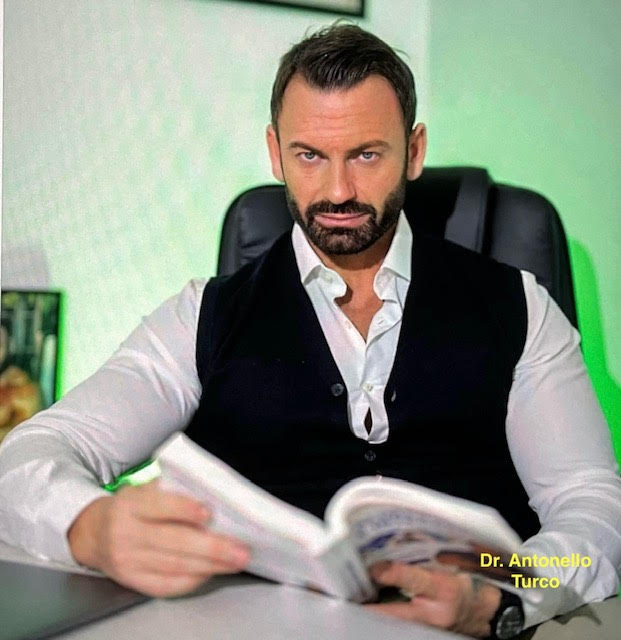
Dr. Antonello Turco’s Holistic Method Is Art and Culture
From Italy, having spread to other European countries, Dr. Antonello Turco’s holistic method has arrived in the USA.
It is a method for physical and mental health that, especially, has a direct and tangible connection to art.
It is certainly a cutting-edge method for physical and mental health.
I have known Dr. Turco for a year, and our relationship has become increasingly interesting and intense, as it encompasses aspects of both the physical and spiritual, but above all, always related to creativity and art.
Now, if extreme attention to appearance was once exclusive to our world of celebrities, this aspect has extended to everyone in the space of about fifty years, albeit with some discrepancies resolved precisely by Dr. Antonello Turco’s holistic method.
Dr. Turco began with a degree in Nutrition and Sports Sciences, followed by years of experience in fitness and coaching, daily developing a method that places creativity and art at its core.
For those in the celebrity world, everything is geared toward serving the audience , and therefore, the more one’s health, physical appearance, and ability to constantly optimize one’s persona improve, the more fame, one thinks it increases.
Generally, this process is often at the expense of one’s private life, since for those in show business, the priority belongs to public life, not private life.
One of the reasons for Dr. Turco’s growing success is precisely that he “gives” everyone the full range of elements that can generate optimal physical health, including excellent physical appearance.
Despite this, Dr. Turco is often in Malibu and Hollywood, and global stars flock to seek his advice.
The really interesting aspect is that the “Dr. Turco Method” is constantly evolving and therefore we will talk about it again since it is becoming a cultural and artistic motif in itself.