Whispering, fish-colored gasps, running and laughing,
The new bud on the new path is everyone’s eye.
The talk goes on saying that you should be quiet.
Time will give some answers.
To retreat silently to the last position,
To feel the attitude of behavior and continue work.
In the composition of silent situations & words,
without words are expressed in the sea,
Illusory imagination floats in the world of the mind.
Magh comes to Paush to compose sentences.
The witness remains in the quiet room of the understanding mind.
Answers play a silent role in the passage of time.
Reflection takes place in silent discourse as causality.
Insistence comes to the new creator,
providing words without words,
Silence wins in the dawn.
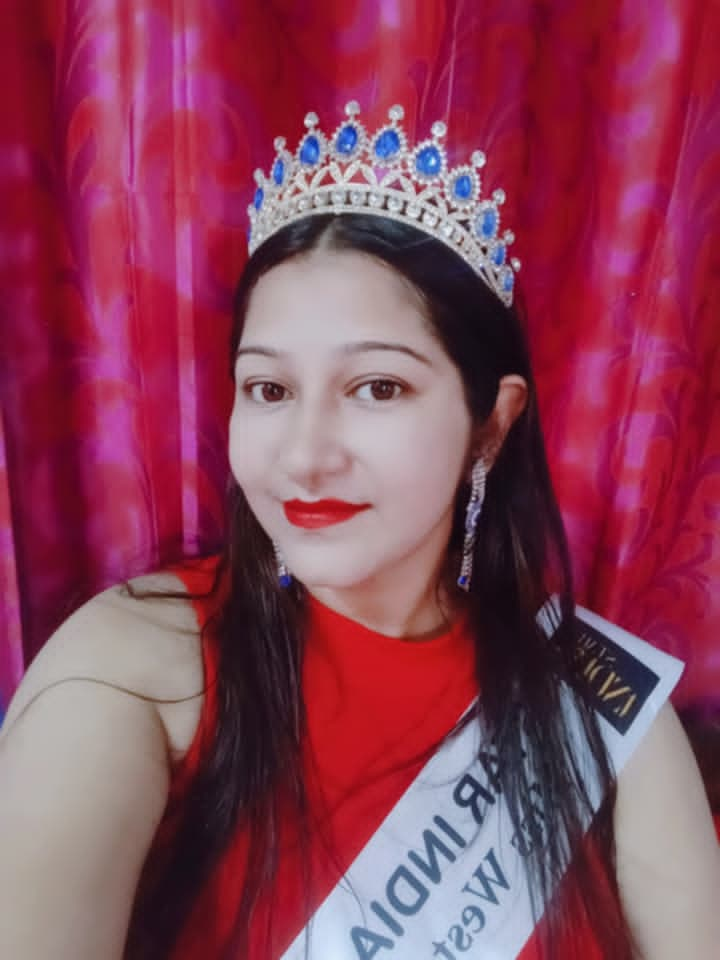
Short biography: Amb. Dr. Priyanka Neogi from Coochbehar. She is an administrative Controller of United Nations PAF, librarian, CEO of Lio Messi International Property & Land Consultancy, international literacy worker, sports & peace promoter, dancer, singer, reciter, live telecaster, writer, editor, researcher, literary journalist, host, beauty queen, international coordinator of the Vijay Mission of Community Welfare Foundation of India.
First, an announcement: published poet and contributor Tao Yucheng would like to host and judge a poetry contest open to all readers of Synchronized Chaos Magazine.
Synchronized Chaos Poetry Contest
We seek short, powerful, imaginative, and strange poetry. While we welcome all forms of free verse and subject matter, we prefer concise work that makes an impact.
Guidelines: Submit up to five poems per person to taoyucheng921129@proton.me. Each poem should not exceed one page (ideally half a page or less). All styles and themes welcome. Deadline for submissions will be in early March.
Prizes: First Place: $50 Second Place: $10, payable via online transfer. One Honorable Mention. Selected finalists will be published in Synchronized Chaos Magazine.
From the back of the book: J.J. Campbell’s work is an unflinching look into a life spent alone with the bottle and the page readily at hand. It is raw, honest, and uncompromising in every sense of the word. You are keyed into the fact that this is a writer who doesn’t sugarcoat a single line to ever soften the blow. Campbell’s work is perfect in that sense, and in this newest collection, you are getting a writer at the top of his form.
Now, for our first issue of 2026. This issue explores what makes us who we are, physically and psychologically, as individuals and as communities and nations.
Nicholas Gunther explores what makes him human, where in his body his consciousness might be located. Kassandra Aguilera also speculates about her consciousness, considering what makes her feel alive.
Xudoyberdiyeva Mohiniso explores some Eastern and Western philosophical conceptions of what it means to live a conscious human life. Morley Cacoethes’ haikus also explore where and how we find inner wisdom and knowledge. Nilufar Mo’ydinova outlines themes of free will and the search for truth through experience in Goethe’s Faust.
Brian Michael Barbeito crafts a lyrical winter meditation on a person’s holding onto nature and his identity in an alienating new world. Satimboyeva Risolat echoes the importance of maintaining one’s personal values. Mahbub Alam urges people to draw on the wisdom they possess to make the world more just and healthier. Türkan Ergör considers the unpredictable nature of our lives and the need to choose kindness. Zeki Celic reminds us to make the most of the limited time we each have on earth as Stephen Jarrell Williams depicts characters choosing freedom, peace, and love.
Aliyeva Aziza Utkirovna points to the eyes as a place where humans reveal their inner feelings. Nurbek Norchayev’s evocative piece celebrates the power of poetry to convey emotion and sensibility. Aliyeva Zulaykho highlights the role of breath in vocal expression while reading texts.
Chloe Schoenfeld delves into Walter Gramatte’s painting of German artist, art historian, and social activist Rosa Schapire. She wonders how much of the craft of creating a likeness is about the subject and how much is about the associations the artist draws on to help them imagine and understand the person.
Shomurodova Dilafro’z Bahodir qizi explores approaches to Uzbek linguistics that focus more on the people creating texts rather than merely on the texts as isolated objects. Fayziyeva Hafiza Alisher qizi also looks at human life and culture’s influence upon languages.
J.K. Durick reflects on the seasons of life where we are observers, contemplating those around us or what has happened. Taylor Dibbert‘s poetic speaker considers his own role in the dissolution of his marriage. Bill Tope’s short story depicts family pulled apart, then back together, then apart again.
Dr. Jernail Singh urges parents to let their young adult children learn and work for their own dreams in life. Also, he reminds us to consider the legacies we leave behind for the rest of the world once we become successful enough to care for ourselves and our families. Tolqinova Marifatoi Shavkatjon qizi outlines research into approaches to social and vocational training for young adults.
Lan Qyqalla recollects his romance with his late wife as Adalat Eroglu versifies about a tender romance and Özcan İşler urges his love to remember him. Nasser Alshaikh Ahmed Arabia’s poetic mind wanders through the jasmine-scented depths and alleyways of love. Ramona Yolanda-Montiel considers an old and warm poncho as a sign of her family’s love. J.J. Campbell writes his way through another lonely, disillusioned holiday, wishing he had love and a close family.
Aleksandra Soltysiak wonders at gentle miracles at Christmas, within nature and within families. Gabriel Bates reflects on the ways he distracts and enjoys himself during holiday celebrations. S. Afrose sings of the joys of the Christmas season. Til Kumari Sharma highlights the beauty and value of the Christian faith at Christmas as Maja Milojkovic expresses gratitude to the archangel Michael. Kalipada Ghosh celebrates life, faith, love, and joy at the holiday season. Sardar Makhmudova’s short story shares how a little girl’s brave adventure lets her discover the meaning of the season, sharing love with others. Dr. Prasanna Kumar Dalai goes into poetic rapture about romantic love, world peace, and personal stillness.
Ahmed Miqdad laments the cold winter endured by Palestinian refugees in a call for global peace and justice. Pat Doyne reflects on the United States’ gun violence epidemic and the lack of progress to tackle it. Also, she speaks to the political chaos in America and its negative effects on consumer prices. Giulia Mozzati Zacco mourns the deaths of children in school shootings through the ancient form of the ghazal. Ziyoda Muradilova reflects on cultural pressures that social media has placed on the craft of journalism, to be fast, interactive, and appealing to readers, and how that poses challenges to the task of delivering truth.
Eva Petropoulou Lianou reminds us that true freedom is a society where people can live safely together, not merely the chance to serve ourselves at others’ expense. Dr. Jernail Singh reminds us that what goes around, comes around, both in terms of the legal system and the religious concept of karma. Duane Vorhees points out that concepts such as justice and poetry and perception should not remain purely abstract but carry practical meanings in the real world.
Abdulrazaq Godwin Omeiza considers how formal education taught him the facts of history, but poetry showed him how to survive it. Ruqaya Mehran, interviewed by poet Eva Petropoulou Lianou, discusses her work as a museum guide, influencer, and historian of ancient Egypt. Dylan Lloyd speaks to the emerging, burgeoning magic of creativity. Taro Hokkyo’s short story illustrates the power of self-belief in overcoming oppression and obstacles. Zaxina Tohirova highlights the lessons we can learn from failure and perseverance. Aziza Xasamova urges us through piercing prose not to give up, whatever happens in our lives.
Elza Hansen celebrates the maternal and paternal love at the heart of the Christmas holiday. Abu Rayhan Beruni connects the importance of strong families to a strong nation.
Dildora Khojyozova highlights the cultural renaissance of the nation of Uzbekistan as Diyorbek Elmirzayev looks at Uzbekistan’s increasing government debt as an outgrowth of economic growth and investments in modernization. Lolaxon Sodiqxonova highlights the importance of gender equality and initiatives to empower Uzbek women in economics and education. Dilshoda Nodir qizi Nurboboyeva presents strategies for educating and raising children without gender stereotypes. Priyanka Neogi urges women around the world to move forward with self-respect, creativity, and independence. Ashraf Al-Mismar provides a literary analysis of gender, identity, and migration in his novel Soul Shards.
Communication is integral to intercultural understanding and migration. Shaxriniso Savranboyeva outlines various approaches to translating idioms across languages and cultures. Saminjon Khakimov points to how language instructors can harness the phenomenon of code-switching, reverting to one’s native tongue, in the classroom. Abdurashidova Sabina Eldarovna highlights teen code-switching, from normal language to chat-speak and slang. Eshpo’latova Xilola highlights the role of audiovisual teaching aids in enhancing students’ foreign language acquisition. Ruziyeva Sitora outlines why and how English is still considered a global language as Ubaydullayeva Saodat discusses the role of English in international travel.
Abdullayeva Feruza suggests visual activities that help accentuate young children’s learning. Yusupov Otajon Ulug’bek ogli outlines various creative approaches to teaching and learning foreign languages. Gulsevar Amirqulova encourages teachers to practice and develop their own creativity as part of professional development. Jo’ranazova Dilobar Dilmurod qizi highlights different ways to teach young children their mother tongue. Nasulloyeva Feruzabonu expounds on the value of science and technology education for society in ways that go above and beyond the practical. Dr. Jernail Singh Anand urges society and our educational system to teach wisdom and the humanities rather than simply focusing on speeding up students’ financial success. Bahora Akmalova considers approaches to teaching preschool children social skills in a classroom setting. Rupa Rao interviews writing mentor Balachandran Nair about his work with emerging authors.
Eva Petropoulou Lianou interviews Dr. Reda Abdel Rahim, inspector of Egyptian antiquities at the Ministry of Tourism and Antiquities, about his work with artifacts of his nation’s past. Jeffrey Spahr-Summers’ digitally altered photographs glimpse a more recent past, giving homes and street scenes a hazy, nostalgic feel.
Image c/o Jeffrey Spahr Summers
Sayani Mukherjee’s imagistic work explores nature, love, loss, and the concept of home. Natasha Leung draws on oceans and canoes as a metaphor for a couple who are separated all too often. Eleanor Hazel Hill reflects on physical mementos of summer fun. Yusufjonova O’gilxon revels in the chill pleasantries of winter. Soumen Roy looks to a river metaphor to express consistent flow, purpose, humility and resilience. Dr. Byeong-Cheol Kang evokes the resoluteness and strength of an eagle. Kujtim Hajdari highlights ecological themes in his review of Eva Petropoulou’s poetry. Axmadqulova Sapuraxon shares ideas for educating preschool children about the environment. A group of youth in China submits various short poems inspired by natural scenes. Alan Catlin patters out imagistic pieces inspired by various Japanese words for rain as O’rinboyeva Zarina speculates on life on a planet where rain is a rarity. Robert Beckvall reflects on his life’s winding path and how it deposited him on the lush big island of Hawaii. Mesfakus Salahin looks to the longer-lasting natural world for absolution from his complex memories. Riley Winters laments human exploitation of animals and the wilderness.
Mykyta Ryzhykh evokes the inextricable natures of life and death. Alyssa Trivett graphically renders the aftermath of a car accident. Nilufar Yoldoshova outlines similarities and differences between Uzbek and Korean funeral customs. Tea Russo’s work dramatizes the soul-killing effects of grief, loneliness, and shame. Gabriel Kang’s work exposes exploitation disguised as progress and love. Robin Beernaert outlines the psychological impact of a griever’s journey through poetry and prose.
Jessica Vanderwall composes an emotionally complex love letter to herself. Daniela Chourio-Soto reflects on the power of dreams to express and warn us about feelings in our waking lives. Joshua Obirija paints a lower-case portrait of the grief and lostness driving his writing.
Adrina Esparas-Hope crafts a graphic image of visceral love that could be a metaphor for creative pursuits. Brian Barbeito lets go of the need to understand everything before he can experience beauty and mystery. Texas Fontanella’s work revels in color and improvisation, reminiscent of jazz and electronica. Mark Young artistically alters geographical maps of checkerboards and Australian regions. Grant Guy intentionally erases parts of painted and typed texts as an artistic experiment. Zamira Moldiyeva Bahodirovna encourages readers and students to take up a refreshing and creative hobby. Federico Wardal explores the career and casting decisions of artists’ manager Adriano Aragozzini.
More practical fields can be creative as well. Shahlo Rustamova explores the role of discrete mathematics, particularly combinatorics, in understanding biological structures. Farangiz Musurmonova urges Uzbek accounting frameworks to match those of international professional standards. Medical student O’roqova Nargiza outlines the importance of salivary glands in the human body. Normurodova Salina Saitkulovna discusses how the medical field prepares for pandemics. Ahmedova Dilorom Mahmudovna highlights the progress of medical therapies for cancers caused by human papillomavirus.
We hope that this issue will inspire your creativity!
Home

A stately home of decorated lamps
The wall blew of homegrown facts
A limerick of two penced walls
A mark on the wall, a safeguard of rubbles
A thick mossed cottage, a writing on home
Homegrown homesickness around my gaze
The sea shore of shattered lamps a pain in my left bruise
I know not yonder thee a maverick lost canopy
Molten raindrops abound thy skin
The flower grew among starlit bones
It asks for home too
A nihilist pain staking twofold grimace
A soft paced milkywave to land my moonwalled trance.
Bitch, plucked the longest strands and held the roots till smoke rose
Bitch, plucked the longest strands and held the roots till smoke rose
Bitch, burned the fruit of the scalpel, acres of land encompassed in flame
Bitch, bowed before the fire and called it becoming
Bitch, said pain meant progress
Bitch, caught flame in the name of approval
Bitch, praised the fire that undid mirrors and frames
Bitch, spread the ash like makeup, smiled and saluted the heat
Bitch, juggled through the fiery circus rings and wooden splinters
Bitch, aimed and threw fiery plastics at the cool blue marine flag
Bitch, saw the glow, mistook it for freedom
Bitch, still burns like it should
Gabriel Kang is a poet whose work interrogates hunger, inheritance, and the quiet violences that shape intimacy, family, and identity. His poems often braid domestic imagery with moral tension, exploring how love can fracture into consumption, silence, and grief. Through precise lineation and restrained lyricism, his writing resists sentimentality while remaining emotionally direct. Kang’s work is informed by his background in competitive rock climbing and creative writing, disciplines that demand both control and risk. This influence appears formally in his poetry through compression, physical imagery, and an attention to pressure—what the body carries, endures, and gives way to.
His poems frequently examine the cost of survival, particularly within immigrant households, where love and necessity are often indistinguishable. He is currently a student at Ruth Asawa School of the Arts in San Francisco, where his work has been developed through workshops, public readings, and literary analysis of contemporary and canonical poets. His writing engages with themes of violence, care, appetite, and moral inheritance, often using animal and food imagery as recurring motifs to expose power dynamics within relationships.
People are swimming among the garbage into the Ocean
We expect to have a clean atmosphere and be happy
But people are bombing citizens and countries with
Poison
We are taking for environmental health
But we humans
We pollute
We don’t respect our selves
We don’t respect nature
We play God
We create earthquakes
We create rain
We create typhoon
One day Earth
Will say enough
And human will be rejected
For his bad behaviour
Review By poet
Kujtim Hadjari
This poem is a powerful and direct critique of human environmental destruction and self-destructive behavior. It’s not subtle—it’s a cry of anger and warning.The poet argues that our interference is not wise or divine; it’s a dangerous, arrogant disruption of natural systems. The poet, after explaining the danger we have created for our Earth, ends with a prophetic warning. It personifies the Earth as a living entity that will one day reach a breaking point: ”enough.”/”Human will be rejected” – This is the final, devastating consequence. Not just punished, but ”rejected,” like an organ rejects a foreign body or a host rejects a parasite. The implication is that the Earth will cleanse itself of humanity to survive.The poem is an ”eco-apocalyptic warning.” It argues that humanity’s pollution, violence, and arrogant manipulation of nature are not separate issues—they are all symptoms of the same disease: ”a fundamental lack of respect for the living system that sustains us.”The poet believes this path is suicidal. If we continue to act as a destructive, parasitic force, the Earth (through climate catastrophe, ecosystem collapse, or our own poisoned environment) will ultimately make the planet uninhabitable for us. It’s a call to recognize our interconnectedness with nature before it’s too late.In short, we are poisoning our own nest, and if we don’t stop, we will be evicted.The poem is a call for all inhabitants to change their behaviour for our living system.






 Christmas Love !