Essay from Muminova Farida

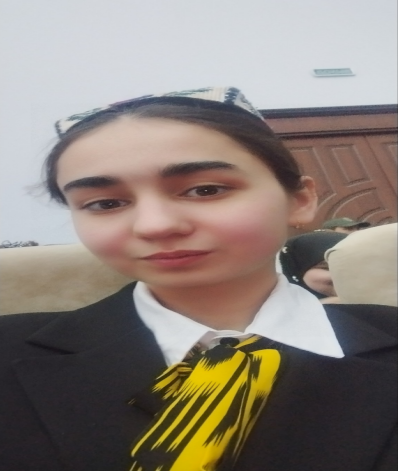
Young Central Asian woman with long straight dark hair, brown eyes, and a black sweater.

DEVELOPING CRITICAL THINKING SKILLS IN PRIMARY EDUCATION

Annotation:

This article analyzes the importance and effective methods of developing critical thinking skills in primary education. It emphasizes the significance of teaching students analytical thinking, problem-solving, and decision-making skills. The development of critical thinking not only influences students’ academic success but also has a significant impact on their social life activities. The article also provides detailed information about innovative pedagogical approaches, optimizing the role of teachers, and the effectiveness of interactive methods in developing critical thinking in primary education.

Keywords:

Critical thinking, Primary education, Pedagogical methods, Student skills

Introduction:

Primary education plays a crucial role in shaping students’ unique thinking styles and in the deep and solid acquisition of knowledge. At the same time, today, critical thinking, analytical approaches, and problem-solving abilities hold great importance in society. Critical thinking helps students not only in learning academic content but also in making the right decisions in various life situations. These skills play a significant role not only in school success but also in personal and social life.

Developing critical thinking skills in primary education teaches students to independently shape their thoughts, search for new ideas and solutions, and approach problems with a positive mindset. Moreover, critical thinking also enhances students’ communication skills, as they develop abilities to exchange ideas, engage in debates, and work in groups. This article discusses effective methods, approaches, and pedagogical practices for developing critical thinking in primary education.

Main Part:

The development of critical thinking skills in primary education has a significant impact on students’ future success. Critical thinking is an essential skill for a person to be successful in both academic and practical activities, enabling students to analyze their thoughts, make decisions, and think logically in various situations. There are several effective methods for developing critical thinking in primary education.

Interactive methods, which ensure active student participation in lessons, play a crucial role in developing critical thinking. Through group discussions, debates, solving logical problems, and role-playing, students learn to express their thoughts, listen to and analyze others’ opinions. For example, when working in groups, students present different perspectives, thus learning to approach a problem from multiple angles.

To develop critical thinking in primary education, it is essential to encourage independent thinking in students. In this regard, it is important for the teacher to monitor students’ activities, provide guidance, but leave the final decisions to the students. Students should be taught to structure their thoughts coherently, analyze evidence, and defend their decisions. This method fosters a sense of responsibility in students and promotes independent thinking.

Asking critical questions is an important technique that encourages students to think more deeply. Teachers should ask not only questions that require simple answers but also encourage students to justify their opinions. Questions like, “Why is this solution correct?” “What other alternatives exist?” and “How might this problem be viewed from another perspective?” provide students with opportunities to expand, evaluate, and analyze their thoughts.

Through practical exercises and projects, students link their thinking process to real-world problems. For example, scientific research, participation in team projects, and problem-solving and decision-making processes help students practically develop critical thinking skills.

Creative and innovative thinking is of particular importance in developing critical thinking in primary education. Students should be encouraged to generate new ideas, write them down, create prototypes, or find solutions through systematic thinking. This process enriches students’ logical thinking and allows them to analyze their ideas in more depth.

The role of the teacher in developing critical thinking is essential. Teachers not only transmit knowledge but also stimulate students’ thinking processes, ask them questions, and assist in generating new ideas. Teachers must tailor their pedagogical approaches to develop critical thinking, motivating, supporting, and guiding students in analysis and decision-making.

The methods discussed above serve to enhance the engagement of primary school students and stimulate their thinking process. In particular, suggesting real-life problems for students to solve helps them develop the skill of thinking about life-related questions. For example, questions like, “What would you do if the school ran out of water?” or “What would be your first action if you were the president?” encourage critical thinking based on the student’s perspective, empathy, and analytical abilities.

Additionally, tasks based on revisiting art, literature, and events deepen students’ creative thinking. For example, asking students to write a different ending for a fairy tale, predict the author’s intention, or imagine themselves in the role of a character combines critical and creative thinking. Through such tasks, children not only understand the events but also analyze them and provide their own evaluations, which forms the foundation for critical thinking.

Modern technologies also offer vast opportunities in this regard. For instance, logical games on digital learning platforms, question-and-answer tests, and problem-based interactive tasks allow children to independently develop their thoughts. This is an important factor in fostering critical thinking.

Based on the above, it can be concluded that the development of critical thinking is not a one-time activity, but rather a continuous strategy that should be integrated throughout the educational process. Every teacher should encourage students to think, ask questions, develop ideas, and make evaluations in each lesson

Conclusion.

In conclusion, developing critical thinking skills in primary education is an essential and indispensable aspect of modern education. This skill ensures that children have a conscious and active attitude toward life, knowledge, and events. By fostering critical thinking, students learn to make independent decisions, compare different opinions, assess evidence, and justify their own viewpoints.

Additionally, this process creates a solid foundation for their personal growth, effective adaptation to social environments, and helps them find their way in the future. The role of the teacher in this process is crucial — they must inspire students to think, ask questions, and analyze carefully.

Through lessons enriched with modern educational technologies, interactive methods, real-life tasks, and social activities, we can raise a generation of critical thinkers who are conscious and responsible. Therefore, every educator must continuously improve their activities in line with the demands of the times. After all, today’s young learners are tomorrow’s active members of society.

References

Xolmurodov A. Methodology of Primary Education. – Tashkent: “Fan va texnologiya”, 2021.

Xasanboyeva S., Yuldasheva M. Pedagogical Technologies and the Basics of Critical Thinking. – Tashkent: “Ilm ziyo”, 2020.

Turdiyeva G’. Innovative Approaches in Working with Primary School Students. – Samarkand: “Zarafshon”, 2022.

Muminova Farida was born on February 1, 2005, in Payariq district, Samarkand region, Republic of Uzbekistan. She is a part-time student in the Primary Education program at Jizzakh State Pedagogical University. Farida is one of the successful students in her field, a holder of several international certificates, and also teaches mental arithmetic to schoolchildren.

Synchronized Chaos’ First May Issue: Paradoxical Understandings

First, some announcements before our first May issue, Paradoxical Understandings.

Pink, blue, white and purple circle with circular designs around the edges.
Photo of a “paradox frame” c/o Piotr Siedlecki

Poetry submissions to North of Oxford’s Streur Anthology are now open!

North of Oxford would like to pay tribute to the late Russell Streur, poet and publisher of The Camel Saloon and The Plum Tree Tavern with an online anthology dedicated to Nature. Send us your poems of Nature, of floral and fauna, of forests and trees, of rivers, creeks and streams. Of farms, of urban nature, of parks and sanctuaries, of oceans and bays, of islands, of all things, Nature.

Send one to three poems for consideration of publication to North of Oxford at sahmsguarnieriandreutter@gmail.com  Subject line of submission: Streur Anthology. Submissions will be accepted until 5/31/25. Only submissions attached as word doc will be reviewed. Please include a 100-word bio within the word doc.

https://northofoxford.wordpress.com/2025/04/13/streur-nature-anthology-submissions/

Announcement from Jacques Fleury:
 “You Are Enough: The Journey to Accepting Your Authentic Self”  is being featured on the Boston Public Library website for Haitian American Heritage Month in May!

Silhouetted figure leaping off into the unknown with hand and leg raised. Bushes and tree in the foreground, mountains ahead. Book is green and yellow with black text and title.
Jacques Fleury’s book You Are Enough: The Journey Towards Understanding Your Authentic Self

Eva Petropoulou Lianou shares a short film inspired by NASA’s inclusion of her poetry in a capsule launched to the moon.

Synopsis
On 26th February 2025 NASA launched a capsule with poems to the moon, one of them was the anti-war poem “Happy Birthday”. Written by Eva Lianou Petropoulou, Directed & Animated by Zina Papadopoulou, Music & Sound by Grigoris Grigoropoulos

Lunar codex, Athena, Minerva Excelsior, The Vagabond Anthology, edited by Mark Lipman, dedicated to the Palestinian poet Ahmed Miqdad

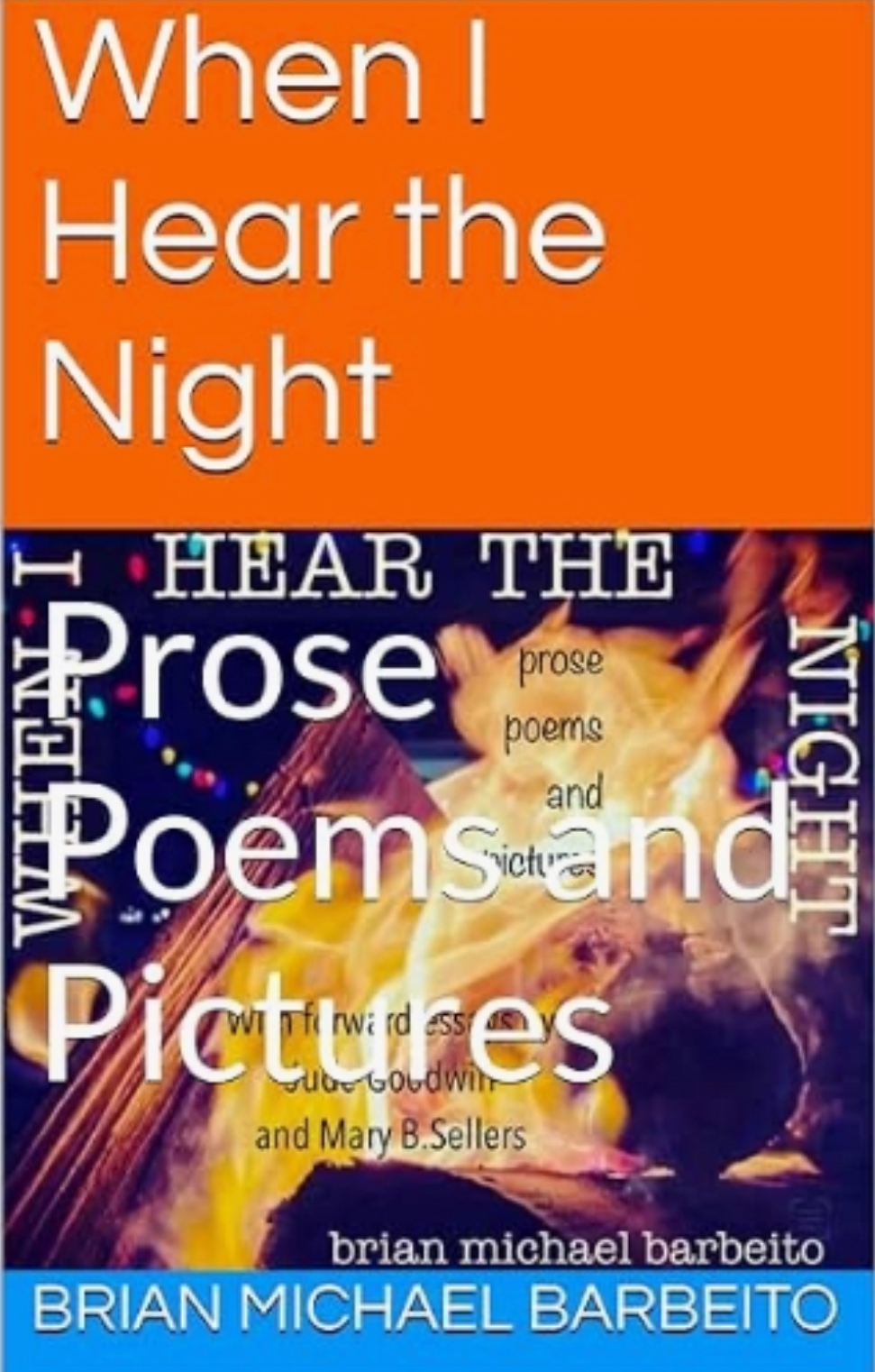
Also, our contributor Brian Barbeito’s new book has just come out, When I Hear the Night. This is a prose poem and landscape photography book. Included with the words and pictures are two literary and dynamic introductory essays, one by poet and editor Jude Goodwin, and another by the writer and editor Mary Buchanan Sellers, figures current and thus well-informed in the field. There are also author notes and question-and-answer sections. The writings can be said to have interesting elements of memoir, essay, belle-lettres, poetry, and short story forms. Their content often includes the mystic and inner vision of the author coupled with the outside world of nature walking and travel.

Brian Barbeito's book When I Hear the Night. White text in various fonts, orange at the top, a bonfire outdoors with flames and colored lights at night on the bottom. Blue stripe at the bottom.

When I Hear the Night can be ordered here.

Now, for May 2025’s first issue: Paradoxical Understandings. In this issue, we explore various perspectives and vantage points, how multiple things can be true at once in our complex universe.

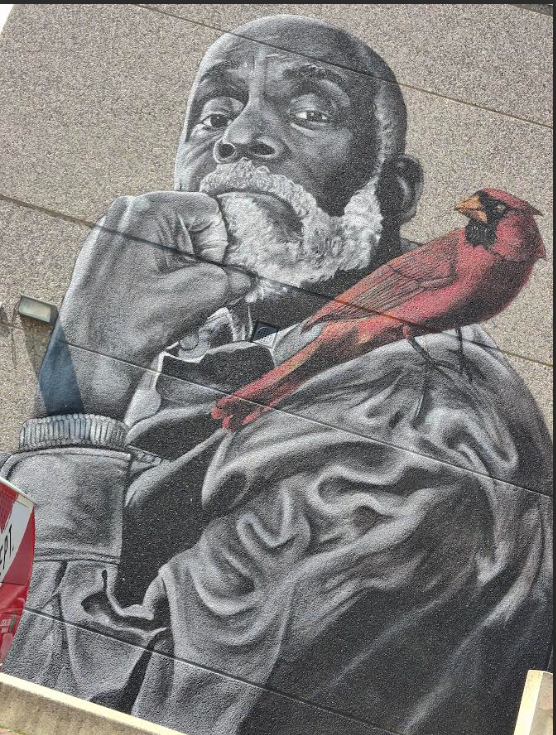
Painting of an older Black man with a beard resting his head on his fist. He's got on a jacket and a red cardinal is on his shoulder.
Image c/o Jacques Fleury

To begin, poet Yang Yujun interviews Sudhakar Gaidhani about the inspirations behind his epic poetic work Devdoot the Angel, which promotes wisdom and unity among the world’s diverse groups of people and philosophies.

On a more personal level, Peter Cherches writes of understandings and misunderstandings, how much we can come to know or forget about those closest to us. Aziza Xazanova urges human understanding through avoiding assumptions and listening with empathy. Daniel De Culla relates a story where a person in trouble simply seeks a listening ear, not rescue.

One way people can understand each other better is by learning each other’s languages. Several contributors discuss pedagogical methods for language teaching.

Malika Abdusamadovna writes about translation techniques, the importance of clarity in a teacher’s speech, principles of word division in various European languages, and ways to teach speech activity. Gafurova Mahbuba discusses complex sentence structure, digital game metrics as teaching tools, and practical and theoretical approaches to translation. Oblaqulova Gulshoda examines and compares the implied meanings of Uzbek and Japanese idioms.

Scrabble tiles, blue text on white tile. The R, worth one point, is jostled out of place in the middle.
Image c/o Anna Langova

Abdullajonova Rayhona outlines methods of translation practice, how to teach speech activities, principles for the categorization of words, and how to teach language through movement and stories. Olimova Shahina discusses how to improve English learners’ skill in speaking. Matqurbonova Ro’zaxon explores different methods of improving spoken word fluency in language learners. Husanboyeva Nargiza highlights the potential of new digital technologies in education.

Other contributors reinterpret language in concrete and abstract ways. Jerome Berglund renders different poetic forms into concrete images. Noah Berlatsky contributes a humorous poem about procrastination that uses repetition as a literary device. Christina Chin and Uchechukwu Onyedikam craft joint tan-renga poems, finishing each other’s pieces with images of music, nature, rest, and memories. Rus Khomutoff’s concrete poetry takes us on a journey of surrealism, music, and romance.

Like Khomutoff, other writers travel deep into their own psyches. Brian Barbeito reflects on his thought process and creative journeys, considering how he both opens his mind to emptiness and enlightenment and, like a skilled hockey player, remembers the basics of his craft. On another note, Nigar Nurulla Khalilova evokes writers’ block and an intense, foul mood as harsh as the Arab Simoom wind.

Mesfakus Salahin ponders the fragility of human identity and self-concept. Mark Young’s poetry explores creative processes, relationships, and the search for meaning. Texas Fontanella’s music digs deep for a dose of duende. Tagrid Bou Merhi draws on train travel as a metaphor for introspection and longing for one’s past or future. Stephen Jarrell Williams crafts a series of verses describing a person’s inner struggle and renewal. Ari Nystrom-Rice explores identity, wondering who he truly is underneath the surface. Mexribon Shodiyeva’s poetry celebrates the fragile butterfly and the beauty of being yourself. Shamsiya Khudoynazarova Turumovna relates having had the courage to free herself from an unhealthy situation and walk her own path.

Light skinned man in a black suit and collared white shirt holds a photo of a woman with dark hair in front of his face.
Image c/o Gerd Altmann

Paul Cordeiro speaks to the aftermath of significant relationships and events and to how our feelings can reshape our memories. On a less serious level, Mark Blickley develops a farcical story of unemployment fraud inspired by a photo of a man with a sheep skull, where a character invests deeply into reinventing himself.

On a more cosmic level, Jack Mellender’s work looks at space, time, and humanity’s place in the universe. Ummnusalma Nasir Mukhtar relates a fanciful and expansive dream where she traveled to the moon and stars and gathered her strength. Jacques Fleury’s photography encourages us to view life from different vantage points, exploring concepts as varied as travel, physical attraction, thought, and justice.

Duane Vorhees reflects on ancient archetypes and how we tell stories about ourselves. Sayani Mukherjee reflects on the constant turbulence of human and natural history. Dr. Jernail S. Anand probes some basic paradoxes of modern human life.

Rezauddin Stalin reflects on the beauty and the price of freedom as Blue Chynoweth reflects on the blessing and curse of being able to contemplate one’s place in the universe rather than living by instinct.

Mahbub Alam wonders whether love or self-destruction will win the day. As a person of faith grappling with these issues, Chimezie Ihekuna addresses life’s seemingly intractable struggles, suffering, and human evil, and also God’s implacable goodness in a paradoxical couplet of poems. Lilian Dipasupil’s paired poems take a similar approach, warning of child kidnapping while honoring the love and sacrifice of Jesus.

Black shadow of a wizard holding a staff up to a bunch of stars in a dark environment with blue and red smoke.
Image c/o Ian Pampagna

As writers, one of the ways we can respond to evil is to bear witness and document it as a warning. This is one of the roles of journalism. Davronova Asilabonu affirms the value of journalism and speculates on the field’s future.

More traditionally literary writing can bear witness as well. Yucheng Tao provides a sobering reminder of the historical massacres of the indigenous people of the American West by European settlers and of many Cambodians later in history by the Khmer Rouge. Z.I. Mahmud explores how Arthur Conan Doyle’s The Hound of the Baskervilles brought realism into detective fiction, illustrating the monstrosity of human greed and vengeance. Rahmat Muhammad laments how people where she lives in northern Nigeria no longer honor elders and ancestors as much as they should.

Yet, history has not all been bleak, and people have developed some magnificent works. Christopher Bernard reviews the energizing performance of Grupo Corpo at Berkeley’s Cal Performances, highlighting how the dances reflect various aspects of Brazilian culture. Federico Wardal outlines the accomplishments of celebrated actor Massimo Sangalli. Jeffrey Levert delves into history and philosophy as he wanders the back pathways of a remote Greek island. Graciela Noemi Villaverde poetizes on the beauty of old books and the sorrow of losing or forgetting the words inside.

Shuhratbekova Gulzoda describes the historical contributions of the humanist Jadid leaders of Uzbekistan to art, literature, science, and culture. Dilobar Maxmarejabova expresses her pride in her Uzbek heritage and her hometown of Qashqadaryo. Hashimjonova Durdana affirms her pride in her Uzbek heritage and culture. Nozima Gofurova outlines the many achievements of today’s Uzbek youth.

Artsy image of older books stacked up with a mug, spoon, and saucer on top with steam and some blackbirds flying above. Pieces of paper with text fly above and a red robin perches above a book.
Image c/o George Hodan

Bhagirath Choudhary points to the role of literature in terms of helping people and societies evolve to become more humane. Dr. Jernail S. Anand illuminates the power of art and literature to touch people’s hearts and souls and inspire wiser and more compassionate behavior.

Alexander Klujev highlights connections between Russian music and Russian philosophy and how both honor the triumph of life over death.

Various contributions celebrate different aspects of life. Shahnoza Ochildiyeva enjoys a picnic with her classmates on a sunny spring day. Su Yun evokes the struggle and beauty of flowers growing in an urban environment. Isabel Gomez de Diego photographs childhood exuberance in a neighborhood where humans coexist with nature, trees and bike paths near city apartments. Eva Petropoulou Lianou crafts a story around the evocatively named “Hero’s Path,” a hiking trail near a European monastery. She finds simple joy in nature and travel. Manik Chakraborty takes poetic inspiration from misty mountains as Taro Hokkyo honors his muse and the land on which he writes.

Marjona Jorayeva Baxtiyorovna expresses her respect for women and the feminine, which she links to nurturing and compassion. Gulsanam Qurbonova celebrates the tender nurturing of a mother’s love. Vo Thi Nhu Mai reflects on the warmth and tenderness of her childhood in Vietnam and how that inspired her creativity. Kylian Cubilla Gomez’ photography captures vintage childhood images: Snoopy, old Easter themed toys, a colorful frog, even possibly Dad’s aftershave. David Sapp enters the mind of a three-year-old, excited about cereal and dogs. Marjona Jo’rayeva relates her enthusiasm for a fresh term at school.

Smiling brown skinned child in a blue tee shirt holding out his arms. Trees with green, yellow, red, orange and bluegreen trees in the background.
Image c/o Gerd Altmann

Kristy Raines expresses the simple yet profound joy of two souls finding true love and choosing each other. Eid Saleh writes in English and Arabic of the meeting of souls in a similar way, and refers both to romance and to close friendship. Qaraboyeva Zilola expresses the tender urgency, trepidation, and obsession of young love. Marley Manalo-Ladicho ignites a fiery love feast in his poetry.

However, as Taylor Dibbert points out in his brief poem, romances, and other sources of happiness, aren’t guaranteed to last.

Tuliyeva Sarvinoz’ elegant poetry laments lost love as Mirta Liliana Ramirez honors the memory of a beloved, asserting that she’s not yet ready to move forward. Eva Petropoulou Lianou touches on the tenderness of human hearts and how many of us carry emotional trauma. J.J. Campbell’s poems describe a soul’s slow descent into misery and cynicism. Luis Cuauhtemoc Berriozabal speaks to social and psychological entrapment, stuck with folks tired of his old stories. Linda S. Gunther’s short story “Bake Me a Banyan Tree” explores what we owe our loved ones and how far we would go for them.

Eric Barr’s poetry reflects the realities of navigating life after a stroke. Manik Chakraborty laments destruction caused by a fire as Mykyta Ryzhykh reimagines the Three Little Pigs into a futuristic dystopia in light of environmental destruction. Don Bormon evokes extreme desert heat and the specter of climate change.

Watercolor of lavender in a decorative vase next to a purple towel and lavender scented water in a glass bottle with a stopper.
Image c/o Sulvia

Alex S. Johnson takes us on a mythical journey to transmute sorrow in a poem translated into Greek by Cassandra Alogoskoufi.

Sometimes what one needs to overcome suffering isn’t as complex as alchemy, but can just be time at home curled up with one’s cat. Nicholas Gunther’s poem describes a weary soul’s desire to return home after a long journey. Bill Tope’s short story explores how a senior cat helped bring an older woman out of depression after society made both feel useless.

We hope that Synchronized Chaos can inspire creativity, bear witness to the joys and pains of the world, and transform sorrow and stagnation. Please enjoy this issue!

Essay from Aziza Xazanova

Young Central Asian woman with an embroidered headdress, dark straight hair up in a bun, a white collared top and black coat and yellow bow.

Scandal is not the solution                                                                                            

Problems and fights are everywhere. Because war will not be the relationship itself without quarrels. Whether it’s in personal life or social .There are also minor disappointments in major cities. Only if you can find the right solution by eliminating it, problems and conflicts will not leave a bad mark on our psyche and memory pages. In my opinion, the problem can be solved in two ways .The first is to calm down and the main thing is to listen to each other.

         The beginning of any irreconcilable argument is caused by misunderstanding .People decide on anger in a hurry without listening to each other’s words to the end. This condition is common in every human condition unfortunately. In such cases, the first thing to do is always try to calm down .Because not all decisions made on anger are true ,and the disputes that are taking place at this time have a profound effect on a person’s life. How do you say? We often lighten our anger when we are angry by saying bitter words to other people, not precisely from the person who let us out of anger. This causes our loved ones to be disappointed in US or lose them. It is necessary to try to calm down somehow so as not to get into such bad situations. It is necessary to coldly try to solve the issue in the case when the person or situation standing on our opposite side is looking at the situation with a real eye, no matter to what extent we were angry, and remember that nothing will change with a quarrel. To the question of how to calm down ? we must remember that in this world everyone can make mistakes ,that there is no perfect person or perfect situation for himself, that nothing stands in this world above our peace and health and more expensive. Because a person who stands in front of us during a quarrel will also expect from us that he will treat us. The situation changes if you speak softly and politely without any quarrels ,or if you can see the good side of the situation, a little, not only from the negative side, the person standing in front of you will sometimes fall.

     Not listening to each other is a situation that aggravates the situation. Those are small problems that cause that condition gets bigger . We all have to try to overcome any situation by being forgiving, taking into account that we make mistakes. Why exactly listen? After all, said a bad word, insulted, is it possible to respond politely? if the question torments you, remember the phrase “good word soul mate”. Even thanks to one sweet word, a person can change for the better in life .This means that you will appear not as a weak or stupid person, but as an incredibly strong person .Try to listen and understand a little, no matter how difficult it is, make a decision in a position that does not compromise the interests between the two people .this shows that you are a real leader. Whether you are an ordinary schoolboy or a student or an ordinary person, you will find the respect you respect.

     From my simple experience , I can conclude that when you come across a person who has said a bad word to you or is in a bad situation in life, do so, try to look for the good side of the situation, see the good side. Because there is wisdom in every job! With the sweet words you say, there will probably be a little better change in someone’s life .Try to turn this quarrel into warm conversations with good qualities in yourself, rather than expanding the quarrels by hurriedly saying offensive words. This will definitely help. Miracles are created by man himself. Think about the fact that everything is possible in this world ,consult ,share your thoughts ,and not that you also leave a quarrel or some big problem will ruin my life, but never think that I will forcibly achieve something with a quarrel. Haste never brings benefits! do not forget that only doing good and good words change the world!

Khasanova Aziza Kumushbek qizi was born on October 1, 2004 in the city of Chirchik, Tashkent region.Student Of The Tashkent Institute of Economics and pedagogy. Owner of several scientific articles.

Poetry from Luis Cuauhtemoc Berriozabal

Saturday Night

Look out of that window. 

Wait, I hear there is no window. 

If only you could fly through walls 

this Saturday morning to freedom…

Will there be a tomorrow? 

The Judges have been blindfolded, 

and some are blind already. 

Saturday night is alright for fighting.

If only you could find a path 

to make your way to freedom, 

steal a little sunlight, 

who knows how far you could go?

They will not let you outside. 

They will not let you come home. 

You do not fit their profile. 

It is almost like you do not exist.

You cannot see the clouds 

or listen to the music you like. 

When you dream on this Saturday 

night, will you dream of freedom?

There is no window. 

There is no night sky in your cell. 

The outside can’t look in.

It’s a miscarriage of justice.

Outside there are voices fighting for you. 
Saturday night is alright for fighting.

*

Echoes

I live in a forest 
where echoes  

plunge into my ears, 

where they sing  

a song wrapped in a 

riddle. My skin crawls 

into a sea of emotions, 

where I drown under 

restless waves so 

far from pleasure.


*
The Same Stories

I tend to repeat 

the same stories 

over and over  

without thinking  

it is a recycled

story. Sometimes 

I embellish a bit 

because memory 

fails me or the stories 

have gone stale. 

Either way I 

am often stopped 

before I get to 

the middle of  

the story. I heard 

that before I am 

told or my family 

and friends finish 

my story with a 

smile or annoyance. 

I need more stories 

or remember stories 

I have not told before. 

With new people I 

meet, I can get away 

with my repeated 

stories but only 

for a little while.

Essay from Abdullajonova Rayhona

Young Central Asian woman in a black graduation gown and hat and red sash in a doorway in a room with black walls and a white framed mirror.

Learning through movement and stories

Student of Andijan State Institute of Foreign Languages

Abdullajonova Rayhona Arabjon qizi

Abdullajonovarayhona874@gmail.com

+998886630603

Scientific Supervisor: Isamutdinova Durdona

Annotation.The article explores the benefits of learning through movement and stories in the educational process. It sheds light on how physical activity and narrative elements promote children’s learning, both on a cognitive, social and emotional level. Movement stories combine the learning of content with active participation, which promotes the holistic development of the children.

Annotation.Der Artikel untersucht die Vorteile des Lernens durch Bewegung und Geschichten im Bildungsprozess. Er beleuchtet, wie körperliche Aktivität und narrative Elemente das Lernen von Kindern fördern, sowohl auf kognitiver als auch auf sozialer und emotionaler Ebene. Bewegungsgeschichten verbinden das Erlernen von Inhalten mit aktiver Teilnahme, wodurch eine ganzheitliche Entwicklung der Kinder gefördert wird.

Schlüsselwörter.Bewegungsgeschichten, Lernen durch Bewegung, kognitive Entwicklung, soziale Fähigkeiten, motorische Förderung, Erzählmethoden, frühkindliche Bildung

Keywords. Movement stories, learning through movement, cognitive development, social skills, motor development, storytelling methods, early childhood education

In modern pedagogy, the combination of movement and stories is increasingly coming to the fore. It is known that children not only expand their knowledge through physical activity and stories, but also improve their physical and social skills. Especially in early childhood, this method can support learning in a playful and motivating way. The article aims to show how movement and stories can be effectively integrated into the learning process to foster deep, long-term understanding while supporting emotional and social development.

1. The theoretical foundations of learning by action. For children, the importance of action is enormous. Firstly, movement is an important part of not only the development of muscles, but also many mental and emotional processes, i.e. the development of thinking, memory, concentration, language, etc. For younger children, physical activity also helps activate their brain’s neural networks, which in turn enhances children’s ability to learn. The part of the brain related to movement, especially the motor cortex, is improved by children performing their physical movements, and this has a direct impact on their learning process. Research shows that physical activity helps a child achieve more success in any educational process.

Exercise makes it easier for children to absorb new information, as new neural connections are formed in the child’s mind during the movement. For example, children can develop their skills through dance, sports, or simple exercise. On the other hand, movements also develop a child’s important social competencies, as children often participate in physical activities together, which develops their social skills, interactions, and teamwork skills. Children’s physical movements also develop their spatial perception. Physical activities, such as running, jumping, going around a cliff, expand children’s spatial imaginations. Children learn to perceive the spatial environment, for example, concepts such as high and low, front and back, are more clearly formed. At the same time, physical movements develop a child’s sense of the body and his ability to self-control.

2. Learning through storytelling. Learning through stories is an effective way for kids to broaden their horizons. Stories not only develop children’s language, but also help their mental development. Through storytelling, children learn logical thinking, analyze events, and identify connections between them. Each story is a new experience and opportunity to learn for a child. Stories increase children’s vocabulary as they learn new words, phrases and grammar rules.

In addition, stories provide children with social and emotional learning. Children feel connected to the characters in the events, feel with them. This will encourage them to empathize, to understand the feelings of others. Stories, in particular, help children learn complex concepts. For example, abstract concepts such as time, space, cause and effect are more clearly understood by children through the story. Also, the stories help to have a better understanding of the child’s emotions and emotional state. Children learn to empathize with others, show respect for their feelings by listening or reading stories.

Through the story, the child’s ability to imagine himself or herself as another person develops, which encourages them to grow physically and emotionally.

3. Moving Stories: An Integrated Learning Method. Moving stories are a way for children to learn through storytelling combined with action. This method requires active participation of the child and provides not only mental, but also physical development. For example, a child can learn more deeply by performing actions related to a story or event. In this, the child understands the content of the story through physical movements and forms his own opinion.

Action stories help children explore a variety of topics. For example, a child’s teaching method might use a story called “The Tiger and His Encounter with Animals.” In this story, the boy participates in the story as his protagonist and finds other animals through actions. Through the connection of actions with the content of the story, children quickly master the topic and integrate their physical and mental activities. Action stories not only develop children’s motor development, but also their teamwork and collaboration skills. Many action stories require group work, so children learn to work together, to collaborate with others.

4. The benefits of action stories. Cognitive Development: Action stories help a child’s cognitive development immensely. When actions become part of the story, the child not only passively listens to the story, but actively experiences the development of events. This process activates the child’s mind, facilitates the assimilation of new knowledge, and develops logical thinking. Studies show that children retain the information they learn through movements much more robustly.

This creates a comprehensive learning experience, especially for children.

Motor Development: Every great story has a huge impact on children’s motor development.

For example, children learn skills such as jumping, running, dancing, doing physical games through action stories. It not only increases their strength, but also has a positive effect on their physical development. Movements develop not only the baby’s muscles, but also the ability to adapt to changing conditions. At the same time, it improves the child’s own body movement and his interaction with the objects around him.

Social and Emotional Development Action stories are an effective tool for children to develop mutual social connections. During the movements, children help each other, work on each other, which strengthens their social competencies.

Participating in activities together with others teaches a child important emotional and social skills, such as empathy, patience, and respect. Thanks to this method, children learn to empathize with each other, to properly orient relationships with others.

5. Application to the educational process. To effectively incorporate action stories into the educational process, teachers must carefully plan this technique and adapt them to the age of the children. Teachers, when implementing action stories in the classroom or kindergarten, should strive to capture the child’s interest. The addition of action to the story improves students’ ability to self-regulate and increases physical activity. It is imperative that teachers choose actions in accordance with the content of the story and monitor the cognitive, motor, and social development of children through the movements.

Learning methods through action and stories contribute greatly to the overall development of children. Thanks to this method, children not only master information, but also develop their motor, cognitive and social skills. Through action stories, children actively learn, think, and realize their feelings. Also, this method leads to the development of an active and sincere dialogue between the child and the teacher.

Action stories can play an important role in the pedagogical process because they motivate children, helping to make their learning process interesting and effective. Therefore, action stories should be widely used in the education system in the future.

References

1. Koller, M. (2019). Movement and Learning: Theory and Practice of Physical

Education. Beltz.

2. Sielmann, M. (2016). Movement stories in everyday kindergarten life. Cornelsen

Verlag.

3. Richter, J. (2017). Narrative bodies: Movement promotion and language

development in early childhood education. Klett learning training.

4. Müller, A. (2018). Creative movement stories for kindergarten. GRIN Verlag.

5. Hoffmann, U. (2020). Learning through movement and language: An integrative

approach to early childhood. Knight.

6. Becker, P. (2015). Children and Exercise: How Movement Activities Promote

Child Development. Vandenhoeck & Ruprecht.

7. Schmidt, S. (2014). Pedagogical promotion of physical activity in primary school.

Klett Cotta.

Essay from Malika Tursunkho’jayeva Abdusamadovna

Young Central Asian woman in a graduation cap and gown holding a bouquet of flowers. She's in front of a tree and a large school building.

THE BASIC PRINCIPLES OF WORD DIVISION IN THE STUDIED LANGUAGE

Andijan State Institute of Foreign Languages

4th year student Malika Tursunkho’jayeva  

abdusamadovnamalika@gmail.com

Supervisor: Ismanova Odinakhon

Anmerkung: In diesem Artikel werden die Hauptprinzipien der Klassifizierung von Wortarten in der untersuchten Sprache Deutsch analysiert. Es werden moderne linguistische Ansätze, Methoden zur Identifizierung von Wortarten anhand grammatikalischer und semantischer Merkmale diskutiert und die spezifischen Charakteristika der einzelnen Wortklassen anhand zahlreicher Beispiele aus dem Deutschen beleuchtet. Theoretisches Wissen wird durch praktische Beispiele ergänzt.

Schlüsselwörter: Wortarten, grammatisches Merkmal, semantisches Merkmal, deutsche Sprache, linguistische Analyse

Annatation:This article analyzes the basic principles of part-of-speech assignment in the learned language – German. Modern linguistic approaches as well as methods for determining parts of speech on the basis of grammatical and semantic features are covered. The specific characteristics of each part of speech are illustrated by numerous examples from German. Theoretical findings are supplemented with practical examples.

Keywords: parts of speech, grammatical features, semantic features, German language, linguistic analysis

The language system is distinguished by its complex structure and rules. Parts of speech are classified according to the grammatical and semantic features of the words in the language. In the process of learning a language, it is important to divide words into the correct categories, to use them correctly and to master grammar perfectly.

German, although structurally similar to English and other Germanic languages, has its specific phonetic, morphological and syntactic features. Parts of speech are distinguished in German on the basis of strict grammatical criteria.

Basic principles of the division of parts of speech

1. Separation based on grammatical symbols

In German, each word group has certain grammatical symbols: gender, number, possessive, tense, cite, condition, and so on. For example:

Ism (the noun): jins (the, the, the), ko’plik (-en, -e, -er) shakllari mavjud. Misol: the table (stol), the flowers (gullar)

Verb (das Verb): changes according to the person and tense. Example: gehen (go), ging (go), ist gegangen (go)

2. Semantic character separation

The meaning of the word is also important in determining its category. For example:Names: refers to the name of an object or person. (Auto, Lehrer)

Verbs: Express an action or situation. (Laufen, Schlafen)

3. Classification based on syntactic functions

The role of words in a sentence can also help determine their category:

Noun: usually comes as an object or object of a sentence.

Verb: forms the predicative core of a sentence. Basic vocabulary and their features in the German language.

Practical Examples

 1. Ismlar: The city is big. (Shahar katta.)

2. Fe’llar: Ich lerne Deutsch. (Men nemis tilini o‘rganayapman.)

3. Sifatlar: This is an interesting book. (Bu qiziqarli kitob.)

4. Ravishlar: He runs fast. (U tez yuguradi.)

5. Template:Wir fahren mit dem Bus. (Biz autobusda ketayapmiz.)

Basic information about parts of speech (Wortarten)

1. What are parts of speech? Speech categories are a system of classifying words of a language based on their morphological form, syntactic role and semantic meaning. Each phrase has its own unique grammatical features. It is also determined by the function of words in a sentence.

2. Main Separation Criteria

3. Basic Vocabulary in German. Variable (flexiberbare Wortarten):

1st noun (Ism) – the dog, the book 2nd verb (Fe’l) – to read, to sleep

3. Adjective (Sifat) – beautiful, clever 4. Pronoun (Olmosh) – I, my, this

5. Numerals (Son so’zlari) – one, two, hundred

O’zgarmas (non-inflectible parts of speech):

6. Adverb (Ravish) – today, there, fast. 7. Preposition (Predlog) – on, under, because

8. Conjunction (Bog’lovchi) – and, because, although. 9. Particles (Yordamchi so’zlar) – yes, yes, wait

4. Features in German Vocabulary Recognition

A. Morphological features

Ismlar: Artikl va jinsga ega (the table, the lamp, the book).

Verbs: Have tense, person, and number variation (ich gehe, du gehst).

Adjectives: Changes when it comes with fixed articles and nouns (ein schöner Tag).

B. Syntactic features

Nouns: In a sentence, it is usually possessive or complementary.

Verbs: Always serve as the center of a sentence, a predicate.

Adjectives: Used as a descriptor or sentence fragment (Das Auto ist schnell.).

C. Semantic Properties

Names: Refers to a thing, person, or concept.

Verbs: Signifies an action, situation, or process.

Adjectives: Signifies the quality, signs of things.

5. Special Events

A. Ismlanish (noun)

A verb or adjective is used like nouns and starts with a capital letter.

Examples: das Essen (eating, eating), der Alte (seniors)

B. Declination of Adjectives. It varies depending on the specified and unspecified article.

Misollar: the beautiful tree, a beautiful tree

C. Arrival of the verb in auxiliary forms

Modal verbs and perfect tenses are used with auxiliary verbs:

I have to learn. He worked.

6. Principles applied in the comparison of parts of speech

7. Examples from German

8. Literature Used

Duden editors: Duden – Die Grammatik, Dudenverlag, 2021.

Helbig, Gerhard; Buscha, Joachim: Deutsche Grammatik, Langenscheidt, 2016.

Durrell, Martin: Hammer’s German Grammar and Usage, Routledge, 2017.

Zifonun, Gisela: Parts of Speech – an Introduction, Gunter Narr Verlag, 1997.

9. Important Notes. In German, an article, gender, declination and conjugation are important for each word category.

The function of words in context is always clarifying.

When learning new words, you should always learn their vocabulary and how they are used in a sentence.

 In conclusion, the division into word categories plays an important role in understanding the logical and structural order in the language. Parts of speech in German are clearly distinguished based on grammatical, semantic and syntactic notation. Adherence to these principles in the study of a language allows increasing the vocabulary and mastering the grammar perfectly.

                             References

1. Duden. Grammar: Indispensable for proper German. Bibliographic Institute, 2016.

2. Helbig, Gerhard; Buscha, Joachim. Deutsche Grammatik: Ein Handbuch für den Ausländerunterricht. Langenscheidt, 2001.

3. Zifonun, Gisela et al. Grammar of the German Language. de Gruyter, 1997.

4. Eisenberg, Peter. Grundriss der deutschen Grammatik. Metzler, 2004.

5. Engel, Ulrich. German grammar: tasks and solutions. Iudicium Verlag, 2013.

6. Hammer’s German Grammar and Usage. Routledge, 6th edition, London/New York, 2017.

7.Zifonun, Gisela Wortarten – Eine Einführung. Gunter Narr Verlag, Tübingen, 1997.

8.Eisenberg, Peter Grundriss der deutschen Grammatik: Band 1: Das Wort.

J.B. Metzler Verlag, Stuttgart, 2004.

9. Hentschel, Elke; Weydt, Harald Deutsche Wortgrammatik.

de Gruyter Verlag, Berlin/New York, 2002.

10.Polenz, Peter von Deutsche Satzsemantik: Grundbegriffe des Zwischen-den-Zeilen-Lesensde Gruyter Verlag, Berlin, 2008.

11.Gallmann, Peter Inflection and Part-of-Speech Belonging in German.

Max Niemeyer Verlag, Tübingen, 1990.

12. Glück, Helmut (ed.)Metzler Lexikon Sprache.

J.B. Metzler Verlag, Stuttgart/Weimar, 4th edition, 2016.