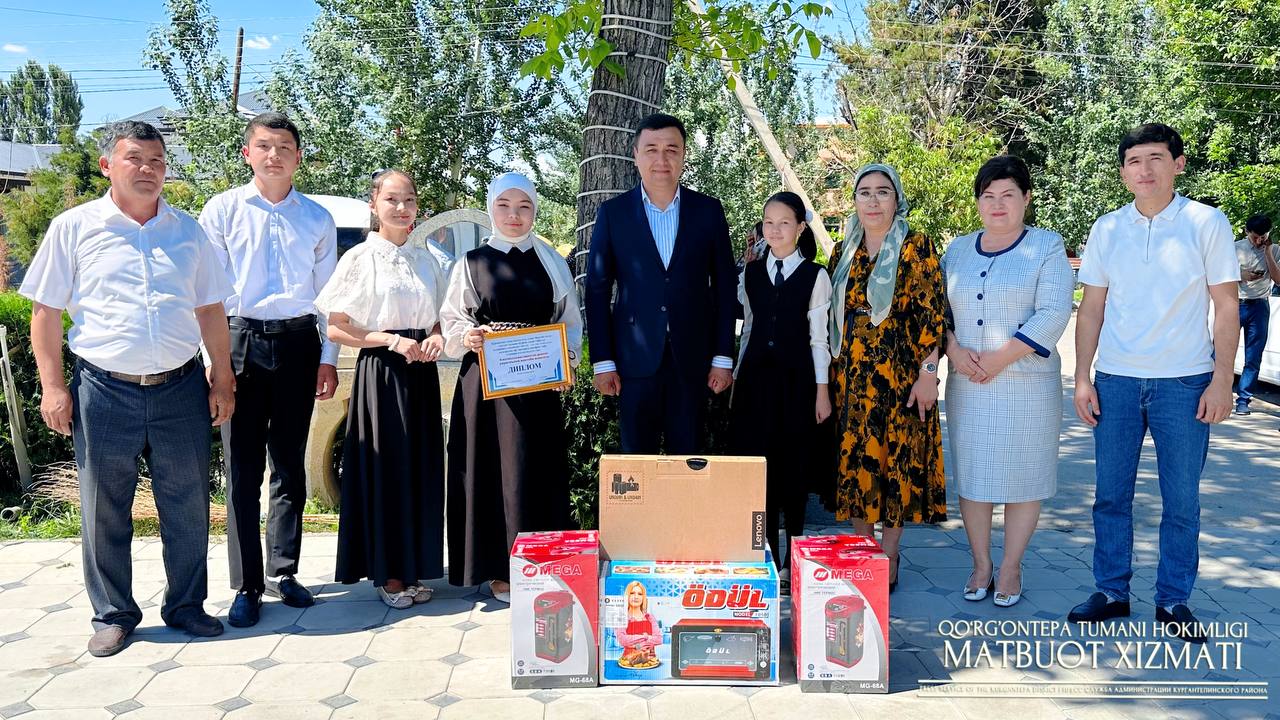
“Every school is a foundation of the future”. Fifth Secondary School, located in Andijan region Kurgantepa district, Khujatepa, is a good example of a foundation.
It was created in 1991. As time goes it is shaping knowledge capacity as well as soft skills and triggers new generations to step forward with great faith. Head teacher Ruzikhon Usmonokhunova’s devoted hard work and the collaboration of school team enhance its success in making opportunities for students.
Improving students’ intellectual capability is a priority. Students take part in annual Subject Olympiads and get good results for the region. Taking into account the quality of education, the school also attaches great importance to physical education and sports. Sport days are held regularly, and various competitions are organized among students. Each student wears a sports uniform and actively participates in competitions. This forms a healthy spirit of movement, team spirit and the desire for victory in students.
Fifth state Specialized Secondary School does not give up its leadership in the implementation of innovative ideas and life. It is noteworthy that a system of self-government for all students has been established. A clear proof of this is the election process among students. The most active and talented students are selected and, using their own schools, ideas and votes, elect a school president. The president of the school and his or her team improve school life, creating a comfortable and productive environment for students. This system serves to improve responsibility, initiative and leadership qualities in students.
The school’s main focus is on two subjects; physics and mathematics, which allows students to gain knowledge at a high level. Students actively participate in various Science Olympiads, intellectual games and many programs, consolidating their knowledge. This paves the way for creating a more comfortable and advanced educational environment for students. The new school building is equipped with modern technologies, opening up even wider opportunities for students to learn. Today, this school has become a center of science, sports and innovative ideas. The unity of teachers and students, selfless work and wise management of the leadership are taking the school to greater heights. We believe that every student who graduates from this school will grow up to be not only educated, but also spiritual, patriotic and a well-rounded person who can contribute to the future.
I am Mukhammadjonova Ugiloy. I am a 9th grade student at this school. I am proud of my school!
It’s a journey running at a stretch or stopping at some places
As I can see through the window of a train
The blooming earth
Spreading green paddy field velvet
The sight mixes at the horizon
With the morning shine
The world smiles with a charm
Overwhelming but not to be expressed in words
You are sitting before me
And raising a storm of the last days stories
Over a cup of tea
Nobody stands by me but someone whispers
I lost my senses
And kept on beholding the green paddy fields
What a wonder!
O life! You are running so deep in speed
The spreading beauty on the earth sometimes stops
Sometimes stops us in no reason
On the other hand, it seems a great reason behind there
Sometimes with you for a cup of tea
How wonderful the life led by!
Chapainawabganj, Bangladesh
08 October, 2025.
Md. Mahbubul Alam is from Bangladesh. His writer name is Mahbub John in Bangladesh. He is a Senior Teacher (English) of Harimohan Government High School, Chapainawabganj, Bangladesh. Chapainawabganj is a district town of Bangladesh. He is an MA in English Literature from Rajshahi College under National University. He has published three books of poems in Bangla. He writes mainly poems but other branches of literature such as prose, article, essay etc. also have been published in national and local newspapers, magazines, little magazines. He has achieved three times the Best Teacher Certificate and Crest in National Education Week in the District Wise Competition in Chapainawabganj District. He has gained many literary awards from home and abroad. His English writings have been published in Synchronized Chaos for seven years.
Write something bright for those who experience a thousand deaths each day.
Write some smiles for those whose pillows are moist with tears each night.
Write a few pure moments of love for those who could never call anyone their own.
Write a few droplets of soothing dew on their lips.
Write true happiness in their pounding hearts.
Write the fulfillment of unrealized dreams in their eyes.
Write floral bracelets of joy for their soft hands.
Write swinging earrings of solace for their ears.
Even if you write nothing else, dear Lord,
You must write freedom for them
Daughters Are Also Sold
In the era of ignorance, it was heard
That they were often discarded.
Mothers would abandon them, and fathers would cast them away
To a distant place where deep wells would swallow their cries forever.
Even today, this tradition persists
In my country,
In remote, desolate regions,
Where the poison of poverty seeps through families.
When a little daughter dons a crimson dress,
She becomes invincible.
All her dreams remain tethered to her tiny feet,
But alas, her laughter never returns.
Her emotions are bartered away,
Her precious eyes lose their value,
And she herself is sold without a price.
I’m like a star
Give me the freedom to write my own story.
My tears show me the true way.
I am like a star that shines brightly to show the way.
I am like a bird that cannot be caged.
I am like the fire that burns inside all of us.
I am like the raindrop that write its own fate
I am the ray of sunshine that sets everything aglow.
I am like the fragrance that scents the entire world
**Pakistan’s Young Shining Star: Anila Bukhari – A Beacon of Intelligence and Inspiration**
**Biography of Anila Bukhari**
Anila Bukhari is a remarkable Pakistani visionary, humanitarian, and author whose brilliance and compassion have captured the world’s attention. Hailing from the esteemed Sunni Syed family of Naqvi Bukhari tribe in Punjab, Pakistan, she has emerged as a shining example of youth leadership and empowerment on the global stage.
From her early years, Anila demonstrated extraordinary intelligence and a passion for poetry, creativity, and service. Her innate kindness, coupled with her strong family values, fueled her lifelong mission to uplift women, children, and communities worldwide.
A celebrated children’s rights advocate and recipient of numerous humanitarian awards, Anila is also an accomplished author whose inspiring books—highlighting themes of women’s empowerment—are housed in the Library of Congress in the USA. Her influential writings include features on prominent figures like Melinda Gates and Oprah Winfrey, reflecting her international reach.
As the founder of **Women Leader Hub**, Anila has organized over a hundred seminars, events, and award ceremonies dedicated to empowering women and nurturing leadership. Her entrepreneurial spirit is evident through her ventures, which promote women’s talents and personal stories, creating platforms for voices to be heard.
Notably, Anila won 1st position in Italy among 41 countries, showcasing her exceptional talent and international recognition. She is also the founder of **”No More Bride, Just Shine”**, an initiative celebrated annually with support from the European High Commissioner, advocating for women’s dignity and independence.
Her dedication extends beyond her country, collaborating with more than 250 students worldwide to foster cultural exchange and global understanding. Through partnerships and e-twinning programs, she promotes innovation, education, and unity across borders.
Anila actively mentors young leaders, conducts workshops on e-safety, graphic designing, poetry, and art, and empowers widows through candle-making courses—striving to build sustainable futures for marginalized communities.
Her unwavering commitment to service and education, coupled with her global influence, makes Anila Bukhari a true young shining star. Her inspiring journey continues to motivate countless individuals to dream big, serve selflessly, and lead with integrity, making her a beacon of hope and change for generations to come.
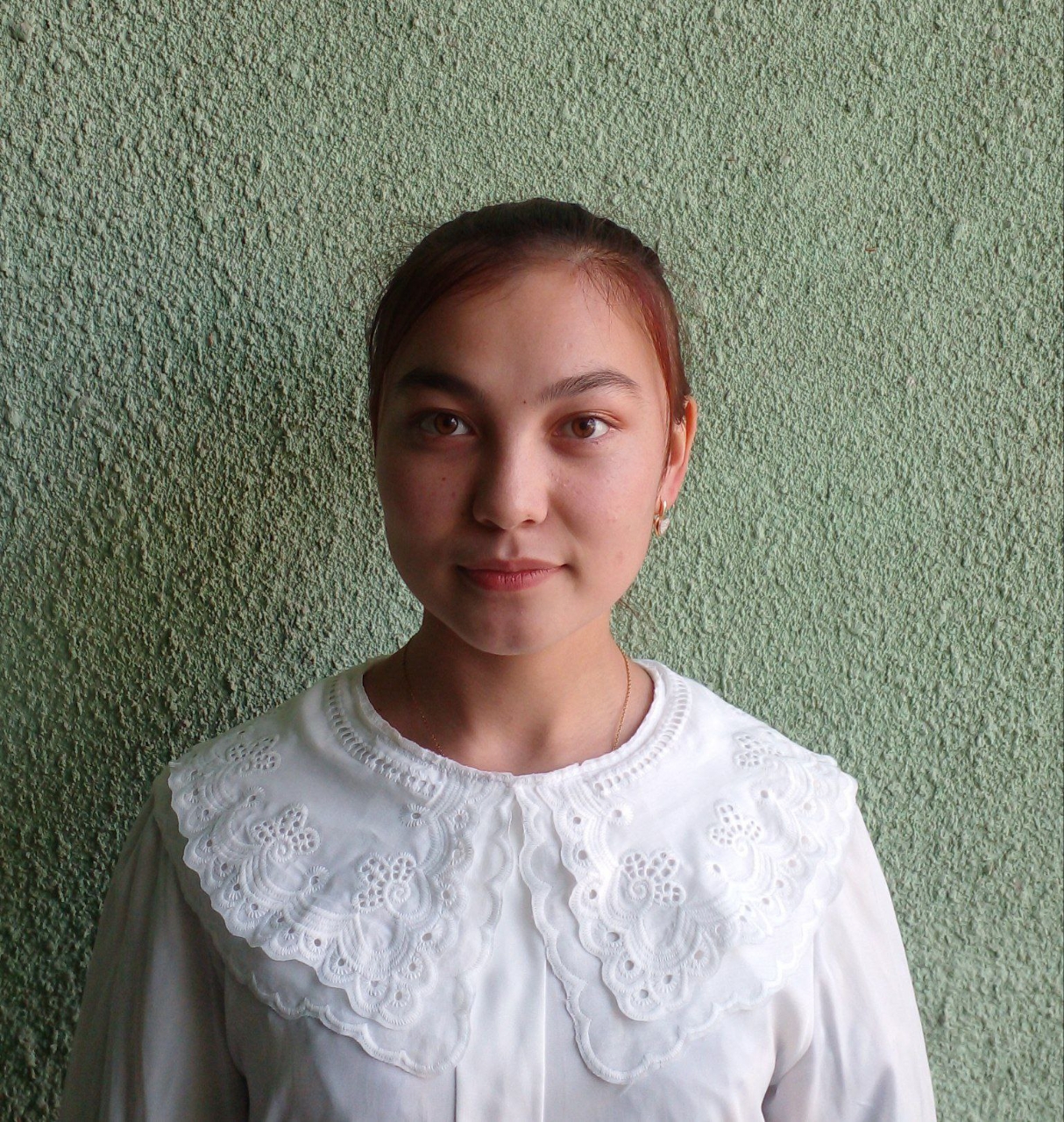
Abduqahhorova Gulhayo was born in the Turakurgan district of the Namangan region. She is a 2nd year student of Philology and Uzbek language at Namangan University of Business and Science. She won first place in the Young Reader competition.
A daughter was born one day to the King of a prosperous kingdom. She was christened Malade. She was a very even-tempered and pleasant girl, and a joy for her father to behold, until one day she was afflicted with a tremor about her features. A severe juddering affected her hands and face and was found by all to be quite disquieting. In fact, she could not hold a teacup without quivering so badly that the contents were spilled. The princess was the only child of the King and Queen. Malade, of course, had a plethora of tutors and so did not have to be around others her own age; that would have caused the King severe embarrassment, as well as being humiliating for the young girl herself. One must keep up appearances, as the King well knew.
When she was six years old, Malade was given lessons in the equestrian disciplines. A young groom, older than Malade by about one year, was there, and the two young people struck up a cordial though not close relationship. This youth was called Judicieux, and he was very good at his job, and soon he was tasked with servicing all the horses that the damsel used. Judicieux was sensitive to the plight of Malade, as he was himself lame. Though she was starved for attention from children, they both recognized their proper places.
Years passed. As Malade grew into young adulthood, she was beset by the responsibilities of her position: functions of ceremony at her father’s table and in the King’s stead. But her malady never lessened; the juddering continued.
“Oh, Judicieux,” she said one day in the stables, preparing to mount her steed. “What shall I do?” I am to meet the prince from the northern kingdom. His father and the King desire that the prince and I wed and effect the joining together of our kingdoms. “What if the prince hates me?”
“He can’t help but love you, Milady,” said the groom with feeling.
“But my quivering,” she said sorrowfully. “With all the beautiful women in our two kingdoms, why would he give me even a second glance?”
“If he has but eyes to see, Milady,” he said from his heart. He then limped back into the stable.
Malade thought of Judicieux: “For a cripple, he has many beneficent qualities. He shall make some peasant girl a fine mate.” And she thought nothing more of Judicieux or her dilemma, for she was astride a horse.
“Milady,” said Inepta, watching as her mistress struggled with her palsied hands, “perhaps if you concentrate, if you tell yourself to be calm, you will not judder, and things will be alright.”
“Thank you, Inepta,” said Malade, “but in seventeen years that strategy has been to no avail.
“Yes, Milady,” murmured Inepta, looking sadly at the princess.
That night, the kingdom was astir. The king would formally announce the engagement of Malade to the prince of the neighboring kingdom. Prince Stephen was rich, handsome, powerful, and heir to his kingdom. Much was made of the festivities. It was wintertime as well, and Christmas was likewise celebrated. This was everyone’s favorite time of year. Sumptuous comestibles proliferated, and sparkling wine flowed like rivers. Everyone partook heartily of the rich food and libations, and at the summit of the evening, attention was focused on the prince and princess.
“Daughter,” intoned the King robustly, “you have before you a prince worthy of your honor.”
She looked shyly into the eyes of Prince Stephen. He returned her gaze, but his face fell.
“Great King,” said he, “I cannot marry the Princess Malade.”
“But,” the King objected. “It is all arranged.”
“That may be, but I have our mutual kingdoms to consider. What will become of us if I marry the Princess and our children are born who are as deranged as she is? How would our realms function? How would our diplomats sort it out if it were thought that the royal family was addle-minded? We would surely become a laughing stock throughout the continent.” The prince’s words pierced like a dagger the heart of the princess.
The king took a great breath and released it wearily. He knew what the prince said was conventional wisdom. He released the prince from his betrothal.
So the Princess returned to her solitary existence, seeing no one other than her lady in waiting, Inepta, and her groom, the lowly Judicieux. She continued to relish time spent among her magnificent stable of horses. Starved for companionship, Princess Malade began conversing ever more intimately with Judicieux on any number of subjects; to her great surprise, she found that he was informed, intelligent, and wise far beyond his station in life. He rivaled the courtiers, in fact, in his canniness. She began to harbor an idea. Despite the fact that Judicieux was neither rich nor handsome, nor the heir to a great throne, she was completely smitten with him.
One day Malade approached the King and inquired, “Father, shall I never marry?” The King, surprised that the Princess would want to marry after the debacle with Prince Steven, responded to his daughter.
“Why, Malade, you will never be wed to a sovereign, as you have seen, but you may of course marry—if only for companionship. And I suppose that if you have a male child, he will inherit the throne, whether he is a juddering idiot or not.”
“I have chosen my husband,” she announced excitedly. The king, with little enthusiasm, asked who it would be. “I shall wed the most intelligent, thoughtful, and wisest man in all the kingdom,” she told him. “I shall marry for love,”
“Have you only just met him?” he inquired.
“I have known him half my life,” she replied. “And the King, seeing as Malade was very old now—almost twenty—knew this to be a long time indeed.”
“If you have made your decision, word shall go out, and a wedding will be arranged,” he said, but still with scant enthusiasm. “Er… who have you chosen?” he asked.
“Judicieux, chief groom of the stables,” she told him. The King swallowed any remarks he might have had.
And so a wedding was held. All the dignitaries attended, including Prince Stephen, who had since married and was beset by a harpy of a wife. He was barely able to draw a breath, but she would criticize him for it. But she had a fertile womb, and all of her children were likewise disposed to be curmudgeons. Stephen’s kingdom was almost constantly at war due to his poor diplomatic skills. The prince looked upon Malade now with admiration, for certainly she was the most beautiful bride ever to grace this or any other castle. He had simply never noticed before.
After the wedding, Judicieux, as the husband of the King’s only daughter, sparked an interest in the king. Like his daughter, he was pleasantly surprised by the native intelligence, thoughtfulness, and wisdom of his son-in-law–and a cripple at that! And as a part of the royal family, the former groom was drawn into the diplomatic order and soon became the outstanding minister in his Majesty’s service. And as his abilities became well known, so too did Malade’s grace, manners, and loving instinct. They had many children, but one of them–like the princess and later the queen–had tremors, but the child was treated with patience, understanding, and compassion. And showered with love. After a long reign by her parents, that child, christened Empathique, served as the greatest sovereign that the kingdom ever saw.
There are moments in life that become turning points — moments that change not only our path but our entire destiny. For me, one of those moments was my decision to study at the Uzbek State University of World Languages. This choice was not just about education; it was the beginning of a journey that would define my dreams, values, and future mission.
I have always been fascinated by the world of languages. As a child, I tried to understand foreign songs and dreamed of watching movies without subtitles. For me, language is not only a tool for communication but also a bridge that connects different cultures, minds, and hearts. That is why I decided to dedicate my life to learning languages and teaching them to others.
The Uzbek State University of World Languages is not just a university — it is a place where dreams come true. Here, science and culture meet, new ideas are born, and every student discovers their inner strength. What attracted me most was that the education here is not limited to theory; it is connected with real-life practice and the modern world.
At this university, I am learning not only German but also humanity, discipline, and teamwork. Every lesson, every text opens a new world for me. Our teachers inspire us not only to learn but also to dream, to believe, and to act. Every day I feel proud to be a student here.
Studying here has changed the way I see life. I no longer see language learning as only grammar or vocabulary memorization. Language is a philosophy of life — the most powerful bridge that connects humans to the world. Through language, we don’t just speak; we think, feel, and create.
My greatest goal is to become a skilled linguist, translator, or teacher. I want young people in Uzbekistan to achieve their dreams through learning foreign languages — to explore the world and to make our nation’s voice heard globally. Because every young Uzbek has great potential within; all they need is faith and hard work.
The Uzbek State University of World Languages has given me more than knowledge — it has given me confidence. This confidence reminds me that I, too, can move forward toward my dreams. Every lesson, every challenge, every small victory is shaping me into a stronger and wiser person.
In the future, I will proudly mention this university’s name, because it showed me the way, gave me wings, and opened the door to the world. I know the road ahead will not be easy, but every step brings me closer to my dream. Because this is not just a university — it is a school of life.
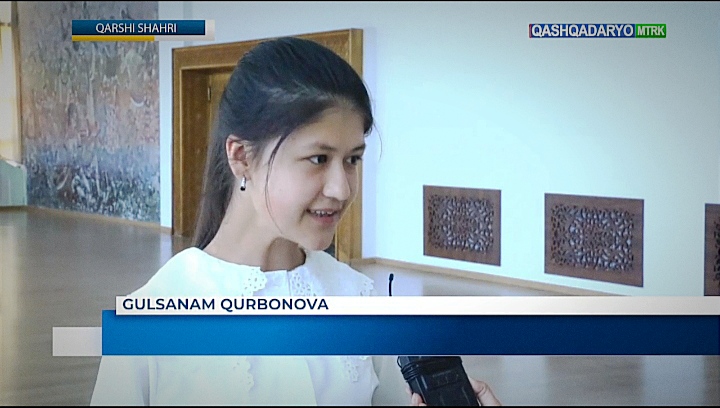
Qurbonova Gulsanam Ilhom qizi was born on April 16, 2006, in Dehqonobod district of Kashkadarya region. She is currently a 2nd-year student at the Faculty of Romance and Germanic Philology, majoring in German Philology at the Uzbek State University of World Languages. She has achieved remarkable success in various fields, including sports, education, and art.
A tireless professional, you give yourself completely,
sowing seeds of passion and discipline.
Your dedication is a priceless gift,
a treasure we cherish in every class.
You dance with your soul, Noe,
and invite us to fly with you.
In every movement, a lesson,
in every smile, an inspiration.
Thank you for being our guide and companion,
for illuminating our path with your art.
Your mark will endure in our hearts,
like an eternal melody.
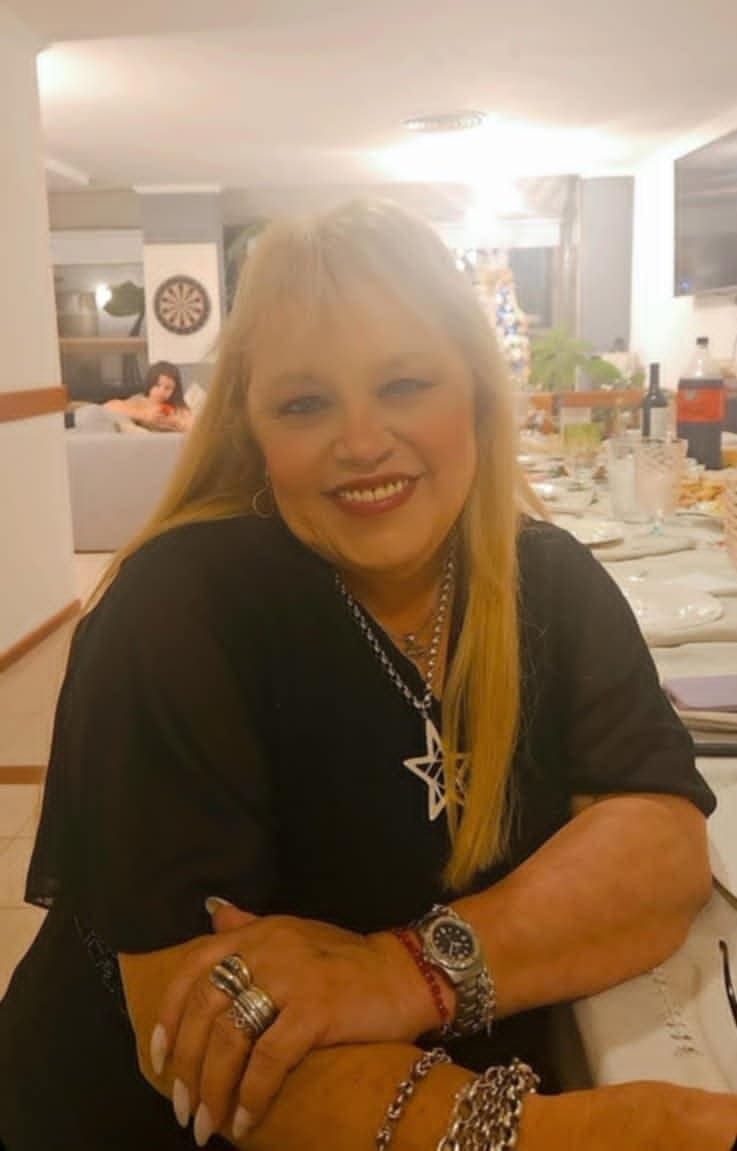
GRACIELA NOEMI VILLAVERDE is a writer and poet from Concepción del Uruguay (Entre Rios) Argentina, based in Buenos Aires She graduated in letters and is the author of seven books of poetry, awarded several times worldwide. She works as the World Manager of Educational and Social Projects of the Hispanic World Union of Writers and is the UHE World Honorary President of the same institution Activa de la Sade, Argentine Society of Writers. She is the Commissioner of Honor in the executive cabinet IN THE EDUCATIONAL AND SOCIAL RELATIONS DIVISION, of the UNACCC SOUTH AMERICA ARGENTINA CHAPTER.