Haeun (Regina) Kim is a student writer from Seoul, South Korea. When not creating visual works, she can be found writing and struggling through amateur ballet.

Haeun (Regina) Kim is a student writer from Seoul, South Korea. When not creating visual works, she can be found writing and struggling through amateur ballet.
All in sleep
Exclamation mark drifts
White lies of snow scattered
I’m throwing sweat in the dry river
Weighing acid in the ocean and on land
Today there is so little dying at the twilight
I am losing the threads of my ancestors
Grandmother is sewing the hems of frayed
Pe(i)ace and relations
In the evening, I count the missing hills
Losing the aesthetic of appreciating
Nothing. No names, no lands, no flowers,
no birds, no animals. Nothing, nothing.
I am a half animal, half cancer, half-life and
half death wherever I go
there is emptiness, a lifeless desert
Breathing smoke like
Buzzing chiming mobile and TV
Everything is available in a mouse click
Money exchanging life in the night
We have been earning and paying
For what is useless?
The truth is nothing
For sale, exchange offer,
Language of broken
Thoughts divided by lines
Tenacious memory like oil on a turtle
The violent angry sun is stomping the sea
You took a pill to drug the drought mind
All in sleep
Colonizers
Not poor but plundered
Chor bazzari of
Gold to be held
Booty looty
Extracting, desecrating, devastating
Land
Glory is dripping blood
The sun never set for it didn’t trust your macabre deeds
By the by, whatever in the name of civilization
You faked it till you traded it
You, what shall I name you?
Thief, thug, plunderer, murderer
History’s revenge or remedy
Don’t point your finger
We are here because you were there
So, bro, I wanna wanna
In the beginning, there was a sigh
I eat and drink with the tongue
That pained my experience
Gone, gone my
Language
My words tried to
Find
Space
I seek mother
Tongue
Dream/nightmare of confused
Language
Speech
An answered question
With white lies
Woman
In passive voice an object
One word indelible in memory
History means inquiry in
Language
On skin
Speaks silence?
Simple Maths
The whole number of our lives is zero
Suppose the value of a person is zero
Suppose one common man meets another
It’s 1/0=0
When Two B *B
It’s equal to E
If A accuses B
B cancels A either by dividing or by subtracting
One thousand guns = mass shooting
80% plastic = Greed
Money > relations
Kindness <violence
Green _Green = concrete
War +War=Insanity
If we run at this speed/Km
Our end is near
Colour
Nothing is mine
Land. Love. Life.
The colour of my skin, my flag, my land,
my name, my blood, my flesh are
not mine
Longing heart, not mine.
My language is colourful too.
Yet it lost its fragrance in the market.
Tired of strolling, it brought RP.
My mother in her lost her tongue, is pronouncing her land.
Her eyes are losing their colour as land.
The paper I carried. My identity is discoloured with time.
The sepia of the frayed paper is slipping.
Time coloured the paper and life.
The forgotten colour of falling time has ripened.
Now, the bells are ringing.
Pulkita Anand is an avid reader of poetry. Author of two children’s e-books, her recent eco-poetry collection is ‘we were not born to be erased’. Various publications include: Tint Journal, Origami Press, New Verse News, Green Verse: An anthology of poems for our planet (Saraband Publication), Ecological Citizen, Origami Press, Asiatic, Inanna Publication, Bronze Bird Books, SAGE Magazine, The Sunlight Press and elsewhere.

Moon
Looking your light
Feeling the energy of brightness
Moon
My full moon
My wishes are in your hands
Moon
My moon
Crasy maybe they call me
But deep down
I see my self in
You
Like a magik mirror
As Hercules
As Zeus
Strong enough
To fight with witches
With giants
And dragons
Moon
Beautiful moon
That you are inspiring
Poets
That you make lovers
Promise faith to eachother..
Moon
Full moon
Mother of sky
Sister of stars
In my heart
Whispering the
Little nymphes
Of night
Moon
Full moon
Unchain my past
Free my future
Today
I become
The Master of my path…
Eva Petropoulou Lianou, international poet and official candidate for the 2024 Nobel Peace Prize
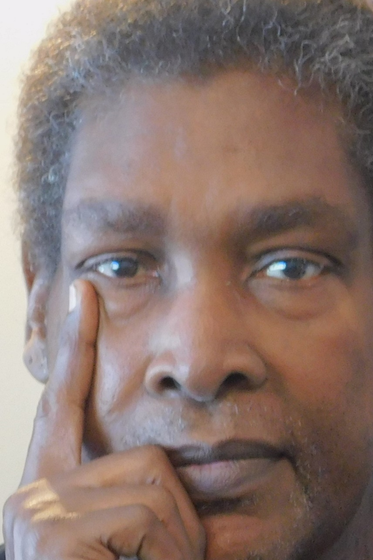
God Adopted
(I was eight years old when God’s Holy presence entered my awareness.)
An essay of Faith
“GOD WANTED ME.”
“For I know the plans I have for you, declares the Lord, “plans to give you hope and a future.”
Jeremiah 29:11
Preface: I have walked seeking God since my earliest days of life. God has been my focus and my needs to know that I belonged to someone. An empty place and a darker place that surrounded me. Amidst the seven day candle representation God’s Holy Light and the burning colors of the votive candles burning and finally, the magnificent array of colors flowing through the stained-glass windows.
This was my sanctuary from the darkness in all aspects of my life outside of God heart for me in this place of Salvation.
God adopted me between the ages of eight or ten years of age. I’m uncertain completely because my aunt Lucille adopted me legally at age eight, but God accepted me since my birth. He truly loved me and He created me. My aunt Lucille exposed me to Holy Redeemer Catholic Church on New York Ave in DC. Morning mass was a part of her religious ritual. Each weekday I’d accompany her to Holy Redeemer. Sitting there amidst these elderly women of the church who were regular attendees for weekly morning mass. Monday thru Friday. Saturday was another Catholic Church Saint Aloysius on North Capitol St.
Saint Aloysius was different to me. It was different inside. It seemed larger than Holy Redeemer. It wasn’t those old ladies there and only a few other attendees at Saturday morning mass. At Holy Redeemer being the only child there added to the feeling of being out of place.
However, at Saint Aloysius there was a sense of privacy with God, but at Holy Redeemer there was no sense of privacy to be with God. Only my aunt and I sat in the pews with plenty of space. There was one circumstance in which the priest approached my aunt. She was receiving Holy Communion and had taken the Host and dropped it on the marble floor. I would take the body of Christ out of my mouth and put it on the floor where I had been kneeling.
She was embarrassed and ashamed more for being scolded by a priest for my desecration of the body of Christ. I didn’t know anything about desecration, but I didn’t like the taste in my mouth. I was a child that didn’t like his food so he would feed it to the dog. I can see the priest use a white cloth probably a handkerchief to pick up the body of Christ off the tile floor. Don’t remember her words, as much as a sense of shame and guilt.
This was a pattern from her for me. She in different occasions seem to always apologizing for me. I was very sensitive to what was said to me and about me. but even at an early age I didn’t like anyone speaking for me. On the other hand there was a need to just be quiet.
Like sitting in church alone or when adults talked was the old adage: children should be seen and not heard. Many things I was told I took to heart and listened to my elders.
Since Dee was a native American and half-Black, she had a strong system of how children should be raised. I truly am so very touched because Dee directed me to God. Her words continue in my memory: You belong to God. Therefore, I sought Him first in the streets and then in the church, as I sat there looking at the candles flickering. I learned at age ten and over the next five or six years that my growth was inside God’s Holy Redeemer Chalice Church in DC.
My refuge, my sanctuary, my safe haven from the treacherous street of darkness. In the church, The Tabernacle that housed The Holy Body of Jesus Christ that would be transformed into Holy Communion. The votive candles burned with glasses of various colors of blue, red, and yellow lighting the votive candles which were on a stand with several rows of candles and the variety of colors bended together in unison. Often, I sat in the pew mesmerized by the colors, sitting there observing all the details of the mural in the dome of the ceiling.
Wonderful colors of light blue colors and art of heavenly figures adorned the ceiling.
Slowly, my eyes would gravitate to the altar where the floor was made of marble not just marble but there was smoothness and a glitter a shine similar to the floors at Lloyd’s job. He buffed and waxed those long hallways and the shine was like a mirror reflecting light.
This marble added to the light of God as the light of the stained glass windows covered the spaces between the walls as the sunlight reflected the art of the windows. The feeling of peace and the comfort my heart experienced. Slowly a heart that raced in the streets was quiet slowly almost still. Surely God would live here with the light shine of candles and serenity. God wouldn’t live out in the streets with all the trappings of inner-city life. Yes, God would live here with the light of His light. God’s quietness flowed into my essence, held me safely in the light of His presence. The vanilla colors of the walls kept the warmth, as the affirmation of God’s sunlight brightly illuminated His inner-sanctuary. This was to me Heaven here on earth. Alone in the majestic palace of the essence of God’s presence surrounding me, protecting me. Giving me life like the breath of God at my birth. I was not alone, but was His creation that fitted into this glorious sanctuary.
My eyes glued to the seven day candle of God. A candle made of beeswax to signify the significance of the Holy Father, as being here and present. I had His full attention, as I continued to be still and listening for His voice. Dee often stand sit there and be quiet. Perhaps, I reasoned that sitting there quietly God would speak. Dee often times would not speak so, listen for her to give directions. Dee was my guide to how to be and now its clear being quiet and listening and to be just be still.
Maybe in his wisdom she loved the line from the Bible: Be still and know I’m God. She never spoke Bible verses, but lived a life without them. She taught me about God and to be respectful to my elders. Dee said God exists and that was enough to know. She instilled in my innocence that God listened and I had no words for Him, but I had questions: Why am I here in this place alone? I belonged here with God.
The inner-city was indeed wasn’t a sanctuary, but rather darkness. Even in the daylight the darkness surrounded my thoughts, my emotions and my body. Only here in God’s Sanctuary was there a array of light following from every corner of the church as the stained glass couldn’t withhold the light and warmth of the sun. God truly was alive and real, but He had no verbal words and often like with Dee I had to just be still and wait for her to say something. Suddenly she spoke. God doesn’t like ugly. Referring to the behavior of someone. Most importantly was she said that I belonged to God. The sun was high in the sky and the Lord took my account of my life, and just as I came to this inner sanctuary it was time to return to the darkness of the streets and the violence and dangers and mostly children yelling and babies crying. God would be a retreat from it all and I would often return to this palace of His Heavenly Heart.
My serenity fades as I used my small frame young body of a ten year old child to open what to me were gates like surrounding a fortress. The light was brought and the eternal darkness would come like it always did in my neighborhood. Alone as I said earlier and its to be repeating because it’s what I experienced repeatedly: without Him and that aloneness was filled with terror and darkness and noise lots of noise. Gunshots and screaming and babies crying into the night as if they two felt the dead and darkness. I felt it each moment of my waking life. Crying myself to sleep in the darkness of my bed. Yes, I cried without ending and afraid my gasping for air would be heard. So, I held my breath as the tears soaked my pillow and as my heart ached.
Many years of soaked pillows and holding my breath as I continued to gasp for air.
The quietness returned when returning to Holy Redeemer Catholic Church and many other churches and chapels quietly sitting and listening for God to speak like Dee suddenly would do in my presence anticipating a word a vocal response, but I did experience was a profound sense of calm and peace filling my very essence and like all the other times it was very clear that and it was time to return to the world, but God had indeed spoken to my soul.
“GOD WANTED ME.”
God indeed had plans for me and a purpose and now His plans and purposes are mine deep in my soul.
“For I know the plans I have for you, declares the Lord, “plans to give you hope and a future.”
Jeremiah 29:11
Assault
Reprint from Freedom Fiction Journal
Hennie stepped out of the shower, trailing twinking droplets of water onto the bare linoleum floor. She grabbed a towel from the towel bar and draped it around her wet hair and shoulders. She stood there for a moment, under the unforgiving glare of the bathroom light, contemplating the brutal rape she’d suffered just hours ago, at the hands of a man she once trusted. Suddenly overwhelmed, she burst into racking sobs, drawing the towel to her overflowing eyes. “Sonofabitch,” she murmured, barely audibly. She was exhausted, both emotionally and physically. She sat at her vanity.
Michael – one year ago
As he said he would, Michael, Hennie’s ex-brother-in-law, showed up in the courtroom today, the day after Halloween. He comforted Hennie and gave her solace over the way that his brother Mark had run out on her, trading up to a younger, wealthier and prettier woman. The divorce proceedings left Hennie feeling drained and vacant inside, and Michael was there for her.
Afterwards, he took her to a tavern within walking distance of his apartment, where he plied her with beers throughout the day, until late in the evening. Then they stumbled back to his place, where he seduced her with a studied charm. Like his brother, he was a handsome man. Hennie was a willing participant that night, hoping in some way to get back at Mark by sleeping with his little brother. This’ll show him, she thought spitefully.
But Michael, besotted with alcohol, was barely functional and scarcely managed to penetrate her, eventually falling asleep atop her. In the morning, he seemed to have blacked out the entire episode, and Hennie hadn’t the heart to disabuse him of his perceptions.
Driving Hennie back to her place that morning, Michael said, “Keep in touch, huh?”
Hennie nodded, gave him a chaste kiss and that was the last she saw of the man. Until exactly one year later.
– – –
After sitting for some time, Hennie stood and began wiping her arms and legs and torso with the towel. She was practically dry already. She shifted her feet and winced with pain. Michael had not been gentle. He had shown up at her apartment, the same apartment she had shared with Mark for 9 years, bearing a bottle of inexpensive champagne and a barrel of fried chicken, of all things.
“KFC?” she asked with a grin when he stood in her doorway. She had been lonely and was happy for the company.
He grinned back at her. “You can have the legs and wings,” he told her pointedly, “but I got dibs on the breasts and thighs–particularly the thighs.”
They both laughed easily.
She let him into the apartment, where he stuck the bottle in the fridge and pulled out cans of beer. They enjoyed their repast; Hennie was hungry. She thought about the significance of the date: one year ago to the day since she and Mark had made their divorce official. Was Michael’s appearance here today intended to mark the occasion? she wondered.
They noshed on the fried chicken and drank the beer and Hennie noticed that Michael was already slurring his words a bit.
“Did you just come from the bar, Michael?” she asked.
Michael frowned. “So what if I did?” he asked gruffly.
Hennie shrugged. “Just asking,” she said lightly.
Michael snorted, drained the third beer since his arrival and then grabbed another.
“You’re not driving, are you, Michael?” asked Hennie with concern. Michael had a history of drinking and driving and, last she heard, had lost his license for that reason.
“What’re you, my freakin’ mother?” he asked peevishly.
“I just wouldn’t want you to get into an accident,” she told him. She touched his shoulder and rubbed it with her fingers.
“God,” he said, arching his shoulders, “you chicks sure got needs, don’t you?”
She stopped rubbing.
“What do you mean?” she asked.
“I mean,” he said spitefully, “that it wasn’t 30 minutes after you divorced Mark last year, that you were doin’ it with me.”
She withdrew her fingers.
Michael laughed coarsely. “You remember alright!” he accused.
“Michael,” said Hennie, feeling hurt, “all I remember from that night was the little brother of my ex-husband taking me home and getting so drunk that he puked all over his mattress.”
Michael flinched. He hated to be reminded that he was a little brother. He had long had issues with his big brother and the role he played in his life. “Watch what you’re sayin’, Hennie,” he warned.
Next, Hennie did the one thing she should never have done: she laughed at the little brother. In response, Michael roughly seized his ex-sister-in-law and kissed her hard on the lips.
She struggled, but in vain. Michael was terrifically strong. He worked as a trainer at a gym and lifted weights relentlessly. Almost before she could take another breath, he had her pinned beneath him on the sofa and was roughly stripping away her clothes.
“C’mon, Hennie,” Michael growled hoarsely, “you know you want it!” He laughed, a harsh, unpleasant cackle.
“I don’t!” she came back. “Please stop!”
As he looked her over, gloating, she suddenly brought her knee up and into the region of his crotch. Her aim was errant, however, and her action served only to enrage Michael further.
“Goddamn bitch!” he snarled, and punched her with an open hand upside her skull. Her ears rang. Then he seized her long blonde hair and forced her onto her belly and began brutally sodomizing her.
“Oh, God!” she screamed. “Stop!” She felt her hair being torn out by the roots.
“You know you want it!” he said gruffly, and punished her with his sex. “Mark always said you like it rough,” he said, laughing darkly again. That’s what Mark had always said to her, whenever he drank too much and then forced her. Had he told his little brother about that?
“I don’t!” she cried, but Michael paid her no mind.
After he finally came, he backed off of her, leaving her trembling and sobbing on the sofa–the scene of the crime. Hennie, an ER nurse by trade, recognized that she was in shock. As she lay there, humiliated and hurting, she heard Michael fastening his pants. “What,” he asked flippantly, “no goodbye kiss? I’d better get a kiss, Hennie,” he said ominously.
Hennie, a mass of pain and degradation, came to all fours and then slowly turned to face her assailant–her rapist. When they were again face-to-face, Michael hauled off and punched her with a closed fist in the mouth. In shock anew, Hennie fell off the sofa and crashed into the glass-topped coffee table, which shattered. She lost consciousness.
“Catch you later, Hennie,” said Michael, as he rose from the couch. From her place on the floor, she could hear the door open and then click shut.
– – –
Hennie reentered the bathroom and regarded her image in the mirror. She ran her tongue over her swollen lip and opened her mouth, saw the vacant spot in the corner of her mouth where Michael had knocked out her tooth. She wailed, then wept anew. Immediately following the assault, Hennie had showered for what felt like hours, with very hot water, but found she couldn’t wash away the hurt or sense of debasement she felt. Then she had collapsed into bed and slept fitfully for a dozen hours. Only now did she take stock of herself.
The idea of reporting the incident to the authorities was immediately dismissed. This was not her first brush with sexual assault. 19 years ago, at 16, she had gone to a party at the college with a group of her friends, also young like her. The experience was as vivid today as it was nearly two decades ago. That was in 1985.
– – –
“Hennie, this is Matt,” gushed Crystal, her best friend, introducing her to a slender, feral-looking young man at the dorm.
“Hennie Penny,” he parodied, squeezing her shoulder. She immediately felt uncomfortable with the closeness of his touch, and drew back a little.
“Haven’t been educated yet, huh?” he said with a smirk. “We’ll soon fix that.”
Crystal, uncomfortable with his unseemly intimacy, laughed, too loudly, at his remarks.
At the gathering, two dozen members of the frat entertained a like number of young women, university and high school students. None of the females was over the age of 18, guessed Hennie. Some she recognized as upper-classmen at her high school. The night proceeded apace, with loud music; Hennie still recalled Van Halen’s “Jump” blaring over the huge stereo speakers, over and over again. Don’t they have another LP? she later remembered wondering. There was copious drinking and marijuana use and other drugs: a colorful assortment of pills and capsules that Hennie had no clue about.
She got high and drank a lot, but not to the point where she was wasted. She eschewed the pills, however, and said no when one of the boys, a creepy-looking fellow she saw only the one time, tried to entice her into a bedroom in order to “slam” a concoction of cocaine and other stimulants. Hennie learned later that Crystal had succumbed to the temptation and that’s the last Hennie saw of her for the evening. Inasmuch as Hennie had ridden to the college with her friend, she felt abandoned and vulnerable.
Unaccustomed to consuming spirits, Hennie readily imbibed everything that was handed her and began to feel giddy. God, she thought, such freedom and release! Then Matt reappeared at her side and handed her a vivid yellow fluid on ice and invited her to “drink up!” Without thinking, she did. Matt had begun to look good to her; his corded. sinewy muscles she suddenly found to be a turn on. Crystal had told her he was a stud and she wondered fancifully about that. Hennie was a virgin. The yellow drink was wonderful! A pineapple-based concoction, it was sweet and tart and refreshing, unlike the medicine-like Black Jack that most of the guys were drinking. Next, Hennie lost all track of time.
When she awoke in the passageway between different dorms, her head felt heavy on her shoulders. She had a terrific headache and she ached all over–especially there! Hennie glanced down at herself and she was a mess. It was like the sidewalk had been swept with her jeans and sweater and then her clothes put back on her. And her underwear was missing. She looked around for her purse, found it and opened it. All her money was gone! Crystal was nowhere to be found; how would she get home?
At length, Hennie wandered to the campus proper, to the Student Union, and asked for help. An older woman, probably in her 20s, took in Hennie’s disheveled appearance, asked her a few questions and then took her in hand to the basement of the building where she turned her over to a woman at the campus Rape Crisis Center.
“Ricki,” said her rescuer, who never identified herself to Hennie, “this is Hennie McCoy. I believe she was sexually assaulted at a frat party last night or this morning.”
A few minutes later, Hennie found herself being interviewed by Ricki, who was a rape crisis counselor. She took Hennie into a back room and asked that Hennie recount the incidents of the night before. Hennie did the best she could, but there were large gray spaces in her memory. After a brief interview, Ricki asked her if she could bring law enforcement into the picture. She said that she first needed Hennie’s permission.
Hennie shrugged. “Okay,” she said. She hurt everywhere.
Hennie waited on a cold plastic chair in an anteroom for 30 minutes before two representatives of the campus police–both men–turned up and invited her back into the interview room. One of the men, who were not in uniform, but rather clad in burgundy suits, was in his early 20s. He identified himself as Officer Ballard and introduced his companion, a 40-something man with a world weary expression, as Officer Chambers. Their first names were not revealed. Without indicating the direction the interview would take, they began immediately peppering Hennie with queries and taking copious notes: her name, of course, and her age, address, telephone number, how she happened to be at the university and so forth. After gathering that sterile data, they both sat and stared at her for what felt like an eternity. Hennie cleared her throat nervously.
“So,” said Ballard, “you told the counselor that you think you were raped?”
Hennie looked up at him. She saw skepticism in his pale blue eyes.
“Y…yes,” she stammered.
“Aren’t you sure?” he queried.
“Well, things are a little blurry,” Hennie confessed.
“We you using alcohol or illegal drugs at the time of the alleged incident?” asked Chambers, speaking for the first time.
Hennie’s mind raced. Would she get in trouble herself now? she wondered. What would her parents say? She was only 16. She wound up saying nothing.
“Is this what you were wearing at the time of the…incident?” asked Ballard with what Hennie interpreted as an aggressive glare.
“Yes,” she answered.
The two cops exchanged a knowing look. At the time, Hennie was a slender, pretty, nubile girl, and the officers seemed to feel that, by attending a frat party dressed in tight jeans and a revealing sweater, she was just asking for whatever happened to her. They continued to stare appraisingly at her until she felt like a specimen on a slide.
“Can you tell us what happened, Miss McCoy?” asked the younger cop.
Hennie recounted the events of the party as she remembered them, including, after a moment’s deliberation, the drinking and the pot.
“How many drinks would you say you consumed?” asked Chambers.
Hennie shrugged. Her mind swam again. “At least 5,” she said. “Maybe 10?”
“Don’t ask me, Miss,” said Chambers sharply. “We’re collecting the evidence; you’re the one providing it.”
Hennie flinched and withdrew into herself like a turtle into its shell.
Not once did the officers ask who had assaulted her. She would not have been able to tender an answer, but they couldn’t know that, and their not asking was one of the things that stuck with her, all those years later. Finally, the interrogation concluded, both men rose to their feet and left without another word. Hennie waited for some minutes, thinking they would return, but when they didn’t, she drifted out of the room and again confronted Ricki, who was sitting at a desk paging through a magazine.
“Are you okay?” Ricki asked tenderly.
Hennie shrugged. “What’ll I do now?” she asked.
“What do you mean?” asked Ricki,
“I mean, what happens next? How do I get home?”
“How did you get here?” the other woman asked.
“I rode over with Crystal; my friend Crystal,” explained Hennie. “She disappeared last night and I haven’t seen her since.”
“You can take the bus into town,” said Ricki. “On weekends they run on the hour.”
Hennie nodded and started to walk away, then turned back. “All my money is gone,” she said, holding open her now empty purse.
Ricki scowled and reached into her own pocketbook and turned up two one dollar bills. “This isn’t a part of my job description,” she muttered resentfully, but then her features softened.
“Did Frank and Tony treat you alright?” she asked, as if just remembering that Hennie’s wellbeing was her responsibility.
“Who?” asked Hennie.
“Ballard and Chambers,” said Ricki.
Hennie frowned. “They practically blamed me for what happened,” she said. “And they didn’t seem very interested in finding the guys who did this to me.” Hennie felt a sullen spark of anger.
“The frat you accused,” said Ricki in a confidential voice, “is prominent on this campus and has a lot of friends. Both of the cops are alumni of the frat too, as are almost every member of the university administration. The A-holes,” she added.
“Then why do you even work here?” Hennie wanted to know.
“In this world, you have got to find someplace to fit in,” she said dispassionately, then went back to leafing through her magazine.
Hennie never heard another word from the university police, nor did she ever reveal to her parents or friends what had befallen her at the party. She was so beset with regret and guilt and self-blame that she forever consigned the incident to the dead past.
– – –
Hennie sat in her robe on a chair in the living room–she avoided the sofa upon which she had been assaulted–and, as with the incident nearly 20 years ago, wondered what to do next. Whom should she call? Surely there was someone she should tell. Hennie hadn’t had a significant other since the dissolution of her marriage eighteen months ago. Mark had always kept close tabs on his wife, and then, as now, she had no real friends. It had come as a shock when he told Hennie that he wanted out.
The breakup
“What are you saying, Mark?” asked Hennie. He had just graduated from school and begun making nebulous references to a future without her.
“I’m just saying,” he explained, “that I think we’ve grown apart. You want one thing and I want something else.”
This was the first that Hennie had ever heard of their diverging interests.
“I don’t see myself in the same space as you, say, 5 years from now, you know?” he said.
“Where do you see yourself then?” she asked, perplexed.
“Aspen,” he replied at once. Mark was an avid skier, and ventured there from their home in Kansas City every opportunity he had. As a long-time medical student, without a regular job, his schedule was at times more flexible than Hennie’s, who had worked for 10 years at a demanding job at the hospital. It wasn’t lost on her that his tenure as a student coincided with their years of marriage. Now, with his residency and his boards complete, Mark was ready to take a huge bite out of life–but without Hennie.
“Why can’t I be a part of that?” she asked in a bewildered voice.
He replied, “It just ain’t in the cards.”
And that was that. They’d had no knock-down, drag-out battles. Hennie offered barely a whimper. She’d long doubted her self-worth and had considered herself lucky to hook up with such a smart and attractive man. Of course she’d asked the obvious question.
“Of course there’s no one else,” he assured her.
Shortly afterward, calls began coming in from Adele, who variously identified herself as Mark’s lab partner, his colleague and finally, his fiance. It turned out that Adele Brennan was Mark’s new love interest, younger than Hennie by 7 years, taller than her by 4 inches, and lighter than the present Mrs. Davis by 20 pounds. Hennie saw a photo of Adele in Mark’s wallet and her heart ached at how pretty and sexy she was. But when the “other woman” began calling herself the new Mrs. Davis, Hennie angrily slammed down the phone, and did so every time she heard the soft purr of her voice. Which only nettled the man who was, for now, her husband. Then, diploma in hand, Mark moved out.
Mark’s younger brother Michael began hanging around, taking up the space left vacant by Mark’s absence. He and Hennie became close, but never lovers. They exchanged warm hugs and chaste kisses, but nothing more. To Hennie, Michael, 10 years younger than she, and whom she had known since he was a skinny teenager of 14, was always the little brother.
– – –
A week following her assault, Hennie was awakened by an insidious itching in her anal region. Fearing the worst, but knowing she should take action, she contacted a woman doctor she was friendly with and Sheila took a swab sample, sent it off to the lab for a NAAT and the next day told Hennie she had Chlamydia. The doc wrote a 7-day script for antibiotics and a week later Hennie was cured.
When Hennie first received her diagnosis, she sighed with relief; it could have been so much worse. She hated Michael now, for what he’d done to her and for how she felt about herself, but she knew she couldn’t turn him in. Mark would never forgive her, nor would his parents, with whom she continued to be on good terms.
– – –
A couple of nights later, on the midnight shift at the hospital, Hennie observed an older woman, perhaps late 40s or early 50s, talking to the intake registrar. The woman was in the company of what turned out to be her daughter, a girl of perhaps 15. The young girl reminded Hennie wistfully of herself at that age. The older woman sported a black eye and had been crying, but had a fierce look on her face. Hennie returned to work.
“That woman,” said Norma, a 50-ish charge nurse on Hennie’s shift, “just reported a rape.” Several women were drinking coffee and gossiping in the break room.
“Yes,” said Milly, another nurse, a recent grad from nursing school who was several years younger than Hennie. “She said it was her husband. Law enforcement and the Crisis Intervention Unit have been summoned.”
“My God,” said Norma. “How can she turn in her own husband?” she wondered aloud. “Her husband is the attorney for this hospital. He is very well respected and earns a great deal of money and is well connected. If she were to succeed at sending him to prison over a marital dispute, where would that leave her family?”
“It was rape,” Milly reminded her, “not a marital dispute. At least that’s what she says.”
“A man cannot rape his own wife,” said Norma doggedly. “By definition, it can’t happen.”
“Whose definition?” Milly came back, “a man’s? She said it was forced sex and she has the black eye and the vaginal tearing to prove it!”
“A husband and wife are a unit,” maintained Norma. “You don’t turn in your lover…”
“What’s love got to do with it?” asked Milly. “When a man forces himself on you, he gives up the title of lover and comes away with the role of assailant. And predator.”
“You’re so much younger,” said Norma dismissively. “When you get older…”
“I wouldn’t tolerate a man who would force himself on me–at any age! Would you, Norma?” she asked.
Norma blushed and turned away, saying nothing.
“I’m not trying to embarrass you, Norma,” said Milly, taking a seat next to her boss. “But think of Mrs. Mason, the rape victim. She has three daughters. They know what happened. It’s happened before. And it’ll happen again, if she doesn’t act.”
“Why do you bring her children into it?” spluttered Norma.
“Because,” said Milly calmly. “She doesn’t want them growing up with the idea that having sex with your wife when she doesn’t want it is normal. What would that say about her? About them? They would be more likely to form relationships with abusive men themselves.”
The three women sat in silence and contemplated what had been said.
Kevin
It was only by chance that, over the weekend, Hennie encountered her one-time beau Kevin. He was the first male figure with whom she had formed a significant romantic relationship two years following her assault at the frat house. Then 18, she was attracted to Kevin’s wide shoulders and pleasant manner. Kevin was not, unlike the other men and boys she’d dated over the past two years, sexually aggressive. He was, as Crystal once pegged him, a “teddy bear.” And perhaps that was the problem. He was boring. Like all teenaged girls, Hennie was viscerally attracted, even after the assault, to the bad boys, the slender young men who smoked and drank and rode motorcycles. But, Kevin thought he was in love with her.
“Will you marry me, Hennie?” he asked, dropping to his knee at the ice skating rink one night after they’d dated for several months.
She was taken aback. She genuinely cared for the man, but she felt she was too young to even know what love was.
Other skaters observed the scene and spontaneously cheered and applauded. Hennie was embarrassed.
“Kevin, get up off your knee,” she hissed furtively.
Eventually, to keep from hurting his feelings, Hennie introduced Kevin to a friend, and a year later, Kevin and Crystal were wed. Today she met up with him again. When Kevin spotted her in the produce aisle at Kroger, he immediately enclosed her in a bear hug and swung her around in the air. She grew stiff, still a bit queasy about personal intimacy, no matter how innocent or well meaning.
“How are you, Kevin?” she managed to ask. He released her.
“I’m good, Hennie!” he said.
“And Crystal?” she asked.
Kevin instantly became more subdued. “Crystal and I split up,” he revealed. “Two years now. She’s doing good, we still talk. She’s engaged to some guy.” He scuffed his shoe on the floor.
“And the kids?” she asked. Kevin and Crystal had two daughters. Hennie received the yearly Christmas and birthday cards from her friend, but she’d heard nothing of the split.
The joy returned to his face. “Fine. Just fine. They live with Crystal, in Jefferson City,” he said, referencing a town a hundred miles distant. To her unasked question he said, “I see them two weekends a month and then for a full month in the summer. It’s kinda’ hard on the girls, but we do the best we can, you know? I moved back to town,” he revealed. “My job.”
Hennie nodded.
“How are you and Mark doing?” he asked because he had to. He had never cared for Hennie’s husband.
“We were divorced last year,” she said bleakly.
It was Kevin’s turn to nod.
“Are you seeing anyone?” he asked.
“No,” she said, “are you?”
Kevin shook his head no. Hennie could almost see the wheels of fantasy turning round inside her old boyfriend’s head. After they exchanged phone numbers and email addresses, Kevin made his exit, saying that his children were waiting for him in the car. As he departed, Hennie could see the hopefulness on his face. She smiled wistfully. She was unwilling to close any doors.
– – –
The next morning, when her shift ended, Hennie visited the hospital library and there checked out a DVD on sexual assault. It was part of the institution’s continuing education program. At home she inserted the disc and watched attentively. She had a lot of questions. 40 minutes later, she paused the DVD, and then pressed Replay and watched it again to the end. The recorded presentation, delivered by a well-known, rather radical proponent of women’s rights, made a number of what Hennie felt were salient points.
“A woman, be she a student, a daughter, a wife, a mother or a complete stranger, is more than a semen receptacle, accountable to the whim of any man…”
Hennie scribbled this down on a pad.
“Every woman has worth,” the lecturer went on, “equal in every respect to that of any man.”
But the most important concept that Hennie took from the DVD lecture was the statement: “Rapists are motivated to assault women–or other men–not by lust or the attraction they feel for their victims. Their most powerful motivation is the infliction on their weaker victim, of a sense of shame, humiliation and abject helplessness. A rapist,” she concluded, “is on a power trip! And there is only one way to combat the inimical forces of misogyny and sexual abuse, sisters, and that is seize back the power!”
Hennie found herself nodding at the words.
– – –
On Dec. 1, precisely 30 days after her former brother-in-law sadistically raped her, Hennie visited the police station in her hometown, accompanied by her attorney. There she filed an official complaint of forcible rape against Michael Davis.
Before the inevitable grilling began, this time by two female detectives, her lawyer turned to Hennie. “Are you ready for this?” she asked her client.
“Bring it on,” she replied, for all the right reasons.

My Mother’s Diary
My mother was chatting and laughing with the neighbors on the lush green grass. As their joyful laughter rose into the sky, suddenly dark clouds blanketed the heavens. A light rain began to fall. The women ran toward their homes. Thunder cracked through the sky, followed by a heavy downpour.
There’s a unique pleasure in watching the rain from behind a window—especially when the raindrops tap against the glass, stirring your thoughts. As I sat with a cup of coffee, the scene outside awakened memories. The rain wouldn’t stop. The streets were silent. Then the power went out. I reached for a candle, searching for matches. As always, they were probably in the box near the old cabinet where my mother’s photos were kept.
Indeed, when I opened the box, I was surprised to find my mother’s worn-out diary. I lit the candle and began to flip through it… I had seen the diary before but never read it. Now, as I turned each page, every line felt like a finger pressing on my heart.
Lightning lit up the room as if emphasizing each word. My little brothers, scared, buried their heads under the blanket while my mother listened to a greeting on the radio.
As a child, I was afraid to touch that notebook. My mother would scold me sharply:
— “Don’t touch it without permission, it’s mine!”
But today… with a trembling heart, I asked shyly:
— “Mom, may I read your diary?”
— “Alright… just be careful, the pages are very old. Inside are my childhood, my sorrows,” she said, her eyes filled with sorrow and permission at once.
The first entry was about a trip to Samarkand—I read it with delight. But the next page had a blank space that shook me.
“Why?”—I used to ask my mother such questions when I was little.
— “Mom, why does everyone have a father, but you don’t?”
She would sigh deeply, gaze at the sky, and with sadness in her voice reply:
— “My father flew to the sky. He’s watching over us from there. But don’t ever mention it when your aunt comes to visit!”
One particular line in the diary broke my heart:
“Spring, I hate you. When you come, I’m afraid you’ll take someone away again…”
That line unlocked more fragments from the past. When my older brother came home with wild spinach, my mother angrily gave it to the animals. My brother would plead:
— “Mom, please make green somsa! Jasur’s mom did!”
— “No! Just eat what I’ve made in silence!” she’d snap, and it used to irritate me.
Back then, I didn’t understand her harshness. But now… I think I do. Her dislike of spring, of green somsa—those were silent echoes of pain, memories tied to her father.
Further in the diary, there was a photograph of her father—tall, dark-haired, and dignified. Below it, a line read:
“Today was unforgettable. My father didn’t go to work!”
— “Daddy, aren’t you going to work?” I asked.
— “No! Today I’ll spend time with you all!”
But early in the morning, his friends came over, saying, “Let’s go to the mountains.” My sister cried:
— “So you’re not staying again?”
— “That’s enough! Don’t embarrass us in front of his friends!” my mother scolded as she took my sister away.
Was it necessary to go to the mountains on that rainy day?
The final lines of the diary tore at my soul:
“Father didn’t want to go. He said, ‘My feet feel heavy today.’ But he went anyway. We made green somsa and waited for him… He never came back.”
Reading these lines by candlelight, the rain hitting the window, and the wind outside felt like they were singing the sorrow in my mother’s heart.
Only now do I understand—this diary wasn’t just a collection of words, it was my mother’s silent scream.
I think my grandmother’s words had truth. My father would leave for work at dawn, long before we woke up. Sometimes he wouldn’t return for days—he carried the burden of two families.
Yet my grandmother supported him unconditionally. Even when he brought another woman with a child into our home, she welcomed them with kindness, offering new clothes without a glance of resentment. A different woman might have thrown her out, but my grandmother understood everything from my father’s eyes—without needing words.
That cursed day, my father left with his friends for the mountains. My sisters and I started making green somsa. In just an hour, it was ready. My grandmother had gone to a neighbor’s house to spin yarn. The house was tidy, our hearts filled with joy. For us, Father skipping work was a celebration.
But that celebration didn’t last long. Our neighbor, Eshim bobo, burst into the house—his slippers mismatched, face pale with fear.
— “Sharofat! Sharofat!” he shouted.
My sister’s face darkened:
— “Is everything okay? Speak quickly!” she said sarcastically.
— “Sharofat, Amir… there’s been an accident…”
— “What?! What are you saying?!” My mother’s breath caught, her gaze suspended midair. “This can’t be true!”
— “At first, I didn’t believe it either… but it’s real, sister. You must go to your in-laws’ home. They say he’s in critical condition…”
— “Tell me clearly! What happened?! Why are you suddenly saying such things?!”
Just then, my uncle and his friend arrived. They loaded us into the car, and we set off. The half-hour journey felt eternal for our shattered hearts.
When we reached my grandfather’s house, my grandmother was crying loudly, the house filled with grief. I was seized by panic. I desperately wanted to see my father—to hear someone say, “It’s not him.” But my legs trembled, my heart pounded.
Strangers kept entering—men with bloody hands, scarves at their waists, skullcaps on their heads. When we finally entered the room where my father lay, I saw him.
His watch still ticked on his wrist. His face was bruised, his body scratched. My grandmother let out a wail:
— “Oh, my God!” But we, still too young to comprehend death, didn’t understand why everyone was crying.
My sister tugged at his hand:
— “Dad, get up! Let’s go home! Where’s your car?!” But he didn’t move.
My grandfather wept:
— “You left your children behind, my dear son. How could you bear it?”
Later… we laid him to rest. As they carried his coffin out, the sky wept with us—a torrential rain as if nature, too, was mourning.
My sisters clung to our grandfather:
— “Grandpa, please don’t let them take our dad! You’re strong—stop them! Don’t let them separate us! We love our father!” they sobbed.
My sister screamed at my father’s friend, Rahmatjon uncle. He embraced her tightly, tears streaming down his cheeks.
— “If you hadn’t insisted, this wouldn’t have happened! Why are you silent?! Say something!”
Those questions hung in the air. There were no answers. Father was gone.
We held the memorials. We returned home. But the pain lingered. Every time I looked out the window, I imagined Father driving up again.
Spring, I hate you! You took my father away! I had barely tasted his love. But my little brother—he was only three. And my baby sister… she wasn’t even three months old. Every night my pillow soaked in tears, as if the pain in my heart spilled onto the bed.
Spring, please, don’t come again. The thought that you might take someone else from me makes my skin crawl…
Reading these pages, I couldn’t hold back my tears. We tried hard to fill the hole in my mother’s heart. But no… neither we, nor time, nor even Father himself could fill that emptiness.
That emptiness—was a scream in silence.
Xurshida Suvon qizi Abdisattorova was born on November 9, 1997, in Olmazor village, Chiroqchi district, Kashkadarya region. She is currently a third-year student at the University of Journalism and Mass Communications, majoring in Sports Journalism.
Her articles have been published in newspapers such as “Hurriyat” and “Vaziyat”, as well as on online platforms like “Olamsport” and “Ishonch”. She is also a participant in the international scientific-practical conference titled “Future Scientist – 2025”. Additionally, her article has been featured in the anthology “Let the World Hear My Words”.
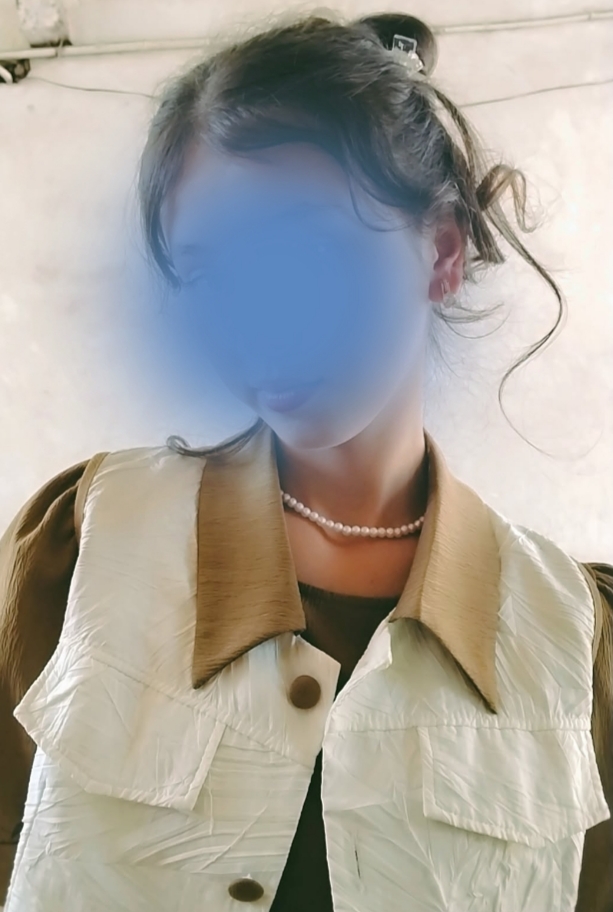
When Books Breathe: How Stories Transcend Borders, Time, and Silence
When Books Breathe
In a world constantly racing forward, books remain the quiet keepers of human memory. Unlike fleeting trends or temporary platforms, they stay rooted, whispering stories from past centuries into the ears of modern souls. A book doesn’t demand attention; it earns it slowly — through pages that unfold truth, pain, joy, and hope.
When a person opens a book, they don’t just read. They listen — to distant lands, silenced voices, and forgotten times. Through the weight of a well-crafted sentence or the simplicity of a child’s rhyme, literature transcends borders. A young woman in Uzbekistan can feel the struggles of a mother in Sudan, or the joy of a boy in Peru, all through ink and imagination.
Books breathe when we let them live in our minds — when we carry their messages beyond the bookshelf. In this sense, books are alive not because they are printed, but because they are read, shared, and remembered. They wait patiently, knowing their time will come when a reader is ready to receive.
In a noisy age, the stillness of reading becomes a quiet revolution. Through books, we learn not only about the world, but how to become more human within it. They do not speak louder than others — they speak deeper.
Mushtariybegim Ozodbekova is a student and aspiring writer from Uzbekistan. She enjoys exploring literature as a bridge between cultures and generations. Her writing reflects a deep belief in the power of language to inspire empathy and awareness.
This article was inspired by my own experience of discovering books during a time of personal reflection. In today’s fast-paced world, I wanted to write something that reminds us of the silent strength books carry — and how they connect readers across continents, cultures, and time.