Come un aquilone che vola alto, legato con uno spago
Questo era un modo per essere sani, ricchi e saggi
Le persone vanno a dormire presto per viaggiare a lungo e si alzano presto
Nei tempi antichi, la conoscenza non era libresca
Il saggio viaggia giorno e notte, a differenza di un pigro
Ibn Battuta, Vasco D’Gama e il famoso Gulliver
Tutti erano fonti di conoscenza, tutti erano viaggiatori
Viaggiare in treno è sempre stato affascinante per me
Mi piace osservare fiumi, colline e pianure che si muovono
Viaggiare con tutti i membri della famiglia è una benedizione
Andare in vacanza d’estate e tornare durante i monsoni
Viaggiare ci insegna a prenderci cura gli uni degli altri
Sviluppa lo spirito di squadra, il senso dell’amore e della cura
La vita è anche un lungo viaggio pieno di gioia e dolore
Fallo ora, se vuoi; chi ha visto il domani?
Originally composed English:
……
TRAVELLING FOR KNOWLEDGE
When we travel far, we observe lots of thing
Like a highflying kite, which is tied with string
This was a way to be healthy, wealthy and wise
People sleep early to travel long, and early rise
In ancient times the knowledge was not bookish
Wise man travels day and night, unlike a sluggish
Ibn Battuta, Vasco D Gama and famous Gulliver
All were sources of knowledge, all were traveler
Travelling has been fascinating to me by trains
I enjoy watching moving rivers, hills and plains
Travelling with all family members is like a boon
Go in summer vacation and return in monsoon
Travelling teaches us to take care of each other
It develops team spirits, sense of love and care
Life is also a long journey full of joy and sorrow
Do it now, if you wish; who has seen tomorrow
Dr. Perwaiz Shaharyar
Editor, NCERT, New Delhi, INDIA
The esteemed and Hon’ble global poetess Maria Miraglia translates from English to Italian language the poem of Dr. Perwaiz Shaharyar.
She is the Literary Director of the Pablo Neruda Cultural Association and Founder of the World Foundation for Peace. She is an intellectual, high-caliber academician and highly meritorious translator by her passion for literature and culture. She is a multilingual translator especially for poetry, which has been her all time favourite.
It’s a deeply tense and uncertain time here in Jammu and Kashmir, India. Any moment could escalate into something devastating. Still, we must hold on to faith. Let’s pray for everyone’s safety… and if this turns out to be my last day here, may we find peace in our hearts.
I am writing my poems
I Carried Books into the Silence When we first shifted to this new home, I walked into my new room and felt the emptiness settle in me. The silence was loud, the walls unfamiliar. But I brought my books all of them as if anchoring myself to something deeper, something eternal.
I became stubborn, defiant refusing to leave behind what feeds my soul.
Now, even in the shadow of war, with chaos looming and choices shrinking, I carry books not clothes, not comforts but books and my laptop.
If this is a battlefield, let it be known: I march armed with words. And if I fall, let me fall as a martyr to learning, to wisdom, to the stubborn hope of a modern philosopher one who chose peace and prosperity for the generations to come, who spoke of the oneness of humanity, so that somewhere, someone, who dreams of making this world a better place, may do so with peace, with purpose, and with passion. Because even when the world forgets the quiet fighters, those who choose thought over violence, books over weapons, and creation over destruction their legacy lives on, not in monuments, but in minds they awaken, in hearts they soften, in the light they leave behind.
Let my life not be measured by survival, but by the seeds I planted of kindness, courage, and consciousness.
Let the next generation know that amidst all noise, someone once believed in stillness. That in a time of breaking, someone chose to build.
And if my story ends here, let it echo not with sorrow, but with the soft turning of pages, the steady tap of keys, the whispers of wisdom still moving forward for I lived not just to breathe, but to leave behind breath for others.
And if history forgets my name, may it remember my intent. That I lived not as a bystander, but as a bearer of light choosing books when the world chose bullets, choosing words when silence grew cruel.
For in every page I carried, I carried hope. And that, perhaps, is enough.
If It Had Been My Last Day In the shadow of war, where time is fragile, Where every heartbeat could be the last, I stand, breathing deeply in the storm, wondering: If this were my last day, what would I leave behind?
I see the faces of those I love, flickering like candle flames in the wind, tender and fleeting. Would I have said enough? Would my silence have spoken louder than the cries of battle?
In this chaos, where bombs drown out reason and fire burns hope, I hold onto something deeper the quiet power of love, the unshakable belief that knowledge, compassion, and peace are the only things we truly carry.
I would not leave behind riches, nor the hollow comforts of fleeting life. What value would they have when the earth quakes beneath us and all that remains is the echo of our choices?
But I would leave behind words words that refuse to be silenced, that rise from the ashes of destruction. Words that seek to heal, to build, to light a path through the darkness of war.
And if my life ends here, let it be known that I lived not in fear, but in defiance of the chaos. Let it be known that I chose peace, even in the face of the storm, and that I chose books the eternal flame of learning, the salve for a broken soul.
If this was my last day, I would not ask for glory or accolades. Instead, I would ask that somewhere, someone, finds solace in the words I left behind. That they carry them into a world still torn apart, a world that has yet to heal.
And when the war ends, when the dust has settled and the smoke clears, may they remember not the weapons I faced, but the wisdom I chose to share.
For in the end, it is not the fight that defines us, but the peace we dare to pursue and the love we choose to leave behind to guide others through the wreckage.
If it had been my last day, let it be said that I lived not just for myself, but for the possibility of tomorrow, a tomorrow where kindness, courage, and knowledge are the legacies we build. – Author Haroon Rashid
Biography:
ABOUT AUTHOR HAROON RASHID
Haroon Rashid is an internationally celebrated Indian author, poet, and humanitarian whose soul-stirring words transcend borders, cultures, and languages. Revered as “a movement of thoughts” and “a soul that breathes through verses,” he is a global ambassador for peace, education, and sustainable development. Through literature, he fosters empathy, cultural harmony, and a collective vision for a better world.
KEY LEADERSHIP ROLES • Global Ambassador & International Member, Global Federation of Leadership & High Intelligence A.C. (Mexico) • SDG Ambassador (SDG4 & SDG13), World Literary Forum for Peace & Human Rights • National Vice Chairman, Youth India – Mother Teresa International Foundation • Peace Protagonist, International Peace Forums – Mexico & Greece • Honorary Founding Member, World CP Cavafy
AUTHOR & LITERARY CONTRIBUTIONS • We Fell Asleep in One World and Woke Up in Another – poetry book, translated by 2024 Nobel Peace Prize Laureate Eva Petropoulou Lianou • Author Haroon Rashid Quotes – A soul-deep treasury of reflections • Works translated into: Greek, French, Persian, Urdu, Arabic, Chinese, Tamil, Hindi, Sanskrit, German, Indonesian, Bolivian, and more.
GLOBAL HONORS & AWARDS • Diploma de Honor al Mérito – Mexico (2025) • World Art Day Honor – Indonesia (2025) • Friedrich von Schiller Award – Germany • 4th World Gogyoshi Award – Global Top Vote (2024) • 1st Prize – Silk Road International Poetry Exhibition (2023) • Golden Eagle Award – South America (2021 & 2023) • United Nations Karmaveer Chakra – 2023 & 2024 • REX Karmaveer Chakra – Silver & Bronze – India • Global Peace Award – Mother Teresa Foundation (2022) • Cesar Vallejo Award – UN Global Marketplace • Honorary Doctorate in Humanity – La Haye, France (2021) • Sir Richard Francis Burton Award – European Day of Languages • Prodigy Magazine USA Award – Literary Excellence • Certificates of Honor – Greece, Serbia, Indonesia, Mexico • Honorary Award for Literature & Arts – Trinidad & Tobago
GLOBAL PRESENCE & RECOGNITION • Invited Guest on The Oprah Winfrey Show • Featured in O, The Oprah Magazine • Speaker at: • International Peace Day – Mexico & Greece • 3rd International Congress of Education – Mexico • Paper Fibre Fest – Represented India in China, Greece, Mexico, Peru • UN SDG Conferences, Global Literary & Peace Forums • Work featured in education campaigns, peacebuilding initiatives, and cross-cultural literary dialogues • Admired by global celebrities, educators, artists, and policymakers
CULTURAL AMBASSADOR OF INDIA • Embodies India’s timeless storytelling, spiritual ethos, and peace traditions • Bridges Indian philosophy with global consciousness • Revered as an ethical thought leader, visionary poet, and global voice of unity
PHILOSOPHY & SOCIAL VISION
Literature, for Haroon, is a sacred space for: • Healing, empathy, and consciousness • Advocacy for: • Mental Health Awareness & Emotional Resilience • Climate Action & Sustainability • Spiritual Depth & Interfaith Harmony • Youth Leadership & Cultural Preservation
He aims to inspire changemakers, dreamers, and peacemakers across generations.
GLOBAL PRAISE & LOVE
Described as: “A movement of thoughts.” “A soul that breathes through verses.”
Celebrated across Europe, Asia, Africa, and the Americas, Haroon is loved for his: • Authenticity • Emotional depth • Literary brilliance Honored by governments, universities, and global literary councils.
TITLES & GLOBAL IDENTITY • Global Literary Icon • Award-Winning Author & Poet • International Peace Advocate • Global Educator of the Heart • Cultural Diplomat & Ethical Leader • SDG Voice for Education & Environment • Voice of Peace, Passion, and Purpose
QUOTE BY AUTHOR HAROON RASHID
“It’s our responsibility to create a better world for our future generations.”
CONNECT WITH HAROON RASHID Follow and engage across all platforms: @AuthorHaroonRashid (Facebook, Instagram, X/Twitter, LinkedIn, YouTube, Threads, and more)
My father is my hero. For me, my father is brave, a hero and more than any other warrior. People always praise our fathers. It is true that they were also ready to give their lives for the country. But the person always sacrifices his life for you, his children, his family it is your dad. Do you know our saying “My father-my country”?! This was said to our selfless father. When did your father say no to you? He says the truth, but he does think about your future. I love my dad so much.
About my family:
There is five girls in my family. But my dad doesn’t separate any of us and treats us equally. I have the only dad in the world. Everyone’s dad is a hero for himself or herself and this is absolutely true!
Dr. Jernail Singh Anand, [the Seneca, Charter of Morava, Franz Kafka and Maxim Gorky awards Laureate, with an opus of 180 books, whose name adorns the Poets’ Rock in Serbia]] is a towering literary figure whose work embodies a rare fusion of creativity, intellect, and moral vision.
Poetry submissions to North of Oxford’s Streur Anthology are now open!
North of Oxford would like to pay tribute to the late Russell Streur, poet and publisher of The Camel Saloon and The Plum Tree Tavern with an online anthology dedicated to Nature. Send us your poems of Nature, of floral and fauna, of forests and trees, of rivers, creeks and streams. Of farms, of urban nature, of parks and sanctuaries, of oceans and bays, of islands, of all things, Nature.
Send one to three poems for consideration of publication to North of Oxford at sahmsguarnieriandreutter@gmail.comSubject line of submission: Streur Anthology. Submissions will be accepted until 5/31/25. Only submissions attached as word doc will be reviewed. Please include a 100-word bio within the word doc.
Jacques Fleury’s book You Are Enough: The Journey Towards Understanding Your Authentic Self
Eva Petropoulou Lianou shares a short film inspired by NASA’s inclusion of her poetry in a capsule launched to the moon.
Synopsis On 26th February 2025 NASA launched a capsule with poems to the moon, one of them was the anti-war poem “Happy Birthday”. Written by Eva Lianou Petropoulou, Directed & Animated by Zina Papadopoulou, Music & Sound by Grigoris Grigoropoulos
Lunar codex, Athena, Minerva Excelsior, The Vagabond Anthology, edited by Mark Lipman, dedicated to the Palestinian poet Ahmed Miqdad
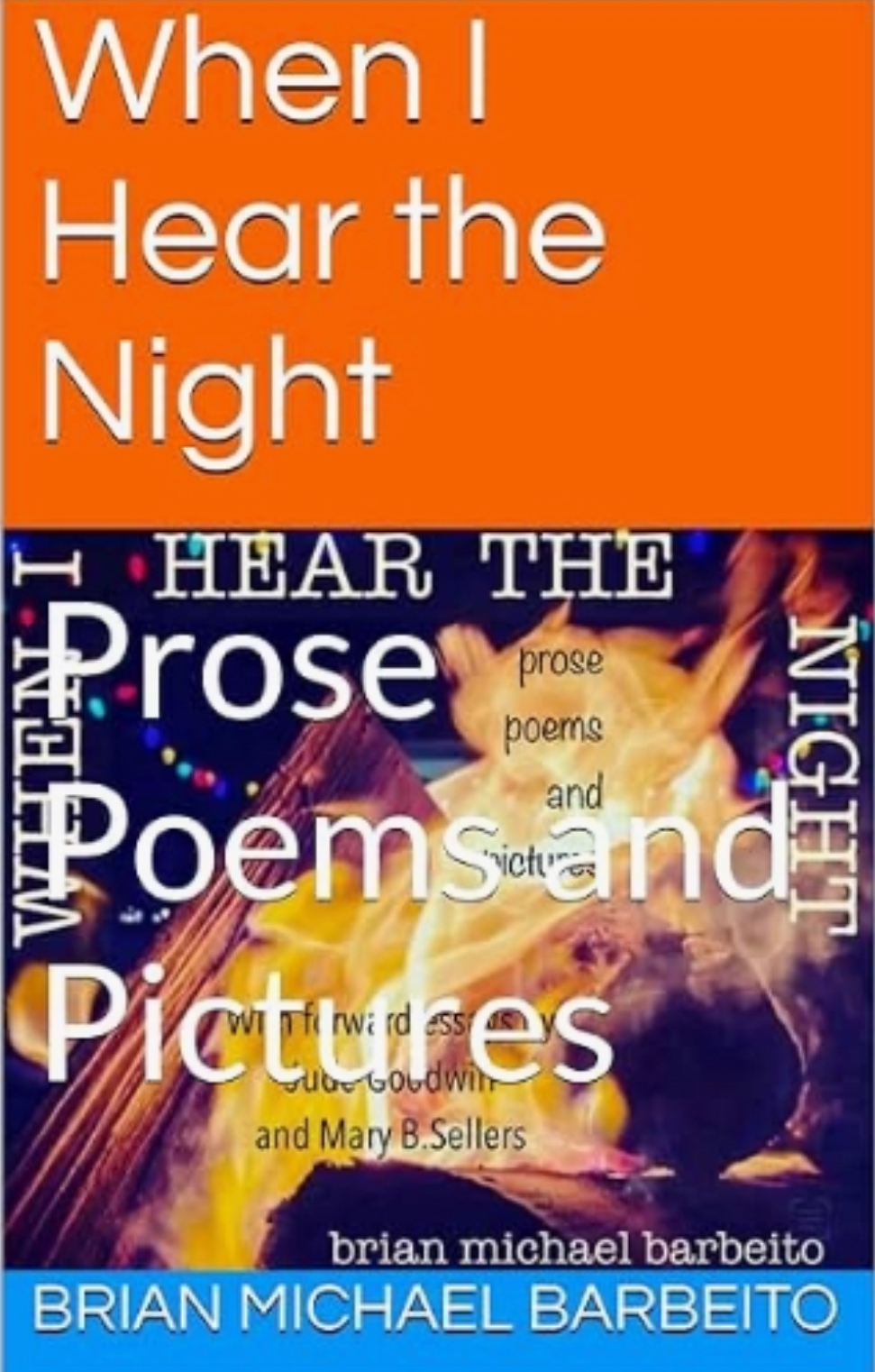
Also, our contributor Brian Barbeito’s new book has just come out, When I Hear the Night. This is a prose poem and landscape photography book. Included with the words and pictures are two literary and dynamic introductory essays, one by poet and editor Jude Goodwin, and another by the writer and editor Mary Buchanan Sellers, figures current and thus well-informed in the field. There are also author notes and question-and-answer sections. The writings can be said to have interesting elements of memoir, essay, belle-lettres, poetry, and short story forms. Their content often includes the mystic and inner vision of the author coupled with the outside world of nature walking and travel.
Now, for May 2025’s first issue: Paradoxical Understandings. In this issue, we explore various perspectives and vantage points, how multiple things can be true at once in our complex universe.
On a more personal level, Peter Cherches writes of understandings and misunderstandings, how much we can come to know or forget about those closest to us. Aziza Xazanova urges human understanding through avoiding assumptions and listening with empathy. Daniel De Culla relates a story where a person in trouble simply seeks a listening ear, not rescue.
One way people can understand each other better is by learning each other’s languages. Several contributors discuss pedagogical methods for language teaching.
Other contributors reinterpret language in concrete and abstract ways. Jerome Berglund renders different poetic forms into concrete images. Noah Berlatsky contributes a humorous poem about procrastination that uses repetition as a literary device. Christina Chin and Uchechukwu Onyedikam craft joint tan-renga poems, finishing each other’s pieces with images of music, nature, rest, and memories. Rus Khomutoff’s concrete poetry takes us on a journey of surrealism, music, and romance.
Like Khomutoff, other writers travel deep into their own psyches. Brian Barbeito reflects on his thought process and creative journeys, considering how he both opens his mind to emptiness and enlightenment and, like a skilled hockey player, remembers the basics of his craft. On another note, Nigar Nurulla Khalilova evokes writers’ block and an intense, foul mood as harsh as the Arab Simoom wind.
Mesfakus Salahin ponders the fragility of human identity and self-concept. Mark Young’s poetry explores creative processes, relationships, and the search for meaning. Texas Fontanella’s music digs deep for a dose of duende. Tagrid Bou Merhi draws on train travel as a metaphor for introspection and longing for one’s past or future. Stephen Jarrell Williams crafts a series of verses describing a person’s inner struggle and renewal. Ari Nystrom-Rice explores identity, wondering who he truly is underneath the surface. Mexribon Shodiyeva’s poetry celebrates the fragile butterfly and the beauty of being yourself. Shamsiya Khudoynazarova Turumovna relates having had the courage to free herself from an unhealthy situation and walk her own path.
Paul Cordeiro speaks to the aftermath of significant relationships and events and to how our feelings can reshape our memories. On a less serious level, Mark Blickley develops a farcical story of unemployment fraud inspired by a photo of a man with a sheep skull, where a character invests deeply into reinventing himself.
On a more cosmic level, Jack Mellender’s work looks at space, time, and humanity’s place in the universe. Ummnusalma Nasir Mukhtar relates a fanciful and expansive dream where she traveled to the moon and stars and gathered her strength. Jacques Fleury’s photography encourages us to view life from different vantage points, exploring concepts as varied as travel, physical attraction, thought, and justice.
Duane Vorhees reflects on ancient archetypes and how we tell stories about ourselves. Sayani Mukherjee reflects on the constant turbulence of human and natural history. Dr. Jernail S. Anand probes some basic paradoxes of modern human life.
Rezauddin Stalin reflects on the beauty and the price of freedom as Blue Chynoweth reflects on the blessing and curse of being able to contemplate one’s place in the universe rather than living by instinct.
Mahbub Alam wonders whether love or self-destruction will win the day. As a person of faith grappling with these issues, Chimezie Ihekuna addresses life’s seemingly intractable struggles, suffering, and human evil, and also God’s implacable goodness in a paradoxical couplet of poems. Lilian Dipasupil’s paired poems take a similar approach, warning of child kidnapping while honoring the love and sacrifice of Jesus.
As writers, one of the ways we can respond to evil is to bear witness and document it as a warning. This is one of the roles of journalism. Davronova Asilabonu affirms the value of journalism and speculates on the field’s future.
More traditionally literary writing can bear witness as well. Yucheng Tao provides a sobering reminder of the historical massacres of the indigenous people of the American West by European settlers and of many Cambodians later in history by the Khmer Rouge. Z.I. Mahmud explores how Arthur Conan Doyle’s The Hound of the Baskervilles brought realism into detective fiction, illustrating the monstrosity of human greed and vengeance. Rahmat Muhammad laments how people where she lives in northern Nigeria no longer honor elders and ancestors as much as they should.
Shuhratbekova Gulzoda describes the historical contributions of the humanist Jadid leaders of Uzbekistan to art, literature, science, and culture. Dilobar Maxmarejabova expresses her pride in her Uzbek heritage and her hometown of Qashqadaryo. Hashimjonova Durdana affirms her pride in her Uzbek heritage and culture. Nozima Gofurova outlines the many achievements of today’s Uzbek youth.
Bhagirath Choudhary points to the role of literature in terms of helping people and societies evolve to become more humane. Dr. Jernail S. Anand illuminates the power of art and literature to touch people’s hearts and souls and inspire wiser and more compassionate behavior.
Alexander Klujev highlights connections between Russian music and Russian philosophy and how both honor the triumph of life over death.
Various contributions celebrate different aspects of life. Shahnoza Ochildiyeva enjoys a picnic with her classmates on a sunny spring day. Su Yun evokes the struggle and beauty of flowers growing in an urban environment. Isabel Gomez de Diego photographs childhood exuberance in a neighborhood where humans coexist with nature, trees and bike paths near city apartments. Eva Petropoulou Lianou crafts a story around the evocatively named “Hero’s Path,” a hiking trail near a European monastery. She finds simple joy in nature and travel. Manik Chakraborty takes poetic inspiration from misty mountains as Taro Hokkyo honors his muse and the land on which he writes.
Marjona Jorayeva Baxtiyorovna expresses her respect for women and the feminine, which she links to nurturing and compassion. Gulsanam Qurbonova celebrates the tender nurturing of a mother’s love. Vo Thi Nhu Mai reflects on the warmth and tenderness of her childhood in Vietnam and how that inspired her creativity. Kylian Cubilla Gomez’ photography captures vintage childhood images: Snoopy, old Easter themed toys, a colorful frog, even possibly Dad’s aftershave. David Sapp enters the mind of a three-year-old, excited about cereal and dogs. Marjona Jo’rayeva relates her enthusiasm for a fresh term at school.
Kristy Raines expresses the simple yet profound joy of two souls finding true love and choosing each other. Eid Saleh writes in English and Arabic of the meeting of souls in a similar way, and refers both to romance and to close friendship. Qaraboyeva Zilola expresses the tender urgency, trepidation, and obsession of young love. Marley Manalo-Ladicho ignites a fiery love feast in his poetry.
However, as Taylor Dibbert points out in his brief poem, romances, and other sources of happiness, aren’t guaranteed to last.
Tuliyeva Sarvinoz’ elegant poetry laments lost love as Mirta Liliana Ramirez honors the memory of a beloved, asserting that she’s not yet ready to move forward. Eva Petropoulou Lianou touches on the tenderness of human hearts and how many of us carry emotional trauma. J.J. Campbell’s poems describe a soul’s slow descent into misery and cynicism. Luis Cuauhtemoc Berriozabal speaks to social and psychological entrapment, stuck with folks tired of his old stories. Linda S. Gunther’s short story “Bake Me a Banyan Tree” explores what we owe our loved ones and how far we would go for them.
Eric Barr’s poetry reflects the realities of navigating life after a stroke. Manik Chakraborty laments destruction caused by a fire as Mykyta Ryzhykh reimagines the Three Little Pigs into a futuristic dystopia in light of environmental destruction. Don Bormon evokes extreme desert heat and the specter of climate change.
Alex S. Johnson takes us on a mythical journey to transmute sorrow in a poem translated into Greek by Cassandra Alogoskoufi.
Sometimes what one needs to overcome suffering isn’t as complex as alchemy, but can just be time at home curled up with one’s cat. Nicholas Gunther’s poem describes a weary soul’s desire to return home after a long journey. Bill Tope’s short story explores how a senior cat helped bring an older woman out of depression after society made both feel useless.
We hope that Synchronized Chaos can inspire creativity, bear witness to the joys and pains of the world, and transform sorrow and stagnation. Please enjoy this issue!
the wind was something. I could hear it rattling outside and at least little parts of the sky blue showed themselves. I had a problem with the boot laces and changed them, using a lighter lace, a running shoe lace as I forgot to purchase proper laces. but I remembered going to Seneca College summer hockey camp and they showed us a video of Gordie Howe giving a few suggestions on equipment. he tied the lace before you do the loops, not once around, but twice, saying that if you do that it won’t come loose. I picked up on that then and always did that and felt I knew some secret about laces. Think about it and you will probably remember seeing someone in life holding down their laces with a finger or fingers in the middle of tying them. That’s because they can become loose before you are done. better to do Gordie Howe’s trick. I wonder how he learned it or discovered it himself. the old time people and figures sometimes know much.
I ventured out and made my way to some
fields. I saw some leaves on trees and they seemed lonesome and strange, burdened by life. I imagined, a pure shameless projection, that they would rather be in Florida on a beach. I myself would have been. I imagined verdant palm fronds in a warm wind, talking slightly in their own way. How would it be? I would walk down some place and easy landscape and read campy pulp novels for fun, enough big thinking about literature and philosophy, spirituality and ideas. but sometimes I’d read a bit of Alexandr Solzhenitsyn and things to remain soulful and as sharp as possible. I’d head back to a patio and order a turkey club sandwich and a diet soda if I was getting hungry. maybe the next day I’d choose to eat at home and fix a sandwich myself. Outside I might hear the sea, and then take a break from eating that lunch, and go glance at the wondrous and whimsical ocean and coastline.
but I had to concentrate on the present and brought myself out of my daydream about the southern shores. I kept on and went over a small bridge. one could hardly discern this bridge from the ground as the snows that had come over the weeks of the middle winter were that high. but some planks wooden were still there, confident and reliable. I stood there for a bit and the wind got stronger, almost vexatious, and I took a few big gulps of it. I had read that Knut Hamsun had gone on top of a train when he was sick and was gulping all the air and helped cure himself. whatever the case, fresh air couldn’t hurt and could only help. then I composed a more ‘verse’ poem in my head:
those leaves/
crinkled and old, staying/
nobody notices such/ and beyond the
winter wind makes the evergreens move/
the working boots talk their talk I see/
and the white collars too/
a bird appears/ somehow displaced from home/ looking/ not at ease like the birds of the summer poet/ no/ looking for something lost
I didn’t have a title for the words then. but I would end up calling it simply, Leaves
there was a series of hills and I went up and then down them, bumps in an otherwise pretty vast and plain area. there were some spots near the far purlieu where some wild sumac lived, retaining that deep inspiring colour in all months. the snow had stayed on some of it, and the white/red made an interesting picture for its juxtapositions. when I had begun nature walking everything looked the same. as time went along I learned that there were hundreds, probably thousands of pictures and poems and stories to be had from woodlands and fields, even the sky and water. we had become friends, and my friends seemed to teach me through time not only photography and writing, but mysticism and maybe…do you know what is beyond mysticism itself, all forms of mysticism, and is the true and most noble and important goal? it is Enlightenment
, Moksha, Freedom, Awakening. Pick your word. I walked and walked. I had to take my time as the snow was deep. The main paths were too busy though. I’d take the snow. Like in life, the main path is easier but paved with mediocrity and predictability. I would make it my own way, somehow, in the snow, in the arts w/my work, and in spiritually and life itself. but, though on the monomyth journey, and the fool’s journey of the tarot, that entire seeker’s trip, i was also no fool, and so would remember to tie my laces like the great Gordie Howe did.
Time spread poems like butter on bread Springtime and long summer days, confusion and technological change
At a distance, the island appeared to be a tiered wedding cake with several layers of dazzling white topped by a castle and monastery. It was all for Tina. On arrival, the Portera on the bluff was open, seemingly to beckon both of us to walk through it into a new Ariadne smile. Radiant rays of sun poured through it. We walked the shores of Naxos. Cheese, carrots, and potatoes. It was 1963, and we were exhilarated by the cooling spray whipped up by the Aegean wind. We laughed and loved.
Do you remember Νaxos? Come let’s take a journey on sun-buttered bays of light. Plunge into waves of morning dance on the sands at night. And we shall arrive again at the place where we loved on trembling sand.
Listen once more to the wave’s music and the tide wetting the land. Feel the warmth of lost moments, feel the touch of our hands. Recline in the sun together, love, on the warm golden sand. Come let’s follow the rainbow pass through the colors of time. Listen again to your voice whispering your head next to mine. Feel the heat of rocks ageless baking in golden sunshine. And we shall lie down at midday, and I shall drink in your sweet wine. Follow the scent of the blossoms; look for the wisdom of vines. I will see you once more in the springtime before leaves leave on their flight. Before you weathered the winter before the cold darkness of night. I shall hear the lilt of your laughter snuggle up into your smile. Bathe in the gaze of your brown eyes all softness and warmth for awhile.
Come let’s take a journey over the widening years. Cool in the waters of morning, warm in the flow of our tears. And I will bring you my laughter blossoms from the bough of a tree. As we hold on to each other forever in love together youthful and free. The same girl Such a wonder have I dreamed and now perceived. That I have found and only lived in you. Could I today just find a way to say. You are the sunshine of my night and each and every day. Two fragments found in a forgotten place Chance it was when an awe-inspiring girl Crossed my path and I hers Our eyes pulling and could not draw back Two different lives were somehow interlocked I looked at the girl and Athens with my amazed admiring gaze, In their own time they gave me back their pulse, their breath, She walked with springtime grace Garlanded with warmth and an enchanting smile That I caught on to within her eyes, Through mine I gave her my captivated gaze, By chance she unlocked a door my charmed life Let’s hold on, search for the sun Enjoy it all with no show at all It’s all ours, ours for the fun Let’s find the road and just go Let’s look up towards the light Enjoy ourselves throughout the night The day and night are ours alone Let’s pass the hours, feel the warmth of home Let’s live life with what we have Not bother with what we have not What we have is precious love, a desire to live Let’s hold on we have the sun We have bays buttered by it too We have the sun and moon the rain We have our smiles, our laughter and the flowers We have our hearts our minds and thoughts We have our garden, no not Eden ours With trees for shade, a stream that runs through Plums and pears and tart apples too.
There was a time when nothing seemed to fit, nothing made sense, and then came. It crept up slowly and then swallowed me. I sipped white wine and nibbled on food, and the hours went by. Suddenly, the words nothing is what it seems to be shouted themselves out at me.
None other heard, and I was not aware of others. Confusion awakened in the dark of night, I left my dreams behind. I stumbled towards day to find that nothing quite makes sense. But all are talking, mouths close and open, moving fast and slow. Devoid of sense with nothing adding up. And when it does, it adds up to represent some zero-sum. Yet all including me are writing. Typewriters tick and tap away, and sheets fall out. Pages littered with a’s and b’s and m’s and n’s not to forget the y’s and z’s.
With far more space than ink, like an unknown atom’s alphabet. Electrons in full chase around a proton-neutron epicenter that may not hold. Reams role for replication to multiply memos meaningless. But no one says a single word while all are talking, scribbling words on paper scraps.
Pursuing thoughts a sentence here a few lines there stretching a paragraph somewhere. With a little more teasing, it stretches to a page of typewriter fodder. Tick and tap, tap tap, and tick the memo shuntered to the replication tray.
Some memo of menace, so beware. Perhaps the country’s call for cannon fodder to feed some war. While controlled conversations behind closed doors. Much said, but making no sense at all. Where all action is delayed and mock decisions with certainty are made.
Confused not knowing what to do, perhaps put down my pen. Return to sleep, hoping to catch up in a better world of dreams. When I was young, I never thought of going to America. When I was still young, I did, and I loved it. I made good friends for life and went back as often as I could. One of my dreams is to make my American last stand in CHICAGO.
Strange notes between Chicago and Athens, from fun to serious and sometimes furious conversation. To be read for me by Ed at the International Club if he remembers, and with poetic aplomb instead of his typical reformer style. Tonight, I can think of no better place to be than to be with you, all of you. So let it happen in thought and memory. A moment of recollection, please, a minute only; I don’t want to take you away from a great chef’s food. Put down your forks, Erich, please put down your fork and lift up your glasses; I see that’s easy! We toast you from afar.
I remember you all so well and clearly: the Dean of Deans who tangoed with his wife in Argentina better than any dago, a medical educator who rants on poverty, a great working man’s doctor whose son is in Hollywood and a TV star. Erich with an h, Ed, and Captain who discovered the dread disease of carbitus, T&D, Tom with the wooden leg, Henry White and Linda Matilda, books and magazines stacked in stable perfection with a central window through which its holed-up occupant could be seen working in his office, and through which, if necessary, the phone could be passed. In my mind’s eye, I see Erich with Fran, Linda knocking back the margaritas in Mexico, Ed asking me mischievously on which side of the bed I wanted to sleep in front of the bellboy… Of course, there is George; his only phrase is “no salt,” said loudly.
My friends, my captain, Zhivago and Zorba have taught me much: that under no circumstances must I despair; to hope and to act is my duty. So here goes. The Jeff Lifetime Achievement Awards tonight go to two distinguished Americans jointly shared by Jolly Jean and Friendly Fran, with the recommendation that the boys keep the money implicit in this ever so meritorious award for an occasional coffee or for the tip of the night. Erich gets Dekano of Dekanos Award, and Captain our captain Ed gets the World Community Service Chalice.
From the eastern flank of the land of Ez [as in Eurozone]: No Dorothy here, only scared crows; no cowardly Lion, just lion-hearted politicians, pronounced in the King’s English as “lyin.” No Tinman, only pilfered copper… while the streets are full of rag, bone, and tag men collecting (that’s what it’s called) all things in reach in sight: street lamps, public telephones, cables…
don’t park your old car anymore here; coming back, your calls to insurance will go unheard… Many on the streets are insiders; some come from outside of Ez… some come from over the rainbow… while others are over the rainbow. Meanwhile, the government of Ez expects its patriotic people to keep coughing up to keep the coffers topped up and spilling over.
Meanwhile, all the Punch and Judies and the Black Georges wonder why the coffers are well below the Plum-rose line. While most are coughing up coin, our saviors circulate and drink wine… the Plimsoll line plummets and the basic basket grows smaller with less salad, no more salad, and no more salad with feta cheese…
Dear friends, you have helped make a difference…In celebration of her long life, many are the things that bound us together: from breakfast to Obama, from bagels to buns, from Chicago to Athens, from fun to serious conversation, from vodka (gin) and tonic with a twist to wine that sometimes tasted of the tar (Retsina), from hot- hot coffee to Greek coffee, from love and affection to affection and love. Her husband was my mentor and taught me neuro-physiology.
Leaning seemed to come easily as he handed out tall glasses of vodka and tonic with a slice of lemon topped up with perfect cubes of ice. As the sun sets or rises slowly in the western and eastern sky, we are confident that day or night will arrive, maybe thinking that the dawn of hope will come for man to live peace on earth, his ultimo besoin.
Lines for a world day of peace It’s quite clear here, right at the center of it all. In Delphi, where the gods still prevail. It’s not too late to build back better, and a better one. Urged on by mountains tall and still agaze on Marathon. While Marathon still looks upon the sea. While here we stand with gods and free. On this most precious special day. Hopeful that we can hail in peace. Yes, it is clear; no, it is not too late.
To build for all mankind a better fate. Can we stop; slow down the undoing of our world? The burning, flooding and polluting of our souls Restore our world to glory in hope and splendid green-blue oceans, sunset’s red, rivulets, and flowing streams. Where men all and women too are equal and all free.
Can we redo our world? Improve it for all offspring. Such wonders are the words and phrases I can hear when I think They tumble forth differently each time but are always woven together as a captivating collage. They come mainly from a lyrical dialogue between East and West. If I can retain rhythm and musicality and remain recitative with recurrent words and transient, what follows may well be called a poem. I give you a bouzouki and three peacocks with bejeweled tails.
Cross-cultural musings I came to buy bread, 6 I am, and never left the street. The street is now renamed for the missile. Here where the clock stopped and Despots bicker over truth. Where lies and misinformation rule the roost. 15 I am a hostage, held because of my darker, deeper skin. Innocent on the threshold of life uninvited horror came to my door. No drip of water; now the pelican for me is dead. Earth has become a stray dog, kicked by a military boot. Carry my soul to the palm reader; take it to be fingerprinted. Two banks of one World River. The West is behind, but the East is not before. Devils are in the Orient, tyrants too, but the bleeding finger does not speak. The weavings of the winds are sparks that can kindle imperial cities. Listening to the stars is a singular experience multiple in meaning. Flames raging furiously, thoughts breathe, words burn, and wine intoxicates. What can we do with this already crumpled world? What can we do with this already unmade world? Underway is the way, and we can only finish the journey. On every path from desert to town, I wander with caravans. Trade in shawls, coffee, and musk. Through bazaars, past donkey carts lining the dirt road. With rosary beads draping my hand. And crimson shades, Eastern roses, the Roses of Shiraz. The cup of Jamshid, obedient water, and worlds contained within the wine. To sip, kiss over kiss. A rose of hope, the stupidity of hate, and hope in harm’s way. Insane shadows, I tasted them and spoke them, though I said I wouldn’t. Ruffled locks near midnight, you come in disarray. Return for a night as the moon turns full.
Fiery eyes and eyes of fire, the loveliest things she owns. Love, listen to me at night, most of all at night. The time will pass, all must change. What is human and what is stone? At dusk I stand beside the well in which the moon is trapped. Face darkness of the coming night, the terror of the waves. Look up to read the cosmos as a sacred text, a perfume that is love. To read the first alphabet that declares our human grace in Persepolis. A glance of the beloved! My ancient love is she asleep? Who lies beneath your spell, tonight? Loves, take me home again but not to that house, especially not at night. She still looks for the man who used to burn inside her blouse. His search is for the hundred qualities of a camel. To plunge into a lightning storm. Oh so rosy lips and cheeks, those lily hands of sheer delight to poets. More precious than all the gems of Samarkand. Gardens are not for those who do not crave to know the flower’s soul. Upon the fates will be bestowed a rose of hope. Return me to lemon trees in blossom and the cicadas call. The devil takes no interest in dry old bones that lie at peace. He fell through a smashed-in anger mirror. To find himself alone on the other side. On the edge of a forest, looking into a large swamp. Take me to the river where fish fall in love three times a day. Three times a day, they kill themselves. No better way to enter heaven, than a return to stone, no heart. In the crimson shade of stars, you’ll find my grief concealed in verse. A falling meteorite from high above connects heaven to earth. Whereupon unfold both sacred and profane in black stone. Where are you from, again the same old question. I am a prophet of myself, without religion or followers. Not even on myself do I impose my invitation. To sit in burnt-down places on either bank of the river of the world. While from today’s day and tonight’s night. Ask not to demand anything but what yesterday did bring. For up there upon the roof, up on the roof a peacock stands. A peacock stands upon the roof. Faraway places with gods in control. Once a young man from a faraway place used a big stick to beat upon snakes. Walking by day and by night, over tall hills and through lonely valleys, came upon coupled snakes in primeval thrill. Warmed by the sun’s rays, releasing such reptilian passion the young man tried hard to subdue a thrill and passion.
He could, should have left well alone, gone on, made his peace but without rhyme or reason he stopped the snake’s fun. How could he not have known that nothing goes unknown or unseen as when his stick was struck by gods all of Greece? Anger came fast to Hera and Zeus he said her you must play by my rules, preserve love and life, and ensure it for fools. You are he bellowed the goddess of the bridal bed and native bliss, get angry much more turn Tiresias into what you wish. The youth Tiresias changed place took up womanhood spent seven years in girlish form. She stayed like that and played the field until she met again by chance a pair of coupled snakes. Still young now worldly wise he downed his stick let them mate and whereupon Hera took away all of his womanly ways. Time passed, and Zeus to Hera said sex is enjoyed by women more than men which got her well worked up said tis not so. They bickered on and on in high dispute tis so says Zeus tis not Hera replied until abruptly they decided to ask someone. Someone who’d played both roles quite well enjoyed sex with a woman and sex with a man. One only they knew who’d lived both lives for sure the still young Tiresias who had lived life with and without a stick. So the young man from a faraway place who hadn’t let seven years slip idly by was now recalled to settle the case. Zeus and no other god had had such a unique fun stated clearly their query and loudly of his and of Hera’s Tiresias now far too big for his occupied boots delivered a verdict, women relish nine men only one if sex has ten part. Hell hath no fury like Hera’s and now greatly displeased decides to punish Tiresias with all loss of his sight Zeus now aghast but with his hands tied, no power to heal him and restore his lost sight so he granted him long life, Life of a wise seer expert on sex with his erudite knowledge Revered by Homer in faraway places and in Oedipus Rex.
At the heart of the Aegean on a small island called Pserimos, whose population is less than 20 but currently about 2000, as a result of tourism, the concept of smart islands was Once upon a time, children ran wild like cappers there, which gave the island its other name, Caparri. It also resulted in this poem dedicated to a wise teacher who years ago remembered 100 pupils in the local school. Her wisdom is larger than her island. And yet another image leaps to mind, with myriads of schoolchildren streaming down a narrow, dusty road towards home when school lets out. It was in Gaza!
Tranquil and reflective Aegean Isles Pserimos in summer, and the sun shines bright. Fiercely in early afternoon while slowly moving towards dusk and night. Day’s end is still yet one whole eternity away. But it will come as surely as the tide will turn.
Then will the sun descend to sink beneath eternal waves. A rising moon will lift off to ride above the darkening earth. Full bloom and full, full as if in high flown birth. Laced beams of silver, flitting through the citrus grove. Fireflies flirting in a purple painted light. Dry, blemished leaves, brushed arrestingly by the lemon’s yellow afterglow. Olives dancing shimmering upon gnarled ancient trees. Scintillations surprisingly softly falling on the eyes. Dreams to be remembered and tenderly recalled. Smells of strained soil with brave blossoms wafted by a breeze. Greek fire, warm drops in sand of pooling wax beneath an icon’s glow. Copper hammered cross by weight of age subdued. An old church whose eyes have within its gaze untold pain. Where the dark-eyed virgin mother of the world. Gives solace and sets in flight waves of worldly inspirational light. With Cassiopeia high above caught once again in the midnight flight. Caught up in Meltemi’s daytime forceful energetic wind. Declining to a cooling evening breeze. Caught up in the Aegean’s gentle fall and swell of tides. Wrapped in a silvery linings through the starry sky. Graceful and flowing along the wide stretching Milky Way. Those isles of Greece, the pleasing Dodecanese. Where mysteries of numbers and the universal harmony became known. To that ancient, awesome, penetrating, and thoughtful gaze. Where know-thyself was perceptively admired, esteemed, revered. Where Apollo’s sun and scepter were bright, Prometheus’s warming fire held sway. Attended by a sometimes sad and woeful moon, sometimes a simple silver sphere. Where the early morning and the evening stars became the same and one. Where lovely Aphrodite beguilingly arose above the ruffled waves. Where a cool Venus rose above and set within a wine-dark clouded sea. Where lovely Aphrodite and cool Venus rise from and descend within the sea. The Isles of Greece are the Isles of pure delight. Apollo’s light cannot be absent there for long. Pythagoras knew his numbers well and fled from Sammian tyranny there. Hippocrates who never harmed a soul, and Socrates, who knew yet knew not at all. Those Isles where philosophy survives and all is well. On a small isle and gentle Grecian site, called Pserimos. Poems end never, mine yes
My words come to an end but poetry goes on and will go on. Writing poems should start early, as early as possible. It is when young when our senses can register the earth-shaking and when our brain has the agility to make up its mind on the direction that life will be taken. If life is lived in freedom it comes easy to the few that take the road less traveled by. Far too many lives unfold in unequal worlds with ever-present, slavery to fear, and want, making it too hard to set free its abundant talent. In the twilight between those worlds, talent can be suspect as when a writer was hauled in by the state police and asks why, saying he has done nothing wrong?
You write books don’t you which people are reading, so you must have done something! When young the earth shakes while the bell rings for old men who continue to tilt at windmills as bell’s toll. As students in search of our Earth’s heart-beat, we learn that there are bridges over which marching soldiers have to break step to prevent collapse and that the flutter of butterfly wings in another place yesterday is the reason for the storm overhead, today.
Tomorrow will always remain unknown except to the poet, while philosophy can shed light in its early dawn.