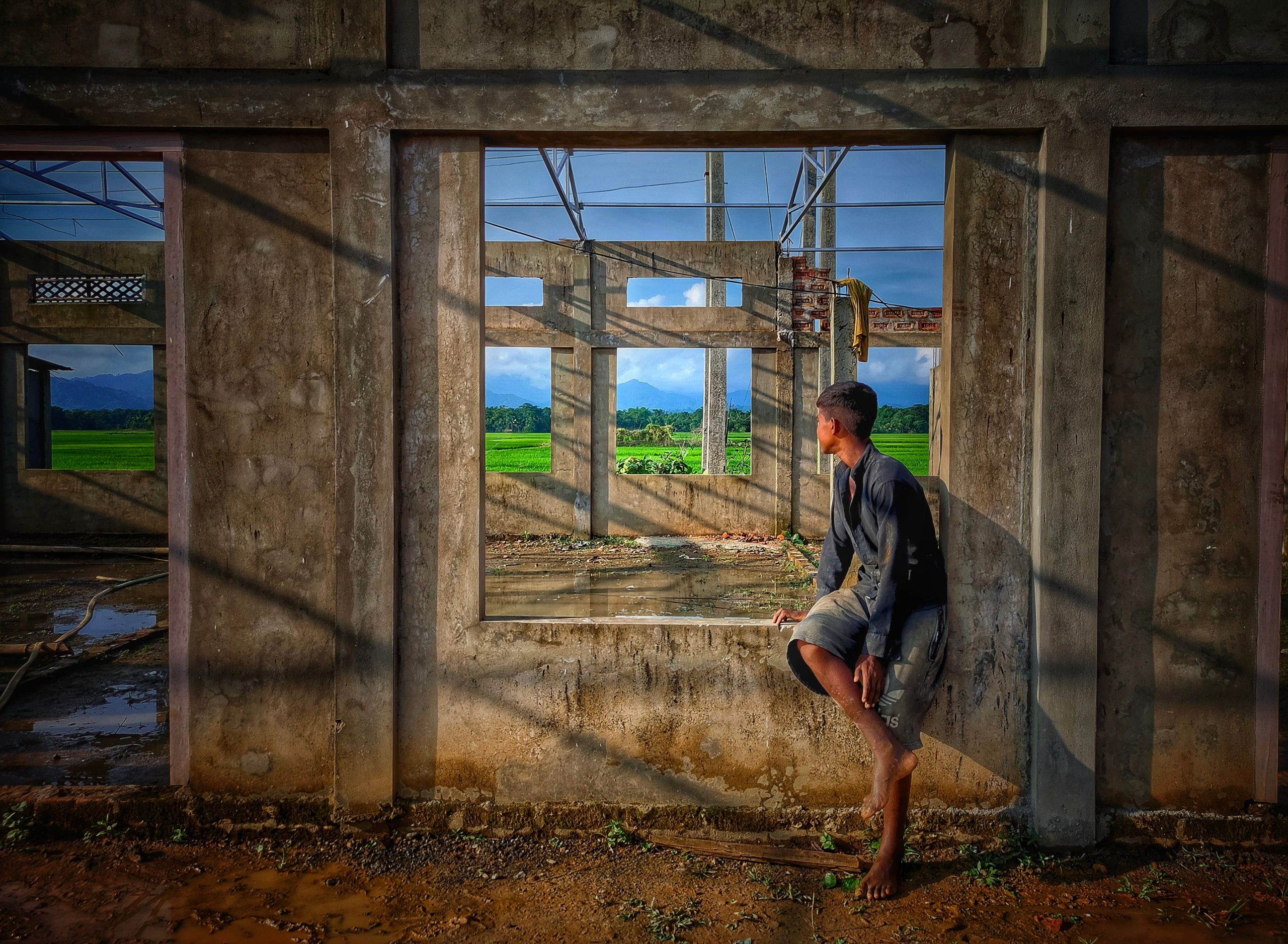
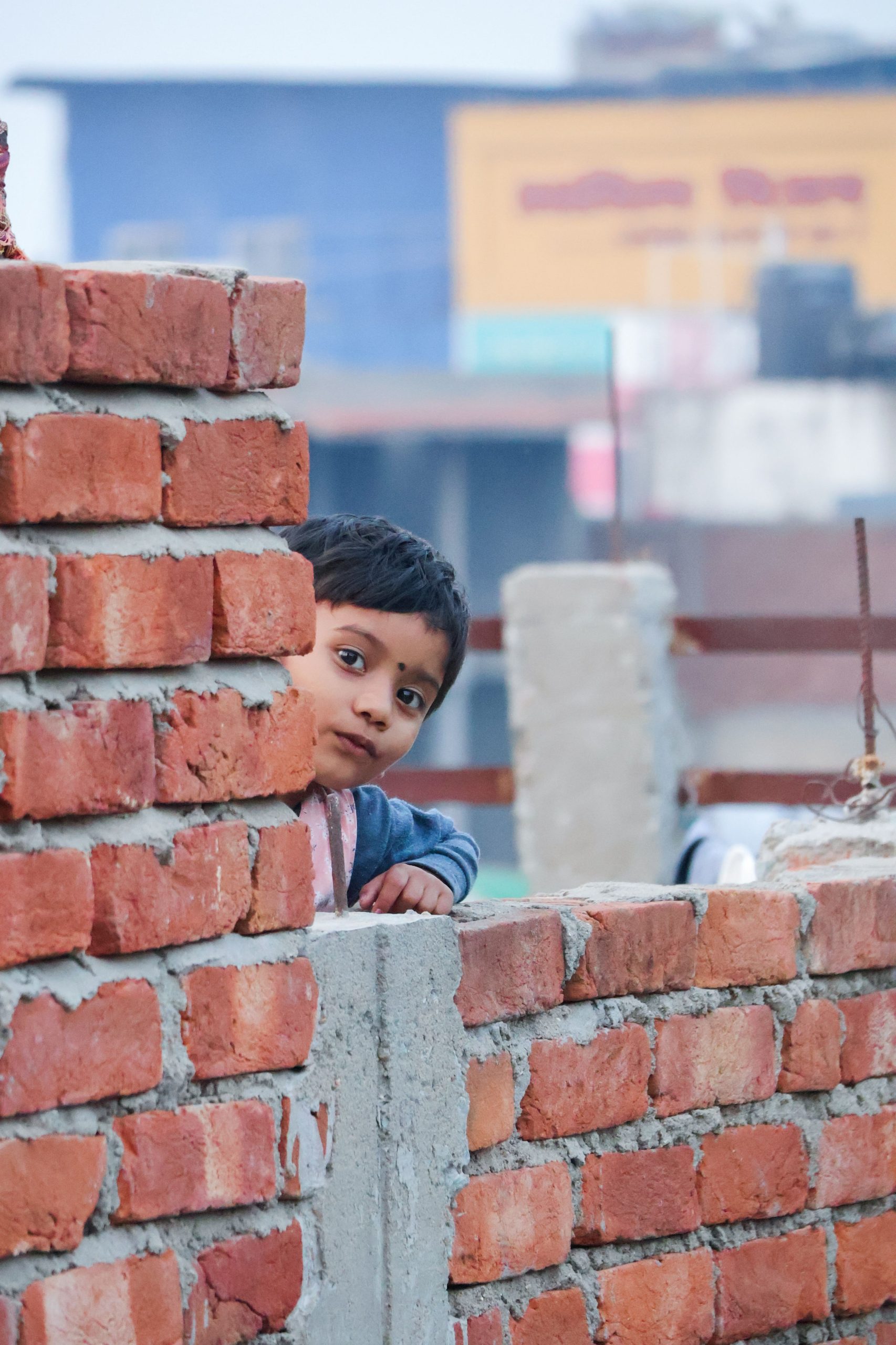
Dawning was a beautiful thing with a strong stem resembling the green sea. At the reversal was hope, growing atop a bed of moss. Every week on the 5th day rain would fall nurturing our seed. Humming a sweet soft melody, summoning its colors. Every 5th day, whenever the sprinkles started our roots would grow instantaneously. Wafting the memories of summer rainfall. Consistency, the lofty petals blooming with future, yet no direction. Rising with a lively brown and blue dye seducing all admirers. The loop presenting comfort. During the 3rd cycle the rain was sparse and barely showered. Hungering, we waited. Fuming with pride vowing to be magnificent. In the next cycle the blessing returned. After completion however our plant remained untouched, frozen in progress. On routine the rain returned a 5th time. The hum reduced to whisper, the droplets sliding off petals. Colors starting to fade. Desperation and distress creeping in. At the 6th run. Silence introduced itself, filling in the soil. Submerging the glow within me. Petals shrinking in remorse. On the 7th cycle I stood by and watched the rain fall as hard as it ever did. Melancholy hovering. Envy running through my dry roots. Wondering, when did I outgrow the rain?
The Mic Flashbacks of how the lights glared at me as my muscles fought for air brush past me. Waves of eyes and cheers disorienting me. Wait, how did I get here? I ponder for a moment before I’m brought back. “Neidy.” My body awakens. My limbs tingle with anticipation. “Do you need the mic?” I nod my head vertically as I step forward, my fingers slowly embracing the cold mechanical device. I suddenly remembered how I got here. 3 weeks prior Rosalia, a classmate approached me with a proposal. “Neidy let’s perform at the school multicultural festival this year!” We are 6th graders. I have never done a performance before. I have no talent. “No.” “Aww, please why not? This is our last year at this school.” She insisted. “I don’t have anything to show.” That is only part of my excuse. Truth is I’m not fully confident in my English speaking skills since I had just moved to Seattle a couple years ago.Who would want to see a performance from a Spanish accent heavy immigrant kid anyway? She smiles sinisterly. “If I find you, say a poem, to read in front of everyone, would you do it?” I stare at her. I give her a small smile and nod my head. Rosalia picked a short poem, thank God. I spent weeks practicing and memorizing that poem in a language I was still mastering. My first time on a platform like this, what if they don’t like me? Well it’s too late to back out now. My presence was seen however my voice was unheard. My voice and my body shake as I begin. “Hi, my name is Neidy Avila Ramirez, I am a 6th grader and I will be reading a poem called Central America in my heart, by Oscar Gonzales. On this voyage into the deep communion of solitude I’ve casually come to know. the old and withered costumes of the sea. I’ve walked carefully through the colors of copper. when the dusk has already conjured the last prayer of the day. Through seasonal doorways I’ve called upon the twilight ghosts arched in the corners of the narrow cobblestone streets. I’ve let my lips evade the necessary verses to find the ending phrase for the afternoon. I’ve disarmed the elusive equity of the night to conceive an intimate verse from its fortified mysteries. I’ve cast aside the grieving songs of my twilight as the sky envelops the enamored vestments of the night. I’ve done and undone so many things in search of you.” My heart is running from my chest. The air has left me again. I stare into the crowd upon my final words.They deflect my doubts as rolling mountains of admiration and cheer follow, causing me to cover my ears for protection. I slowly place the mic back on its original stand then struggle making my way down the steps. “You did great!” Rosalia cheers. “Thanks!” I respond breathlessly. “Would you do it again?” That’s a good question. My knees were locked the entire performance, and i think I stopped breathing a couple times, yet there was something so exhilarating and empowering to voice what I had spent weeks practicing. Who knew they’d react like that. Would I be crazy to chase that feeling again? I suppress the thought. I inhaled deeply. “Maybe.”
Where I am from
I am from juicy soft mangos and oil drenched plantains masking the air. Where remnants of past civilizations and African slaves linger. Where each ocean crash tells a secret. I’m from cold, wet rain and mountains, where the sky roars of anger. Where “opportunity” and reality clash. I am from burden, responsibility and accountability. With the lights burning my skin and the cameras forever rolling. I am from bundles of hardworking souls. “Fight for change or it’ll never happen”. Witnessing the molding of future generations. I am from twisted coily black thick hair. The kind to entrap its invaders. Defensive. I am from a place of knowledge, offering comfort and vast history. A hideout from the world.
THE RELATIONSHIP BETWEEN LANGUAGE AND CULTURE IN EFL LEARNING
Termiz davlat universiteti Xorijiy filologiya fakulteti Filologiya va tillarni o’qitish: ingliz tili ta’lim yo’nalishi talabasi Abdukarimova Qadriya
Annotatsiya
Ingliz tilini chet tili sifatida (EFL) o‘rganishda til va madaniyat o‘rtasidagi munosabat muhim ilmiy hamda amaliy ahamiyatga ega. Til nafaqat muloqot vositasi, balki xalqning qadriyatlari, dunyoqarashi, urf-odatlari va ijtimoiy tajribasini aks ettiruvchi madaniy hodisadir. Shu sababli EFL ta’limida madaniy kompetensiyani rivojlantirish o‘quvchilarning kommunikativ kompetensiyasini shakllantirishda muhim omil hisoblanadi. Ushbu maqolada til va madaniyatning o‘zaro bog‘liqligi, EFL ta’limida madaniyatning roli, madaniyatlararo kommunikativ kompetensiya hamda zamonaviy o‘qitish yondashuvlari tahlil qilinadi.
Kalit so‘zlar: EFL learning, language and culture, cultural competence, intercultural communication, communicative competence, language teaching, cultural awareness.
Abstract
The relationship between language and culture is one of the most significant aspects of English as a Foreign Language (EFL) learning. Language is not merely a means of communication; it is also a carrier of cultural values, beliefs, traditions, and social experiences. Therefore, understanding cultural aspects is essential for developing effective communicative competence in language learners. This article examines the interconnection between language and culture, the role of culture in EFL education, intercultural communicative competence, and modern approaches to integrating culture into language teaching. The study highlights the importance of cultural awareness in achieving successful language learning outcomes.
Keywords: EFL learning, language and culture, cultural competence, intercultural communication, communicative competence, language education, cultural awareness.
Аннотация
Взаимосвязь языка и культуры является одним из важнейших аспектов изучения английского языка как иностранного (EFL). Язык представляет собой не только средство общения, но и носитель культурных ценностей, убеждений, традиций и социального опыта народа. Поэтому понимание культурных аспектов играет важную роль в формировании коммуникативной компетенции учащихся. В данной статье рассматриваются взаимосвязь языка и культуры, роль культуры в обучении английскому языку, межкультурная коммуникативная компетенция и современные подходы к интеграции культуры в процесс обучения языку.
Ключевые слова: изучение английского языка как иностранного, язык и культура, культурная компетенция, межкультурная коммуникация, коммуникативная компетенция, языковое образование, культурная осведомленность.
In today’s globalized world, English has become an international language used in education, business, science, and intercultural communication. As a result, English language teaching has expanded significantly, particularly in countries where English is taught as a foreign language. However, language learning involves more than mastering grammar, vocabulary, and pronunciation. Effective communication requires an understanding of the cultural context in which the language is used.
Language and culture are inseparable concepts. Every language reflects the history, values, customs, beliefs, and social norms of its speakers. Learners who study English without understanding its cultural background may face difficulties in interpreting meanings, idioms, humor, politeness strategies, and social behaviors. Therefore, cultural knowledge has become an essential component of EFL instruction.
The increasing importance of intercultural communication has encouraged educators to integrate cultural content into language teaching. This approach enables learners not only to develop linguistic proficiency but also to interact successfully with people from different cultural backgrounds.
Literature Review
The relationship between language and culture has been widely discussed in linguistic and educational research. Scholars such as Edward Sapir and Benjamin Lee Whorf argued that language influences the way people perceive and interpret the world. Their linguistic relativity hypothesis suggests that language and culture shape human thought and behavior.
Kramsch (1998) emphasized that language expresses, embodies, and symbolizes cultural reality. According to her, language learning should involve cultural understanding because communication is deeply rooted in social and cultural contexts. Similarly, Byram (1997) introduced the concept of intercultural communicative competence, which combines language skills with cultural awareness and the ability to interact effectively across cultures.
Recent studies indicate that integrating culture into EFL classrooms improves learners’ motivation, communicative competence, and critical thinking skills. Researchers have also highlighted the importance of exposing learners to authentic cultural materials such as literature, films, media content, and real-life communication situations.
Modern educational approaches stress the need to move beyond teaching facts about English-speaking countries and instead focus on developing intercultural understanding. This perspective encourages learners to compare cultures, recognize cultural differences, and respect cultural diversity.
Research Methodology
This study employs a qualitative and analytical research methodology. The research is based on the examination of scholarly books, journal articles, and theoretical studies related to language, culture, and EFL education.
Several methodological approaches are applied:
– Descriptive analysis to explain the relationship between language and culture.
– Comparative analysis to identify similarities and differences between cultural perspectives in language learning.
– Content analysis of relevant academic literature on intercultural communication and EFL teaching.
– Interpretive approach to evaluate the significance of cultural competence in language education.
The combination of these methods provides a comprehensive understanding of how cultural factors influence language learning and teaching processes.
Language as a Reflection of Culture
Language serves as a mirror of culture. Vocabulary, idioms, expressions, and communication styles often reflect the values and traditions of a society. For example, English contains numerous expressions related to individualism, personal achievement, and independence, which are significant values in many English-speaking societies.
Cultural influences can also be observed in forms of politeness, greetings, and social interactions. Understanding these cultural norms helps learners use language appropriately in different contexts. Without cultural knowledge, learners may produce grammatically correct sentences that nevertheless sound unnatural or inappropriate.
The Role of Culture in EFL Learning
Culture plays a crucial role in developing communicative competence. Learners who understand cultural contexts are better able to interpret meanings, avoid misunderstandings, and engage in effective communication.
Cultural integration in EFL classrooms offers several benefits:
1. Enhances communicative competence.
2. Increases learner motivation and engagement.
3. Promotes critical thinking and cultural awareness.
4. Reduces stereotypes and cultural misunderstandings.
5. Prepares learners for global communication.
Through exposure to cultural content, learners gain a deeper understanding of how language is used in authentic situations.
Intercultural Communicative Competence
One of the primary goals of modern language education is the development of intercultural communicative competence (ICC). ICC refers to the ability to communicate effectively and appropriately with individuals from different cultural backgrounds.
According to Byram’s model, intercultural competence includes:
– Cultural knowledge.
– Skills of interpretation and interaction.
– Attitudes of openness and curiosity.
– Critical cultural awareness.
These components enable learners to navigate cultural differences successfully and build meaningful international relationships.
Challenges in Integrating Culture into EFL Education
Despite its importance, incorporating culture into language teaching presents several challenges. Teachers may lack sufficient cultural resources or training. Textbooks sometimes provide limited or stereotypical representations of culture. Additionally, some educational systems prioritize grammar and examination performance over communicative and cultural competence.
To overcome these challenges, educators should utilize authentic materials, digital resources, international projects, and interactive classroom activities that encourage cultural exploration and discussion.
The relationship between language and culture is fundamental to successful EFL learning. Language cannot be fully understood or effectively used without considering its cultural dimensions. Cultural knowledge enhances communicative competence, promotes intercultural understanding, and prepares learners for participation in a globalized society.
Modern EFL education should therefore integrate cultural learning alongside linguistic instruction. By developing both language proficiency and cultural awareness, learners become more effective communicators and more competent global citizens. Future language teaching practices should continue to emphasize intercultural competence as a central objective of English language education.
References
1. Byram, M. (1997). Teaching and Assessing Intercultural Communicative Competence. Clevedon: Multilingual Matters.
2. Kramsch, C. (1998). Language and Culture. Oxford: Oxford University Press.
3. Sapir, E. (1921). Language: An Introduction to the Study of Speech. New York: Harcourt Brace.
4. Whorf, B. L. (1956). Language, Thought and Reality. Cambridge, MA: MIT Press.
5. Brown, H. D. (2007). Principles of Language Learning and Teaching. New York: Pearson Education.
6. Richards, J. C., & Rodgers, T. S. (2014). Approaches and Methods in Language Teaching. Cambridge: Cambridge University Press.
7. Hall, E. T. (1976). Beyond Culture. New York: Anchor Books.
8. Moran, P. R. (2001). Teaching Culture: Perspectives in Practice. Boston: Heinle & Heinle.
This month’s issue addresses the Unfinished Business of Living.
The Talmud states: “Do not be daunted by the enormity of the world’s grief. Do justly, now. Love mercy, now. Walk humbly now. You are not obligated to complete the work, but neither are you free to abandon it.” This quote emphasizes the importance of taking action and doing good, even in the face of overwhelming challenges. No one can do everything that should be done, but we can all do something.
We look at different types of human ventures, including literal business and entrepreneurship, but expanding out to art, literature, cultural preservation, maintaining relationships, living within nature, peacebuilding, and just figuring out whom to be, how to exist in the world. Perhaps the deepest work of a human life is learning how to belong, to land, to history, to one another, to the difficult truths we carry, and to the dreams we still have the courage to pursue.
First, an announcement: our regular contributor Rui Carvalho invites readers and contributors to submit poetry to the next annual Nature Writing Contest.
Our contest, Nature 2025-2026, is a new opportunity that we, as organizers, create to reach the rest of the world. Every Contest is a challenge for authors participating and to people that make it happen. This year we invite all authors to write poetry about: (i) Flowers; (ii) Trees and wind; (iii) Water; (iv) Nature Conservation; (v) Turtles; (vi) Love for people and nature; (vii) Hope and Happiness.
Ismoilova Madinabonu Jaloliddin qizi reminds us of our need for and connection to the rest of nature, and this single insight threads through nearly every voice gathered here. We are not isolated atoms; we are woven into a living world.
Business leader Safwan Ahmed outlines mind-shifts that can assist entrepreneurs in his upcoming titles The Solo Founder’s Kite and the Maverick Strategy, suggesting that how we orient our thinking determines what we can build. Dr. Jerry Olivas reflects on how, like sports, life sometimes doesn’t allow do-overs—a bracing reminder that presence and intention matter now, not later. Shah Jehan Asrafi reimagines silence not as absence, but as a latent, creative force, pushing back against the modern terror of quiet. Ananya Guha loves the difficult, noisy, demanding parts of life, even barking restlessness, insisting that vitality lives in the friction, not the ease. UmidaSayfulloyeva encourages society to look at stress and social pressure as we would any other epidemic.Elmaya Jabbarovacaptures the spark between people when love could have started, and the feeling after the moment passes. Amonboyeva Shahnoza reminds us to notice and reach out to lonely people around us—a small, radical act of repair in a disconnected age.
Mark Young playfully alters the color and texture of Australian geography to craft unique landscapes, showing that the ground beneath us can be reimagined, not just endured.Priyanka Neogi relates a trip to colorful Guayaquil, celebrating the beauty and culture of the developing Ecuadorean city. Su Yun’s Chinese elementary school students’ poetry, which he translated into English, focus in on ordinary, relatable experiences. Abdukarimova Farangizdiscusses strategies for helping Uzbek students learn English as a foreign language, bridging worlds through language. Timothee Bordenave finds Jesus Christ within his ordinary life: in legends, in his craft, in his quiet room, not as a doctrine to be believed, but as a reality to be lived—a spirituality of the everyday, not the cathedral. Amina Sunnatullayevaunderscores the importance of remembering and teaching history to maintain one’s cultural identity, a thread that runs through several contributors here. Dr. Reda Abdul Rahimtraces the history of Palestinian political and military uprisings, grounding memory in the specific, contested weight of lived experience. Lan Xinacknowledges the long and rich history of the Dongba culture in China and her partnership with Dongba elders to preserve the culture through education. Rushana Shomurodovapays poetic homage to Uzbekistan’s scientific, medical, and literary history with her tribute to the works of historical writer Abdulla Oripov.
Saymurodova Madinakhon Zokhidjon kizi discusses the cultural associations given to the sound of various languages, revealing how hearing itself is shaped by belonging. Gulyor Matchonova highlights the importance of reading for personal education, the quiet technology of becoming. Maftuna Rustamova encourages steady work towards our goals and consistent study in order to learn, in a manifesto that attempts to empower ordinary people to achieve aspirations. Elmurodova Charos also notes the importance of history and national memory to Uzbekistan’s young people, so that they can appreciate the sacrifices of their ancestors and the value of hard-won peace—a generational chain of gratitude and awareness.
Silke Heiss reviews Abigail George’s novella Did You Get Married To Her While I Was In the Mental Hospital? which is a fierce, boundaryless fusion of mental illness, womanhood, and political rage, where survival lies not in being a “writer” but in being a woman who lives, acts, and cares for others. Abigail George’s new poem relates the experience of family life shaped by addiction, illness, and the commandment of silence, the things we are told not to say, and the cost of keeping them buried. J.J. Campbell writes from the trench of a life lived hard, with no romanticism, no filter, and no apology. Yet his poems are acts of resistance: he’s still here, still writing.
Mahbub Alam’spoem reminds us of the power of a simple word or bit of attention from a friend or loved one. Nidia Amelia Garcíareflects on a love that has healed her, not through rescuing, but through consistent and tender presence. Maja Milojkovic draws on elements in nature that balance and complete each other as metaphors for romantic love. Sumana Bhattacharjee describes love as both otherworldly and grounded in reality, a spiritually grounded physical journey. Gaurav Ojha’sessay brings a philosophical perspective to the experience of falling into romantic love as Milena Pčinjskievokes a quiet, tender, and sacred rhythm of romance unfolding away from the world’s eyes.
Christina Chin’s haiga presents a simple, yet tender, image of departure and separation, the ache of distance rendered in few strokes. Tanja Ajticportrays the anguish of intimate loss and grief. Milka J. Šolaja acknowledges the grief intertwined with the beauty of aging, losing physical and mental prowess even as we develop wisdom.
Duane Vorhees’ work explores false promises and hidden costs: sometimes we don’t get what we expect or bargain for in life. Rehaan Khan’s piece is a plea and prayer for a visit from the divine, or from a departed loved one—the hunger for presence beyond the veil. Joseph Ogbonna’ssimple yet profound piece reminds us that life and death are paths traveled by all. Graciela Noemi Villaverdeweaves a vision of loss incorporated into future life, transformed into future growth. Dr. Debabrata Maji’s poem shows that togetherness transforms losses that would break you into something you can carry. Bahtiyar Hidayet mourns the devastation of war and longs to return to the days when people and animals were cared for and respected—a vision of peace that includes the whole created order. Danijela Ćukinsists that peace is not a distant ideal but something we give each other, moment by moment.
Alan Catlin’s poetic portrait illuminates the humanity of school shooting survivors. Stephen Jarrell Williamssuggests that humanity has a last chance to wake up, speak up, and choose sanity over destruction, both personally and globally. Christopher Bernard’sstory portrays young children caught between idealism and the betrayal of national institutions.
Saeed Koushan’s work illuminates love that arrives and departs in the same wet night, leaving nothing behind but the memory of something that briefly, impossibly, shone. Noah Berlatsky’s piece speaks to the gap between spiritual ambition and clumsy, human reality—the comedy and tragedy of trying to be better than we are. Hassan Ismail Adekunle shows how one doesn’t build a bridge only by laying steel, but through asking, listening, leaving room for mystery, and honoring the ones who cross with courage and return with compassion.
Jacques Fleury’s poem brings humanity together in solidarity against injustice: it’s always a fresh new morning for someone on the planet.Marjorie Thelen’sshort story “The Alien Jazz Band” is about found family, identity, and escape from a broken system, while also serving as a cautionary tale about AI, surveillance, and the loss of human agency, a warning that the technologies we build can sever the connections we need. Bill Tope’s short story is about the gap between what people see and what a person is really like, and how, for some, allowing the gap to remain is a refuge, strategy, and quiet form of grace. Saymurodova Madinaxon Zohidjon qizi points out how ownership of the English language has shifted from a small group of native-speaking nations to the global community of users, a democratization of voice that mirrors the broader themes here.
Chidimma Ewelukma illustrates what it means to be there for someone: to witness their difficult moments even when you can’t solve their problems, and to stay with them through the different seasons and versions of themselves over time. Srijani Dutta’s collection of poems and paintings embrace questioning, resilience, and self-discovery as a way of living, through recurring images of light, water, wind, dawn, journeys, circles, and flames. InPatrick Sweeney’s monostich poems ordinary moments, memory, faith, and imagination constantly intersect, revealing how people search for meaning amid imperfection, mystery, and everyday life. J.K. Durick’s poetry captures the feeling of being a tourist in one’s own life: perpetually out of place, unable to change situations, and curious about the mysterious lives of the locals around you.
Photini Karamouzis Chalkias’work reflects a journey through deprivation, survival, and a desperate attempt to find meaning and connection in a world where truth is veiled by blood and silence. Cyril Etchev’s work highlights the power of the dreaming, loving, creative spirit to rise from the grounded, the silent, the ordinary and transform both self and world into light. Mykyta Ryzhykh depicts a reality in which time melts, language fragments, bodies decay, love becomes entangled with violence, nature becomes contaminated by human suffering, and death seems to be the only stability—a counterpoint that makes the acts of connection elsewhere in this gathering all the more urgent.Türkan Ergörexpresses a nostalgic wish to return home where she feels she belongs, although life has inevitably changed her. Alex S. Johnson’s interview with musician Militia Vox highlights how for her, authentic artistry is forged in the stubborn refusal to abandon the raw, relational reasons you started, and reclaiming that impulse is itself an act of rebellion.
Dr. Jernail Singh’s piece argues for ethical action on a broader timescale, regardless of visible consequences in our lives. Sayani Mukherjee’s speaker seems to ask: What truly makes a nation? The answer is not simply borders or governments, but the memories, emotions, songs, cultures, and stories shared by its people. Shlok Pandey explores the weight of generational trauma and impossible social expectations through a mother-daughter story, the inheritance of wounds and the possibility of healing. Thi Lan Anh Tran’s piece suggests that childhood is often happy because then we know how to be fully present, wonder at small things, and love without condition.
Brian Barbeito offers a meditation on authenticity, simplicity, and the harmony that exists when humans, animals, and land live in honest relation to one another, circling back to the opening note from Ismoilova Madinabonu Jaloliddin qizi.
Shannon Scoates speculates through a tone poem on a decaying piano on what remains of our art and creation as natural cycles and time pass.
Finally, Madina Shodmonova encourages us to summon up all our courage and live our dreams with gusto.
What emerges from this constellation is a single, insistent truth: we are beings whose survival and meaning depend on the quality of our connections—to nature, to history, to language, to the divine, to the lonely, to the difficult, to the departed, to the dreams we have not yet lived. The work of being human is not to transcend these ties, but to deepen them, to show up for them, to carry what breaks us together, and to keep writing, making, and loving through the wreckage and the wonder alike.
Three little children under open skies, Tiny hands lifting wind-borne dreams that rise. Smiles so pure, like verses softly born, Innocence blooming like the grass at dawn.
Butterflies drifting through the endless blue, With laughing breezes that the world renew. No weight of future, no worry, no pain— Only the present, like sun after rain.
A year has passed in whispers light and brief, Drifting like gentle wings of tender grief. Carrying joy in a peaceful flight, Through childhood’s skies of soft and endless light.
Childhood is sunlight at break of day, A drop of rain that gently fades away. A song that echoes through hearts so wide, A world of wonder we keep inside.
And when we grow in the rush of time, May we not lose those days so fine. May innocence still guide our way, And happiness in our hearts forever stay.
TUỔI THƠ LÀ HẠNH PHÚC
Ba em giữa khoảng trời xanh, Nâng niu cơn gió mong manh ước nguyền.
Nụ cười trong vắt hồn nhiên, Như hoa cỏ dại bên miền bình minh.
Bướm vàng chao liệng lung linh, Theo làn gió hát hành trình rong chơi.
Không lo năm tháng xa vời, Chỉ vui hiện tại giữa đời tuổi thơ.
Một năm thoáng tựa giấc mơ, Êm như cánh bướm vật vờ bay qua.
Mang theo hạnh phúc chan hòa, Thả theo ngọn gió ngân nga dịu dàng.
Tuổi thơ là nắng mai vàng, Là cơn mưa nhẹ khẽ ngang hiên nhà.
Là câu hát vọng ngân xa, Là miền cổ tích nở hoa trong lòng.
Mai này giữa chốn mênh mông, Bước qua dâu bể đục trong cuộc đời.
Xin đừng quên một khoảng trời, Từng là hạnh phúc tuyệt vời tuổi xanh.
Để còn giữ chút trong lành, Giữa bao biến động mong manh kiếp người.
Để khi tóc điểm sương rơi, Vẫn nghe hạnh phúc đầy vơi trong tim.
Excerpt 1: The Solo Founder’s Kite: Flying Alone in Business (From Section 1.1: The Death of Institutional Scale)
“In the deeply evolved landscape of contemporary global macroeconomics, traditional assumptions regarding corporate scale, human capital density, and structural longevity are facing critical systemic failure. For past generations, industrial and commercial dominance was directly measured by organizational volume—the size of a company’s physical real estate footprint, the complexity of its vertical internal hierarchy, and the sheer headcount of its full-time labor force.
However, the emergence of hyper-connected communication networks, decentralized programmatic software, and automated data processing matrices has fundamentally flipped the dynamics of leverage. Today, massive corporate overhead, deep bureaucratic structures, and consensus-driven decision cycles function not as competitive fortresses, but as structural weights that actively compress profit margins and severely slow operational velocity. The modern economic landscape secretly favors a completely different species of corporate architect: the Solo Founder. This architectural evolution represents a permanent paradigm shift in how global enterprise value is created, distributed, and sustained over long-term financial horizons.”
***
Excerpt 2: The Maverick Strategy: Strategic Entrepreneurship and Leadership (From Introduction: The Maverick Mindset)
“The global macroeconomic landscape does not reward standard compliance; it rewards calculated disruption. In the contemporary theater of corporate operations, the historic boundaries separating traditional industries are dissolving at an unprecedented velocity, rendering classic business rulebooks obsolete. The vast majority of economic participants enter markets by mimicking existing commercial archetypes, implement marketing frameworks copied directly from immediate competitors, and quantify success by how seamlessly they blend into the prevailing ecosystem. This standard behavior creates an environment of intense, margin-depleting competition.
However, there exists a distinct, elite cadre of independent strategic thinkers who fundamentally refuse to accept the constraints of traditional commercial design. These individuals are the Mavericks. In the realm of high-impact venture creation, a true Maverick is a deeply disciplined, hyper-analytical systems architect—an individual who possesses the cognitive autonomy to peer through historic industrial illusions and recognize hidden structural inefficiencies that the establishment has failed to address due to long-term bureaucratic inertia.”
***
Author Bio: Safwan Ahmed is an independent entrepreneur, author, and business strategist specializing in business architecture and digital problem-solving. Based in Sylhet, Bangladesh, he successfully manages traditional physical enterprises while providing advanced technical consulting and online troubleshooting to help modern businesses scale. Alongside his business operations, Safwan actively writes to codify his real-world frameworks, offering visionary builders hyper-analytical insights to eliminate structural friction and maximize business velocity.
Dreaming of you, loving you, always listening to you.
Maja Milojković was born in Zaječar, Serbia. She is the deputy editor at “Sfairos” publishing house in Belgrade, Serbia. She is the vice-president of the association “Rtanj and Mesečev poetski krug”. She is the author of two books: “The Circle of the Moon” and “Trees of Desire” She is the editor of the International Anthology “Rtanjski stihopevi” One of the founders of the poetry club “Area Felix” from Zaječar, Serbia and the editor of an international e-magazine for creative literature and culture “Area Felix”.