Andijan State Institute of Foreign Languages Foreign Language and Literature German Language Direction Student of group 402 Yunusova Khodisa Scientific advisor Kadirova Nargiza
Problems of translation practice and methods of analysis
Annotation: This article analyzes the problems encountered in translation practice and ways to overcome them. Special attention is given to analyzing the translation process through exercises. The article illustrates analytical methods used to address linguistic, cultural, and stylistic challenges, and suggests strategies for developing translation competence.
Annotation: V dannoy state rassmatrivayutsya problemy, voznikayushchie v protsesse perevoda, i metody ix preodoleniya. Osoboe vnimanie udelyaetsya analizu protsessa perevoda na osnove uprajneniy. Na primerax pokazany analyticheskie metody, primenyaemye dlya preodoleniya linguisticheskih, culturalnyx i stylisticheskih trudnostey, a takje predlozheny puti razvitiya perevodcheskoy komettsii.
Key words: translation practice, analysis method, translation problems, exercises, linguistic barriers, cultural differences, translation competence Keywords: translation practice, analytical method, translation issues, exercises, linguistic barriers, cultural differences, translation competence Key words: translation practice, analytical method, translation problems, training, linguistic barriers, cultural differences, translation competence
The process of translation involves not only the transfer of meaning between languages, but also the complex relationship between two different cultures, ways of thinking and styles. The translator must preserve the content of the language units in each text and convey it to the target audience in an understandable and appropriate form.
However, many problems arise in translation practice – linguistic differences, cultural context differences, stylistic adaptation, etc. This article considers the role of analytical exercises in identifying, analyzing and solving such problems encountered in translation practice. It also provides suggestions and approaches for improving the competence of translators through analytical methods.
Translation is an exchange of information between two languages, which covers the areas of linguistics, cultural studies, methodology and contextual thinking. Each translation is a creative process, which is carried out based on a specific methodology. In translation practice, learners often make not only grammatical or lexical errors, but also make incorrect translations without sufficiently understanding the content and cultural essence of the text. Therefore, exercises based on analytical methods are of great importance in the in-depth study and improvement of translation practice. These exercises develop translation skills, strengthen critical thinking, and teach context-based decision-making.
Problems encountered in translation practice a) Linguistic problems: – Multiplicity of words and phrases – Problems of synonymy and antonymy – Variety of syntactic devices – Difficulties in ensuring terminological compatibility b) Cultural problems: – Translation of idiomatic expressions and metaphors – Realities (national and cultural elements) – Differences in style of use and social context c) Stylistic problems: – Differences between formal and informal styles – Preservation of the author’s tone and individuality – Adaptation to a literary, scientific or journalistic style
Analysis method and its advantages The analysis method is a method of dividing the translated text into components and analyzing each part based on a linguistic and contextual approach.
Through this method, the student: Understands the function of language units in depth Understands the stylistic and semantic features of the text Learns to compare alternative options in translation Advantages: Develops analytical thinking Reduces errors in translation Makes translation choices based on linguistic and cultural analysis. Analyzes incorrect translations and explains the correct form. Translates in a specific style (formal, artistic, scientific). These exercises encourage students to think deeply not only grammatically, but also stylistically and culturally. To achieve effective results in translation practice, not only theoretical knowledge, but also analysis-based exercises are necessary.
I speak my heart out, unbridled and free, A symphony of emotions, intertwined with every word, I am yet to discover, the depths of my soul, Living life in chapters, unfolding with each passing moment,
Gazing up at the brilliant blue, across the zenith and nadir, I am a living embodiment of life, in this moment, right here and now, My thoughts and emotions, a kaleidoscope of hues, In every step, I seek your guidance,
From the turbulent clouds, of inner turmoil, dense and dark, Falling into the crest of the sea, there the sailor smiled upon me, Chapters merging into one, oneness radiating, with faith in my eyes, Motionless yet in motion, blossoming with love,
The divine religion, there my dreams spread their wings, Again, limitless saga, nothing seems impossible, There I assemble in you, and the monk meditates, in eternal newness.
Desolate
Devastated by the world, Standing amidst the debris, Where emotions have been numbed, On the arid soil, Where the shovel refused to cultivate, Vacant eyes searching for those hands, Now merely a memory, There, my verdant spirit sings of the autumn fall, In a huff, Abandoned in the lanes of desire and acquisition, Shrieking in solitude amidst the mirage, Hawks flying overhead, Vultures lurking over the vulnerable heart, A rugged dholak stifling the feeble voice, And life, set free, leaving nothing behind, Loud, as never before.
Hot weather sweating the body and firing the nature
Suddenly the sky becomes so gloomy
Just like my beloved’s face in the shadow of sorrow
It stands as the dead of the dark starless night
In this puzzled situation I lean down in the lightning
The earth trembles with fire and die so many people in the thundering
After the rain in the half bright sky the rainbow blooms out with a hope
That colorful garden laughs out with heavenly brightness
The deaths embedded on the ground
And the bright flowers smiling on the other side
The rain takes out the lives in contrast it helps sprout the new lives
And the colored rainbow in the sky smiles in the glory of hope
We everyday weave.
Chapainawabganj, Bangladesh
13 May, 2025.
Md. Mahbubul Alam is from Bangladesh. His writer name is Mahbub John in Bangladesh. He is a Senior Teacher (English) of Harimohan Government High School, Chapainawabganj, Bangladesh. Chapainawabganj is a district town of Bangladesh. He is an MA in English Literature from Rajshahi College under National University. He has published three books of poems in Bangla. He writes mainly poems but other branches of literature such as prose, article, essay etc. also have been published in national and local newspapers, magazines, little magazines. He has achieved three times the Best Teacher Certificate and Crest in National Education Week in the District Wise Competition in Chapainawabganj District. He has gained many literary awards from home and abroad. His English writings have been published in Synchronized Chaos for seven years.
Poetry submissions to North of Oxford’s Streur Anthology are now open!
North of Oxford would like to pay tribute to the late Russell Streur, poet and publisher of The Camel Saloon and The Plum Tree Tavern with an online anthology dedicated to Nature. Send us your poems of Nature, of floral and fauna, of forests and trees, of rivers, creeks and streams. Of farms, of urban nature, of parks and sanctuaries, of oceans and bays, of islands, of all things, Nature.
Send one to three poems for consideration of publication to North of Oxford at sahmsguarnieriandreutter@gmail.comSubject line of submission: Streur Anthology. Submissions will be accepted until 5/31/25. Only submissions attached as word doc will be reviewed. Please include a 100-word bio within the word doc.
Jacques Fleury’s book You Are Enough: The Journey Towards Understanding Your Authentic Self
Eva Petropoulou Lianou shares a short film inspired by NASA’s inclusion of her poetry in a capsule launched to the moon.
Synopsis On 26th February 2025 NASA launched a capsule with poems to the moon, one of them was the anti-war poem “Happy Birthday”. Written by Eva Lianou Petropoulou, Directed & Animated by Zina Papadopoulou, Music & Sound by Grigoris Grigoropoulos
Lunar codex, Athena, Minerva Excelsior, The Vagabond Anthology, edited by Mark Lipman, dedicated to the Palestinian poet Ahmed Miqdad
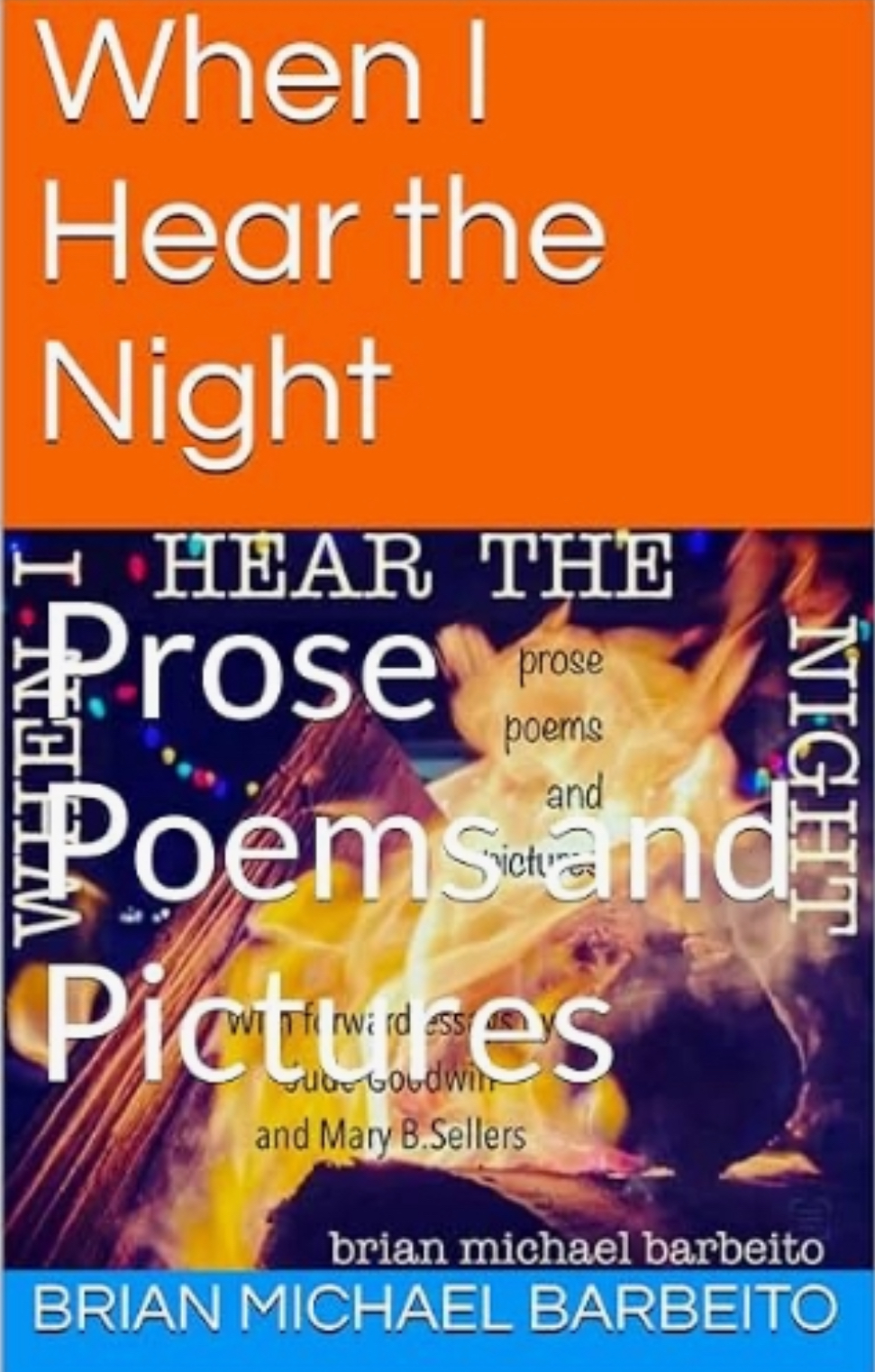
Also, our contributor Brian Barbeito’s new book has just come out, When I Hear the Night. This is a prose poem and landscape photography book. Included with the words and pictures are two literary and dynamic introductory essays, one by poet and editor Jude Goodwin, and another by the writer and editor Mary Buchanan Sellers, figures current and thus well-informed in the field. There are also author notes and question-and-answer sections. The writings can be said to have interesting elements of memoir, essay, belle-lettres, poetry, and short story forms. Their content often includes the mystic and inner vision of the author coupled with the outside world of nature walking and travel.
Now, for May 2025’s first issue: Paradoxical Understandings. In this issue, we explore various perspectives and vantage points, how multiple things can be true at once in our complex universe.
On a more personal level, Peter Cherches writes of understandings and misunderstandings, how much we can come to know or forget about those closest to us. Aziza Xazanova urges human understanding through avoiding assumptions and listening with empathy. Daniel De Culla relates a story where a person in trouble simply seeks a listening ear, not rescue.
One way people can understand each other better is by learning each other’s languages. Several contributors discuss pedagogical methods for language teaching.
Other contributors reinterpret language in concrete and abstract ways. Jerome Berglund renders different poetic forms into concrete images. Noah Berlatsky contributes a humorous poem about procrastination that uses repetition as a literary device. Christina Chin and Uchechukwu Onyedikam craft joint tan-renga poems, finishing each other’s pieces with images of music, nature, rest, and memories. Rus Khomutoff’s concrete poetry takes us on a journey of surrealism, music, and romance.
Like Khomutoff, other writers travel deep into their own psyches. Brian Barbeito reflects on his thought process and creative journeys, considering how he both opens his mind to emptiness and enlightenment and, like a skilled hockey player, remembers the basics of his craft. On another note, Nigar Nurulla Khalilova evokes writers’ block and an intense, foul mood as harsh as the Arab Simoom wind.
Mesfakus Salahin ponders the fragility of human identity and self-concept. Mark Young’s poetry explores creative processes, relationships, and the search for meaning. Texas Fontanella’s music digs deep for a dose of duende. Tagrid Bou Merhi draws on train travel as a metaphor for introspection and longing for one’s past or future. Stephen Jarrell Williams crafts a series of verses describing a person’s inner struggle and renewal. Ari Nystrom-Rice explores identity, wondering who he truly is underneath the surface. Mexribon Shodiyeva’s poetry celebrates the fragile butterfly and the beauty of being yourself. Shamsiya Khudoynazarova Turumovna relates having had the courage to free herself from an unhealthy situation and walk her own path.
Paul Cordeiro speaks to the aftermath of significant relationships and events and to how our feelings can reshape our memories. On a less serious level, Mark Blickley develops a farcical story of unemployment fraud inspired by a photo of a man with a sheep skull, where a character invests deeply into reinventing himself.
On a more cosmic level, Jack Mellender’s work looks at space, time, and humanity’s place in the universe. Ummnusalma Nasir Mukhtar relates a fanciful and expansive dream where she traveled to the moon and stars and gathered her strength. Jacques Fleury’s photography encourages us to view life from different vantage points, exploring concepts as varied as travel, physical attraction, thought, and justice.
Duane Vorhees reflects on ancient archetypes and how we tell stories about ourselves. Sayani Mukherjee reflects on the constant turbulence of human and natural history. Dr. Jernail S. Anand probes some basic paradoxes of modern human life.
Rezauddin Stalin reflects on the beauty and the price of freedom as Blue Chynoweth reflects on the blessing and curse of being able to contemplate one’s place in the universe rather than living by instinct.
Mahbub Alam wonders whether love or self-destruction will win the day. As a person of faith grappling with these issues, Chimezie Ihekuna addresses life’s seemingly intractable struggles, suffering, and human evil, and also God’s implacable goodness in a paradoxical couplet of poems. Lilian Dipasupil’s paired poems take a similar approach, warning of child kidnapping while honoring the love and sacrifice of Jesus.
As writers, one of the ways we can respond to evil is to bear witness and document it as a warning. This is one of the roles of journalism. Davronova Asilabonu affirms the value of journalism and speculates on the field’s future.
More traditionally literary writing can bear witness as well. Yucheng Tao provides a sobering reminder of the historical massacres of the indigenous people of the American West by European settlers and of many Cambodians later in history by the Khmer Rouge. Z.I. Mahmud explores how Arthur Conan Doyle’s The Hound of the Baskervilles brought realism into detective fiction, illustrating the monstrosity of human greed and vengeance. Rahmat Muhammad laments how people where she lives in northern Nigeria no longer honor elders and ancestors as much as they should.
Shuhratbekova Gulzoda describes the historical contributions of the humanist Jadid leaders of Uzbekistan to art, literature, science, and culture. Dilobar Maxmarejabova expresses her pride in her Uzbek heritage and her hometown of Qashqadaryo. Hashimjonova Durdana affirms her pride in her Uzbek heritage and culture. Nozima Gofurova outlines the many achievements of today’s Uzbek youth.
Bhagirath Choudhary points to the role of literature in terms of helping people and societies evolve to become more humane. Dr. Jernail S. Anand illuminates the power of art and literature to touch people’s hearts and souls and inspire wiser and more compassionate behavior.
Alexander Klujev highlights connections between Russian music and Russian philosophy and how both honor the triumph of life over death.
Various contributions celebrate different aspects of life. Shahnoza Ochildiyeva enjoys a picnic with her classmates on a sunny spring day. Su Yun evokes the struggle and beauty of flowers growing in an urban environment. Isabel Gomez de Diego photographs childhood exuberance in a neighborhood where humans coexist with nature, trees and bike paths near city apartments. Eva Petropoulou Lianou crafts a story around the evocatively named “Hero’s Path,” a hiking trail near a European monastery. She finds simple joy in nature and travel. Manik Chakraborty takes poetic inspiration from misty mountains as Taro Hokkyo honors his muse and the land on which he writes.
Marjona Jorayeva Baxtiyorovna expresses her respect for women and the feminine, which she links to nurturing and compassion. Gulsanam Qurbonova celebrates the tender nurturing of a mother’s love. Vo Thi Nhu Mai reflects on the warmth and tenderness of her childhood in Vietnam and how that inspired her creativity. Kylian Cubilla Gomez’ photography captures vintage childhood images: Snoopy, old Easter themed toys, a colorful frog, even possibly Dad’s aftershave. David Sapp enters the mind of a three-year-old, excited about cereal and dogs. Marjona Jo’rayeva relates her enthusiasm for a fresh term at school.
Kristy Raines expresses the simple yet profound joy of two souls finding true love and choosing each other. Eid Saleh writes in English and Arabic of the meeting of souls in a similar way, and refers both to romance and to close friendship. Qaraboyeva Zilola expresses the tender urgency, trepidation, and obsession of young love. Marley Manalo-Ladicho ignites a fiery love feast in his poetry.
However, as Taylor Dibbert points out in his brief poem, romances, and other sources of happiness, aren’t guaranteed to last.
Tuliyeva Sarvinoz’ elegant poetry laments lost love as Mirta Liliana Ramirez honors the memory of a beloved, asserting that she’s not yet ready to move forward. Eva Petropoulou Lianou touches on the tenderness of human hearts and how many of us carry emotional trauma. J.J. Campbell’s poems describe a soul’s slow descent into misery and cynicism. Luis Cuauhtemoc Berriozabal speaks to social and psychological entrapment, stuck with folks tired of his old stories. Linda S. Gunther’s short story “Bake Me a Banyan Tree” explores what we owe our loved ones and how far we would go for them.
Eric Barr’s poetry reflects the realities of navigating life after a stroke. Manik Chakraborty laments destruction caused by a fire as Mykyta Ryzhykh reimagines the Three Little Pigs into a futuristic dystopia in light of environmental destruction. Don Bormon evokes extreme desert heat and the specter of climate change.
Alex S. Johnson takes us on a mythical journey to transmute sorrow in a poem translated into Greek by Cassandra Alogoskoufi.
Sometimes what one needs to overcome suffering isn’t as complex as alchemy, but can just be time at home curled up with one’s cat. Nicholas Gunther’s poem describes a weary soul’s desire to return home after a long journey. Bill Tope’s short story explores how a senior cat helped bring an older woman out of depression after society made both feel useless.
We hope that Synchronized Chaos can inspire creativity, bear witness to the joys and pains of the world, and transform sorrow and stagnation. Please enjoy this issue!
Following a breakfast hardly worthy of the name, Annie sat with her cup of coffee on the porch, swinging listlessly as she watched huge, sculpted flakes of snow blow across her front yard. The wind sang through the black, denuded boughs of her hickory trees. Although the outdoor thermometer showed the temperature to be a bitterly cold 12 degrees Fahrenheit, Annie didn’t feel the chill in the air. She did, however, feel the coldness of isolation and depression and a continuing deep sense of loss closing in on her.
She cast her mind back several weeks, to the two days voluntary absence she’d taken from work. Annie, 60, had worked for half of her life at Mercer Portfolio as an executive secretary. She knew, as did her employer, that she was very good at her job, and her record of attendance had been nearly spotless. She hadn’t requested personal time off from work since her mom died, almost a decade before. The time had been readily granted. Additionally, cards, flowers, prepared food and other expressions of condolence has been forthcoming. All this for the death of a woman with whom Annie had not stayed overnight for more than 40 years.
Mom, a cold and unfeeling woman trapped in parenthood, had never wanted to be a mother. Because of her ambivalance, she had treated her only child distantly. Annie’s father died when she was 7 and she could scarcely remember him. She remembered the last time she had visited her mother, 11 years before. She had just flown in.
“Mom, how can I help? Do you want me to do some laundry or shopping or…”
“I don’t want nothin’ from you,” snapped Delores Davis in her hacking, 3-pack-a-day voice. “You don’t come back but ever’ other month and you try to make up for it by doin’ laundry or shoppin’ or whatever. I jus’ want one thing from you,” she said.
“What’s that?” asked Annie tiredly. They went through this same drama every few months. “What could I finally do that would actually make you happy?”
“Don’t come back here no more,” said the old woman with an evil smirk. “That,” asserted Delores, “would make me very happy!”
Annie got a letter from the Edgewood Nursing Home a month later, telling her that Delores had entered their facility as a permanent resident. Annie never again saw her mother alive. She had several times sent a check to the Home to provide some extras for Mom, but the envelopes had been returned unopened. A phone call from that facility almost a year later informed her that Delores Davis had escaped her mortal bonds. Annie had felt numb for a day afterward, but that was all. No other member of her family was living.
Sam, however, was another story. Sam, Annie’s molly cat, had been an integral part of her life from the time she got her from Animal Rescue at 3 months until she finally died at 17 years. Sam was a fast friend and constant companion and Annie had come to rely emotionally on her cat to always be there for her. Conjuring an image of her beloved Sam still brought a tear to her eye. Perhaps most hurtful was that, unlike when her mother had died, others reacted rather coldly when Annie expressed her grief at Sam’s passing.
Her boyfriend, Arch, at her home on the day of Sam’s passing, at first seemed not to know what to say, but then folded her obligingly in his arms and patted her back. But, when she didn’t immediately snap out of it, he seemed not to understand why the loss of a friend whom Annie had known ten times as long as she’d known him should have struck her so hard.
“Annie,” he said with rock-headedness, “how long are you going to mope?” She looked up out of her tissue and blinked. “I mean, it’s only a cat.” Her lips drew into a straight, unhappy line. Arch, she knew, had never liked Sam, not really. What he said next was the worst thing: “If it had been a dog, then I could get it…”
“Then get this,” she told him coldly, and stuffed her snotty tissue into his shirt pocket and said, “Beat it!” He did beat it and, despite fruitlessly calling her daily for the first week, soon stopped trying to make contact.
“Hey, Sam, cute stuff,” cooed Annie, picking the cat up off the porch and cradling her like a baby in her arms. The cat instantly began to loudly purr. “That’s a good girl,” Annie said, and rubbed Sam’s belly. Annie sat down upon the swing, eagerly soaking up the love she she often hadn’t found elsewhere. “Hey,” she asked the cat, “do you want some treats?” Sam’s ears perked up and she squirmed and jumped from Annie’s arms, landing lightly upon the porch floor. She fed Sam her treats, but of course she wanted more. Additional crunchies were not forthcoming, however, for as Annie cautioned Sam, “We girls got to watch our figures, or no one else will.”
“Mr. Helper,” said Annie, speaking on the phone with her boss. “It’s Annie.”
“Annie, are you feeling any better? I was surprised when you took a sick day yesterday. I checked, and you haven’t taken a sick day since you had Covid, nearly 5 years ago.”
“I’m alright, Mr. Helper, thank you. I need to call off today for a different reason.”
Helper’s voice suddenly turned harder. “What reason?” he asked suspiciously.
“Sam…my cat, Sam, died yesterday, and I’m still a little messed up about it.”
Silence.
“Mr. Helper?” asked Annie.
“You mean, you weren’t ill yesterday?” he asked.
“Well, not physically. But, emotionally I was a mess. I owned Sam for…”
He cut her off. “You can have one day, Ms. Davis,” said Helper, using her formal appellation. “You misled the firm yesterday when you called off with what turned out be a lie. One day,” he repeated. He disconnected.
Annie never went back to Mercer Industries.
Claudia, Annie’s best friend from work, called her 5 days into her continued absence from the job. “What’s goin’ on, girl?” asked Claudia. Annie had phoned her friend the day that Sam died and left a message, but until now, she had received no call back. “The rumor mill is working overtime, Annie. Did you really quit?”
“Quit?” repeated Annie. “Not exactly. I’m still grieving, Claudia. I told you, Sam died.”
“Yes,” murmured her friend. “You said that.” After a moment, she asked, “what else is it? Are you sick? Tell me you’re sick, Annie, and I’ll tell that to Helper. Then he can’t fire you.”
“I already told him why I missed work, Claudia,” said Annie.
“I can tell him you were upset, that you had a serious condition; you know, that you had an STD or something and were ashamed to talk about it.”
“I’m not ashamed, Claudia,” Annie said a little more sharply that she intended. “But I am grieving. If you and Mr. Helper and his bosses can’t cut me some slack after three decades of faithful service, then…” She was losing her temper, something she’d never done before with her friend.
“Do you feel suicidal?” asked Claudia eagerly.
Annie pulled her cell phone away from her face and stared into it. She said, “What?”
“If I could tell them you’re suicidal, then they could refer you Human Resources and get you some help…”
Annie retorted, “I don’t need help. I just need time to grieve.” Did she need professional help? she wondered. A shrink would only laugh at her, she feared.
“Then I could explain that you were raped–a date rape–and you had PTSD.”
Annie took a great breath and let it out. “Claudia,” she said calmly, “I’m not suicidal. But I could use some personal support, from my friends.”
“What about Arch?” asked Claudia.
“Yes,” replied Annie wearily, “what about Arch?”
“Is there anything I can do to help?” asked Claudia next.
“I’ll call you if I need anything, okay?” replied Annie softly.
“Okay, girl.”
“Oh, baby,” said Annie, kneeling by Sam’s side. The cat had just vomited again and lay prostrate in the mess. She pulled her pet from the discharge and took her inside to wipe her off. This was the third time is as many days that Sam had regurgitated. Annie phoned up the vet and made an appointment for that afternoon.
Dr. Patel gently palpitated Sam’s distended abdomen and checked her tongue and eyes and ears. He said something about “jaundice.”
“No parasites,” he murmured, “but we’ll check the stool sample and do an X-ray and an ultrasound.” Sam had known the vet all her life and trusted him. But, when he touched her stomach, she growled crossly. After an hour, the vet met with Annie again and told her that Sam’s liver was at issue.
“It’s hepatic failure, Annie,” said the vet. “It’s almost certainly the result of the ingestion of toxins. We’ve gotten a number of similar cases in the area. Do you use any toxins around your house?”
Annie frowned thoughtfully. “No,” she began but then remembered, “the groundskeeping crew has used a defoliant on my blackberries the last two years. But, I asked them and they said it was pet-friendly and wouldn’t hurt Sam.” When he asked, she told him the brand name. He stared sadly at her. “Do you think they lied to me?” she asked in a tiny voice.
_______
Annie and Sam sat alone on a bench in the consultation room at the vet’s. She sat not in her lap as she usually did, but stretched out on the seat. She gently stroked her side. Dr. Patel had told her that, given Sam’s condition and her age, surgery was not indicated. It would be very expensive and it simply wouldn’t work; Sam would never survive the procedure.
“Pretty girl,” she murmured. The cat rolled onto her back and stuck her paws into the air.
The vet reentered the room.
“How long does Sam have, Dr. Patel?” she asked, feeling the moment was surreal.
The vet stroked the cat; Sam purred. “She could last for six months. Or she could expire tomorrow.”
Expire, thought Annie bleakly. What a cold, lifeless word to describe the death of a friend.
“It’s up to you, of course,” the vet went on, “but the kinder course would be to put Sam to sleep, as soon as possible.”
Annie felt as though a hundred pound weight were on her shoulders. “Is she in any pain?” she asked.
The doctor nodded. “Yes,” he said.
Sam was euthanized 30 minutes later, after Annie had said her goodbyes. She didn’t cry, which she felt was weird, inasmuch as her grief was manifest. She told herself she was still in shock. The vet’s assistant gave Annie a wax imprint of Sam’s paws, plus a bill for $1,500, including $100 for the cremation.
Annie sat alone in her car and wept bitterly.
_______
For the first week, Annie felt as if, when she entered a room, she would find Sam padding across the floor or mischievously shredding the curtains or sharpening her nails in the doorways. Then she’d remember and just sigh. Her friends, all from work, were by this time avoiding her. Claudia had emailed her and told her that at Mercer, Annie was persona non grata and no one dared be seen with her. This explained the mild rebukes she’d gotten from work friends she’d texted to spend some time with. She was dreadfully lonely. The house and yard were home to ghosts.
Doing what she always did when she faced uncertainty, Annie booted up her PC and consulted Dr. Google. She clicked on Grief Over Pets and received a panoply of advice. She read that modern Western society had a rather unforgiving attitude toward those who claimed to be suffering grief over the death of an animal. They called this disenfranchised grief and said that it only added on additional layers of misery to those so afflicted.
By the time the second week had passed, she thought to seek professional help. Dialing up the HMO in which employees of Mercer were enrolled, she talked to what sounded like an older woman at the HMO and explained her situation, asking if she could have an appointment with a mental health professional. The woman apparently placed her hand over the telephone receiver and spoke to someone else. When she came back on the line, she said, barely containing her hilarity, “Maybe you should contact an animal psychologist,” and exploded into gales of unpleasant laughter. “I think they got one at the greyhound track,” she added, then cackled some more.
Annie hung up the phone.
Nights were the worst. When Arch wasn’t there, Sam had spent the nights in Annie’s bed, curled on top of the comforter and nestled in her owner’s arm. But, because Arch was now a ghost as well, Annie spent every night. every second, alone. She hated it.
Mercer was an investment brokerage and the employees, including the secretaries, had profitted from the firm’s investment strategies and enjoyed rich supplements to their already generous remuneration. After 30 years, Annie was but 7 years from retirement. And, because she was in good health and excellent financial shape, decided she wouldn’t reenter the work force. Although she had been discharged, the company was still obliged to pay her substantial pension. Annie retired.
Annie sat in the living room, wathing a PSA on television, showing the dire situation of abandoned and neglected animals. It was a fund-raising effort by Animal Rescue, the same group where she’d gotten Sam so long agp. Videos of starving dogs and abused kittens and lame horses flashed across the screen, ripping at her heart. When the commercial ended, Annie turned to her PC and looked up Animal Rescue on the web. She was surprised to learn that the local shelter was still located at the same spot it had been when she got Sam so long ago. Taking up a wrap, she walked to her car and into her salvation.
Annie was shocked to discover that the same ageless woman who had facilitated Sam’s adoption was still working at the shelter, only now she was the director. Her name, she read on her name tag, was Gladys. Next on the string of miracles was that the woman recognized Annie as well when she mentioned the animal she had adopted.
“Sam, yes, I remember,” said Gladys. “In our follow up telephone interview with you, you said you named her Sam. But, she’ll always be Cuddles to me,” she said, recalling the temporary name that the shelter had given her. She expressed condolences when Annie told her that Sam had passed. But, she didn’t press Annie to immediately readopt and Annie was a little surprised.
“It’s important to grieve properly after a friend passes,” Gladys said. “If you adopt too soon, it’s not fair to the memory of your friend and it’s not fair to your new animal.” Gladys went on to recommend a grieving period of 2 to 3 months, at a minimum. “And Cuddles…Sam, has been gone just six weeks.”
Annie smiled with relief; she had half expected a hard sales pitch; perhaps she was too used to the mercenary buyers and sellers of the transactional American culture. “I agree with you, Gladys,” said Annie.
“Then what can I help you with today, Annie?” asked the other woman. “Or did you just want to visit with some of our little friends?”
‘Is…is that allowed?” asked Annie timidly.
“Of course. Look around and visit. They love company.”
So Annie did, strolling around and visiting every animal. They all seemed pathetically eager for attention, for socialization. When she had completed her visit, she asked the question she had when she came.
“Is there anything that I can do?” she asked.
“What did you have in mind?” asked Gladys, all business now.
“Well,” replied Annie. “As a volunteer. I’m recently retired and I have a lot of hours to fill. And I’d like to help, if I can.”
“What sort of work did you do?” asked Gladys.
“I was an executive secretary for a financial firm for thirty years,” replied Annie.
“Well,” said Gladys, we don’t have much call for dictation or typing and the like…” Annie’s shoulders slumped. “…but,” she continued, “If you can muck out cages and give the animals water and food and assist the visiting vets and love the precious creatures, then you got a job.” She smiled warmly.
“Can I start today?” asked Annie.
Annie began working at the shelter 15 hours a week, which soon escalated to 6 hours per day, five days per week. She loved her work, menial as it was. She enjoyed getting her hands dirty and returning home in the evening smelling like cats and dogs. She fell in love with all the animals, though Sam was never far from her mind. By August, Annie felt that the intensity of her grief was at last at an end. She approached Gladys one afternoon.
“I think I’m ready,” she said.
Gladys somehow knew exactly what she meant. “I think you’re ready too,” she said. “Does this mean you’ll be leaving the shelter?” she asked with concern. Annie was one of her most avid helpers and her sudden absence would surely be felt. Not only a favorite of the shelter’s patrons, board members and workers, but the animals took to her naturally as well. Their love was returned.
“You’ll never get rid of me, Gladys,” vowed Annie.
“Who’s the lucky girl, or guy?” asked Gladys.
“I’m adopting Jupiter,” declared Annie with a big smile, referencing a large gray male cat.
Gladys frowned. “Honey, Jupiter is 13 years old.”
“I know.”
“In just a couple of years you may have to go through with him what you did with Sam.” Jupiter was diabetic and needed daily insulin injections, which the shelter’s pro bono vet had trained Annie to give.
“I know all that, Gladys,” said Annie. “But, Jupiter has been here for two years, and if I don’t adopt him, then nobody will. He’s an outcast, sort of like me. I think we belong together, you know?”
The night that Annie adopted Jupiter, she lay asleep with the big gray cat curled into her chest and she dreamed. Of Sam. In the dream, Sam was in her lap on the swing and Annie was stroking her fur. Sam suddenly began purring very loudly. She looked up into Annie’s green eyes and opened her mouth.
“What is it, baby?” asked Annie, bending down. In response, Sam leaned up and bit Annie almost impossibly softly on the nose. Then she was gone.
Annie woke up abruptly, said aloud, “Sam?” But, it was Jupiter who lay nestled up against her. There had, Annie realized, been a changing of the guard and a release from her ever-present malaise. The cat looked up inquiringly into his mistress’s eyes, as if to say, this is all new to me too. “I’m out of the gloom now,” murmured Annie, and fell back into a dreamless sleep.
We are talking about a foreign world where the USA were the absolute protagonists, a world, however, that was only shown in the USA in the magazines dedicated to celebrities: it is the post-dolce vita Rome, which follows the Rome – Dolce Vita, so called, because brilliantly depicted by my mentor Federico Fellini in his famous film of the same name.
We are in 1995 in Rome. The poets, the writers, the filmmakers, the global stars all frequent the literary café “Caffè Greco” and the night clubs. My friend Prince Egon Von Furstenberg, who introduced me to Joan Crawford in NYC, and I were leaving the famous Jackie O’ nightclub, in homage to Jackie Onassis, with a group of movie stars to continue the night at “Gilda”, another famous nightclub dedicated to Rita Hayworth, owned by my friend Giancarlo Bornigia. Wild dancing with songs by Corona, Cher, Haddaway and a group of fans around their idol took up all our space. The idol was the adolescent star of photo stories, the fascinating Massimo Sangalli, accompanied by Doriana Bianchi, the favorite actress of movie director Marco Ferreri.
I called the director of Gilda, my friend Angelo Ciccio Nizzo, to calm down Sangalli’s fans and to have some space for us to dance too. I met Sangalli and Doriana Bianchi, we started dancing together, but we also started a friendship that never ended. With the great poet Dario Bellezza, a pupil of Pasolini, we were working on a big show, based on the novel by Dario Bellezza: “Turbamento” about Pasolini. I invited Sangalli and the Italian star Sebastiano Somma to act with me. It was a great success for Sangalli in his theatrical debut and then he became internationally famous. Sangalli is currently starring in “Music in the Forest” by Roberto Lippolis with Nastassja Kinski, John Savage, Cassandra Gava, Vincent Spano, soon to be released.
In Lippolis’ film, set in the Second World War, Sangalli plays Zigmund, a Jewish poet. Both female and male beauty in the world of cinema is certainly important, since it is the easiest road to fame, which, however, survives only if you have talent and gradually put aside roles based on the beauty of physical appearance and often superficial, to interpret psychologically complex and profound roles, as in the case of Sangalli. Of course, the world of fashion, especially in Italy and France, opens the doors to perfect bodies and enchanting faces and so Massimo Sangalli has participated in events of the famous fashion designer Anton Giulio Grande. He is the testimonial for “Angel” by Dolce & Gabbana. He has been photographed by Helmut Newton, Louis Vidal, Carlo Bellicampi, Dario Plozzer, working in cinema with prestigious directors such as Tinto Brass, Pupi Avati, George Lucas and others.
Sangalli will soon be in an Italian-Californian film about Pirandello and in an interesting film written by Hollywood authors, based on the transition between the era of communication without the internet and with the internet. Cinema continues to be an important reference for all of us to improve ourselves, but I fear that it will continue to always be based on “fame” which for Hannah Montana by Michael Poryes, instead falls to second place, since life reconquers the first. https://synchchaos.com/?s=Poryes&submit=Search .
A difficult swing for those who, like Sangalli, face this aspect on a daily basis.
Observation of Blood (previously published in The Lake)
Today, the museum closes its doors early, waiting; how much of the night’s bleakness seeps into it, enjoying the dark corridors. The Indian tents with pointed frames, like spears of bone, stand pierced in the empty lobby, lonely, waiting; how the winter wind cuts through it. As the cold artifacts of the museum catch the outside glow, the carnivalesque slaughter brings laughter to civilization.
Denver’s rain is absent and dry, the natives of the Arapaho meditate on the sacred mountain when the invaders come. I watch how blood spreads— past and present—and death favors their flesh, buried under black moonlight by fire and sword. Left with sword marks, they dye the river bend with blood, winding like red silk; now it leaves collections lying in the museum of darkness. Their bones cannot be read, as their residues are covered under the ash of death.
Inside or out, there is no sweetness— only the salty taste of blood. The truth sinks and vanishes; as for the sleeping city folks, the moon is clear tonight.
They Came (It was published Cathexis Northwest Press)
Tuol Sleng like a poisonous flower exhaling a piercing venom.
The palm trees swayed beneath the faltering shadow, a procession of bones
—the dead— labeled as intellectuals.
They came like a gust of wind, They came like a herd of wild beasts. They came slaughter upon slaughter, cursing Tuol Sleng, damning its streets and rivers.
They regarded themselves as fanatical idealists, But never, made the place a paradise. Passion torched it into a fiery hell.
They came with frantic lusts. They came to Cambodia— its flesh drenched in rouge.
When Tuol Sleng opened, Moonlight buried people in a sunken pit of earth.
None to cry those words: “ They came!”
Yucheng Tao is an international student from China, currently studying songwriting in Los Angeles. His work has been featured in Wild Court (UK), The Lake (UK), Red Ogre Review (UK), Cathexis Northwest Press, and NonBinary Review (which includes an interview). His poems have passed into the semifinalist round of the Winds of Asia Award by Kinsman Quarterly, and many poems and fiction have been published in Yellow Mama, Apocalypse Confidential, Waymark Literary Magazine, Ink Nest, The Arcanist, Synchronized Chaos, Down in the Dirt, Academy of the Heart and Mind, and others.