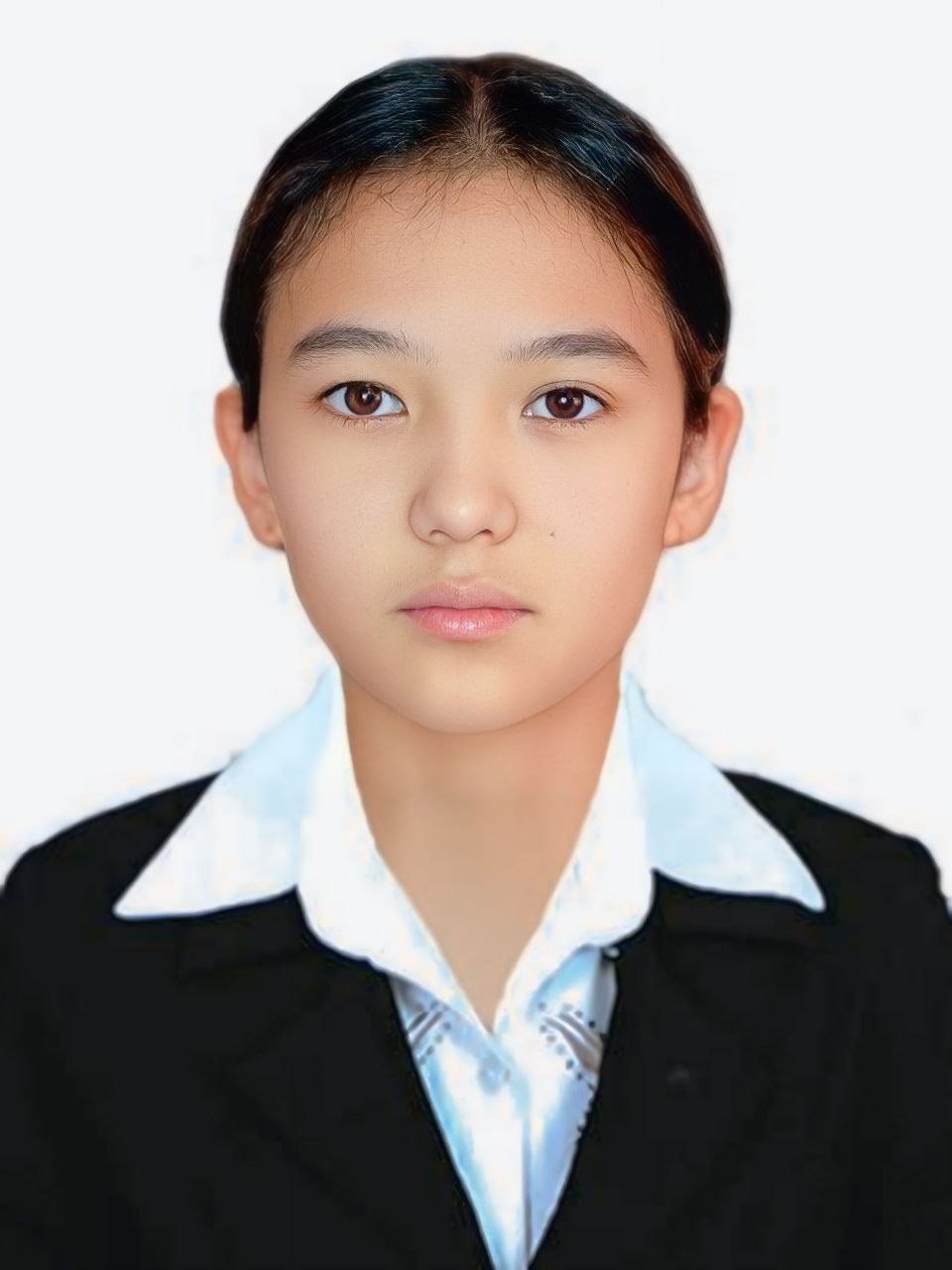
Essay from Asalxon Xasanova

TO HELL WITH POSITIVITY!

​“For years, we’ve been told that positive thinking is the key to a happy, successful life. Not anymore. To hell with positivity!”

Mark Manson

​Everyone goes through adolescence, and right now, I am navigating this exact phase of life. We all know that teenage years come with a wave of hormonal changes, so I won’t dwell too much on that. It is a time when everyone struggles and experiences a certain degree of emotional pain.

​As I grew older, my responsibilities multiplied: household chores, studies, language learning, and, most importantly, family issues. This is the period when a person is tested the most, and knowing how to make the right choices becomes vital. However, there was a time when I completely lost interest in everything. I couldn’t focus on my studies, I felt disconnected from the world around me, and I became utterly indifferent to my own future. The underlying reason was simple: I had turned into a “coward.”

​Everything began piling up at once. Schoolwork, especially language learning, became incredibly overwhelming because I had reached the most critical and decisive stage — preparing for the “IELTS” exam. Ironically, the very process I had been anticipating so eagerly turned out to be daunting and complex in reality. Unwilling to fight through the difficulties and feeling lost, I chose to escape from my problems… and I began mindlessly scrolling through Reels for temporary hits of dopamine.

​No matter how much I tried to force myself to think positively or justify my slacking, the anxiety and inner turmoil kept eating away at me. My peers seemed so much more fortunate and successful than I was. It felt like they could achieve anything, while I, in my own eyes, had become utterly useless. So, what did I do next? I decided that I simply refused to go on living as a useless member of society!

​I committed to a radical change. I had always enjoyed reading, but this time, in an effort to understand and discover myself, I turned to self-development literature. I opened the “Mutolaa” app and browsed through the personal growth section. The first book that caught my eye and instantly drew me in was The Subtle Art of Not Giving a Fck*. It perfectly matched my state of mind. As I read, I began questioning the values I had always blindly accepted as true. I threw toxic positivity out the window and learned to embrace “negative thinking” — or rather, looking reality square in the eyes.

​Surprised, aren’t you? You read that correctly: I learned to accept the truth for what it is. The more clearly a person can see their own shortcomings, the more they grow, the more real solutions they find to their problems, and the wider their worldview becomes. I put this into practice.

​For instance, I was struggling significantly with English Writing (essays). It was a painful sticking point for me. I analyzed the situation brutally, asking myself: “What am I doing wrong? Why does this feel so impossible?” I realized two things. First, my vocabulary was insufficient. Second, even when I did manage to write an essay, I was terrified to re-read it because I was scared of making mistakes. And why was I so afraid of making mistakes? Because I dreaded being criticized by my teacher. But one day, I conquered all my fears and simply read what I had written, then handed it over to my teacher. My teacher simply corrected the errors, and that was it. In that very moment, I realized that you just have to start without fear. I had been making a mountain out of a molehill.

​Not everyone can solve their problems independently; many prefer to simply run away from them. I was no exception. I used to try to avoid thinking about even the smallest issues, but deep down, I knew they were draining me every single day. Eventually, I resolved to face them all. Most of my anxieties revolved around my future: “Will I get a high IELTS score? What about the SAT? Will I get accepted into prestigious universities in the US?” These questions spun in my mind like a non-stop carousel.

I tackled these issues by prioritizing the most fundamental ones.

Problem 1 & Solution: Why don’t I always speak fluently and flawlessly in English?

Solution: I realized I had been speaking mechanically. My mindset was basically, “I need to talk, I am talking, so that’s enough.” I wasn’t bringing the same freedom and emotion to English that I naturally use in my native language. The next time I spoke, I infused it with emotion just as I would in my native tongue, and I discovered it became significantly easier.

Problem 2 & Solution: Why did my closest friend betray me?

Solution: In reality, labeling them as my “closest” friend was flawed from the start. A person’s ultimate confidants are only their family and God. My friend hadn’t betrayed me; they had simply made a new friend, built a closer bond with them, and chosen to trust them. They shared their thoughts with them. This is a completely natural human dynamic. Because I had viewed them as my “irreplaceable” friend, I felt like a victim who had been stabbed in the back. The truth is that everyone has the right to choose their friends and confidants, and you cannot force anyone’s affection. Accepting this changed my perspective entirely. The situation wasn’t a tragedy, and I was not a victim.

​Conclusion

​In conclusion, I realized that during my teenage years, I had been exaggerating minor setbacks and artificially shaping myself into a “victim.” This victim mentality provided a temporary cushion and a false sense of dopamine, making it feel like my problems weren’t my fault. But please, do not make the same mistake!

​No matter what challenges you face, whether you are to blame or not, the responsibility and accountability ultimately rest squarely on your shoulders. Always look at situations with a realistic, critical eye and filter your thoughts. Do not run from your problems; solve them. Do not fear losses, and start working for your future today. No one is going to hand you success on a silver platter. You must always strive to reach every single milestone through your own hard work!

​Finally, I would like to express my deepest gratitude to Mark Manson, the author of the book that entirely transformed my outlook on life, and I highly recommend that you pick up a copy and read it too.

Synchronized Chaos’ Mid-May Issue: Life in Transition

Image c/o George Hodan

“God is Change.” — Octavia Butler, The Parable of the Sower

This month’s issue explores how individuals and societies navigate change, uncertainty, and transformation. Through poetry, essays, cultural criticism, artwork, fiction, and scholarship, these works examine what it means to stay human in a rapidly shifting world, while searching for meaning, connection, identity, and resilience.

Our issue starts with contributors looking directly into time, change, and transformation. Jacques Fleury speaks to seasons, renewal, and the passage of time. Patrick Sweeney’s monostich poems explore transitions, nostalgia, and fleeting but precious moments. J.K. Durick draws on airports as a metaphor for connection, disconnection, and transition. Roberta Beach Jacobson addresses identity, impermanence and transformation in her poetry. Nozimova Shukrona highlights how travel can facilitate personal growth, learning, and development. Tursunova Mehrinoz Oybek qiz outlines the process of self-discovery, career and intellectual development. Laskiaf Amortegui encourages readers to focus on the present and future, drawing on heartbreaks as catalysts for the future rather than letting romantic disappointment hold us back. Elaine Murray celebrates the warm, gentle beauty of the country on a spring day. Brian Barbeito speaks to the deep mystery of the sea as rendered through different works of literature, and to the continual change of seasons.

Image c/o Nicky Pe

Other writers speak to love, longing, and human connection. Mesfakus Salahin reflects on the importance of love and freedom in a changing and fragile world. Joshua Obirija somehow misses a place he’s never been. Stephen Jarrell Williams expresses love, longing, nostalgia, imagination, and a sense of vulnerability. Milica Tomić begs a lover to return to her and renew the early days of their relationship. Yuldasheva Xadichaxon Bahodir qizi laments a lost love. Lan Xin speaks eloquent words of comfort to those living through romantic heartbreak. Eva Lianou Petropoulou rejoices in the power of love to overcome difficult situations. Soumen Roy’s poetry “Lonely River” is a reflective and introspective piece that explores themes of love, isolation, growth, and resilience. Kholboyev Mashrab offers love and respect to his caring mother. Abdusalomova Marjona Jahongir qizi celebrates a mother’s unconditional love. Polina Moys celebrates family, kindness, children, and gratitude for everyday blessings. Bakhadirova Rukhshona remembers the love of a caring grandfather figure. Saparboyeva Laylo Hajiboy kizi’s short story relates how mothering can bring people purpose and help them move forward after loss.

Some people engage in existential reflection and the search for meaning. J.J. Campbell’s lyrical works explore disillusionment, existential crisis, and the search for meaning in a decaying world. Jelena Jovanović illuminates existential crisis, nihilism, and the search for meaning. Sterling Warner’s poems rebel against conformity and consumerism, turning instead to inward spirituality. Sayani Mukherjee explores the concept of soul, the essence of a person, and of a society. Duane Vorhees’ poetry speaks to duality, paradox, repression and authenticity, and the subconscious and the power of nature. Daniel G. Snethen and Alex S. Johnson’s spider poem suggests that existence is cyclical, with life and death being intertwined and perpetual. Elena Nedelcu’s poems present a dreamlike, iridescent view of the world, speaking to self-discovery, love and connection, and spiritual searching.

Some look into war, violence, and historical memory. Alan Catlin’s work probes propaganda, wartime violence, and the “banality of evil” with destruction amidst cultural entertainment. Joseph C. Ogbonna critiques hubris through an epic take on Napoleon’s military downfall in the Russian winter. Marjona Karshiyeva Zoxidjon speaks to war, loss, and the longing for peace. Jernail S. Anand urges people to integrate the lessons of history into today rather than consigning historical figures to the past. Su Yun’s pieces point to the impact of violence on a child’s fragile psyche and the power of art to enhance resilience.

Image c/o Gerd Altmann

Still others explore themes of identity, society, and cultural critique. Ken Poyner touches on the fragility of relationships and social norms and the blurred lines between order and control. Mark Young’s intertextual work sends up a mishmash of names and identities, high and low culture. Alex S. Johnson critiques the propensity of the healthcare system to use its soft power to generate clinical narratives that can override patients’ lived realities. Later, he lampoons celebrity culture through an essay on the off-screen personality of Willem Dafoe. Hilola Sharipova reminds young would-be Internet influencers to focus on character rather than fame and appearance. Muslima Murodova reminds us to look beyond first impressions and avoid snap judgements in social situations.

Literature, art, and creativity are often important vehicles by which we hold onto and communicate our humanity amid change. Kobulova Madina outlines the types of heroes presented in Russian literature and how the concept of heroism has diversified in recent years. Harinder Cheema revels in the power of poetry to foster creativity and transcend cultural boundaries. Ozodbek Narzullayev honors the power of poetry and the calling of being a poet. Shahnoza Amanboyeva adds her thoughts to the question of artificial intelligence’s effects on artistic creativity. Dr. Reda Abdul Rahim compares themes of imagination and facing the unknown in Haruki Murakami’s Murder of the Commander and the ancient epic of Gilgamesh. Murtazoeva Shakhnozabonu advocates for youth to study classical Russian literature. Fhen M. celebrates and honors the lengthy heritage of literary and popular musical and literary culture in his evocative poem. Tuychiyeva Odinaxon Axmadjon qizi looks into how globalization and nationalism are simultaneously influencing Uzbek art. In an interview with poet Eva Lianou Petropoulou about his Hyperloop project, where he collects short poems from around the world, writer Alexander Kabishev discusses what he’s learned about innovation, collaboration, and perseverance.

Several writers look to education, language, and learning as facets of human creativity. Jumanazarova Nafisa speculates on the advantages of online vs offline education. Orinboyeva Sayyora and Maxliyoxon Yuldasheva discuss various pedagogical approaches to improving student communication in foreign languages. Soliyeva Dilshoda Tokhtamatjon qizi highlights ways to use fairy tales to improve language learners’ speech. Alimardonova Gulsevar Sirojiddinovna offers up a comparative analysis of terminology in English and Uzbek. Shohista Narzulla O’ktamova qizi discusses nouns and adjectives in Uzbek dialects. Norqizilova Layla outlines the potential roles for artificial intelligence in education. Feruza Otaboyeva suggests that students should volunteer for the sake of helping others, not just to pad their resumes.

Image c/o Gerd Altmann

Several of these writers focus on the transformation of society through labor, industry, and modernization. Rakhimova Dilafroʻz Axrorjon qizi explores the food industry as a living expression of Uzbek identity, showing how nourishment becomes a bridge between cultural continuity and modern commerce. Umarova Muattarxon Akromjon qizi similarly examines the garment industry as both a practical and symbolic force within Uzbekistan’s evolving economy, where tradition is stitched into the fabric of contemporary life. Oʻrinboyeva Ziynatjon’s discussion of big data expands this transition into the scientific and technological sphere, portraying a world increasingly shaped by information systems that redefine medicine, research, and communication. Kholdorova Durdona Odiljonovna looks deeper into medicine, outlining the physiological mechanism of inflammation. Muxtorov Xabibullo Kozimjon o‘g‘li discusses modern methods for reactive electrical power compensation. Nigora Tursunboyeva weighs the promises and dangers technology presents to younger generations, illuminating the tension between digital opportunity and emotional vulnerability. Jamilova Zaxro’s work on digital diplomacy further reflects a civilization adapting its oldest political practices to a rapidly interconnected world. Meanwhile, Jalolova Ruxshona Nosir qizi, Ubaydullayeva Fariza Sheraliyevna, and O‘rinboyeva Zarina Xabibullo qizi examine risk prediction and logistics modeling, emphasizing how modern societies increasingly rely upon technology and data to navigate uncertainty.

Yet transition is not only technological or economic; it is deeply moral and psychological. Nazarova Hamida turns toward the humanitarian wisdom of Uzbek poets Alisher Navoi and Abay Qunanbayuli, whose works remind readers that periods of change require compassion and ethical grounding. Hua Ai’s reflections in Quintessence similarly argue that meaningful social transformation begins within the self: before one changes the world, one must first confront one’s own consciousness. Zinnura Yo‘ldoshaliyeva explores the psychology of risk-taking, capturing the fragile threshold between fear and courage that accompanies every major life decision. Xasanova Aziza Kumushbek qizi encourages readers to resist the crushing weight of criticism and maintain dignity amid judgment, portraying resilience as an act of survival during moments of personal upheaval.

Many of these works also examine what it means to remain human within unstable environments. Hauwa Hassan Haruna presents one of the collection’s most striking paradoxes: women are often forced to become invisible for safety while simultaneously fighting to remain visible enough to claim dignity and rights. Erkinjonova Bibisora Elyorbek qizi offers another quiet portrait of vulnerability through her empathy for a lonely older man, suggesting how aging itself becomes a transition into isolation and invisibility. Bill Tope mourns the disappearance of inexpensive comic books and childhood treasures, tracing the painful shift from youthful abundance into nostalgic loss. His reflections remind readers that even ordinary objects become markers of changing eras.

Image c/o Gerd Altmann

Against these anxieties, several contributors seek refuge in tenderness, imagination, and connection with the natural world. Ananya S. Guha dissolves the boundaries between human beings and nature, envisioning love and belonging on a planet overshadowed by climate crisis. The poems suggest that humanity’s survival may depend upon rediscovering intimacy with the earth itself. Student works collected by Su Yun return readers to innocence through playful clouds and animals, preserving moments of wonder that adulthood often forgets. Christina Chin’s haiga, centered on kittens and their protective mother, offers an image of care and familial devotion amid uncertainty. Likewise, the poem by Chinese poet and music producer He Taiji portrays Lan Xin as a figure of serenity and kindness whose quiet presence becomes transformative for others, reminding readers that gentleness itself can guide people through periods of unrest.

The collection also celebrates the sustaining power of culture and community during times of transition. Rahmonova Dildora highlights the importance of cultural immersion in her piece where a traveler encounters the gentle sincerity of the Uzbek people, suggesting that identity is strengthened through openness rather than isolation. Yayra Erkin qizi Bo‘riyeva advocates for physical exercise, public competitions, and healthier urban design, envisioning communities that evolve not only economically but physically and socially. Her work imagines progress as something lived collectively through public space, movement, and shared participation.

Transition is both disruptive and necessary, integral to human and non-human nature. Even as it unsettles institutions and identities, change can open new possibilities for connection, awareness, and renewal. These works remind us that people endure, adapt, and continue searching for meaning while the world around them transforms.

Essay from Murtazoeva Shakhnozabonu

THE RELEVANCE OF CLASSICAL RUSSIAN LITERATURE AMONG MODERN YOUTH 

Jizzakh State Pedagogical University

Faculty of Philology

Field of Study: Russian Language and Literature

Student of group 723-24

Murtazoeva Shakhnozabonu

Annotation:

This paper examines the relevance of classical Russian literature among modern youth. It analyzes young people’s interest in reading and emphasizes the educational and moral significance of classical literary works. Special attention is given to the role of literature in shaping values and worldview. The study concludes that classical Russian literature remains important and influential in contemporary society.

Keywords: classical Russian literature, youth, reading, morality, education, relevance, literary heritage

Main Part

Classical Russian literature occupies a special place in the global cultural and spiritual treasury of humanity. It was formed over several centuries and has absorbed a rich experience of philosophical reflections, moral searches, and artistic interpretation of reality. In modern conditions, when information technologies are rapidly developing and young people’s interest in reading is gradually declining, the issue of the relevance of classical Russian literature becomes particularly significant.

First of all, it should be noted that classical literature performs an important educational function. The works of such outstanding writers as Leo Tolstoy, Fyodor Dostoevsky, Alexander Pushkin, Ivan Turgenev, and Anton Chekhov contain profound reflections on the meaning of life, good and evil, and moral choice. These works contribute to the formation of moral values among young people, develop empathy, critical thinking, and spiritual self-improvement. In the context of modern globalization, when young people are faced with many contradictory values, classical literature becomes a reliable guide in the search for life meanings.

In addition, classical Russian literature plays an important role in the development of thinking and intellectual abilities of the younger generation. Reading complex literary texts requires concentration, an analytical approach, and the ability to interpret what is read. Unlike short informational messages and visual content that dominate the digital environment, classical works stimulate deep reflection and shape a culture of thinking. This is especially important in modern society, where the ability to analyze information and draw independent conclusions becomes a key skill.

The relevance of classical Russian literature is also manifested in its ability to reflect universal problems of human existence. Themes such as love, freedom, responsibility, the meaning of life, and inner struggle remain unchanged over the centuries. Despite historical and cultural differences, classical works continue to resonate with modern readers. By engaging with these works, young people gain an opportunity to better understand themselves and the world around them.

However, it should be acknowledged that today the interest of young people in classical literature faces a number of challenges. One of the main reasons is the development of digital technologies and changes in the ways information is perceived. Social media, video content, and entertainment platforms often displace traditional reading. As a result, many young people perceive classical literature as complex and outdated. In addition, the language of 19th-century works may seem difficult to understand, which also reduces interest in reading.

Despite these challenges, there are effective ways to increase young people’s interest in classical Russian literature. The education system plays a key role in this process. Modern pedagogical methods, such as interactive learning, discussions, dramatization, and the use of digital technologies, make the study of literature more engaging and accessible. For example, film adaptations of classical works, audiobooks, and electronic resources can serve as additional incentives for exploring literary heritage.

Personal example and the cultural environment are also of great importance. If respect for books and reading is fostered in families and society, it positively influences young people’s interest in literature. In this context, libraries, cultural centers, and educational institutions play an important role by creating conditions for promoting classical literature.

Classical Russian literature also remains relevant in the context of forming national and cultural identity. It reflects historical experience, traditions, and social values, contributing to the preservation of cultural heritage. For modern youth, this is especially important, as it helps maintain a connection with the past and better understand their place in the world.

Thus, despite modern challenges, classical Russian literature has not lost its significance. It continues to perform important educational, moral, and cultural functions. Its relevance is обусловлена (determined by) the universality of its themes, the depth of its philosophical ideas, and its ability to shape the spiritual world of an individual. The task of modern society is to preserve and pass on this rich heritage to future generations by adapting its presentation to the conditions of the digital age.

In conclusion, it should be emphasized that classical Russian literature is not only a part of cultural heritage but also an important tool for personal development. It helps young people comprehend complex life issues, forms moral guidelines, and contributes to intellectual growth. That is why its relevance among modern youth remains high and requires further study and popularization.

CONCLUSION

The study has shown that classical Russian literature retains its relevance among modern youth despite significant changes in the informational and cultural environment. The analysis demonstrated that classical works continue to perform important educational, moral, and spiritual functions. They contribute to the formation of moral values, the development of critical thinking, and the expansion of the worldview of the younger generation.

The particular significance of classical literature lies in its universality. The themes addressed in the works of Russian writers—such as love, moral choice, the meaning of life, freedom, and responsibility—remain relevant regardless of time. This allows modern youth to find answers to important life questions and reflect on their own experiences through classical works.

At the same time, it has been found that young people’s interest in reading classical literature is somewhat declining under the influence of digital technologies and changing forms of information perception. However, this process is not irreversible. With the right approach to teaching and promoting literature, it is possible to revive interest in classical works. The use of modern educational technologies, interactive teaching methods, and the adaptation of classical texts to contemporary conditions contribute to a more effective perception of literary heritage.

LIST OF REFERENCES

Ivanova N.V. Modern Perception of Classical Literature by Youth. – Moscow: Yurait, 2023. – 256 p.

Petrov A.S. Russian Classics in the Digital Age. – Saint Petersburg: Piter, 2024. – 312 p.

Sidorova E.M. Literary Education in the Context of Globalization. – Moscow: Akademiya, 2023. – 198 p.

Kuznetsov V.I. Reading and Culture of Modern Youth. – Moscow: Prosveshchenie, 2024. – 224 p.

Melnikova T.A. Classical Literature and Its Role in Personality Formation. – Kazan: University Press, 2023. – 176 p.

Zakharov D.P. Youth Interest in Classical Literature: Problems and Prospects. // Pedagogy. – 2023. – No. 7. – pp. 45–52.

Orlova L.S. Methods of Promoting Classical Literature among Students. // Education Issues. – 2024. – No. 2. – pp. 88–96.

Poetry from He Taiji, translated from Mandarin to English by Lan Xin

Renowned Chinese director and music producer He Taiji presents an original poem to praise Lan Xin for winning the World Literary Practitioner Grand Prize.

Sincere congratulations to Ms. Lan Xin on receiving this magnificent global honor, stepping into the core palace of world literature.

Moonlight Shines on Lan Xin, Ode to Her Glory

Poem By He Taiji

Translated by Lan Xin (Lanxin Samei)

In the quiet corridor of time

Her grace shines like the moon with gentle glow sublime

Her voice resounds as nightingales sweetly sing

Notes dance along weaving dreams into a delicate ring

Within her eyes lies endless starlight bright

Reflecting all mortal scenes in depths of quiet night

Her smile blooms fair as spring flowers in full sway

Whose fragrance lingers enchanting time along the way

Her heart remains pure as frost and snow

Kindness flows like springs where hopeful spirits grow

With tender grace she calms life’s weary tide

With steadfast will she writes life’s poetic ride

Amid the noisy world she keeps her serene domain

Lanxin Samei a harbor for the soul to remain

Her presence weaves a scene of verse and dream

Casting radiant light on ordinary life’s stream

As night descends and stars begin to gleam

She stands at the heart of timeless cosmic stream

With love and hope she watches in peaceful grace

Leading us forward to a beautiful distant place

Poetry from Soumen Roy

Lonely River 

**********

A poetry that sang in the heart long ago 

The love still echoes 

The only change I see is that which is constant 

They came and left my courtyard 

Lonely, I was, so I am today 

But something changed within me 

A huge shift, perhaps, that had changed my perspective 

From where I see today without expecting outcomes 

I walk alone, detached 

They believed they have isolated me 

And I thank them for being generous 

I grew in silence; isolation was never a curse 

It’s a blessing for me, 

my flow holds my courage 

Completely unshakable, defining my spirit 

Unique and indomitable 

Ethereal Song 

I fight with the time 

that lied so many times 

Whispering another lie each time 

Though it appeared so real like a mirage 

But my camel refused to give up 

My youth never demanded a flawless skin 

A skin destined within its flawlessness 

There gleamed my eternal spring 

And there sang the migratory birds together 

The gates of past were closed forever 

Welcome to vibrance of every season 

They sang the most sonorous notes 

Lifting my reborn spirit 

Its never too late, give it a try 

Tomorrow it will definitely be a sunrise 

Essay from Jumanazarova Nafisa

IS ONLINE LEARNING MORE EFFECTIVE THAN OFFLINE LEARNING?

Author: Jumanazarova Nafisa

Email: davlatmuradovna@gmail.com

ORCID:0009-0001-5442-4349

University: National university of Uzbekistan

Field: Foreign language and literature

Annotation: This study examines the effectiveness of online and traditional education. The relevance of this topic is due to the rapid development of technology and the widespread adoption of distance learning in recent years. The main objective of the research is to identify the advantages and disadvantages of both online and offline education and to evaluate their impact on the learning process. The study employs comparative, analytical, and generalization methods. Both forms of education are explored, and their distinctive features are highlighted. The findings indicate that online education provides convenience and flexibility, whereas offline education enhances direct interaction and supervision.In conclusion, both forms of education are important, and their combined application can lead to more effective outcomes.

Keywords: Online education, traditional education, distance learning, educational effectiveness, learning process, educational technologies, interactive learning, flexibility, quality of education, digital education.

Annotatsiya: Ushbu ishda onlayn va an’anaviy  ta’limning samaradorligi tahlil qilinadi. Mazkur mavzu hozirgi kunda texnologiyalarning tez rivojlanishi va masofaviy ta’limning keng tarqalishi sababli dolzarb hisoblanadi. Tadqiqotning asosiy maqsadi — onlayn va offline ta’limning afzallik va kamchiliklarini aniqlash hamda ularning o‘quv jarayoniga ta’sirini baholashdan iborat. Ish davomida taqqoslash, tahlil va umumlashtirish metodlaridan foydalanilgan. Tadqiqotda har ikkala ta’lim turi o‘rganilib, ularning o‘ziga xos jihatlari yoritib berilgan. Natijalar shuni ko‘rsatadiki, onlayn ta’lim qulaylik va moslashuvchanlikni ta’minlasa, offline ta’lim bevosita muloqot va nazoratni kuchaytiradi. Xulosa qilib aytganda, har ikkala ta’lim turi ham muhim bo‘lib, ularni uyg‘unlashtirib qo‘llash samarali natija berishi mumkin.

Kalit so’zlar: Onlayn ta’lim, an’anaviy ta’lim, masofaviy o‘qitish, ta’lim samaradorligi, o‘quv jarayoni, ta’lim texnologiyalari, interaktiv o‘qitish, moslashuvchanlik, ta’lim sifati, raqamli ta’lim.

Аннотация: В данном исследовании рассматривается эффективность онлайн- и традиционного  образования. Актуальность темы обусловлена быстрым развитием технологий и широким распространением дистанционного обучения в последние годы. Основная цель исследования — выявить преимущества и недостатки онлайн- и офлайн-образования, а также оценить их влияние на учебный процесс.В ходе исследования использовались методы сравнения, анализа и обобщения. Были изучены обе формы обучения и раскрыты их отличительные особенности. Результаты показывают, что онлайн-образование обеспечивает удобство и гибкость, тогда как офлайн-образование усиливает непосредственное взаимодействие и контроль.В заключение следует отметить, что обе формы обучения являются важными, и их сочетание может привести к более эффективным результатам.

Ключевые слова: Онлайн-образование, традиционное образование, дистанционное обучение, эффективность образования, учебный процесс, образовательные технологии, интерактивное обучение, гибкость, качество образования, цифровое образование.

 INTRODUCTION 

In recent years, the education system has undergone significant transformations under the influence of rapidly developing technologies. In particular, the widespread adoption of online education has created the need to compare it with the traditional (offline) education system. This article is specifically devoted to analyzing the effectiveness of online and offline education, aiming to determine their role and significance in the learning process.

The relevance of this topic lies in the fact that today many pupils and students are faced with the necessity of choosing between two modes of learning—distance and traditional. The development of digital technologies, the expansion of internet accessibility, and the increased popularity of distance education in the post-pandemic period have made this issue even more important. Therefore, identifying which type of education is more effective has become a crucial matter not only for learners but also for teachers and the education system as a whole.

At the same time, although existing studies have separately highlighted the advantages of online and offline education, there remains a certain gap in directly comparing their actual effectiveness and drawing clear conclusions. In some cases, the convenience of online education is highly valued, while in others, the effectiveness of traditional education is considered superior. This indicates the need for a more in-depth investigation of the issue.

The main objective of this article is to analyze the effectiveness of online and offline education, identify their strengths and weaknesses, and justify in which situations each type of education is more effective. Furthermore, the study examines the impact of both forms of education on students’ learning processes and, based on this analysis, provides general conclusions.  

 RESEARCH METHODOLOGY

This study aims to determine the effectiveness of online and traditional (offline) education and employs a mixed-methods approach. This approach allows for a comprehensive examination of the research problem from multiple perspectives. During the study, the impact of different modes of education on learning outcomes was analyzed using both qualitative and quantitative data.

The research design is based on comparative and survey methods. Through this approach, the differences between online and offline education, as well as their effectiveness, were systematically compared.

The main research problem is to determine how effective online education is in comparison to offline education. Based on this, the following research questions were formulated: How does online education affect learning outcomes? What is the level of achievement in offline education? Which type of education do students prefer? In addition, the study proposes the following hypothesis: there is no significant difference between the effectiveness of online and offline education.

The participants of the study were students enrolled in higher education institutions. The sample was formed using a random sampling method.

Data collection methods included surveys, observation, and statistical data analysis. Surveys were used to examine students’ opinions, observation helped to analyze learning activities, and statistical data were applied to evaluate academic performance.

To ensure the reliability of the research results, the survey questions were pre-tested, multiple sources were cross-checked, and the findings were statistically verified. This contributed to enhancing the validity and reliability of the study.   

 LITERATURE REVIEW 

In the last 5–10 years, due to the rapid development of digital technologies in the education system, a significant number of scientific studies have been conducted comparing online and traditional  education. In particular, the widespread use of distance learning during the COVID-19 pandemic further increased academic interest in this topic. In general academic literature, online education is characterized by its flexibility and independence from time and place. In contrast, offline education is valued for its advantages in direct communication, teacher supervision, and the formation of a social learning environment.

Among recent studies, the work of Means (2013) indicates that online education in some cases produces equal or even higher outcomes compared to traditional education. According to their analysis, well-designed online courses with interactive materials can significantly improve students’ academic performance.

Similarly, Broadbent and Poon (2015) found that self-regulated learning skills are a crucial factor for success in online education. In other words, the effectiveness of online learning largely depends on the learner’s level of independence and ability to manage their own study process.

From another perspective, Bernard et al. (2014), based on a meta-analysis, argue that there is not always a significant difference between the outcomes of online and offline education. They emphasize that educational effectiveness depends more on teaching methodology, instructional quality, and course organization, while the mode of delivery is considered a secondary factor.

Post-COVID-19 studies, particularly the work of Adedoyin and Soykan (2020), highlight that online education ensured the continuity of the learning process; however, challenges such as reduced student motivation, technical difficulties, and limited social interaction were observed. In contrast, offline education is distinguished by a more stable learning environment and higher student engagement through face-to-face interaction.

Local studies conducted in the context of Uzbekistan also examine the implementation and effectiveness of online education. The results of these studies indicate that although online learning has expanded access to education, many students still prefer traditional education. This preference is mainly attributed to direct interaction with teachers, a disciplined learning environment, and easier comprehension of materials.

At the same time, some researchers argue that excessive reliance on offline education may limit the development of modern digital skills. Therefore, in recent academic literature, blended learning is increasingly considered the most optimal approach, as it combines the advantages of both online and offline education.

Overall, the literature review shows that there is no definitive conclusion regarding the effectiveness of online versus offline education. Both forms have their strengths and weaknesses, and their effectiveness largely depends on teaching quality, student engagement, and contextual factors.

 RESEARCH RESULTS 

In the present study, the activities of students enrolled in both online and offline education systems were analyzed. The collected data showed that students in the online learning group demonstrated higher performance in independent learning and time management skills. However, in the offline learning group, the level of classroom engagement and direct interaction with instructors was significantly higher.

According to statistical analysis, no substantial difference was found in the overall academic performance (test scores) between the two groups. The average results were nearly identical, with a difference of approximately 5–8%. This indicates that not the mode of education itself, but rather teaching quality and individual student characteristics play a more significant role.

The survey results revealed that the majority of respondents considered online education to be convenient and flexible, with 74% of students identifying time and location independence as its main advantage. At the same time, 69% of respondents stated that direct interaction with instructors in offline education helps them better understand learning materials.

Observations also showed that students in online education rely more on independent learning, whereas offline education is characterized by higher classroom participation and more dynamic question-and-answer interactions.

 DISCUSSION 

The obtained results indicate that both online and offline education have their own advantages and limitations. Online education provides students with flexibility, opportunities for independent learning, and access to a wide range of resources. These findings are consistent with previous studies, confirming that the effectiveness of online education largely depends on the learner’s self-regulation abilities.

Offline education, on the other hand, supports deeper understanding of knowledge through face-to-face communication, teacher supervision, and a structured social environment. The results of this study show that many students perceive offline education as more understandable and effective due to the possibility of receiving immediate feedback and answers to their questions.

Based on statistical findings, it can be concluded that there is no significant difference in overall academic performance between online and offline education. This suggests that teaching methodology and student motivation play a more crucial role than the mode of education itself.

Furthermore, some challenges were identified during the study. In online education, reduced concentration and motivation were observed, while in offline education, time and location constraints created difficulties for some students.

Overall, the results of this study suggest that the most effective approach is a blended learning model that combines the advantages of both online and offline education. This approach contributes to improving educational quality and meeting diverse student needs.

 CONCLUSION 

The main objective of this study was to compare the effectiveness of online and traditional  education and to determine their impact on the learning process. The results of the research showed that both forms of education have their own specific advantages: online education primarily enhances independent learning and flexibility, while offline education contributes to deeper knowledge acquisition through face-to-face communication, active classroom participation, and teacher supervision.

Based on the findings, there is no significant difference in overall academic performance between online and offline education. However, their impact is manifested in different skill areas. This indicates that educational effectiveness depends not only on the mode of delivery but also on teaching methodology, student motivation, and individual learning characteristics.

The results of this study have important practical implications for improving the organization of the educational process. They suggest that educators should consider the strengths of both learning formats when designing instruction. In particular, combining digital resources from online education with interactive communication from offline education may enhance overall learning outcomes.

Accordingly, the blended learning model is recommended as the most appropriate approach in the education system. This model integrates the advantages of both online and offline education and helps create an effective learning environment tailored to students’ needs.

Future research should explore this topic on a broader scale, including different age groups and educational institutions, as well as analyze the long-term impact of digital technologies on the quality of education.

 REFERENCES

  1. Means B., Toyama Y., Murphy R., Bakia M., Jones K. Evaluation of Evidence-Based Practices in Online Learning: A Meta-Analysis and Review of Online Learning Studies. — Washington, DC: U.S. Department of Education, 2010.
  2. Bernard R. M., Borokhovski E., Schmid R. F., Tamim R. M., Abrami P. C. A meta-analysis of blended learning and technology use in postsecondary education. — Review of Educational Research, 2014. — Vol. 84(1). — P. 1–35.
  3. Broadbent J., Poon W. L. Self-regulated learning strategies & academic achievement in online higher education learning environments. — Internet and Higher Education, 2015. — Vol. 27. — P. 1–13.
  4. Adedoyin O. B., Soykan E. COVID-19 pandemic and online learning: The challenges and opportunities. — Interactive Learning Environments, 2020. — P. 1–13.
  5. Moore M. G., Kearsley G. Distance Education: A Systems View of Online Learning. — Boston: Cengage Learning, 2012.
  6. Hrastinski S. What do we mean by blended learning? — TechTrends, 2019. — Vol. 63(5). — P. 564–569.
  7. UNESCO. Education in a post-COVID world: Nine ideas for public action. — Paris: UNESCO Publishing, 2021.
  8. OECD. Education at a Glance 2023: OECD Indicators. — Paris: OECD Publishing, 2023.

Essay from Tuychiyeva Odinaxon Axmadjon qizi

NATIONALISM AND GLOBALIZATION IN CONTEMPORARY

PAINTING ART

Kokand State University, Head of the Department of “Art History”, Associate Professor Sharabayev Ulug’bek Muhamedovich

Faculty of Art and Sports

Fine                                                                                                       Arts and Engineering Graphics

3rd-year student: Tuychiyeva Odinaxon Axmadjon qizi

Annotatsiya: Ushbu ilmiy maqolada zamonaviy rangtasvir san’atida milliylik va globalizatsiya jarayonlarining o‘zaro ta’siri, ularning san’at asarlaridagi in’ikosi hamda milliy o‘zlikni saqlab qolish muammolari tadqiq etilgan. Globalizatsiya sharoitida tasviriy san’atning umumjahon tendensiyalari bilan uyg‘unlashuvi, yangi texnologiya va uslublarning kirib kelishi milliy maktablar an’analariga qanday ta’sir ko‘rsatayotgani tahlil qilinadi. Tadqiqot davomida zamonaviy rassomlarning ijodida milliy ramzlar, etnik motivlar va an’anaviy qadriyatlarning modernistik va postmodernistik uslublar bilan sintezi ko‘rib chiqilgan. Maqolada san’at asarlarining badiiy-falsafiy mazmuni, ularning global madaniy makondagi o‘rni va ahamiyati qiyosiy tahlil etilgan. 

Kalit so’zlar: rangtasvir, globalizatsiya, milliylik, madaniy integratsiya, etnomodernizm, tasviriy san’at

       Abstract:

This scientific article examines the interaction between national identity and globalization processes in contemporary painting art, their reflection in artworks, and the challenges of preserving national identity. It analyzes how the integration of global trends in visual art under globalization, as well as the introduction of new technologies and styles, affects the traditions of national schools. The study explores the synthesis of national symbols, ethnic motifs, and traditional values with modernist and postmodernist approaches in the works of contemporary artists. The article also provides a comparative analysis of the artistic and philosophical content of artworks and their role and significance in the global cultural space.

Keywords: painting, globalization, national identity, cultural integration, ethnomodernism, visual art

INTRODUCTION

At the beginning of the 21st century, globalization processes have intensified in all spheres of human life, including culture and art. Globalization is not only an economic and political integration but also the unification of cultural values, acceleration of information exchange, and closer interaction among different civilizations. This process has significantly influenced contemporary painting art. Today, national borders in visual arts have become more fluid, and international stylistic and technical standards have gained prominence. However, under such conditions, the issue of “national identity” has become increasingly relevant.

The relationship between national identity and globalization in contemporary painting is complex and contradictory. On one hand, artists have access to global artistic achievements, new media technologies, and international exhibitions. On the other hand, there is a risk of losing national roots and the homogenization of artistic expression. These tendencies can also be observed in the visual art of Uzbekistan. While the national painting school has a rich historical tradition, it has also become an active participant in global artistic processes.

The aim of this article is to study the mechanisms of synthesis between national traditions and global trends in contemporary painting, analyze artistic uniqueness in painters’ works, and determine future development perspectives. The research object includes paintings created over the past twenty years and their artistic explorations.

   LITERATURE REVIEW

The issue of national identity and globalization in contemporary painting is one of the most relevant topics in modern art studies. Scientific research in this field widely covers the preservation of national culture, the influence of global cultural processes on art, and the creative explorations of contemporary artists.

According to art scholars, globalization has created new opportunities for the development of visual art. International exhibitions, internet platforms, and cultural exchanges have enabled artists to become more familiar with world art trends. At the same time, some researchers note that the strengthening of global cultural flows may weaken national artistic traditions.

Studies conducted by Uzbek art historians highlight the unique features of the national painting school, Eastern aesthetic principles, and the influence of folk applied arts on contemporary painting. These studies emphasize the importance of national imagery, traditional color harmony, and modern interpretations of historical themes.

Some academic sources analyze the synthesis of modernism, abstractionism, and postmodernism with national styles in contemporary artists’ works. Researchers view this process as a result of cultural integration and artistic dialogue. The issue of maintaining balance between national identity and modernity in young artists’ works is also emphasized.

Foreign literature widely explores issues of identity in the global art space, cultural transformation, and changes in visual thinking. Researchers stress that the integration of cultural heritage and innovation is crucial in defining the place of national art in the international arena.

Overall, the literature review shows that national identity and globalization are interrelated processes in contemporary painting. Studies emphasize the necessity of preserving national values while effectively utilizing global artistic achievements.

RESEARCH METHODOLOGY

This study employed a systematic approach, comparative-historical analysis, and hermeneutic methods of art studies. The methodology includes the following stages:

Theoretical analysis: Scientific literature, theories of globalization and cultural identity, and international experiences were studied.

Comparative analysis: Works of contemporary artists from different countries, especially Central Asia and Western Europe, were compared to identify national and global features.

Iconographic and semantic analysis: Symbols, color schemes, and compositional structures in paintings were analyzed in terms of their national sources and modern interpretations.

The study used a conditional model expressed as:

I = f(N, G)

where I is the integrative value of the artwork, N represents national components (traditions, mythology, ornamentation), and G represents global components (modern techniques, abstraction, conceptualism).

Additionally, the creative activity of more than 50 contemporary artists and their participation in international biennales were analyzed statistically. The empirical basis of the study includes artworks from the collections of the Uzbekistan Academy of Arts and international galleries.

    ANALYSIS AND RESULTS

The analysis identified three main models of interaction between national identity and globalization in contemporary painting:

Ethnomodernism model: Artists combine national ornaments, miniature art elements, and folk motifs with abstract and expressive modern forms. Traditional textiles such as “atlas” and “adras,” Islamic geometric patterns, and symbols are reinterpreted through contemporary color expressions. Such works account for about 45% of internationally exported artworks.

Conceptual integration: In this model, national identity is expressed not in form but in philosophical content. Artists reflect global issues (ecology, human rights, technological pressure) through a national worldview. In the last 10 years, participation of Uzbek artists in international biennales has increased by 30%, with 60% presenting conceptual works.

Technological transformation: The emergence of digital art and video art has expanded the boundaries of traditional painting. Painting is no longer limited to brush and paint but includes multimedia elements. More than 70% of young artists integrate national themes using digital technologies.

The study also found that academic realism is increasingly being replaced by subjective interpretation. A brighter color palette and greater expressiveness are characteristic of national painting schools under globalization.

     DISCUSSION

The results provide new perspectives in contemporary art studies. Globalization is often criticized as cultural imperialism; however, this study shows that in painting it takes the form of “glocalization” (global + local).

Artists do not simply copy global styles; they transform them within a national context. For instance, influences of Picasso or Matisse, when combined with miniature painting traditions, create unique artistic expressions. This demonstrates that national culture is not a closed system but an evolving one.

However, negative aspects also exist. In some cases, national identity is reduced to an “exotic commodity” for sale, where superficial use of national symbols diminishes artistic value. Genuine artworks should emerge from an organic synthesis of national spirit and universal values.

Educational reforms are necessary to sustain national schools under globalization. Alongside academic training, students should learn contemporary art philosophy and management to broaden their worldview. National identity should be understood not as a static heritage but as a dynamic language of expression connecting past and present.

   CONCLUSION

Based on the study of national identity and globalization in contemporary painting, the following conclusions were drawn:

First, globalization is not a destructive force but a means of enriching national art and bringing it to the global level. The process of understanding national identity is deepened through new artistic forms and conceptual approaches.

Second, ethnomodernism emerges as one of the most promising trends, successfully synthesizing traditional values with modern aesthetic requirements. National symbols and metaphors gain new meanings in this process.

Third, creative freedom and international cultural exchange increase the competitiveness of national painting schools. However, it is important to avoid superficial commercialization of national elements and focus on the philosophical depth of artworks.

Future research should focus on the impact of digital technologies and artificial intelligence on national painting, as well as new marketing strategies in the art market. Art is the spiritual passport of a nation; in a global world, it continues to enrich universal culture while preserving its identity.

        REFERENCES

1. Ahmedov, M. (2021). Zamonaviy san’at nazariyasi. Toshkent: San’at nashriyoti.

2. Appadurai, A. (1996). Modernity at Large: Cultural Dimensions of Globalization. University of Minnesota Press.

3. Belting, H. (2013). The Global Contemporary and the Rise of New Art Worlds. MIT Press.

4. Giddens, A. (2000). Runaway World: How Globalization is Reshaping Our Lives. Routledge.

5. Haqberdiyev, A. (2019). O‘zbekiston rangtasvirida milliy an’analar transformatsiyasi. Moziydan sado jurnali, 4(82), 12-15.

6. Huntington, S. P. (1996). The Clash of Civilizations and the Remaking of World Order. Simon & Schuster.

7. Karimov, N. (2022). Tasviriy san’atda postmodernizm tendensiyalari. O‘zbekiston san’atshunosligi masalalari, 2, 45-50.

8. Robertson, R. (1992). Globalization: Social Theory and Global Culture. Sage Publications.

9. Smith, T. (2011). What is Contemporary Art? University of Chicago Press.

10. Usmonov, O. (2020). O‘zbekiston tasviriy san’ati tarixi. Toshkent: O‘qituvchi.

11. Zunnunova, G. (2023). Globalizatsiya va milliy madaniyat: falsafiy tahlil. Toshkent: Fan.

12. UNESCO (2022). World Culture Report: Diversity in a Globalized World.