Poetry from Ivan Pozzoni

WHO IS SPEAKING?

Cell phones ring careless little tunes

downloaded at a cost of beauty, 2€,

sad services, from a website found

during the passing of whole distracted hours.

Who is speaking?

There’s constant risk of being pissed,

moderated by the illusion that a call,

certainly next, might change our lives.

Who is speaking?

We press the green button, abandoned to the illusion,

never aware of the irreparability of our ill-fated action.

Who is speaking?

No one.

From the acoustics emerge the noises of dead souls,

saved by cheap rates from outcomes of ill fate,

claiming insistent attention,

with the knife between the teeth.

PERIPHERAL BALLADEER

I can finally stop calling myself a poet,

not creating in hendecasyllables,

loosened in the acid, caustic, of my intuitions.

I create in the vernacular, measuring on no meter

the fragments secreted by the conflagration of existences,

Giovanni beheaded, and landed on two wheels in front,

in front of the clamoring sirens of the fire brigade,

in front of the ironic muzzle of a dog met in a courtyard,

in front of the assenting silences of the walls of an urban cemetery,

in front of the shouts of owner and editorial director,

in front of a walk among the currents of a warehouse,

in front of the certainty of needing no one.

A poet? No. Thank you.

I feel a balladeer, a writer of disgrace,

yielding every victory to souls never sated,

of honors, and of crowns, gathered face-down for the crown.

INVERTED VERSES

We do not sing of grassy mantles

dampened by a fine morning mist;

in our inverted verses

there lie stretches of synthetic turf,

reeking of pollution fumes.

We do not sing of smiling hills

warmed by the gentle sun of a gentle autumn;

in our inverted verses

there stand mounds of organic waste

piled in the middle of a road.

The stairs descend, catching junkies

in the act of shooting up,

with the indifference of being different,

to the rhythms of discounted music

from shopping malls.

We do not sing of crystal seas intent

on cradling boats with the sweet roll of waves;

in our inverted verses there are water tanks

from fire-suppression systems,

brimming with mosquitoes and sludge.

We do not sing of charming little girls

busy arranging their blond curls;

in our inverted verses

there are prostitutes beaten into soliciting

on the outskirts of urban sprawl.

We descend

into Paradise,

aedo Narcissus:

do not make a racket,

I will hold your hand.

MEOWING IN A CORNER

To the moon, saddened by blue clouds,

a celestial wall of a room,

I raise laments, faint meows of a furious brute,

against the crows hidden in the ivy,

against the worms concealed in the saucers

of Italian criticism.

A cat that roars at the moon, meowing in a dark corner,

without the courage to be a beast thirsty for flesh,

without the destiny to be a predator hungry for verse,

you find me thus, on spiteful evenings,

on harsh evenings of fluorescent anguish.

Hissing at enemies, ghosts, myself,

I lift lullabies, at times off-key,

from my left eye,

awaiting catatonic clashes,

love quarrels,

as a castrated sovereign.

A cat that roars at the moon, meowing in a corner

of a darkroom, unknown to all, unknown to everything,

chased across balconies stained with eviction,

intent on disturbing the sleep of those

who live by begging.

PRISONERS OF THE PRESENT

Prisoners of the present,

peeling the knuckles of our fingers,

bouncing off the chewing-gum walls of art,

wearying ourselves in the aisles of warehouses,

running, in vain, on the treadmills of fitness,

between fashion stores and discount shopping,

always, or sometimes, searching for what we had,

what we will have, or what we should have had.

Everyday life is a refundable emptiness,

rented out, to non-EU citizens, at fair rates,

it is overcrowded: dozens of individuals in a room,

with no chance to step down,

to compromise,

or at least to reduce the distance

between frenzied screams and tone-deaf voices.

Prisoners of the present, with no way out,

laboratory hamsters stimulated by mass-media anxiety,

we gamble on loves so vast they could feed oceans of mosquitoes,

and spray ourselves with hectoliters of Autan,

struggling to survive ourselves

until we wear out completely.

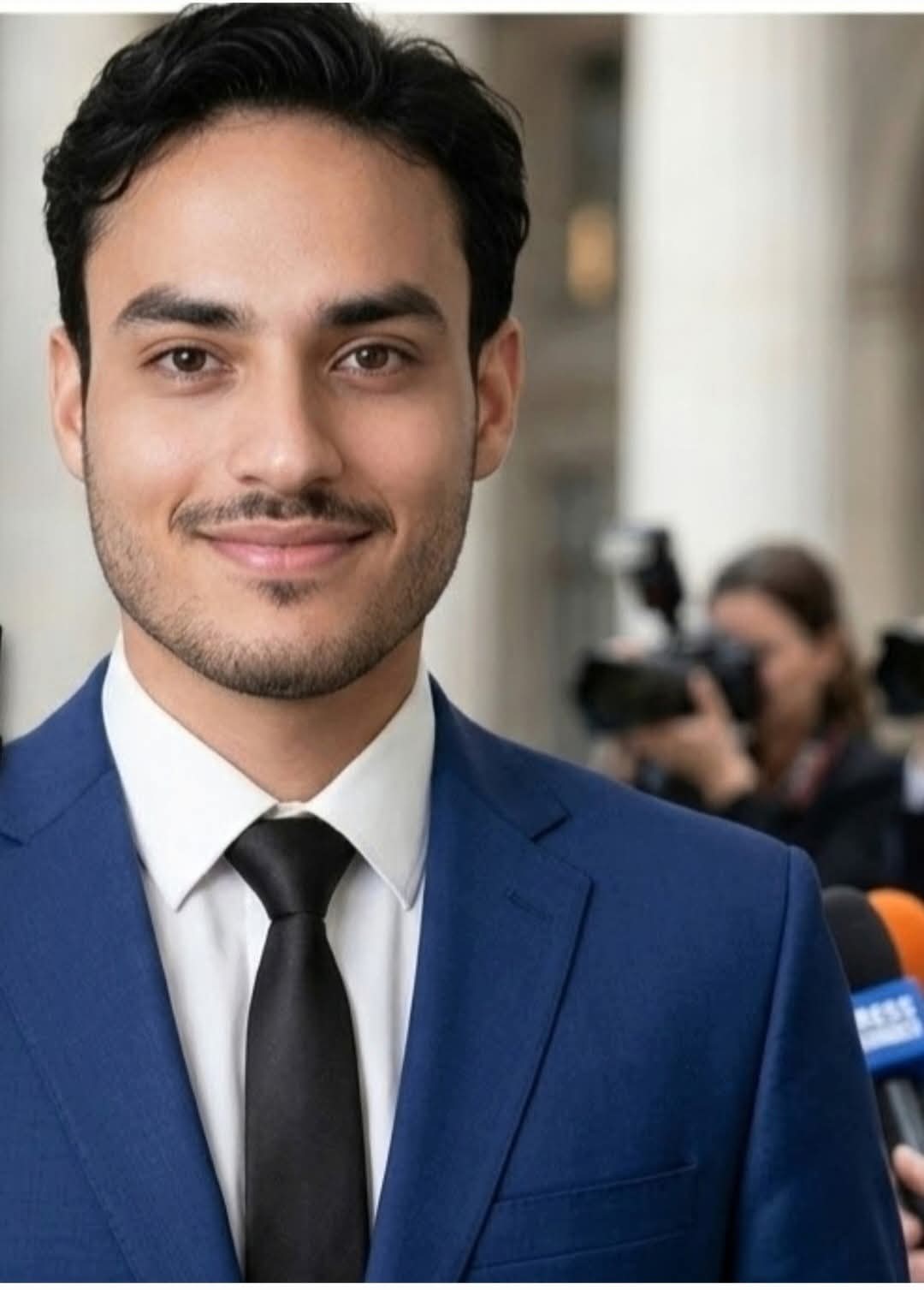
Ivan Pozzoni was born in Monza in 1976. He introduced Law and Literature in Italy and the publication of essays on Italian philosophers and on the ethics and juridical theory of the ancient world; He collaborated with several Italian and international magazines. Between 2007 and 2024, different versions of the books were published: Underground and Riserva Indiana, with A&B Editrice, Versi Introversi, Mostri, Galata morente, Carmina non dant damen, Scarti di magazzino, Qui gli austriaci sono più severi dei Borboni, Cherchez la troika e La malattia invettiva con Limina Mentis, Lame da rasoi, with Joker, Il Guastatore, with Cleup, Patroclo non deve morire, with deComporre Edizioni, Kolektivne NSEAE and Lo Stato Pontificio with Divinafollia. It contains a fortnight of autogérées socialistes edition houses. He wrote 152 volumes, wrote 1000 essays, founded an avant-garde movement (NéoN-avant-gardisme, approved by Zygmunt Bauman), and wrote an Anti-manifesto NéoN-Avant-gardiste.  His verses are translated into 30 languages. In 2024, after six years of total retrait of academic studies, he return to the italian artistic world and melts the NSEAE Kolektivne (New socio/ethno/aesthetic anthropology) [https://kolektivnenseae.wordpress.com/], the legal “armed” wing of Italian literary latemodernism.

Essay from Timothee Bordenave

This essay will explain one of the ideas I have, very dear to my heart now, that we could use the chemistry to solidify and ameliorate the plastics materials, in order to use them in many more applications than today they are. And that we could do so as per a new utility for our plastic waste widespread across the world.

*****

The solidified plastic component.

In the daily use of items made of metal—and often, around me, of that rust-proof metal that allows for longer service life and offers the properties associated with metals and alloys (specifically resistance to pressure or torsion—or, to put it another way, solidity, at least as far as I can observe)—a very simple thought occurred to me (which you might deem naive): many of these metal alloys, or metals rendered rust-proof through chemistry, could easily be replaced by other materials for the same purposes and with virtually the same utility—often, I believe, with even greater practical utility—and, from what information I gather, at a much lower cost! Specifically, they could be replaced by some of the plastic materials that modern chemistry enables us to create!

Indeed, given that we can now easily engineer very hard thermoplastics—producing materials like polycarbonates that are incredibly strong, rust-proof, and virtually impervious to water—and given that we can (or so I understand) readily make plastic materials that are nearly fireproof and highly heat-resistant, we have—easily and cheaply—a plastic component that could be molded for many applications usually reserved for “stainless metal”…

One could design components for door and window fittings. Interior and exterior cladding components—such as vehicle bodywork or fuselage sections—or even structural elements like armor plating and furniture (as is already common), and perhaps even machinery parts, such as engine components, drive shafts, or gears.

Also, a wide range of household tools—hammers, shovels, screwdrivers, kitchen mills, and many others.

And perhaps even structural or framing elements for construction?

The primary immediate benefit would likely be a reduction in production and assembly costs. Naturally, the chemical composition of such hard, durable plastic elements would need to be designed first; this would likely yield a range of formulas, allowing for the creation of materials ideally suited to specific applications.

An entrepreneur looking to cut production costs might well consider reclaiming plastic waste—melting and reprocessing it for this purpose. We are well aware of the vast quantities of plastic waste scattered across the globe or sitting in landfills. It was actually while discussing my project—using nets to capture plastic waste at river mouths—with friends that the idea struck me: we could easily derive new uses from this existing mass of composite plastic waste through minor modifications—specifically heating, adding chemical solutions, and employing processes such as the thermosetting of polycarbonate compositions (which could also be engineered to be fire-retardant).

This same approach could—perhaps for different purposes—be applied to various other materials, such as vitrified ceramics and, most notably, wood; after all, it is well understood that wood can relatively easily be made extremely hard and resistant to heat, fire, and wear. Today, there are stylish watches made of wood, featuring a lacquer finish that protects them from moisture and corrosion…

And if I mention here the processing of plastic materials—specifically to make them fire-resistant and exceptionally hard and durable through thermodynamic methods, notably in the form of “polycarbonates”—it is to reiterate a key point: plastic waste and scrap can be found all over the world. While not biodegradable in their raw state, once recovered and reprocessed—simply by melting them down and applying chemical treatments—they could provide a vast supply of potential industrial components or even manufactured tools of genuine commercial value.

This was my idea—admittedly very simple, and perhaps you might even consider it naive. It turns out that plastics—in the form of waste or scrap—are now deemed dangerous to our natural balance and the environment by scientists and environmental advocates alike. In my view, one could easily develop a business model based on reusing them for this purpose—one that would serve the cause of the environment while also delivering social and economic value.

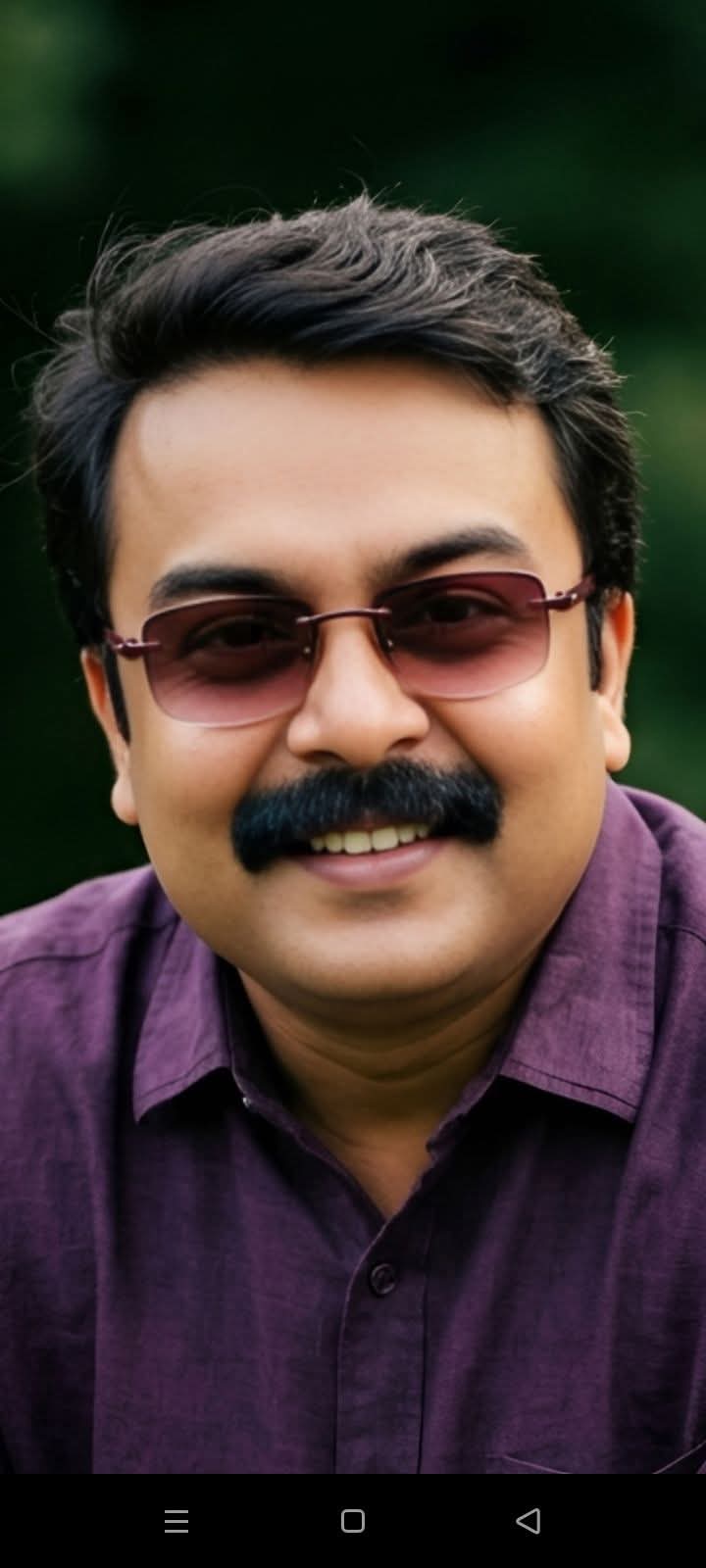
Born in 1984 in Paris, France, Timothee Bordenave is a French author of fiction and essays, and a poet. He has published many books, about 25 to date, and his literary works have been translated in large parts to about 20 languages… He is also a visual artist, whose photographs and paintings have been shown in France and in various international locations.

He used to work directing libraries in Paris, and then nowadays he is a full time creative. Timothee Bordenave has received several awards and distinctions, from around the World.

Poetry from Maja Milojkovic

Younger middle aged white woman with long blonde hair, glasses, and a green top and floral scarf and necklace.
Maja Milojkovic

Raindrops

Raindrops fall silently from the sky,

The rose in the garden gently unfolds its petals.

And love, like a river, flows deep,

Entwined with rain and flower, in an endless dance.

Gracefully, the rain kisses the rose in the night,

Gently illuminating it with its droplets.

And the rose, like a lovestruck maiden,

Receives rain kisses with joy and a smile.

Love, like the scent of a rose in the air,

Softly envelops the heart, making it strong and tender.

In this union of nature and emotion,

We discover the beauty of love that doesn’t fade even when the rain stops.

Maja Milojković was born in Zaječar, Serbia. She is the deputy editor at “Sfairos” publishing house in Belgrade, Serbia.  She is the vice-president of the association “Rtanj and Mesečev poetski krug”.  She is the author of 2 books: “The Circle of the Moon” and “Trees of Desire” She is the editor of the International Anthology “Rtanjski stihopevi” One of the founders of the poetry club “Area Felix” from Zaječar, Serbia and the editor of an international e-magazine for creative literature and culture “Area Felix”.

Poetry from Qahramonova Zaxro

To My Dear Father

You are everything I have in this world,
My pride, my patience, my honor unfurled.
My shield, my strength, my greatest treasure,
My dear father, whose love knows no measure.

You have endured so much pain in this life,
Yet faced it all with courage, without strife.
You gave your strength and soul for your children,
My dear father, whose love has never weakened.

You raised us with care, never letting us ache,
With patience, each difficult day you would take.
You showed us the world, took us far and wide,
My dear father, always there by our side.

With your advice, you gave us love and light,
A love so magical, pure and bright.
May you always live surrounded by your children’s affection,

My dear father, whose love is beyond perfection.

To My Dear Father

With my tiny hands raised in prayer,
I ask Allah for your life to spare.
May my prayers reach the heavens above,
For all I wish is your long life, my beloved father.

What have you not seen in this bright world?
How much pain, how many hardships unfurled?
With patience, step by step, you carried on,
And finally, the days we dreamed of have come.

Never say, my dear father, that you are less,
Never bow your head to those who bring distress.
Look upon the world with kindness and care, dear father,
For with you, this bright world blossoms fair.

Short story from Eva Lianou Petropoulou

Συνημμένη φωτογραφία: FB_IMG_1763912737886.jpg

The sea

Once upon a time..

The sea Once a sailor asked a dove, how is it to fly? and the dove answered, you ask me because you are every day at sea and with your strong boat you tear the waves in two. You have a brave crew and you are not afraid of storms.. Meanwhile I just fly, sometimes low, sometimes high, but I always meet clouds and planes, nothing exciting. You tell me about your adventures… So said the dove and the sailor, who was the captain of a boat, began to tell about the nights with the full moon and the mermaids crying on the reefs burnt with orange and red coral, to weep for their sisters or for the fortunes of travelers

and the stars twinkle merrily high up there in the firmament of heaven. Years ago there lived a dolphin in the waters of the Atlantic and sang and played with the other dolphins of his tribe, until one day he woke up and nothing was the same as before. Everything changed in his neighborhood, they were found to have plastic bottles and tons of tires in every coral cave, the algae got sick and the dolphins got stuck in the deepest caves. -But what’s going on? The sea became sick, the ocean became infected, the mullets answered him as they also passed by, looking for better and cleaner waters. – The sea got sick, but that doesn’t happen, the sea is a living organism

with the power of self-healing, it has iodine and phosphorus and salt, thought the dolphin… deciding to rise to the surface, to go and see up close what exactly happened. As soon as he climbed a little higher, he saw a terrifying sight, plastic bags and bottles were floating, and tires from cars and another pile of garbage. The dolphin started swimming back and forth restlessly and doing somersaults. It’s all true, he said over and over again. The sea became sick and filled with rashes and sores. I have to find a solution, but how can I? I’m small and ….. as he thinks he saw the careta careta  turtle carelessly swimming around, looking for food. I will ask about this careta careta  turtle..

she will be able to help me, since she often rises to the surface to give birth to her young, he thought and quickly made hasty movements with his tail, to reach her.. – What are you saying, did Thalassa get sick? the loggerhead turtle grimaced as he munched on a seaweed, Since when; Does he have a high fever? Let’s vacuum her, he replied and continued swimming towards a more fertile ground that also had plankton. – Suction cups, what is that again? These elders talk with incomprehensible words and never explain the inexplicable to us… all their philosophies and then… we , the new generations we are   lost  and we don’t know what we should do to find solutions!!!!

Lady Turtle Caretta – Caretta , I don’t want tips or suction cups, i need help….The Sea got sick and filled with rashes, and sores . We need to find a medical help, look around you, and  stop chewing.

..The loggerhead turtle stopped munching and looked around, facing a macabre sight, with plastic bags on every coral reef and plastic bottles lying on the bottom, and car tires blocking the entrance to  the main door of  homes of  the Smyrna, of the crabs and  the starfish and a  chaos was everywhere… .

Those aren’t viruses, the turtle said flatly and continued munching on her seaweed. – Isn’t it a virus? and how do you know that, wondered the dolphin – I just know it, and I also know who is responsible for this downfall… Probably the people are responsible!!! 

– People?

what is this, swamp fish? asked the dolphin in wonder – No, they are not swamp fish, 

people are people.

 They are different from us because they can stand and walk with their feet and move outside the water, they breathe and live by eating each other.. but also us , the fishes and other animals, but they don’t know how to hide their garbage, to recycle it, like we do , and  they just through their carbage into the sea. They did that.

I have a bad experience with them, I see how they treat me and my children when I go to the surface to give birth. They are monsters!!!- The dolphin was scared but said determinedly, monsters or dragons, I will go fight them and send them back their garbage. The dolphin  said  and swam angrily towards an unknown direction.

after months it was heard in the dolphin family that a small gray dolphin was caught in a fisherman’s net and died like a hero. They said it was found, swimming on the surface and very close to coasts and cities.

They said that every night he carried plastic bottles with his snout and left them on the beach, in the morning the people who went to the beach found mountains of plastic bottles and plastic bags waiting for them and they frowned and shouted and made faces and were very annoyed because they couldn’t bathe or sunbathe and they went to the beginning and asked the Municipality to clean up the waste, because some unconscious people threw it on the shore, and it prevents them from sitting comfortably or drinking their coffee, they couldn’t from the stench .

The municipality called the garbage trucks and collected 3 truckloads of plastic, and he didn’t know where to take it, since he himself knew that plastic doesn’t dissolve easily and takes thousands of years to decompose, but wherever he throws it or buries it , it will be harmful to the environment.. .However the whole story was, he ordered the trucks of waste to be taken to the dump and melted down. . Every night the dolphin continued to carry whatever plastic bag or other plastic he found thrown on the bottom and in the yard of the dolphin’ s house.

He also carried bottles and tin cans of soft drinks, he had also found friends, and the caretta-caretta turtle, and a couple of octopuses were coming to help him in this whole business. But no matter how much they emptied the bottom and how much they tried, the next day, they still found empty plastic bottles buried in the sand and mixed with their food. Yesterday, the Whale almost swallowed a soft drink cap and a small plastic spoon, they didn’t know where all this dirt was coming from, until one day, the loggerhead turtle, who was around the world, explained to them that this was garbage of the human and throw all   into all the seas.

All the fish have moved out of their caves and gone to other coral caves to stay. The loggerhead turtle said that the seas have no more plankton and much of the algae has been poisoned. – But we can’t live like this, in uncertainty and misery, said the dolphin angrily. We have to show them, that we are down here living with our families and the sea is getting sicker day by day. – And what should we do? Asked the turtle,

 they have destroyed everything  the forests and the air. They will never  stop …now they will destroy the sea.

– Should we act, should we send a message to these people? – But how; The turtle once said. There are many of them and they don’t speak the same language as us. They don’t understand us. – They understand us, insisted the dolphin. There are some of them, the little people who understand us. I feel it. We need to alert the little people to help us. To stop throwing their garbage into our sea. We will find a way. We have to if we want to stay alive and with clean seas. – How are you so sure? Caretta-caretta turtle replied. – Some time ago I traveled with my family to see distant relatives,

– our dolphin cousins, who live on a piece of land that is washed by the sea. There I had a strange encounter with a small man, I guess, I didn’t know what kind of animal it was, because I didn’t understand his speech and he didn’t come to the sea, only I was approaching the shore… – You’re still alive, you were lucky. People usually kill dolphins and all other fish, either for food or to make fertilizers for their skin. Monsters I tell you, I know them well, who am forced to wait long nights for them to leave, so that I can go lay my eggs and then I quickly run away and leave the unfortunates to their fate… They are all monsters, continued the Caretta turtle

– -I believe in this little man, he didn’t hurt me, nor did he try to imprison me. We played very often and he taught me many tricks too, I will try to find him and give him a message, the dolphin continued his thoughts optimistically.

.If I manage to get to shore again, there will be a way to send him a message. So I’ll tell you, people spend hours at the sea, on days when it’s always sunny. They sit lying down, and sometimes they turn to the right, sometimes to the left, on huge quilts, I often see them, said the turtle-caretta-caretta. It will be your only chance to send them a message, but only to the little people. I will tell you what you will do, you will find a glass bottle, it will surely be there near the coral reefs, you will bring it here and tell the seahorses and the cuttlefish to come to my house. –

. – But for what reason? He asked the surprised dolphin.-I have an idea, the turtle said meaningfully and continued to chew her seaweed. So it happened, when the sun’s rays were no longer visible, they all gathered in the coral cave of the caretta-caretta turtle. She opened her desk and took two feathers and a piece of paper, she told the cuttlefish to put as much force as she could and blow her ink over the feathers, she began to write and write on this paper and when she had finished folded and put them in the glass bottle that the dolphin holds for them. He turned to the seahorses and told them in a determined voice, now you know what to do.

The sea-horses galloped away with the bottle fastened between them, they swam for some time, until it was daylight when they reached a shore. With an acrobatic figure, they threw the glass bottle towards the shore and it went and got stuck, between some deckchairs, where a family was. A child who was carelessly playing with his buckets a little further, went to collect stones and shells and found the glass bottle. He took it and took it to his grandfather, look what I found, grandfather, a glass bottle with a message inside, it must be a treasure. Grandfather took the bottle, opened the cap and carefully took out the note and read aloud:

Here in this blue land that we inhabit, and you call the sea, we live before you are even born, before you even learn to walk, before you even know what you are?   We not disturb you ,you  not care. 

We demand

Stop throwing your trash here, 

stop throwing your plastic waste in our yard and poisoning our food. Stop right now!»

Signature 

The creatures of the sea

 Dolphins – whales – sharks

 Corals and algae 

End 

Eva Petropoulou Lianou

Poet and author 

Essay from Elmurodova Charos Sunnat qizi

Amir Temur – Great Commander and Statesman

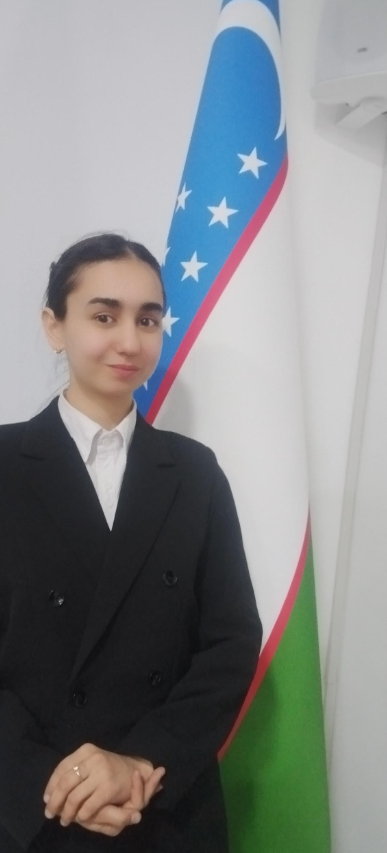
Elmurodova Charos Sunnat qizi
Sarbon University, Faculty of Philology (Uzbek Language)

Amir Temur was the great commander and just statesman of his time, born on April 9, 1336, in Kesh (now Shahrisabz). From a young age, he stood out for his bravery, intelligence, and determination.

In 1370, he took power in Transoxiana and founded the Timurid Empire. Amir Temur paid great attention to science, architecture, and building. During his time, Samarkand became a major cultural center. The Gur-i Amir, Bibi-Khanym Mosque, and the Shahi Zinda complex reflect his rich legacy.

In conclusion, Amir Temur was a great commander and statesman who built a strong state based on justice and order, and his governance experience remains important even today.