
Literary traditions and renewal processes in Uzbek literature and world literature
Abstract: This article covers the issues of the historical development of Uzbek literature and world literature, the preservation of their literary traditions and a comparative analysis of the processes of renewal. In Uzbek literature, the role of such creators as Alisher Navoi, Zahiriddin Muhammad Babur, Abdulla Qodiriy in continuing traditions and at the same time introducing new ideas into literature is examined. From world literature, comparative aspects with the work of such great writers as William Shakespeare, Leo Tolstoy, and Franz Kafka are revealed. The article analyzes the harmony of literary heritage and modern creative innovations, the relationship between national literatures, and their contribution to global literary processes on a scientifically based basis. It also discusses the integration of Uzbek literature of the period of independence with world literature and the formation of the translation school.
Keywords: Uzbek literature, world literature, tradition, renewal, comparative analysis, creativity, modernism, realism, cultural integration, national heritage, literary process.
Literature is one of the oldest and most influential forms of human thought. The literature of each nation reflects its national thinking, psyche, socio-spiritual state. Therefore, the study of the interaction and connections between Uzbek literature and world literature, the analysis of their traditional and new aspects is a separate, relevant scientific topic today.
During the period of independence, Uzbek literature has reached a new stage of development. On the one hand, our classical literary heritage is being re-examined, and on the other hand, advanced experiences in world literature are being absorbed into Uzbek literature. This process is further enriched by the fact that the works of Uzbek writers are being translated into world languages, and examples of world literature are being published in Uzbek.
Classical literature: The traditions of classical Eastern literature were continued in the work of Alisher Navoi. However, he also initiated a stage of renewal with his approach based on the Turkic language.
Babur: a vivid example of the harmony of tradition and innovation in literature. His work “Boburnoma” combines historical, artistic and scientific features.
20th century literature: National realism and modernist movements were combined in the works of Abdulla Qodiriy and Cholpon.
Shakespeare: Continuing the traditions of the Renaissance, he created new dramatic forms.
Leo Tolstoy: through Russian realism, he interpreted humanity, morality and social issues in a new way.
Kafka: was the embodiment of modernism, depicting the conflicts between man and society.
Comparative analysis:
Navoiy and Shakespeare: although one reached the pinnacle of Eastern and one Western classical literature, both of them covered the problems of the human psyche and society.
Qodiriy and Tolstoy: there is a commonality in depicting the spiritual image of the nation and social problems through realism.
Cholpon and Kafka: both created in the spirit of modernism and tried to express the spiritual crisis of the time.
In conclusion, although Uzbek literature and world literature have their own traditions and renewal processes, through their comparative study, one can see many commonalities and harmonies. Uzbek literature, relying on its rich classical heritage, is also actively participating in modern global literary processes. Therefore, a deep study of literary traditions and the integration of innovations with the national spirit will remain one of the important tasks of future scientific research and creative activity.
References:
- Navoiy A. Khamsa. – Tashkent: Fan, 1991.
- Bobur Z.M. Baburnoma. – Tashkent: Gafur Ghulom Publishing House, 2008
- Qodiriy A. Bygone Days.- Tashkent: Sharq, 1994
- Cholpon A. Night and Day.- Tashkent: Literature and Art, 1992
- Shakespeare U. Hamlet. – London, 1603
- Tolstoy L. Anna Karenina – Moscow: Science 1978
- Kafka F. Process. – Berlin, 1925
- Karimov I. A. High spirituality is an invincible force. – Tashkent, 2021
- Mirziyoyev. Sh.M. Strategy of the New Uzbekistan. – Tashkent, 2021.
- History of Uzbek literature. 5 volumes – Tashkent: Science, 2010.
- Saidov. A. Theory of Literary Studies. – Tashkent University, 2015
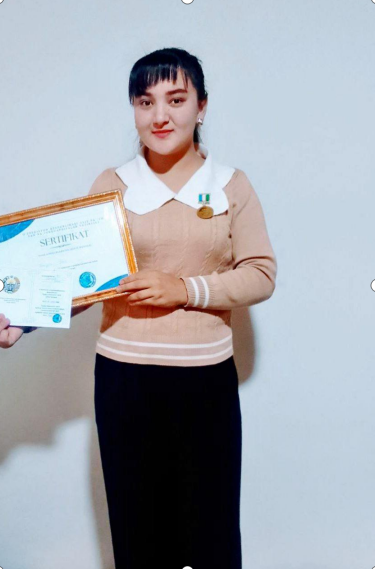
Choriyeva Go’zal Gayratjon qizi was born on February 17, 2007 in Kyzyryk district of Surkhandarya region. She is a 1st year student of the Denov Institute of Entrepreneurship and Pedagogy of Samarkand State University, Uzbek language and literature department and holder of a national certificate in native language literature. She is an international ambassador of the Indian state Iqra Foundation Organization (online) in three areas. An active member of the Argentine Association of Science and Literature Writers. The creative collection “Zukko izvlavi” -2025 of the Republic of Uzbekistan and Karakalpakstan has been published.
Pingback: Synchronized Chaos’ First December Issue: Step Up to the Plate | SYNCHRONIZED CHAOS