
The High Value of the New Uzbekistan: The Global Ascent of Uzbek Women in Art and Beyond
Uzbekistan today stands at a decisive stage in its historical development — a period marked by rapid transformation, renewal, and the elevation of human dignity as a national priority. Within this dynamic process, women of Uzbekistan have become the defining force shaping the most inspiring chapters of the nation’s progress. They are not only the pillars of families and communities but also the driving agents of innovation, knowledge, and creativity. Through their remarkable achievements in science, technology, economy, culture, and sports, Uzbek women are capturing the attention of the world.
The status of women in Uzbekistan today goes far beyond symbolic respect. It is reinforced through tangible policies and initiatives that promote gender equality, remove structural barriers, and create strong platforms for personal and professional growth. This article explores the key directions of this rapid evolution, focusing on the mechanisms that empower women and the extraordinary accomplishments that have gained international recognition. Uzbek women are defining a new trend — one where intelligence, perseverance, and creativity merge to shape a globally admired identity.
The cornerstone of Uzbek women’s success lies in education. The country has made significant strides in ensuring that girls receive quality education and are encouraged to pursue modern and in-demand professions. In recent years, admission quotas for higher education have increased substantially, alongside the introduction of special grants and scholarships for female students. As a result, women now constitute more than half of all university students — a figure that symbolizes not merely numerical progress but a long-term investment in the nation’s intellectual capital.
Beyond traditional fields, young Uzbek women are making impressive strides in STEM — Science, Technology, Engineering, and Mathematics. They are entering disciplines such as IT, artificial intelligence, robotics, and engineering, supported by newly established IT parks and specialized training centers across the regions. Many of these women have earned recognition at international competitions and conferences, reinforcing Uzbekistan’s growing presence on the global technological map.
The rising number of women earning Doctor of Philosophy (PhD) and Doctor of Science (DSc) degrees also signifies a powerful intellectual awakening. Uzbek female researchers are contributing meaningful innovations across fields like ecology, medicine, economics, and the humanities. Their discoveries enhance not only national academic prestige but also global scientific collaboration.
Economic independence and entrepreneurial spirit represent another defining dimension of Uzbek women’s global ascent. The government’s ongoing support for female entrepreneurship — through grants, preferential loans, and training programs — has enabled thousands of women to start their own businesses and achieve financial autonomy. Over the past few years, the number of women entrepreneurs in Uzbekistan has nearly doubled, with their enterprises thriving in both traditional and emerging sectors.
Female-led businesses are now reaching international markets, proudly showcasing the “Made in Uzbekistan” label. From textile production to handicrafts, from food industries to technology-driven services, Uzbek women are redefining the standards of excellence and creativity. Their achievements are not only contributing to economic growth but also shaping a more inclusive and sustainable model of national development.
Uzbek women are also becoming global ambassadors of culture and art. Designers, performers, dancers, and visual artists from Uzbekistan are earning recognition at international festivals, exhibitions, and creative platforms. They skillfully blend national traditions with modern aesthetics, giving a fresh and distinctive identity to Uzbek art on the world stage.
In sports, Uzbek female athletes continue to bring pride to the nation by winning gold, silver, and bronze medals at the Olympic Games, World Championships, and Asian tournaments. Their accomplishments in boxing, judo, weightlifting, and rhythmic gymnastics are powerful symbols of resilience, confidence, and determination. These victories serve as a source of inspiration for the younger generation, particularly for young girls who now believe that their dreams have no boundaries.
In conclusion, the women of Uzbekistan today embody intelligence, creativity, and perseverance that transcend national borders. Their dynamic participation in education, science, entrepreneurship, culture, and sports exemplifies the nation’s human-centered development strategy and its commitment to equality and empowerment. Every achievement of an Uzbek woman represents a collective triumph — a reflection of a society that believes in the power of opportunity and the worth of every individual. Uzbek women are not only shaping the New Uzbekistan but also redefining what it means to be successful in the modern world. Through their strength and creativity, they are giving birth to a new form of art — the art of ambition, progress, and excellence — a legacy that will inspire generations to come.
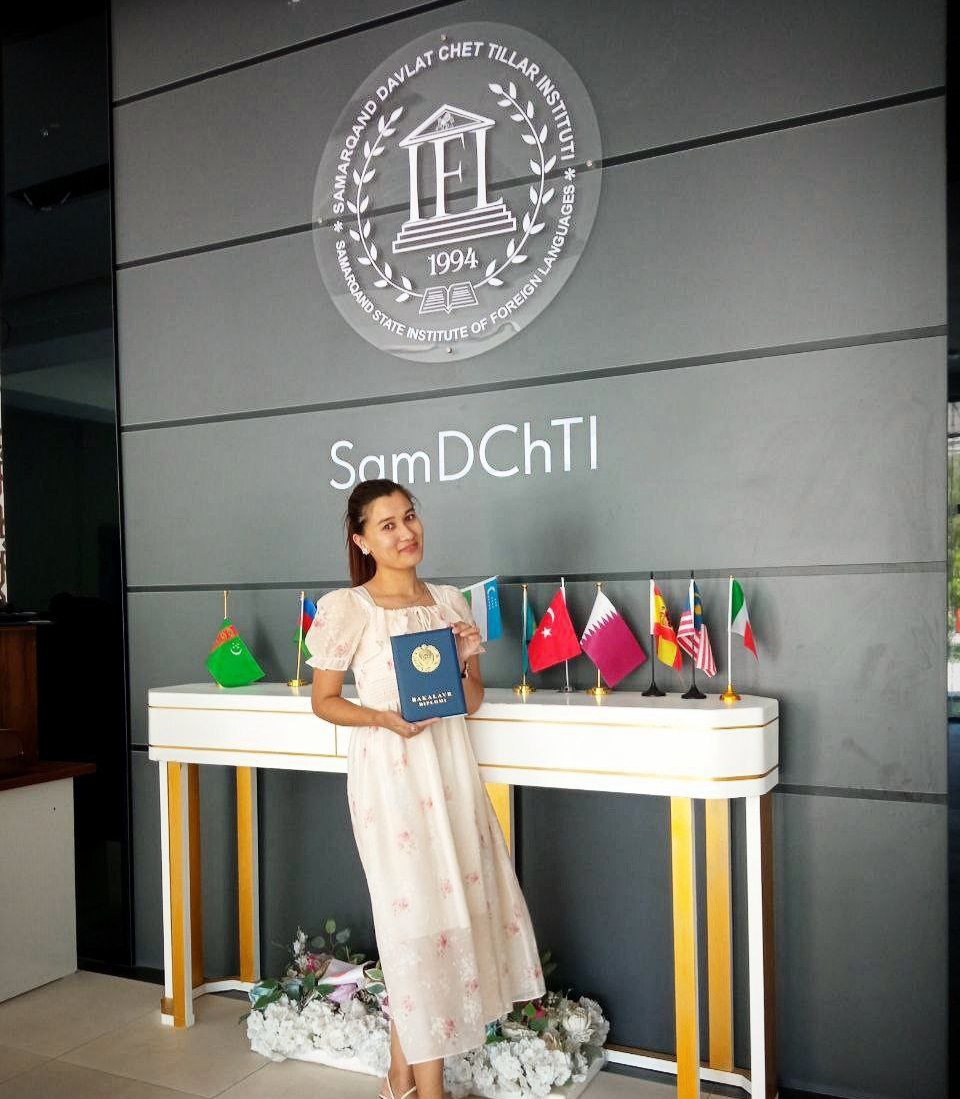
Mashhura Ochilova was born on August 14, 2001, in Sherobod district, Surxondaryo region, Uzbekistan.
She is a graduate of the Faculty of Philology at Samarkand State Institute of Foreign Languages, majoring in Korean and English philology.
Mashhura is an educator of Korean and English languages and a regional-stage participant of the prestigious Zulfiya State Prize competition.
She is the author of more than twenty international scholarly articles and has actively participated in academic presentations and conferences held in countries such as Qatar, Egypt, Turkey, Azerbaijan, and the United States. Her research papers have been translated into English and Turkish and published in international journals indexed on the Google Scholar platform.
Fluent in Korean and English, and proficient in Russian and Turkish, she demonstrates strong multilingual competence. Currently, she serves as the Director of the Yumyong Academy Online Learning Center, where she teaches nearly 200 students in Korean and English languages, contributing to cross-cultural education and linguistic development.