
THE SIGNIFICANCE OF LEGENDS IN FOLK THOUGHT AND WORLD VIEW
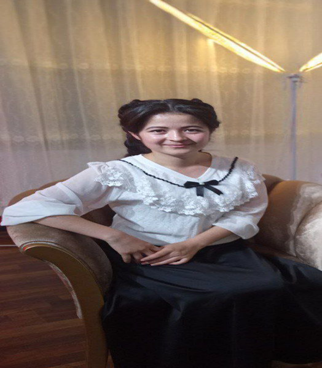
Rahmonkulova Gulsevar Samidovna
1st year student of the Faculty of Uzbek Language and Literature of the Tashkent State University of Uzbek Language and Literature named after Alisher Navoi
Annotation. This article analyzes the role and significance of legends and legends in folk thought and worldview. The scientific basis of the fact that these genres of folk oral art have played an incomparable role in shaping people’s views on nature, society, goodness and evil, life and death is highlighted. Also, the figurative expression of folk thought, philosophical layers in the relationship between nature and man, artistic interpretation of values such as selflessness, faith, love and goodness are analyzed in the examples of the Kashkadarya oasis “Legend of the Creation of Kashkadarya” and “Legend of the Girl Kashka”. This establishes the role of myths and legends in the formation of national historical memory, understanding of spiritual identity, and national worldview.
Keywords: Folk oral art, myth, legend, folk thought, worldview, Kashkadarya, faith, devotion, historical memory, national values.
Folk oral creativity is one of the oldest and most natural forms of human thought. The history, spirituality, life experience, aspirations, religious and moral views, and ways of perceiving the world of every nation are primarily embodied in samples of oral creativity. In particular, myths and legends are genres that hold incomparable importance in the formation of folk thinking and in expressing its worldview. They have served to help humans understand the world, explain natural phenomena, and express attitudes toward concepts such as life and death, good and evil, loyalty and selflessness. In this regard, myths and legends are not only products of artistic thinking but also unique sources that embody the nation’s social, spiritual, and philosophical worldview.
Numerous examples among myths and legends clearly demonstrate how deep and figurative folk thinking is. For instance, ancient myths and legends related to the Kashkadarya oasis are vivid examples of such folk thinking. In the “Legend about the Creation of Kashkadarya,” the emergence of water is depicted as a source of life, embodying the people’s desire to live in harmony with nature and their religious views. According to the legend, in ancient times, the Kashkadarya region consisted of vast deserts and dry plains, where life was full of suffering due to the lack of water. At that time, a kind old saint living among the mountains, seeing the plight of the people, prays to God for mercy, and by God’s grace, a powerful spring bursts forth from the earth’s bosom. This spring flows through the valley, restoring life. The people call this water “kashka,” meaning white, clear water, and name it the Kashka River. Based on this event, the entire region is called Kashkadarya.
This legend reveals important aspects of folk thinking. First, natural phenomena are linked to divine power. That is, in the folk worldview, water is perceived as God’s mercy and a source of life. Second, the legend expresses the people’s sense of goodness and gratitude: people regard the appearance of water as God’s mercy and treat it with respect. Third, the metaphorical (symbolic) form of folk thinking is clearly evident in the legend: the word “kashka” signifies not just the whiteness of the water but its purity and life-giving quality. This demonstrates the artistic and semantic richness of the folk language and the ability to express deep meaning through words.
In folk legends, along with artistic fabrication, moral and educational ideas are strongly expressed. The “Legend about the Origin of the Name Kashkadarya” is one such example. Through the image of a beautiful and selfless girl named Kashka, it highly expresses the people’s spiritual values, humanity, selflessness, patriotism, and ideas of love and kindness. According to the legend, drought engulfs the land, all springs dry up, and people are left in despair. At that time, Kashka girl does not abandon her people and sacrifices her life to provide water for the homeland. She prays to God to save the people, saying, “Take my life, but let water flow here.” As a result, a river bursts forth from the earth’s bosom, but the girl herself merges into that river. For this reason, the people begin to call the river Kashka River and the region Kashkadarya.
This legend embodies several layers of folk thinking. First of all, it shows the people’s affection for nature and their perception of water as a symbol of life. At the same time, the legend sanctifies the image of a woman, her selflessness, and placing the people’s interests above her own life, which are important virtues in the Uzbek people’s spiritual worldview. Through the symbol of Kashka girl, the people have embodied concepts such as “selflessness,” “loyalty,” and “goodness.” Thus, in folk legends, one can see the people’s moral ideals through artistic images.
In both of these examples, we see that folk thinking is formed based on metaphorical expression, religious views, and social values. Myths and legends are historical sources that preserve various layers of the folk worldview from different periods. Through them, we learn how ancient people perceived the world, what beliefs they held, and how they understood life. In this sense, myths and legends are the people’s “oral philosophy.” They appeared before written sources but preserve deep philosophical content within them. For example, in many Uzbek myths, natural elements like water, trees, mountains, sun, and moon are depicted as symbols of vital force, blessing, and purity. This shows that folk thinking was formed in harmony with nature.
Furthermore, myths and legends express universal values such as the struggle between good and evil, the connection between humans and nature, labor, patience, and selflessness. For instance, in legends about “Koksaroy Spring” or “Aral Sea,” there lies a philosophical content warning about disasters resulting from human indifference or greed toward nature. This reveals the moral-didactic nature of folk thinking. Through their oral creativity, the people have taught lessons to generations, shaping feelings of goodness, patience, love, and respect for nature in their minds.
Another important aspect of myths and legends is that they serve as a means of preserving historical memory. Behind every legend stands a specific historical event or person. By expressing them in artistic form, the people have strived not to forget their history. For example, legends like “Bibi Seshanba,” “Girls’ Fortress,” “Chortoq Water” are connected to events in folk memory, religious beliefs, or ancient customs. All of them hold an important place in preserving folk thinking as social memory.
In today’s folklore studies, myths and legends are studied not only as artistic heritage but also as a source for researching “national identity (selfhood).” Because these genres are a unique model of folk thinking, expressing the people’s attitude toward their history, nature, and human values. By analyzing them, the people’s ancient philosophical worldview, social ideals, and aesthetic views are restored. For example, through the legend about the Kashka girl, we understand that the people depicted women not only as beauty but also as a source of life, a symbol of love and selflessness. This, in turn, shows the ancient respect of the Uzbek people for women and their sacred place in society.
In conclusion, myths and legends are one of the oldest sources expressing the historical layers of folk thinking, religious and spiritual worldview. They illuminate the stages of humanity’s artistic perception of the world and embody the people’s inner spiritual world, aspirations, beliefs, and views on life. Myths and legends are also highly valuable for modern humans because they remind us of the Uzbek people’s spiritual roots, living in harmony with nature, and values such as selflessness, goodness, and devotion to faith. Thus, myths and legends are a living bridge of folk thinking continuously extending from the past to the future.
References:
Jo‘rayev M., Saidova R. (2002). Bukhara Legends. A. Qodiriy National Heritage.
Imomov K. (1989). Myth. Essays on Uzbek Folklore. Volume II. Fan.
Uzbek Folk Myths. Uzbek Myths, Wisdoms, Legends. Ten-volume set. Volume 3. A. Qodiriy National Heritage.
Razzoqov H., Mirzayev T., Sobirov O., Imomov K. Myths and Legends.
Uzbek Folk Oral Poetic Creativity. Textbook. – T: O‘qituvchi
Rahmonkulova Gulsevar Samidovna, 1st year student of the Faculty of Uzbek Language and Literature of the Tashkent State University of Uzbek Language and Literature named after Alisher Navoi