
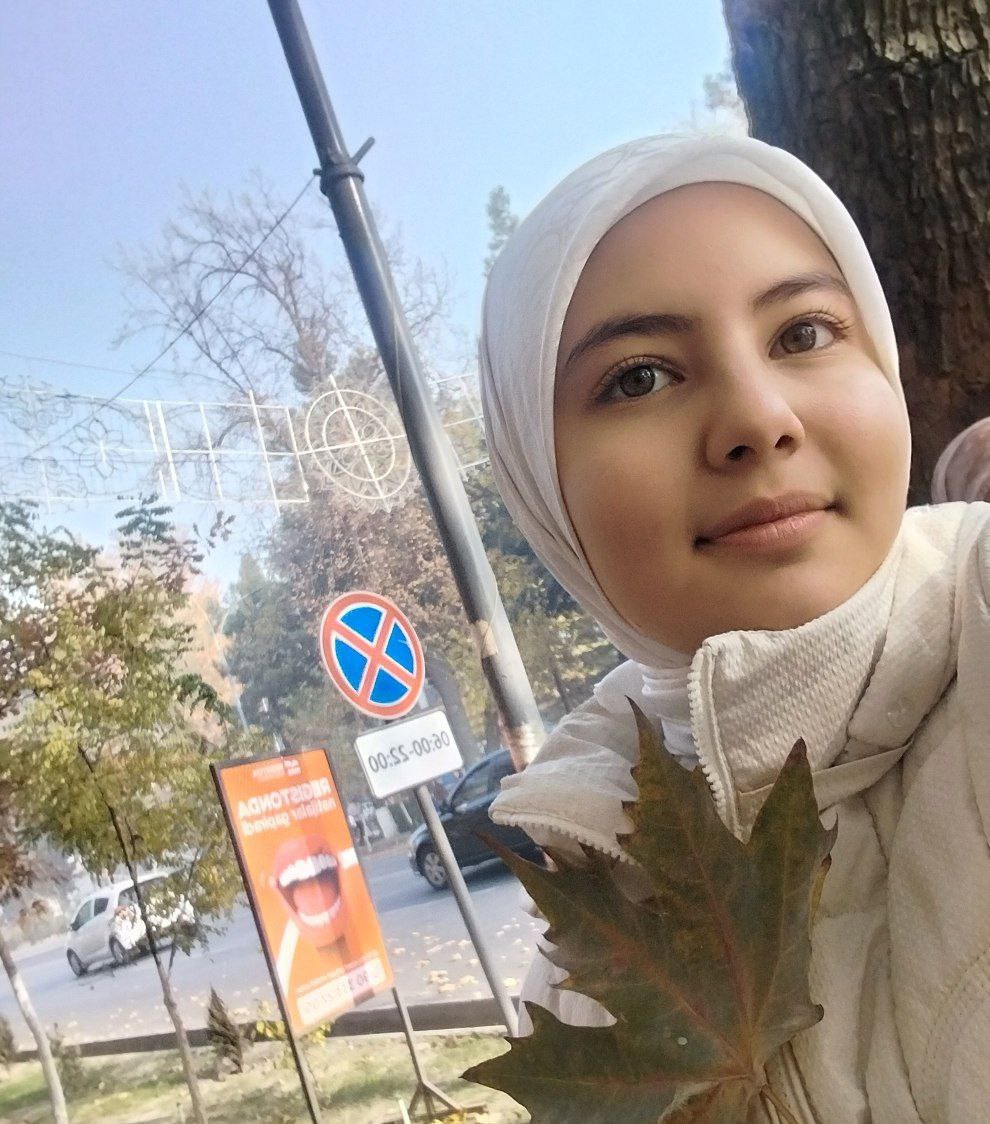
My name is Umarova Gulsevar Ubaydullo qizi. I am a student of Kokand State University, Faculty of Humanities and Languages, majoring in Uzbek Language and Literature. I hold a B2 level certificate in English.
I participated in the “Zakovat” intellectual competition with my team and won 3rd place at the district stage and 2nd place at the regional stage. I am also the 2nd place winner of the “Young Reader” competition at the district level. In addition, I have actively participated in many poetry recitation and literary events.
Lexical Monosemy and Polysemy
Abstract.
The article discusses the concepts of lexical monosemy and polysemy, their meanings, and their functions within the language system. Monosemy is defined as a word having a single meaning, while polysemy refers to the use of a single word in several related meanings. The differences between these two phenomena, the factors influencing their formation, and their significance in speech are comparatively analyzed. In conclusion, it is emphasized that monosemy ensures clarity, whereas polysemy enriches the semantic and expressive potential of language.
Keywords: lexical monosemy, lexical polysemy, word meaning, single-meaning, multi-meaning, semantic system, metaphor, metonymy, significance in speech, language development.
The richness of any language is primarily reflected in how its words acquire meaning and how these meanings change over time. A word is not merely a collection of sounds; it is a living phenomenon that reflects the history, thinking, and culture of a society. Therefore, the use of a word in one precise meaning or in several interconnected meanings directly influences the semantic structure of a language. These processes are manifested through the phenomena of lexical monosemy and lexical polysemy.
Monosemy: Clarity of Meaning and Differential Characteristics
Monosemy refers to linguistic units possessing a single, clear, and limited meaning. Monosemic units are most commonly found in scientific terminology, technical terms, and the vocabulary of natural sciences. This is because the primary function of terms is to express concepts with maximum precision.
For example:
Photosynthesis, phragma, component, diameter — such terms adhere to the principle of monosemy.
Monosemic units prevent semantic ambiguity, ensure logical consistency, and enhance the effectiveness of scientific communication. From the perspective of the language system, their presence leads to a deeper differentiation of semantic categories.
While monosemy strengthens the principles of clarity and logic in language, polysemy adds diversity, semantic flexibility, and expressive richness. The natural development of language occurs through the interaction and harmony of these two phenomena. Therefore, the issue of monosemy and polysemy is relevant not only theoretically but also practically in terms of speech culture.
Polysemy: Semantic Richness and Dynamic Development of Language
Polysemy is characterized by a word developing several semantically related meanings over the course of its historical evolution. This phenomenon aligns with the core characteristics of natural language — dynamism, systematic structure, and economy.
The main mechanisms of polysemy formation include:
Metaphor — semantic transfer based on similarity or analogy.
Example: eye — an organ; the eye of a spring — the source point.
Metonymy — semantic transfer based on spatial, functional, or cause-and-effect relationships.
Example: I drank the glass (meaning the liquid inside it).
Contextual extension — acquisition of additional semantic shades during speech.
Polysemy increases semantic density in language, making speech multifaceted, vivid, and expressive. It is precisely through polysemous words that the main semantic and aesthetic features of artistic style are formed.
Monosemy and Polysemy: Systematic Comparison
1. Number of meanings
Monosemy — a word has a single, precise meaning.
Polysemy — a word is used in several interrelated meanings.
2. Main function
Monosemy ensures precision and terminological strictness.
Polysemy enhances expressiveness, imagery, and semantic richness.
3. Sphere of use
Monosemy is common in scientific-technical, official, and specialized fields.
Polysemy is widely used in everyday speech, literary works, and journalism.
4. Influence on language development
Monosemy clearly defines conceptual boundaries and reinforces semantic order.
Polysemy expands the semantic system and introduces new semantic dimensions.
5. Factors of formation
Monosemy develops mainly due to social necessity, scientific precision, and terminological requirements.
Polysemy arises from metaphor, metonymy, contextual expansion, and historical-cultural processes.
6. Role in the language system and their interaction
Monosemy strengthens logic and precision.
Polysemy enriches creative and semantic potential.
These two phenomena are complementary and do not negate each other within the language system. Monosemy ensures clarity, while polysemy serves as a source of semantic creativity and development.
Main Characteristics of Monosemy
1. Precision and strictness of meaning
Monosemantic words denote only one specific concept, and their meanings do not shift to other objects or phenomena.
Examples:
Metronome — a device that measures rhythm in music.
Oxygen — the chemical name for the gas O₂.
Using these words in other meanings would cause misunderstanding.
2. Stability of meaning
The meanings of monosemantic words rarely change over time because they are mostly used in scientific, technical, and medical fields, where semantic precision is essential.
3. Limited sphere of application
Such words typically belong to specialized disciplines and are rarely used in everyday speech. For instance, terms related to physics, chemistry, mathematics, and technology are often monosemantic.
Polysemy
The term polysemy originates from Greek: poly — many, sema — meaning. Polysemous words emerge as a result of language development. When a word initially denotes one meaning, that meaning is considered its lexical meaning. If additional meanings develop based on this primary meaning, they are considered derived (figurative) meanings, resulting in polysemous words. In literary speech, derived meanings are widely used.
Examples of the word place:
Munis froze in his place — meaning a position or location.
I examined the place where construction was taking place — meaning a site of activity.
Have you heard of a place called Mirzachol? — meaning a geographical area with a specific name.
They prepared a place for us in the hotel — meaning accommodation.
Kifoyat lay down, having prepared her place — meaning a sleeping area.
Although the word place appears in different contexts, all its meanings relate to the concepts of area, surface, or space. No matter how many meanings a polysemous word possesses, it is still considered a single lexical unit. Among its meanings, one remains primary, while others become figurative.
Monosemy expresses a word’s possession of only one clear meaning and mainly occurs in scientific and technical fields, contributing to linguistic stability.
Polysemy, on the other hand, ensures versatility and adaptability, making language richer and more expressive. It is more frequent in everyday communication and artistic discourse.
While polysemy plays a vital role in the dynamism and development of language, monosemy contributes to precision and systematic structure. Both concepts complement each other in linguistics and communication.
References
Rahmatullayev, Sh. Modern Uzbek Literary Language. Textbook. Tashkent: Universitet, 2006.
Ne’matov, H., Rasulov, R. Fundamentals of Systemic Lexicology of the Uzbek Language. Tashkent: O‘qituvchi, 1995.
Jamolxonov, H. Modern Uzbek Literary Language. Textbook. Tashkent, 2005.
Pingback: Synchronized Chaos First March Issue: Fingering the Spines | SYNCHRONIZED CHAOS