Essay from Shannon Snyder

Mosaic

Under an uncharacteristically clear London sky, I looked behind me as I rode across the playground on a pink scooter that was much too small for me. I was being chased by two three-year-olds, the make-believe cops in rapid pursuit of their robber. They shouted stop, stop! and I slowed down only enough to keep myself a foot ahead of them, mocking fear at my inevitable capture. In this moment, as I smiled broadly at the children chasing me, I realized how much fun I was genuinely having. In this small, enclosed playground in Westminster, everything had changed.

I was intimidated by the families that came to Cardinal Hume at first. They were all impoverished, and many of them recent immigrants. As part of my internship in the day care center, I would be taking care of their small children twice a week. It seemed strange to me that in the heart of Westminster, among the high rises and only blocks from Parliament Square, there could be such poverty. However, maybe it shouldn’t have been. In the past twenty years, the number of immigrants in the UK has doubled to 8 million, with a third of these people living in London. The city is one of the most diverse in the world, and people have come for reasons that are as numerous as their origins- for work, refuge, profit, personal development.

Immigrants have not been received warmly by many native Brits, who feel that they’re losing out in the competition for jobs and housing; politicians have added to the tension. Prime Minister David Cameron pledged in 2010 to pass legislation that would limit the number of annual immigrants to below 100,000; the current number of migrants is three times this. The United Kingdom Independence Party (UKIP) plans to go into the next election with a promise to ban any immigration in Britain for five years, while immigration policy is rethought. While London does hold a great appeal for many foreigners, many of these people struggle with the politics and ethnic tensions of immigration.

Many of the families I met at Cardinal Hume were immigrants from Eastern Europe or the Middle East. Their origins and thick accents, as much as I tried to deny it, did make me uncomfortable in the beginning. Back in Iowa, I had never been around people of a different religion or culture, and I was nervous that I wouldn’t be able to make a connection with the families. I looked through the glass doors that led out to the small playground, and the iron gates that surrounded it. I watched the women in hijabs as they pushed strollers through the gates and down the ramp from outside each morning, small kids teetering behind them. I often wondered what their hair looked like underneath the scarf; was it cut short or long, of a dark chestnut color, curly?

What would these women think of me, a young, foreign girl? Will they hate me because I’m American? I worried that these families had been displaced from their home countries because of political unrest or wars, which the United States may have played a part in. What if they were from Iraq or Afghanistan, had family who became casualties of war? Or the only American they ever saw was dressed in combat gear with a gun in hand, and the images of war would forever smear their perception of the US? However, the women scanned me without recognition; perhaps they saw my blonde hair, blue eyes, and fair skin and thought that I was another one of the Danish students who came to Cardinal Hume for a student teaching opportunity.
Continue reading

Poetry from John Grey

THE HEART OF MY MATTER


My love is sluggish,

crawls up in dark corners

where it won’t be so easily seen.

For it fears exposure.

It’s even terrified of the warm

that dwells within itself.


For the longest time,

my love was a bird on a branch

freely trilling.

Then it was a salesman going door to door.

Now it’s like the least likely suspect

in a mystery novel.

It may be guilty

but the neutral observer

will gravitate to a more likely perpetrator.


My love is here – I can see it –

in this man’s face in the mirror.

But, whenever there’s an audience,

it’s like a magician

whose disappearing routine

has become his life story.


My love is tenacious,

I’ll give it that.

It can cling to a wall like a praying mantis.

It could live down between the floorboards

for a thousand years.

It just doesn’t like company.

Is that so wrong?


Every now and then,

a woman says that she returns my love.

It’s a wonder I don’t confuse it with a library book.

Actually, I did once but the overdue fines became intolerable.


Continue reading

Ryan Hodge’s Play/Write column

Play/Write banner

-Ryan J. Hodge

For someone who enjoys a great story, is there anything better than a narrative that engages you from the very start? Imagine a world so rich you can almost smell the scents in the air, a delivery so clever it forces you to think in a way you never thought you would. I’m Ryan J. Hodge, author, and I’d like to talk to you about…Video Games.

Yes, Video Games. Those series of ‘bloops’ and blinking lights that –at least a while ago- society had seemed to convince itself had no redeeming qualities whatsoever. In this article series, I’m going to discuss how Donkey Kong, Grand Theft Auto, Call of Duty and even Candy Crush can change the way we tell stories forever.

What Video Games Teach Us About Writing For Addiction

First things first: This article is not about video game addiction; it regards what we can learn about addiction from video games. Okay? Okay.

Video games, in general, tend to handle substance abuse rather poorly. “Drugs” (such as they are) will usually have some sort of status bonus in the short term, with a lingering status hit in the long term in what is supposed to be a simulation of “High” and “Withdrawal”.

In real life, however, there’s no handy pop-up alert to inform you when that alcohol you imbibe “only socially” has actually become a problem.

Though I’m sure Google’s on it.

Though I’m sure Google’s on it.

Addiction cannot be adequately simulated with a status effect or a woozy camera; it’s something that gnaws at you constantly. It’s all-consuming, almost impossible to ignore unless you’re actively gratifying it.

So if video games are doing such a bad job, why am I bringing them up as an example of addiction done right? The answer may surprise you.

Continue reading

Announcement about a new musical, A Priceless Heart, directed by Lysious Ogolo


Poster for A Priceless Heart

ABOUT THE STORY

A Priceless Heart is a story about finding true love and going the distance to keep it. It’s a journey of self-discovery and a tale which illustrates in more ways than one the power of great love. In the musical, Lauren Carter, a 20 year old college undergraduate, is torn between her father’s plans for her and her own plans for herself. As heiress of her father’s billion dollar corporation, everything in Lauren’s life is designed to help her successfully take over from him. But Lauren wants nothing more than to chase her own dreams-to be a musician. Yet, she lives by her father’s every rule until she learns of his plans to exploit her. In a fit of anger, she leaves the house and embarks on her journey of self-discovery. In the process, she gets to know Ife Jacobs, the Nigerian-American bartender at her family’s favorite bar. A mutual attraction ensues and a relationship BEGINS. But they are two worlds apart. He’s from the meagerly hoods of the Marcy Projects and she’s from the wealthy Upper East side of New York. Besides, with her father in the middle, Lauren knows dating Ife would not be a walk in the park. In the end, Lauren is forced to make a decision between her father’s empire and the love of her life.

BRIEF BIO ABOUT LYSIOUS

Lysious Ogolo is a Radio, TV and Film major at Howard UNIVERSITY. A novelist, playwright, screenwriter, actor,director and producer, he has written, co-written, produced, directed and co-directed a series of plays and musicals, including, The Case Against Christmas and Anything Good among others. He currently serves as the Head of Department of FACES, a drama ministry associated with Jesus House, DC, a mission of the Redeemed Christian Church of God.

He currently resides in Maryland. He hopes to tell stories which inspire hope and love in the hearts of his audience, while leaving them entertained and enlightened. In a world filled with many uncertainties and heartaches, Lysious desires to craft stories that will encourage, inspire, challenge, and warm the hearts of people; stories that reflect the reality of society with a promise of hope even in the most dire of circumstances.

A blend of great music and a talented cast, A Priceless Heart is a tale of grace, healing, restoration and the power of true love. It’s a story that’ll take the audience on an unexpected journey filled with warmth and inspiration.
To support Lysious and help him bring this story to this stage click on this link: https://www.indiegogo.com/projects/a-priceless-heart/x/9925242

You may also visit Lysious Ogolo’s web site here: http://www.lysious.com/

Synchronized Chaos May 2015: Phonetic Concoction

Welcome readers to May’s issue of Synchronized Chaos Magazine! According to Google’s dictionary, a concoction is a mixture of various ingredients. The term can also refer to a story, sometimes a lie but also just an elaborate invention, a combination of story elements and literary devices.

This month’s contributors bring us a phonetic concoction, a crafty and touching mix of words and thoughts where how things are said and told matters as much as the content.

This issue contains a great deal of poetry. David Newell calls attention to the power of words to evoke patriotic emotions and to call our minds to attention, even in our sleep. He also makes wry observations on the ubiquity and universality of death. Jacob Holtgraewe’s work reminds us that our relationships and even our own sense of who we are is less permanent than we would like to believe. K.C. Fontaine echoes this idea, showing a change of heart and mind through physical poetic metaphor as his speaker goes from admiring to fully embracing a new set of values. Nathanial Caudel examines the role of religion in our lives, critiquing how hypocrisy and selfishness have overtaken institutions meant to provide comfort and encourage compassion.

Christopher Bernard illustrates the power of one person to ignite historic change – even catastrophic, accidental, seemingly random change, even as great thinkers doubt their capacity. Cristina Deptula also reviews a talk at Oakland, California’s Chabot Space and Science Center from UC Berkeley’s Seismological Center’s Dr. Peggy Hellweg on new and improved methods for earthquake warnings and on why seismologists believe a major quake may hit the state soon. The natural world, as Dr. Hellweg and Christopher Bernard point out, is still wild and unpredictable. But through our efforts we can have an influence and take steps towards gaining understanding.

David Ishaya Osu brings us original and vibrant images, including white pythons, blind eyes and salt, and conveys regret, sorrow and wonder. Christina Murphy exults in the ethereal beauty of Georgia O’Keefe’s floral paintings and Mitchell Grabois gives us a visceral, colorful set of narrative poetry, exploring disaster and history with humanity and humor.

In her monthly Book Periscope review column, Elizabeth Hughes comments on novels that use suspense, humor, metaphor and other literary techniques to tell stories of war and rebellion, murder and corruption, adventure and rescue, and loving friendships and family relationships. The craft of writing becomes as integral to the story as the plot in Amanda Clay’s Rebel Song, Dale Wiley’s The Intern, Louis Piechota’s A Rose in the Desert and Tracy Ploch’s The Shoebox and enriches these books, making them stand out in their genres.

Laurie Kolp presents an independent female protagonist determined that she will travel the world and will not be treated as a pretty plaything or objectified for someone else’s comfort. Kolp’s other writing evokes the beauty of a listening ear and of martial arts well practiced.

Mei Du gives us a lullaby embracing the sounds of the outside world rather than shutting them out in order to rest. Yuxing Xia also presents ‘found objects’, in this case words from Apple’s robotic personal assistant component of its operating system Siri, as poetry. They may not make literal sense but there is a feeling and rhythm to what’s said.

Elle Pryor harnesses anapaestic meter and formal poetic style to create scenes with drug addicts, rowdy soccer fans and prostitutes, and in so doing suggests that her rough subjects are part of human life and not something to shrink from or treat in strictly a clinical way. Andrea Carr writes of love and loss in a traditional Old English poetic style, using meter and language from that period as a vehicle for her speakers’ emotion. She celebrates the beauty of the language and illustrates the power of strong feeling to transcend time and connect with modern people even through the language of days past. Joan Beebe uses simple, elegant language and rhythm to convey the comfort and beauty of friendships, music, a full life with all our human feelings, and days from her childhood in libraries, on the farm and in her family’s old boarding house. Her work becomes a kind of plainsong, speaking of the dignity and gentleness of America’s past.

Michael Robinson creates prose poetry sketches of a boy’s inner city foster family, as they celebrate the joy and heritage of Motown music and bear the scars of disease, exhaustion and the after effects of the Vietnam War on body and soul. Doug Hawley also looks to family relationships for inspiration in his short story where a grown man finds his long-lost father and the extended families reconnect. In Hawley’s optimistic piece, many, but not all, rifts are overcome. Ryan Hodge, in his monthly Play/Write column on what video games teach us about crafting stories, focuses on relationships in a different context. This month we observe from Stargate, Red Dawn and other science fiction classics the importance of developing mutually enriching friendships while learning and taking on challenges appropriate for one’s skill level.

Howie Good brings us the substance and feeling of nightmares, various extreme situations that all end in disaster, and also an instruction for the writing process: hurry towards the end of what we have to say, don’t stop for premature editing or cleaning things up, and one might arrive in time to see our subconscious angels put the piece together by the faint light of imagination.

Andrea Carr personifies her speaker’s emotions and then talks to and about them, explaining and defending their presence. She also contributes an essay describing her writing process, how and why she writes and how she finds connection with others through sharing work.

Merrell Miles uses a more lighthearted approach to comment on the procrastination that plagues many creative artists’ lives. He wishes that we could tackle all of our life issues in one burst of effort when we get to them, as we can sometimes with the dishes, depending on our standards of hygiene. His other pieces touch on self doubt, dissatisfaction and those moments when our lives do not measure up to our ideal self-image. Perhaps he and Howie Good consider desperate urgency to create, and fear of that act of creation, part of the life of the artist.

Jaime Mathis sketches out a vignette on the end of a codependent relationship, where two fragile people are drawn to each other out of psychological need. His nonfiction piece illustrates how a visit to New Zealand, where he learned of the history of the native peoples and their connection to the land, caused him to seek a similar connection in his own hometown of Portland, Oregon. Rather than leaving modern society to chase native wisdom in a foreign land, he brings the lessons home to his own life and family.

Lewis Humphries writes of passions denied and expressed illicitly: young apprentices waiting for independence and the ability to craft their own dreams, adulterous lovers who seek and find each other.

We hope that reading this issue will be a passion in which you proudly indulge, and that you consider leaving feedback for the many writers included within this month’s work.

Poetry from Christopher Bernard

Modernity Is Catastrophe


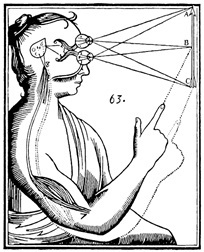
Anatomically correct drawing of a seated person pointing


Modernity Is Catastrophe

He woke in the middle of a nightmare.

The terror lay in his room

like the body of a dead animal

covered with flies. Its teeth

shone in the grass.


A French soldier,

half-asleep above the stove of a peasant,

turned, restless with insomnia from his problem:

What can I know, if anything?”

He knew he could doubt; besides that, 

could he know anything at all?


A man raised a tube in Italy

with curious lenses toward the night.

The moon bowed its face toward him.

What will I see there, if anything?”

To his eye he put the tube and squinted.

Cara luna, will I see anything at all?”


An Englishman sat carefully writing

a work of indisputable logic

through the night. He raised his eyes, reflected:

What can a man do, if anything?”

In the darkness he heard someone whisper:

What if he can do anything at all?”  


A gentleman in Paris totted up figures

in two columns on a smooth surface of calf-skin:

What can I make, if anything?”

He counted again: the numbers added up, beautifully.

His fingers grasped the quill so hard it split.

I can make more. What if I can make it all?”


It was nearing midnight in Europe.

A messenger was crossing the mountains,

taking an urgent notice between sovereigns

who had never met face to face.


As he neared the summit, he stumbled,

his boot dislodging a stone

that fell, gathering stones as it went

in a wind of rocks, trees, snow,

collapsing across the valley

in an avalanche, burying it all.

_____

Christopher Bernard is a poet and writer living in San Francisco. He is coeditor of the literary and arts webzine Caveat Lector. His poetry can be read at The Bog of St. Philinte.

Image from The BioLogos Forum.

Play/Write by Ryan Hodge

Play/Write banner with a video game character on the left, and a pen on the right

-Ryan J. Hodge

For someone who enjoys a great story, is there anything better than a narrative that engages you from the very start? Imagine a world so rich you can almost smell the scents in the air, a delivery so clever it forces you to think in a way you never thought you would. I’m Ryan J. Hodge, author, and I’d like to talk to you about…Video Games.

Yes, Video Games. Those series of ‘bloops’ and blinking lights that –at least a while ago- society had seemed to convince itself had no redeeming qualities whatsoever. In this article series, I’m going to discuss how Donkey Kong, Grand Theft Auto, Call of Duty and even Candy Crush can change the way we tell stories forever.

What RPGs Teach Us About Creating an Ensemble

Most kids in my generation grew up watching shows like Power Rangers, Teenage Mutant Ninja Turtles, Voltron, and other dynamic action shows featuring an ensemble cast. Which of these personas we adopted on the playground could actually be viewed as a partial reflection of what qualities we valued. Kids who wanted to play as Leonardo tended to want to be leaders, Raphaels were more inclined to just fight, Michelangelos had a penchant for silliness, and Donatellos… were the fourth one.

Donatello the Ninja Turtle

Oh…fourth kid.

Now a group of people coming together to solve a problem is nothing new, narrative, of course; but there seems to be something in particular that is compelling about these particular kinds of shows –especially with the younger crowd.

What’s very interesting about these stories is their inclusiveness. It’s predicated on the notion that neither one individual nor skill set is sufficient to solve the problem. You could be the greatest warrior to have ever lived, but if your mechanic can’t maintain your equipment; then there’s only so much a naked warrior can do against a tank.

Continue reading