Short fiction from Mitchell Grabois
Responders
There are scattered pieces of stale rye bread in the patchy snow of Sloan’s Lake Park. The geese ignore them. The old man who put them there gets on his bicycle and begins to ride away, but he doesn’t get far before he falls over onto the unyielding pavement. Pinned by his bicycle, he’s hurt and perplexed. He’s been riding a bike for over seventy years and has never lost his balance before.
I call 911, even after the old man sees me pull out my cell phone and snaps: Don’t call 911. I don’t want to argue with him. He’s too confused to make a judgment. I just do what I think is right.
The EMT’s put him in the back of the ambulance. What about his bike, I ask.
I don’t know, says one. I don’t know about bicycles. We just take the people. Bicycles have to fend for themselves.
Really? That’s your answer? You must be new.
The First Responder doesn’t respond.
I end up taking the bicycle for the old man. I don’t want the responsibility, but I’m the only one there. I’m not looking forward to returning it to him. He’ll probably be pissed at me for calling 911. He might even get violent. But I’m not worried. I can outrun an old man who can’t even manage to stay on his bike anymore.
I watch the ambulance drive toward St. Anthony’s Hospital. The geese have decided that the rye bread is safe, and are busy eating it. Goose shit is all over the grass, as usual.
That night, I’m in a dark closet, stretched out on the shoes, lots of shoes, footwear for all seasons, cowboy boots with horse shit still on, thongs with grains of sand, rain boots running with water, espadrilles, high top sneakers, shoes with cleats. I’m writhing, allowing all those shoes to fuck me in the ass, make me their bitch.
Clothes hang above me. Inside each shirt is an evil spirit, in every jacket a Nazi. I scream: Oh Lord, why hast thou forsaken me?
The closet door opens. A woman vaguely familiar (I think I was married to her) yells: Get out, you fucking party crasher.
I need medical marijuana to ease this bad trip.
Synchronized Chaos April 2015: Creative Tension
Happy April and Happy Easter to those who celebrate. This month’s contributors create a sense of suspense, an uneasy creative tension throughout the issue.
Leonard Traumel’s lecture at the Chabot Space and Science Center in Oakland, California, reviewed here by Cristina Deptula, shows how leading physicists and cosmologists say that much of our universe is composed of ‘dark’ matter and energy, about which we know next to nothing. Poet Kira Burton urges us to embrace dissonance and confusion, while Neil Ellman’s poetry comments on paintings whose protagonists are perched between love and disaster, beauty and death.
San Francisco’s Fashion Tech Week reflected the influence of high technology, startup culture and environmental concerns on San Francisco’s emerging fashion aesthetic. Returning poet Tony Longshanks LeTigre describes social contradictions within the same city, where during the same week he can visit a renowned botanical conservatory for free and be harassed for napping briefly in a public park.
Sonny Zwierkowski’s poetry presents images that carry hints of unreality and disconnection: empty foreclosed homes, people who have trouble speaking to each other, a backyard view reflected in a pool of water. Joshua Dunlap’s poetry and prose vignettes tell stories with themes that have resonated with people throughout human history: striving for accomplishment versus living in the moment, fighting with others to prove oneself, contemplating mortality in the midst of vibrant life.
Russell Sivey presents a relationship where there is simultaneously passionate love and intense conflict.
Joan Beebe’s gentle, thoughtful pieces convey the earth’s natural renewal in spring and the rhythms of her childhood working on a family farm. Yi Wu’s poetry presents spring as fragile, almost tipsy and clumsy in how it clears away frost. Patrick Ward also contributes a pleasant piece about growing beans in his garden, and in later pieces encourages acceptance and respect for those who are somehow outside the mainstream, even those who seem scary at first glance. Ward also points to the existence of cruelty and evil in one of his pieces. Again, the complexity of life involves both good and bad, compassion and malice.
Ann Tinkham’s travel essay, like Patrick Ward’s work, comments on the lives of those who are different. She portrays a moment of tension in a family whose baby has Down’s syndrome and wonders if we can broaden our concept of ‘having it all’ to encompass ‘welcoming all.’ Shawn Nacona Stroud’s poetry conveys themes of family and loyalty, showing the beauty of building a history with loved ones. His final piece describes a near death experience, reminding us that we are all vulnerable. Laurie Byro’s work embraces all, love, memory, travel, grief, separation, culture, the foreign, prayers, through lush imagery.
Elizabeth Hughes reviews titles in her Book Periscope column where protagonists must make choices that determine their character and destiny. In K.C. Simos’ Ambrosia Chronicles, the characters within the adventure trilogy slowly grow into themselves, discovering their supernatural powers. In pastor Stephen White’s self help guide Saving Dr. Jekyll, Destroying Mr. Hyde, the author gives advice on how to live a moral life and overcome one’s addictions and bad habits. Characters and readers must choose to show courage and do the right thing even when faced with constant danger and pressure to give in to temptation.
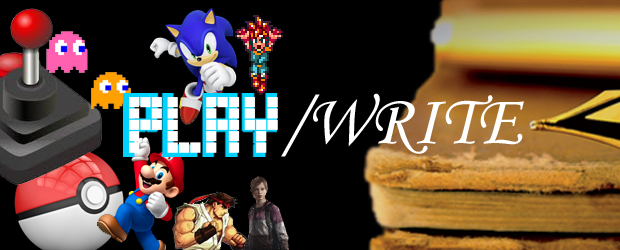
Ryan Hodge, in his monthly Play/Write column, discusses how the most interesting video games encourage characters to solve problems in more creative ways than simply shooting as many enemies as possible. As one game demonstrates, sometimes peace can be even more complex and interesting to maintain than war.
In his lengthy poem about the provenance of a clock, Christopher Bernard reminds us that most of us are inextricably connected to others. Nigerian political columnist Ayokunle Adeleye urges his fellow citizens to turn away from selfishness in the social and political spheres. Laura Kaminski and David Subacchi advocate for tolerance and nonviolence in the wake of killings of civilians within Nigeria by terrorist group Boko Haram. Warwick Newnham presents the moral chaos still present in post-colonial Myanmar/Burma through a vignette about drunken sailors, lovers and fireworks.
There’s plenty of chaos in this issue, but also plenty of love and understanding and creativity. These pieces point to a way forward where we embrace complexity while acknowledging our pasts and accepting and honoring our connections with others.
Announcement from our partner Rui Carvalho, who has worked with poet Janine Canan and other writers here:
===================================
Now you can publish your e-book for Windows or Windows Phone, with your poetry, tales or novel, for only a donation of the following amounts:
a) annual donation 10 USD (maintenance);
b) price per page 1 USD;
c) authorize the inclusion of automatic ads in 10 % of the pages (at least and only if you aren’t happy with this).
For more information please contact Rui M. Publishing at:
ruiprcar@gmail.com
Best regards.
===================================

Play/Write from Ryan Hodge
-Ryan J. Hodge
For someone who enjoys a great story, is there anything better than a narrative that engages you from the very start? Imagine a world so rich you can almost smell the scents in the air, a delivery so clever it forces you to think in a way you never thought you would. I’m Ryan J. Hodge, author, and I’d like to talk to you about…Video Games.
Yes, Video Games. Those series of ‘bloops’ and blinking lights that –at least a while ago- society had seemed to convince itself had no redeeming qualities whatsoever. In this article series, I’m going to discuss how Donkey Kong, Grand Theft Auto, Call of Duty and even Candy Crush can change the way we tell stories forever.
How Unconventional Problem Solving Makes Stories More Exciting
There’s a certain habit one can get into while writing as well as playing video games; the habit of resolving problems in the most straight forward, obvious way possible. Be it with firearms or sharpened sticks, it is easy to think of conflict as an uncomplicated affair of each party dueling the other until one falls over. Unfortunately, this can lead to a bit of creative stagnation and, worse, make combat in a story outright boring.
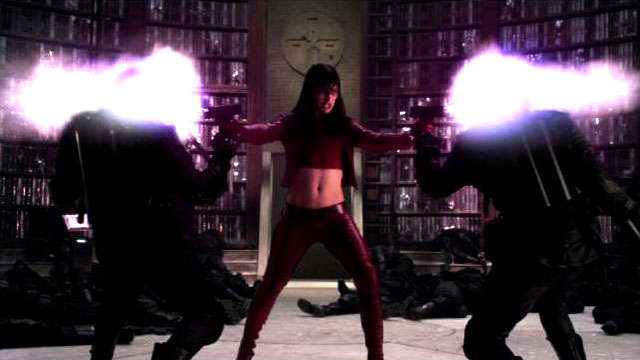
Take Ultraviolet (2006, film) for example. In this movie, Milla Jovovich’s character, Violet, lays waste to the enemy forces with such brutal efficiency that nothing the villains send against her can really be considered a threat. Though the number of enemies is scaled up with every encounter, because Violet’s default problem solving mode is pure attack we, the audience, need not even ask ourselves How’s she going to get out of this one?
Such modus operandi is more than applicable to a lot of modern video games. The worst offenders, in fact, are some of the most popular on the market; including Halo, Call of Duty, and Battlefield. Despite their financial successes, however, there tends to be little about these titles that players find memorable. However, the moments they do find memorable tend to have little to do with endlessly felling waves of enemies.
Poetry from Tony Longshanks LeTigre
Yobo Poems
by Tony Longshanks LeTigre
yobo (noun): young hobo
1.
I take a nap in George Sterling Park
broad daylight, early afternoon
I’m tired, between appointments
sleep for an hour or less
do not litter, in fact pick up
a bottle left by someone else
pee on the concrete
don’t drink or smoke (though I might)
as I wake up, guy confronts me
“are you camping out here?”
tells me to leave & not come back
calls me “buddy”
I say, “don’t call me buddy”
does this guy know
what it’s like to be crazy tired
and have nowhere to sleep?
I leave, for my own reasons
but may be back again
to this park named after a bohemian roustabout poet
who would totally take a nap in a park
Poetry from Kira Burton
Embrace Dissonance
Simplicity in chaos
The disorientation of unreality
Realizations
Of your own insignificance
Finding that time
Is the most valuable commodity
The clock ticks
As you read this
Is it worth it?
The most beautiful moments
Are tragedies
Because they end
We are always waiting
For something to begin
Lingering has consequence
We say forever
Like it actually exists
Optimistic in our hubris
Embrace the discord
Because change is perpetual
And without its ongoing tilt
We would wither
We would wilt
Let whimsy rule the day
Let nonsense out to play
And place logic in a box
Only to be used when requisite
If possible avoid it
Logic lies
Logic justifies
There is honesty in discord
That is not easily ignored
Because it makes up our very existence
And it is exquisite in its persistence
It is the majesty of juxtaposition
Peace within dissonance