Short story from Mary Mackey

Vampire Bats Make Strange Bedfellows

The moment I woke up, I could hear the bat crawling toward my cot, dragging itself across the wooden floor of the tropical field station with a low hiss and an occasional squeak. That’s how I knew it was a vampire bat. Unlike other bats who fly at your face like teenagers on motorcycles playing chicken, vampires like to use their wings like paddles so they can sneak up on you, nip you on a bare toe or exposed shoulder, inject an anesthetic under your skin, and then bite down and do what vampires in horror films do: drink your blood. Unfortunately, unlike Dracula, vampire bats can be rabid, and getting medical attention if this one bit me would mean flying out of the Costa Rican jungle on a small plane held together with bailing wire and duct tape if I were lucky enough to be able to contact San Jose on the shortwave radio which never worked when you needed it to.

Continue reading

Short story from Evan Almon

THE SOUND OF LOATHING

Evan Almon

Curling his fingers into his palm in a limp fist, the son examined his fingernails.

The son had a bad habit of cutting his nails a bit too short so they were pink and sensitive; he fell into this habit because his father did the same. A real manifestation of hereditary OCD if ever there was one.

His fingernails had grown out an off-white opaque about the length of the bend in a staple. He would know, for at his age, he thought it brilliant to use a staple to just try and dig out the dirty brownish-bluish streaks which were probably ink and the other crud of life all wedged underneath, like dust bunnies in their dens. Time to trim. Things grow, and you cut them down to a suitable size, so it goes.

Continue reading

Short story by Evan Almon

The Gauntlet

Evan Almon

We were assigned a uniform to be worn at all times which was of the cost that it wasn’t a loss if the clothes were to somehow end up completely destroyed.

The dress code entailed: a cheap polo shirt, wrangler jeans (no substitutes), and ranch work boots that had to be one size too small, all tied off with a branded leather belt.

Continue reading

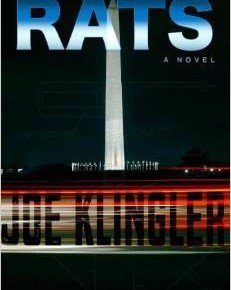
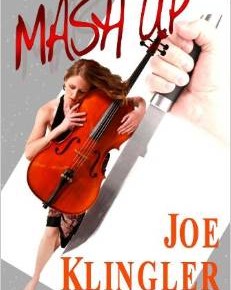
Interview with Joe Klingler, author of suspense novels Mash Up and RATS

Novelist and software developer Joe Klingler, in conversation with Synchronized Chaos Magazine:

What makes RATS and Mash Up unique? Why should someone read them when there are so many sci-fi and thriller books out there? 

Writers essentially have a sort of living fingerprint that they bring to their work based on their personal experiences, insights and attitudes constructed over years of seeing the world from their unique perspective. This they share with us when putting pen to paper.

My own work tends to be layered; not because I plan it that way, but because I see life to be interconnected in that way. In Lean Manufacturing (sometimes called The Toyota Way) there is the Five Whys that require asking Why five times in order to reach the root cause of a problem. The Whys is one method for digging down through those layers of interconnectedness.

For example, in RATS Claire Ferreti is a young sniper trying to do her job. When her mission goes sideways, she is faced not only with the physical challenge of staying alive, but also with challenges to her core beliefs. At the same time, her prey is on his own mission based on events that took place decades ago, and his personal conclusions about what needs to be done about them. Fine so far. But these two exist in a world of RATS (multiple kinds, but none with four legs), where a hawk versus dove political battle rages for the Presidency, with the 600 billion-dollar United States defense budget at stake, while a young boy’s curiosity pulls him into this larger world. While following the action and wondering what will become of Claire, a reader who is interested in such things might think to themselves: this isn’t about the past, it’s describing a possible future—this could really happen. So RATS can be read, and I hope enjoyed, on several levels.

Mash Up has at least as many layers, though the players are college music students, Silicon Valley executives who think greed is a sacrament, software engineers, YouTube, and computer viruses in a world that shifts between cyber and physical reality. There is a horrible crime, its aftermath, a new crime, and two detectives: Qigiq (the Alaskan detective from RATS) and his new partner Kandy Dreeson (who strikes fast and takes no prisoners) on their first case together trying to sort it all out.

Continue reading

Short story from Evan Almon

“A Life After Bungee”

At some point in everyone’s life, they must ask themselves the question: what would Batman do? I did so when conferring within as to decide whether or not to bungee-jump over the Zambezi River, and the obvious answer brought with it a brave determination I had never felt before. I was not a risk-taker, and felt out of my element. My mom insistently discouraged the idea, my younger brother said he would if his arm hadn’t been broken while skiing two weeks prior to our African excursion, and my Dad said it would probably be a hell of an experience but that you could count him out.

The constant baritone rush and roar of the mighty Victoria Falls was ubiquitous when standing on the Great Victoria Bridge that connected Zimbabwe to Zambia.It was Christmas day, but it was technically late Christmas Eve still in America.

Continue reading

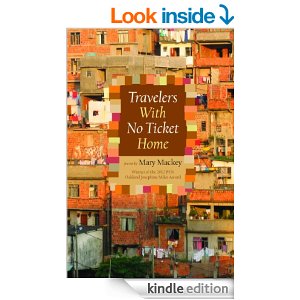
Interview with poet Mary Mackey, on her new collection Travelers with No Ticket Home

Cristina Deptula interviews Mary Mackey, poet and author of the recent collection Travelers With No Ticket Home:Cover of Mary Mackey's latest poetry collection

CRISTINA: I noticed that in the middle section some of the poems spoke to or addressed a character known as ‘Solange’, such as the environmentalist piece when she encouraged the river to break the dam. Please tell us more about her. Who is she, where did she come from and why did you decide to incorporate her as a character?

MARY: Solange is a mysterious, ambiguous character who appears in a number of my poems. I never consciously decided to incorporate Solange into my work. She just appeared spontaneously when I was writing the poem ”Sugar Zone.” “Sugar Zone” was published in my previous collection of poetry which is also called Sugar Zone. So, as you can see, the appearance of Solange was a very important event for me creatively. Solange takes on different roles at different times: she may be an incarnation of the force of nature, a priestess, a goddess, a shaman, an ex-lover, or even the wilder side of Mary Mackey. I’ve deliberately avoided pinning her down so that she can move fluidly from one poem to another. In the poem “Solange Encourages A River To Destroy A Damn,” which you mention, Solange is dressed in the garb of a priestess of the Afro-Brazilian religion Candomblé and is speaking to the river as a shaman/goddess.

Continue reading

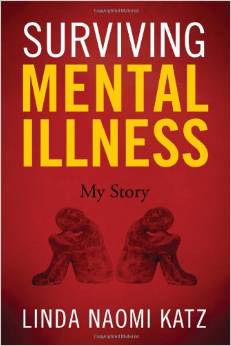
The Birth of a Healer – Holly Sisson reviews Linda Baron-Katz’ Surviving Mental Illness: My Story


The Birth of a Healer

Surviving Mental Illness” by Linda Naomi Katz

By Holly Alexis Sisson June 10, 2014

 Linda Baron-Katz' Surviving Mental Illness: My Story cover image

In the digital age of snapshots and youtube videos, decentralized news sources and social media, where the minds of so many can connect at the drop of a wifi connection the mental health field is quickly diverging into the many voices of our global human village. We can see this in Brene Brown’s Ted talk on the power of vulnerability (https://www.ted.com/talks/brene_brown_on_vulnerability), in the critical examination of the inter-sectionalities of human existence in academia, the changing way our hi-tech world influences how we relate to ourselves and each other, and in the return to an earth-based indigenous worldview where each individual is vital to the whole and one person’s illness is a reflection that something is out of balance in the entire community. The will of one to break down the barriers of stigma, ignorance, misunderstanding, systematization of models of illness and health affects the many.

The modern field of psychology is taking bounds and leaps from a model of pathology and illness to a model of health and wholeness that changes the very foundation that guides us in our search for mental health as individuals, communities and a global village. Linda Naomi Katz so valiantly brings to us her own journey of recovering her health and wholeness as she recounts her persistence as a strong woman suffering from a diagnosis of bipolar disorder in her book, Surviving Mental Illness: My Story. Her recovery from illness in a world of hyper-individualism and standardized models of health reveals a powerful message in times of extraordinary transformation of the human consciousness that hope is alive and well.

Continue reading