Susan Maciak reviews Elsie Augustave’s novel The Roving Tree

The Roving Tree

Reviewed by Susan K. Maciak, www.cameo100.com
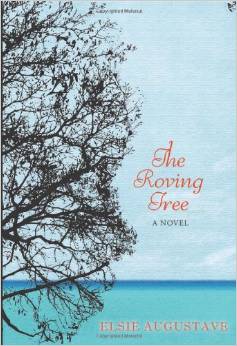
Book cover - Elsie Augustave's The Roving Tree

Elsie Augustave‘s novel The Roving Tree contrasts black and white cultures in several countries through a riveting story based on reality for many African Americans. It starts with a young girl’s struggle between two completely different worlds. Adopted at age 5 by a white family, Iris tries to reconcile her past as a poor, black child from Haiti, with her present. The story starts while she’s growing up in an affluent Anglo-American household in New York.

Her new family treats her with love and respect, but she soon faces taunts at school where many fellow students muttered when they saw her: “That nigger better not sit here” or “Go back to Africa.” After tossing out in shame her only photo of her birth mother, pinching her nose together with a clothespin to alter her Afro appearance and begging her American family for skin-lightening cream, Iris realizes that she can’t change who she is.

Despite rampant racial discrimination of the Sixties, Iris adjusts to her new life, excelling in school and in dance. In college, she accidentally meets her half-sister Pepe who also lives in the U.S. Both girls travel to Haiti when Iris’s mother dies in the same village where Pepe was raised. When Iris meets Pepe’s father, she finds out that he was also her own father, a wealthy Mulatto who had raped her mother while she worked as a maid for his family.

In Haiti, Iris reconnects with her relatives and experiences their culture, a mix of French and African tradition, Catholicism and voodoo magic of zombies and spirits. She sees discrimination among the natives based on the darkness of their skin, and she realizes that her mother had given her up for adoption to escape poverty and desperation to live a better life in America.

After graduating from college, Iris wants to return to her roots in Haiti, but decides to accept an offer to lead a dance troupe at the Institute of the Arts in Zaire, Africa. There she discovers the same rigid class structure, corruption, greed, poverty and illiteracy that marks her native Haiti. She confronts yet another culture shock – the practice of polygamy. Despite warnings of deprivation and despair for women in 1960s-Zaire, Iris’s friends there were unable to convince her to leave the place of her ethnic origins.

Her story astonishes readers when they realize that finding one’s heritage can compel someone to give up comfort, convenience and culture of the developing world to live in a country that offers much less. Iris’s story opens eyes to the deep yearning of all people to learn and appreciate their cultural backgrounds. The Roving Tree is a must-read for anyone who needs to understand and accept their fellow citizens who came here from the continent of Africa.   

Susan Maciak may be reached at maciak@comcast.net

 

Book announcement: Susan Maciak’s Add To Your Edge

 newmaciakbookcoverjpeg


Book Review: Add to Your Edge: 12 Ways to Excel in the 21st Century If earning a living seems more daunting these days, you’ll find a few coping clues in Add to Your Edge:12 Ways to Excel in the 21st Century.This recently released book guides readers through a dozen changes in direction that have turned the business world upside down and changed the job market forever.


Small business owners, CEOs of large corporations, seasoned employees and recent graduates all will find out how the game has changed. This book covers new rules for everything from career advancement to customer service. It helps readers climb today’s unsteady career ladder, control inevitable crises, compete in the global marketplace and cope with intense 21st century competition.


Add to Your Edge, by Susan K. Maciak, career coach and corporate trainer, could be called a survival guide for navigating today’s world. This book shows nervous employers, frustrated job-seekers and troubled work teams how to take advantage of current trends rather than be crippled by them. Hints can be found in every chapter, including:


Re-Train Your Brain You ‘Gotta’ Have a Gimmick Stand Out from the Crowd Crack into Your Creativity Be Your Own Teacher Articulate Your Strengths Update Customer Service Control Crises and Conundrums Take Personal Interest in People Think speed . . . and Convenience Understand Added Value Re-Imagine the Road to Success


Add to Your Edge is now available in paperback and eBook on amazon.com, bn.com, cameo100.com and other online booksellers, along with Maciak’s four previous books: What Are People Skills, Anyway?, First Job Jitters, Job Shopping and The Monster Show.


Contact the author at suemaciak@comcast.net Author owns rights and consents to use of photo.


Christopher Bernard reviews poet Ivan Arguelles’ Ars Poetica


Photo of poet Ivan Arguelles

Ivan Arguelles

Ivan Argüelles


Ecstasies in a Great Darkness


Ars Poetica

Poems 2006−2013

Poetry Hotel Press

320 pages, $24.95

By Ivan Argüelles


A review by Christopher Bernard


“Dazzling, brilliant, inspiring, eloquent, demanding, confusing, chaotic, flummoxing, the work of a mad genius, the work of a genius madman” are some of the things that may come to mind as one reads the work of Ivan Argüelles. And this is what one might expect of someone whose dense and difficult poetry is some of the most vital literary work by a contemporary American writer. Dark, lyrical, intense, and at its best of a deep, if at times willful brilliance, Argüelles’ writing shows little patience with the flippant ironies of the postmodernists, yet he takes the modern skepticism of any metaphysical certainty seriously and uses his work to probe some of its darker implications. His work has long been a Commedia of our nihilism.
And yet he is a natural ecstatic, which gives his writing a profound poignancy. He subscribes to a kind of maximalist Augustan modernism, seized with prophecy and the divine afflatus, though fully capable of dips into the slangy and demotic; he is, refreshingly, a master of that rarest of literary voices, the contemporary high style, a style unafraid to assert and insist, yet that, at every step, undermines its own insistence:

Continue reading

Poetry from Janine Canan

Invocation

Mother Earth, it is not you

who need to be invoked—

for you are always here!

But we your human children

who today must be invoked—

who have abandoned you, forgotten

to call upon you, neglected to care for you,

failed to serve you and disregarded your needs.

Help us now to awaken and remember

our obligations to you and all Earth’s beings.

Let your spirit fill us with love, appreciation and joy

and overwhelming desire to serve you in all that we do.

May we think and speak and act as one family of one Mother

who gives life to all and when it is time, takes it away.

Guide us, Great Mother, in every decision we make,

every habit we develop, every action we undertake.

May we never forget you again, beloved Mother Earth,

beautiful and bountiful source and resting place and wonder.

BY JANINE CANAN

FROM CONSCIOUSNESS: NEW & SELECTED POEMS 1971—2014 (Regent Press, Oakland, Fall 2014)

Visit Janine Canan.com from more information.


Essay from Ayokunle Adeleye

YOUTHS, Save NIGERIA.

I have since heard many a youth lament about how our grandfathers
continue to ruin the country in the name of ruling it, about how the
rulers of yesteryears are yet the leaders of tomorrow, about how these
grandfathers themselves were youths when they set out but now detest
our youth and our entitlement, about how the affairs of the youth are
left for our gramps (and grannies) to ru(i)n.

I had therefore asserted that anyone older than the republic Nigeria
has no business whatsoever ruling in whatever capacity, that we, the
youth of this country, have had enough of them, that they have failed
to solve even issues that their wantonness created lest we talk of the
challenges of our time, that they have over-stayed their (stolen)
welcome being antiquated and obsolete in all their ways.

Continue reading

Poetry from John Grey


INTO THE ROCKIES


Due west, as we drive,

mountains, colored mostly from the red spectrum,

rise up in a line.

I feel a little like the captain

of a charging army.

The enemy won’t shoot

until they see the whites of my eyes.


The land’s been so flat until now

but, ahead of us,

the world no longer adheres to that lie.

My wife turns down the radio.

It’s like she wants to be able to hear

what she’s seeing.

Even in the back seat, boredom gives way to awe.


“Those are the Rockies,” I proclaim.

So I’m the head of an expedition now.

Once again, my team fail to recognize their leader’s genius.

Continue reading

Mind Your Own Business: Ayokunle Adeleye’s entrepreneurship column

The POTENTIAL III: Minding Your Own Business.
I have since realised that youth can be turned to advantage, that
things are easier when one is young (contrary to popular opinion and
everyday observation); that when one is young, the ‘whole world’
typically rallies around to help, advice is easier to get and
experience, to garner, and the ancient argumentum ad misericordiam
holds sway. Ironically, that is when one is interested in camaraderie,
looking-good, feeling-fly, wasteful spending; rather than in
investments, digging-deep, taking-root, securing assets (land
other/more than cars).

I had therefore urged that we break forth, start our own businesses,
but realise limits, and stay safe. But I have also seen how that is
not the reason we are where we are (poor, jobless and thronging
ourselves to death; Boko Haram joblessly working on our National
security, sovereignty, and sanity; and the Government dutifully
procrastinating, denying, and politicking), how we indeed break forth
and set limits (that we do not court save conquer), how we are easily
quietened, silenced, satiated; for we quickly lose focus, loose grip
and, in not minding our business, place it in loos.

Continue reading