The Propaganda Machine: Don’t Get Fooled Again (An essay by Randle Aubrey)

The other day, I stumbled across an article on the news site PoconoRecord.com regarding President Obama’s recent signing of the FAA Reauthorization Act, the appropriations bill for the Federal Aviation Administration. The focus of the article was on a section of the bill regarding unmanned aircraft systems, better known to most of the general public as “drones”. The rather ominous title of the article is “Attack Of The Drones”, and begins as follows:

“If you thought 1984 sounded bad, look overhead. Congress quietly passed a new law in February that could result in as many as 30,000 unmanned drones plying [the] nation’s skies by 2020.

The measure was part of the FAA Reauthorization Bill, which President Obama just as quietly signed. A component of the bill calls for the Federal Aviation Administration to develop regulations…by 2015.

Government doesn’t even have rules in place, yet our elected officials passed a bill that will increase surveillance…of just about anybody, anytime, anywhere?”

I’m sure you can imagine this author’s alarm after reading the first few paragraphs. The article goes on to describe how privacy advocacy groups are concerned about the bill’s implications, and the potential dangers to personal security if/when the usage of drones reaches the private sector. It closes with another reference to Orwell’s 1984, praising his prescience in seeing the future of surveillance, and an entreaty to the public to “demand that guidelines be in place before any more licenses are issued” in order to “avoid a floodgate of abuse and the disappearance of even the expectation of privacy at home.”

Scary stuff, right?

My knee-jerk response to this was highly typical of many of my peers on the Left: I freaked the fuck OUT. I immediately posted this to my Facebook feed, making some wisecrack about the President being a peacemaker, then issuing a digital scream heard far and wide…

“WHEN ARE YOU PEOPLE GOING TO WAKE THE FUCK UP?!?!?”

Well, someone did wake up as it turns out, and that someone was me.

About an hour after posting this, one of my friends on my Facebook feed responded to my call for alarm with some rather surprising information. It turns out that The Pocono Record is owned by Dow Jones Incorporated, the marketplace for some of the world’s largest textile and manufacturing companies(you’ve heard of the Dow Jones Index, right? Yeah, it’s those guys), which was until recently owned by none other than the Bancroft family, one of the wealthiest families in America and a textbook example of some of the worst the 1% has to offer.

He then went on to cite the specific text in the bill regarding unmanned aircraft systems, which makes no mention of the actual usage of the craft, only the requirement to establish regulations to do so by the aforementioned deadline.

The signing of a rather innocuous bill regarding FAA funding and safety compliance has been blown out of proportion by the ‘liberal media’, and turned into fodder for the propaganda machine. And #ThaPink was completely fooled.

As someone who rallies hard against the dangers of propaganda and the imminent hysteria contained in both the liberal and conservative echo chambers, you can imagine my surprise and shame at being so completely hoodwinked. Upon rereading the article, all of the fallacies and absolutist demagoguery contained within it quickly became glaringly obvious, further fueling my indignation:

-The arbitrary figure of 30,000 drones that cites no external reference

-The InfoWars-esque condemnation disguised as a question: “Government doesn’t even have rules in place, yet our elected officials passed a bill that will increase public and private electronic surveillance of just about anybody, anywhere, anytime?

-A reference to “privacy advocacy groups”, again with no cited organizations

-Blatant fear-mongering statements like, “[some drones] are tiny, as small as birds. You won’t be able to go to the bathroom or have sex without risking a witness.”

-Twisting facts to support the evidence and cast the FAA in the role of “Big Brother”

-A direct appeal to the reader’s newly-created false sense of fear and moral outrage

It’s clear that this article was written as an attack against the President and the supposed dangers of the ‘big government’ he represents, in order to stir up people’s emotions and prevent them from making clear-headed decisions about various issues. And in my particular case, it worked all too well.


When There Is No Product, The Product Is You

Propaganda is a very real thing in our everyday lives: we are constantly bombarded with it from every angle, every hour of every day. From the 24-hour news cycles of Fox News, CNN, and MSNBC to the endless stream of videos, podcasts and newsfeeds all over the face of the Internet, the endless struggle between liberal and conservative ideologies has turned into an all-out media war, where pundits and demagogues lend fire and weight to polarized identities through the relentless application of propaganda upon the citizenry.

However, the propaganda of both Left and Right do have one thing in common: they paint a false picture of America is, as well as what they think it should be. Propaganda relies on extremities of ideas in order to send direct messages, which requires a deliberate disregard for integrative complexity on behalf of its creators. From the patriotic stirrings of America’s golden years on behalf of the Right to President Obama’s 2012 election campaign call-to-arms, the simple “Forward”, both sides work in conjunction to create a false reality of polarized ideologies, an “us versus them” world where the politics of the parties trump the will of the people, starting from within each individual.

Arguably, the Left’s perspective of what America ought to be is a much kinder, gentler one than the homogeneous, hive-minded worldview of the Right, but the unfortunate truth of the matter is that the Left’s ideology is, in the end, just as unrealistic. It stresses far too much mankind’s altruistic tendencies without acknowledging our innate selfishness, coupled with a deep distrust of authority figures and an excess of individualism.  The idea of a nation where everyone gets along, people are free to be whomever they like, and everything is genuinely “fair and balanced”, fails to account for the fact that some people are just not going to get along no matter how much you try and make them, and the lack of respect for that fact only serves to the detriment of this ideology, by keeping Lefties in a near-constant state of apoplectic moral outrage over the fact that people won’t accept their lifestyle choices.

This lack of pragmatism on the part of the Left is more than made up for on the Right, a party brimming with authoritarianism and individuals with a deep-seated need to follow and obey. The might-makes right, “free market” morality espoused by the majority of conservatives, where some people are “more equal than others” as Orwell so eloquently put it, creates a profound and tangible sense of “in-group/out-group” tribalism, where demonizing the “other” in order to preserve community integrity takes primacy over things like social justice and equality.

But propaganda cannot exist in a vacuum. It relies upon certain aspects of human nature in order to work properly: aversion to uncertainty and ambiguity, the aforementioned concepts of justice and fair play, and the need for closure, among other things. These are universal traits that transcend partisanship and reach directly into people’s core values, no matter the particulars of their ideology. Granted, the relevance of each to egalitarians and authoritarians alike varies between individuals and party affiliations, but without these fundamental human traits, propaganda would not exist, nor would its necessity.


The Ultimate PR Machine: The Brain

Acknowledging propaganda’s effect on the self requires understanding the relationship between your values and your ideology, a fact clearly misunderstood by a large majority of the populace to the benefit of the body politic. Both inform and shape one another in your decision-making process, and the disproportionate influence of either on the psyche is what allows propaganda to flourish.

Coming to this understanding is no simple task, however. It first requires a great deal of introspection about both your values and your ideology, which is seldom done by anyone without a great deal of initial resistance. Depth of introspection is not an innate survival skill, rather a learned behavior based upon a combination of personal experience and genetic predisposition. Everyone undergoes this process throughout their waking lives, but most often unconsciously and with little thought given to consequence. And it’s not necessarily their fault.

I hear a lot of talk these days from both liberals and conservatives about media “echo chambers”, where not only the same ideas are endlessly repeated, but the same reactions to them, as well. These are tangible manifestations of partisan tribalism, where the homogenization of ideas serves only to preserve the in-group and to suppress dissenting opinions out of fear for ideological safety. In short, the echo chambers are little more than cadres of yes-men and yes-women, surrounding themselves with party rhetoric in order to find shelter from the intellectual storm. In the echo chamber, you don’t have to think: others will do it for you.

To quote Orwell once again, this sort of “groupthink” is particularly dangerous, and has become a self-perpetuating propaganda machine of its own. In the echo chambers, you have to agree with the group or at least act as such, or else risk being ostracized by your peers. But at that point, you have to ask yourself: if my opinion is different than everyone else’s, are they actually my peers or just people I disagree with? Am I crazy for daring to be different, or are they crazy for failing to be?

Surrounding yourself with yes-men doesn’t make you smarter; it only keeps you safe. Unchallenged opinions created treacherous chasms in the intellect, where the tendrils of propaganda can take root and slowly corrupt rational thought. We owe it to ourselves and to one another to break free of the choking restrictions placed upon us by groupthink, and to strive together to form more personalized ideologies based upon a deeper assessment of our values through communication, honesty and respect for one another.

At the end of the day, we all want the same things, regardless of political affiliation: peace, security, and personal well-being. But only through the difficult process of reconciling our beliefs with our behaviours will we be able make ourselves immune to the machinations of the propaganda machine, and create the society we truly desire: not the one we’re told is acceptably desirable.

“Kimberly Luves Is a Brand”: A prose piece by Kim Brown

Kimberly Luves Is a Brand

Spirituality- My belief and personal relationship with God began a life for me. Today I live!

Encouraging- Since my life in Christ, God has been able to encourage me to go after my goals.

Education- I have always lusted and thirsted for knowledge in itself. Today, because of God’s encouraging words and promises, I have a college degree, a family development credential through Cornell University, 4 Human Services Certificates, CPR & First Aid Certifications. It is because of God and his encouragement in love, that I have a college experience and education.

Love- The love that God has bestowed on me through Salvation and Sanctification freed my heart of Hate and Envy. I am able to love my enemies, people that have constantly offended me, people that have a lack of love for me, because God has loved me so. My mind and heart is full of compassion, empathy, and unconditional love. I no longer have the mindset of an unsatisfied life. I am thankful for the life I lived and the life that I am living.

Opportunity- Through Christ, I have the opportunity to create a new life and a new me, and so far so good. I enjoy helping the less fortunate, drug and alcohol addicted and just anyone who needs help. Today, unlike before, I am so happy to volunteer myself and my time to help a stranger in need.

Desire- Today, I have the desire to take my time with the little things in life, taking inventory of myself and children, making sure that we are right. I have the desire to live a normal life: no drugs, alcohol, and bull-shit living. I have a routine and schedule from the time we awaken to the time we go to bed. I am organized, clean with my body and my surroundings at all times. I have the desire to be a great role model to my sons, a great cook, doctor, tutor, maid, listener, counselor, stylist, barber, writer, producer, and advocate for my children. I have the desire to live for my children and stay out of trouble for my children.

Health- Today I am healthy, focused on eating healthy foods, fruits, and drinks, I enjoy exercising and motivating others to get healthy too. I lost 120 pounds and counting in two years, by exercising at least 60 minutes a day, cutting back on unhealthy carbohydrates and thinking positive, about my weight loss and weight loss goals.

Wealth- The rich and wealthy heart of love that God has given me is my wealth. Today I look at life, people, and obstacles in a positive way. I’m not perfect; I get mad, but because my heart is flooded with a sea of love, I am wealthy and I plan to stay that way in this life and the one after.

Image- Image says a lot, and I have come a long way from not caring about mine. Today, you can catch me in the latest fashion of clothes and shoes, and luxurious wigs that enhance my beauty. I am perceived to be a superstar, and I am… I am Gods superstar; through him I am famous; people are intimidated by my beauty and name.

Blessed- Blessed is He/She who acknowledges the Lord in spirit and truth. I am so honest and upfront with God about me and my needs. Kimberly Luves is a brand. Kimberly Luves is constantly changing; the crowd is unable to figure her out completely; she is humble, unique, sophisticated and lovely; she is interchangeable daily; she is envied because of her smile and happy words; like a celebrity who loves to shop for clothes and shoes, Kimberly Luves is always shopping for a new outfit and shoes. Kimberly Luves’ appearance is so versatile that not many people are able to recognize her on any given day. Through the trials and tribulations, because of my desire for positive change, God has been so kind to bless me with all things…

Get God in your life, no matter the cost; do work for Him so that you can be blessed like me.

Love,

Kimberly


I love those who love me, and those who seek me find me.

Proverbs 8:17

Synchronized Chaos, November 2012: Senses and Emotions

Welcome, readers, to the November 2012 issue of Synchronized Chaos! Our pieces for this month vary widely in format—ranging from poetry to prose pieces to visual art to literary criticism to performance reviews—but they share a focus on human senses and emotions. With the five senses, we perceive the world around us, while the emotional response represents our reaction to these observations; let’s see what our contributors have to say about these vital elements of the human soul…

An absolutely unforgettable sensory experience comes from Justus Honda, whose prose piece “Sound Man” involves one person’s lifelong search for an elusive noise. Be sure to investigate this tale, with its truly original premise and its superb portrayal of the protagonist’s sense of longing. Moving from the audible to the tactile, Avi Hoen’s poem “Lazy” features a similarly detailed and evocative set of descriptions: it recounts the sensations (and lack of sensations) felt by the narrator, who walks barefoot through a stark and litter-filled cityscape.

A wide variety of the senses play a role in another of our prose pieces for this issue, Luca Foggini’s “Pavement Ends.” In this work, a haunting description of a deserted town, the atmosphere is conveyed through the sights of empty buildings and discarded garbage, the sounds of bells and tires, and the feelings of hot asphalt and cold snow.

Of course, any great concert is bound to feature an interesting variety of sounds; this issue features a review of just such a show. As Synchronized Chaos editor Cristina Deptula describes, the Tom Sway Orchestra’s performance at the Mission District’s StageWerx Theatre contained an excellent array of styles, ranging from jazz to bluegrass to the realm of fantasy (including one song about a car-stealing mermaid!). A different but equally brilliant and meaningful sort of sound can be found at the many poetry slams around the Bay Area, and Christopher Romaguera covers two of them–the Berkeley and Oakland Slams–for this issue.

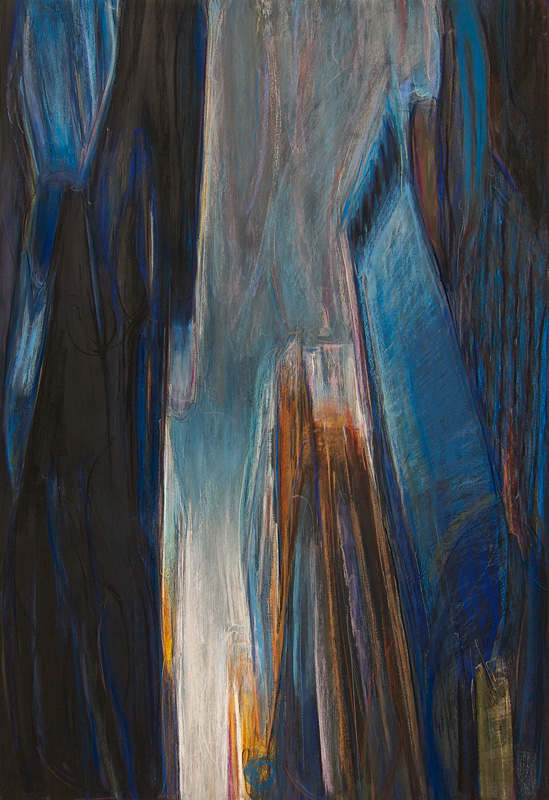
You might start to exercise your sense of sight in a new way after looking at the work of artist Frédéric Choisel. “Vertical Horizons,” a set of six pieces, takes the ordinary skylines of New York City and reinterprets them into new, more vibrant images; he accurately points out that his work conveys “an impression of something beyond human scale.”

Kwesi TerboLizard, who contributes the poem “Stop” to this issue, also uses the sights of the modern city as a springboard for some fascinating work. In Kwesi’s piece, the colorful radiance of red and green stoplights serves as a metaphor for the struggles of the protagonist to stay on pace with the surrounding world.

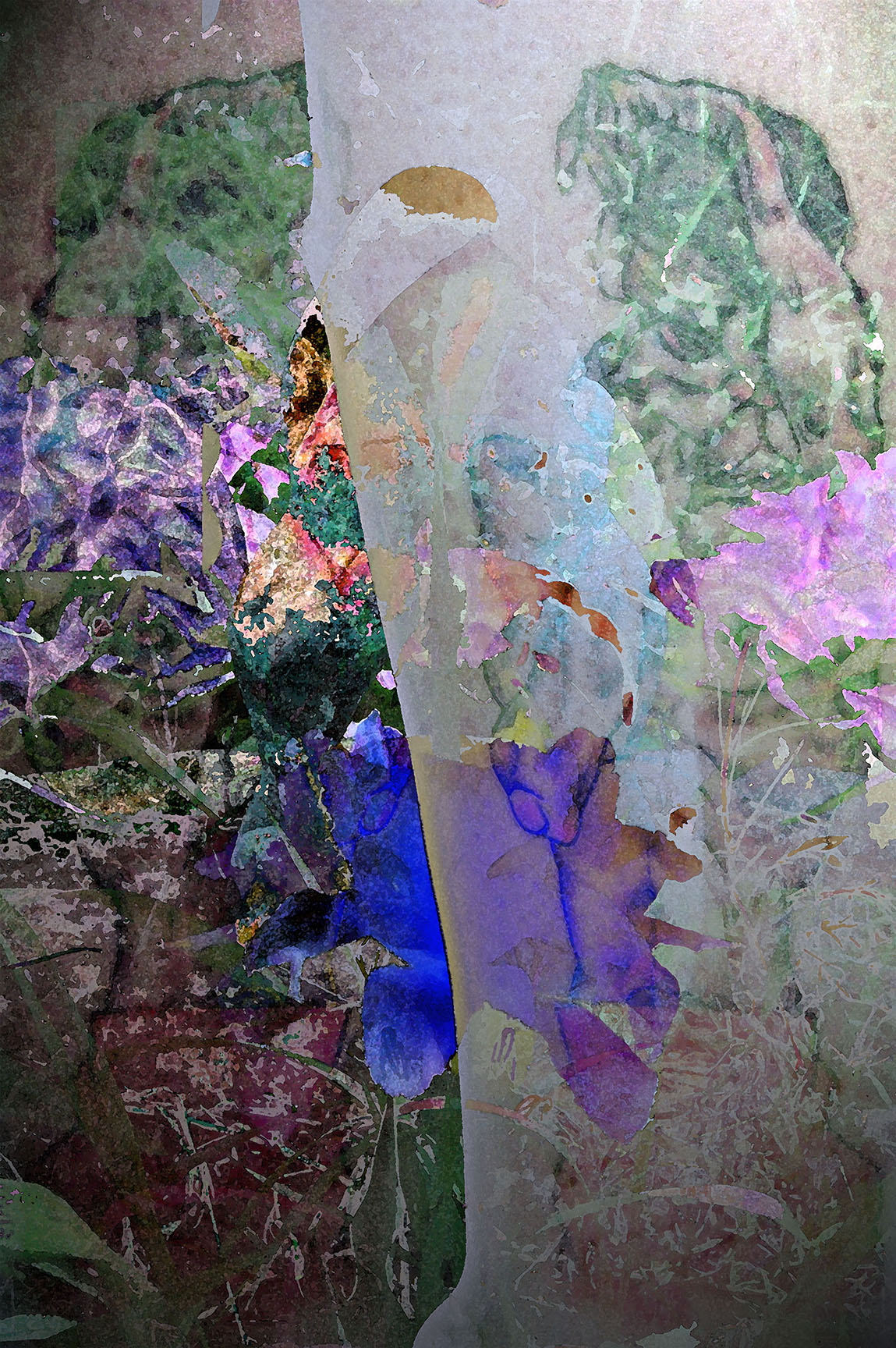
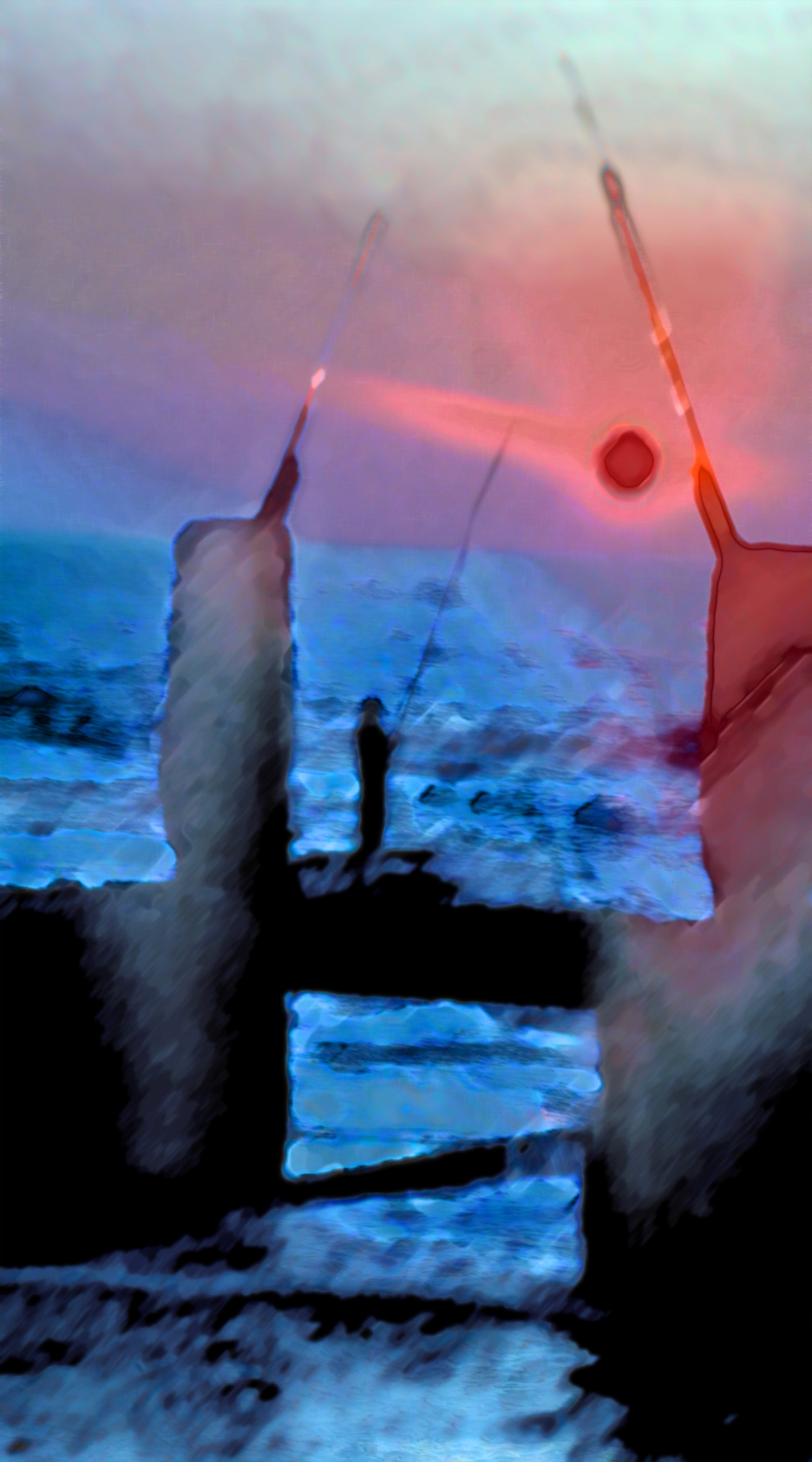
Another source of visual fascination is the work of artist Michael Dickel, whose bright colors, unusual settings, and impressionistic designs are a veritable feast for the senses. In addition to his three artistic pieces in this issue, Michael also contributes a set of four exquisitely-crafted poems which explore the emotions of love, despair, and desire.

Let’s take a look at some of our other emotion-related pieces. This month’s installment of Leena Prasad’s column Whose Brain Is It? investigates political beliefs—which often seem to be among the most passionate and emotion-based elements of a person’s psyche—and lays bare the little-known physical factors which lie under our ideological choices.

The emotion of anger is represented by poet Raj Dronamraju, whose works express harsh but justifiable criticisms of the hatred, prejudice, and shallowness of modern society. His new book of poems, Travels with the Anti-Johnny Appleseed, is reviewed by Bruce Roberts in this issue. Bruce also has one of his own poetic compositions for us this month, and it brings us into a very different emotional world: “Pelican Ballet” describes a unique natural sight—the beautiful, almost-synchronized movement of the particular birds—with a sense of awe and exhilaration.

Yet another side of the great range of human emotions can be found in J’Rie Elliott’s poem “The Cowboy and His Lady Love,” a memorable and powerful love story whose conclusion will definitely bring a lump to many readers’ throats. And J’Rie also contributes a short story in a very different vein–“Dream Girl,” a memorable tale of fear and sudden shock.

Like love, hope is one of the most important human emotions–it allows us to get through each day and maintain a vision for a better tomorrow. Natalie (Neco) Haviland, who has been imprisoned for some time under California’s Three Strikes law, conveys an inspiring sense of hope in her essay “Coffee in My Cup”; in spite of the suffering which she’s endured, she continues to think positively and is working to improve the lamentable conditions of the state’s justice system. A similar sense of hopeful inspiration comes from Kim Brown, whose prose piece “Imagine a Woman” urges its readers to live life to the fullest while maintaining a sense of self-respect, courage, and love.

Several of our other poetic pieces for this issue deal with emotional subjects. Regular contributor Sam Burks weighs in with “A Simple Matter” and “What Bridge?” which have a well-evoked tone of wistfulness and underlying determination, and Ria Burman contributes “Snap! We’re All the Same” and “The Woman in the Wind”—the latter of which features a memorable exploration of emotional sympathy and human interrelationships.

The artwork of Doug Beube—which includes honey-covered Bibles, reshaped world maps, and books turned into facsimiles of bombs—seems designed to provoke an emotional response, and reviewer Kelly Munoz admits to some initial shock from her initial encounter with his work. Yet, as she points out, his art (collected in his book Breaking the Codex) has quite a few layers of deeper meaning, and he conveys some vital truths about the current societal attitudes towards books, art, and the power of the written word.

Swedish playwright August Sternberg (1849-1912) is renowned for his five pioneering chamber plays written in the early twentieth century, and the entire quintet is currently being performed at San Francisco’s Cutting Ball Theater. As reviewer Christopher Bernard points out, the plays delve deeply into the love and hate which characterize human emotions, but it’s also important to examine the actors and the emotions which they instill in the audience members.

Closing the issue on a note of pensiveness and quiet humor, we have Hazel Mankin’s microfiction piece “Matches,” which features beautiful descriptive writing as well as a particularly unusual idea from the mind of the narrator.

We hope you enjoy this month’s issue of Synchronized Chaos! As always, feel free to leave comments for the contributors; if you’re interested in submitting some of your work to the magazine, please send it over to synchchaos@gmail.com.

Art from Michael Dickel


Mediterranean Sunset, Israel


Garden of Mind


Kaddish

Michael Dickel’s prize-winning poetry, stories, & photographs have appeared in journals, books, & online—including: Sketchbook, Zeek, Poetry Midwest, Neon Beam, why vandalism?, & Poetica Magazine. He lives and works in Jerusalem at the moment. His latest book of poems is Midwest / Mid-East: March 2012 Poetry Tour ( http://www.amazon.com/Midwest-Mid-East-March-2012-Poetry/dp/1105569136).

“Stop”: A poem by Kwesi TerboLizard


stop
by Kwesi TerboLizard


the light turned red
and they ran ahead of me
laughing
as they slipped into tomorrow
no one looked back and they ran
while my heels were still glued to the curb
while I waited at the light for eternity
racing past midnight
they sank out of sight
the gap between us growing wider until
the light turned green
and I ran, too
chasing after them
even though they wouldn’t stop
and then the light turned red again and
catching up was out of the question.

Poetry from Sam Burks

“A Simple Matter”

Where is home?
I want to know,
when will these foggy windows
look out upon a familiar road?
One that I
have never seen
save for in the fleeting
images
of dreams


“What Bridge?”

I have seen
different lights,
strange reflections,
distorted by shifting winds
north
south
east
west
the crossroads over
the currents,
the stepping stone
upon the shaking ground

I have lived
and I
have died
at these crossroads
I have burned every bridge
and danced within the smiles
shimmering with the reflected
embers
fading, and quickly lost

I still dance
for the sake
of those lost grins

I still dream-
too vividly at times-
of those lost directions
and missed connections

I still smile
even though I
have lost it all

north
south
east
and west

I still cross the bridges
even though
they are gone


Sam Burks is from the San Francisco Bay Area, in California, and can be reached at srburks@gmail.com

Poetry Review: Bruce Roberts on Raj Dronamraju’s Travels with the Anti-Johnny Appleseed

REVIEW: TRAVELS WITH THE ANTI-JOHNNY APPLESEED

While teaching 7th grade for 35 years,  I would tell my students, “I’m such an optimist, even my blood type is B positive”—which it is.  Raj Dronamraju, author of a book of poetry, Travels with the Anti-Johnny Appleseed, probably could not make that claim, if his book is any indication of his world view.

He states in his introduction that his poems are not necessarily autobiographical, though points in his life are referenced often.  And of course voice in poetry, like a novel or short story,  should not be assumed to be the author. That said,  the speaker of these poems puts forth a consistently negative, cynical, depressing view of modern life—one that is full of truth, yet does not tell the whole story.  Glass half full?  Glass half empty?  As with all complex ideas—and life is truly complex—it’s probably both. This book presents only one side of the story-a legitimate side, but only one, nonetheless.

This book is divided into three sections—Past, Present, and Future. In “The Past,” the speaker is mainly a victim.   Bullying,  discrimination,  rejection in romance,  parental divorce and resentment—all negative forces shape the speaker’s outlook. The book begins, “I can only begin to tell you/Of the living ordeal I have gone through. . . .” and, immediately, a poetic litany of life’s offenses against him begins.

“The Present” section is rabidly anti-American. “Hollywood Bad Guys” speculates on America’s reaction if 9/11 had occurred there instead of New York.  “There would have been cheering and crying/But of a different kind/ Because deep down inside people hate Hollywood/Hollywood reinforces the most negative aspects of America.”  (Ironically,so do these poems.) In “Sick, Sick America,” he laments that “America makes me want to take a hot shower and scrub my skin/thoroughly until it is red and irritated.” He ends  “Empire of Gluttony,” with “Ugly, obese America/I will melt your fat down/And make candles out of it/To light the way to a better world,” ironically one of the most positive comments in the book.

The title poem,“Travels with the Anti-Johnny Appleseed,” comes from the last section, “The Future.”  Like the other poems it is a doomsday tirade.   Instead of apples,  the voice rides in his backpack, watching as this modern Johnny  “plant[s] seeds of hatred.”  Everywhere he went, “. . . . up sprung distrust, fear, class divisions, racial prejudice.”  In “The Golden Age of Knowing Nothing,” the voice boasts “You can’t convince me of anything that is not scripture based/When dogma and ignorance meet up with anger/It’s like a drunk behind the wheel of a car.”

By now you might think this is a terrible book.  Not so. In its own negative way, it’s a brilliant book.  All of the problems excoriated here exist. American people can be fat, stupid,  blindly religious, greedy, conforming, corrupt, prejudiced, bullying, intolerant, shallow, hypocritical,  and on and on.   And using echoing refrains, strong metaphors, and jarring descriptions,  the author has laid all of these undesirable character traits bare—as they deserve.

But where is the positive side of life?  Where is the perception that this  rambling indictment is only one side of the coin?  Where are “Children’s faces/looking up/holding wonder like a cup?” (Sara Teasdale) The last poem, “Outdoors,” offers a glimmer of hope:  “Turn off the television/Turn off the stereo/The iPod gets locked in a drawer/The Internet will not be surfed today/. . . .I can feel the sun cut through the cold air/. . . . I see others out and about/Filled with an energy/That speaks well of humanity.”

Despite Raj Dronamraju’s  persistent dissection of life’s problems— no, they’re not just America’s problems—he’s perceptive and articulate; he thinks “outside the box!”   And that’s exactly why he’s able to attack life’s ills.  He’s able to distance himself from the mainstream and analyze it’s inconsistencies.  And that’s why he should be read.

Bruce Roberts

October, 2012

Bruce Roberts, who may be reached at brobe60491@sbcglobal.net, is an accomplished sculptor and schoolteacher from Hayward, California.