October’s Solo Sunday – the 25th


Hey everyone – once again, as a monthly treat for our readers and everyone in the Synchronized Chaos family, my colleague Bruce Pachtman offers free tickets to October’s San Francisco solo spoken word productions.

I’ve seen some of these performances before…spectacular stage presence and a wonderful ability to communicate with, educate, and build rapport with the audience, all while making everyone laugh, cry, and smile.
You may either simply show up and say you’re with Synchronized Chaos Magazine at the door and get in free with a promotional media ticket – or go ahead and buy your $10 ticket to support emerging artists and the defiant resurgence of culture despite the faltering economy.
SOLO SUNDAYS
Going beyond stand-up and storytelling, solo performance creates casts of thousands – plus special effects – all bursting from one person. The results are hilarious and heartbreaking, passionate and provocative, ablaze with the personal vision of one very compelling actor/writer.
Solo Sundays, S.F.’s premier monthly solo theater showcase, presents select samplings of veteran virtuosos and top emerging talent in the intimate 50-seat StageWerx theater, a block from Union Square
Please reserve your seats in advance to make sure there will be enough space for everyone.

Anyone who’s 100% certain they will attend just needs to copy and paste these four items into an e-mail:
1. Solo Sundays – Oct 25 at 7:00 (please say you are with/heard about this in Synchronized Chaos Magazine!)
2. StageWerx Theatre  533 Sutter (nr. Powell)
3. Your FIRST and LAST name
4. Whether you would like one or two tickets (additional tickets are $5 each.)
And send it to brupach@gmail.com. We’ll respond to all requests for tickets.

OCTOBER’S LINE-UP
·      Vanessa Lee Khaleel’s “The Rooster” finds one woman queasily confronting pregnancy and childbirth’s freakier physical effects.
·       In “Cracked Clown,” David A. Moss portrays a Shakespearean actor trying to silence his bickering inner demons via comedy, but voices from his painful past remain.

·      Julia Jackson’s “I Didn’t Sign Up For This” rides modern adoption’s emotional roller coaster with a birth mother speaking to her unborn daughter while her own fed-up mom rages over beers and American Idol.

THE DETAILS
Solo Sundays
Sunday, October 25 at 7:00
StageWerx Theatre
533 Sutter St. (nr. Powell)
SF
(near Powell and Montgomery BART stations.)
TICKETS

October’s Synchronized Chaos: Field Notes


Welcome to October’s issue of the magazine! For many cultures, this month brings awareness of the cycles of life and death, of ancestors who have come before us. As we celebrate Celtic Samhain or Mexican/Latin American Dia de Los Muertos or Western Halloween, we reflect upon the journeys we take throughout life, the pattern of beginnings and endings, the process of venturing out and gathering information and life lessons and bringing them back to others.

In keeping with that spirit, October’s monthly theme, Field Notes, celebrates the information-collecting we engage in throughout life. Some of our contributors take literal, physical journeys, such as Matthew Felix Sun’s migration from China to the United States, and others, including Daniel Rekshan and Blanca Jones, abstract what they observe from meditation, prayer, dreamwork and other psychological travels into artwork and writing.

Some of our Field Notes focus in on specifics: Wayne Jiang’s “Restaurant Series” oil paintings examine condiments, table settings, and other small items in great detail. Known for his miniatures, Jiang draws viewers’ attention to the here-and-now of contemporary environments while at the same time creating scenes which seem timeless, suspended in space and time, beyond the changing moods of fashion or movements of people or other living creatures.

Jeremy Warach’s vignettes comprise a similar conceptual intent, through a different art form and with a lighter mood. He brings us fragments of stories which never existed, akin to scraps from a sailor or traveler’s diary which have drifted down to us through space and time. We are then invited to ‘connect the dots,’ to join the plot threads ourselves and thus complete his journey.

As an illustrator, Tim Davis designs work in collaboration and conversation with writers, highlighting and accentuating the main or unique aspects of their ideas. The intellectual interchange becomes an art form in itself, along with the craft of watercolor painting. Davis and his fellow San Francisco painter Karen Gray have explored possible intersections between art and science, providing pictorial interpretations of scientific philosophy and of various evolutionary theories.

Mixed media visual artist Charlotte Severin combines various types of paper in her watercolor scenes of Yosemite and her still-life work. She attempts to capture the lighting and mood of particular moments, and also celebrate and convey her unique vision of nature and the physical world.

In the same spirit, San Francisco Opera’s fall Il Tritico production derived its uniqueness and power from its particular moments – standout minor characters, details of setting and revealing turns of phrase. Verdi’s creation consists of a triptych of one-acts, completely unrelated but each examining and illuminating certain aspects of human nature through evoking richly specific times and places. The way the stories continue to resonate with viewers, with or without updated settings, demonstrates how these performed ‘field notes’ remain relevant.

Other contributors approach the concept of ‘field note’ observations through reflecting upon personal (or fictional narrative) biography. Cynthia Lamanna describes her memorable preschool teacher in extravagant detail, leaving readers with a verbal oil-painting portrait of Miss Nancy. Lamanna’s other piece, a fictional short romance, presents a main character who slowly learns what makes her happiest in life and remembers those lessons. Patsy Ledbetter shares a poem where a musician must lay down his beloved French horn, and speculates upon what his years of performing have taught him about the meaning of his music. Jaylan Salah’s latest poem “Reflections of a mad woman in a sane, sane world” conveys a hard-won sense of self-knowledge and pride in one’s chosen life and surroundings.

Lisa Demb’s colored pencil drawing Margaritaville reflects her own personal journey by celebrating the new happiness she has found through a friendship with a caregiver who understands her and has taken the time to improve her living situation. Her other work, a sample of her Happy Armageddon series, expresses an optimistic attitude through re-interpreting apocalyptic imagery as potentially interesting changes in the landscape rather than depictions of disaster.

Matthew Felix Sun also works with apocalyptic imagery, exploring the motif more traditionally by drawing upon fear, alienation, and the rise of stupefying entertainment and power-hungry political leaders…social conditions he identified just as easily in the Western world as in his native communist China. Several other contributors interviewed as part of October’s Synchronized Chaos also took ‘field notes’ on what they observed in terms of broader social and environmental conditions, including Global Exchange’s fair-trade produced chocolate media liaison, Adrienne Fitch-Frankel, short-story writer, classical musician and poet Patsy Ledbetter, and the Berkeley Ecology Center’s representatives, including Debra Berliner of the Climate Change Action Project.

Global Exchange describes more just and sustainable business models for producing certain crops, including cacao, coffee, and tea, while explaining current industry conditions, and the Ecology Center relates how they purposefully set out to learn from and stay responsive to the communities where they work, and how they have adapted to cultural shifts in the environmental movement. Patsy Ledbetter’s short story, “Sun Lo and the Sewer” addresses the global problem of prejudice and discrimination against social and religious minorities. Her piece relates how the scriptures of one’s faith, the ancient ‘field notes’ from others’ physical and spiritual journeys, can remind one of one’s values during difficult times.

Thank you again for reading this issue of Synchronized Chaos and for becoming part of our magazine’s family. We welcome you to our October issue, which brings together a diverse array of contributors.

Taking the local to the global – Berkeley’s Ecology Center

A hybrid hardware/seed depot, nature lover’s bookstore and odds-and-ends informational clearinghouse, the Berkeley-based Ecology Center (San Pablo Avenue) beckons locals to come and learn about their residential curbside recycling program, farmers’ markets, and educational and policy-related activities.

Their latest initiative, the Climate Change Action Project, an environmental education program for community members, businesses, government and nonprofits, sets up action-oriented support groups to motivate people towards greater resource conservation and environmental stewardship.

More of this article behind the link below.

Link to contact and signup information for the Climate Change Action Groups and the Ecology Center: http://community.livejournal.com/chaos_zine/6334.html

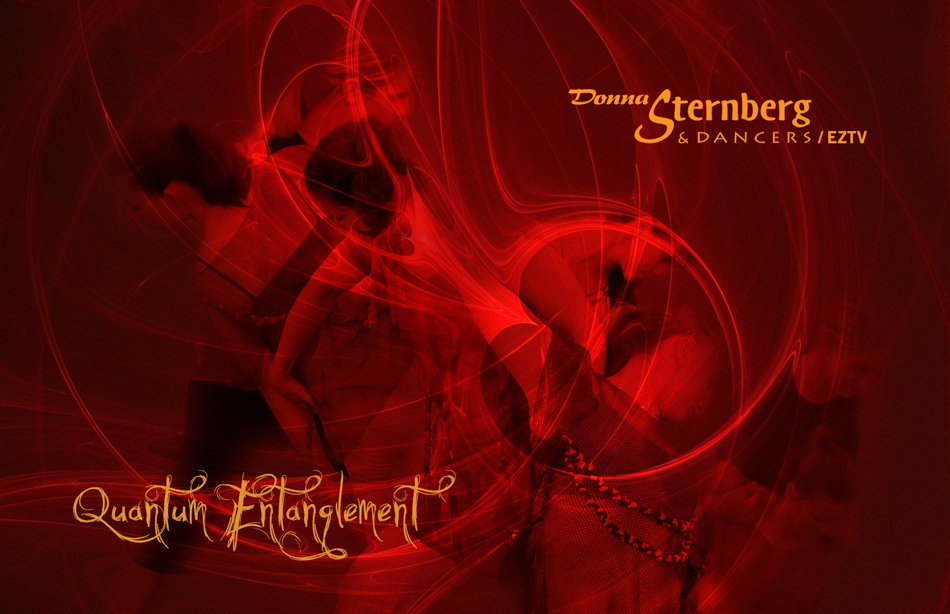
Quantum Entanglement: Donna Sternberg’s Dance Company

QUANTUM ENTANGLEMENTOctober 16 and 17, 8:30 P.M.

DONNA STERNBERG & DANCERS in collaboration with EZTV premiere a dance/multimedia event where dance, video and science collide, intertwine and coalesce. Quantum Entanglement  explores how we are connected in both human and scientific ways, from the emotional interaction between people to the movement of subatomic particles. The performers including dancers, a musician and actor weave in and out of plexiglass cubes, passageways and a small lounge, interacting with projections on two video screens.  In the unorthodox space of Royal T, a charming cafe/shop/art gallery, audience members move from place to place as the performing area shifts.   Live music as well as selections ranging from the classical composer Albonini to Tinariwen, a band of exiled Touareg freedom fighters from Mali to the Gotan Project aurally entwine with the movement to create a sensory feast. 

Royal T
8910 Washington Blvd.
Culver City , CA 90232

Admission:  $20 general, $15 students/seniors/DRC
Tickets and information: www.dsdancers.com or 310-260-1198

Editor’s Note – apologies to those out of the area for posting something local to Southern California…but this seemed a very unique, interesting, interdisciplinary approach to dance. We encourage people to use this forum to comment and dialogue with the producers and dancers. And, of course, if you are near Culver City, please feel free to attend and send in a review of the performance to Synchronized Chaos’ upcoming issue!

Santa Clara Review open for submissions (from the general public, from everywhere)


Santa Clara Review is published in February and May by Santa Clara University in Santa Clara, California. We accept submissions of poetry, fiction, nonfiction, essays, drama/screenplays, art work, and photography year round.

To ensure proper and thorough consideration of each piece, please limit your submissions according to the following guidelines: For poetry, please submit no more than five poems, not to exceed ten pages in length. For fiction and nonfiction, please limit your submission to 5,000 words or less. Most pieces we publish are between 2,000-4,000 words.

Deadline for all submissions is Oct 30th – www.santaclarareview.com

I Fear You Not – Affirmation Poem from Blanca Jones


I Fear You Not


Babylon – Daniel 1-6:16

LITTLE HORN – Daniel 7:8

MAN OF LAWLESSNESS – 2 Thessalonians 2:1-12

ANTICHRIST – 1 John 2:18

DRAGON – Revelations 12:9


You have no effect on me!

You cannot touch me!

Your efforts serve only to strengthen me.

I fear you not

For I rejoice in my

Relationship with my sweet Lord!


The disguised temptations you present me

Are inevitably revealed and disrobed

By the grace of my loving God.

Although I am weak – I am strong!

Although I stumble – I right myself.

Although I fall – I rise above you!

Although you bring me darkness,

I see light!

And I fear you not

For I rejoice in my

Relationship with my sweet Lord!


Although you entice me with luxuries

I pray for forgiveness and wisdom.

Although I am woman (man)

Christ lives in me!

I belong to my Lord!

Upon your destruction

I will reside

In the house of my Lord

For all eternity

And I will enfold

As many as I can under my wings!


For I fear you not

As I rejoice in my

Relationship with my sweet Lord!


Bless us all my Lord who rejoice in your love

Bless us all my Lord who seek your truth

Bless us all my Lord who seek your strength

Bless us all my Lord who fall at your feet

Bless us all my Lord who walk the path leading us home

In your name we pray

Our Lord Christ Jesus

Amen

Blanca Jones lives in the San Francisco Bay Area, welcomes feedback on her writing, and may be reached at blancajones@att.net

A review of San Francisco Opera’s Il Trittico: Details Make the Show


San Francisco Opera’s Il Trittico showcases several world-class vocal talents, who in the one-act format transition seamlessly among completely different roles. Paolo Gavanelli becomes Il Tabarro’s distraught, betrayed husband and then Gianni Schicchi’s hilarious, shrewd title-character lawyer. Patricia Racette transforms herself into Il Tabarro’s restless wife, Suora Angelica’s grieving nun, and Schicchi’s innocently romantic daughter. However, the minor characters and subtle staging innovations bring this triptych up from a decent show to a spectacular performance.

Each of Puccini’s one-acts follows a basic, coherent plotline, but with enough background action and distinctive supporting characters to add color to the pieces and remain engaging after audiences guess the ending. Il Tabarro’s Frugola, another discontented boatman’s wife who avoids adultery, deposits her frustrations and other odds and ends into a memorable purseful of junk. The food scraps she saves for her beloved cat, the stories behind each object she collects, and her dream of a country cottage remained with me longer than Giorgetta’s forbidden affair. And the working stevedores’ rough clothing and the half-lighting and simple sets befitting a wooden barge highlights the contrast between both wives’ dreams and the reality of their lives.

Suora Angelica’s convent, updated into a children’s hospital, sings with joyful Ave Marias and the chatter of cheerful sisters. We see the ladies playing with wheelchair-bound children, breaking small regulations, sharing innocent desires, and remarking upon water from a fountain turned golden with afternoon sunlight. They make the best of a clinical environment, perfectly staged with glaring indoor lighting, cold straight-backed chairs, and medicines in full view of patients and caregivers.

 Such a life-affirming sensibility further adds to the tragedy of Angelica’s suicide and the emotional impact of her miracle vision. The vision, a child waiting to welcome her to heaven, might have seemed contrived in the hands of a less competent opera company. Yet the hospital, with its old-style frosted-glass door, provides the perfect way for the boy to appear ethereal yet believable.

Gianni Schicchi’s supporting characters include a corpse hidden in plain sight, a host of feuding, greedy relatives, notaries, doctors, and two guileless young lovers. Revered soprano Racette herself plays Schicchi’s daughter, one of the pair of lovers – demonstrating San Francisco Opera’s awareness of the importance of quality vocals for the entire cast and not merely relying on the strength of a scene’s main characters. Audience members chuckle at her famous “O mio babbino caro” – as Racette comes across as having a youthful crush on Rinuccio, which fits in with the piece’s charm. Schicchi and the various relatives’ over-the-top facial expressions and lyrical shows of emotion remind us this is a comedy, and the final pillow-fight in the black and white art-deco stage bedroom conveys a refined-sitcom sensibility.

For all three pieces, the orchestral music complements the action without overpowering the vocals or plot. Dramatic at tense moments and atmospheric when needed to set the pace and mood for action between arias, it provides the continuity Puccini intended when he designed these three acts to be presented together. Although the plots bear no relation to one another, a background motif of celebrating common, quirky, crazy humanity and life’s daily moments runs through the entire performance – helped along by the entire cast, crew, and orchestra of San Francisco’s Il Trittico.

Il Trittico currently shows at San Francisco’s War Memorial Opera House. One production remains, a Saturday evening performance this October 3rd. You may visit the SF Opera website at www.sfopera.org for more information.