Sodalis’ comparative essay on the natures of art and craft – posted for discussion


In society, there is much confusion as to whether a specific work can be considered either ‘art’ or craft.

Although there is no checklist, no list of specific criteria to determine whether something can considered art or craft, there seem to be some inherent criteria common to both art and craft. Both require a good deal of talent and dexterity from the producer of art and craft and both require a great deal of skill and effort.

However, the two disciplines have several divergent attributes. Craft is considered practical and crafts often have a functional use. Craft does not express a specific ideal or arouse the deeper emotions. It can certainly be aesthetically appealing; I have seen quite a few aesthetically beautiful crafts, but they cannot be considered art in any sense of the word.

I think that the need for a deeper philosophy behind the piece is the important criterion for separating art from craft. I have produced some work that I can consider art, and other pieces that I consider craft. To me, graphic design is my craft, and writing (and to a lesser extent, drawing) are my arts. I do not intend my functional graphic design to have a deeper philosophy than what is directly visible there. It is concrete and tangible; there is no secret, numinous and arcane thought behind what I have wrought.

I consider pornography to be ‘craft’ as well. It is designed for the ‘practical’ purpose of sexually arousing someone. There is no hidden philosophy, and there is nothing hidden behind the brazen exposed bodies that grace the pages of pornographic magazines, or the words that convert the visual into the written expression of said purpose. A pornographic photographer might be adept at taking photos, but he is not producing any art.

Craft can be learned by most people. You can be artistically numb, unable to see the simplest abstract concept, yet be able to produce aesthetically-sound crafts due to an innate awareness of aesthetics. You can be taught crafts with little step-by-step kits and lessons. Even painting and drawing can be considered crafts if there is nothing behind them. A knowledge of craft is inherent to a knowledge of art, though. One must master the mechanics of what is to be produced before you can produce a great masterpiece that is able to convey your artistic expressions through that practical knowledge. There is a difference between art and craft, but one must master the craft before becoming a true artist.

Art, as opposed to craft, has a tendency to arouse the more profound emotions, rather than mere aesthetic appreciation or sexual arousal. Often there is a certain value or belief or message inherent in a work of art, something that transcends the tangible and concrete. Artists try to challenge ideas or support them through their work. In short, craft is about the tangible and art is about ideas. The great artists, both ancient and modern, tried to convey emotion and meaning through their work. Pathos and anger, lasciviousness and repentance, worship and blasphemy permeate the work of artists. It is obvious that artists’ work does not simply represent what is physically there, or is just meant to be pretty, for the most part. Not all of Picasso’s work could be considered ‘pretty’, yet it is art, because there is an underlying philosophy for it, and his work is a vessel for higher things.

Not just anyone can produce a work of art. One has to have an innate sense of how to play the tune of philosophy, to create a sense of awe and wonder or simply to convey an idea through one’s work rather than producing it for mere aesthetics. To make things clear, my opinions on craft and art also apply to writing, although if one is good with literary mechanics, it is easier to become an artist through writing because of words’ inherent ability to convey ideas. There are things you cannot see that can be described in words. Both art and craft are integral to civilisation, but there are areas that craft cannot reach that art can.

Essay by Sodalis – a San Francisco writer/blogger/social commentator, author of last issue’s Post-Racial Manifesto. You may read Sodalis’ blog here: http://anotherautismblog.blogspot.com/
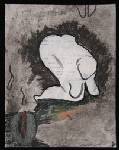
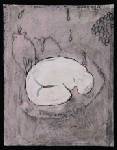
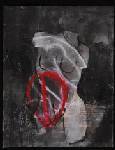
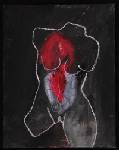
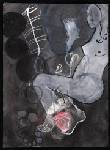
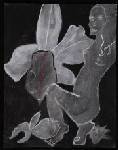
Sara Waugh’s 2008 Mutatus Series – mixed media


My multimedia works on paper are visual poems depicting the elements of life: birth, reproduction, the passage of time, transformation, and death. The imagery I use relates to these elements and is taken from botany and biology – seeds, fruit, plants, water, and parts of the human body. Life and living things are beautiful but also mutable and impermanent. I hope my work encourages viewers to contemplate time, change, and the life-death cycle.

 The images I create are inspired by my background in archaeology and science as well as my interest in gender and sexuality. This series, Mutatus, is inspired by the female form and the idea of regeneration and the natural cycles of the cosmos.  “Mutatus” is a Latin term meaning altered, changed, become different. 

 I work with a mix of media including watercolor, gouache, acrylic, ink, oil stick, and pastel on watercolor paper to create these introspective and dream-like worlds. The source material for the nudes in my work includes pornographic magazines and self-portraiture. I am interested in the art-historic roles of artist and model, and I enjoy playing with and challenging these traditional roles in my work. In addition, I am exploring ideas of female sexual power and the voyeuristic implications of looking at art.

Sara Waugh’s work is available for purchase, shows, and galleries…she’s available at swaugh@gmail.com


Arthur’s Harp – short fiction by David Cicerone


A twisty experimental tale of creative curiosity and lost innocence. — editor Cristina Deptula

“Autobiography,” Arthur said, “is an indiscriminate drinker.”                                                                      

We were in Scotland’s Hollow, as we almost always were this time of night, and Arthur had just finished one of his glorious reveries, his second and last of the evening. The conclusion, coming as it did on the heels of a rambling fifteen minutes of accusation, absurdity and exaggerated self-pity, had brought him to an artfully drained state. It had been an extraordinary improvisation, and he’d capped it off grandly, eloquently, and in the perfect setting to boot.                                                                                               

For months I’d been enjoying Arthur’s offhand enlightenments, which, of late, had become a kind of mantra to me as the juggernaut of corruption disguised as the twenty-first year of my life had worn and worn away at me, reaching its apex this midnight, a wind-swept, leaf-tumbling Fourth of July. This particular tangent had been occasioned by a certain sighting of a very certain young lady, with whom Arthur had recently concluded an affair, one whose manifold effects had ranged from the loftiest of passions to the most wretched heights of scorn. Moments like this made me glad to have him as my friend.             

Read the rest of the story here:

http://www.writerscafe.org/writing/D-cic/317195/

David Cicerone plays guitar, writes, and creates visual art for sale and gallery show. An East Coast transplant, he admires Bukowski and all the Beats and performs at San Jose’s Cafe Trieste – and has more stories where this one came from 😉

You may find him online at www.myspace.com/davidcicerone or www.artbistro.com/member/dcic – or perhaps playing behind an open guitar case in San Francisco’s Haight-Ashbury district?

Ivory Tower zine open to environmental/ecological submissions

Announcing that fellow zinester John Darling of the Ivory Tower (http://www.theivorytowerzine.com/) is now accepting submissions for their upcoming quarterly issue, this time with an ecological/environmental theme.  More information and guidelines can be found here: http://www.theivorytowerzine.com/submissions.htm

I have perused Ivory Tower at times and found some unique, interesting work there and would like to support another magazine’s efforts.

We at Synchronized Chaos would also love more submissions of any shape or form for our December issue. Thanks to everyone who has become part of this project and part of the Synchronized Chaos family.

Welcome to November’s issue: Choosing to Create amidst Challenges.

Hello, and welcome to the November issue of Synchronized Chaos! Thanks for the feedback on the webzine’s content and how we can best benefit authors and artists, and please continue the discussion.

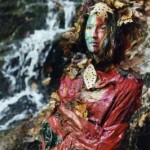
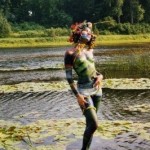
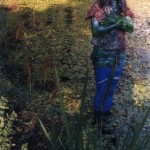
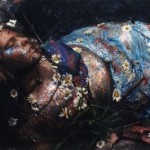
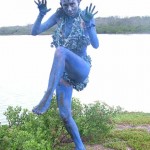
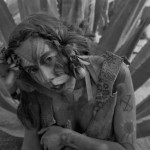
This month saw a small variety of highly individual submissions, each somehow presenting the theme of creation. Fletcher Goldin’s flash fiction piece’s speaker builds a highly detailed house of sand out of his memory or imagination, fully aware the waves will eventually wash it away, yet still building for reasons he leaves unstated. Sodalis’ piece deals with creating an identity and developing friendships of one’s own choosing, not simply taking on expected roles or preferences because of one’s race or ethnicity. Alisha Fisher’s photography combines nature, spirituality, and a sense of humor in an unique way. She takes everyday ponds, leaves, and natural materials others step on or overlook and turns them and her own body into artwork. In the same way, the characters in Tosca Lee’s Havah create beauty while making their way in a strange new land by working with the natural objects around them, developing objects at once lovely and pragmatic: shapely smooth clay pottery, intricate designs woven into useful winter blankets, harmonic chants to assist women in labor.

Life – past and present, from prehistoric times to the experience of a modern San Franciscan writer – continually provides a series of challenges to our physical and social development. These works illustrate ways of working with challenges…choosing to create and enjoying the product for a short time even though it is impermanent, valuing the process of creation as much as the outcome, turning one’s creative energies inward to focus on developing one’s own sense of self when one lacks physical raw material or other people who understand and are on the same page, using whatever materials one has available, finding ways to honor memories while discovering and appreciating the positives of one’s current situation.

We at Synchronized Chaos thank November’s contributors and join in honoring and celebrating the creative impulse in all its forms and in a variety of circumstances.

We also invite people to check out the Benefit Auction/Sale portion of the site to help out members of our community and fellow artists who’ve come upon difficult emergency situations. Please pass on the link to anyone you think might donate (art or cash 😉

Thank you all for all of your support! Happy Halloween/Samhain/All Hallow’s Eve/Dia de los Muertos for those celebrating 😉

Press release from NASA’s Mercury flyby/photographic exploration: http://www.nasa.gov/home/hqnews/2008/oct/HQ_08-275_Messenger_Mercury.html

Apparently the planet is old, has been bombarded evenly with electrical charge and meteorites. Many new images of a much larger surface area than before seen.

November’s book review! Tosca Lee’s Havah: A Poetic, Prehistoric Immigrant Narrative

“I do not tell him that I wait for the birdsong to seem somehow more heavenly and ethereal at once, as though from a throat which never devoured something so base as a worm. For the air to smell of apricot and peach, for the sound of a river fed by the waters of the abyss. I start at the stir of every breeze, at the whisper of the stunted grass on the plain.”

As she nears the site of the former Garden of Eden, in one last attempt to re-enter her old home, Tosca Lee’s main character Havah (Eve) finds herself filled with poetic nostalgia. This evocative, lush novelization of the story of Adam, Eve, and their children traces the first couple’s passionate marriage from their awakening in the garden through their exile, their work to survive in an often harsh new world, and the several generations of their family.

The characterization of Havah reminded me of Ashima in Jhumpa Lahiri’s The Namesake – after immigrating to the United States to accompany her husband, who has landed a Boston professorship, she exhibits quiet strength and slowly adjusts to their new home while never losing sight of her memories of eastern India. Havah is also a kind of early immigrant, forced to continually travel south with her growing family in search of water, food, and fertile soil. She is also left at home while Adam embarks upon dangerous explorations, defending their caves and reed brick houses against lions and wolves.

One of the first scenes in the movie version of the Namesake shows a loving, determined, but bewildered Ashima shaking red curry powder into her bland oatmeal before washing her husband’s shirts. In a similar way, Havah retains an emotional and spiritual connection to life in the garden valley of Eden to an even greater extent than her husband, who lived there with her before the birth of their children.

Busy with building their first permanent home south of Eden, Adam comes home exhausted one night and asks Eve whether their new lives are truly so bad compared to what they have left. He and most of the children rush to make their ways in the new world and scarcely mention the past, while Havah holds on in her mind to the beauty, the innocence, and the easy communion with nature and her husband she enjoyed in the old days. Through this characterization of the couple, and through the children with whom they eventually develop closer affinities (Havah with the sensitive, complex, burdened, protective and wild Kayin/Cain and Adam with the easygoing, social, fun-loving Hevel/Abel), Tosca Lee illustrates different approaches to resolving the dilemma faced by many immigrants: how to successfully adapt without losing one’s sense of oneself.

There are dangers in both remembering and forgetting: Havah effectively places a huge burden on Kayin to rescue his family by restoring a past he’s never seen, contributing to family tensions which end in murder, and Adam becomes detached, rootless, gone most of the time, emotionally disconnected from his wife and his own identity. Near the end, the couple talks during their final journey back to Eden, and the elderly Adam admits he’s always admired his wife’s poetic descriptions of the past and her focus on ideas beyond their everyday life. She in turn embraces Adam and reassures him that despite the new life’s imperfections they have both done their best to build a life and create a family in the new world. At last they grow into becoming the way they have always described each other: two bodies joined as one, one flesh, making peace with the past and present.

Tosca Lee resists the temptation to romanticize or melodramatize prehistoric life throughout her book. Food rots in Havah, animals eat one another and leave carcasses in the fields, and children must be toilet-trained so they will use the sanitary midden hole rather than the back of the family home. Adam, Havah, and the children, and eventually the children’s spouses and grandchildren, must all labor daily at weaving, farming, sheep-herding, sewing, etc to ensure the family’s survival. The descriptions of everyday work and everyday efforts to manage life in the new settlements ground the book firmly in reality as well as illustrating the dignity, strength, and equality of these men and women.

Lee found much of her inspiration for this novel through exploring older Hebrew writings on the creation story, and has explained how modern readers lose much of the lyricism, humor, poetry, and layers of meaning in the texts when we only access them in translation. And this novel certainly fleshes out and humanizes each of the major characters as a result of her research and imagination, while sprinkling the minor ones with distinctive traits to individualize them (Sufa’s flirtatiousness, Renana’s birthsongs, Lahat’s sewer engineering and early pottery accident.)

Eve is somewhat of an athletic tomboy, taking off to run across the fields and reveling in her outdoor adventures, and has a dry, earthy sense of humor, teasing her husband and children at opportune moments. The non-transliterated Hebrew names for the characters cause readers to take a step back from the usual associations one would bring to a story about someone named Cain or Eve, and to view them with fresh eyes. The natural setting is also described in extensive detail, using original language and varied sentence structure to bring a subtle poetic sensibility to even the most mundane events.

The author is personally Christian, yet this is not formula “Christian Fiction” and avoids providing easy, spiritual answers to the inevitable questions the characters face. We never know, for example, why Hevel’s sacrificial lamb catches fire almost immediately on the altar and Kayin’s (more humane!) vegetables simply smolder, humiliating him before the entire family. The event simply happens with no explanation, and the characters then respond as they choose. This reflects much of the human experience – we only understand so much, and then must go on to live as best as we can.

As a journalism student, our curriculum includes descriptions of early models of communication and persuasion. One of the most prominent early ideas was the ‘looking-glass self,’ the concept of learning about oneself and developing a self-concept from watching others and eventually the mass media. The novel provides an interesting exploration of how self-development might occur in the absence of a metaphorical ‘looking-glass’ – where the first family learns about life from observing the natural world around them. Adam and Havah peer into ponds and lakes and feel their own features for glimpses of themselves, yet most of their learning comes from everyday reality. They conceptualize and prepare for old age by watching aging animals, and create a moral code based on their own experiences and past feelings of betrayal, and from what they observe is necessary for survival. Life is difficult and they must eat, so everyone must work hard. Everyone’s cooperation is necessary – so one must be trustworthy and loyal. The world is dangerous – so having the courage to protect the settlement is a worthy ideal. There are many mysteries in everyday life – so cultivating an attitude of wonder and reverence is crucial.

A few times I became confused with the large assortment of Adam and Havah’s descendants and it was difficult to keep all of the names straight. Also, Havah’s character change from being a lovely pacifist horrified at the mere thought of wearing fur to a scrappy hardworking survivalist proud of her hunter son seemed a bit abrupt, occurring  between two sections of the novel.

Overall, though, I would definitely recommend Havah to anyone who enjoys family sagas, immigrant narratives, survival stories, cultural anthropology – or simply a powerful, thought-provoking read. This is Tosca Lee’s second novel, and available online in paperback from its website: http://www.havahstoryofeve.com/

Alisha Fisher: Nature-Inspired Shamanistic Fashion and Photography

SHAMANISTIC PHOTOGRAPHY
Alisha Naomi Fisher’s artist statement:
I combine costume with jewelry, body-painting, hair design and background art in my work. I also take pictures.
I make myself and my models blend in with their surroundings whether I am doing scenes in nature or in the city.
I have studied Fine Arts in College and at university, Textile Arts and Painting. I also minored in college and University in Women’s studies. I have attended crafts workshops over the years.
For the past couple of years I have been working with plants. I am fascinated with the different textures and colors in the plant kingdom.
I love nature so much that one day I exclaimed “Why not dress people up in nature!” I first began my plant costumes in August 1999 on a trip to the Madeleine islands of the Quebec Maritimes , Canada . I am fascinated by the fact that many of my costumes look like fabric. In fact I have always been interested in fashion. All the materials I work with are free!
My work can go in many directions; fashion, performance art, photo art, movies, theaters can interpret any theme and transform it into an experience.
You are free to interpret my work as you wish but for me I feel that my work represents this: We are part of nature. When we die we will go back to the earth just like the plants. All that will remain is our bones like stones. Our blood contains chlorophyll and so do plants! Minerals in the earth we possess as well. By killing the earth we are thus killing ourselves. When we stop our busy lives by taking a slow walk in the forest and listen and touch then we are closer to god.
For me when I dress up in the plant clothes I become closer to the goddess/ god presence. The scratching of the branches against my skin wakes me up, brings me closer to god. I become the Shawomin; transforming myself into the nature spirit/nymph.
I believe that a fairy world exists in each species of plants, trees, and flowers.
My work can also be interpreted as ritual. A sacred act, performance.
I was born and raised in Montreal , Quebec to an artistic family. My father would give me fabrics and old hats as a child I would dress up in them. He was a photographer and would take pictures of me.
My work is owned by a number of celebrities and private collectors. I have appeared on TV in Canada and the United States. I have also had articles written about me. I have had solo shows and have been a performance artist in a couple of festivals.
I am available to hold/give workshops here and in other states or countries.