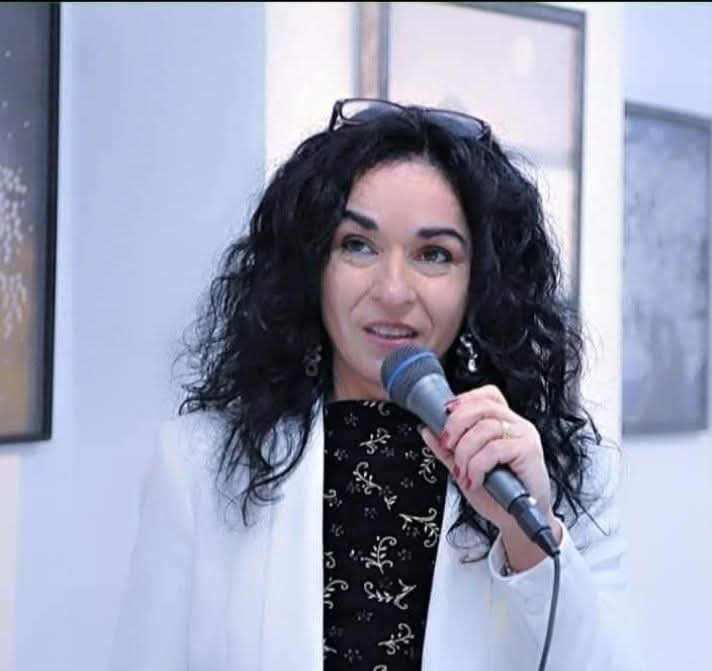
Poetry from Abigail George (one of many)

Longing

for K. Sello Duiker

I sleep when I am tired

When there’s a hummingbird in my mouth

A starling swimming in a cup of honey

On my kitchen table

I was so good at giving 

my heart away to the flowers,

to the rain, to the sky, 

to the empty field behind my house

I am tired of being mentally ill,

this chronic sickness,

this flame

the powers that be

I watch it burn between my fingers

It tastes of Palestine

Cold stone turned into rubble

Make it go away

But it doesn’t go away

Look!

Wildflowers have started 

to grow next to my bed in the hospital

next to the bars at my window

I needed sanity in my life

Every woman needs that

So I imagined their beauty,

their growth

the growth and beauty 

of the wildflowers

Every woman needs that

In my bedroom, at home

a cobweb covers the rose,

my mother’s wizened hands

and fingers as she makes my bed

She bought me a journal,

a new pen,

new books

She places these gifts

on the table next to my bed

welcoming me home

She doesn’t say that she loves me

She doesn’t say that I’ve been missed

The gifts are enough

The fact that they tidied up my room

that my mother’s made up my bed

I dance in the Imperial dark

by myself, barefoot,

to the lonely notes of pianist Olga Scheps

The bathwater turns into seawater

The kitchen turns into the shore

I hug the red fox 

bleeding into the sheet

I hand my father his teeth

and towel-dry my hands

I watch him shave

We read the newspaper

in the sitting room

We drink coffee

We eat cheese sandwiches

We talk

Years later

I am standing in the kitchen

thinking back to my first breakdown

My brother makes eggs 

While he makes the eggs

he shouts at me

Those were his words and not my own,

I tell myself

I ate the green olives gingerly

Olives for breakfast

They tasted delicious and cold

The men in my life

that tension and spark

didn’t know what to do

with me really

Only that I could never

be wife material

Only that I could never 

raise children

Oh, madwomen couldn’t do that

Years later

I am alone

remembering all of this

all of them

remembering the breakdown

how it changed me

how it broke me in waves

The kitchen turns into the shore

The bathwater turns into seawater

I sink

I fall

I think

I know it all

Cloud people turn to dust in the rain

Another year turns into a birthday cake

A woman brings life into the world

The father, my brother, nurtures the child

Calls his daughter “Princess”

My father loves me

He turns the wrinkled prunes 

and custard into a feast meal

I was loved

I am loved

I will love myself and take care of myself

It’s much too late

The clock doesn’t work anymore

Yes, it’s much too late.

flame

in the silence

in this, this lonely hour

Gaza falls

like the neck of a wildflower falls

this too shall pass

do you remember the past

your past

i am in the cave again

how your voices warm my heart

how your voices comfort me

a bird spilled out of me

i am 19 years old

getting on a bus to Johannesburg

not knowing I will go mad there

that it will be six months

before I will see the sun again

the leaves are sad for me

this singing forest, my mother

there is a terror inside of me

the voices murmur something

something about a baptism

i am only a passenger

a passenger who lost her mind

the marbles rock the children to sleep

the children i will never have

the son and daughter i will never have

speak, memory of light, of war

before I disinherit you

summer. salt. tears

the highway falls through the sky

i read everything

i can even read your mind,

this silence

this perception and topography of light healed all my wounds

bloodless grass

on reading that sad story Flowers For Algernon

flame

tomato seeds plastered on my tongue

tasting of summer in the salad

droplets of seawater

against my skin

cold. wet. plasma

the shake of the fish seismic

these pills fill me or are they peas

please fix me, i cried

my mother doesn’t love me

i doubt she ever has

perhaps when i was a baby

no

perhaps when i cried

in her own mother’s arms

i don’t know

perhaps when she knew

that i was going to be a writer

at eight

well, maybe

at twelve, when the typewriter appeared

perhaps when she 

bought adult diapers for me

but she never told me,

her manic depressive daughter

in so many words

that she loved me

i am still crying

middle-aged i am still crying

please, please fix me

fix what is broken

make me whole again

bring my father back to life

i’m changing

i’m changing

watch how proteas grow

out, yes, out of my fingers

watch how they hiss, 

snake and groove

just look at how perfect the day is

Don’t you forget about me, pinky swear promise me, R.

I’m sick, R.

It’s my kidneys

(they don’t

work so nicely

anymore) and

my heart and 

so sometimes

I get tired. So, so 

tired. Today was

one of those 

days. You’re

two-years-old so 

you don’t really

understand

but I’m telling

you anyway so

that you’ll

understand one day

So, today you

weren’t mine

So, today you

didn’t belong 

to me. Your

father kept you

 hidden from me.

You didn’t 

sing for me. We

didn’t watch

 television together.

I didn’t 

cook for you.

I was crazy, he 

said. I felt no

shame. Many 

people had

called me that. I 

sat in my bedroom

as your father 

shouted at me.

Where’s the food?

He screamed, as

he walked down

the passage

with you in his arms

You do goddam

nothing in this

 house. It didn’t

matter. Nothing 

mattered. Only

the composer 

Maurice Ravel.

I could feel him 

in my bones, you

know? He was

shielding 

me from my

brother’s gaze.

Lifting me towards

the foam of the

sea threatening

to engulf me via

the ceiling . Oh,

you’ll see. You’ll forget 

me. Just like

other family members, 

just like my mother

on my birthday, the 

church, the

Johannesburg

People. This

memory of

isolation is so 

deep. Today

you didn’t ask for

me but that

didn’t make me cry

It was, forget

about her, she’s

crazy, (I mean

what kind of man

says that 

to a two year old.)

Soon I’ll disappear,

vanish like chocolate

into thin air. There’s

no key that can fit

into the cage

of my heart

anymore. Shush.

Close your eyes.

Go to sleep. I

am only a dream.

He screams and

screams. The man

screams and

screams at me

but all I can hear

is Olga Scheps  and

Maurice Ravel. Look!

I am turning

into a pianist,

a composer. They’re

standing for me

like they stood for

Beethoven. There’s

no more pain.

Everything that

I do is still wrong

but there’s no more

pain. There’s no

longer a cage in

front of and behind

me, an order and

routine of isolation.

Poetry from Eva Petropoulou Lianou

Light skinned middle aged European woman with long reddish-brown hair and a smile. She's in front of a lake on a sunny day with trees and people on the beach behind her.

Women in chains

Unloved Woman 2

I was alone for years…

Like a tree

During the rain

So when I met this man

It was love at the first sight

I think

Talking hours on the phone

Talking hours over the dinner table

-U are only mine, he whispers for years

– U belong to me, he repeat day after day

I didn’t react when he search my bag, my phone, my Facebook account..

He told me to delete my social media accounts

He told me no need to go to work because he will take care of me

He told me, never go out alone…

I do not like!!

I did not react,

I did not go away

I did not talk to anyone

I keep my secrets deep inside

Without smile

Without tears

One night, they find me

In a foetus position

Cover of blood

He stabbed me with the kitchen knife….

After we had celebrated our 5th anniversary

The police described the whole scene

as a

Crime of passion

……….. 

Speak up!!!! 

Open the door and run!!!!

Do not be afraid!!! 

Poetry from Ahmed Miqdad

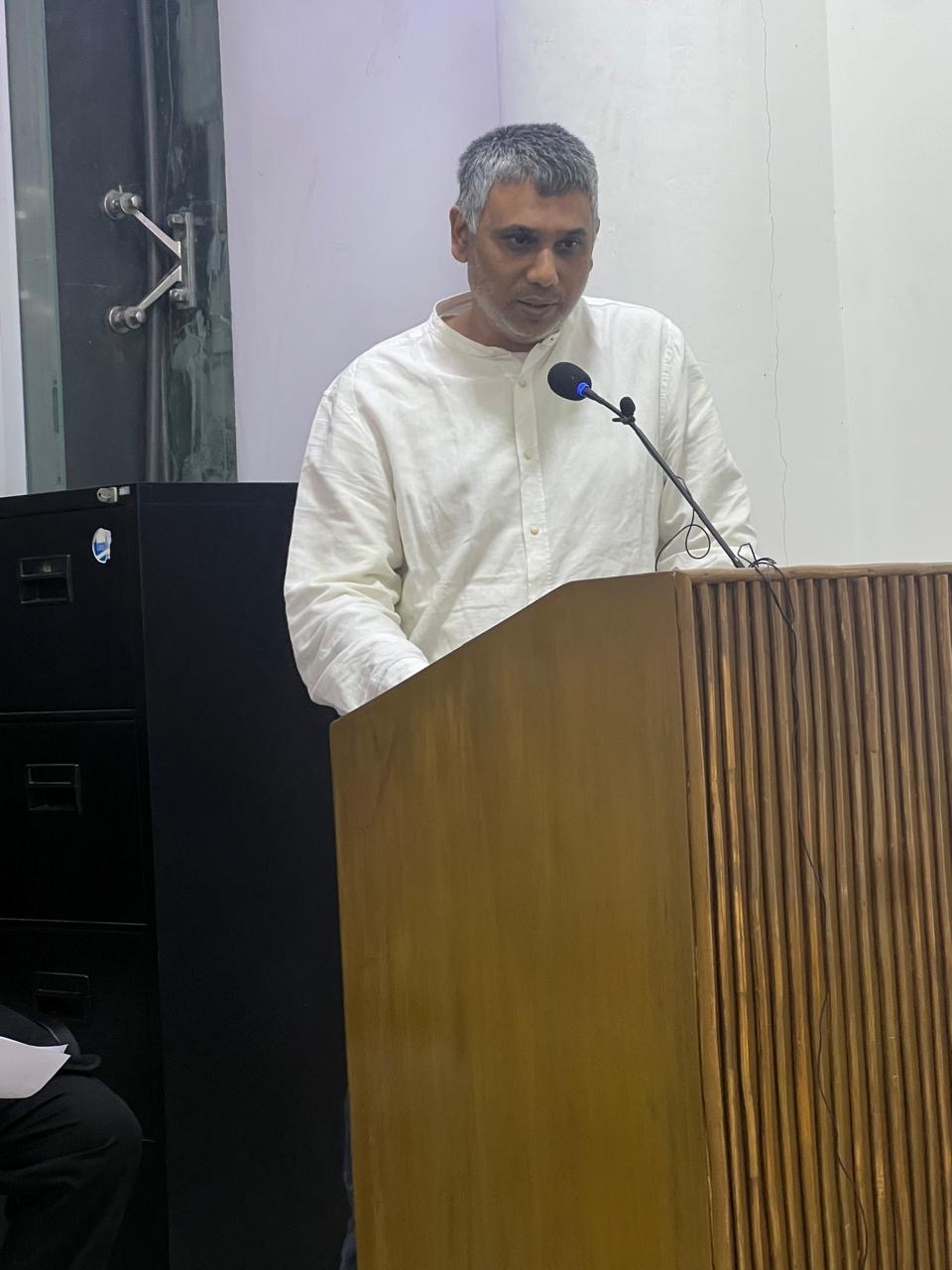
Middle aged bald Arabic man with a collared white shirt with blue and green stripes.

All In Vain

Every night,

I chase sleep

As if I were a ferocious lion

And it was the humble friendly deer.

However, the closer I get 

The more the distance becomes greater

As if I were lost in the vast universe looking for a dead-light star and the moon laughs at me,

But all in vain.

I search for sleep

As if I were looking for my lost beloved inside a black hole,

But all in vain.

I beseech sleep

As if I were thirsty

Lost in an arid desert 

And I think the scorching wavering heat is the cold lake,

But all in vain. 

I beg to sleep

As if it were an affluent arrogant man

And I were a destitute poor soul

Nonetheless, he is so mean

And I’m extremely needy,

But all in vain.

Please let my eyes embrace you just  for a once

As my fatigued body 

Anchors on your banks.

Palestinian poet, activist, teacher

Awarded Naji Naaman literary award, 2025

Poetry from Sayani Mukherjee

Promise

The courtesy of ever brimming love

The fountain of lost promises

Of lands and antique mountain heroes

They sung a different lullaby

To keep the vigil intact of broken dreams

A dream is a moving wish for penchant hope

I stand at the gate of eternity

Of heavenly shadows and rainbow dreams

A penmanship of an author lost and found

As the river ran a thousand depths

For the feeling of innumerable grief

As if my heart string was tied to a shadow.

Synchronized Chaos Mid-August Issue: Layers Upon Layers

Contributor Abigail George would like to share a new project of hers: a blog called Mentally Sound that features articles, updates, a magazine, poetry, and uplifting music. In this day and age, so many things can affect our mental health. Please feel free to join the blog and blog about your own experiences or loving someone who has a mood disorder or an individual who is suffering from depression. Log in, blog, do read the posts and leave comments to inspire our growing community!

Now for this issue’s theme: Layers Upon Layers.

Layers of red rock in the desert with a tiny corner of blue sky and a small woody shrub with green leaves.
Image c/o Ken Kistler

For we are all bound in stories, and as the years pile up they turn to stone, layer upon layer, building our lives. – Steven Erikson

This month’s contributions deal with the complexities of nature, history, culture, language, or even the psyche of a single person. Everything we choose or experience builds upon itself to make us who we are, even short-lived experiences.

Yucheng Tao’s poetry collection April No Longer Comes, published by Alien Buddha Press and reviewed by Cristina Deptula, explores moments of love and beauty that are wonderful and transient, like the season of spring. Sean Lee’s poems remind us that even fleeting moments can be meaningful and beautiful. Jian Yeo’s poetry touches on the pain and beauty we can find in mortality. Mykyta Ryzhykh contributes surreal images of life, death, and the cycle of modern existence. John Grey’s poetry explores comings and goings, presences and disappearances.

Yoonji Huh presents nature, family tenderness, and humor with a color scheme that looks historical and weathered. Gwil James Thomas speaks in several tough-minded pieces to memories and dreams and our sources of inspiration. Sean Lee’s artwork evokes the power of the imagination to illuminate daily life. Alina Lee’s poetry suggests that our pasts and futures comprise layers of each moment in which we find ourselves. JK Kim’s poetry looks at summer scenes with a calm nostalgia, after events have passed. Alexis Lee’s poems probe what we choose to value and remember, what we invest in and find beautiful. Olivia Koo probes the nature of memory, how multiple moments combine to craft a mental impression and feeling. Ah-Young Dana Park’s poetry comments on our changing memories and perspectives as time passes and we age. Chloe Park’s art revels in exquisite detail, probing culture and memory with intricacy. Sally Lee provides poetic snapshots of moments in time, considering whether they have meaning or value without context.

Person's hand holding an old black and white photograph and some flowers. Daisies, baby's breath, a pink flower.
Image c/o Victoria Borodinova

Seoyun Park’s visuals speak to how we observe and confront life, the dangers we face and those we pose. Ethan Lee’s poems remind us of the underside of our world: the everyday grotesque and the many layers of the ordinary. Irene Kim’s work explores the strain and melancholy that can permeate ordinary moments. Austin Chung’s poetry illustrates various kinds of disorder and dispersion as Taylor Dibbert vents his annoyance at the common problem of loud museum patrons. Lauren Kim stays with a single scene from everyday life for an entire poem, probing its layers. Haeun Regina Kim’s poetry examines ordinary objects and animals in depth, sharing details and language to create an off-kilter feel.

Brian Barbeito also explores deeply, focusing in on the flora and fauna of an Aruba resort. Debabarata Sen celebrates the verdant beauty of Costa Rica. David Sapp’s poetic speakers become waylaid by the arresting color and beauty of nature. Dylan Hong’s pieces present a gentle, abstract, even whimsical peek at nature. Grace Lee’s poetry crafts dreamlike, gentle, floating scenes. Terry Trowbridge’s pieces on peach harvests evoke the challenging economics and natural realities of farming. Mahbub Alam reminds us of the innate rough wildness of nature: storms, volcanoes, huge predators.

Jacques Fleury translates Dr. Jason Allen Paissant’s poem “Treeness,” about threats humankind poses to trees and the natural world, into Haitian Creole in a collaboration with Dr. Rachel Rome to provide music and poetry for the Boston Public Garden.

Sayani Mukherjee evokes the rhythm of a public piano played for big city pedestrians in a rainstorm. Eva Petropoulou Lianou waxes poetic about the beauty of the moon. Noriniso Kasimova shares memories of spring in her hometown and her father’s love. Chinese poet Su Yun collects a group of short poems from elementary school students, mostly impressions of natural scenes. Dhani M.’s artwork stylizes natural scenes to create emotional senses of calm, curiosity, and wonder. Jinwoo Brian Park’s art suggests that we can re-incorporate the old into the new, the natural into the artificial.

Stylized blue and white and pink image of an analog clock with lit candles at its base.
Image c/o Linnaea Mallette

Mark Young contributes a fresh set of fanciful geographies. G. Emil Reutter humorously describes noisy construction’s impact on local residents. Erin Kim’s artwork explores the upsides and downsides of civilization’s technological progress. Katie Hong’s work critiques our isolation and obsession with technology as Xushnudbek Yakubov warns of the dangers of online misinformation. Sophie Yoon’s art critiques our complex relationship with consumption and the natural world. Eugene Han’s art explores who we are and where we’re going as humans, and our relationships with nature. Shabbona Abdurashidova highlights the importance of sustainable ecology in Uzbekistan. Jahin Claire Oh’s work speculates on how the world’s other creatures might see us: mimicking and learning from them, drifting into or penetrating their environments.

J.K. Durick speaks to new, wild, and real frontiers in modern nature and technology, commenting on our efforts to understand and control them. Pulkita Anand evokes the mental and physical disorientation brought on by the colonization of one’s land.

Ahmed Miqdad calls the world to action to help suffering civilians in Gaza. Patricia Doyne also calls the world’s attention to starvation in Gaza. Stephen Jarrell Williams speaks to the numbing, mindless destruction of war.

Poet Eva Petropoulou Lianou illuminates themes of patriotism and sacrifice in Algeria’s quest for independence in Turkia Loucif’s fantasy novel The Legend of a Squirrel. Yuldasheva Xadichaxon outlines themes of resilience and patriotism in Resat Nuri Guntekin’s novel The Clinging Bird.

Cover of an old leather book with designs and some fading.
Image c/o Anna Langovna

Abdisattorova Xurshida highlights the contrasting legacies of Genghis Khan and Amir Temur. Abdisattorova Hurshida reflects on her admiration for Uzbek martial artist Abdulbosit Abdullayev. Maftuna Rustamova and Chorsanbiyeva Gulnoza poetize in honor of the military personnel who serve and guard Uzbekistan. Zumrad Sobirova celebrates the poetic beauty and pride of her Uzbek heritage. Jumaniyozova Nazokat encourages Uzbekistan’s young people to develop a greater appreciation for their heritage by visiting points of historical interest.

Nilufar Moydinova’s essay highlights language’s inextricable interconnection with thought, life, and culture. Mauro Montacchiesi creates a dialogue of philosophical thoughts and poetry between Dr. Jernail Singh and Rabindranath Tagore. Federico Wardal speaks to his long admiration for artist Andy Warhol and director and screen writer Federico Fellini. Orolova Dinora explores layers of meaning in Antoine St. Exupery’s The Little Prince as Surayyo Nosirova celebrates the heritage of Uzbek author Alexandr Faynberg.

Reagan Shin revels in the comfort and ecstasy and happy memories she finds in books. Mushtariybegim Ozodbekova highlights the power of books and stories to transcend time, culture, age, and space. Panoyeva Jasmina O’tkirovna highlights ways language teachers can help students develop fluency through relevant speaking and grammar practice. Turg’unov Jonpo’lat explores techniques to help children of all abilities to learn foreign languages. Nafosat Jovliyeva and Dilshoda Jurayeva illustrate gamification and other creative strategies for language learning. Rahimova Dilfuza Abdinabiyevna discusses ways to improve student competence with writing and speaking. Hilola Badriddinova outlines strategies used throughout the developed world to teach foreign languages.

Linda S. Gunther contributes a craft essay on “interviewing” your characters to better understand them as a writer. Paul Tristram’s poetry explores the heroic narratives we create through our writing and our lives. Gloria Ameh evokes the visceral sensations of writing on topics close to the bone.

Old style writing desk with a wooden chair and wood floor and papers for an ink pen. Window and cot in the room.
Image c/o Ken Kistler

Abigail George writes a stream of consciousness essay on her vulnerabilities from mental illness and just plain existing as a female-bodied person and how enduring them inspired her to write. Soumen Roy also connects beauty to vulnerability, speaking to the fading Mona Lisa and the union of joy and sorrow as fellow travelers.

J.J. Campbell reflects on disillusionment, loss, and the eternal quest, against all odds, for love. Mesfakus Salahin speaks evocatively of his quest for love and freedom. Baxtiniso Salimova’s poetry tells an epic love story. Mirta Liliana Ramirez relates intense grief at the loss of her lover. Dilnoza Islomova expresses her gratitude for her mother’s tender care. Bill Tope and Doug Hawley collaborate on a love story that turns unexpectedly tender. Urazaliyeva Sarvinoz shares an emotional tale of jealousy, love, and forgiveness between two twin sisters. Sarvinoz Orifova expresses gratitude for her parents’ constant love and care. Wazed Abdullah expresses his love and gratitude for his mother. Ozodbek Narzullayev expresses his love for his mother and invites her to share her life struggles with him for support. Xurshida Abdisattorova shares the story of a mother’s complicated grief for an imperfect husband and father who passes away in a sudden accident. Shoxrukh Fayzulla o’g’li Dusmatov speaks to his mother’s love and care and how wealth alone matters little without compassion and humanity.

To’raqulova Pokiza Sanjarovna speaks to the need for human compassion, wisdom, respect, and personal development. Hamza Kamar’s poetry expresses his powerful hopes for a transcendent hero. Bhagirath Chowdhary expresses his determination to avoid the next life until he has finished roaming this world, offering blessings to others. Charles Taylor’s short story probes our ethics and the extent of the compassion we owe our friends and fellow humans.

Julia Kanno reminds residents of the USA that most Latino immigrants are hardworking people with lives and dreams. Bill Tope presents a tale of a survivor’s search for justice for a sexual assault that shattered her psyche. Abdisattorova Khurshida presents a tale of thievery exposed.

Flat, mosaic like image of a crowd of diverse people, men and women, different races and ages, all dressed pretty warmly in suits, coats, dresses.
Image c/o Linnaea Mallette

Graciela Noemi Villaverde shares a poem on the joy of community and diversity and welcoming special education students. Haeun Regina Kim’s artwork explores unity and acceptance of others, as well as harmony among rural and urban areas. Nabijonova Madinabonu outlines how sharing coffee can help us build building friendship and community. Khudoyqulova Shahzoda highlights Uzbekistan’s programs to enhance economic opportunities for low income women and families and the disabled.

Nazarova Moxiniso looks into discipline and student character development as part of Uzbek preschool education. Ulsanam Ulmasovna outlines Amir Temur’s contributions to the Uzbek education system. Islomov Inomjon describes the Geoment, a device to teach mathematical reasoning to children with low or no vision.

Bozorboyeva Iroda offers encouragement for young people to find and follow their own dreams. Khudoykulova Shahzoda points out consequences of and solutions to youth unemployment.

Abdurayimov Faxriddin suggests strategies for teaching music practice and theory for children. Colombian philosopher and author Dr. Tayron Achury interviews Dr. Alexander Klujev, professor of musicology, about the increasing role of human personality and feeling in modern classical music.

Greg Gildersleeve’s pieces speculate on how small individuals can claim agency in a large world. Akramov G’ulomnazar’s poetry asserts his courage and resilience. Ashirova Dilrabo Ermatovna urges us to stay motivated and persevere towards our goals.

Space shuttle Discovery, with a fuselage and two rockets, under a full moon.
Image c/o Jean Beaufort

Various contributors celebrate notable people who should be better known, or highlight important research work. Sobirjonova Rayhona outlines the career and accomplishments of Uzbek woman mathematician and teacher Shodmonova Hilola. Eshmurodova Sevinch highlights the need for training for employees in Uzbekistan’s banking industry in digital technology to modernize industry. Muslima Olimova highlights strategies corporations have used to adapt to stay on top in a digital world. Jo’rayev Ulug’bek outlines engineering techniques for strengthening concrete structures. Mirzaolimov Mirabbos probes the medical relationship between diabetes and cardiovascular diseases. Ostanaqulov Xojiakbar speculates on how to improve web search engine optimization to improve online communication and website findability. Orozboyeva Mohina Nuraliyevna outlines the role and history of psychology as practiced in Uzbekistan.

On a more psychological level, Duane Vorhees’ poetry covers and highlights human complexity: different aspects to our personalities, different choices we can make, how we can change with time. James Benger’s poetry explores the fear and tension underlying our individual existences, the danger from geologic pressure, storms, raw meat – and how we sometimes find hope to carry forward.

Andrew Ban shares restless, random thoughts, finding commonalities with all humanity while acknowledging the need to protect and defend himself if needed. Dongeon Kim’s work presents scenes of intense human and natural energy while Texas Fontanella revels in the pure sound of non-representational language. Dennis Daly wanders through a variety of human feelings, from nostalgia to frustration to faith. Michael Robinson shares his journey and heritage of faith, how he found a spiritual home and refuge in Christ and the church. Muhammad Sanusi Adam speaks to struggle, resilience, destiny, creation, and faith.

Gaurav Ojha seeks out meaning in a confusing and vast world, ultimately affirming everyone’s ability to find their own truths. We hope that reading this issue helps you to find a smidgen of truth for your own life.

Poetry from Muhammad Sanusi Adam

Young Black man in a green and yellow athletic shirt standing and holding a microphone at a festival near a lectern.

SEE 120  

I fades 120 days in a shell, 

then begins to crawled in the tongue of the angels, 

whom are rolling miracles. they poured it—

into the skull of the destiny, from there, 

destiny started humming inspiration of my affairs, 

I remembered. It has four nose around it zabiba;

i. it breathe out gold and diamond that taste like honey. 

ii. that’s when carbon dioxide & oxygen will flood towards the heaven’s window. 

iii. it defined the colour of an oxygen paint. 

iv. it submit the poem whether it resembles the angels or peeling the throat of fire.

Then—, my mother run bear footed to the voice of agony speech, 

her final oxygen says, hymn. here, I flush out with her oxygen, 

clicking the dimples of my breathe, then, i coddle into the eyes of destiny,

to wear the skin of this poem.

          Ode To Pain

A poem ring a worm matter with it eyes,

touching the tongue of my heart in secret,

shaping in my face like an acid powder. 

And it makes me to fissured my self to inorganic soul,

I wonder how they are piercing me with love but with the eyes of fire,

they usually use the saliver of my shadow at my back,with an acid. 

but I kicked my griefs with my faith,hollowing on wreckage depression. 

And i am inside the belly of 15 sun beams & moon. 

But griefs are nesting on my dimples, splitting in shape of beauty.  

Then, I tongue my self in a jacket prayers, sitting in the eyes of moon, 

when God usually ask for desires, i fold mine in tears, 

wrapping toxic evils reaction on my throat with shroud.

BIO:-

Muhammad Sanusi Adam is a building Nigerian poet, spoken word artist and essayist from Minna, Niger state. Currently studying at Aisha International Islamic Academy in Minna with a strong foundation from Amru Bin Al-Hass Academy in Nassarawa State (keffi). He is a promised Hafiz who grinds God’s book & pierces the air with his sweet voice. He is a poet who believes that all mornings open your palms and show you the beauty of the world. He can be reached here:

WhatsApp no : 08104031325

Email : muhammadsanusiadam7@gmail.com

Essay from Dilshoda Jurayeva

Engaging young learners in English:

Age-appropriate methods and materials

Annotation:

This article explores effective strategies as well as age-appropriate materials for engaging young learners in English. It highlights have storytelling, creative activities and emotional encouragement can build confidence and interest in English at early ages. This paper also gives some information about the benefits of songs and playful routines improving communication skills in learning a second language.

Key words:

age-appropriate methodologies, play-based methods, learning strategies, activities, English language teaching.

Introduction

It is obvious that it can be both interesting and difficult to teach English to young children. Cause you know that almost every child do not want to pay more attention to learn something for a long time. Especially when it comes to learning English through ordinary learning methods like memorizing and repeating new vocabulary words. This seems chaotic to children and they want to stop.

But at the time, there are plenty of new teaching methods like playing games in English or watching English cartoons instead of only repeating new vocabulary words again and again. That is the reason why this article is based on learning the English language in the young learner’s academic life. Moreover,  this paper will analyze the effect of games in English and show the mastery of learning English without any difficulty. 

Methods:

The role of games :

Playing games in English can be an effective tool for developing children’s speech and improving their pronunciation. First of all, this method helps them not to feel bored. As a result, they can train in English for hours with huge interest. 

Using from modern technologies in learning language :

It is clear that modern technologies are becoming popular among the population , especially in the life of young ages . These kind of multimedia tools are really essential for capturing the attention for young learners. Short videos and interactive games always attract them and so if we use from them in the right way , for example , in teaching , it gives us lots of benefits and we can achieve success in teaching English to beginners. Cause you know that it seems more interesting for young children to learn the second language through media than ordinary methods. 

Conclusion 

Games-based learning is one of the most effective ways to teach English to young learners. 

Furthermore, by encouraging motivation, enhancing vocabulary acquisition, improving speaking skills, and leading to greater educational success in general, games offer a dynamic, fun, and creative alternative to traditional methods of teaching. 

The databases can be integrated into educators’ curriculum with the assistance of these approaches that will facilitate the improvement of language in the academic life of young children.

References:

1. Cameron, L. (2001). Teaching Languages to Young Learners. Cambridge University Press.

2. Brewster, J., Ellis, G., & Girard, D. (2002). The Primary English Teacher’s Guide. Penguin English.

3. “The Benefits of Using Games in Language Teaching.” British Council

Future linguist | Article writer

Debate Speaker 

Dilshoda Jurayeva, born on January 30,2008 in Jondor, Bukhara region of Uzbekistan, is a diligent language learner.

She began her academic journey at school No. 25 and this year she graduated from the school with good grades. During her school years she achieved to Cefr with English and national certifications in Mother Tongue and History. Then, she was accepted to the faculty of philology and teaching languages of Bukhara State University with the maximum score – 189.

She is an active member of the Ibrat debate project. Besides that, she has participated in various online/offline projects like SwapUp and Yk as a participant in her school years.