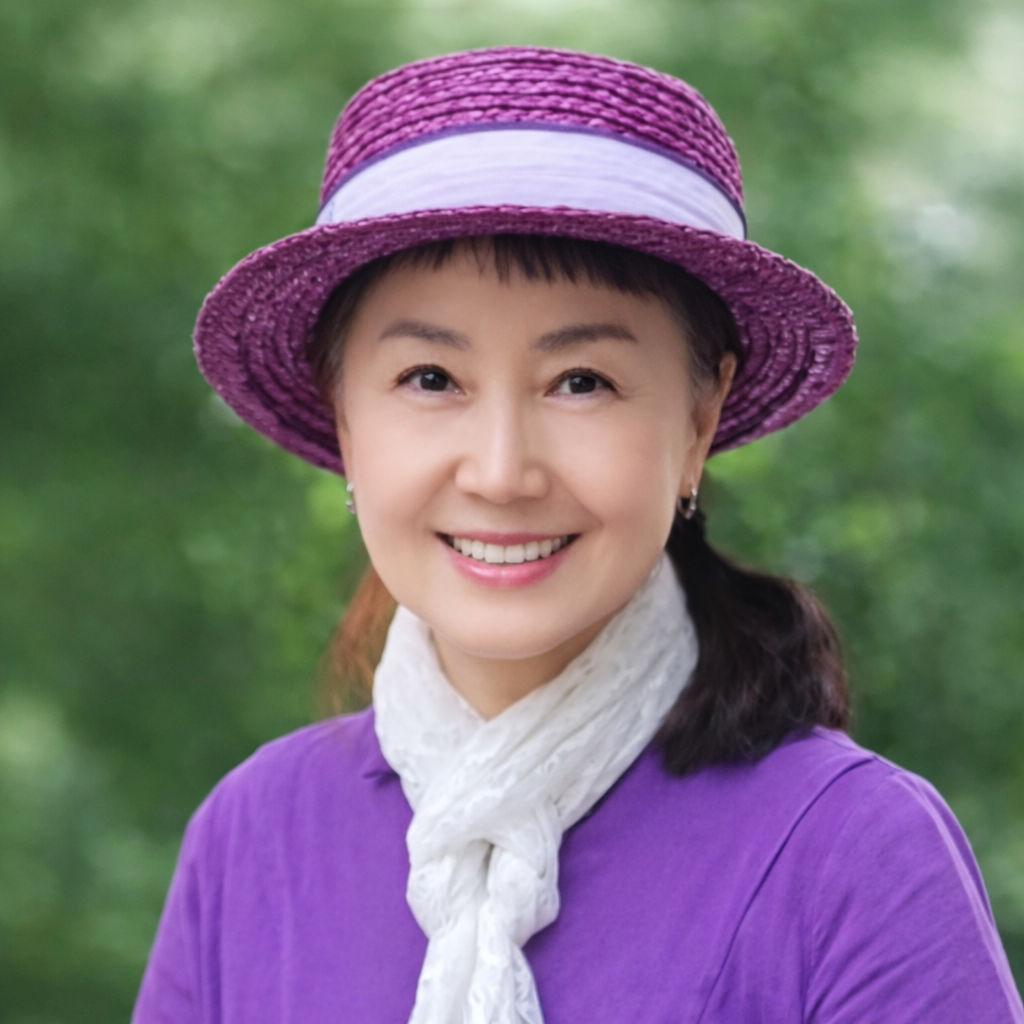
Essay from Asalbonu Otamurodova

Why Can’t We Say “No”?

Why is it so difficult for us to say “no”? It’s an interesting question. Throughout our lives, we often believe that we are living for ourselves, when in reality, we may be living under the expectations of others without even realizing it. Naturally, we all have our own needs and desires, but so do the people around us.

If we fail to set boundaries with others—if we cannot say “no”—we will continue to live under their demands. This is not just an unfortunate situation; it can be deeply harmful. Let me tell you this: learn to set boundaries with the people around you, even if they are very close to you. Until you define those boundaries, you will gradually become a prisoner of others’ expectations, because they will always continue to demand more.

Only when you stop living for others will you truly begin to live for yourself. I once read in a book: “If you consider burning in fire to be natural, you will turn into ashes and come to believe you deserve every suffering.”

Be courageous. At this point in your life, your primary responsibility is to be able to say “no,” not to wait passively like a sacrifice. Never forget this. Living under the pressure of others’ expectations will only harm you and slowly extinguish your self-confidence.

Poetry from Noah Berlatsky

Archaic Torso of Apollo

After Rilke


He has no head. He has no eyes

to pin us with his godhead. But his torso

is itself a gaze in which there grows

from inside, like a covered lamp, a fire.


Without that rising surge, divinity

would not ravish you, nor would a lip

trace the gentle curve of thigh and hip

to the shadowed center of fertility.


Without it, the stone would seem a broken thing,

chipped, cracked, dead, a stone,

and would not glisten like a wolf’s dark mane,


and would not from its remnants blaze and singe

you like a god. Of all its parts, there is not one

that does not see you. Your life must change.


Poetry from Duane Vorhees

THE HAUL

The apostles

learned to equip

their gospel ship

with hooks cross-shaped

and Christ as bait.

And they employed

muscle and wit

to deploy nets

of iron strength

at untouched depths.

Mighty fishers,

they spent their catch

on wishers’ masts,

sinners’ anchors,

and sure harbors.

THELONIOUS STRAIGHT

The monk in

habit black attacked

attacked        attacked

his devil — devil grinned 

on four legs — — attacked —

blue monkish evangelist fanatic

he went afterafter his 

4legged infidel foe —

with fingers uncurled 

straight for the eyes, for their whites and 

for their blacks

until they scream in blind

NO CHASER

the unsquare monk

the monk melodious

prayed and prayed

mystic irre

ligious

prayed his round midnights with

out even a chaser of

sunny Cannonball blues

attackattacked, in bflat

solitude

YOUR GARDEN

is filled

with forget-me-nots

but I can’t

find

any rue.

HOMESICKNESS 

In my childhood

homesickness was a cheap stamp.

I was here

and Mom just over there.

When I was grown,

homesickness a boarding pass

and bride just beyond.

But then

homesickness became a tiny tomb.

I stayed outside

but Mom was deep within.

And now

Homesickness is a narrow strait.

I on one side

continents on the other.

–after Yu guangzhong

BL IN KI NG unedited by

Life starts when some man rams his Dodge

into some garage and guns the engine,

then gets lost somewhere between debacle and apocalypse.

Time unscrolls itself outside the windshield,

vibrates and alters again just beyond attention,

in constant motion from mist to liquid to real to uncongealed.

 Not every stage equates to hajj,

but no ride’s just road nor map nor engine

nor even mere pathway among all the altars and the crypts.

If life’s the shimmer between death and sex,

the interplay’s the thing! The strength is in the tension.

In our yinyang universe, concave shapes itself toward convex.

Poetry from Patricia Doyne

SEIZE THAT TROUBLEMAKER—

AND HER TORCH!

After the “No Kings” rally in LA,

signs and costumes milled around, blocked traffic–

until the cops showed up.

Picture this: riot-gear police

seizing blue-gowned, blue-faced Lady Liberty.

They confiscate her torch, then loop a chain

around her waist, cuff hands behind her back,

and march her off, one lawman on each side.

So—Liberty’s too dangerous? Too woke?

Welcomes the tired and poor, asylum-seekers?

Says no one– NO ONE– is above the law?

We the People came downtown today,

seeking solace, strength in shared resolve—

rejecting ICE, that preys on immigrants,

but won’t apply laws to rich pedophiles;

rejecting millions spent to build a ballroom

while health care’s cut, and hospitals shut down;

rejecting war with no goals, no way out,

while old bone-spurs plays golf at Mar-a-Lago;

rejecting loss of three-branch government,

while faux-king stamps his name on doors and dollars.

We twice elected this convicted felon

with track records of insurrection, racism, and rape.

He raised the cost of living, and attacks

free speech, free press, and now, the right to vote.

Eight million, coast to coast, reject this future.

and gather to share anger, fear, and strength.

But in the end, when all the chanting’s done–

there goes Lady Liberty in chains.

A zip-tied symbol of a vision lost.


Copyright 3/2026

Patricia Doyne

Poetry from Alan Catlin

Rules for War Photographers

Recognize what the war is,

and where, then patiently wait for

the photograph to happen

Be objective and never

interfere

Even when the baby is

drowning

when the village is

burning

when the women are on their

hands and knees praying, begging

you to stop

where the girl is running with

her back on fire

Do not become the subject yourself

even when captured by

the enemy

Especially when captured by

the enemy

To not take these pictures

so we will never know what

you have known,

to see what you have seen

these pictures are too terrible

for words

Violate all these rules

whenever possible

The Crime Scene

after Stan Rice

All the faces in the ill-lit street

are wearing masks like equity

actors off-stage in guerilla theater,

a strange interlude with police cars,

emergency flashers, real murder

weapons and riddled bodies 

emboldened by death, their heads

covered by rags, a black plague

mask for disease prevention in

a rat-infested tin pan alley awaiting

a visitation of wisemen from another

vision drawn with white chalk and 

defined by yellow caution tapes,

Caucasian chalk circles drawn

on stained concrete for filling in 

the spaces with blood evidence and

severed finger prints; the muffled

hooves of a mounted police cordon

nearby indicate the pale horses,

pale riders, have arrived.

Found Photo, “The Garden of Earthly Delights” in the Background 

The talk here is

not of Spain

nor of the Civil

War

Not of Picasso

bleeding,

a failing century’s

grief

but of the harm

men do to other

men

the held-breath

silence of just-

before-the-end

and what

comes after

Mayakovsky at 3 AM

Eyes closed, stuffed head in

a noose, broken arms

wrenched aside useless as

foam, the smoke of many

cigarettes in glass ashtrays

on the littered, low table,

dealt playing cards folded

into hands, played tricks

amidst litter: empty clear 

bottles, overturned shot glasses,

spent cartridges, dueling pistols,

barrels still crossed on the wall

above the torso of a bald, 

black veiled woman, painted 

eyes half-open, false lips

the color of dried blood.

Enola Gay, the result: details 

Three wisemen with gas masks,

their asbestos suits alight; dis-

colored babies, the egg heads and

the deformed; body parts of the afflicted

blue and exploding; peace bridge

over a river, running red as ink, collapsing,

a conveyance, a memorial no more;

railroad trestles melting, steel matchsticks

pliable as plastic; graveyard markers

reduced from stone to ash; altars

for the ancients and the newly dead

wiped away; great beasts rising from

the human muck, primordial, simian,

their eyes white as heat lightning,

as atomic mushrooms after the fire

storm, after the manumission of these

wandering souls; the black impressions,

shadows frozen in flight.

Portrait of the Artist, Photo of a Mock Turner in the Background

Brought back to life, his eyes

have seen it all on both sides

of the bar, the swarthy demons,

the headless huntsmen, range

riders on white buffalo shooting

the dead warriors when artificial

respiration won’t do what jesus

did, making a mockery out of 

mortality by raising Lazarus three

days gone, decayed and festering,

an incomplete new man cursed with

vision once the white scabs of his

eyes have been removed, once new

uncanny visions of resurrected pain

have been felt; the risen elk on steep

promontory wait amid the unearthly

swirl of colored mists, the creator’s

face suggests what cannot be said,

“nothing I can say will make it better.”

Poetry from John Edward Culp

+


Falling faster 
      than skies can 

Just to find ground.

The stable beginning 
     where particles meet 
        to find a rhythm 
     As Love rests my
        Heart safely 

Told a thousand truths
    each different without 
   source   until I touch 
  Harmonious Light with 
    direction.
      Myself I AM

    Best upon
       needless to 
          say.

  .............................................


A morning script 
    by John Edward Culp
      April 6, 2026
   All Rights Reserved 


+
 

Poetry from Yeon Myeong-ji

Asked How Spring Should Be Used

       I sleep beside an old film
where long-forgotten names come and go.
Sleep folds away the faces I miss,
soaked through with the tears of flowers.


In the place where past words were set loose,
unshed cries are tangled, unable to be locked away.


When I dip an old brush,
droplets open a path.
A breath touches that distant landscape —
in the place where hidden flowers bloom alone,
there is the heart of the sea.
Flowers blooming underwater
sway yellow with a trembling grief.


Some springs must gather courage
just to be used —


they must be wept through.
Hands that had sunk
heave up what they could not hold;
eyes whose depths cannot be known
even after sorrow has drained away.
Days we once embraced
lie arranged in quiet rows.


Spring returns carrying the word I’m sorry.
On the anniversary we meet again,
rolled up inside our unfinished speech.
I’m sorry
for leaving you behind.

봄을 어떻게 사용하느냐고  물었다
           

               연명지

머리맡에 오래된 이름이 드나드는
낡은 필름을 두고 잔다
그리운 얼굴이 접혀 있는 잠은  꽃들의 눈물로 흥건하고

지나간 말을 부려놓은  곳에
잠그지 못한 울음들이 엉켜 있다

오래된 붓을 담그면 물방울들이 길을 연다
그 아득한 풍경에 닿아 있는  숨
혼자 숨어 핀 꽃들의 자리에 바다의 심장이 있다
물속에 핀 꽃들이 노랗게 울렁거린다

어떤 봄은 용기를 내서 울어야  사용 할 수 있다

가라앉은 손들이 울컥 게워놓은
슬픔마저 빠져나간 깊이를 알 수 없는 눈빛들
껴안았던 날들이 가지런히 놓여 있다

미안하다라는 말이 돌아오는 봄
기일에 만난 우리들 말 속으로 말아 올려지는
두고 와서 미안해


Mother’s Empty Room

      By Yeon Myung Ji

When blood bloomed from her children’s fingers,
Mother would grind cuttlefish bone to dust
And cover our wounds.


In her final years, she was a map of tender pressure points;
She placed a heavy boulder atop the eyelids of life.
Leaving us—who once played beneath the shelter of her bones—
She let go of the hands she held until the end,
Taking not a single one with her as she went alone.


A certain someone, who wrote that we should rejoice
In having something left to leave behind,
Shed the tears of a bird.
And her children, sinners before their mother,
Stifled their tears, pressing them deep down.
They hid them in haste
So no one could ever find them.


Those who have buried a loved one in their hearts
Know how to unlock and bolt the gates of grief.
Though there is no scripture on how to mourn well,
Lips that met for the first time wailed out loud.
In three days, every trace of Mother
Was summoned away by the wind.
The woman who, in life, stayed only in her room,
Now hides within the fringe tree branches, within the breeze.


If blood should ever seep from her children’s fingers,
She seems ready to appear, clutching a piece of cuttlefish bone.
Even in death, she is Mother;
With that very word, “Mother,” she still cradles us.


엄마의 빈 방

      Yeon Myung Ji

엄마는 새끼들 손가락에서 피가 나면
갑오징어 뼈를 갈아 상처를 덮어주었다.

늘그막의 엄마는 온통 압통점이어서
생의 눈꺼풀 위 묵직한 바위 하나 올려놓았다.
당신의 뼈 아래에서 놀던 우리를 남겨두고
마지막으로 잡았던 손들
하나도 데려가지 않고 혼자 갔다.

무언가 두고 갈 것이 있다는 걸
기뻐하라는 글을 남긴 어떤 이는
새의 눈물을 흘렸고
어미 앞에 죄인인 새끼들은 눈물을 꾹꾹 숨겼다.
누구도 눈물을 찾지 못하도록
바삐 숨겼다
누군가를 가슴에 묻어본 사람들은
눈물을 열고 잠그는 방법을 안다.

잘 울어야 한다는 교리가 있는 것도 아닌데
처음 본 입술은 깔깔 울었다.
엄마의 흔적은 사흘 만에
바람으로 불려갔고
살아서는 방에만 있던 엄마는
이팝나무 가지에, 바람 속에 숨어 있다.

새끼들 손가락에 피가 나면
얼른 오징어 뼈를 들고 나타날 것만 같은
엄마는, 죽어서도 엄마
그 엄마라는 말로 여전히 우리를 다독인다


Profile

Poet Yeon Myeong-ji began her literary career in 2013 with the poetry collection 『Gashibi』, published in the Minerva Poetry Series.


Her published works include the poetry collections 『Sitting Like an Apple』 and 『Where would the House of the  Sorry’ be? 』 the e-poetry collection 『Seventeen Marco Polos,』 and the travel essay 『Step by Step, Walking the Camino.』


She has received the Tolstoy Literary Award, the Homi Literary Award, the Cheongsong Gaekju Literary Award, and the Aviation Literary Award. In 2025, she was awarded the Bronze Prize in Poetry at the Literature Asia Awards.


Her poems have been translated and published in local languages in India, Pakistan, Kosovo, Italy, Egypt, the United States, and Belgium.