Journalist Giorgos Pratzikos interviews actor and children’s author Zisis Papaioanou

Middle aged Central Asian man in a dark collared button down shirt.
Zisis Papaioanou

Zisis Papaioanou is an actor and children’s literature author who manages to bridge two worlds: acting and children’s books. He has appeared in theater, television, and cinema, while at the same time, through his books, he conveys knowledge, imagination, and values to children. His participation in the new film *The Carpenter’s Son*, starring alongside Nicolas Cage, as well as his books such as *Vasiliki, the Magical Echo of Epidaurus* and *Aristotle’s Walk*, highlight the breadth and creativity of his career.

What follows is a discussion that sheds light both on his artistic side and on the man behind the works.

**Tell us a few words about your role as a leper healed by Jesus in the new film *The Carpenter’s Son*, where Nicolas Cage also stars. Did this experience strengthen your faith?**

I wouldn’t say it strengthened it because I come from beautiful Meteora — I am from Kalabaka — with the most wonderful experiences I have had. My faith in the Church has saved me during this difficult period. I also taught for years and for 15 years I was an altar boy alongside a wonderful monk, Father Chrysostomos, from whom I learned to have the fitting faith and inner peace in daily life. Everyone experiences faith differently.

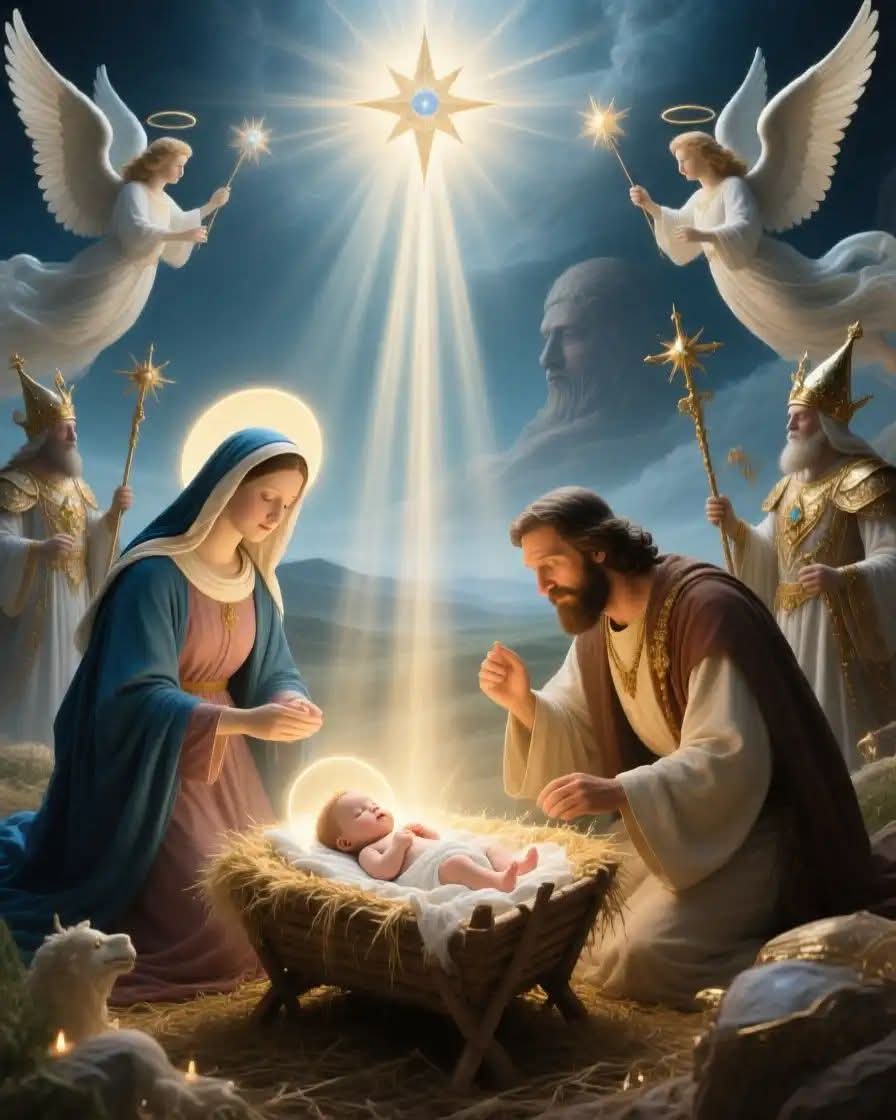
The film *The Carpenter’s Son*, directed by Nathan Lotfy — when I received the proposal from Los Angeles to participate — excited me, especially the idea of acting in a new film about the childhood years of Jesus. My role was the Leper whom Jesus healed, because wherever He passed and touched, He healed people. I knew the story through scripture, but it is even more fascinating to live it through acting. I was among wonderful people with passion and love for cinema. See you in theaters in the coming months.

**Among your children’s books, *Vasiliki, the Magical Echo of Epidaurus* stands out. What does sound mean to you, and what does Epidaurus mean to you personally?**

Yes, indeed *Vasiliki, the Magical Echo of Epidaurus* has traveled widely, has been read a lot, and I am deeply grateful to my readers. I thank them from the bottom of my heart. It has made its journey, and years later it continues to travel. It is my pride. I believed in it, and I was vindicated — I feel proud.

The echo is music, sound, journey, feeling, and discovery. For me, as an actor, Epidaurus embodies all these elements. At this point, I would like to thank my publisher, **Michalis Sideris Publications**, for the beautiful journey of my heroine Vasiliki.

**In your book *Aristotle’s Walk*, you introduce children to the great philosopher. How relevant is Aristotle today, and what have you personally discovered through this “walk”?**

This particular book is from **Kaktos Publications**, titled *Aristotle’s Walk*. It has a special feature: you can also listen to it with one click via the QR code on its first page.

Aristotle always touched me — his method — and I thought it right to pass it on to children. To your question whether Aristotle is relevant today: I will answer, he is astonishingly relevant in 2025, despite the fact that his works were written thousands of years ago. From ethics and politics to logic and his peripatetic method.

I will mention Aristotle’s view of virtue: he said virtue lies somewhere in the middle. Balance is important for our times in 2025. Personally, I discovered balance in all aspects of my life. It helps — it is something like a psychologist. I encourage you to discover Aristotle; he will help you.

**Where do you draw inspiration for writing your wonderful children’s books?**

It depends on what I want to convey to children through my books. I discuss it with my publishers, and that’s how I proceed. It is something that comes naturally — I don’t force it.

**Which of your children’s books is your favorite, and why?**

I don’t have one in particular. All my books are like my children. I treat them as such. They are my creations — I have given them flesh and bones to travel.

**You have embodied many roles in theater, television, and cinema. Which role do you single out and what did it leave you with?**

In the film *Eftychia*, I played the role of the fiancé. We had an amazing cast of actors, and I feel nostalgic about those days under the Acropolis. The director, Mr. Angelos Frantzis, played an important part — a director who masterfully puts you in the atmosphere of the era so you can perform.

**If you had to choose, what do you prefer more: acting or writing?**

Both are parts of my life. These are what I studied, these are what I do. And it is a blessing to do what you love. Life is short.

**Although I first saw you on television, I got to know you better through my friend and collaborator Eva Petropoulou-Lianou, who suggested I interview you. What is Eva Petropoulou-Lianou to you?**

Ah, this woman… for me, personally, she is **WOMAN**. To be more specific, there are women all over the world, but in Greece lives the goddess Eva Lianou Petropoulou. She is the one who supported me in the hardest time of my life.

It is important when you have suffered something to have someone for psychological support. Being orphaned and alone, I had Eva, who helped me significantly to move forward and see things with a freer and clearer perspective.

**Do you believe theater can be an important educational tool for children today?**

Of course! That’s why there is Theater Pedagogy and theatrical play for minors and beyond. I have taught for many years in the past, and it was a wonderful journey I will never forget. I hope I can take it up again from where I left it.

There are thousands of exercises in rhythm, orientation, communication, self-respect, respecting others, discovering another world and the real one. Exercises that help your inner self and those around you. Very important.

**How would you like to be remembered by your young readers and audiences?**

With a smile. That’s what I would love.

**What are your next steps, both as an actor and as a writer?**

I am currently auditioning for three television commercials in France. In a few days, I expect the results. At the same time, I have started writing a theatrical monologue based on a true story I personally experienced, and I would like to put it on paper — and hopefully bring it to the stage.

It deals with the new reality of crime in the center of Athens. Recently, I survived an attack — but it left me with a “why” about a State that does not care for Greek citizens. I consider it a shame that we lack rights while others have them. This is not racist — racism lies within **us**.

In my opinion, we must return to being human as we once were.

At this point, I would like to make an appeal to the Greek State: please create campaigns for humanity. It is not shameful to call 100 (the police emergency number) if you see someone bleeding in the street. Call 100, indicate the location, and leave — but call. Don’t pass by in fear. It is not shameful to call 100. It is help — because yesterday it was **me**, tomorrow it may be **you**.

Poetry from Mesfakus Salahin

South Asian man with reading glasses and red shoulder length hair. He's got a red collared shirt on.
Mesfakus Salahin

The Eyes Inside the Eyes

‎While searching for love, a river is born

‎The waves of that river remain unknown for a long time

‎Or, remain unknown for a lifetime

‎The water of that river changes color as desired

‎The waves do not write the story of pain

‎Rainbows  illuminate the hanging dawn

‎The melody of the past trembles in the embrace

‎The spring moon falls prematurely

‎The sky becomes empty

‎The murdered lights suck life

‎The dreams with broken wings want to become windows

‎In the world of extinguished lamps.

‎Now, the riverside settlement is on the side of the road

‎Life is elsewhere

‎The river walks on the boatman’s boat

‎The colony’s Royal Primary School sniffed by the boat

‎The sun of sadness burns in the wake

‎The eyes find the eyes inside the eyes

‎The memorable time does not burn in those eyes

‎The dream life swims in solitude

‎The ground melts at the station of estranged retirement

‎When will the train come, the whistle blow?

‎The organic evolution of existence questions the self

‎The symbolic self becomes a constant fraction.

‎The brain remains inactive

‎In all the elements of the unconscious language of existence

‎I keep looking for love

‎In a passive obedient mind

‎I have no coffin of blood

‎Yet, the continuous bleeding in the rhythm of poetry

‎I have no primitive competition

‎Even in the midst of conflicting excitement

‎One day the flower of union will bloom on the wall of distance

‎If my nest is empty

‎From the womb to the grave, I desire you

‎That is not why I desire the happiness of voluntary death.

‎Some people have a fierce desire –

‎To weave a garland of dew,

‎To be different from the wind,

‎To return to the womb again and again.

‎Some people have a longing to embrace death.

‎Feelings are awakened by the fire of desire.

‎For some, death is more pleasant than earthly life.

‎In my thoughts, life is a struggle.

‎Death is not a solution.

‎The only reality is the passenger in the vehicle of my imagination.

‎Happiness, sorrow are the opposite sides of love.

‎My love is not dissolved in the solution of anxiety.

‎Let the soul full of beauty awaken in the color of struggle‎

Or I will live with that color.

Essay from Omonova Sevinch

Central Asian woman standing in front of a set of medical research themed posters. She's got dark hair and a black coat and black pants over a light tan top.

Knowledge for a woman is a light for society

In our holy religion, acquiring knowledge is considered an obligation for every Muslim, both women and men. Why specifically for women? Because in the family, the upbringing, morality, and knowledge of a child largely depends on the mother. It is precisely intelligent, conscious mothers who raise a comprehensively capable, educated generation. In the development of such great figures as our great ancestors – Amir Temur, Zahiriddin Muhammad Babur, Alisher Navoi, Abu Nasr Al-Farabi, Abu Ali ibn Sino, there was a place and prayers for book-loving, enlightened mothers.

Unfortunately, in our recent history, in particular, during the last khanates, not enough attention was paid to women’s education. In some cases, there were even periods when they were strictly forbidden to study. But Uzbek women, whose blood reflected the spirit of courageous women like Tomaris, Bibikhanim, Nodirabegim, and Uvaysi, fought for education, to find their place in society, and to liberate their homeland from colonialism. They worked resolutely towards their dreams, despite all obstacles.

There have been many such heroes in our history. The Jadid movement was especially widespread in Bukhara. In the 1929s, many young people were sent to study in Germany and Turkey under the leadership of our Jadid grandfather Abdurauf Fitrat. Among them were future doctors like 17-year-old Khayriniso Majidkhanova and scientists like Maryam Sultanmurodova. They aimed to serve the country with science for the prosperity of the homeland. Because the foundation of any society that dreamed of independence was science and the experience of developed countries.

Unfortunately, the former Soviet Union did not allow this. They were afraid of the people who recognized their rights and fought for freedom. In 1938, along with intellectuals such as Fitrat, Abdulla Qodiriy, and Chulpon, young girls with lofty dreams were also shot. However, this tragedy did not make the girls who wanted to get an education give up their dreams or scare them. On the contrary, it strengthened their determination, perseverance, and thirst for enlightenment.

Omonova Sevinch Oybek qizi, 2nd year student of Tashkent Pharmaceutical Institute

Poetry from Lola Ibrajter

Young Eastern European woman with long dark hair, brown eyes, and a necklace.

Violet

I send you violets,

while you place a wall of concrete before me.

It is easier to be alone

than to lose both head and sight,

carrying the weight

of others’ betrayed expectations.

Carnations stay in the same place

where once we stood.

You stand there, proud and alone,

as you fall into the abyss.

Velvet and chestnut lie

beneath the shelter of a dream,

while with her you rest in silk.

Lilies—

they long held back the fear.

The carnival inside you

makes you believe the feeling deceives you,

yet you would give it all

for me to be that old one,

alias, as if new.

And that is the story, my friends.

Lola Ibrajter was born on 11.01.1996 in Uzice. She spent her childhood in Nova Varos, where she also completed high school. She studied at the Faculty of Law in Belgrade, where she still lives today.

Since early childhood, she has been writing poetry and engaging in drawing and painting. Since 2022, she has been a member of Young Artists of Culture (MUK), where in 2023 her poem titled “Ona” is published for the first time in the poetry anthology “5 to 12 Time for MUK”. Two years later, her poems “Sveto tlo” and “Deo ljudske duše” are published, and that same year the Spanish magazine “AZAHAR” translates her poem “U početku beše reč” into Spanish.

Art from Annabel Kim

Abstract art with open books and houseplant leaves.

Person with a blue jacket in the foreground dashing through a crowd of other people inside a building.

Two brain hemispheres drawn in gray and connected by musical notes. Blue background.
Spools of gray, yellow, and multicolored yarn, knitting needles and a safety pin.

Layers of leaves on green trees.
Stylized image of a disposable camera and reels of photos.

Annabel Kim is a high school student from Massachusetts whose artwork explores the intersections of memory, identity, and landscape. She often works in mixed media and oil, drawing inspiration from both everyday life and literature. Her work has been featured in student exhibitions, and she is excited to share her art with a broader audience through literary publications.

Poetry from Duane Vorhees

BRIDGES WALLS AND DOORS

liars(lovers)(artists)

execute an honest

condemned activity

misshaping reality

art is a seed a hedge

love is a need a bridge

that connects a leisure

to unextinguished torture

greenest seeds weed their way

from criminalities

too covert to commit

and too active to stay hid

the right to scream is held

only by us tortured

the will is a wall made

to support or separate

the corpse is tradition’s

usual exhaustion

of palettes and menus

and an unfreedom to choose

love and art are the words

used to mimic or urge

the word is a closed door

but an urge opens the door

COUNTING THE COCKS IN THE HEN HOUSE

How many celebrants have danced in your penetralium?

Your hangar has sheltered how many planes?

COME THE REVOLUTION

Which among you shall being sandwiches?

And who’ll organize the selfies?

Which manifesto would you execute?

“The sky must be purged if the earth is to prevail!”

“The earth must be buried for Heaven to reveal!”

Which Utopia would you provoke?

Which of the pasts should be banned?

But don’t be the freak hot on the runway

or the gangster in church.,

don’t be the priest caught in the whore house,

or banker man in the line-up.

[The democracy entered upon the struggle with dictatorship heavily armed with sandwiches and candles. — Trotsky]

IN MY DEFENSE

And dark it was, yes, and I: alone

but full unwilling to succumb

and weaponed she: silk&smile&cologne.

Yet I still could hold my own

till lastly, Your Honor, did she come

at me with All the moon.

Poetry from Abdel latif Moubarak

Older Middle Eastern man with white hair and a black coat over a blue collared shirt.

probability

The wheat stalks breathe you in,
Braid your letters for the evenings.
And stir your songs the day they met
Upon his face, the silence… the flock of stillness.
Depart to where we began our journey,
Indeed, the streams hold but fragments.
To a time squandered,
Forgive my death when I choose you,
To the mercy of the devout, in protest,
To the dwelling of the wound,
The distance of desolation.
And your endurance was to borrow
From the star, the day of collapse’s rituals.
Within you, the debasement of poems eludes,
Towards the sunrise.
And you quiet above some plains
The languages of apprehension,
In your sailing times.
You soothe the blaze of solitude… cities,
And pour into the eye the tears of reunion,
Branches from the beginning we were,
For the land of severance.
We carry to it the beseeching letters,
To write in love,
The beloved’s spinning song.
And you still swear by the earthquake,
So as to prepare a new homeland,
Which the questions lost in their lament,
And the impossible bolted its gates
With bursts of time that began to depart.
You never left the harvests of remembrance,
That we were quenching.
With your silence, visions will not overflow
The boundaries of emptiness.
And we…
Are in vain.

***

May God Strengthen You

When love confused you one day,
And you melted into it, and you had no choice.
That separation was coming for you, my heart,
Anyway, may God strengthen you.
Why did you obey him and walk with him?
He got lost with you from the first step.
You lived life after him,
And the pain of his separation keeps you awake.
When love called to you,
You saw paradise with your own eyes,
And you returned again with what’s inside you,
In every glance, he makes you remember.
Were his days a dream, or
Was it a time that came and went?
In it, my joy is absent from his presence,
And my sorrow and worry destroy you.
Believe me, a page has been turned,
Like the hearts that were burned.
From him, love and hearts intended
To return to him again and command you.
Anyway, may God strengthen you.

***

The Roofs of Houses

It peeks from the window of our hearts,
And steps onto the paths that have drunk
From its spring, the tales.
Upon a thousand civilians who implore,
And thousands of throats whose echo
Is the roofs of houses.
Their lament still embraces them,
And gathers them,
A million prayers,
Except what it couldn’t contain.
And you, who are ascetic within your prison, waiting
For a glimpse of light,
Just to caress your forehead.
Your umbilical cord between you
And the homeland,
Knows you overcome your tears
And split your chest for the cities,
So that life may enter them,
Free from the gloomy darkness clinging
To every wall that the specter of silence
Has demolished.
These are thousands of throats whose echo
Is the roofs of houses.

***

The Scars of Salvation

Let the halos of my heart fall from my brow,
A light I thought I’d find while resting on the shoulder of the word,
The one that hums a tune through the folds of this poem.
Illuminate for others my journey, this bitter taste of a homeland’s pain,
The anguish that fills it, stirring with every dawn
That rises on a morning full of nonsense.
The word was powerless then,
Unable to forge a new space for confession,
Or pluck a bejeweled pearl from its sky
To gift to the poor, the orphans, the forgotten,
Those on the brink of death.
I know I am the zero from which all poets begin,
The seed whose sprout only grew in the shadow of my ancestors’ verses.
From them, I drew the strength to survive,
Dreaming of their blissful, generous seas.
I lean on them all with a pride that lifts me
Into realms bright with the light of their wisdom, O Lady Poem.
All I ever wanted from you was salvation,
To end on your shores.
I began you (or you began me) among the transients
In a city whose streets had all gone dark,
Forgotten by long wars, then awakened just once
By the triumph of survivors, and drops of hope
That thirst couldn’t defeat.
Between tables of gunpowder and napalm,
Scattered limbs and blood-stained walls,
Jackets lie vomiting on the sides of ruins,
With the words “I was here” scrawled upon them.
A hemorrhage of questions.
How I’ve longed for my poems to take them on,
A path to grief and to release.
I craft my shoot for the fated crowd,
And belong to the march coming from those forgotten lands
Hidden in the folds of shackles and prison cells,
The torment of hungry stomachs,
The gasping of tongues behind cries for departure,
The absence of hope for a coming brilliance
That carries on its face the radiance of the impossible.
Lady Poem, I know glory in your proof.
I know the secret in your river.
This is how we meet, and with us, we meet
A life that has no shrine,
A life that only survived through an impossible bargain
Between a bundle of thorns that grew just once
From the pain of salvation.
I am destined to live and to see the city
Be the first to bless the burning heat of a step toward freedom,
Swearing by the fading glory in its children’s eyes,
The honeyed treasures flowing over a new homeland.