Essay from Qudratova Nozima Bahrom qizi

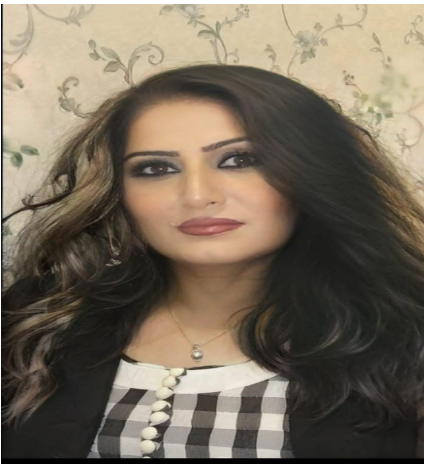
Young Central Asian woman with long straight dark hair, brown eyes, and a long sleeved flannel black top.

LINGUISTIC FEATURES OF TOG‘AY MUROD’S WORKS

Qudratova Nozima Bahromovna

1st-year student, Department of Uzbek Language and Literature,

Denau Teacher Training Institute

Email: qudratovanozima@gmail.com

Annotation

This article explores the linguistic features present in the works of the renowned literary figure Tog‘ay Murod, distinguished for his profound narratives and unique style. Through a comprehensive analysis, the study highlights key linguistic elements that define Murod’s writing, offering insight into his literary techniques and contributions to the cultural and artistic landscape.

Keywords: Tog‘ay Murod, literary analysis, linguistic features, narrative style, literary technique.

Introduction

Tog‘ay Murod stands as a prominent figure in modern Uzbek literature, celebrated for his captivating storytelling and innovative narrative approach. His works have long fascinated both readers and critics, prompting scholarly interest in the linguistic elements that form the foundation of his distinctive literary voice. This article examines the recurrent linguistic features within Murod’s works, revealing the craftsmanship behind his style and illuminating the essence of his literary genius.

Murod’s literary corpus spans various genres—from prose to poetic narratives—each crafted with its own linguistic precision. His prose is characterized by rich imagery, metaphorical language, and nuanced character development, all of which create immersive storytelling experiences for the reader. Moreover, his use of symbolism, allegory, and intertextuality adds layers of depth, inviting readers to engage with multiple levels of interpretation.

Linguistic Characteristics in Murod’s Works

Beyond his narrative mastery, Murod’s poetic works demonstrate exceptional linguistic rhythm and lyrical expression. By artistically arranging words and sounds, he captures the essence of emotion and human experience, creating a deep resonance with readers. His exploration of linguistic ambiguity and semantic complexity contributes to an intellectual dimension that encourages readers to reflect on the subtleties of language and meaning.

A systematic approach—combining close reading, stylistic analysis, and comparative research—was employed to examine Murod’s linguistic techniques. Works representing different periods of his creative activity and covering diverse themes were analyzed. Textual fragments were studied for recurring linguistic patterns, rhetorical devices, and stylistic choices, providing a comprehensive understanding of his unique writing style.

One of Murod’s most notable contributions lies in his transformation of the natural speech of ordinary people from the Surkhan region into a literary stylistic device. He was among the first to elevate this regional vernacular to the level of a refined artistic tool. Following in the footsteps of earlier creators, he developed his own perspective on literary style. Researcher M. Khidirova describes language as the foundation of literary structure, noting:

> “A literary work is like a tower. It has its own foundation. The lifespan of the work depends on this foundation. The foundation of a literary work is language. Life begins with language and ends with language.”

Thus, the linguistic worldview of Tog‘ay Murod embodies a philosophical understanding of language as both an artistic and spiritual necessity. His unique stylistic mastery continues to serve as a school of artistic skill for young writers, especially at a time when the Uzbek language is flourishing as a state language and its preservation and development are of great importance.

Theoretical Perspectives on Style

Classical and contemporary scholars alike have offered insights into the formation of literary style. The eminent

scholar Abdurauf Fitrat emphasized that as a writer matures artistically, a distinctive style emerges:

> “As a poet or writer rises in artistic mastery, he begins to create a style peculiar to himself. When his imagination, thought, and understanding reach maturity, a unique style naturally appears.”

Literary critic O. Sharafiddinov likewise described style as an all-encompassing phenomenon permeating every aspect of a writer’s work:

> “A writer’s style is like air—we breathe it without noticing its components. Style is the spirit of creativity, the subtle fragrance present in every work.”

Accordingly, Tog‘ay Murod’s reflections on artistic language and style deserve special attention. Language, artistic vision, and literary technique interact harmoniously in his works, shaping an individual and unrepeatable style formed through philosophical perception, cultural identity, and narrative skill.

Tog‘ay Murod’s Creative Language

Tog‘ay Murod is widely recognized for his original and vivid prose, which resembles poetic narrative in both rhythm and imagery. Even casual readers familiar with modern Uzbek literature can easily identify his works by their expressive, colorful, and deeply lyrical language. This distinctive quality sets him apart from other writers.

In works such as Otamdan qolgan dalalar (“Fields Left by My Father”) and Bu dunyoda o‘lib bo‘lmaydi (“One Cannot Die in This World”), Murod won the admiration of readers by portraying the sincere and humble people of the Surkhan region—their hardships, aspirations, and inner worlds. His language is deliberately simple, flowing, and deeply rooted in folk expression.

He skillfully incorporates proverbs, idioms, synonyms, archaic words, and dialectal expressions, enriching the artistic imagery of his narrative. Folk speech enhances the authenticity and emotional connection of his works. For example, dialectal words such as baycha, jigit, bova, iyarmoq, angnib yotmoq, and yonashtirmoq vividly illustrate the regional character of his narratives:

> “I told the boys to lie down by the river and keep watch.”

Discussion

The linguistic features identified throughout Murod’s works emphasize his innovative approach to storytelling and his profound connection to language as a tool of artistic expression. By blending imagery, metaphor, symbolism, and intertextual references, he creates multilayered narratives that resonate deeply with readers.

Moreover, his linguistic versatility allows him to traverse different genres and thematic landscapes, demonstrating the breadth and depth of his creative vision.

Conclusion and Recommendations

In conclusion, the study of Tog‘ay Murod’s linguistic features reveals a writer of exceptional talent and intellectual depth whose works continue to captivate and inspire audiences worldwide. Future research may further explore specific aspects of his linguistic style—such as dialect usage, narrative voice, or linguistic innovation. Comparative analyses with other literary traditions may also offer valuable insights into the evolution of literary language and expression.

Ultimately, the linguistic richness of Tog‘ay Murod’s works serves as a testament to the enduring power of language to illuminate human experience and provoke thought. As readers engage with his texts, they embark on a journey of linguistic discovery, uncovering layers of meaning and developing a deeper appreciation for the art of storytelling.

References

1. Oydinda yurgan odamlar. G‘. G‘ulom Literature and Art Publishing House, Tashkent, 1985.

2. U. Jo‘raqulov. Nazariy poetika masalalari: Muallif, Janr, Xronotop. G‘. G‘ulom Publishing, Tashkent, 2015, pp. 148–150.

3. U. Faulkner. Qora musiqa. Yangi Asr Avlodi Publishing, Tashkent, 2018.

4. A. Fitrat. Adabiyot qoidalari. Tashkent: O‘qituvchi, 1995.

5. O. Sharafiddinov. Iste’dod jilolari. Tashkent.

Qudratova Nozima Bahrom qizi. 2006.11.12.

Surxondaryo viloyati Shurchi tumani Oynako’l mahallasi Amir Temur ko’chasi 160 uy.

+998 90 071 06 11.

Denov Tadbirkorlik va pedagogika instituti 1 kurs talabasi. Filologiya fakulteti o’zbek tili va adabiyoti guruhi.

Poetry from Anna Keiko

Young East Asian woman with brown eyes and reddish hair.

Meeting Myself

A door unknown

You are led inside

To where night has yet to fall

In There, you meet yourself

You tread along a steep, winding mountain path

No flowers in sight, nor does it lead to the other shore

With threads of thorns

Weave an indescribable language

November 30, 2025

Poetry from Mykyta Ryzhykh

The boy

the boy dies as if the AIDS of past happiness lives in his heart

the boy is silent until the screams on his nails turn into screams

the sky above the boy’s head bursts like a balloon

the sky falls on the heads as if the heads are still not cut down

the anus is like a water pipe: it will just flood everything around

life is like a plumbing pipe torn without an anal ring

the sky overhead repeats the weakness

the god above his head cannot explain the meaning of his presence

a sweater draped over the skin instead of a mole and a tattoo is torn

a man stands near the sign and does not know where to go next

where to? in basements where it’s easier to hide and fuck?

or move forward? or into the future that floats in its own absence

it starts to rain and the dogs get wet

I wash in the rain

I wash exclusively in the rain

I’m dying inside someone else with my name and body

I wash only in the death

I’m dying but I live

I’m rain with a soft torso

boy / me / or someone else

while around the zz skr sc cars ars

iron butterflies tear the stomach

the city tramples me with leaves

crunch outside or inside fills the air

all around say: quietly quietly

Poetry from Brian Michael Barbeito

Closeup of a wilted brown plant in the fall with grass and trees in the background.

Sometimes the Clouds and Sometimes the Angels (prose poem and picture)

at moments though it was generally overcast, the light of the sun so determinately arrived that it felt like an angel or group of angels giving a sign and blessing. I had a spinning ring silver w/several saints and divine figures and I touched it. I remembered other moments similar such as when a praying mantis out of nowhere flew across and landed beside me, watching me. it was the wings of the creature that made it appear like a fairy or angel or whatever the case, something more metaphysical than of this world. and then as life goes in cities and in rural and pastoral settings w/many blessings, the clouds resumed and even some rain and anxious strange wind had their turn and show of ruefulness and moving melancholy. but one had to take all moods of the capricious earth and learn from them by observing and remembering. like a soul that would scry the sky or an old-time sagacious psychic who had gifts of the spirit. so, step and step and step again, by the field and under late autumnal tree canopy beige and yellow and brown then…yes step again, to become a nature poet. 

Poetry from Milana Momčilović

Young Eastern European woman with long dark hair, earrings, and a black top with white dots.

IN THE SHACKLES OF YOUR SILENCE 

Under your name, the night trembles within me.

In my chest, a bound flame moans.

Like a cold darkness, love stretches me upon its rack.

Your shadow drinks my breath.

My bones remember your touch.

Within me, centuries collapse without you.

Like spilled gold, my sorrow flows.

Your eyes — two abysses above my soil.

My heart bears the shackles of your silence.

My skin is a book of your wounds.

I have written you in my own blood.

I have carried you through my own ashes.

Into your voice, I placed my final peace.

And when I sink, your shadow will remain in me.

And when I fall silent, I will still long for you.

Milana Momčilović was born on April 4, 1999 in Vrbas. She currently lives in Srbobran, a place near Novi Sad in the Republic of Serbia.

She published the collection of poetry TALISMAN.

She doesn’t like to talk about herself, so in the end she can describe herself through the verses of Sergei Yesenin: “What am I?” Who am I? I’m just a dreamer, whose sight fades in the fog and mist, I lived along the way, who can dream, like many other people on that earth.”

Poetry from Dr. Jernail S. Anand

Older South Asian man with a beard, a deep burgundy turban, coat and suit and reading glasses and red bowtie seated in a chair.
Dr. Jernail S. Anand

My Friends 

There are times 

When we slowdown 

But the water in the river 

Flows on unconcerned 

I am perhaps feeling 

My weight too much 

For my legs 

To carry 

The memories are hard 

To lay bye 

And harder still

The fears of descending uncertainties

When was I sitting alone 

Not bothered by 

Real or unreal joys

And sorrows?

My invisible friends are they

Leave me alone

Only when I am asleep

May desert me only when it is eternal.

Jernail S. Anand 

President of IAE

Essay from Xudoyberdiyeva Mohiniso

Young Central Asian woman with a pink collared shirt, earrings, and straight black hair up in a ponytail.

The Kara-Khanid State and Its Development

Student of Denov Institute of Entrepreneurship and Pedagogy

Xudoyberdiyeva Mohiniso

Annotation

The Kara-Khanid State, which emerged in Central Asia between the 9th and 12th centuries, was one of the earliest Muslim Turkic states and played a significant role in political and cultural life. During their rule, Islam spread widely, mosques and madrasahs were constructed, and trade and crafts flourished. The works of Yusuf Khass Hajib, Qutadghu Bilig, and Mahmud al-Kashgari, Divanu Lughat al-Turk, belong to this period. Although the Kara-Khanids eventually weakened, they strengthened Islamic values in the region and greatly contributed to the cultural development of Turkic peoples.

Keywords: Qutadghu Bilig, Transoxiana, Central Asia, Muslim Turkic state, Islam, culture.

Introduction

Research in this field focuses on examining the role of Turkic states in the history of Central Asia, and the Kara-Khanid Khanate occupies an important place in this process. According to scholarly studies, during the period of the Uyghur Khaganate, the Karluks—composed of three major tribes—were among its subjects. In 756–757 they grew in strength and sought to seize the throne. The internal struggle that began in 789 prevented their success, causing them to separate from the Uyghurs and migrate toward the region of Jetisu, where they later established a new khaganate.

Sources published in Chinese and Uyghur languages describe in detail the historical and ethnic situation in Central Asia before the formation of the Kara-Khanid Khanate. According to these works, the political map of the region underwent repeated changes over several centuries: internal conflicts, wars, and invasions led some states to decline while others flourished.

Main Part

Historical Context and Migrations

Chinese scholars report that after the fall of the Turkic Khaganate, large migration processes took place in Central Asia for nearly two centuries. This intensified after the Uyghur Khaganate, founded in 744 in present-day Mongolia, collapsed in 840. Several factors contributed to the downfall of the Uyghur state: internal power struggles, widespread drought, disease, and harsh winters that devastated livestock. Discontented officials allied with the Kyrgyz, attacked the royal palace, and killed the khagan. Consequently, the Uyghur Khaganate disintegrated, and its population dispersed.

A large group of Uyghurs abandoned their homeland and moved westward, eventually settling in the pastures of Jetisu. When internal unrest broke out within the Uyghur Khaganate, the Karluks were among the first to withdraw from the confederation and migrate to Jetisu—present-day southeastern Kazakhstan. According to Chinese researchers, the Karluks belonged to the “Toqquz Oghuz” (Nine Oghuz) tribal union and constituted a significant portion of the population of the Uyghur state.

By the 9th century, the Karluks had gained considerable political influence and consisted of three principal tribes: Bulak (Muyolo), Sabak (Chjisi), and Mashli (Tashli. Some scholars, including Vey Liangtao, refer to them as one of the “eleven Uyghur” groups.

Islamization and Cultural Development

By the time the Kara-Khanid State was established and began consolidating political authority, most of the population of Transoxiana and surrounding territories had embraced Islam. During this period, Islam reached a high level of development and gradually became a distinct cultural system.

This religious transformation also influenced the Turkic tribes within the Kara-Khanid realm. Due to their close interactions with the settled population of Movarounnahr, the nomadic and semi-nomadic peoples gradually adopted Islam. In Transoxiana and Khwarazm, pastoral tribes living near urban settlements accepted Islam nearly simultaneously with the settled population. Nomadic groups living along the Syr Darya and further north also converted between the 9th and 10th centuries.

According to historical sources, in 960 alone, approximately 200,000 Turkic households embraced Islam.

The rulers of the Kara-Khanid State recognized the significance of Islam and actively supported the development of Islamic culture. Satuk Kara Khan was the first Turkic ruler to convert to Islam, adopting the Muslim name Abd al-Karim Satuk Kara Khan. During his reign, numerous Turkic tribes—Karluk, Chigil, Yaghma, Khalaj, and others—converted to Islam. This process played a major role in unifying the state and shaping its political stability.

Conclusion

The Kara-Khanid State successfully united various Turkic tribes and established a strong central authority. They strengthened trade routes, enhanced economic stability, and paid great attention to cultural and scholarly development. Madrasahs, mosques, and cultural centers were built in cities such as Samarkand and Bukhara.

The Kara-Khanids actively promoted Islam, ensuring both religious and political unity within their territories. Therefore, this state represents an important stage in the consolidation of governance and the cultural advancement of Central Asia.

References

1. Irpan To‘xtaev. Kara-Khanid Silver Coins Minted in the First Quarter of the 11th Century. Tashkent, 2015.

2. Vey Liangtao. Kalaxan Wangchao Shigao, p. 72.

3. Ibid., pp. 66–73.

4. Khojaev K.A. On the Terms “Jyushing Ugu”, “Jyushing Tele” and “Jyushing Xueyhe” in Chinese Sources. Oriental Studies, Tashkent, 2004, pp. 223–228.

5. Khojaev A. Data from Ancient Chinese Sources on the Ethnic History of Central Asia. Tashkent, 2017, pp. 239–252, 356.

6. Wikipedia.

7. Ablat Khodjaev, Dilrabo Turdieva. The History of the Kara-Khanid Khanate in the Research of Scholars of the People’s Republic of China. Tashkent, 2021.

Xudoyberdiyeva Mohiniso was born on May 22, 2006, in Denov district, Surxondaryo region. She is currently a second-year student at the Faculty of History, Denov Institute of Entrepreneurship and Pedagogy.