
Listen to Qyincko’s WerewolvesvsJustice Grimes by The Desoxyn Midnight Gunners (Sloth and Styx@$).mp3 by STYX VISCOUS on #SoundCloud
Poetry from Philip Butera
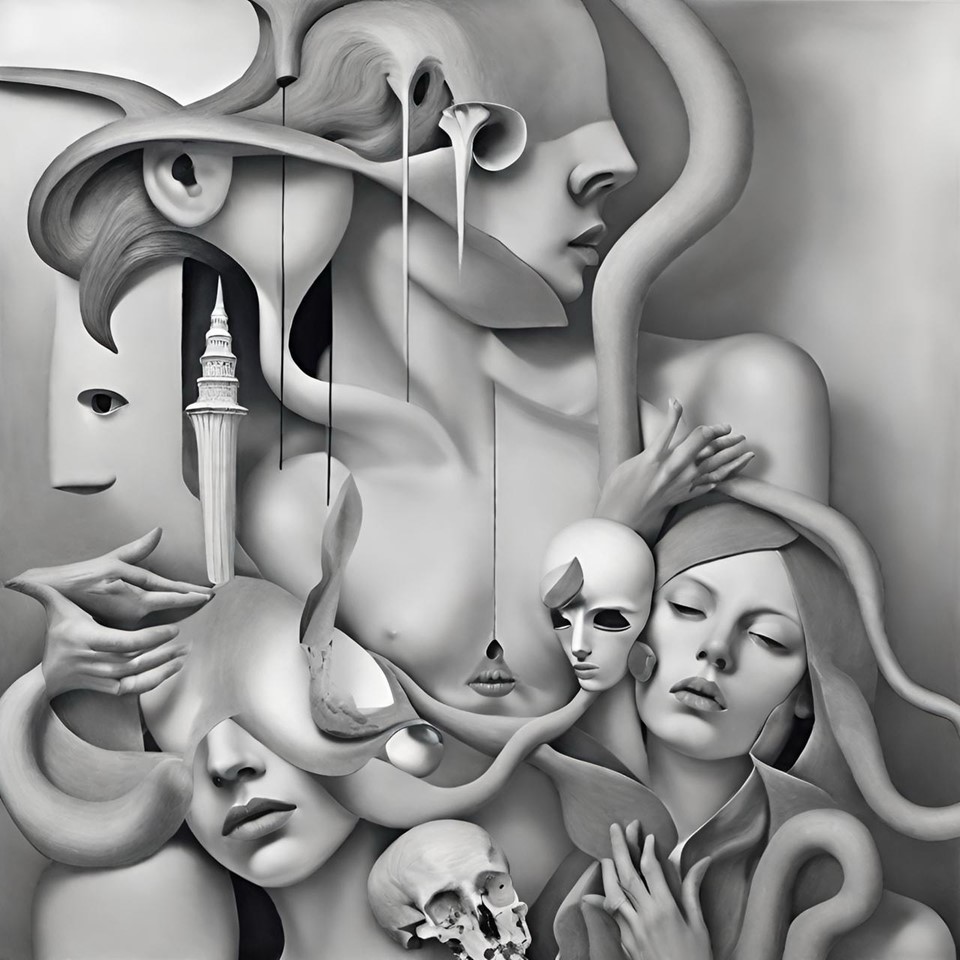
Marlowe, Marlow, and Marlowe
Preface
Being touched like a flame lit twice afire,
I ran to the illusions of three characters I knew well,
Marlowe, Marlow, and Marlowe.
Though they knew little of my faults, their intuition carried me to them.
Then, the wisdom of the future, heralded by naked angels, touched me.
We embraced each other, reflections mixing our roles,
never our ambitions for adventures.
Amid an absence of sanity and security,
we considered the uncertainty of time,
existence was now a plan
a playing field of absurdity.
Seduction
for pleasure, not honor.
Immediately, I searched for the remedies
that would unite the past with what was once the past
but is now
at the center of what can be imagined.
My feelings went astray as sensations courted all things moving forward,
forward in a circle.
How do I
define loyalty?
By
disgrace
and embarrassment?
The whereabouts of desires glistened
as I waded toward the underbelly of reality.
In the distance,
where logic cannot overcome fear
God, the Almighty,
yawned
as Hera flirted with him.
But his eyes were fixed
on
beautiful but dangerous
Aphrodite,
bathing nude opposite herself.
I became the difference between myself
and who the evil spirits thought I was.
With the world in turmoil, my mind sharpened,
effectively becoming a destructive weapon.
One – Christopher
Sailors, soldiers
and veterans without optimism
on warships
headed to those mountainous beliefs
a thought away from a fall.
Both
commitment and rage
gave a sense of camaraderie
to the blood-doused euphoria
of
redemption.
A word without meaning
to those without meaning.
After a war party
I undressed an ageless goddess in my bedroom
and smelled the aromas of comfortable past entrances.
The eager men and the women before me
now, just melancholy ghosts
reflecting their regrets from colored liquor bottles.
Impatient from our liberation from conformity,
uncomfortable with delusion,
but in harmony with the obvious,
I licked the sweat from her breasts
and legs and turning her gently around.
There are many impulses
but the foremost crime of humanity
is to waste hours
longing for a continuation of life.
I said
simply to Marlowe,
“I am passionate about my ambitions.”
His grin became Faust’s smile, “If she’s a goddess, shouldn’t you spread her legs wider?”
Exceptions more than expectations are forgiven
when unwanted expressions are spoken.
Devoid of boundaries,
I never considered any alternatives
to succumbing
once again.
As per usual
at the trial, I was found guilty
of loving
of living
and of loving and living with a lion’s roar
convicted by a jury with venom in their eyes.
In the nightclub next to the crematorium,
friends’ wives with the scars they bear from trysts
recalled times when we were thought to be
mythical models
with a hated impetuousness for life.
As the power drained,
the lights dimmed, and we gave an icy toast to the exultation
of man’s counterfeit concern for his fellow man.
Foxes and flies entered from the back door.
I heard drunken eagles swoop down on doves dressed in corsets,
their plumage more golden than cinnamon-red
and their nakedness
open to the pampered
but
never to the dreary day laborers
who thought themselves tortured martyrs.
I listened as those in lines of their own making
cried when the whips
struck their backs.
How repetitious,
their
self-serving stories
about the holiest of nights
in the most dank and dreary places
where death played with the horrors of existence
was little more
than a morsel of
marshmallow self-forgiveness.
Never be fooled
by the
pungent mistrust of thoughts
thinking about thoughts
and being
misled
by thoughts
unthought.
I left Marlow in the last booth of a
celebrated pub
with Diana, the Huntress
where I knew he would strangely
disappear.
Two – Charles
The wedding ceremony was incidental.
Attendees formed a stairwell of disbelief.
An armistice of sorts
for those who thought
freedom
was a consequence of lethargic behavior.
My ashen date, a scholarly Norsewoman, Sigrid
believed
Orpheus should travel to Hades once more
but
this time with the Minotaur
to save Eurydice.
I was asked to come along
but I suggested Marlow,
a storyteller
who believed in reaching
for something incredible
and missing
was better than playing it safe.
Of actions unfathomable,
he considered it ludicrous
to invent tragedy
when it was blatantly a
portrayal of reality.
But he was sometimes found to tell lies to preserve
the perception of individuals as noble;
shielding the listeners from any disturbing truths.
Lying in bed
with a nymph,
high on the Oracle of Delphi’s appraisal that
wealth prolonged adolescence
I realized
if you dream,
if you wish
then make promises, the end becomes the beginning
and the promises become
an unquenchable serpent around your neck.
Faith is always in the distance, and though you are amazed
you are dwelling in lore,
prayers, like gratitude
get trampled.
The privileged passed, whined, and reflected on the enigma of monetary sorrows
as being the reason
Grendel’s mother went mad,
not the murder of her son.
With tears of surrealism,
I became what I was before I became what I could never be.
Passing the Asphodel Meadows,
Orpheus recited Hamlet’s soliloquy
to Hecate.
She stripped, and both dissolved into a myth of their own making.
The Minotaur
decided to kill Perseus before
he beheaded Medusa
and
Marlow approached Teiresias,
the blind prophet
and asked how to
return order
to a chaotic world.
He petted the vicious three-headed dog Cerberus
and smiled,
“Why?”
I realized despair had no wings.
Against the grain, against the turmoil, against the odds,
seeking the self-portrait behind the mirror,
I leap
through diamond-shaped crystals
that
irradiated irises
so, whatever there was to see
I would see
without penance or absolution.
A woman forever in a prism, bathing in infinite beauty,
dripped from shadows of memories I had forgotten.
Hearing church bells,
I ran to the line between life and death,
where Eurydice lovingly opened her arms
to hide me.
I glided into her
resting upon all the effeminate
virtues.
Horror and absurdity
abound
beyond the satyrs’ chorus
in the souls of the
ravenous.
I revealed myself
to Eurydice
as being
who I am
because there was no one to follow.
I exited,
without a kiss
landing uncomfortably
in the dark
where Marlow
began the story.
Three – Philip
Language is raped every day, and the rapist goes unpunished.
There are prisoners inside puzzles, trying to locate characters lost in scenes.
I see their disappearing trails through the maze.
Restless accusers scorn me for exploring
among the split tongues of war
and the fortune found in the asylums of women.
Craving that smell of feminine power that wafts from between their legs,
cubist women curl their hands around my neck.
Laughing at sanity,
I remain searching
where time and fate ride
that line of horizon and sea.
If I needed someone
she would be found here
where curiosity
tempts virginity.
Prophets say that tyrants triumph as meanings disappear from words.
Though the wind has no enemies,
it never rests.
The wind
and the seekers
of the wind
live in a world without
ultramarine and vermillion.
They question whether a life is worthwhile
without color
or ignorance.
I, though, have no quarrel with those who question
their crucifixion
without
hope or fear.
Relentless in my pursuit to find where I stand
I call Marlowe,
who always
plays hunches in emotional landscapes.
Crafting experiences and perceptions
he tells me,
“Darkness only remembers pleasure’s smile.”
I follow him
down the paths of confusion and madness
until we set sail
for places without boundaries
where
convention is extinguished from conviction.
We watch as language is blundered, ravished, and tossed aside
to rot and die.
Marlowe,
who sees beyond the big sleep,
preaches that
you can never take back what you have heard.
Still, some find comfort in nevermore
disguised
as evermore.
But we adventurers, always on the fringe
of knowing
of finding
of believing
are strangers even to the ones we love.
We understand the violence of our own feelings
and see beyond
the visible appearance of the world.
Epilogue
Days later – not yet now,
but far from then.
I sit in a comfortable leather chair at the workplace
of
Marlowe, Marlow, and Marlowe.
While my mind is unraveling a myth,
an unrelenting myth
a beautiful woman
with straight, long red hair,
cold-piercing green eyes and black business attire
states smartly,
“The playwright, the narrator, and the detective
will see you now.”
Essay from Bekmirzayeva Aziza
Forgotten spring
The queen loved the spring from childhood. The rustling of the leaves, the vibration of the roses, was astonishing to her. The spring seemed to bring new life, new hopes, and dreams.
But then years passed … The life of the princess has changed. She married, took on daily worries, responsibilities, moved away from childhood. Now she did not notice the spring coming. There was no time to observe the raindrops from the window. Every day, the day of worries would pass the tremors, and it seemed to missing something in her heart.
One day when she was walking along the road, she felt that the soft spring was beating her breeze. She stopped for a moment. The trees were overwhelmed by gusts, moving the birds and the air. Her heart remembered those pure sensations a few years ago.
In no hurry, the princess went to the most loved garden in her childhood. She sat there and first took time for herself. The leaves were rich and the smell of flowers filled the air. The princess felt as if she had lost herself and found herself again.
That day she realized: Life is not just a bunch of worries. Sometimes you have to stop and feel spring. Because every season is the priceless gift of life, every moment.
Bekmirzayeva Aziza Rustam daughter was born on May 10, 2005 in Khatirchi district of Navoi region. It is the 2nd year student of the Samarkand Institute of Agroinovations and Research, which is interested in science and creativity. Continues to study the way to get to education and personal development and to be a leading specialist in their field. To date, they have more than 10 certificates and are working in various fields.
Poetry from Graciela Noemi Villaverde

A Song to True Love
Beacon in the storm, light that pierces the darkness,
taste of saltpeter on the lips,
icy wind whispering secrets to the waves.
Unbreakable refuge, scent of salty wood and rain.
Deep roots,
scent of damp earth and ancient moss,
rough bark under the fingers,
rough and firm touch.
Indestructible bond, deep and damp silence.
Crystal river,
cold water brushing the skin,
constant murmur, reflection of the leaden sky,
scent of clay and seaweed.
Constant flow, aquatic freshness.
Midday sun,
scorching heat on the skin,
blinding golden light,
buzzing of bees in the air,
aroma of honey and pollen.
Heat that penetrates the soul,
intense glow.
Embrace of wings, soft skin against skin,
deep joint heartbeat,
scent of jasmine and wet earth,
absolute security.
Perfect Union/
Silent song,
vibration in the chest,
deep resonance, serene silence,
peace that floods the being.
Serenade of the soul/
Silk canvas,
soft texture under the fingers,
smell of fresh paint, vibrant colors,
delicate brushstrokes.
Joint creation…
Secret garden,
fragrance of roses and damp earth,
velvety petals, soft touch,
mysterious silence.
Shared intimacy, vegetal freshness.
Eternal fire,
intense heat on the face,
crackling of flames, smell of burnt wood,
hypnotic light, burning warmth.
Flame that never goes out/
Safe refuge,
soft and warm blankets,
smell of home, cozy silence,
feeling of deep peace. Peace and tranquility,
aroma of cinnamon.
Endless journey/
Fresh air in the lungs,
changing landscapes, murmur of the wind,
excitement of adventure, boundless freedom.
Shared adventure, sensation of movement.
Intense brilliance…
Dream come true;
Softness of the sheets, comforting darkness,
a feeling of peace, sweet dreams,
immense joy. Complete fulfillment,
the scent of lavender.
Constant whisper,
a gentle breeze on the skin…
GRACIELA NOEMI VILLAVERDE is a writer and poet from Concepción del Uruguay (Entre Rios) Argentina, based in Buenos Aires She graduated in letters and is the author of seven books of poetry, awarded several times worldwide. She works as the World Manager of Educational and Social Projects of the Hispanic World Union of Writers and is the UHE World Honorary President of the same institution Activa de la Sade, Argentine Society of Writers. She is the Commissioner of Honor in the executive cabinet IN THE EDUCATIONAL AND SOCIAL RELATIONS DIVISION, of the UNACCC SOUTH AMERICA ARGENTINA CHAPTER.
Poetry from Lilian Dipasupil Kunimasa

Ignorance’s Bliss
Have I not seen the beauty of dawn
I’d be contented of midnight lawn
Yet the pains of desire is sown
Hopeless pains of once numbed pawn
Have I not seen the field of star
I’d be blinded by neons lights afar
Yet not even diamonds come on par
The hope of peace in midst of war
Would it have been better to be ignorant
Following the instincts of an ant
From the sea of norm be deviant
Would satisfaction be a blessed grant?
Why must my eyes be opened wide
To the vastness of truth can’t hide
Confusion of uncertainty to confide
White, black, red or blue, gown of bride
Knowledge is power and poison of peace
When certainty knows not of wisdom’s ease
How much rain can be contained by fleece
Doubts and fears even sage’s soul tease.
War is Inevitable
In the middle of big powerful guns playing game
Neutrality is seen as a safe and wiser gamble
A treaty forced with one is historically lame
But dropping the ball will give us fatal shame
Four big guns on hands-off checkered board
Pawns to push, where no one wins, but the lord
Four chips are not placed, to protect their gourd
Secretly waiting for spoils to divide and hoard
Truces do not shield one from adventurism
Just a buffer for growing, survival mechanism
Until one is called by players for ‘altruism’.
A normal game for big players of empiralism
A call to see whether one of the four is weakening
They need to know who gets the most in harvesting
Though they are strong and science is advancing
Power growth development and resource producing
Both at same time is too much for maintaining
Supply and demand defeats technology source
Deficit in alternative energy and resource
Science has not yet advanced sufficiency
To the stage of not needing natural resources,
Be it in agricultural or mineral produce
Time, of course, comes when one cannot hide
Where small allies will need to choose a side.
Not from two but actually four stong fiery tide
But now’s time to juggle, paint over national pride
Neighbor in friendly alliances for mutual benefits
Symbiotic relationship for opportunity and profits
But all must be careful not get so much credits
Big Four shall check if we reached the limits
Hounds shall come for potential threats to diffuse
Tribal wars, distrust, gossips , rebels to confuse
Chiefs to change if interference foolishly refuse
Convenience of profit to harvest where they choose
Nation have agricultural, sea or mineral treasure
People have technical, medical, skills to measure
Be productive and generous, no alien pressure
Peaceful farms in long protected tenure
Free trade and cordiality as an allied gesture.
Yet I see non political people speaking
Unity in diversity everyone is learning. Resistant to racism and discrimination
Probe the manipulations and misinformation
People blending colors of the rainbows
Harmonious arc of peace everyone knows
I wonder how my friends see the world?
Lilian Dipasupil Kunimasa was born January 14, 1965, in Manila Philippines. She has worked as a retired Language Instructor, interpreter, caregiver, secretary, product promotion employee, and private therapeutic masseur. Her works have been published as poems and short story anthologies in several language translations for e-magazines, monthly magazines, and books; poems for cause anthologies in a Zimbabwean newspaper; a feature article in a Philippine newspaper; and had her works posted on different poetry web and blog sites. She has been writing poems since childhood but started on Facebook only in 2014. For her, Poetry is life and life is poetry.
Lilian Kunimasa considers herself a student/teacher with the duty to learn, inspire, guide, and motivate others to contribute to changing what is seen as normal into a better world than when she steps into it. She has always considered life as an endless journey, searching for new goals, and challenges and how she can in small ways make a difference in every path she takes. She sees humanity as one family where each one must support the other and considers poets as a voice for Truth in pursuit of Equality and proper Stewardship of nature despite the hindrances of distorted information and traditions.
Poetry from Mahbub Alam
My Prayers in Ramadan
I dream for the day, O Allah
When you will recall us together, you said
And we get afraid of the condition
Standing before you
What the result may come out to the selves.
At that time the situation will be so grave
Nobody can come forward to save
The near and dear ones without your consent
You, the only King of the whole kings of the universe
We, all will fly to you like the insects
You, the supreme authority, my dear Allah
I dream just like a dreamer
We are all born dreamers in different perspectives
You know very well and you said also
My everyday prayer to you in the Ramadan period
You must fulfill my dream
That you told to keep ready for the dreamers and good doers
I know I am a sinner
But you mercy is more than our sins
I love to be your servant following
What you have told to perform
Though we fail every time
Our deeds are so little
We are so weak and careless to our deeds
Overlooking all the mistakes
I have a firm faith in my breast
You will receive us in your wonderful, loving, unimaginable
So expected charming ‘Jannah’
When nobody can read my heart without you
I am so worthless, useless, helpless to myself
O Allah, please permit my prayer in this holy Ramadan.
Chapainawabganj, Bangladesh
28 March, 2025
Md. Mahbubul Alam is from Bangladesh. His writer name is Mahbub John in Bangladesh. He is a Senior Teacher (English) of Harimohan Government High School, Chapainawabganj, Bangladesh. Chapainawabganj is a district town of Bangladesh. He is an MA in English Literature from Rajshahi College under National University. He has published three books of poems in Bangla. He writes mainly poems but other branches of literature such as prose, article, essay etc. also have been published in national and local newspapers, magazines, little magazines. He has achieved three times the Best Teacher Certificate and Crest in National Education Week in the District Wise Competition in Chapainawabganj District. He has gained many literary awards from home and abroad. His English writings have been published in Synchronized Chaos for seven years.
Artists Invited To Submit Work Via Video To A Paper Fiber Festival

You are all invited
Paper fiber festival
Puebla
City
Mexico
6-8 MAY 2025
Poets and artists of the world, we are receiving video entries. Send your photo and your environmental-themed video to 3 minutes with your name and country.
Registration for non-official members of the Global Federation: US$15.
More information here:
https://www.facebook.com/share/p/16LVYTToo6/
***PayPal account: mexicanosenred@gmail.com
Deadline April 15-04-25
jeanettetiburciomarquez@gmail.com
Organisation
CEO
Global federation of leadership and high intelligence
Mexico
Jeanette Eureka Tiburcio
China
Greece
Tunisia