Essay from Tolqinova Marifatoi Shavkatjon qizi

The Content and Main Directions of Upbringing

Andijan State University
Faculty of History and Social Sciences
Student of Applied Psychology
Tolqinova Marifatoi Shavkatjon qizi
Email: aprmaaprov@gmail.com
Tel:+998930759404

Annotation: This article mainly focuses on the process of upbringing, namely the essence, content, and significance of the upbringing process. The content of the article is upbringing is understood as a system of knowledge, skills, beliefs, personal qualities, character traits, and patterns of behavior that learners are expected to
acquire in accordance with the set goals and objectives. The main purpose of upbringing is to form a well-rounded and harmonious individual. In other words, the primary goal of upbringing is to educate a person who is fully developed in the spiritual, scientific, moral, and social aspects.

The main task of upbringing is to ensure the purposeful development of members of society and to create appropriate conditions for meeting their various needs. When one need is satisfied, another emerges. If these needs are chosen and developed based on proper upbringing, an individual can achieve the necessary successes and levels of personal development. For example, a person who chooses the path of education and knowledge has certain needs that can be explained step by step: the first step is admission to a bachelor’s program, the second step is entering a master’s program,
the third step is enrollment in doctoral studies, followed by further stages of academic and professional growth.


Keywords: educational process, content of education, essence of education, significance of education, well-rounded personality, personal development, goals of education and objectives, knowledge and skills, belief, personal qualities, behavior, social
needs, continuous development, motivation, professional growth.


Аннотация:В данной статье в основном рассматриваются процессы воспитания, а именно содержание, сущность и значение воспитательного процесса. Содержание воспитания понимается как система знаний, умений, убеждений, личностных качеств, характера и поведенческих установок, которые обучающиеся должны усвоить в соответствии с поставленными
целями и задачами.Основная цель воспитания заключается в формировании всесторонне развитой личности. То есть главной целью воспитания является становление личности, гармонично развитой в духовном, научном и коллективном аспектах.

Основной задачей воспитания является создание
условий для целенаправленного развития членов общества, а также для удовлетворения их различных потребностей. Иными словами, при удовлетворении одной потребности возникает следующая, и если данные потребности формируются на основе правильно организованного воспитания, личность способна достигать необходимых успехов и уровней развития.В качестве примера можно привести образовательный путь личности: первая ступень — поступление в бакалавриат, вторая ступень —
обучение в магистратуре, третья ступень — поступление в докторантуру, а также последующие этапы профессионального и научного роста.

Ключевые слова:воспитательный процесс, содержание воспитания, сущность воспитания, значение воспитания, всесторонне развитая личность, развитие личности, цели и задачи, знания и умения, убеждения, личностные качества, поведение, социальные потребности, непрерывное развитие,
мотивация, профессиональный рост.


Introduction


Throughout the historical development of society and pedagogy, various approaches have emerged to explain the concept of upbringing. First of all, a distinction is made between upbringing in its broad and narrow senses. In the broad sense, upbringing refers to the overall influence of society on an individual, in which the process of upbringing is closely interconnected with socialization. In this context, a person’s development occurs through continuous interaction with social norms, values, and cultural traditions. In the narrow sense, upbringing is understood as the purposeful educational activity carried out by educators, which is
commonly referred to as educational or upbringing work.

This approach emphasizes the intentional and organized influence of pedagogical efforts aimed at shaping an individual’s moral, intellectual, and social qualities. This article examines views and reflections on upbringing presented in the works of prominent
scholars such as Jan Amos Comenius, Anton Makarenko, and Abu Nasr al-Farabi, highlighting their contributions to the understanding of the essence and significance of upbringing in human development.

Review of the Literature
In his work “The Virtuous City”, Abu Nasr al-Farabi considers upbringing to be a fundamental factor in the formation of a morally perfect individual. This viewpoint is highly valid, as upbringing can be regarded as the foundation upon which knowledge is built. An individual who has received proper upbringing tends to acquire knowledge more quickly and effectively.

According to al-Farabi, upbringing plays a crucial role in developing moral virtues, intellectual maturity, and abilities that enable a person to contribute positively to society. This idea appears well grounded, since the development of such qualities indeed leads to the formation of individuals who are beneficial to society. However, upbringing should not be limited solely to these aspects; it is also essential to cultivate additional abilities in children, such as communication skills, social interaction, appropriate behavior, and the ability to speak and act suitably in different social contexts.

Jan Amos Comenius viewed upbringing as a natural, continuous, and systematic process. He emphasized that education and upbringing should be equal and compulsory for all individuals. While this perspective is partially acceptable, excessive enforcement and rigid compulsion may lead to fatigue and resistance among children. Treating all individuals identically in the process of upbringing
can diminish the diversity and meaning of human life.

Every individual requires upbringing, but not in the same manner, as people differ in their personalities, needs, challenges, and developmental conditions. Therefore, forced uniformity in
upbringing is inappropriate. Nevertheless, in collective and public environments, adherence to common rules and norms is necessary. Thus, when Comenius’s views are examined from both objective and subjective perspectives, they can be considered largely valid and well-founded.


Research Methodology
In order to determine the effectiveness of the upbringing process, this study employs several research methods widely used in pedagogical science, including historical-pedagogical analysis, descriptive analysis, comparative analysis, and pedagogical experimentation. As the methodological foundation of the research, A. S. Makarenko’s concept of upbringing through the collective was selected.

Makarenko’s practical experience in collective education was
implemented during the 1920s–1930s at the M. Gorky Labor Colony located in Ukraine. This pedagogical experiment primarily involved orphaned children, adolescents prone to delinquent behavior, and individuals belonging to socially vulnerable groups. During the research process, the participants were educated on the basis of collective labor, strict discipline, responsibility, and mutual
respect.

The central idea of the experiment was that the collective, as a leading educational tool, exerts a strong influence on personal development. According to Makarenko’s theory, the harmony between high demands and respect within the upbringing process ensures effective outcomes. This approach contributed to the
formation of such qualities as social responsibility, diligence, discipline, and social usefulness among the participants.


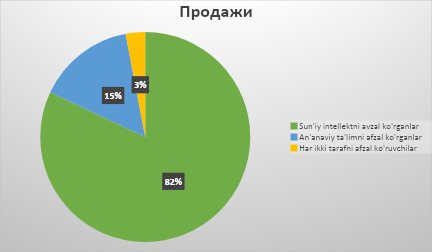
The analysis of the experimental results indicates that approximately 80–85 percent of the participants successfully achieved social adaptation and developed into individuals who found their place in society. At the same time, 15–20 percent of the participants continued to experience various social difficulties. This situation
can be explained by the large number of participants involved in the experiment, the complexity of their psychological conditions, and differences in their ability to accept and respond to educational influence.

Overall, Makarenko’s methodology of upbringing through the collective demonstrated high effectiveness and was scientifically substantiated as one of the most significant pedagogical approaches
for fostering social development and personal maturity. The findings of the study highlight the necessity of strengthening the role and importance of the collective within the upbringing process.

Analysis and Results
During the research process, the effectiveness of the pedagogical approach based on A. S. Makarenko’s concept of upbringing through the collective was analyzed using criteria for assessing personal development. The evaluation focused on key indicators such as changes in the participants’ social adaptation, level of discipline,
sense of responsibility, and skills of cooperation within the collective.

The results of the conducted pedagogical experiment revealed that approximately 80–85 percent of the participants demonstrated positive changes. Within this group, clear improvements were observed in adaptation to collective activities, awareness of
social responsibility, a more positive attitude toward labor, and the development of personal discipline. These findings confirm the practical effectiveness of Makarenko’s theoretical view that regards the collective as a leading instrument of upbringing.

At the same time, the study identified that 15–20 percent of the
participants did not achieve the expected level of outcomes. This result can primarily be explained by the individuals’ psychological characteristics, negative social experiences, and a low level of receptiveness to educational influence.


Additionally, the large number of participants limited the possibility of fully implementing an individualized approach during the research process.


Discussion


The discussion indicates that although the approach of upbringing through the collective demonstrates high effectiveness, applying it uniformly to all learners is not advisable. This method can fully achieve the expected outcomes only when it is integrated with individual and differentiated approaches. In this regard, the
findings are consistent with the ideas proposed by Jan Amos Comenius concerning the continuous and systematic nature of upbringing.

The analysis of the results shows that the model of collective upbringing remains highly relevant within the modern educational system. It serves as an effective means of fostering social activity, self-awareness, and motivation to attain a достойное place in society. At the same time, it has been scientifically substantiated that successful implementation of this approach requires careful consideration of the learners’ individual characteristics and psychological conditions.


Conclusion


The findings of the study indicate that pedagogical activities organized through the collective play a significant role in ensuring personal development within the upbringing process. The concept of collective upbringing developed by A. S. Makarenko remains relevant and applicable in contemporary pedagogical contexts. The results of the experimental research demonstrate that upbringing based on collective activity contributes to the formation of essential qualities such as social adaptation, responsibility, discipline, cooperation, and diligence.

At the same time, the necessity of incorporating elements of an individual approach into the upbringing process has been scientifically substantiated. The limitations identified during the study highlight the need to further improve the upbringing process by harmonizing collective and individual approaches, as well as by
developing methodological recommendations aimed at increasing the effectiveness of educational influence.

The outcomes of this research have practical significance
for general education institutions, educational and upbringing organizations, and the training of pedagogical personnel, contributing to the overall enhancement of the upbringing process.


References

1 Al-Farabi, A. N. The Virtuous City. Tashkent: Fan Publishing House, 1993, pp. 45–52.
2.Comenius, J. A. The Great Didactic (Didactica Magna). Tashkent: O‘qituvchi Publishing House, 1975, pp. 88–96.
3.Makarenko, A. S. The Pedagogical Poem. Tashkent: O‘qituvchi Publishing House, 1988, pp. 134–156.
4.Mavlonova, R., & Vohidova, N. Pedagogy: A Textbook for Higher Education. Tashkent: Fan va Texnologiya Publishing House, 2010, pp. 201–215.
5.Xolmatova, M. Pedagogical Foundations of Personality Development. Tashkent: Nizami Tashkent State Pedagogical University, 2015, pp. 67–79.

Poetry from Mesfakus Salahin

South Asian man with reading glasses and red shoulder length hair. He's got a red collared shirt on.
Mesfakus Salahin

Memorial

‎Memory does not do much harm without traces

‎That day, I suddenly found a memory

‎In the longitudinal section of the rib bone

‎I was overwhelmed with love and happiness

‎The tired heart swam in the water of my eyes

‎Promises were scattered from the soul,

‎A supernatural promise

‎The wound wanted to settle

‎But like many, I am nostalgic myself

‎So I postponed the amputation.

‎A memory from the tomb of the river said,

‎’People who have lost their memory are helpless’

‎Even blood stirs up a thousand memories

‎The memories of the world never retire

‎You will return – I know it is pointless

‎Still, it is for a dignified life.

‎One day I went to see the sea

‎There were countless memories on the beach

‎I picked up memories from the pebbles

‎Some memories shouted

‎’Forgive me, forgive me’

‎I couldn’t express my tears for you

‎The ocean’s tears were filled with memories

‎I didn’t pronounce it clearly with my open chest

‎Your name that you gave me

‎The ocean waited for me

‎I waited for your embrace.

‎One day the rain touched my past

‎It wanted to give me freedom

‎It couldn’t erase all the sorrow

‎And couldn’t separate me from the sorrow

‎By the one who taught me to love

‎Only you can give me a river free from sorrow.

‎You know, memories are eternal, heavenly

‎Revived in solitude

‎I will feel pride in your memory

‎As long as I live

‎I too have secret memories

‎There is the sorrow of losing my soul

‎Who will pay the price of losing my soul?

‎Memories mixed with the intoxicating air

‎Who can afford to ignore it?

‎I continuously drink the essence of memories

‎Feelings hanging from a window filled with sadness

‎I remove the window curtain and see the horizon line

‎Where the poetic essence merges with the essence of me.

‎No one questions the wind above my head,

‎The ground beneath my feet,

‎The waves of adolescence,

‎The dreams of youth,

‎The stars falling in the darkness,

‎The stopped watch –

‎How have they kept me?

‎Don’t you ask – at what price is memory sold,

‎at what price is time sold?

‎I haven’t learned to sell memory

‎I haven’t learned to sell time

‎I couldn’t bow my head like a slave for a moment.

‎Now the poetry shops are not crowded

‎Like the forbidden shops are crowded

‎Poetry does not glorify the soul

‎Because you do not recite the exiled poem

‎Open the window of the soul once

‎Purify my tears

‎With breath, purify the soil

‎Purify our surroundings again

‎Let’s drink together morning, afternoon, evening

‎Let’s drink hand in hand the song of time

‎Let’s release the anxious stars

‎Let’s embrace the earth deeply.

Essay from Satimboyeva Risolat

Young Central Asian woman with long dark straight hair up in a bun or ponytail standing near a book on a display case and wearing a pink jacket.

VALUES AND PERSONAL DEVELOPMENT

Annotation

This article examines the concept of values, their role in society and
individual life, their significance in personal development, and the
importance of cultivating values among young people. The study
highlights how values influence decision-making, social interactions,
and overall societal progress.

Introduction

Values are essential factors that form the moral, spiritual, and
cultural foundation of human life and society. When an individual
understands and follows values, they not only contribute to society
but also ensure their own personal development.

1. The Concept of Values

Values are a set of moral, spiritual, cultural, or practical
principles important for both individuals and society. They ensure
social stability, mutual respect, and responsibility among people.

2. The Role of Values in Personal Development

Values shape a person’s life decisions. For example, honesty,
diligence, respect, and helpfulness guide individuals toward their
goals and help them succeed in social interactions.

3. Youth and the Formation of Values

It is crucial to educate young people in the spirit of values. Values
instilled through family, school, society, and media positively
influence the personal and social development of youth.

4. Values and Societal Development

Values serve as the foundation that unites society and promotes
sustainable development. In a society where values are practiced,
people respect each other and cooperate to solve social problems.

Conclusion

Values are an integral part of personal and social development. By
understanding and applying them in daily life, individuals can realize
their personal potential and contribute to societal progress.

References

1. Giddens, A. Sociology. Polity Press.

2. Durkheim, E. The Elementary Forms of Religious Life. Free Press.

3. National sources on education and culture of Uzbekistan.

I am Satimboyeva Risolat Ilhomboy qizi. I was born on 16 February 2007 in Hazorasp district of Khorezm region. I am currently a first-year student at the Tashkent International University of Financial
Management and Technologies in Tashkent city. I studied at School No. 12 in Hazorasp district of Khorezm region and participated in numerous academic Olympiads, winning honorable 1st and 2nd places.

I hold several international certificates in Russian and Turkish
languages. I have also worked as a tutor, teaching students Russian,
and I can speak both Russian and Turkish fluently. During my school
years, I actively took part in reading competitions and was repeatedly
awarded certificates in the “Best Reader” and “Exemplary Student”
nominations.

I participated in intellectual competitions such as “Zakovat,”
advancing to the regional level. My photos were displayed at school as one of the most exemplary young readers and role-model students. I am the holder of many certificates and also frequently participates in literary anthologies. In my free time, I write poems and continue doing so; one of my books has already been published.

Reaching this level at the age of 18 is largely due to the support of
my parents and grandmother, whose encouragement has played a
significant role in my achievements.

Poetry from Alan Catlin

Bakeame: Rain in the sunshine

after the downpour

white blossoms

falling from damaged

tree limbs

softer than a dream

lover’s skin

…………………………………………………….

Fuchikunun: Rain that comes inside

A glimpse

of nothingness:

an empty

mirror reflects

interior rain

…………………………………………………..

Mifu San-U: Merciless rain and wind

Like Sinead

singing in the rain

the voice of

an angel

besieged by

demons

Pipipiri: A little light rain

Light Spring

rain:

recalling all

those who

passed before

us

………………………………………………………………

Wakabu Ame: Rain falling on new leaves

Early morning

Spring rain

on new leaves:

a festival of

white

………………………………………………………………….

Oniwaaarai: Rain after a religious festival

After the outdoor

wedding

rain consecrates

the union

Deiu: Rain mixed with ashes

So much

black rain

                                           !

How many

people have

died

      ?

………………………………………………………………….

Zanteki: Remaining raindrops after rain

Lingering drop

on bare

new budding

branch

about to

fall

………………………………………………….

After the funeral

incessant

rain on a tin

roof

Essay from Dr. Jernail Singh Anand

Older South Asian man with a beard, a deep burgundy turban, coat and suit and reading glasses and red bowtie seated in a chair.
Dr. Jernail S. Anand

PARENTS AND THEIR RESPONSIBILITY TOWARDS HUMAN SOCIETY

How sons and daughters should be brought up, parents are very touchy in this matter. They use all their powers, even if they have to go for loans, to offer them a world of surety and security. They cannot be faulted in their passion to make all the provisions for the happy stay of their offspring. But some obvious facts that we have to contend with are that the over-protected and pampered sons and daughters of the rich are worst examples of humanity. They have power and wealth which they squander and make life difficult for people who want to live life with dignity.  

If a father is a great painter, can he make his son also a painter, and at that, great too like him? A businessman can bequeath his organization to his son, but has he made the son equal to the task he is going to inherit? We see great organizations and establishments which disappeared when they passed into the hands of crafty or craft-less offspring. We have this equation before us: Wealthy parents have sons and daughters who squander wealth and prove good for nothing and the establishment crumbles as soon as the father is gone. We also have another equation. When the parents are financially weak, and suffer indignities in society because of their poverty, the sons and daughters work hard and rise to high positions. These are far better specimens of humanity, who have seen poverty and who have struggled hard to gain position in society.

Creating Artificial Scarcity

I feel every father who has wealth should not lavish it on his son or daughter. He must create an artificial scarcity for them. Let them feel the pinch and work hard. There is nothing bad in it if he sends his son to work and earn his livelihood, so that he knows the value of being useful to society and learns the art of living with others. This is a world society which we all inherit, and we must know how to share this commonwealth of joy and pain, which are shared for us all. We cannot create young men and women who know everything of plenty and have no knowledge of penury.

When I see fathers doting on their sons, and mothers killing their daughters, I feel how sinful we are. We are not ourselves, we are a part of human society, where we are expected to add to its well-being. If we are centred on our self, or our family, it is a foolish exercise. And it is being practised on an astronomical scale. Parents are worried only about their sons, and little less for their daughters, provide them every joy, every amenity. So far so good. But what is the result of this doting? Particularly, for the society in which we are living? We are giving to society men and women with twisted sensibilities, women and men who could not grow to their potential, people who were made to choose to be parasites.

If a man has to work hard in life, face many struggles, and suffer so many wants and losses, he becomes humble and wise too. But, when he stops all these forces of correction from his son, and gives him a protective atmosphere, it means that son will never rise to those heights to which his father had risen. When we stop our sons and daughters from facing rough weather, [to an extent, it can be excused] but in order to make them men and women in the real sense, so that they could develop their own capabilities to the maximum, they need to be in the ocean as an independent entity.

Protection destroys their potential. You can just cast a look around and see, how my kids who are under protection, they have to be helped in getting jobs, in staying in jobs, and cannot take independent decisions. It is parasitism of the worst kind. Parents must realize their duty towards their sons and daughters. It is poverty of wisdom and foresight if we end up scuttling their progress and growth as human beings, which is a cumulative loss to human society.

Author

Dr. Jernail Singh Anand, with an opus of 190 plus books, is Laureate of the Seneca, Charter of Morava, Franz Kafka and Maxim Gorky awards.  His name adorns the Poets’ Rock in Serbia. Anand’s work embodies a rare fusion of creativity, intellect, and moral vision.

Poetry from Gabriel Bates

Young white man smoking a cigarette. He's got curly black hair and a baseball cap and a plaid shirt with buttons over a shirt with some design on it. He's at a gas station on a sunny day and is holding blue hydrangeas.

Sorry for What I Said While I Was on Salvia

I took a big hit from the bong,

coughed hard

through a cloud of smoke,

and sat back on the couch.

I looked around and noticed

that the living room

was expanding and shrinking.

Then I started to get paranoid

and thought that the TV

was ordering me to do things.

At some point during the trip,

I must’ve said something

my girlfriend didn’t like

because she ended up

getting upset with me.

But what can I say?

It wasn’t me talking,

it was the drugs. 

°

Drunk on Peach Wine at the Christmas Party

And I’m having

a pretty good time.

I laugh and smile

after opening the microwave

my mother-in-law got us.

But something else

is on my mind.

There’s always something else

on my mind.

So I take another sip

from my glass

and try to forget about it.


Gabriel Bates is a poet living in Pittsburg, Kansas. His work has appeared in many different publications. Keep up with him on Facebook!

Poetry from Abdulrazaq Godwin Omeiza

We Were Not Taught How to Hold the Future

They taught us dates

before they taught us consequences.

How empires fell,

but not how to catch ourselves

when hope slips on wet floors.

I grew up learning that history is past tense,

as if it doesn’t knock on our doors every morning

wearing our faces.

My country wakes up tired.

Even the sun hesitates before rising

as if asking,

are they ready today?

We are a generation fluent in survival.

We know how to laugh during blackouts,

how to fold dreams small enough

to fit into pockets with holes.

We know the price of bread

and the cost of silence.

Nobody warned us

that growing up would feel like translating pain

into productivity,

that resilience would become a compliment

used when repair is too expensive.

I write because talking fails me.

Because some truths are too heavy

for ordinary sentences.

Because poetry is the only place

I am allowed to be unsure

without being called weak.

They say the future belongs to us,

but they forgot to leave instructions.

So we improvise!

with borrowed courage,

with borrowed time,

with faith stitched together

by hands that are still shaking.

If this poem sounds unfinished,

it’s because we are.

Still becoming.

Still choosing softness

in a world that profits from our hardness.

We were not taught how to hold the future,

so we are learning

with open palms,

and hope that refuses to sit down.