Essay from Ibadullayeva Sevinch

Young Central Asian woman with long curly hair, brown eyes, a dark coat and white sweater.

DIGITAL LITERACY AND PISA: DEVELOPING STUDENT COMPETENCIES BASED ON MODERN EDUCATIONAL REQUIREMENTS

JDPU

Faculty of Preschool and Primary Education

Primary Education major

1st-year student

Ibadullayeva Sevinch 

Ulug`bek qizi

ABSTRACT:

This scientific article provides a theoretical analysis of the essence of digital literacy in the modern education system and its close relationship with the international assessment program PISA (Programme for International Student Assessment). The importance of digital literacy in developing students’ functional literacy, critical thinking, problem-solving skills, and effective information management in the context of rapid digital transformation is substantiated. In addition, the article examines the integration of digital literacy components into PISA assessments, the experience of high-performing countries, and the prospects for developing digital literacy within the education system of the Republic of Uzbekistan.

Keywords: digital literacy, PISA, functional literacy, modern education, quality of education, competency-based approach.

Introduction

The processes of globalization and digitalization are having a strong impact on all areas of 21st century society, including the education system. Today, the main task of education is not only to provide knowledge, but also to develop students’ skills in making independent decisions in life situations, analyzing information, and using it effectively. From this point of view, digital literacy has become one of the most important requirements of modern education.

While the concept of digital literacy was initially limited to the skills of using computers and information technology, today it means much wider. It includes competencies such as searching for, selecting, evaluating, and processing information, and acting safely and responsibly in a digital environment. These competencies are consistent with the core ideas of the PISA international assessment program.

The PISA program aims to assess the ability of 15-year-old students to apply their reading literacy, mathematical literacy, and natural science knowledge in real-life situations. In recent years, the proportion of tasks based on digital technologies in PISA tasks has been increasing. This shows that the development of digital literacy is an important factor in the quality of education and achieving a worthy place in international rankings.

The purpose of this article is to analyze the relationship between digital literacy and PISA requirements from a scientific and theoretical perspective, and to highlight the current issues of developing this direction in the modern education system.

The concept of digital literacy and its content

The concept of digital literacy is interpreted differently by different researchers. In general, digital literacy is the ability of an individual to find, analyze, create, and effectively use information using digital technologies. It encompasses not only technical skills, but also critical thinking, communication, and collaboration skills.

In modern scientific literature, digital literacy is considered to consist of the following components:

information literacy;

media literacy;

skills in using information and communication technologies;

compliance with digital safety and ethical standards.

These components are instrumental in developing students ‘ functional literacy.

The essence of the PISA international assessment program

PISA is an international study conducted by the Organization for Economic Cooperation and Development (OECD) and is conducted every three years. The program is focused on assessing students ‘ ability to practice knowledge rather than their level of knowledge.

PISA assignments are based on real-life situations and require students to understand, analyze, find solutions and draw conclusions about the problem. In recent years, the use of digital formats in these tasks has been expanding.

The intrinsic link between PISA and digital literacy

Although digital literacy is not directly assessed as a separate subject in PISA studies, it plays an important role in all areas. For example, reading literacy assignments are common for electronic texts, graphs, and table-based tasks.

Mathematical and natural science assignments also require understanding and analysis of information given in a digital environment. This means that students’ digital literacy levels directly affect PISA results.

Experience of developed countries

Countries that have shown high results in PISA studies, including Finland, Singapore, South Korea, and Canada, pay special attention to the development of digital literacy in their education systems. In these countries:

 digital technologies of teachers integrated into the educational process 

digital competencies are regularly increased;

students develop independent learning and critical thinking skills.

Issues of developing digital literacy in the education system of Uzbekistan

In recent years, significant reforms have been implemented in the digitalization of the education system of Uzbekistan. The use of electronic textbooks, distance learning platforms, and digital resources is expanding. However, in order to develop digital literacy from the perspective of PISA requirements, it is necessary to pay attention to the following issues:

adapting curricula to PISA competencies;

increasing teachers’ digital pedagogical competencies;

Conclusion

In conclusion, digital literacy is an integral part of the modern education system and is important in shaping the requirements of the PISA international assessment program. Students’ ability to effectively function in a digital environment increases their functional literacy and competitiveness.

Further deepening the reforms being implemented in the Uzbek education system to develop digital literacy and effectively using PISA experiences will serve to improve the quality of education.

LITERATURE USED

1.O`zbekiston Respublikasi Vazirlar Mahkamasining umumiy o`rta ta`lim sifatini oshirish va xalqaro baholash dasturlarida ishtirok etishga doir qarorlari.

2.Ta’lim sifatini nazorat qilish davlat inspeksiyasi. PISA xalqaro tadqiqotlariga tayyorgarlik bo`yicha metodik qo`llanma. Toshkent,2021.

3.Abdullayeva, M.Zamonaviy ta`limda funksiyonal savodxonlikni rivojlantirish masalalari. Toshkent: Fan va texnalogiya,2020.

4.Amonov, U., Karimova, G.Raqamli ta`lim muhitida  o`quvchilarning kompetensiyalarini shakillantirish. Pedagogik ta`lim jurnali,2021, №3, 45–52-betlar.

5.O‘zbekiston Respublikasi Xalq ta’limi vazirligi.Umumiy o`rta ta`lim davlat ta`lim standartlari.  Toshkent, 2020.

6.OECD PISA 2018 Results: What Students Know and Can Do. Paris: OECD Publishing, 2019.

7.Gilster, P. Digital Literacy. New York: Wiley Computer Publishing, 1997.

Essay from Turgunova Kh.

Communication between the Teacher and the “Digital Generation” (Gen Alpha): Strategic Approaches in New Era Education

Author: Turgunova Kh.

Educational Institution: Kokand University, Andijan branch

Field: Primary Education

Course: 2nd-year student

Abstract: This article analyzes the unique characteristics of communication between the teacher and representatives of the “digital generation” (Gen Alpha) and the strategic approaches used in new era education. The research explores the integration of digital technologies into the educational process and the importance of the teacher’s friendly relationship and psychological closeness. The results indicate the need to reshape the image of the modern teacher.

Keywords: digital generation, Gen Alpha, teacher, primary education, digital technologies, education strategy, communication.

Introduction

​The 21st century has started an entirely new stage for the education system. As a result of the rapid development of information technology, the deep penetration of the internet and digital devices into all spheres of life, a new generation — the “digital generation” or “Gen Alpha” — has been formed. Members of this generation differ significantly from previous generations in how they receive, process, and analyze information.

​Gen Alpha children have been growing up in a digital environment since birth. For them, smartphones, tablets, interactive games, and video content are ordinary realities. Therefore, traditional teaching methods — relying solely on textbook reading, one-way lectures, and strict control — are no longer effective.

​Particularly in the primary education stage, establishing correct communication between the teacher and the student is crucial for shaping the child’s interest in learning. From this perspective, this article scientifically analyzes the role of the teacher in working with the Alpha generation, modern education strategies, and issues of using digital technologies.

Research Objective

​To identify strategic approaches for teachers in establishing effective communication with members of the digital generation and to reveal their impact on educational efficiency.

Research Methodology

​The following methods of scientific cognition were used in this research:

​Analysis of pedagogical, psychological, and methodical literature;

​Comparative-analytical method to compare traditional and digital teaching methods;

​Study of the activity of digital generation students in the lesson process based on the observation method;

​Drawing conclusions through methods of generalization and systematization;

​Analysis of digital tools used in educational practice.

Research Results

​The research results highlight the following main aspects:

​1. Characteristics of information perception in the digital generation

Gen Alpha members receive information quickly, prioritizing short and meaningful content, especially visual and audiovisual content. For them, moving images, animation, video lessons, and interactive games are considered effective.

​2. Limitations of traditional teaching methods

Lessons based only on reading text or oral explanation cause boredom in children. This leads to a decrease in attention and a decline in the quality of education.

​3. Importance of digital technologies in education

Introducing online platforms, interactive tests, educational video clips, and elements of digital gaming into the lesson process increases student activity. In such conditions, the child becomes an active participant in the lesson rather than a passive listener.

​4. Psychological closeness and communication

A friendly, open, and respect-based attitude from the teacher awakens trust in students. A child who feels that their opinion is valued approaches the educational process with responsibility.

Discussion

​The results show that the image of the teacher is changing in the modern education system. Now, a teacher must turn into a person who is not just a provider of knowledge, but a guide, consultant, and motivator.

​In working with the Alpha generation, a student-centered educational approach based on cooperation should take the place of an authoritarian approach. Rational use of digital technologies strengthens mutual trust between the teacher and the student and increases the quality of education.

Conclusion

​In conclusion, working with the “digital generation” requires the teacher to constantly work on themselves, master innovative approaches, and adapt to the requirements of the times. The teacher must change along with the children, speak their “language,” and understand their worldview.

​Through sincere communication, psychological closeness, and the correct use of digital technologies, educational efficiency can be increased. This, in turn, serves to raise a free-thinking, knowledgeable, and socially active generation in the future.

References

​O’zbekiston Respublikasi Prezidenti. Yangi O’zbekiston – taraqqiyot strategiyasi. – Toshkent, 2022.

​Karimov I.A. Yuksak ma’naviyat – yengilmas kuch. – Toshkent: Ma’naviyat, 2019.

​Mirziyoyev Sh.M. Milliy taraqqiyot yo’limizni qat’iyat bilan davom ettirib, yangi bosqichga ko’taramiz. – Toshkent: O’zbekiston, 2021.

​To’xtaxodjayeva M., Jo’rayeva D. Zamonaviy pedagogik texnologiyalar. – Toshkent: Fan va texnologiya, 2020.

​Usmonova N. Boshlang’ich ta’limda innovatsion yondashuvlar. – Toshkent: Sharq, 2021.

​Prensky, M. (2001). Digital Natives, Digital Immigrants. On the Horizon, 9(5), 1–6.

​OECD. (2019). Trends Shaping Education. Paris: OECD Publishing.

​Tapscott, D. (2009). Grown Up Digital: How the Net Generation Is Changing Your World. New York: McGraw-Hill.

Cristina Deptula reviews Dianne Reeves Angel’s Every Restaurant Tells a Story

Dianne Reeves Angel's book cover, light blue with white text and a place setting with a plate, fork, and knife. Hollywood sign on a hill below.

In ambitious film producer Dianne Angel’s memoir Every Restaurant Tells a Story, old Hollywood glamour is tinged with tragedy and motifs of potential danger. We enter smoky, booze-filled, elegant restaurants, hear old-time clever, and crass, writers’ room dialogue, and revel in the lush descriptions of clothing and accessories. 

Each chapter involves food or drinks at a different restaurant or bar, hence the memoir’s title. These venues range from Hollywood to low-income student neighborhoods in Los Angeles to still-Communist Eastern Europe to South Africa during apartheid. Although sheltered as privileged Americans in the entertainment industry, the characters still get glimpses of the rest of the world’s injustices and traumas. Planes divert their course due to political unrest abroad, Black restaurant servers have to leave to make it out of South African cities before racially based curfews, and intriguing acquaintances have massive gun collections. 

There’s often a dirtier, menacing, or just more ordinary underbelly to the tales. AIDS cuts short vibrant, creative lives, whirlwind engagements turn out to be financial scams, naive aspiring starlets dine unknowingly with armed international spies. This world is also unpredictable: the most hilarious, creative, heartfelt, or meaningful projects can be suddenly canceled on a whim, even after filming has started. The suspense adds mystery and texture to the chapters, as we find ourselves reading some of the short vignettes over to see if we missed any clues to what was really happening. 

Yet, the memoir never becomes a trite, one-dimensional morality play on the vanity of pursuing fame, or money, or beauty. While there’s certainly a class structure and pecking order in this culture and no guarantee of success, these characters enjoy their experiences and can reflect on them with a sense of humor. Also, people find real love and genuine friendship in these pages, as they connect and share food and drinks. While the author’s reconnection with an old acquaintance who becomes her husband is touching (and the incident with her car is tragically hilarious!), the most tender part is how her college study group morphs into lifelong friendships. 

This collection is worth a read: entertaining, heartfelt, and a portrait of an era experienced by intriguing and memorable personalities in various times and places. In a time when people seem to gather in person less often, this book is a call to consider what we might be missing by choosing food delivery or staying at home over going out with friends or co-workers. And, mostly, it’s a charming and elegant set of stories that draws you in with drama, mystery, and grace. 

Every Restaurant Tells a Story is available here from Lost Telegram Press. 

About the author: Dianne’s career is a fascinating journey through the entertainment and technology industries. In the 1970s, driven by an aspiring film producer’s dreams, she began her work as Vice President of Project Development at Zeitman/Townsend Productions at Columbia Pictures. At Z/T Productions she wrote the screenplay, James Barry with Robert Townsend, Executive Producer. She also wrote Berlin with Robert Townsend for Z/T (neither film was produced). She developed Weekend Fathers for CBS Television. (Not produced).

In the early 1990s, Dianne transitioned her skills to Silicon Valley, where she was a Human Resources executive for high-tech companies. She has published numerous poems that highlight human frailty and triumph, in Moonshine Ink. She holds a Bachelor of Arts degree in English Literature from UCLA. Dianne is a native of California, born in Palo Alto, California.

Essay from Daminova Sevinch Tuychi qizi

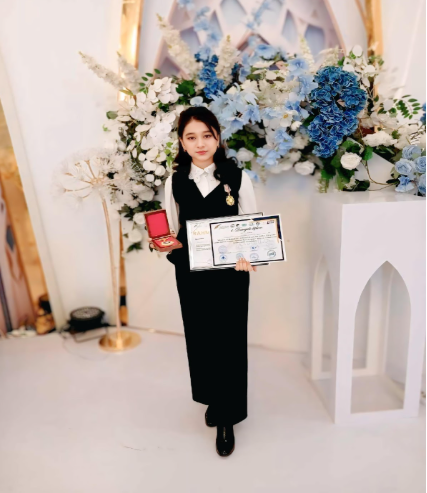
Young Central Asian woman with straight dark hair and a black suit holding a certificate and medal standing indoors in front of many blue and white flowers.

                     PEDAGOGICAL VIEWS OF ABDULLA AVLONI

                              Daminova Sevinch Tuychi qizi

                  3rd-year Student, Primary Education Program,

                  National Pedagogical University of Uzbekistan

Abstract

This article analyzes the life and pedagogical views of Abdulla Avloni, an Uzbek enlightener, poet, playwright, and educator. It examines Avloni’s role in the development of public education in Uzbekistan, the essence and significance of his work “Turkiy Guliston or Morality,” as well as his ideas on enlightenment and national awakening. The article scientifically explores the thinker’s interpretation of education and upbringing as the most important factors in human life, the theoretical and practical aspects of his pedagogical activity, and his contribution to the development of the modern Uzbek school system. In addition, the relevance of Abdulla Avloni’s views on knowledge, morality, upbringing, and patriotism for today’s education system is highlighted.

Keywords: Abdulla Avloni, pedagogy, upbringing, enlightenment, morality, Jadid school, education, national awakening.

At the beginning of the 20th century, the national awakening and enlightenment movement gained wide momentum in Turkestan. During this period, among the intellectuals who called the people toward knowledge, culture, and progress, Abdulla Avloni occupied a special place. As a poet, playwright, publicist, public figure, and most importantly, a devoted educator of the people, he left an incomparable mark on the history of Uzbek pedagogy. Abdulla Avloni dedicated his entire life to enlightening the nation and educating the younger generation in the spirit of knowledge and morality.

Throughout his career, Avloni worked as a teacher, established new-method schools, created textbooks, and encouraged the public toward enlightenment through the press. His pedagogical views were innovative for his time and continue to play a significant role in shaping the modern education system today.

The thinker’s work “Turkiy Guliston or Morality” is considered a masterpiece of Uzbek folk pedagogy. In this work, he scientifically presents his views on morality, upbringing, knowledge, and human development. Avloni’s ideas on education and upbringing have retained their relevance not only in his own time but also in the present day. Therefore, studying his pedagogical heritage and applying it to modern educational practice holds great scientific and practical significance.

Abdulla Avloni (1878–1934) is one of the most prominent enlightenment figures, educators, and writers to emerge during the period of national awakening of the Uzbek people. He was born on July 12, 1878, in the Mergancha neighborhood of Tashkent, into a family of craftsmen. Showing an interest in learning from an early age, Avloni first studied at a traditional school and later at a madrasa. Entering the world of literature and enlightenment in his youth, this talented young man began writing poetry at the age of fifteen. In his early works, he called on the people to escape ignorance, study in new-method schools, and acquire knowledge and professions.

Avloni’s enlightenment activity was primarily manifested in the field of journalism. In 1907, he published the newspapers “Shuhrat” and “Osiyo”, serving as their editor and promoting ideas of enlightenment, unity, and progress. Although the tsarist government soon shut down these publications, Avloni did not cease his activities. He continued his work in the newspapers “Sadoyi Turkiston”, “Turon”, and the journal “Kasabachilik Harakati”, making an invaluable contribution to the formation of Uzbek journalism. He regarded the press as a force that awakens the people, calling it “a lamp that illuminates the darkness of ignorance.”

Abdulla Avloni’s pedagogical activity formed the essence of his entire life. He viewed teaching not merely as a profession but as a sacred duty in service to the nation. In his lessons, he paid special attention to nurturing students’ independent thinking, patriotism, and moral purity. He considered expressive reading, emotional engagement with texts, and sincere communication between teacher and student as essential components of the educational process.

In “Turkiy Guliston or Morality,” Avloni deeply analyzes the issue of human perfection. According to him, upbringing is the fundamental foundation of human life. He famously wrote: “For us, upbringing is a matter of either life or death, salvation or destruction, happiness or catastrophe.” Through these words, Avloni interprets upbringing not only as a personal matter but as a factor determining the fate of the nation.

In his works, he divides upbringing into four main directions:

The timing of upbringing – education must begin from early childhood;

Physical upbringing – a healthy mind is formed through a healthy body;

Intellectual upbringing – developing intelligence, striving for knowledge, and cultivating thinking; Moral upbringing – instilling virtues such as honesty, conscience, patience, and compassion.

Avloni’s pedagogical views were considered innovative approaches in his time. He regarded education and upbringing as inseparable concepts “like body and soul,” emphasizing that teaching and moral education complement one another.

The thinker viewed morality as the highest human virtue. In “Turkiy Guliston or Morality,” he divided human behavior into two categories: good morals and bad morals. Good morals include patriotism, cleanliness, courage, conscience, patience, and kindness, while bad morals include ignorance, anger, laziness, lying, and greed. Avloni supported these ideas with verses from the Qur’an, hadiths, and the wisdom of thinkers such as Socrates, Aristotle, Ibn Sina (Avicenna), Sa‘di, and Bedil.

As an educator, Avloni sought to cultivate love for the mother tongue, respect for knowledge, diligence, and loyalty to the homeland among the younger generation. His poems and fables written for children possess strong educational value, fostering love for books, labor, and nature. In his poems about the Motherland, the poet depicts the homeland as a beautiful, generous, and prosperous land, instilling a sense of pride and honor in children.

Avloni’s work “A Brief History of the Prophets and the History of Islam” was written in a religious-enlightenment direction, aiming to acquaint the younger generation with Islamic history and enrich their spiritual world. This work was widely used as a textbook for primary schools in its time.

The thinker was not only a writer but also an active practical educator. During the 1920s and 1930s, Abdulla Avloni taught at the Teachers’ Seminary in Tashkent, the Faculty of Pedagogy, and the Central Asian University, where he trained many young teachers. During these years, he compiled the textbook “Literature Chrestomathy,” thereby laying the foundation for the methodology of teaching Uzbek literature in schools.

Throughout his life, Avloni devoted himself wholeheartedly to the enlightenment of the nation. In recognition of his services, he was awarded the honorary title “Hero of Labor” in 1927 and “Shock Worker of Public Education of Uzbekistan” in 1930. His name is still remembered with great respect in the history of the Uzbek education system. Today, schools, streets, scientific centers, and a museum at the Institute for Advanced Training of Teachers in Tashkent bear the name of Abdulla Avloni, honoring his invaluable contribution to education and enlightenment.

Abdulla Avloni regarded education as a powerful force leading the people toward freedom, culture, and progress. He emphasized the irreplaceable role of the teacher’s personality in educating the younger generation as well-rounded individuals. Therefore, Avloni can be regarded not only as a great figure of his own time, but also as one of the founders of the entire history of Uzbek pedagogy.

In conclusion, Abdulla Avloni is a great educator, poet, and enlightener who left an indelible mark on the spiritual and educational life of the Uzbek people. His views remain highly relevant not only for his own era, but also for the modern education system today. In his pedagogical activity, Avloni placed upbringing at the center of human life, interpreting it as the most important factor in the nation’s prosperity and the development of society.

His work “Turkiy Guliston or Morality” is a masterpiece of Uzbek pedagogical thought. It addresses the issues of educating a well-rounded generation based on values such as moral integrity, aspiration for knowledge, patriotism, compassion, and humaneness. For Avloni, education and upbringing were inseparable concepts; he highly valued the teacher as the most important figure shaping the future of the nation.

Even today, the ideas put forward by Avloni—humanism, moral education, loyalty to national values, love of knowledge, and the cultivation of independent thinking—are fully aligned with the main directions of modern education. Therefore, the legacy of Abdulla Avloni stands as the foundation of Uzbek pedagogy and an inexhaustible spiritual source in the upbringing of the younger generation.

References

Zunnunov, A. (2004). History of Pedagogy. Tashkent.

Dolimov, U. Abdulla Avloni as the Founder of Uzbek Pedagogy of the National Awakening Period.

Ziyouz. (n.d.). Retrieved from www.ziyouz.com

Daminova Sevinch Tuychi qizi was born in 2006 in Shahrisabz district, Kashkadarya region, Uzbekistan. She graduated successfully from Secondary School No. 72 in Shahrisabz district, Kashkadarya region. Since 2023, she has been a student of the present-day National Pedagogical University of Uzbekistan.

During her academic journey, she has distinguished herself through her high level of activity, strong interest in science, and initiative. She has carried out volunteer activities at the Pinnacle Science Republican Scientific Center, contributing to the promotion of scientific research among young people.

Sevinch Daminova is the author of scientific articles published in prestigious journals of countries such as the United States, Singapore, and Russia, which reflects her recognition at the international level as a young researcher. She is the holder of more than 50 diplomas and certificates and has actively participated in numerous national and international competitions.

In 2025, she became the recipient of the “Future Star” Statuette, organized on the scale of the Commonwealth of Independent States. She has also been awarded the “Advanced Generation” badge and the “Devoted to High Science” badge. In the “Mosaic of Nations” competition organized by the Jadids International Scientific Research Association, she won first place and was awarded the “Friendship” badge.

She is the author of a number of poems and international scientific articles, successfully combining creativity and scientific research. She is a determined and ambitious young scholar who aims to contribute to the development and prosperity of her country in the future.

Essay from Mengboyeva Baxtiniso Mamatqobilovna

Young Central Asian woman with straight dark hair and a brown coat.

THE IMPORTANCE OF TEACHER SPEECH CULTURE AND CONDUCTING WORK IN THE STATE LANGUAGE

Mengboyeva Baxtiniso Mamatqobilovna

First-year student, Faculty of Philology,

Uzbek Language and Literature Department,

Denov Institute of Entrepreneurship and Pedagogy

Email: @meliqulovabarno3gmail.com

TEACHER SPEECH CULTURE AND THE IMPORTANCE OF WORKING IN THE STATE LANGUAGE.

Abstract: This article analyzes the relationship between the culture of teacher speech and working in the state language. It also highlights the role of speech culture in the professional activity of a teacher, its impact and significance in the educational process. It is shown that ensuring the accuracy, fluency and standardization of speech in the process of working in the state language is one of the main duties of a teacher.

Keywords: Speech culture, teacher, state language, document management, effective speech, expressiveness, formal style.

The culture of a teacher’s speech is one of the most important factors determining the effectiveness of the educational process. This is because a teacher’s ability to express ideas clearly, fluently, and understandably creates a solid foundation for students to master knowledge thoroughly. Conducting activities in the state language not only ensures the correct management of official documents, but also guarantees unity and discipline within an educational institution. Therefore, a teacher’s speech culture and literacy in the state language become an integral part of their professional competence. This article highlights the significance of these processes and their impact on the quality of education.

1. The essence of a teacher’s speech culture and its role in the pedagogical process

A teacher’s speech is one of the main tools of the educational process and is a key factor in influencing students’ minds, providing knowledge, and ensuring the effectiveness of education and upbringing. Speech culture includes not only correct, fluent, and clear speaking, but also the ability to express ideas in an expressive, logical, and comprehensible manner. In addition, a teacher’s speech shapes the psychological environment of the learning process and fosters students’ interest, confidence, and motivation toward the subject.

The effectiveness of a teacher’s speech determines the overall success of the lesson. A teacher with a high level of speech culture is able to capture students’ attention, explain topics fluently, and present complex concepts in a simple and concise way.Especially in the modern educational process, a teacher not only provides knowledge, but also acts as a communicator, educator, and moral leader, guiding, motivating, and evaluating students through their speech.

2. The main characteristics of a teacher’s speech: clarity, fluency, logic, and expressiveness

A teacher’s speech is distinguished by the following qualities:

Clarity. Clarity in pedagogical speech means delivering information without confusion, in a clear and understandable manner, using precise terminology. Clarity helps prevent unnecessary questions, misunderstandings, and ambiguities during the lesson. The correct use of scientific concepts, definitions, and examples is an important manifestation of clarity.

Fluency. A teacher’s fluent speech determines the rhythm of the lesson. Proper use of pauses, logical stress, and speaking at a moderate pace ensure fluency. Fluent speech also helps develop students’ listening culture.

Expressiveness. Expressive speech enriches students’ imagination and actively engages them in the learning process. Intonation, stress, pauses, and emotions create memorable impressions for students. Especially in subjects such as literature, art, and history, expressive speech becomes one of the teacher’s main tools.

Logic. Logical speech is reflected in the consistency of ideas, cause-and-effect relationships between concepts, and the sequential presentation of thoughts. A logically structured speech helps students develop critical and systematic thinking.

3. Speech culture as a teacher’s professional competence

A teacher’s speech culture is a core component of their professional mastery and pedagogical competence. The modern education system requires teachers to possess the following speech competencies:

adherence to the norms of the literary language;

deep knowledge of the grammatical, phonetic, and lexical rules of the state language;

control of diction;

observance of speech etiquette rules;

ability to communicate effectively with an audience;

correct use of communication genres (lecture, explanation, question-and-answer, discussion).

A teacher with rich speech and the ability to think scientifically forms a positive image in students’ minds. Such a teacher not only provides knowledge, but also serves as a role model of speech culture for learners.

4. The content and significance of conducting documentation in the state language

In the Republic of Uzbekistan, conducting documentation in the state language implies maintaining official documents in Uzbek across public administration, education, healthcare, the judicial system, the economy, and other sectors. This process plays an important role in strengthening political independence, enhancing national identity, and ensuring clarity within the legal system.Conducting documentation in the state language serves to:

ensure documents are maintained in a clear and unified standard;

observe literary norms in official communication;

promote effective communication between state institutions;

enable citizens to clearly understand their rights and obligations;

support the development of national culture;

 enhance the prestige and status of the language.Proper organization of documentation in the state language ensures order, consistency, and legality in social life.

5. Conducting documentation in the state language in a teacher’s professional activity. In the education system, a teacher is not only an instructor, but also a record keeper. In this process, the teacher must correctly and appropriately prepare official documents in the state language, such as class registers, curricula, electronic diaries, orders and directives, reports, and official records.This process depends on the teacher’s knowledge of the official style, ability to distinguish document types, strict adherence to language norms, literacy in spelling and punctuation, as well as responsibility and accuracy. Proper documentation in the state language by teachers directly affects the legal functioning, discipline, and overall effectiveness of an educational institution.

6. The interconnection between a teacher’s speech and the culture of the state language

Speech culture and the culture of record-keeping are complementary processes. The richer and more fluent a teacher’s oral speech is, the more precise and compliant with official standards their written speech becomes. Proficiency in conducting documentation in the state language enhances a teacher’s communicative literacy. These two processes also have a strong impact on students’ education and upbringing. A teacher’s speech model helps shape students’:

culture of thinking,

writing skills,

respect for the literary language,

sense of national identity,

readiness for official communication.

7. Speech technologies and electronic documentation in the state language in modern education

In today’s digital era, teachers are required not only to have clear and accurate speech, but also to use information technologies effectively. Electronic diaries, online platforms, official emails, and reports must be maintained in the state language. This requires not only linguistic literacy, but also technical competence.

A teacher’s electronic communication is based on:

concise and clear style in official correspondence,

adherence to spelling rules,

avoidance of unnecessary words,

logically structured content,

observance of official etiquette.

Conclusion

A teacher’s speech culture is one of the key factors determining the quality of the educational process. Fluency, clarity, and expressiveness of speech directly influence students’ comprehension of knowledge, interest in lessons, and the effectiveness of communication. Conducting documentation in the state language ensures that official documents are prepared correctly and in accordance with established standards, and it enhances the culture of official communication. Therefore, a teacher must be knowledgeable, responsible, and possess a high level of speech culture in both areas.

References:

Law of the Republic of Uzbekistan “On the State Language”.

Toxliyev B., Fundamentals of Speech Culture, Tashkent.

G‘ulomov A., Conducting Documentation in the State Language, учебное пособие.

Qosimov B., Language and Speech Culture, textbook.

Official documents of the Cabinet of Ministers of the Republic of Uzbekistan on record-keeping procedures.

Mengboyeva Baxtiniso Mamatqobilovna was born on April 1, 2007, in Denov District, Surkhandarya Region. She graduated from General Secondary School No. 73 located in Denov District. Currently, she is a first-year student at the Faculty of Philology, majoring in Uzbek Language and Literature, at the Denov Institute of Entrepreneurship and Pedagogy in Denov District, Surkhandarya Region. She has earned nearly 50 international certificates.

She is a participant in the project “The First Step Towards a Scholarship – Season 1”, created by Dilshoda Akhadova. In addition, she serves as the coordinator of the “Eco Call” movement council at the Denov Institute of Entrepreneurship and Pedagogy. At the same time, she is a member of the Argentine Association of Science and Writers, holding an official membership certificate.

Essay from Norqulova Madina

Young Central Asian woman with dark curly hair and a burgundy coat.

The Significance of Foreign Language Learning for Young People

Norqulova Madina

a second-year undergraduate student

Samarkand State Institute of Foreign Languages

Abstract: 

In this article, the significance of foreign language proficiency in the lives of young people is analyzed. The impact of foreign languages on the educational process, professional development, and social engagement is examined from a scientific and theoretical perspective. Furthermore, the article substantiates that, in the context of globalization, the acquisition of foreign languages serves as a crucial factor in enhancing the competitiveness of youth.

Key words: Foreign language education; youth competitiveness; globalization; language proficiency; international integration; human capital; educational reforms; multilingualism; global labor market; lifelong learning.

Introduction 

In the current era of globalization, knowledge of foreign languages is considered one of the crucial factors for societal development. In a period when information exchange has accelerated and international relations have expanded, young people’s mastery of foreign languages plays a significant role in their intellectual, professional, and social development. In particular, English, as a means of international communication, occupies a leading position in the fields of education, science, and technology.

Literature review 

Foreign language proficiency contributes to the development of young people’s cognitive potential and enhances their critical thinking skills. Scientific research indicates that knowledge of multiple languages broadens an individual’s intellectual perspective and enables them to approach problems from various viewpoints. At the same time, acquiring foreign languages fosters young people’s ability to independently analyze information.

Within the education system, foreign language proficiency is regarded as one of the key factors ensuring academic mobility. Proficiency in a foreign language is considered a prerequisite for participation in international educational programs, grants, and exchange projects. Moreover, access to foreign academic sources and research contributes significantly to improving students’ overall level of knowledge.

At the 72nd Session of the United Nations General Assembly, the President of our country emphasized: “The future and prosperity of our planet depend on what kind of people our children grow up to be. Our main task is to create the necessary conditions for young people to fully realize their potential.”At a time when the boundaries between globalization, culture and values, and national identity are rapidly diminishing, language plays a crucial and fundamental role in enabling young people to integrate into the global community. Today, young people clearly understand that without knowledge of foreign languages, it is almost impossible to find a place in international business, science, politics, economics, or the fields of information and communication technologies.

Furthermore, the establishment of the “El-yurt umidi” Foundation, aimed at providing opportunities for young people to study abroad, train specialists, and maintain communication with compatriots, has served as an additional incentive. One of the main requirements for participating in the foundation’s selection process is possessing a valid national (CEFR) or international language certificate (such as IELTS, TOEFL, or DELF). Every year, hundreds of young people take advantage of this opportunity to pursue undergraduate or master’s degrees at foreign higher education institutions and return to their homeland as skilled professionals. According to many of them, knowledge of a foreign language not only broadens their worldview but also serves as a key that opens the door to the global arena.

Conclusion

In conclusion, the mastery of foreign languages plays a pivotal role in the personal, academic, and professional development of young people in Uzbekistan. As globalization continues to shrink the distances between cultures, values, and national identities, foreign language proficiency has become a key factor for youth to successfully integrate into the global community. The state’s efforts to provide favorable conditions—such as high-quality language education, international certification support, and opportunities for studying abroad—ensure that young people can fully realize their potential. Ultimately, enhancing foreign language skills not only broadens the worldview of the youth but also equips them with the knowledge, competencies, and confidence necessary to contribute effectively to the country’s prosperity and compete in the international labor market.

Reference

1.Crystal, D. (2019). English as a Global Language. Cambridge: Cambridge University Press.

2.Nunan, D. (2015). Teaching English to Speakers of Other Languages: An Introduction. London: Routledge.

3.Graddol, D. (2006). English Next. British Council.

4.Baker, C. (2011). Foundations of Bilingual Education and Bilingualism. Bristol: Multilingual Matters.

5.Galloway, N., & Rose, H. (2015). Introducing Global Englishes. London: Routledge.

6.Phillipson, R. (2009). Linguistic Imperialism Continued. London: Routledge.

7.Kachru, B. B., Kachru, Y., & Nelson, C. L. (Eds.). (2006). The Handbook of World Englishes. Oxford: Blackwell Publishing.

8.Jenkins, J. (2006). World Englishes: A Resource Book for Students. London: Routledge.

9.Samovar, L. A., Porter, R. E., & McDaniel, E. R. (2012). Communication Between Cultures. Boston: Wadsworth Cengage Learning.

10.Crystal, D. (2003). The Cambridge Encyclopedia of the English Language. Cambridge: Cambridge University Press.

Norqulova Madina was born in Pastdargʻom district, Samarqand region, Uzbekistan, in 2006. She is a 19-year-old undergraduate student currently in her second year at Samarkand State Institute of Foreign Languages. Madina has earned over 50 certificates in various academic and professional fields, demonstrating her strong commitment to continuous learning and personal development. She has achieved a B2 level in English, reflecting her solid proficiency in the language. Her extensive qualifications highlight her dedication to academic excellence and her readiness to participate in international educational and research opportunities.