Poetry from Manzar Alam

Call of Death 

I forgot the day when I opened my eyes

In a world where everything decays and everyone dies

Where Beauty lives just for a moment or less

Where old age visits us much early we guess

Where Spring never lasts long

And winter engulfs

Every beauty and song that Nature bestows

I fail to remember, 

I was happy or not 

When Almighty had sent me

in such an elusive a world.

Perhaps I was unhappy and  my soul was so.

But the pangs of my soul nobody could know.

I don’t now remember that touchy moment

When I was placed first in the lap of my mom

Who kept me safe for so long in her womb,

Who fed me milk, from the breast of her own

Which bestowed me a power

and kept me alive. 

When I grew up little by little

I saw people dying but never returned

I saw my sister dying one day

I missed her presence every moment and day.

Her loss in my life gave me real message

That no one on the earth is our friend 

But Death on this earth is a great comrade

Who lives with us every night and day.

Whatever I think wherever I go

I feel Death’s presence every moment and so.

Death calls me frequently every night and day

But O’dear Death I’m never afraid. 

Today or tomorrow you will take me with you.

I would take last journey certainly with you.

You are a connector of mortal with immortal I know.

You would lead me to the world where the immortals would live.

That living abode would be given by Lord.

The grading of which

will  depend on the deeds

Where we the mortals are fated to live.

(Manzar Alam, Bangladesh)

Poetry from Mahbub Alam

Shattered Glass

Our loves are like shattered glass,
And day by day,
The clarity fades from our sorrow-stricken lives.
How rare it has become to find the traces of humanity in human hearts!


Our fragile hearts tremble,
Shatter like glass into countless shards.

Life has become
A blurred afternoon, veiled in mist.

Or like a restless wanderer,
Unsettled by the tok-tok, tok-tok of a woodpecker
Beneath the scorching, crackling sun,

Melancholy deepens,
And darkness veils the world around us.

Severed limbs,
A broken mind,
Blind eyes.

How far can we journey on
When every step is steeped in pain?

Yet life leaves us no choice.
We keep moving forward.

How much farther must we travel?
How much more blood must we shed?
When will the destination of our long journey finally emerge from the haze?

Will the earth awaken to joy beneath the gentle sunlight?
Of a bright, pure morning?

Or has even that hope
Dissolved into the mist?

Who knows?

Love lies shattered like broken glass,
Scattered across roads and fields,
Strewn everywhere,
Day and night—

Chapainawabganj, Bangladesh
21 September, 2026

Md. Mahbubul Alam is from Bangladesh. His writer name is Mahbub John in Bangladesh. He is a Senior Teacher (English) of Harimohan Government High School, Chapainawabganj, Bangladesh. Chapainawabganj is a district town of Bangladesh. He is an MA in English Literature from Rajshahi College under National University. He has published three books of poems in Bangla. He writes mainly poems but other branches of literature such as prose, article, essay etc. also have been published in national and local newspapers, magazines, little magazines. He has achieved three times the Best Teacher Certificate and Crest in National Education Week in the District Wise Competition in Chapainawabganj District. He has gained many literary awards from home and abroad. His English writings have been published in Synchronized Chaos for seven years.

Once when he was in grade ten in 1990, his Bangla letter was selected as the best one from Deutsche Welle, Germany Radio that broadcast Bangla news for the Banglalee people. And he was given 50 Dutch Mark as his award. They would ask letters from the listeners to the news in Bangla and select one letter for the best one in every month.     

From 17 to 30 September, in 2018 he received a higher training in teaching English language in Kasetsart University of Thailand for secondary level students through a government order from education ministry. 

On 06 November 2015 he achieved Amjad Ali Mondal Medal for his contribution in education field by a development organization in the conference and felicitation function for the honorable personalities at Rajshahi College Auditorium. 

On 30 December 2017 from West Bengal in India he was declared a ‘Literary Charioteer’ in Bangobandhu Literary and World Bango Conference and they awarded him with a Gold Medal in their International Literary Conference and Prize Giving Ceremony.

In 2018, he achieved Prodipto Lirerary Award in Prodipto Literary Conference at Kesorhat, Rajshahi for poems in Bangla literature. He received honorary crest from the administration of Chapainawabganj District Literary Conference and Cultural Function in 2021 and 2022 consecutively. 

His poems have been published in many international online magazines such as Juntos Por las L Raven Cage Zine, and Area Felix.  His poems have been translated and published in Argentine and Serbian, and he participated in many international online cultural meetings. 

Poetry from Francis Godoy

Ancestors

A note on the fridge read: Make rice. Back at 5. – mama

It’s been a while. What did my sister say again?

A piece of advice: listen to your ancestors.

Wait, I’m not even fluent. How will I—

Step 1:

Enter the pantry. Note: Be aware of the tiny squeaking creatures. 

Translation: Watch your feet.

Step 2: 

Locate the goods. Preferably jasmine. 

Steps 3 & 4:

Pot and water. Grab in less than 30 seconds. 

Am I understanding this right? Did they even have a clock back then?

Step 5:

Wash until clear.

Quick, time check. 4:33. I’m on my fourth wash.

Guess I am fluent.

Surely it’s 

fine.

Step 6:

Pour the water in. Just enough.

How do I know what’s enough? 

I didn’t even measure the rice. 

I forgot the finger rule. 

I am SO f*cked.

4:44. 

Ten minutes to cook normally.

Six minutes to figure it out.

Ancestors? No response. Not even Tagalog.

I guess they’re scared of her too.

The Olympics

I’ve never felt so American

Until Stephen Curry got on that court.

Three pointer?

                              Over the tall French man?! 

                                                                                  SWISH!

God… 

Why have I never stood up during the pledge of allegiance?

Poetry from John Grey

LEAVING TOWN, TAKING AN OLD SONG ALONG FOR THE RIDE

It’s only twilight.

Not the likelihood of loneliness.

But then a familiar melody

interrupts encroaching dark,

a tune, not sentimental,

but with nostalgia’s aching beat. 

He pauses on the rickety top wooden step.

Moth wings thump

the parlor screens, 

a hound howls in the distance.

But old songs need no radio,

are transmitted by breeze:

whatever their words,

the meaning is the same –

someone is leaving forever.

And then that melody

bestrides time,

cruises mindlessly through young nights,

past the stylish store windows

of Main Street,

picks out the softest of local girls,

the darkest of nights down by the lake,

embraces an echo out of the past,

sets his lips in motion. 

The steps are deeper 

than they were the day before.

The outside world 

is suddenly impersonal.

But he moves on.

Once hummed regretfully,

no song is ever going back.

A BEAUTIFUL FRIENDSHIP?

Sure, it’s the beginning of something.

Every moment is.

A baby is born.

An idea pops into a head.

But what it’s the beginning of,

only the future knows.

We just met.

And yet so did any number 

of other people.

Every minute of the day,

the world is one giant handshake.

It’s also a kiss.

But nowhere near as huge.

EVENTS TO WHICH I WAS NOT INVITED

There was that all night drinking session at the crossroads

and, of course, the tete-a-tete on Elaine’s couch.

The get-together in Randy’s apartment on the outskirts

of Brown University is one that stands out for me,

especially as I heard later, they discussed the relative

merits of the French and Russian authors until dawn.

Throw in Roseanne’s pajama party, Cliff’s baseball

game outing, Leo’s restaurant reunion, and a

whole pattern emerges. On the one hand, there’s

the fun I might have had. On the other, the pain of

being forgotten or purposely not asked. If only the

former could say to the latter, why don’t you meet me

somewhere, we’ll have a ball, just the two of us, and

everyone else can spend a lifetime wondering, “Why

didn’t he invite me?” Truth is you’re not wanted. Only hurt

can show disappointment that kind of good time.

HOUSE HUNTING

While we talk

the wide-eyed windows

listen in

understanding

as they do

a thousand languages

whether a sound has a face

or is merely Formica whispering

saying nothing

merely rattling gently

from curt summer wind

while we stroll through 

an open house

room after room after room

gathering windows like daisies

as we look for a place

where we can sign our names

and ring a bell

that only we can answer.

WRITER’S BLOCKADE

I wait, 

forgetting how to write,

hidden from view,

no light going forward…

what a time to discover

I can’t imagine anything…

grind my teeth,

use my hand as a claw

to scrape the surface of my desk…

maybe I should 

shut up shop,

go somewhere,

have breakfast…

but it’s seven o’clock

at night…

that might work…

breakfast at suppertime…

the metaphor’s like

an alien landing

between the tabs 

of a blank screen…

take me to your words,

it says.

John Grey is an Australian poet, US resident, recently published in Midnight Mind, Willow Review and the Pennsylvania Literary Journal. Latest books, “Bittersweet”, “Subject Matters” and “Between Two Fires” are available through Amazon. Work upcoming in the MacGuffin, the Bayou Review and Plainsongs.

Poetry from Ali Farhan, translated by Faleeha Hassan

  • The Apple at Its Own Funeral

The boy grew weary, begging his own bones and skin

He reaps nothing from the earth’s adornments but its wars.

Not even his garment wears – he does not live that long

Nor does he hear the melody of life…

His brow is high, like a prophet’s;

He has no sheep,

No wood,

No serpents,

No hoopoe, no ants,

No well,

No home,

And no woman running toward him.

…

He seeks no sea from the seashell,

Nor the drowned from its depths;

He wants no prying fishermen,

No gods, no recurring mysteries;

He does not want her as a mere “female”—

For a woman is not the same as a “female,” as the poet said.

…

Do you want him as a pearl upon your wrist,

Or as a memory unable to bid you farewell…

Do you want him as a fever,

Or as a desolate road—

The dying grasp of a hand seeking another hand,

Two beads in the pupils, their fading alike,

Like a meter humming within a classical poem…

…..

So, who will reach out to the woman as she whispers to the apple at its funeral?

Who will lay the woman upon the poet’s pale body?

Who will turn on the tap of weeping

Upon the earth,

To fill the prophet’s well?

By Ali Farhan

Translated by Faleeha Hassan 

…………….

Translator’s Note:  The poem’s opening stanza is built on a web of allusions to Islamic prophetic stories. The line comparing the boy’s highbrow to a prophet’s means that dignity is essentially all he has left. The items he’s said to lack aren’t just signs of poverty — each one points to a specific prophet: the missing sheep evoke the prophets who worked as shepherds before receiving their calling; the missing hoopoe bird and ants refer to Solomon, whose story famously involves both creatures (the bird carried his message to a foreign queen, and he alone could understand the ants); and the missing wood and snake likely refer to Moses, whose staff turned into a serpent in front of Pharaoh. Taken together, these absences mean the boy carries the noble bearing of a prophet but none of the miraculous proof that usually goes with it.

Essay from Alex S. Johnson

The Death of Call-Out Culture: A Postmortem
by Alex S. Johnson

 
Recently I have given a bit of thought to the call-out culture trend that prevailed in social media spaces for more than a decade, and the reasons for its utter collapse. This being said, straggling remnants of call-out culture still persist, but they are isolated and disorganized.
At its height, call-out culture operated as a form of quasi-judicial vigilantism with real-world consequences; it allowed digital space to be overrun with illegal behaviors such as slander, usually without any consequences. Numerous authors, directors, actors, comedians, musicians were serially subject to “cancelation” only to have their status secretly restored later by a thoroughly unsystematic process.


The reasons call-out culture failed are several, but the main ones are:
1. No vetting process for accusers, evidence (aka “receipts”) and litigation of cancellation.
A typical call-out occurred this way: a culturally prominent/significant person is accused of misdeeds ranging from actual crimes such as assault, molestation, plagiarism, etc to legal but questionable social behavior. The evidence was delivered via screenshots by interested parties, often those with a vested interest in harming that person (with significant exceptions). It was thought that the greater community interest was served by exposure of bad actors, with literal consideration as to who was pointing the finger, and why. It was thought that the greater community interest was served by exposure of bad actors, with literal consideration as to who was pointing the finger, and why. should be without consideration as to the motives or identities of those doing the finger-pointing; in rhetorical terms, this form of vetting is known as ‘ethos.’ 


No vetting process means in practice that those accusing could literally be anybody, and most often were, those with personal grudges, animosity, jealousy and other low motivations. Unlike the legal process, there consisted of no means by which the accusers’ claims could be stacked against the truth; most often, these campaigns were waged using ad hominem attacks and pile-ons. Various insults were bandied about; the sociological phenomenon of the bandwagon effect meant that even those who had no personal grudge against those targeted could be swept up into the fray and conscripted in a war against their peers. When the smoke cleared and the bodies were counted, it often became clear that nothing whatsoever had been accomplished and the wrong person had been hurt.


Receipts replacing actual evidence meant that unlike the legal process, a screenshot could be altered, manipulated and taken out of context by bad actors solely to damage their target’s reputation. Receipts are not subject to the rules of provenance; screenshots can be easily faked using a variety of tools, including AI. In law the principle of “fruit of the poisoned tree” applies; in online call-out culture, it never did. Meaning that anybody could at any time invent, concoct, construct “receipts” that did actual social harm to authors, for example (this has occurred numerous times to me), resulting in their work being either deleted from anthologies and magazines after publication or their names removed from projects they created and re-credited to people who had nothing to do with their creation.

One example from my own career occurred about a year ago, when a very troubled author/editor stated online that they wished me to “suffer” from my extreme neurodegenerative condition which also involves around-the-clock chronic pain often hovering towards “10” on the needle. Their reasoning? Because an anthology I had included their work in changed thematic focus; I apologized to them, but they stated that they would publish my email online and in a book of such “receipts.” This person was the co-creator of a press whose founder literally mailed me an amazon gift pack of 100 razor blades with suicide instructions. The book my work was removed from went on to achieve fame for the editor who removed it and a coveted Splatterpunk award (ironically enough, an award co-created by Bram Stoker Award-winner Brian Keene, who also runs Scares that Care, where the razor blade sender had assaulted a former imprint editor for their press; Keene banned the razor sender for life from Scares that Care and publicly apologized to me, yet failed to make the connection with the recipient of the Splatterpunk award.

This kind of blatant disconnect is, unfortunately, far more common than one would suppose). I was forced to report the sender of the razors four times to the FBI, which did nothing.


2. Exhaustion

Professionals do not engage in call-out culture, by definition, unless there is independent, highly vetted evidence that the person accused has, in fact, done the thing they are accused of (legal evidence helps!). Professionals, by definition, are concerned with the writing of books, the creation of songs, experiments, films, art, and so forth. Professionals in order to function require order to their work space and time spent attempting to determine if a sock puppet account that just called out an author they work with can be trusted (this also occurred to me; I wish I could say only once).


3. It’s Completely Batshit

The worst-case example of a call-out campaign would be a fringe author with a long history of severe mental illness well known to the community deliberately targeting a colleague with obvious slander that contains no actual evidence except for screenshots (“receipts”) which, again, have no vetting process; unlike in law, where evidence is introduced only after its actual origins have been confirmed; then, the significance of the evidence qua evidence is further vetted by cross-examination of expert witnesses. Which is not to say that literal legal processes cannot be corrupt or tainted, just that the standards are much, much higher.


3. Call Out Campaigns Harm Everyone.

If a bad actor is supported by their community, which instead targets someone who has committed no bad act whatsoever, and it’s discovered that the community has been all that time covering up for that bad actor(s), it can and has led to the demise of an entire genre or movement, such as, for example, what occurred with Bizarro…a genre rife with internecine wars that finally detonated the genre and its infrastructure itself in 2019, where it was discovered that a Bizarro author arrested for assault by the FBI and known to have stalked and harassed numerous women was a guest of Eraserhead Press founder Rose O’Keefe, and had stayed on her coach during a period where the outraged father of the woman he had allegedly assaulted on an airplane (leading to his arrest on the ground) attempted to bring justice for his daughter. Ultimately that author was booted out of Bizarro, but in the context of other shenanigans being exposed. The end result of this was that the aforementioned Brian Keene, who had named several Bizarro authors, including myself, in a Cemetery Dance Publications History of Horror column in 2017, deleted Bizarro altogether from that column and publicly pulled his support from the genre. After 2019, numerous core members of the genre withdrew from the field; Eraserhead Press itself collapsed, and at present Bizarro is a footnote of genre history.


The Eraserhead Press example demonstrates that a culture of call-outs without any kind of formal adjudication, based on personal animus, the desire to cover up actual harm, or emotional dysregulation prevailing, led to a movement which had great potential dissolving in a puddle of goo. Reputations were permanently harmed; self-appointed “gatekeepers of Bizarro” found themselves without a genre to gatekeep. 


4. Conclusions

The lesson of the demise of call-out culture is fairly simple: Anybody who spends more time attempting to harm others, in whatever form that harm takes, than doing their job, will suffer the consequences. A very few instances of call-out culture that proved successful in permanently damaging the reputations of their targets only succeeded because those targets were also credibly called to account in highly vetted processes such as trials, with actual evidence.


During his 30 plus year career, “dark polymath” Alex S. Johnson, aka Kandy Fontaine, has been accused of sending a magical bee egregore to another horror author, causing their fictional murder; raping and murdering a former professional party clown by a similar process (long distance telekinesis which, oddly enough, failed to result in the actual rape and murder of the victim); and running a foreclosed on wine press in Las Vegas (his accusers mixed up Darkest Wine Media with Dark Wine Press). He has also published alongside such outlaw icons as Allen Ginsberg, Patrick Califia, Kate Bornstein and Carol Queen, hosted multiple award-winning authors and literal rock stars on their Youtube program, had their work archived at Harvard’s Widener Library, and celebrated more than a decade of Nocturnicorn Books featuring David J. Haskins (Bauhaus/Love and Rockets; Jarboe (Swans), Caitlin R. Kiernan (“an original”-Clive Barker) and Poppy Z. Brite (Queer horror icon, author of Exquisite Corpse). Forthcoming from Johnson is Twilight of the Doom Hippies, with a Foreword by Horror Writers Association Lifetime Achievement Award-winner Mort Castle and an Afterword by Cyberpunk genre co-creator Paul DiFilippo, who has been nominated for the Hugo, Nebula and World Fantasy Awards and praised by the likes of Samuel R. Delaney and Kathe Koja. On Halloween Day 2026 he turned 59. He lives with his family in Central California. 

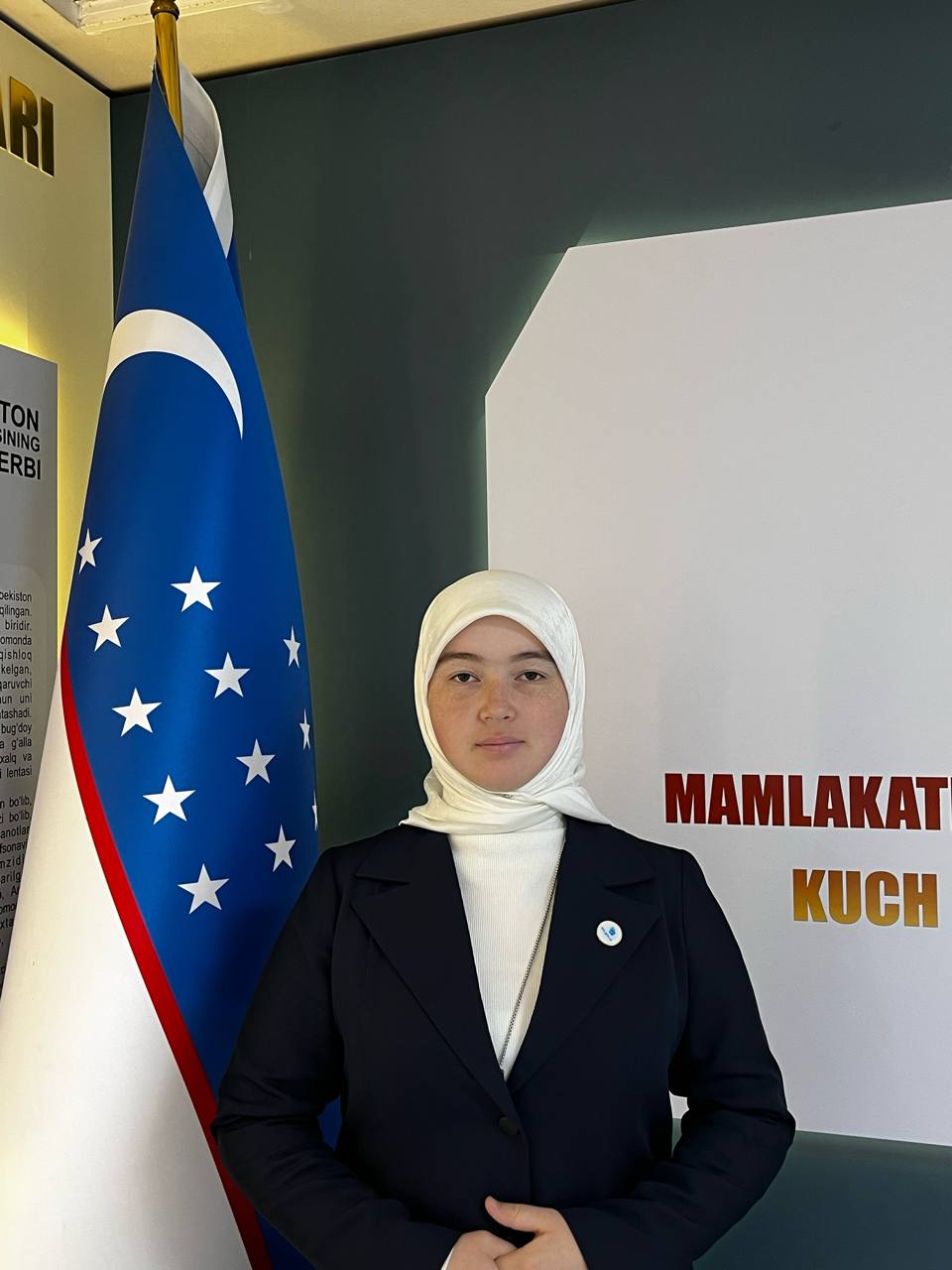
Essay from Amina Zafar qizi Sunnatullayeva

Are We Raising Our Children, or Simply Watching Them Grow?

“A child is a sapling, and a mother is its support. The kind of tree each sapling becomes depends, in part, on how it is nurtured.”

Amina Zafar qizi Sunnatullayeva
Student at the School of Preschool and Primary Education, Nizami National Pedagogical University of Uzbekistan

Every parent wants their child to have a bright future, find their place in life, and grow into a person who makes a meaningful contribution to society. Parents rejoice in their children’s achievements, worry about their setbacks, and strive to provide them with the best possible conditions. Yet one important question remains: while worrying about our children’s futures, how well do we understand their present interests, inner worlds, and individual abilities?
Raising a child to adulthood and supporting their all-round development are not the same thing. Growing up is a natural process, but reaching one’s full potential requires attention, knowledge, proper upbringing, and consistent support.
Unfortunately, we sometimes reduce parenting to ensuring that our children eat well, attend school, complete their homework, and receive high grades. In reality, a child’s development cannot be measured solely by the completion of daily tasks. Their interests, the questions they ask, the activities in which they feel comfortable expressing themselves, and the problems they attempt to solve independently are equally important.

Because shaping a child’s future begins with recognizing their abilities today.

A Child Is a Sapling, and a Mother Is Its Support

Let us imagine a sapling. To grow, it needs water, sunlight, nutrients, and strong roots. Simply demanding that it grow faster is not enough. We must create favorable conditions for its natural development.
Children are much the same. Every child has unique interests, a distinct learning pace, an individual way of thinking, and their own abilities. One child may be fascinated by numbers and logical problems, while another may be drawn to drawing, storytelling, observing nature, or making things with their hands.
These differences should not be used to rank children as superior or inferior. Instead, they should help us understand why every child needs an individualized approach.
If we try to force a sapling to take the shape of another tree, we may hinder its natural development. Similarly, directing a child solely according to adults’ dreams and expectations can limit our ability to recognize their genuine interests.
Therefore, a mother’s role is not to make every decision on behalf of her child. Rather, it is to help the child understand themselves, explore their abilities, and develop independent thinking.

Is Good Intent Enough?

A mother’s love for her child is natural and invaluable. However, not every mother who wants to help her child necessarily knows the best way to do so.
When a child struggles to understand their homework, giving them the answer may seem like the easiest solution. Yet teaching them how to approach the problem, encouraging them to analyze their mistakes, and allowing them to find a solution independently may prove more beneficial in the long run.
Sometimes, we respond impatiently to our children’s questions, fail to take their interests seriously, or compare them with other children. We often do not do these things with bad intentions. We may simply lack the knowledge of how to approach a child, encourage them, or understand their difficulties.
This means that the problem does not lie solely in parental inattention. In some cases, parents themselves lack sufficient pedagogical knowledge, psychological understanding, and practical guidance.
For this reason, improving mothers’ knowledge and teaching them to understand their children’s developmental stages and provide appropriate support throughout the learning process are essential tasks.

Recognizing Talent Begins with Understanding the Child

Identifying talent should not be understood merely as administering tests or observing which school subjects a child receives high grades in.
A child’s repeated interest in a particular activity, their tendency to ask numerous questions, their eagerness to try new things, or their enthusiasm for tackling challenging tasks may offer valuable insights into their natural inclinations. However, it would be inappropriate to determine a child’s future profession or abilities definitively based on a single sign.
Instead, we should observe children as they engage in different activities, provide them with new opportunities, listen to their opinions, and take into account how their interests evolve over time.
The primary school years are particularly important in this regard. During this period, children begin discovering their potential through different subjects, activities, and experiences. Adults should not restrict them through premature conclusions; rather, they should create an environment that encourages exploration.

A child who enjoys reading today may develop an interest in scientific research tomorrow. A child who loves drawing may become interested in design or the arts. However, none of these possibilities represents a predetermined destiny. What matters is supporting children’s interests and allowing them to discover new abilities.

Guiding a child in the right direction does not mean choosing their path for them; it means creating opportunities for them to find their own way.

Mothers and Schools: Partners in a Child’s Development

A child’s education and upbringing are not the sole responsibility of either the family or the school. Schools provide knowledge, teachers observe children’s learning processes, and families have a closer understanding of their children’s daily lives, interests, and emotional well-being.
When these two environments work together, they can develop a more comprehensive understanding of the child.
When a mother takes an interest in her child’s school activities, communicates with teachers, and creates suitable learning conditions at home, she helps her child feel supported throughout the educational process.
The mother’s role is not to replace the teacher. On the contrary, it is to cooperate with educators, understand her child’s needs, and work together with the school to support the child’s development.
In this sense, improving mothers’ pedagogical literacy can benefit both the family and its partnership with the school.

“Maktabga birga” — A Step Toward Knowledgeable Parenting Support

It was through reflecting on these needs that the idea for the “Maktabga birga” (“Together to School”) platform emerged.

The platform aims not simply to provide mothers with ready-made information, but to help them better understand their children’s education, interests, and individual characteristics.
Resources on homework, child and maternal psychology, books, dictionaries, podcasts, audio materials, PDF resources, and knowledge-reinforcement activities all serve a common purpose: to make mothers’ support for their children more informed and effective.
Through these resources, mothers can learn how to help their children, respond to their questions, encourage independent thinking, and observe their interests.
The platform’s central idea is that a mother’s support should help her child develop self-awareness and cultivate their abilities.
This process does not happen overnight. It requires consistent attention, learning, observation, and cooperation. Nevertheless, every small step can contribute to a child’s future development.

The Future Begins with the Attention We Give Today

The future of society is closely connected to a generation that is knowledgeable, capable of independent thinking, aware of its abilities, and able to make informed career choices.
To nurture such a generation, we must focus not only on improving the quality of education in schools but also on creating a supportive learning environment at home. Providing mothers with the knowledge they need to understand and support their children is an important step toward this goal. Every child is a unique sapling. Their development depends on many factors. A mother can serve as a source of support throughout this journey by offering love, knowledge, and attention.
Therefore, let us not limit ourselves to expecting good grades, achievements, and success from our children. Let us ask them what interests them, listen to their questions, and give them opportunities to discover their abilities. After all, building a child’s future does not begin with making decisions on their behalf, but with helping them understand their own potential.