Article from Abdumaxamedova Gulchexra

Socio-Political Impact of Uzbekistan–United States Relations on Social Life: A Sociological Analysis


Student of the Faculty of History and Social Sciences,
Andijan State University
Abdumaxamedova Gulchexra
Email: abdumaxamedovagulchexra@gmail.com

Abstract: This article analyzes, from a sociological perspective, the impact of the mutual cooperative relations between Uzbekistan and the United States on the socio-political life of our country. The main objective of the study is to determine the role of the bilateral relations between the two countries in social changes within society, the education system, and the formation of political consciousness. The article provides an in-depth look at issues such as the influx of Western culture, the impact of exchange programs in education on the worldview of young people, and the socialization of Uzbek immigrants into American life. 

Keywords: Cooperation, Socio-political, Sociological, Research, Western culture, Worldview.

Аннотация: В данной статье с социологической точки зрения анализируется влияние взаимоотношений сотрудничества между Узбекистаном и США на общественно-политическую жизнь нашей страны. Основная цель исследования – определить роль отношений между двумя странами в социальных изменениях в обществе, системе образования и формировании политического сознания. В статье подробно рассматриваются такие вопросы, как приток западной культуры, влияние программ обмена в сфере образования на мировоззрение молодежи, а также социализация узбекских иммигрантов в американской жизни. 

Ключевые слова: сотрудничество, социально-политический, социологический, исследование, западная культура, мировоззрение.

Annotatsiya: Ushbu maqolada Oʻzbekiston va AQSH oʻrtasidagi oʻzaro hamkorlik aloqalarining mamlakatimiz ijtimoiy-siyosiy hayotiga koʻrsatayotgan taʼsiri sotsiologik nuqtayi nazardan tahlil qilingan.  Tadqiqotning asosiy maqsadi ikki davlat munosabatlarining jamiyatdagi ijtimoiy oʻzgarishlar, taʼlim tizimi va siyosiy ong shakllanishidagi rolini aniqlashdan iborat. Maqola mazmunida gʻarb madaniyatining kirib kelishi, taʼlim sohasidagi almashinuv dasturlarining yoshlar dunyoqarashiga taʼsiri kabi masalalar, o‘zbeklarning Amerika hayotiga ijtimoiylashuvi atroflicha yoritilgan. 

Kalit so‘zlar: Hamkorlik, ijtimoiy-siyosiy, sotsiologik, tadqiqot, g‘arb madaniyati, dunyoqarash, 

Introduction

The outcomes achieved through cooperation between Uzbekistan and the United States are primarily aimed at improving the welfare of the population. The creation of new jobs, the introduction of modern technologies, opportunities for training qualified specialists, and economic stability are among the changes clearly reflected in the lives of our people. Based on this, it can be said that bilateral cooperation contributes to effective improvements in public welfare.

A vivid example of this was demonstrated during the meeting held within the framework of the 80th anniversary session of the UN General Assembly in New York City. The conversation between the presidents took place not only in an official diplomatic spirit but also in an atmosphere of sincerity and trust. This indicates that relations between the two countries have reached the level of a true strategic partnership.

It should also be noted that trade relations between the two countries have significantly expanded in recent years. In 2024, trade turnover reached a historic high of 882 million dollars.

The influence of Western culture has both positive and negative aspects. On the positive side, it contributes significantly to education and worldview development, such as expanding critical thinking, mastering new technologies, keeping up with modern times, enhancing creativity, acquiring global knowledge, and increasing attention to personal development. Individuals are becoming more focused on self-improvement rather than relying on others’ opinions, and they are paying greater attention to career growth. The widespread use of the English language is also a positive outcome.

However, there are also negative aspects. Every nation has its own traditions and unwritten values, such as language, respect for elders, and care for younger people. These values are at risk of weakening. For example, increased self-centeredness among youth may lead to disrespect. Changes in national dress styles, such as wearing shorts or overly colorful clothing, and the tendency to view modesty in communication as “outdated,” can also be considered negative consequences

Research Methodology

Using the observation method, we examined youth behavior in public transportation with respect to respect for elders. It was observed that some young people do not offer seats to older passengers, push to enter transport first, pretend to sleep, or hold a book while using their phones instead of actually reading.

We also used comparative analysis in studying clothing culture by comparing people’s clothing styles in the 2000s and in 2026. Clothing in the 2000s was more traditional, modest, and less attention-grabbing, whereas modern clothing tends to be more open, tight-fitting, and visually striking.

In terms of language culture, there is a growing tendency to mix Uzbek with foreign words. For example:

  • “Is everything clear?” 
  • “We have a meeting tomorrow” 
  • “I posted your picture” 
  • “Write to me in private” 
  • “I deleted the channel” 
  • “I blocked that person” 

From these observations, it can be concluded that Western culture does not always bring only positive changes.

Results

The strengthening of strategic partnership relations between Uzbekistan and the United States, the activation of trade and investment cooperation, and the implementation of joint projects across various sectors of the economy have been discussed. In recent years, trade turnover has increased fourfold, reaching nearly 1 billion dollars.

More than 300 American companies are successfully operating in Uzbekistan. Major cooperative projects are being implemented in industry, agriculture, energy, and innovation sectors.

The growth of economic investments (with over 300 American companies operating) affects the population’s standard of living and social mobility. This, in turn, accelerates the integration of Western management styles and corporate culture into Uzbek society.

The Government of Uzbekistan signed a $300 million agreement with the John Deere Corporation to supply agricultural machinery. According to the U.S. Department of Commerce, half of this amount—$150 million—will be directed toward cotton harvesting equipment in Ankeny, Iowa. This agreement is part of a series of investment and trade projects within the “C5+1” framework, which includes Kazakhstan, Kyrgyzstan, Tajikistan, Turkmenistan, and Uzbekistan.

Additionally, Boeing and Uzbekistan Airways signed a final agreement for the delivery of 8 more Boeing 787 Dreamliner aircraft, increasing the total order to 22.

Analysis

Uzbekistan and the United States have also signed agreements on the extraction of rare metals, modernization of pumping stations, implementation of drip irrigation, and the supply of beans and cotton.

Former President Donald Trump announced an “incredible trade and economic deal” worth 100 billion dollars between the two countries.

The inflow of U.S. investments and technologies is opening new opportunities for young people. How does this happen? The presence of more than 300 American companies in Uzbekistan acts as a “social elevator,” motivating young people to learn foreign languages and modern technologies to achieve higher social status. This increases the social demand for knowledge among youth.

Conclusion

The conducted analysis shows that the new stage in Uzbekistan’s foreign policy, particularly the strategic and large-scale economic agreements with the United States, directly impacts all segments of society, especially the worldview of young people.

During the transition from the conservative approaches of the 2000s to today’s more open and technological society, an increased interest in American lifestyle and corporate culture among youth has been observed.

As identified in the research, economic investments (such as those by Boeing, John Deere, and in IT sectors) not only create new jobs but also shape new forms of social interaction.

In conclusion, Uzbekistan–U.S. relations serve as one of the key drivers accelerating the process of social modernization in society.

References

1.Bo‘riyev, A. (2025, 7-noyabr). O‘zbekiston — AQSH munosabatlari yangi bosqichda. Oliy Majlis Qonunchilik palatasi rasmiy sayti. https://parliament.gov.uz/uz/news/ozbekiston-aqsh-munosabatlari-yangi-bosqichda (https://www.google.com/search?q=https://parliament.gov.uz/uz/news/ozbekiston-aqsh-munosabatlari-yangi-bosqichda)

2.Gazeta.uz O‘zbekiston va AQSH o‘rtasidagi strategik hamkorlikning yangi bosqichi: 100 milliard dollarlik loyihalar. https://www.gazeta.uz/oz/2026/03/20/us-uzb-deal/ (https://www.google.com/search?q=https://www.gazeta.uz/oz/2026/03/20/us-uzb-deal/)

3.Kun.uz  O‘zbekiston bozorida Amerika korporatsiyalari: Boeing va John Deere bilan hamkorlik kengaymoqda. https://kun.uz/news/2026/03/15/amerika-gigantlari (https://www.google.com/search?q=https://kun.uz/news/2026/03/15/amerika-gigantlari)

​4.Kun.uz. (2026, 21-mart). Prezidentlar uchrashuvi: O‘zbekiston yoshlari uchun yangi imkoniyatlar va iqtisodiy o‘sish istiqbollari. https://kun.uz/news/2026/03/21/prezidentlar-uchrashuvi (https://www.google.com/search?q=https://kun.uz/news/2026/03/21/prezidentlar-uchrashuvi)

​5.O‘zbekiston 24. (2025, 7-noyabr). Prezident Shavkat Mirziyoyevning AQSHga amaliy tashrifi tafsilotlari [Video]. YouTube. https://youtube.com/watch?v=GGhI5RFK7I8 (https://www.google.com/search?q=https://youtube.com/watch%3Fv%3DGGhI5RFK7I8)
Open letter from Nilavronill

An Open Letter To All Poets

28th March 2026. Is there any significance at all, being alive today?

Today too many innocent people will be killed in the war zones, too many had already lost their precious life, no matter how strong and abysmal their belief was on the almighty God! 

Humanity thrives not on love and compassions, but on technological advancement of the killing machines with lethal and brutal powers.

Humanity cannot save innocent people but can witness genocidal massacres without even feeling any shame or remorse. Humanity seldom bears the responsibility to uphold peace and prosperity, but more often remains complicit in the crime against humanity. 

Yes, it is not even any assumption. It is the basic fact, practical truth that we, working with words and emotions; writers and poets alike have failed measurably. We have failed to promote love and compassion. We have failed to awaken true sense of humanity, the indispensable dignity of being human. We have failed to spread harmony and empathy. Our words didn’t make any difference, didn’t overcome the power of nuclear bombs, hypersonic missiles, deadly aircraft carriers. Our words didn’t withstand the greed of the power brokers around the globe. We, working with words and emotions remained too naïve to see through our incompetency, our vulnerability, our weaknesses! We remained too insignificant to bring any radical change to the present world order. The world order of Genocide, massacres, and abysmal injustices. We remained buried under our incompetent words, our worthless emotions and our ineffective will. Too feeble to make any impact at all. 

Poetry from Ms. Koo Myongsook 

The Mountain

Even after ten thousand years,

It stacks layers upon layers of loneliness.

Though people tread upon it,

the path always remains alone.

With ten thousand forms,

yet possessing nothing at all.

oh, you, majestic mountain.

산은 

만 년이 지나도

외로움을 켜켜이 쌓아 올린다

사람들이 밟고 걸어도 

길은 언제나 홀로일 뿐

만 가지 형상을 가지고 있으면서도 

아무것도 갖지 않는 

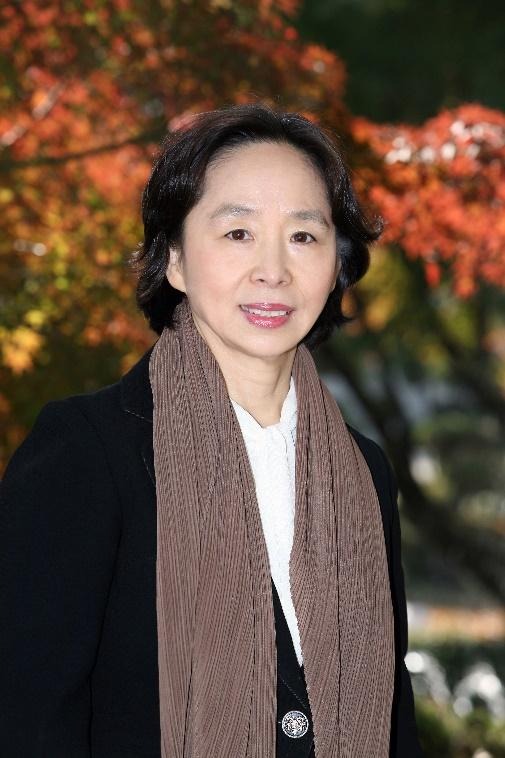
Poet Ms. Koo Myongsook was born in Nonsan, Chungcheongnam-do, South Korea. She graduated from Sookmyung Women’s University with a degree in Korean literature and later earned her Ph.D. in literature from Bielefeld University in Germany. She received the New Writer’s Award from the monthly literary magazine Simunhak in 1999 and from Poetry and Poetics in 2009.

She has held various academic and cultural leadership positions, including Visiting Professor at Soka University in Japan, Visiting Professor at Waseda University, Director of the Sookmyung Leadership Development Institute, Director of the Museum and Cultural Center, President of the Korean Women’s Literary Association, Chief Editor of Our Literature, Chairperson of the Korea Gender Equality Education Promotion Institute, Policy Advisory Member for the Ministry of Gender Equality and Family, Mediator at the Seoul Family Court, Chief Editor of Siseon, Director of the Literature House Seoul, and Vice President of the Korean Women’s Literary Association.

Currently, she is an Emeritus Professor at Sookmyung Women’s University, President of the Glocal Women’s Network, Director of the Korean Women’s Organizations Council, Director of the National Museum of Korean Literature, Advisory Member for Korea Women Consumers News, Senior Vice President of the Seocho Cultural Center, and Vice President of the World Poetry Literature Society.

Her poetry collections include How Many Bushels of Rice Has That Woman Washed to Cook?, Walking, Life Is, Sky Tree (selected as an excellent literary book in the 2014 Sejong Book Program), The Art of Flowers, You, Pietà, Heartfelt, Asking the Spring River off the Way of Poetry, and Where Do Clouds Go?.

Her academic publications include Understanding Korean Women’s Literature, The Horizon of Han Moo-sook’s Literature, Women Communicating Through Literature, A Collection of Women’s Literature (From Liberation to the 1960s) Vol. 1-6, Diaspora and Korean Literature, War-time Literary Discourse and the Reconstruction of Collective Memory, and edited works such as Anthology of Women’s Short Stories from the Liberation Period, Anthology of Korean Women’s Essays (1945-1953), Anthology of Korean War-Era Women’s Literature, Bibliography of Works by Korean Women Writers: From Liberation to the 1960s, and Selected Works of Representative Korean Women Poets.

She has received numerous awards, including the Deputy Prime Minister and Minister of Education Award, the Manhae “Nim” Poetry Award, the Excellence Award from Poetry and Poetics, the Seocho Writers’ Association Grand Prize, and the Grand Prize from the World Poetry Literature Society.

Poetry from Ms. Im Sol Nae

Blue Butterfly

“The sky and the earth are my coffin, and the sun, moon, and stars are my burial gifts”

Zhuangzi once said.

I envied him.

I envied the silkworm

that sheds its stiff cocoon of flesh

to become a butterfly of the soul.

I envied Kübler-Ross,★

who cared for dying children,

carrying a plush caterpillar that, when flipped,

transformed into a butterfly,

a small miracle for her young patients.

But what moved me even more

was the final moment of her own funeral—

her children opening a small box before the coffin,

releasing butterflies into the air.

And when the mourners opened their envelopes,

blue butterflies fluttered out,

rising toward the sky.

What are we to do with such beauty?

★ Elisabeth Kübler-Ross: Swiss-born psychiatrist and world-renowned authority on thanatology (the study of death and dying).

파란나비

“하늘과 땅이 관이고 해, 달, 별이

나의 순장품이다” 라던 장자가

나는 부러웠습니다

그 딱딱한 육신의 고치를 벗고

영혼의 나비가 되는 누에가 

나는 참 부러웠습니다.

임종을 앞 둔 어린이들을 돌 본

퀴블러 로스★

뒤집으면 나비로 변하는 애벌레 인형을

가지고 다니며 어린 환자들에게 보여 주던

그가 

나는 참말 부러웠습니다.

더 기막힌 것은,

자신의 장례식의 절정을

그의 자녀가 관 앞에서 작은 상자를 열어

나비가 날아가게 한 것

조문객들이 미리 받은 봉투를 열자

봉투에서 파란나비가 나와

공중으로 날아 갔대잖아요

이 일을 어쩌면 좋아요

★「퀴블러 로스」 스위스 태생의 정신과 의사, 생사학의 세계적인 권위자

Poet Ms. Im Sol Nae received the Newcomer Award from the monthly literary magazine Jayu Munhak in 1999. Her poetry collections include The QR Code of a Leaf, Amazon, That Transit Station, The Cry of an Awakened Amazon, Hong Nyeo, and many others. She has also received numerous literary honors, including the Yeongnang Poetry Award, the Korean Literary Critics Association Award, the Korean Lyric Poetry Award, selection as a Sejong Excellent Book, the Poet’s Poet Award, and the Buddhist Literary Writers’ Award.

Poetry from Siyoung Doung

Like a Single Word

The sky and the earth are the lips of eternity.

There,

we live like a single word.

Like a ring worn without knowing

whose hand placed it,

people live, fitted into the world.

Today,

I do not know where I am.

Just standing—

Hands engraving handprints, 

feet engraving footprints.

Life is finding a path in the void.

Birds know

that the void is eternity.

Living is the breaking of one boundary after another.

Life grows colder as it goes on.

The time they wrote

abandons them in the end.

On a spring day when cherry blossoms befriend the wind,

mountain-like buildings,

valley-like alleys,

water-like people.

People, worn by strangeness,

save it sparingly, fearing they might grow used to it.

An angel slips between their lips,

and they take out a single smile.

한 마디 말처럼

하늘과 땅은 영원의 입술

거기,

한 마디 말처럼 우리는 산다

누구의 손에 끼웠는지 

모르고 사는 반지처럼

세상에 끼워 사는 사람들

오늘은 

어디 있는지 몰라

그냥 서 있는 곳

손으론 손자국 판화

발로는 발자국 판화

삶은 허공에서 길 찿기

새들은 안다

허공이 영원이라는 걸

사는 건 경계가 경계를 허무는 것

목숨은 갈수록 쌀쌀한 남

그들이 쓴 시간이 그들을 버린다

벚꽃이 벗하는 봄날

산 같은 빌딩

계곡 같은 골목

물 같은 사람들

사람들은 낯섦이 닳아

익숙해질까 봐 아껴 쓰고 있다

입에 드나드는 천사

웃음 하나 꺼내 본다

Poet Siyoung Doung graduated from the Department of Korean Language and Literature at Dongguk University and went on to earn a Ph.D. in Korean Language and Literature from Hanyang University. She further expanded her academic pursuits by studying humanities at Regensburg University in Germany. Her teaching career includes positions as a professor at Korea Tourism University and Jilin University of Finance and Economics in China.

Her literary journey began in 2003 with her poetry debut in the literary magazine Dacheung. Since then, she has published numerous poetry collections, including Future Hunting, In Search of a Strange God, The Phone Call from God, The Eyes of November, The Carnival of Time (Anthology), Was It You, Was It Me, or Was It Longing?, The Scent of Secrets, Aria of Everyday Life, The River Flowing Under the Pen, The Magic Letters, and The Horizon Never Gets Wet. In addition to poetry, Doung has contributed significantly to literary research with works such as Roh Cheon-myung’s Poetry and Semiotics, Korean Literature and Semiotics, and Semiotics of Modern Poetry. Her exploration of literature extends into travel writing, with essay collections like Encountering Culture Through Travel and Encountering Travel Through Literature. Her literary excellence has been recognized with numerous prestigious awards, including the Park Hwa-mok Literary Award (2010), Poetry and Poetics Young Poet Award (2011), the Grand Prize at the Korean Buddhist Literature Awards (2018), the 32nd Dongguk Literary Award (2019), the Yeongrang Literary Award for Criticism (2020), and the 7th Woltan Park Jong-hwa Literary Award by the Korean Writers’ Association (2021). Most recently, she received the Literary Youth Work Award in 2024. In recognition of her contributions to literature, She was also a recipient of a creative grant from the Arts Council Korea in 2005.

Poetry from Ms. Kim Sun Young

The Vegetative Nature of Longing

Even when erased,

Even when erased again,

It reappears like a crescent moon,

Grows beyond a half-moon,

Becomes a full moon.

Like a face

Drifting as a full moon,

People hang

The space of longing

In their hearts.

Love,

Even when one tries to forget,

Has a terrifying vegetative nature—

It reveals itself, it grows.

That is why tonight is a full moon.

그리움의 식물성

지워도

지워도

생기는 초승달같이

반달에서 더 자란

만월같이

만월로 둥실

걸린

얼굴같이

사람들은 그리움 공간을

가슴에 걸어 두지요

사랑은 

잊으려 하여도

드러나고 자라나는 무서운 

식물성이 있어요

그래서 오늘밤 만월이에요

Poet Kim Sun-Young was born on May 17, 1938, in Kaesong, Gyeonggi Province. She graduated from Sudo Women’s Teachers College and later served as a teacher at Sudo Girls’ Middle School and as a professor at Sejong University. In 1962, she made her literary debut in Hyundae Munhak(Modern Literature) after her poems Bluebird, Echo, and Graffiti of the Seasons were recommended for publication. She was also an active member of the literary coterie Cheongmi (靑眉). Since the publication of her first poetry collection, Saga (思歌), in 1969, she has published 15 poetry collections, including The Shoe Store of Emptiness (1972), Wildflower Ritual (1976), Atmosphere of Fantasy (1976), Words Written at Night (1982), God Who Lives in the Lilac Tree (1983), Song of Longing (1987), and To Shatter (2008). She has received numerous literary awards, including the Contemporary Poetry Award and the Korean Literature Award. She has also served as an advisory board member of the Korean Poets Association and the Korean Women Writers’ Association, as well as a member of the International PEN Korea Center.

Essay from Jumayev Akmal G’ulom o’g’li

THE SYSTEM OF LEGAL INCENTIVES FOR EMPLOYING YOUNG SPECIALISTS: A FACTOR IN ENSURING LABOR MARKET STABILITY
Jumayev Akmal G‘ulom o‘g‘li
Student of the Public Security University of the Republic of Uzbekistan

The legal foundation of youth policy in Uzbekistan and the analysis of constitutional reforms demonstrate significant progress in strengthening the protection of youth rights. The new edition of the Constitution of the Republic of Uzbekistan, adopted by referendum on April 30, 2023, has elevated the system of youth rights protection to a qualitatively new level. Unlike the previous version, the new Constitution explicitly enshrines youth rights in a separate article.

Analysis of Article 79 of the Constitution — the “Charter of Youth Rights”:
This article imposes an obligation on the state to ensure the protection of the personal, political, economic, and social rights of young people, as well as to create conditions for their active participation in the life of society and the state. From a legal perspective, Article 79 elevates the issue of youth employment from a mere social measure to the level of a constitutional obligation of the state.

Labor guarantees:
Article 42 of the Constitution guarantees every individual the right to work, to freely choose a profession, and to work under fair labor conditions. For young specialists, the realization of this right is ensured through a “system of legal incentives” facilitating their transition from education to the labor market. Constitutional reforms legally confirm the transformation of the state’s role from a “passive observer” to an “active facilitator” in youth-related issues. This serves as a higher legal basis for establishing quotas and tax preferences for youth in subordinate legislation.

Socio-legal necessity of ensuring youth employment under demographic growth:
Uzbekistan is currently considered one of the youngest countries in the world, with nearly 60% of its population consisting of young people. This demographic situation implies that more than 600,000 new entrants join the labor market annually.

The “first job” problem:
Although graduates of higher and secondary specialized education institutions possess theoretical knowledge, they often lack practical experience, making them less competitive in the labor market. Legal mechanisms (such as preferential probation conditions) are essential to bridge this gap and protect young people from discrimination.

Labor market stability:
Youth unemployment is not only an economic loss but also a social risk (including increased migration and crime). Therefore, a system of incentives for employing young specialists serves as a key tool for maintaining the balance between supply and demand in the labor market.

Elimination of legal conflicts:
In practice, contradictions arise between employers’ demand for experienced workers and legal obligations to hire graduates. Before analyzing the system of incentives, it is necessary to clarify the legal meaning of the term “young specialist.”

Legal status of “young specialist” and “graduate” in national legislation:
The term “young specialist” has a specific legal status closely related to, but distinct from, the concept of a “graduate.”

  • “Graduate” refers to an individual who has completed higher, secondary specialized, or vocational education programs. According to the Law “On State Youth Policy,” youth are defined as individuals aged 14 to 30. 
  • “Young specialist” is a narrower legal concept, typically referring to a person who, within three years after graduation, enters employment for the first time. In some cases, this period may vary depending on the sector or program. 

Connection with incentives:
The status of a “young specialist” provides certain legal benefits, such as employment without a probation period and assistance in job placement. While “graduate” indicates completion of education, “young specialist” reflects entry into professional activity and eligibility for legal protection.

Distinguishing between these two concepts is important for both employers and young individuals. Employers must comply with legally established benefits when hiring young specialists, ensuring fairness and transparency in the employment process.

International Labour Organization (ILO) standards and their transformation into national law:
As a member of the International Labour Organization (ILO), Uzbekistan has ratified several conventions and recommendations aimed at promoting youth employment. These standards serve as an important legal guideline for improving national legislation.

In ILO documents, “youth employment” implies not only job creation but also ensuring decent work conditions, protection of rights, and opportunities for professional growth. The ILO generally defines youth as individuals aged 15 to 24, although this range may extend to 30 in national contexts.

Key aspects include:

  1. Conventions and Recommendations: Ratified ILO conventions (e.g., on employment promotion) form an integral part of national legislation and may have direct applicability. 
  2. Best practices: International experiences, such as Germany’s dual education system and Japan’s lifetime employment principles, serve as models for shaping Uzbekistan’s youth employment policy. 

ILO standards ensure protection against forced labor, prohibition of discrimination, and the right to fair wages, reinforcing the concept of “young specialist” within both national and international legal frameworks.

Thus, the legal determination of the term “young specialist” is based on both national and international legal norms. It refers not merely to age but to a qualified individual entering the labor market who requires special legal protection. This concept forms the basis for applying all benefits and guarantees aimed at youth employment.

Incentives for employers:
Ensuring youth employment requires not only providing benefits to young people but also incentivizing employers. This helps maintain labor market balance and facilitates youth employment.

Tax incentives are among the most effective tools. Legal frameworks should allow reductions in social tax rates for enterprises hiring young employees. Relevant provisions of the Tax Code of Uzbekistan (such as those related to personal income tax and social tax) may include mechanisms for granting such benefits.

Currently, these incentives may take the following forms:

  • Social tax benefits: Partial reimbursement or reduced rates of social tax for companies employing young specialists under certain conditions. 
  • Income tax benefits: In some cases, enterprises implementing youth employment projects may receive tax preferences. 

These measures compensate employers’ additional costs and make hiring young specialists economically beneficial, especially for small and medium-sized businesses.

Conclusion:
Youth employment today is not merely an economic issue but a crucial legal element of Uzbekistan’s national security and constitutional stability. Therefore, studying the system of legal incentives for young specialists is of great theoretical and practical importance. Economic-legal mechanisms such as tax incentives, subsidies, and mentorship systems accelerate the integration of young specialists into the labor market. This system serves as an essential legal instrument for implementing state youth policy and encourages employers to invest in young human capital.