
Essay from Z.I. Mahmud

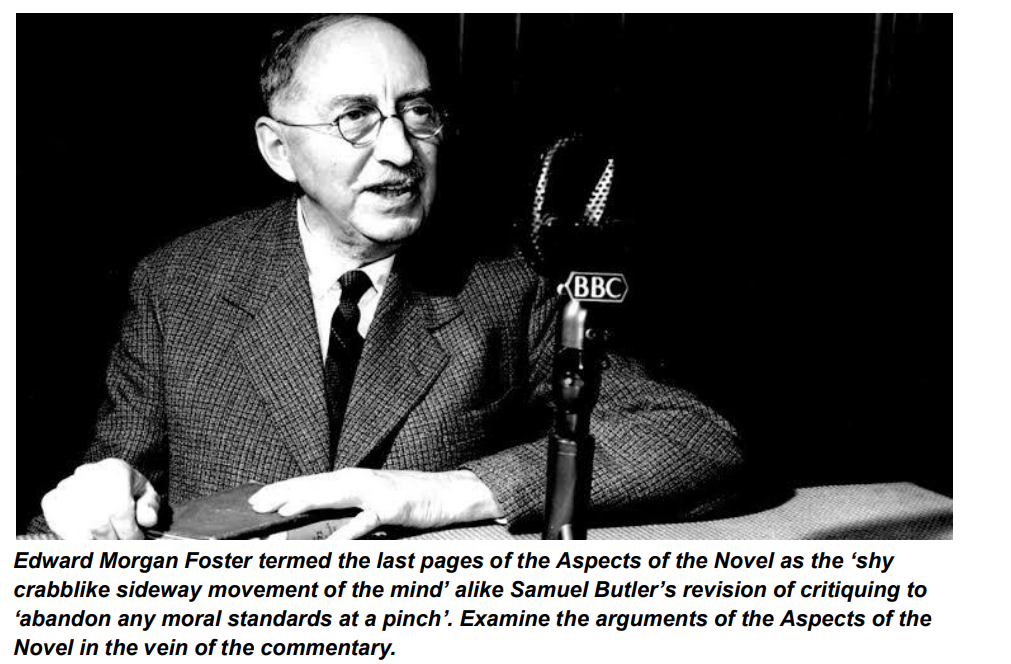
Black and white photo of a middle aged white man with reading glasses in a suit and tie sitting in front of a BBC microphone.

Forster was a story teller of diminuendos and anticlimaxes, as pointed out by Katherine Mansfield in the lines, “Forster never gets any further than warming the teapot.”


EM Forster highlights the radiant grandeur and majestic wonder of the Greek literature that tends to be both aesthetic and ethical and imitative in the mimetic of both individual and social realities which blends a combination of beauty and depth, wit and wisdom, gaiety and insight, speculation and ecstasy, carnality and spirit.

EM Forster’s crucial crux of characterization and incidents are touchstones in the arrangement of plots as sequences of events in their time sequence bereft of spatiotemporality, periodization or historicity. In fact, Aspects of the Novel, is the critical examination of the eclectic literary critic in the immersive objectivity and sympathy of
the narratives’ dramatis persona and the narrative multiplicities featuring those timeless classic masterpieces or avant gardes that encompasses and engenders architectural unity and preordained form.

The self confessed literary critic expostulate nineteenth century romanticism, aestheticism, symbolism, impressionism in the humanistic and liberal attitudes in the late world war I and the aftermath of the early world war II decades. Forster asserts the significances of a central theme or idea in the literature as evidenced in the passage: “When a book is written round a central idea, it gains unity that is denied to its more discursive brethren, and this
Norwegian novel stands out among its English contemporaries much as a man that has something to say stands out in a crowd of chatterers. Its characters are sketches, and the plot does not exist, but the central theme gripped by the author, grips the reader and leaves a profound impression behind.”


EM Forster critiques Sir Walter Scott as idiosyncratic and wayward more than order because of moral and commercial tastes contrarieties in the 1980s art for an art’s sake movement. On the contrary, Virginia Woolf, triumphs from the distortion effects of aestheticism owing to her comical sense and creative zest. Poetry is enchanted garden much more like the spiritual armory in the words of Mathew Arnold as eternal engravings in the creator, spectator
and readers alike, resonating Shelley’s commentary, “beautiful idealisms of moral excellence.”


Emily Dickinson’s poetic verses and musical lyrics in the prose works contrasts with Austenean realists fiction in the literary imaginative landscapes of the readers’ mindscapes and the momentary transformative external environment of the appreciative individual. Forster was also undoubtedly thinking of Dickinson when he viewed Dickinson as one who loved the Ariel world of the spiritual repose and aesthetic emotion but cannot remain in it because Caliban had to be tamed, Antonio reformed and Prospero restored to his rule. ‘A true novelist observes the realities and describes them dispassionately.”

In ‘Anonymity’ Forster expresses that literature not only lectures the outward and rational but also the subconscious, the reality that lies within the center of the individual personality. In this sense, social and political realities should be lesser important than the aesthetic effectiveness. Forster deplored the fascist Nazi censorship since the epoch resulted in ‘uniformity’, ‘monotony’ and ‘spiritual death’.

Nonetheless, Forster tells us of the literary tradition to be the borderline between history and literature in the Aspects of the Novel. To him, the best critic will have spent much time exploring that territory in order to augment his knowledge of literature. Leo Tolstoy’s novels are an omnibus of complex plot intricacies and characters of psychological complexities that for subtlety were ambiguous
because of inconsistencies and violation of the probability to Forster.

Fantasy is the featured as alternative to realism in fiction and upholds resemblances to the symbolic alternatives to desires and identities———-metonymic for orgasmic terms such as choking or thrilling readers even to this degree of maturity in accord with obscenities, oddities and queerness. Fantasy is a doubled natured and gendered beast expression some of the alternative interpretations to realities in the vein of supernaturalism and mysticism that can take the androgynous guise.

The Edwardian epoch heralded the familiarity and popularity of fantasy fiction from folklores and folktales and folk fables or fantasy tales inhabited by satyrs and nymphs of the magical woods. Fantasy and prophecy are together diametrically polaroids of alternative interpretations to realities. In this sense, fantasy and prophecy are illuminators and intensifiers of the material world, sedulously dusted by the hands of common sense, manipulated by the beam light in the more vividness than mediocrity and domesticity by the fantasist and the prophet. For instance, Tristram Shandy and Moby Dick are diametric axis of fantasy and prophecy. Northrope Frye claims that “fictions in the last generation or so has turned increasing from realism to fantasy, partly because fantasy is the normal technique for the modern fiction writers who do not believe in the permanence or continuity of the societies they belong to.”

Poetry from Ogwuche Bella

My home has mastered the act of wearing the devil as a character
Everything here is a shadow of another body     
                                                                                 even the night  comes in the mask of hell at the sight of dawn                                                       
we mastered saying goodbye faster than      
                                                                                        living my father is a chapter of a grieving testament where everything       
darkens so we'll we mold ashes out of ourselves.    
                                                                           The news headlines flaunts a girls who crawls slowly into dust.            
I fear I might be after her. My mum says much about     
                                                  contentment so I teach myself how to love my country. Suddenly I remember 

broken things doesn't love. I have thought myself how  
                                                                       to crawl into love by spelling it backwards. On the highway a young boy teach 
me how to pray before his body kiss the soil but I fear   
                                                                          that a prayer is a torture to my tongue, I do not wish to trade my words for                            emptiness. 


Poetry from J.D. Nelson

Six Untitled Monostichs


flour tortilla minnow tomorrow


—


casserole the martian trowels


—


sneeze beep citadel


—


denver me a cake rabbit


—


yes no space breakfast


—


pyramids underscore freedom socks


—


bio/graf

J. D. Nelson’s poems have appeared in many publications, worldwide, since 2002. He is the author of ten print chapbooks and e-books of poetry, including *Cinderella City* (The Red Ceilings Press, 2012). Nelson’s first full-length collection is *in ghostly onehead* (Post-Asemic Press, 2022). Visit his website, MadVerse.com, for more information and links to his published work. His haiku blog is at JDNelson.net. Nelson lives in Colorado, USA.

Poetry from Christopher Bernard

Whose Body

It’s half past July.
The trunk of the backyard tree
lies beneath your hand.
A smell of moss
crosses the yellow wood.
It was the wind broke it,
the wind in the night.

See the ladybug. She works her way up
the bare stump
like a tiny VW,
anxious for her children
in the burning house.
A worm pokes a blind head
above the cracked ground.
The ferns pretend 
to be asleep.
Beyond the fence, the willows
are grave in stillness.
The sun blinds the eastern arc of the sky.

It holds its breath.
Even the stone beneath your knee.
Then it crosses the silence
on great wings
toward the future.

_____

Christopher Bernard is a novelist, poet, critic and essayist. His poetry collection The Socialist’s Garden of Verses won a PEN Oakland Josephine Miles Award in 2021. He is also a founder and co-editor of the webzine Caveat Lector. His children’s books If You Ride a Crooked Trolley . . . and The Judgment of Biestia will be published this fall and featured in Kirkus Reviews in November.

Poetry from Ahmad Al-Khatat

My Dear Grief 

Will I ever meet with you in physical human flesh?
I am willing to learn about your culture and share
my tobacco with glasses of wine with more regrets
I might start to understand why am I cast down.

 Should I sell my unsteady dreams & distance myself 
I try to forget about my struggles of being noisily calm
On some sunrises, my nightly tears carve into my cheeks 
If just a dream, where we'll come back and laugh ‘till we 

Poetry from Tanvir Islam

Young South Asian teen boy with short brown hair and brown eyes and skin wearing a white collared shirt and a school lanyard around his neck and a badge on his shirt.
Tanvir Islam

Love In Your Eyes
 
When I am looking into your eyes,
I see all the love you have for me. 
I see in your eyes you care for me a lot. 
I see your love for me is true, 
And you will do whatever it takes to have me in your life. 
When I am looking into your eyes, 
I see your love for me is unconditional. 
Your eyes tell me you will never leave me. 
You will always stay by my side 
To protect and cherish me. 
When I am looking into your eyes, 
I see with you everything is possible. 
I see in your eyes your love for me is everlasting. 
Your eyes tell me you really, really love me

Tanvir Islam is a student of grade 9 in Harimohan Government High School, Chapainawabganj, Bangladesh.

Poetry from Wazed Abdullah

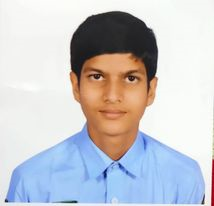
Young South Asian boy with short black hair and a light blue collared shirt.
Wazed Abdullah

MY FATHER 
(This has been dedicated to my loving dad RAMJAN ALI) 

Father, you're my guiding light, 
An example of love shining bright. 
In tough times, you lend a hand, 
Teacher, mentor, a steady stand. 

Your laughter, wisdom, a melody sweet, 
A father's love, forever complete. 
Dad, I love you, always near, 
With a heart full of love, forever dear.


MY MOTHER 
(This has been dedicated to my mom JANNAT ARA) 

In mother's lap, safe and sound, 
A strongest love, that knows no bound. 
Her gentle words, like melodies, 
Bring comfort, joy, and sweetest ease. 

Through highs and lows, she's always there, 
A constant love, beyond compare. 
In her embrace, I find my worth, 
A mother's love, the dearest on Earth. 

Forever grateful, my heart does say, 
Thank you, Mom, for lighting my way. 
I will be grateful of you forever "AMMU".

Wazed Abdullah is a student of grade 8 in Harimohan Government High School, Chapainawabganj, Bangladesh.