Bundle the mimic Panoply. circa 1637. Pan magi urges the hieratic fast
Glitzy doppelgangers warhole the coin cidence and skip the eye
Our asthmatic companion’s paranormal apology. Sold for a nickel. The decamass takes cadmium heads without a trim
We leap on inferences, the refine nothing, the tartuffery twist
A citadel of phototex A citadel of latex A citadel of profolaktex
snapshots rescue us from buffo
The thresh held to a tripod, a joke with frogs.
2
Latituderation injures the baggy drivel, the same spit on purp
fakes a dialectjour in pose. A hiccup castigates that dull dichotomy that dull cantata
Messianic purits ban scrid, and hung tongues to increase assitude
Paragonic sputters the squat pastiche reeks solipsism
3
Triptych occupies itself in a fake hinge in a faux link
The zero amp tight
A cylinder cataract dogma tames the spread fixed in reverse,
an instability from every flat tumble. The gut fears sight
4
Tempo the average meta. Petronius is untranslatable
because elegantiarum is a canard to profligate a voluptuary speed
A science in quo allur, the plausi representationincisions the vain
play. A broken fluorspar dippers the table with two hims, a ragment
5
Under a pillow, Aristophanes hides the attic wasp. Lysistrata
loses the slander chorus and Didaskalos habits an errand return
Irene Koronas’gnōstos, Volume VII (manuscript) of the Grammaton Series is an unanguagic, hyper-minimalist écriture, melding its aporias with a mix of staccato posthumanism and The Nag Hammadi Scriptures.
Irene Koronas is an extreme experimentalist. Her Grammaton Series includes siphonic, Volume VI (BlazeVOX, 2022), lithic cornea, Volume V (BlazeVOX, 2021), holyrit, Volume IV (BlazeVOX, 2019), declivities, Volume III (BlazeVOX, 2018), ninth iota, Volume II (The Knives Forks and Spoons Press, 2018) and Codify, Volume I (Éditions du Cygne, 2017). Her extreme experimentalism has been published in Alligatorzine, BlazeVOX, The Boston Globe, Buzdokuz, Cambridge Chronicles, E·ratio, Marsh Hawk Press Review, Offcourse, perspektive, slowforward, Taos Journal of International Poetry & Art and Word For/Word. She is the Publisher of Var(2x). Her website is irenekoronas.com.
The totality: YARP (chaosmos), its janitrix or reverse proxy (gRPC)—is Totalité et Infini. 2.06
The mclnēut’ium (from mclnē,
“filth”): GPO abuse—this lipoleum snipe (kinesis/kenosis), this thingajarry nonexist, negative fact: binwalk output. Compress the POSIX tar archive. This tranche: EDR/IR.
2.061
IDOR (allos in agora)—das Schrifttum: pstmt.executeQuery().
2.062
Zerstörung maßnahmen (Wireshark, Tcpdump, Dirb, Snort)—its generica in Theatrum Chemicum. The gaud, crux. Geffe juvat. Pose nihilum.
Daniel Y. Harris’ The Metempsychosis of Salvador Dracu, Volume VI (manuscript) of The Posthuman Series, is a misprision of Ludwig Wittgenstein’s Tractatus Logico Philosophicus with its 7 primary levels divided into 525 sublevels. The protagonist, Salvador Dracu, is malware as Jacques Derrida, Black Hat Hacker. His Posthuman Series has received praise from Charles Bernstein, Harold Bloom, Marjorie Perloff, Kenneth Goldsmith and Andrei Codrescu.
Daniel Y. Harris is an extreme experimentalist. His Posthuman Series includes The Resurrection of Maximillian Pissante, Volume V (BlazeVOX, 2022), The Misprision of Agon Hack, Volume IV (BlazeVOX, 2021), The Reincarnation of Anna Phylactic, Volume III (BlazeVOX, 2019), The Tryst of Thetica Zorg, Volume II, (BlazeVOX, 2018) and The Rapture of Eddy Daemon, Volume I (BlazeVOX, 2016). His extreme experimentalism has been published in Alligatorzine, BlazeVOX, The Denver Quarterly, Dichtung Yammer, European Judaism, Exquisite Corpse, Marsh Hawk Press Review, The New York Quarterly, Notre Dame Review, perspektive, Poetry Salzburg Review and Word For/Word. He is the Publisher of Var(2x). His website is danielyharris.com.
to the jury

we don’t need the details
details
             they distract us
                             from the truth—


to the prosecution

we don’t need the truth
truth
           distracts us
                     from the jury—


to the jurisdiction

we don’t need the victim
victims
              distract us
                       from the prosecution


to the apocalypse

we don’t need the destruction
destruction
                    distracts us
                              from the victim


to the defence

we don’t need the holocaust
holocausts
                   distract us
                            from the guilty


bonus:

to the story

we don’t need the junction
junctions
                 they distract us
                                  from the judge.
David lives just south of Montreal with his wife and son.
Aina! Why haven’t you reached the park yet?” Falah said to Ahmed and Hashim in annoyance. Who had been waiting for Aina in the park for the past half an hour. Aina sent a message to the group this morning asking all the kids to come to the park at 4pm because Aina had a “surprise” for them. This was the reason why Falah, Ahmed and Hashim had reached the park but Aina had not reached yet.
Hey, look at that! Aina is coming” Ahmed said attracting everyone. Assalam Alaikum: Dear friends! Sorry I’m a little late” Aina addressed everyone and said, “Yes, you are late, but now hurry up and tell us about the surprise, we are dying to know.” Falah was excited. He said.
Yes of course! So here’s the surprise Aina said while holding the children’s colorful magazines and books. “Wow! These are very cute magazines.” Hashim happily said. “It has very cute pictures too. I will color in these pictures. And look at how many funny jokes are in this book.” Ahmad said while turning the pages of the book. “Very good Aina! This is really a beautiful surprise. My mother was telling that she used to read children’s magazines and stories very fondly in her childhood. Where did you get these books and magazines?” Falah asked Aina. These books have been brought by my uncle. He himself writes stories and recites poems for children.”
Aina told her friends. “Aina! I was thinking why don’t we all create our own little library of just children’s story books, informational magazines and magazines. And then we will invite all the children of our neighborhood to take books and magazines from our library and read them. Because our school parents don’t let us go to the school library, thankfully our families have kept us connected to books. Otherwise, nowadays every child is just crazy about mobile games. We will also teach all these children to love books,” said Falah. “Hey! This is a wonderful idea,” said the other three children excitedly. “After today, whenever we give each other a gift, we will give a book as a gift.” Which will adorn our library.”
Hashim offered another beautiful suggestion. “Absolutely Hashem! You have spoken very well.” All the children said supporting Hashem. This love of books was inherited by these children from their parents and undoubtedly this love of books will continue to be transmitted from generation to generation. These children also decided that on the holiday day all the children will sit in this park and read their favorite book.
Verse 1 On a Friday night, as I got the club, I met this damsel She was too real to be true She was so fresh n green That I couldn’t help grin Her sexy face Made me to dance As I looked through her body, I knew she was worthy As I danced towards her, I saaaaaaawwwww….that she was:
Chorus Made in heaven Made in Heaven (yea) Made in Heaven
Verse 2 I told her ‘’you’re my meat that I want to eat’’ She smiled and said, ‘’You’re got some wits’’ ‘’Alright’’ as I smiled passionately I also said to her, ‘’though I’m meeting first time, you make comfortable’’ ‘’Are you sure? How could this be possible?’’ I went on to say ‘’I simply want to know you better. My name is Peter.’’ ‘’hmmm Peter!’’ She exclaimed, giving me a warm shoulder ‘’I’m for real…’’ those were assuring words ‘’I see your will’’ her words replied me with I heralded, ‘’You were…
Chorus Made in heaven Made in Heaven (yea) Made in Heaven’’
Verse 3
I asked her, ‘’what’s your name, damsel?’’ ‘’Cristabel’’ she replied, looking seductively Right there at the club, I got a drink for both of us We drank to the point we couldn’t drink no more We got so high We started talking dirty And the rest became history One thing led to the other We were unclothed, holding each other The morning bright I looked at the body I admired And I said to myself: ‘’This is… Chorus Made in heaven Made in Heaven (yea) Made in Heaven’’
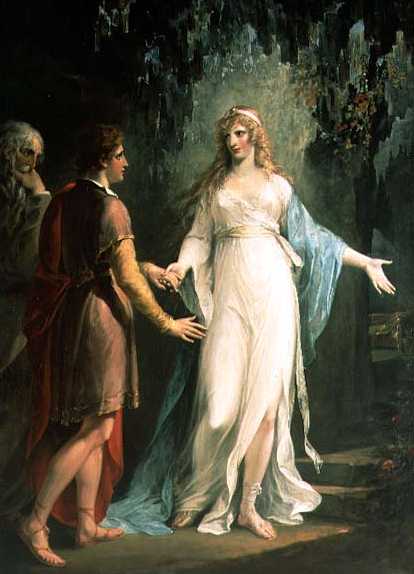
Calypso lives as a goddess of immortality and youth upon the Ogygian island and she entraps and encharms Odysseus until the divine cosmic intervention of Zeus averted her into succumbing this lusty temptation as embellished in these lines, “By then, good bye to him, since no God can evade or thwart the will of Zeus.”
When Odysseys felt homesick remembrances of Penelope haunted him, Calypso’s immortality makes her more superior in her form, stature and appearance compared to Penelope. Odysseus’ choice of being paramoured by this enticement seemed to be foreshadowing Penelope’s susceptibility to time and decay, as metonymic for the realistic human condition he prefers unlike ‘ageless youth’ of Calypso. In this behaviour Odysseus’ choice deprioritizes idolized beauty.
“A cruel folk you are, unmatched to jealousy? You gods cannot bear to let a goddess sleep with a man, even if it is done without concealment or she has chosen him as her lawful consort.” Calypso become disillusioned by the boorish heraldry of Hermes, the giant slayer and Messenger of God; Zeus, the Lord of Hera and Thunderer doesn’t relish the fact of her conjugal union with Odysseus and thereby she releases her captive.
Odysseus cannot but be suspicious of villainous trickery of Calypso, who in intercession, chants breathtaking rhetoric, pointing Odysseus’ crafty mind. “What a villain you are to think of such a thing! It shows the crafty way your own mind works.” This happens, however, that the nymph Calypso becomes intensely emotional and elevated with sensational feelings for the hero proclaims in ingenuity of her fairness of being tender hearted soul.
“For I, after all, have some sense of what is fair; and my heart is not a block of iron. I know what pity is!”
Describe the cosmic and divine interventions of the anthropomorphic Gods in Homer’s Odyssey.
Odysseus and Calypso
Or Justify Odysseyean narrative in perspectives of man’s responsibility rather than divine malevolence
Or “The companions yielding to reckless folly invokes the wrath of the Gods. Explain in the light of the commentary.
Or “That is the God’s work, spinning threads of death through the lives of mortal men…” Explain and justify the perspectives of Alcinous’ speech through the light of divine intervention and cosmic role of gods and goddesses.
Poseidon Lord of the Earthquake and Earth Girdler incites a thunderous rivalry with Odysseus for murdering Cyclops, the mountain giant. In vengeance and vengeful spirits, he shipwrecks Odysseus as manifested by these inferences to these dactylic hexameter, “So I had only to go to Ethiopia for the Gods to change their minds about Odysseus. And there he is, close to the Phaeacian lands, where he is destined to bring his long ordeal to an end. Nevertheless I mean to let him have his plentiful of trouble yet.” In a nutshell, Poseidon is cast as the blocking force of obstacle or hindrance to Odysseus’ return and to Zeus’ will. Odysseus attributes both destructiveness and helpfulness to Zeus when he describes the culminating disasters of his travels and the shipwreck off Thrinacia.
Throughout the narratorial omniscience poaching of animals renders impending doom and life threatening stance. Zeus’ animosity of lightning thunder to strike Odysseus’ ships reflect the divine justice of his companions’ doom and furthermore, Zeus’ prevents Scylla’s reappearance. Both Teiresias’ and Circe’s re echoing of stock advisory imperatives entails foreboding apprehensions with incurring the wrath of Poseidon or Helios’ against killing their sacred cattle:
“And if you yourself contrive to escape, you will come home late, in evil plight, with all your comrades lost.” Athena aids in the favour of betterment for the future of the Ithacan kingdom and she exclaims, “I knew in my heart”.. “That you would return after the loss of all your companions, but I did not want to fight with Poseidon, the brother of my father, who has put anger in his heart in wrath because you blinded his own son.”
Athena’s magical divinity and wondrous marvels have been a boon for Odysseus’ and Telemachus’ accomplishments. Nestor exclaims after the disappearance of Mentes, that, she [goddess Athena] For never in my life have I seen the Goddesses display such open emotion as Pallas Athena had shown for the championship of Odysseus. For instance, Odysseus was blessed by a divine showering of radiance by Goddess Athena upon his brine crusted ascension to shores of Scheria from Ogygiaian isles. Arrogant and hubristic beasts such as Cyclops Polyphemus have been bestowed by Zeus’ showerings of torrential downpours for the fertility and productivity of grapes and grains in mountainous caverns, which Odysseus feels loathsome. Nevertheless, Zeus’ retributive justice to invoke wrathful vengeance in collaboration with Artemis to disenfranchise maidservant for entrapment of Eumaeus is vindictive justification.
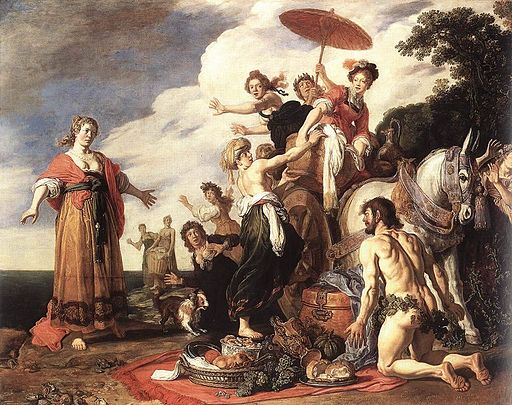
“Odysseus and Nausicaa” by Pieter Lastman
Evaluate Nausicaa’s character as a feminist threat of the Homeric epic Odyssey.
Or Explain the significance of Nausicaa’s feminist character in Homer’s Odyssey.
Or Describe Odyssus’ journey from Ogygia to the island of Scheria and eventually acquaintanceship with Phaecan princess Nausciaa. Illustrate your answer with references to family, marriage and conjugality.
Or “Good luck, my friend, and when you are in your own country, you will remember at times, since it is to me, before all others, you owe your life.” Explain the incidents of the episodes at Scherian island with Nausicaa.
Or Odysseus’ and Nausicaa’s can be considered as unrequited love in canonical literature. Explain with textual evidences.
Seafaring wanderer Odysseus acquainted himself with Phaeacian princess Nausicaa. If Homer hadn’t intended Odysseus’ eventual homecoming then this folk tale romance would evolved as a ‘tragic artistic blunder’ linking conjugality of Odysseus with the Phaeacian princess Nausicaa in the isles of Scheria. The princess attends neither courtly royal affairs, Phaeacian palace games nor Odysseus’ eventual departure. Their solitudinous solace of final meeting renders romantic anticipation. Odysseus’ impetus of Phaeacian episode falsehood rechoes to safeguard the image and reputation of the princess in King Alcinous presence. “My lord”, replied the resourceful Odysseus, “your daughter [Phaeacian princess Nausicaa] is not to blame for that [ushering Odysseus along with her attending maidens’ accompaniment], and I beg you not to take her to task. She did tell me to follow along with the servants. But in my modesty I shrank from doing so, thinking it possible that you might be annoyed at the sight.” [VII 303-307].
Nausicaa’s tactfulness and vigilance in espousal of shipwrecked foreigner Odysseus infers the imminent danger of tarnishing reputation amidst Phaeacian sailors and noble suitors Princess Nausicaa’s demeanor possesses a considerable appeal to influence Odysseus’ future prospects through the cherishing of a royal wedding and sovereignty of a dukedom.
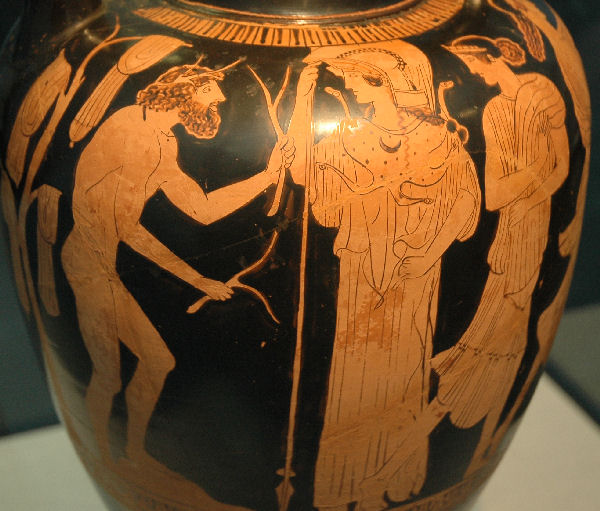
Odysseus, Athena and Nausicaa
Nausicaa is a divine deity as envisioned by Odysseus’ in spellbinding admiration of her grace, beauty and statute. “If you are one of the Gods, it is of Artemis, the daughter of Almighty Zeus, that your beauty, grace and stature most remind me.” [VI 49-52]. Odysseus’ pitiful appeal for a rag to shroud and wrap his nakedness and storytelling of the winds and tempestuous waves of island of Ogygia ensues within this phenomenal meeting. Even Nausicaa’s is hailed to be a female of wonder and veneration for a seafaring voyager like Odysseus. Furthermore, Odysseus’ prayers for Nausicaa’s future blissful conjugality assures something charismatic. Since home, husband and family will be confounding their enemies and delighting their friends. In the end, Nausicaa’s feminine persuasion, graceful eloquence, charming beauty, youthful intelligence exalts Homeric artistic triumph and Odyssean resolution.
1. Nausicaa: A Feminist Threat, Authors: Nicolas P. Gross and Nicholas P. Gross, Source: The Classical World, February 1976, Vol. 69, No. 5, February 1976, pages: 311-317 2. Poor Polyphemus: Emotional Ambivalence In “Odyssey” 9 and 17 , Author: Rick M. Newton, Source: The Classical World, January-February 1983, Vol. 76, No. 3, pages: 137-142. 3. The Role of Telemachus In The Odyssey, Author: M.J. Alden, Belfast, Northern Ireland, Source: Hermes, 2nd Qtr, 1987, pages: 129-137 4. Narrative and Rhetoric To The Odysseus’ Tales To The Phaeacians, Author: Marianne Hopman, Source: The American Journal of Philology, Spring 2012, Vol. 133, No. 1, pages: 1-30 5. The Reunion of Penelope and Odyssey, Author: Chris Emlyn Jones, Source: Greece and Rome, April 1983, Vol. 31, No. 1 , Pages 1-18, Cambridge University Press On Behalf of The Classical Association
[surrea(list)]


 what if telepathic rain filled boiling cold cedar streams of dancing ash that rolled upward in incandescent tides to sweet fragrant sloughs of blood-black ammonia rimmed by deer sitting in beach chairs discussing ones-and-zeros in unpatterned rhythms with venomous violets in ancient Aramaic as ticks stalked great hawks mid pyroclastic flows while boldly grinning ferns with Marilyn Monroe hair hummed derisively in tangerine shade beneath turquoise gums dropping warm lavender snow during any season when snakes reproduced into laurel bushes bearing giant red acorns sprouting thorned orchids that softened the forest floor with pearls of conscience while being serenaded by schizophrenic gnats to the meter of pine bombs whispering in the silence of a chaos so loud that the sky deafens the leaves and betrayal was the norm until the belligerent sun separated into vapid sonnet-spewing starlets cheered on by the dumb and the thunderous applause of the handless as the world became a single-celled virus on the tip of a needle plunged into nothingness and infecting the void and what is real is surreal and surreal is so real that everything is relative and relational in an amalgam of disturbing perspective in perception subsumed in a line of poetry born on the wings of a great moment written between hell and whatever describing life and death and death becomes the purgatory of unfinished business and life reveals how stupid it all is and confirms that the poet is the prophet that will become one with the universe
****************************************************

[poetry]


singing in the silence of beats

while words


 spin


            on


                        trapezes


deliciously catching

                                    thoughtsinmidair

above uncertainties

                                     highwiring

without nets


miraculously

                                    afloat


until the roof

blows

off


and the fog


lifts


*****************************************************

[poetry]


finding lyricism in chaos

listening to the speech of color

seeing the shades of wind

feeling the tingle of time

kissing the memory of was

touching the excitement of is

sensing the truth of now

tasting the world of wow