
730-

Jesus Lizard
Jesus Wept
Jesus’ Son
Judas Hole
Judas Tree
Jesus H Christ Attorney at Law
Judas Priest
Judas Door
Jesus Saves
Jesus Christ Foretopman
Jesus Christ and Jerry Cruncher Resurrection Man at Large
Jesus Christ Superstar
Jesus Camp
Jesus of Montreal
Judas Kiss


				732-

100 word review challenge to Howie Good’s
Stick Figure Opera: 99 100-word Prose Poems.


Imagine word salads made of image
clusters leaking from holes in a canvas
by Dali. And one by Cocteau. With a
side of Bacon. Or shotgun art made by
someone like Burroughs at ten paces
with a pump action, shooting five-gallon
paint cans, resulting impact something like
forensic evidence. Like blood splatters.
With a side of fileted Pollock. Like Dada
at the MAMA. I mean the MOMA.
Opening night Patrons of the arts dancing
a Lobster Quadrille to a Resurrection Jazz
Band. Dressed in top hats with pink boas
and Robante gowns. That’s a Stick
Figure Opera: 100 words exactly.


733-

The Eggplant That Ate Chicago or
The Ham Sandwich That Killed Mama
Cass. Attack of the Killer Tomatoes or
It Came from Schenectady. The Grilled
Cheese Sandwich with the Profile of
Jesus Christ or The Block That God Forgot.
The Thigh Bone Connected to the Hip
Bone or Zen Bones, Zen Bones.


734-

Exploding Trees
Frost Quakes
Arctic Sea Smoke
Fog Freeze
109 below
Climate Change
Weather events
or rock groups


740-

“When I make a film, it is a sleep.
I am dreaming.”

“Realism in unreality is a constant
pitfall.”

“He or she exists only if introduced
with events in a dream.”

“I have always liked the no man’s land
of twilight.”

“What are you trying to say?
I was trying to say what I said.”

Jean Cocteau, “On Orpheus


743-

Memory is what happens next.
“a memory is nothing/nothing is
a memory.” Bernadette Mayer.
“Just because something has never
happened before doesn’t mean it
can’t happen again.” (unknown)
(Sports Center? ESPN?) “I seem
to remember my future works although
I don’t even know what they will be.”
V. Nabokov, The Gift.
“Shove a slogan down the throat
enough times I becomes an acquired taste.”
Jenny Xie. “I confess I don’t believe
in time.” V.N. “an image of the dead or
the fingernail/ of a new born child.”
John Berryman


748-

You don’t know Jack(s)

Jack(ie) Kennedy
Jack(ie) Robinson
Jack(ie) Jensen
Jack Shit (e)
Jack Off
Jack Rabbit
Jack Tar
Jack Johnson
Jack Spicer
Jack beanstalk
Jack Kerouac

Jack Giant Killer
Jack(son) Polloc
Jack(b) Nimble
Jack (b) Quick
Jack Dempsey
Jack Micheline
Jack (a) Lope
Stories from Mark Young
The bats in blackness

I like to find
what’s not found
at once, but lies

within something of another nature,
in repose, distinct.

I have always liked those lines from Denise Levertov’s "Pleasures." Have used them before as an epigraph, to an essay written around an exhibition of works by the great New Zealand painter Ralph Hotere, an exhibition that I remember as consisting of a number of black paintings, but within the black were shades, & shapes.

Am reminded of the lines tonight. & the context in which I used them. There is a rugby game being played on the park below the house. The floodlights are on, but because they’re angled downwards, onto the field, the light is focused inwards, not outwardly diffused. Six banks of lights, one at each corner & at the mid-point of the two longer sides. There is a blanket of light beneath the top of the stanchions, but above them, on this moonless night, the black rests. Stars can be seen.

The lights attract moths. They show like sparks, but moving towards the source, a movie of a fire run backwards, the broken vase made whole again. Large moths, have to be to be seen at this distance. In the line of the lights they are all you can see.

But, step aside a bit, hold up your hand or use a branch to conceal that concentrated bright-light patch. Let your eyes adjust. & at the edges of the seepage you see the bats, shapes within the blackness, come to feast on the moths, to pick them off as their arc goes beyond the lights’ arc. An overlap, a Venn diagram, a feeding zone.

Because

of my Anglophile education in New Zealand, there are vast chunks of U.S. writing that I have never explored. Unlike Bob Dylan's Mr. Jones, I don't think I have read any of F. Scott Fitzgerald's books; Faulkner I cannot read — which aligns him with Australia's Patrick White & Greece's Nikos Kazantzakis; Thomas Wolfe I tried after reading Kerouac's The Town & The City but couldn't get (in to) him. I have never read — which might make me unique on the planet — To Kill a Mockingbird.

Perhaps it has to do with the absence of prescribed cultural antecedents (though much of it has been shown to me as Hollywood movie) & so I have no reference points. There are exceptions, most of them self-subscribed. Moby Dick led me to Melville. Poe & Hawthorne I came to through a liking for fantasy. I've read all the great U.S. crime writers & still love the genre. Whitman's two great poems to Lincoln opened up the marvellous Leaves of Grass. The New American Poetry led me backwards to Williams & Rexroth as well as forwards.

So, confessional time. In my seventh decade I am reading Thoreau for the first time, Cape Cod, picked up — along with a number of other books — at the recent second-hand proceeds-to-charity Bookfest.

& I'm liking it.
Poetry from Steven Bruce
Bottled Laughter

It has been almost seven years
since that forgotten day
in the hobby shop.

Browsing paint brushes
to blush a miniature
dragon’s scales.

Overhearing the cashier’s
gripe about the height
of his new chair,

I approached the counter.

He sat there, spectacles, rosy smile,
weighing over three hundred pounds.

When I gave him the brushes,
he said something humorous.

For the life of me,
I can’t recall what it was.

As he chuckled at his own joke,
he tilted back, and the stool gave
out from underneath him.

By some divine miracle,
I held a straight face
while saying the only thing
you can say in a situation
such as this,

Are you alright, mate?

He clambered to his feet,
cursed and scowled at the stool
with his hands on his hips.

I purchased the brushes, fled the shop,
and continued to hold in laughter.

On the way home,
I recalled the time I tripped
in the rain, slapped my chin and hands
off the road.

How I shot up like some kind
of lightning bolt in reverse.

And it is tonight,
while stargazing,
while trying to find the words,
while accepting absurdity,
that this memory
chooses to flash
my mind’s eye.

I swear, my lips almost tear
as I laugh so hard tears
roll from my eyes.

And it’s not at his misfortune,
the inelegant tumble or the wild,
goat-like cry he gave.

It is the memory
of his little black boots
punting air
as he flailed on his back
like an overturned beetle.
Steven Bruce is a poet, writer, and award-winning author. His poetry and short stories have appeared in magazines, webzines, and anthologies worldwide. In 2018, he graduated from Teesside University with a Master’s Degree in Creative Writing. He is the recipient of the Literary Titan Golden Book Award, the Firebird Book Award, and the Indies Today Five-star Recommendation Badge. Born in the North of England, he now lives and writes full-time out of an apartment in Barcelona.
Poetry from Yike Zhang
Unsung Serenade

In realms ethereal, we ascend the stair,
Our fleeting gazes intertwined in air,
Transcendent and evanescent, this tender plight,
Yet within our hearts, an ineffable knowing takes flight.

Butterflies pirouette, seraphic and amorphous,
Whispering esoteric secrets, shrouded in a luminal chorus,
Oh, how I yearn for them to linger, their presence sublime,
In this ephemeral expanse, where fear finds no place and time.

Through the verdant meadow, our path unfurls,
A gentle zephyr carries your essence, as I behold,
Transient is the nature, whispering in the breeze,
Yet I'm aware, your soul's truth it does seize.

Palpitations, unspoken, within us stir,
An uncharted symphony, our souls concur,
In this poetic silence, a tale unfolds,
With nuances untamed, where desire molds.

Unsaid infatuation, profound and elusive,
Within this labyrinth, our bond tightly fused,
With artistry and grace, our souls serendipitously entwined,
In this unuttered sanctuary, love's testament transcends.
Yike is a 16-year-old sophomore from China with a passion for international relations, creative writing, and debating. Her work can be found in Blue Marble Review, The Trailblazer Review, The Teen Magazine, among others. She edits for multiple academic journals and literary magazines, and she genuinely loves it.
Poetry from Obirija Joshua
I'm still on the road,
guided by Grandma's prayers,
wandering in patched paths with images of green
pastures in mind,

worried and sad as I complete one more revolution
around the sun
still wondering when this vivid imagination would become a
reality.
Poetry from J.J. Campbell

from miles away


here come the dog days

of summer


days of sunshine and the

occasional thunderstorm

or tornado


i miss the days on the farm


where you could see something

rolling in from miles away


enough time for the cats

to run and panic


the birds to get that last

bit out of the feeders


enough time for me to grab

a stiff drink and settle down

on the front porch for the

show
----------------------------------------------------------------
yet another tragedy


another day

another school

shooting


yet another tragedy

we have grown

numb to


everyone knows

how this plays out


calls for gun reform

and the money goes

to make sure it never

happens


doesn't matter the

school or the race

of the victims, etc.


we are slaves to

whatever the rich

can get away with


no matter how much

we believe we can or

will change things
---------------------------------------------------------------------------
more useful advice


had the joy of sharing

a bottle of liquor with

a homeless man back

in my early twenties


he gave me more useful

advice than my fucking

father ever did


i remember that conversation

behind the old arby's like

it was yesterday


easily worth the price of

a bottle of jack daniels

and two packs of cigarettes


never had to think twice

about old hookers or ever

being worried about any

dark alleys
------------------------------------------------------------------------
a bunch of old people


the haze from

the wild fires

is back for

round two


living around

a bunch of old

people


i'm waiting

for them to

start dropping

like flies if it

doesn't rain

or clear out

soon


not exactly

the kind of

entertainment

i'm hoping

for looking

out my front

window
----------------------------------------------------------------------
racing down your bad back


three in the morning


hot water racing down

your bad back


nothing legal touches

the pain anymore


there aren't many

options left, at least

in this state so far


you doubt there is

a THC level that

eases this


you're not sure how

many organs you

would need to sell

for a morphine drip


and no one is just

casually giving when

it comes to heroin or

cocaine for relieving

the pain


and there are the

moments where

it gets bleak


you still have no

clue what keeps

you going
J.J. Campbell (1976 – ?) is old enough to know where the bodies are buried. He’s been widely published over the years, most recently at Horror Sleaze Trash, The Beatnik Cowboy, Disturb the Universe Magazine, Lothlorien Poetry Journal and The Rye Whiskey Review. You can find him most days on his mildly entertaining blog, evil delights. (https://evildelights.blogspot.com)
Essay from Z.I. Mahmud

Cleanth Brookes pointed out in the Paradox of Language that the poem is the well-wrought urn itself and will not suffer in comparison with the prince’s half-acre tomb…the pretty sonnets will not merely hold the ashes of the phoenix in a decently earthly memorial. But their legend, their story will give them canonization and approve them as love’s saints; other lovers will invoke them…..The urn to which we are summoned, the urn which hold the ashes of the phoenix is like the well-wrought urn of Donne’s Canonization, which contains the Phoenix lovers’ ashes. One is reminded of yet another urn——–Keats’ Grecian urn which contain Beauty and Truth as Shakespeare’s Urn embodied Beauty, Truth and Rarity. But there is a sense in which all such urns contain the ashes of the Phoenix.
Background Context:
Catholics were persecuted with treason and felony by Protestant Elizabethans. John Donne did not receive his degree from either Oxford or Cambridge because he refused to the path of allegiance, which would have compromised his Catholic faith.
The poem’s liberty to have been written in the wake of criticism that he received for secretly marrying Anne More, an act that led to his brief imprisonment and expulsion from his courtly circles.
The colloquial opening of the clause sharply contrasts to the poem’s title Donne’s use of a blasphemous curse undermines the expectations created by a title that seems to focus on profound piety. /”For God’s sake hold your tongue and let me love.”/
The poetic voices frustrations and angel is implicit in the shocking opening clause. The alliterative of I used when speaking of love presents the contrasts to the gentle emotion of love and the harshness of the poet’s anger.
Donne presents himself as physically infirm and poor. He suggests that the addressee should criticize these aspects of himself rather than anything regarding his love. /”Or chide my palsy, or my gout,/ /My five grey hairs, or ruined fortune flout,”/ Here the alliteration of the forceful fricative maintains the sense of the infuriating image in the poetic diction.
/”With wealth your state, your mind with arts improve,”/
/”Take a course, get you a place,”/
/”Observe his honour, or his grace,”/
/”Or the king’s real or his stamped face,”/
/”Contemplate; what you will approve,”/
/”So you will let me love!”/
A mocking tone is created by the suggestion of observing the kin himself. This my seem like a valuable instruction except for the juxtaposed alternative. /”Or his stamped face.”/ This reference to a coin, stamped with the face of James-I, implies that there is much worth in the observation of either.
/”Alas, alas, who’s injured by my love?”/
/”Add one more to the plaguy bill?”/
Hyperbolic Donne’s sardonic approach is evident in the rhetorical questions. Being embittered and exiled from the society as a result of his marriage to Anne More so scathingly slurs the conventional Petrarchan imagery of profound emotion having an effect upon the world. Her sights have not drowned ships nor his tears caused floors. /”And merchant’s ships have my sights drowned?”/
Butterflies and moths are small and insignificant symbols of love imageries to Elizabethans.
/”Call her one, me another fly,”/ /”We’re tapers too, and at our own cost die.”/
A moth is attracted to a candle, so Donne epitomizes Moth in his imagery. Elizabethan euphemism die alludes to gratification of the orgasm reduced to life expectancy.
/”And in us we find the eagle and the dove.”/
Eagle symbolizes masculinity and power imageries while dove symbolizes femininity and peace imageries conjoined together.
Furthermore tombs and hearths are conventional methods of commemorating the dead, although they are insufficient for commemorating love of such a magnitude unless verses immortalized being chronicled through sonnets.
Examine Anandamath as a political work of Hindu myth and Hindu revivalism that establishes conceptuality with gender and history.
Or
Explain and elucidate Anandamath in references to the Birth of a Goddess, Vande Mataram and Hindu Nationhood.
Or
Discuss the relevance of the song Vande Mataram in the novel Anandamath in the context of gender and history.
In Bankim Chatterjee’s Anandamath the lyrics of patriotic and nationalist homily Vande Mataram glorifies the spirit of nationalism and nationhood as encompassed in the gender terrains—the allegory of the metaphorical motherland through the portrayals of stalwarts feminists such as Kalyani and Shanti and anthropomorphic femininity as depicted by Mother Goddess. Fakir Sanyasi Rebellion and the Sepoy Mutiny of the famine ravenous Bengal inflicted by the calamitous and disastrous plight of mass starvation and disillusioning poverty. In terms of historicity the novel fictionalises the struggle for freedom by the peasants movement and the ascetic pilgrims guerilla warfare united fronts of these patriotic rebels executing their civilian militaristic operations against imperialistic British colonial domain. Spectral phantoms of cadaverous and cannibalistic intruders rampaging the denizens of the suburban locales from mob lynching to mayhem and bedlam forfeiting to usurp their wealth and fortune. Mahendra the wealthy aristocratic landed gentry deserts his ancestral legacy in wonder of rectitude and salvation from starvation and eventually encounters the pilgrims freedom fighters.
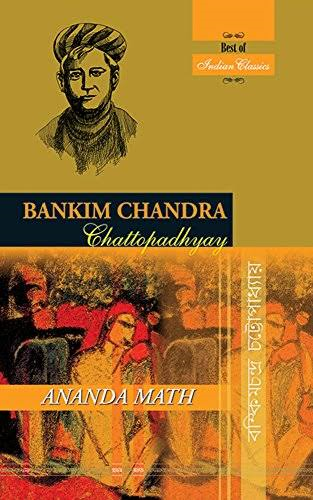
Bankim was experimenting with the awakening spirit of Hindu revivalism a kind of idealistic romantic regeneration of the Hindu ethos. Miscreants of colonial resistance carried a Bhagavad Gita along with weaponries such as revolvers. The Vande Mataram should not be chanted to insult or oppress the religious sentiments of the Muslims pointed out by Mahatma Gandhi…/”It should not be a cry against religion”/ /”It should be a cry against politics”/ … Satyananda’s chauvinistic prejudices of communalism and Islamophobia are explicated in the speech, /”We do not want power for ourselves. We want to exterminate all the Muslims on this land as they are the enemies of God.”/ /“Where else have you seen a land where your wealth is not safe in the attic chest, the sacred idol is not safe in the shrine, the foetus is not safe in the mother’s womb…all our faith is ruined, our honour and creed gone…even now our lives are in danger…unless we drive out these drunken Muslim wretches, how can we save the religion of the Hindus?”/ Nationalists Muslims found it difficult to chant Vande Mataram, since the song personified the motherland as the Goddess, thereby alienating Christians and Muslims, whose faith could not acknowledge personified deity embodied in Hinduism. AM Muzzaffar Ahmad, founder of Bengali communism described the novel in the language, “full of communal hatred from beginning till end.” Shanti and Jibananda repressed their sexual eroticism and the romantic relationship; they renounced sexuality alike Mahendra and Kalyani; whom pledged to the devotionalism of celibacy. Death, sacrifice, renunciations and abandonment created to fulfil the novelistic space with heroism. Jaggadhattri, the goddess of agriculture cleared the forests to tame wild beasts. Kali, the goddess denoted the lapse from production and civilization; she marked the time of reversion to the jungles. Demon slayer Durga, the goddess encompasses, might and glory, learning and wealth, who triumphs over the demons as the imperialistic figure trampling over her adversarial foes. Shameless and ravenous Kali wearing human skull and trampling the prostrate body of her divine consort symbolically resembles the peasant turned into robbers. The villagers are the spectral flames of phantom figures in ghastly terror and gothic horror; emerged as the ghostly shadows, cadaverous and naked to devour human flesh, to tear each other apart. Heroism, valour, bravery, splendor and glory were the cultural heritage of Bengal that reflected story telling dealing with fantasy, magic, chivalry and adventure. Shanti implores resurrected Jibanananda to renounce the garbs of a Sanyasi since they have achieved victory in the battle and this is reminiscent of the Pandavas in abandoning their kingdom. She heroically accompanies her divine consort life partner on a great departure (Mahaprasthan). While Drupadi was merely following her five husbands, Bankim’s heroine was marching abreast with the fellow traveler husband in joint quest for the welfare of the motherland. Bakim delinks womanhood from the enclosed space of domesticity and subverts the canon of femininity through delineation of Shanti.
Comment on the novel as the reflection of society with special significance to the Aspects of the Novel.
Novel as a narrative in prose perfectly mirrors the embodiments of the society in the modern era encompassing fictional narrative, literary prose and experience of intimacy. E.M. Forster characterizes novel as a fiction in prose of a certain extent exempted from historicization and chronicles of spatiotemporal regions. In Aspects of the Novel the writer explores the varieties of genres and insightfully sheds lights on its functionary in capturing and portraying the intricacies and complexities of the world we live in.
The novelist highlights the storylines and plot structures as the narrative techniques where authors engross in indulgence of the social and psychological terrains of the human society limelighting the human experiences with profundities. Novels possess the magical charm and spell to fantasize and romanticize the allegorical significance and satirical symbolism with magnificence and radiance.
Novels critique societies in the explication and implications of injustices, inequalities, prejudices, discrimination, disparities and tyrannical hegemonies and other vicious evils. Often the Dickensian narratives of Victorian literature portray flat characters as villains or antiheroes and this character can be defined as two dimensional in the sense that they are relatively uncomplicated and they do not change throughout the narrative. By contrast round characters are complex and three-dimension in the sense that they change throughout the narrative; they undergo development sometimes sufficiently to surprise the readers with clichés and cliff-hangers as suspenseful literary tropes. For instance, James Steerforth is a stock character in the 1850 novel David Copperfield by Charles Dickens—–a handsome young man noted for his wit and romantic charm. Though he is liked by his friends, he proves himself to be condescending and lacking in consideration for others. Nonetheless, unlike James Steerforth, David Copperfield is a round character—–the bildungsroman protagonist. Furthermore, novels reflect prevailing background, culture, heritage, lifestyle, traditions, customs, philosophies and heresies in the midst of the intricacies of those dispositions, motivations, emotions and relationships. Inevitably Forster emphasizes the essence of storytelling in order to provide illustrative understanding and narrative analyses of the societies. “Birth, food, love, sleep and death” are the main facets of the storyline in depicting the human nature, social issues and human condition.

Furthermore, the narrative of events arranged in their time sequence becomes feeble at the end through resolution or anti-climax. As mirror of society novels have the proclivity to endorse fantasy and prophecy consisted of mythical allusions. Parodies and adaptations were elements of fantasy in the viewpoint of E.M. Forster as depicted in the novel of Ulysses by James Joyce based on the Greek myth Odysseus. Forster describes the aspects of prophecies in a novel as the mimesis of the universal voice of the author ;ie the subject-matter might be anything but universal——–that mimics “humility” and “the suspension of the sense of humour” Thus this discussion can be concluded that readers have the privilege of exploring diversified perspectives and historical contexts, and thereby enriching their understanding of the world; and this results from the aftermath of immersing in the lives and experiences of fictional characters, novels cultivate humanity, comradeship, solidarity and fraternity.
ElaborateEthics and Values of Reading Indian Fiction.
Swadeshi and Swadhinata are facsimiles of nationalist and patriotic temperaments disposed by the glorious revolutionaries during the Post Pallesy Bengali rebellions of tribes and peasants as depicted by the stalwart fiction writers such as Bankim Chandra Chatterjee, Rabindranath Tagore and Sharatchandra Chatterjee notably in their portrayals of Jibanananda, Gora and Sabyasacchi Mallick in their love of religion, patriotism and service to one’s own country and people against the antihumanitarian colonial subjugation, tyrannical exploitation and inhumane persecution.
Spirits of camaraderie and affinity of fraternity in the unison of brotherhood unites these charismatic revolutionaries and heroic idealogues to be apostles of brethrenship in case of freedom struggle, emancipation, advancements of revivalist movement towards bettering society transitioning to progressivism and libertinism. Swadeshi era’s historical fiction have romanticized these maxims and aphorisms of sanctimonious unity in accomplishing moral endeavours or sainted missions. In the aftermath of the 1857 mercantile classes and burgeoning Bengali townsfolk comradeship could be contrasted scathingly with the obscurantist and antimodern proclivities in the minds of these alienated Bengali gentry arouse stirring controversy in the satirical allegories of these literati. Nationalists religious prejudices of the masses arousing and bringing them into the struggle against colonialism is nonetheless breach of the peaceful solidarity in exacerbating the Hindu-Muslim communalism. Muslim separatism was the residue of political, cultural, social and economic conditions peculiar to India from the late 18th to the emerging 19th centuries. Religious vehemence was limiting constraint of the advancing national movement on a multiclass and multi communal basis it ceases development and becomes its fretters. However, Nikhil, the aristocratic gentry of Bengali landlords was exceptionally the humanitarian advocate of the Muslim traders, harassed into giving to the demands of the public to burn their stocks of British goods in a highly spectacularised and ritualistic fashion. Tagore’s Ghore Bhaire (The Home and The World, 1916) depicted Nikhil’s dissent reactionary to the illegitimate behavior against traders living in his estate; he is labelled unpatriotic and regressive.
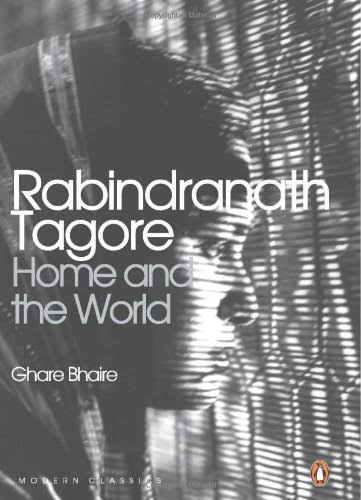
Collapse of the basic human ties and affection, of devotion and filial bonds are illustrative in ethical degradation and values extinction by the upheavals of the Quit India Movement of 1942, the devastating Bengal Famine of 1942-43; Emergence of Communism and Marxist Politics in Colonial Bengal. The job-seeking educated unemployed youth as well as the large number of famine stricken peasantry faced a large scale of indignation and suffering from hunger and starvation as exemplified and exhibited in the novels of the Bandyapadhays. Anti-fascist and pacific platonisms would be salvaging wrecks within the colonial and post-colonial epochs. Non-violence of the massive upsurge and imprisoning of the struggling patriots; the Japanese bombings in the city of Calcutta and different parts of Bengal were to be furthered explored in the ethics and values of narratives.