
BLUE EYES, RED HAIR

Eyes of ice,
hair of flames –
yet I burn when you look at me,
I freeze when I touch you.

I want to be the last man to make you cry.
My arms can be a cradle.
I want to be the only man
to stay another night.

Eyes of ice,
hair of flames –
I stare into you and you crack;
I run my hands through all that cold fire.


FLOWER CHAIN

She put the flowers in a chain
But she never wore them
As a necklace or a crown.
She kept the flower chain in a locked drawer
Below a book of Poe given by a dandelion,
Beside an engraved corkscrew given by a mangrove flower,
On top of a stack of poems written by this moon flower.


One flower rarely touched another
And when one accidentally did
In her shut drawer
She just denied the existence of the other flower
As a whisper in the dark.

She put the flowers in a chain,
Never wearing them
As a necklace or a crown
But hiding them in a drawer
Away from the light.
Removing them one at a time
To wear behind her ear
Solitarily
In the dark
Before the mirror,

Feeling at once sad and powerful,
Sexy and unfulfilled,
Needed but alone.

GOD IS JUST A MAGNET IN THE SKY

The wind came up along the rain
And whipped around the house
As I waited for something to happen
But nothing happened.
Just rain and wind
And music and laundry
And the alarm clock
That will remind me.

You were born in the memory of the poverty of earthquakes
And the wreckage of civil wars
While I was born into a little house on a dead end street
Where the trees were sick and yellow
But we could play roller hockey in the street without defense.
Along the way we found the same music
And we found the same empathy, then
When we met a seed was planted.
Neither of us went to the prom, both of us lived our lives
Riding the subway to the MidManhattan Library
And now here we are, as far apart
As the day you were bitten by a rat in your crib
While I learned about dinosaurs in Kindergarten class,
Where I met Michael Blair and Marc Gonzalez.

If only we had met while staring at the same painting
In an art gallery during your time in college
As I toiled unloading trucks and ordering sundries.
Maybe this would be different.
Maybe our bodies would still be beside one another.
Maybe we would be hearing the same song
While I made the meatballs and you boiled the spaghetti
And added to the gravy.
Huh. Maybe.
But this is what is.

The wind dies down,
Drowned out by the sputter of the washing machine
And the music always playing
In this room that is otherwise silent but for my sighs
And my swears.
Now there is a violin and an accordion here
While your home is filled with anything or nothing at all.

You are just a little horse in a small stable,
Unaware of the magic you are capable.
And I am just a little horse in the wild,
Pretending to be a thoroughbred,
Kicking around this little hostel in the middle of nowhere.
Neither of us will ever run free
Or find one another again
And so be it.
Let it be so.

My brother used to tell me that God is just a magnet in the sky
And that makes as much sense as anything.
If my heart was a compass it would point to you
As True North
As I move toward there

But never arrive
In this life
Or likely any other.

We are both born in the mud of slaves
And slaves we remain
In this life.
May there be another lifetime where we are us
And free
With the sharp rocks still under our feet
As we refrain from complaint.

God is just a magnet in the sky.
I’ve yet to see a better argument why or why not.

PRETTY BLONDE LADY SITTING AT THE COUNTER IN THE DINER

I look up from where I am sitting
At the booth in the back
And you have already come in and sat down
At the counter unnoticed,
Sitting and staring and typing into your phone,
Your little pale feet in sandals and curled up a little
Under the stool.
I put my glasses on so I can watch you
Without you noticing me from my perfect angle
In the booth.

I can hardly see your face but you look good everywhere else
With your shoulder length blonde hair, staring straight down
At your phone, occasionally typing but never looking up.
Stout body, about 30 lbs. overweight – but aren’t we all?
About my age and growing old – but aren’t we all?
You frown into your phone until the waitress comes.
I keep watching you. I can hardly see your face.

You give the waitress a smile as you order. A pained smile
Of politeness, that grin that is close to the baring of a predator’s teeth.

My food arrives and I watch you as I eat it.
You can’t see me or feel I am watching. I am insignificant.
I cannot hurt you and maybe I can help you but we’ll never know.
You won’t turn around and look at me and I would be afraid if you did.
Your food comes and you eat without joy, in a hurry,
Sucking the orange juice into your mouth through a straw.
Still you look down at your phone and frown and type.
Is your husband a bastard? Are your kids not coming home for Christmas?
Is your job asking you to work today?
Is your mother dying?
Maybe you just frown all day. Are you in misery?
Are you a carrier of misery?
So many of us are both.

I watch you and sip my coffee,
Imagining your naked body under that ghastly Christmas sweater,
The soft gentle roll of fat on your belly you cannot remove
No matter how hard you try
And I would not hesitate to put my hands upon,
Standing behind you in the bathroom as you are topless
In just your panties, combing your hair in the mirror.

I finish my food, finish my coffee, refuse a refill.
I get up, leave the tip, walk right past you
And you do not notice me. Your mannerisms do not change.
I pay at the cashier and turn around to finally see your face
And you are still looking down, concentrating,
Done shoveling the food in without an ounce of pleasure.
I still can’t really see your face. I turn around, get to the door,
Walk out into the late morning sun,
Imagining you are beautiful but sad,
The way I imagine I am,
Will continue to be.


YOUR BOOK

I bought your book
because of the picture of you
on the back cover.

I looked into your eyes.
I felt your body all along mine
as my heart flip-flopped in its cage.

I want to luxuriate in your presence
while you write poems of taffeta
and poems of steel.
Sewn by you,
forged by you.

What kind of dazzling words await me
between the pages
of your book?
How deeply will I fall?

Your book is sleeping now
on my bedside table.
I give it a nudge
and it opens to the first page
but I’m afraid to read it,

knowing that you cannot be
the you I am so certain you are.

I close the book.
I don’t want it ruined just yet.

Perhaps tomorrow my curiosity will overtake
my fear
and I can destroy it all then.
Poetry from Adepoju Timileyin
She definitely wasn't singing.

This was a cry at the break

of dawn, I couldn't

understand her words but the pain.


Perhaps, hope of surviving the day,

the sky is enough to occupy species

but not ready to spice her lips.


Or the climate condition,

surviving the burning noon

or the cold that houses her haven.


She definitely wants a HOME

Maybe a listener or comforter,

and she did, as I watch her.


She was next to my room,

perching filtered tree on hope to survive.

Not all bird sings, some cries.


Title:- Cries of my neighbour

Adepoju Timileyin: Juste Ink


::::::::::::::::::::::::::::::::::::::::::::::::::::::::::::::::::::


Nigh on Nine


I rote on tales from granny,

about the last penny

that got married to the soil,

She must be lost.


I learnt of mistakes from granny,

that it shines with the evening sun

it's neither hot but hurts n' hunt.

Oh pains of losing a day!


I cleared anxiety n' shuffle my hopes.

I nailed my fear and caged my guilt,

And before the night came

I cleared the soil afraid of losing

my penny.


And so I dream

dreamt about my sleep.

And so I knew,

knows dreamland was an odyssey

to future n' Illusion pinned on mindset.


Adepoju Timileyin: Juste Ink.


:::::::::::::::::::::::::::::::::::::::::::::::::::::::::::::::::::::


My Grandma Tales


My grandma had said,

"even burial grounds makes noise"

She said, her father, My granny

still shouts, whispers

n' hold whips on wheel of hope.


She also said, Màmá Sódìki,

our next door neighbour, whose history says

she left to buy cloth for her children since birth, I don't know if to envy the twin, they'll have more to wear.


And Ìyá okẹ̀-odò who sit beneath

the ólùmọ́ tree and feed ears with Àló,

I once overheard nightingale

repeating her rhythm,

who dare not envy such sonorous tune.


My grandma said,

they made burial ground their haven

and scare us away from their abode

to home beneath momma's wrapper.


Poem by:- Juste Ink


::::::::::::::::::::::::::::::::::::::::::::::::::::::::::::::::::::


POET'RY


Where there is pain;

We proffer lines of comfort....

Where there is betrayal;

We sit them beneath stanzas of trust...

And where there is no one,

We are here, there, n' anywhere,

With themes of solitude enough

to gulp sorrows


We have chose to bear

children of their pains,

We have chose to carry

drops of their misfortune

on lines (art) of poetry.


Poem by:- Adepoju Timileyin: Juste Ink
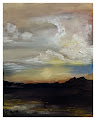
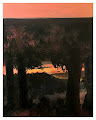
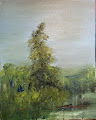
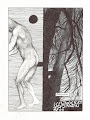
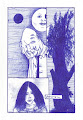
Artwork from Norman J. Olson
Poetry from J.D. DeHart
Marginalia


Now, here it is,

nestled in the ice path,

resting restless


at page’s side.


While the wide

blank field might

draw the eye,


free of lilt, unmarked,

virgin ground,


it’s a landscape

largely without contemplation.


Look instead at corners

of circumnavigation, the story

echoes from the mountain’s


sharp spaces,


often just out of sight,

spoken over,

ignored                        removed


a palimpsest reaching

onward, outward,


a counternarrative

ready to recenter.


Predators Are Often Silent


Of course, we had no idea

such teeth were set just at the boundary

of quiet tree line.


Who might have known that a hungry

force could exist as a mere shift

of darkness to light?


Such a soundless movement.


We have so many complicated

stories of assaults in cacophony,

yet damage can swiftly switch foot

to claw,


undetected.


My wife tilted with a rustle,

trying

to make sense of the change,


considering the air, looking at me

as if to say: Do you see it too?


I could only nod in July’s

amber porch glow,

before we turned back inside,

retreating to the safety of society.


Does the Horse Deserve a Poem?


What seemed like imminent death

galloped towards me.


I must have been fourteen,

thinking I knew more than

I did (probably still think that way).


Still galloping, he turned to the side

and passed gas – loudly.

Then trotted away. Anticlimactic.


Here I am talking about this

decades later, and does this moment

deserve to be preserved in poetic

form?


The horse, no doubt, is long since

passed on. I keep his legacy alive.


I saw him in the hollow,

at the neighbor’s house where

I cried at the age of twelve


because I misread country code –


threw a rock at a dog that was

chasing some deer, which I thought was

a universal action.


I can picture him now not stopping, what

might have been. Coming face to face

with barnyard rage, trampled.


When he saw that I did not run, I suppose

he decided there was no fun in it,


leaving me with only another story

to tell from the country.


Years later, I would tell my students

and some parts of this story always earned

an enthusiastic guffaw.


Perhaps, they might think, the best

story I ever told.


Too Nice


I suppose they might say,

except those few who have

whisked moments to froth.


We are travelers here one time,

so far as I know, and forestall

rather than rush to rage.


Nevertheless, backed in a corner,

I can find the bone-edge

words and deliver them,


well past the wishing

for compassion instead.


How Unexpected


this new window view,

a trip to share about Salinger,

meeting Holden Caulfield

again.


The story takes a turn,

a moment of decision, and here

I am, whispering and singing

words


on a new and yet familiar stage,


celebrating words from Zora

Beale on down to Long

Way Down,


and so will state again

a love for the written word.
Short story from Mary Grimm
Dreaming Backward

I was someone else, a younger woman who was polite and shy.

I was on a family vacation except it was not my family

I was looking for a dentist but he had moved out and his office was empty.

I was a male student in a comics class, not paying attention, and was called on to explicate a new superhero comic.

I saw an old friend pass by me, quite close, intent on something else. She had aged and her hair was uncombed.

I was a character in a book, but I was also trying to write the book.

I climbed into a treehouse that was carved into a great tree.

I discovered that my boyfriend had spilled something so I wetted two paper towels to wipe it up -- the spill was a yellow-orange color, as if it had turmeric in it.

I was in my sister’s office and her bookcase tipped over and hit her in the back of her head.

I was visiting a billionaire on his immense yacht.

I was crossing a plaza and saw my cousin coming toward me. I realized I wasn’t wearing a mask when I saw that she wasn’t wearing a mask. But I was embarrassed to put mine on.

I was piloting a small submarine in a sea the color of lime jello with a few drops of yellow food coloring added.

I drove with a man who had a wooden car to a factory where we were going to have lunch in the employee cafeteria, but when we arrived there were dinosaurs in the parking lot.

I had to protect a baby – a real baby and a fake baby – from someone who wanted to steal it. There was some question of whether the fake baby was in fact also real.

I was rewriting the Lara Croft film I watched last night, thinking about whether it was likely that she would kill Gerard Butler, her lover.

I was at a beach and someone was swimming very far out.
Mary Grimm has had two books published, Left to Themselves (novel) and Stealing Time (story collection), and a number of flash pieces in places like Helen, The Citron Review, and Tiferet. Currently, she is working on a YA thriller.
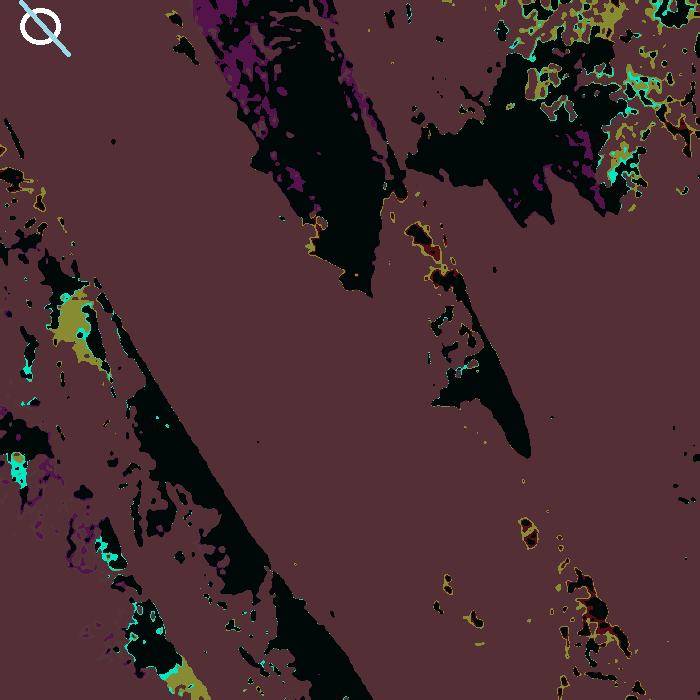
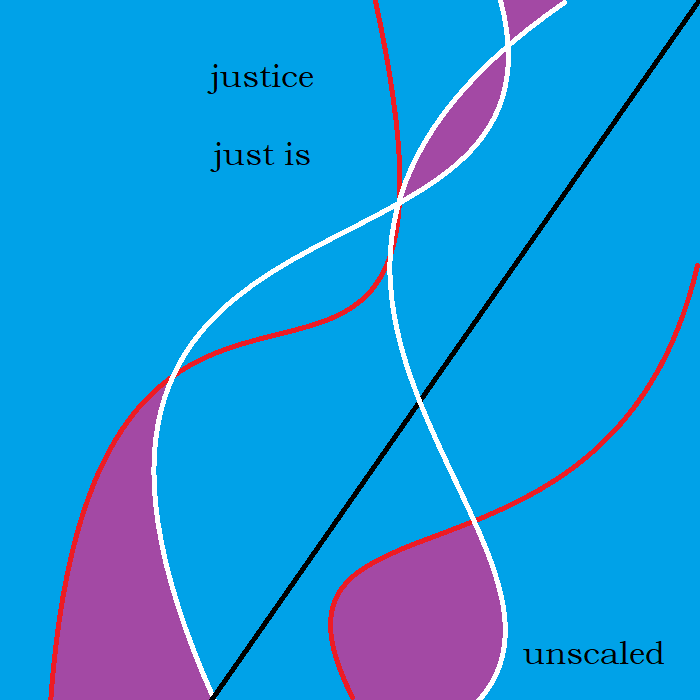
Art from Mark Young
Short essay from Lorraine Caputo
QUIRIGUÁ
A rocky road studded with jade and copper-blue rocks cuts for several miles through banana plantation, heading for the heart of the Maya past. This land formerly of Cuauc Sky, Jade Sky … formerly of the United Fruit Company, now (in this late-December of 1993) of DelMonte.
A hedge of clavel separates road from field. Their bright red flowers cascade towards the dustraised by passing trucks and tourist buses. Three men ride up on bicycles, a small bunch of bananas slung from the handlebars. They pass a sign. PROHIBITED TO CUT RACIMO DE BANANO.
The finca stretches to either side, laced with irrigation ditches and overhead cable lines. Broken sunlight shifts on the ground with each sway of the broad green leaves splitting into thick frays. Large purple and red teardrop flowers bow. As each aged petal curls away, the delicate fingers of a new bunch of bananas is revealed. The growing racimo is protected from sun, dirt, rain by blue perforated bags. Trees are tied to one another with a thin white cord to keep them erect beneath the weight of heavying fruit.
Four workers emerge from a field. One has a small bundle of bananas in hand. Their loose rubber boots slap against calves. The lunchtime silence interrupted by birdsongs and the sound of water erupting from upright black pipes. A circulating sprayer pounds it down upon the leaves like a torrential rainstorm. The road wettens, muddies. It continues through a guarded gate. HALT PRIVATE PROPERTY BANDEGUA.
An old rail line passes through its own yellow and black barrier. Across the road and rusty tracks lie the ruins of Quiriguá.~
~ Upon entering the site the banana forest gives way to palms and amates, ceibas and almond trees. Elaborately carved stelae rise seven, eight, nine meters towards a rain-threatening sky.
This Quiriguá once was a colony of Copán only 50 kilometers away as the cuervo flies.But Cuauc Sky chose independence. He captured 18 Rabbit and beheaded that Copán rival. These stones record the history. This Maya kingdom, tough, faded with the rule of Jade Sky. The spirit houses and monuments sank into the returning jungle.
Many centuries later arrived a new conqueror: United Fruit. It stretched its fincas to the hills that roll down to the Río Motagua that once divided those great Maya kingdoms, that divided the great rival fruit companies. An island in the new banana jungle, United Fruit donated this site several decades after acquiring these lands.~ ~ ~
I turn back following the rusty rails into the heart of the finca. Yellow flowers and grass cover the rotting wood ties. Banana fields dense on either side.I soon come upon a light-ochre structure: PLANTA 22 – WITH TEAMWORK WE HAVE SUCCEEDED IN PRODUCING BANANAS OF THE BEST QUALITY DEL MONTE.
The sound of water and voices echo from the open building. The packing plant is idle until day after next when the banana branches will arrive on those cable lines. Their wire-mesh baskets hang empty.
But still the workers toil their seven days a week, from sunrise to after sunset. Barefoot women scrub the tanks in which the choice bananas are washed and disinfected. They scoop the water out of the vat with their hands and brush the rims and outside walls. A young boy helps his mother. The smell of their chemical bath hangs in the humid air. Empty Del Monte boxes stack. A woman rubber cements bright yellow plastic on blocks of styrofoam. They will divide the boxes, protect the fruit when packing resumes.
Outside, an empty truck waits, its rear doors open, to take the rejects to Central American markets. The conveyor belts to carry that clean, perfect fruit lie slack.~ ~ ~ ~
Again I walk atop the railroad barranca. A man in a short-sleeve t-shirt straddles the walls of an irrigation ditch. He turns the massive black wheel handle. Stagnant water seeps then flows into the field. A dirt road leads to grid-laid tin-roofed, smooth-plastered walls of the workers’ housing.
A blue tractor pulls a flatbed trailer. On benches sit four bananeros going into the fields.At the low bridge before Quiriguá village, the banana forest ends, and just at the edge of that pueblo, a yellow and black guard gate blocks the old tracks: HALT.
This branch off the Puerto Barrios line continues into the village of sagging wooden houses straddling canals. The tin roofs rust under the stormy sky.
Lorraine Caputo is a wandering troubadour whose writings appear in over 300 journals on six continents, and 22 collections – including On Galápagos Shores (dancing girl press, 2019) and Chaco Dreams (Origami Poems Project, 2022). She also authors travel narratives, with works in the anthologies Drive: Women’s True Stories from the Open Road (Seal Press, 2002) and V!VA List Latin America (Viva Travel Guides, 2007), as well as articles and guidebooks. Her writing has been honored by the Parliamentary Poet Laureate of Canada (2011) and thrice nominated for the Best of the Net. Caputo has done literary readings from Alaska to the Patagonia. She journeys through Latin America with her faithful knapsack Rocinante, listening to the voices of the pueblos and Earth.
Follow her adventures at www.facebook.com/lorrainecaputo.wanderer or http://latinamericawanderer.wordpress.com.