Poetry and prose from Jean Eureka

Jean Eureka

“Let’s dream big and make reality bigger than our dreams, let’s dream together in a humanity immersed in art, science and culture.”

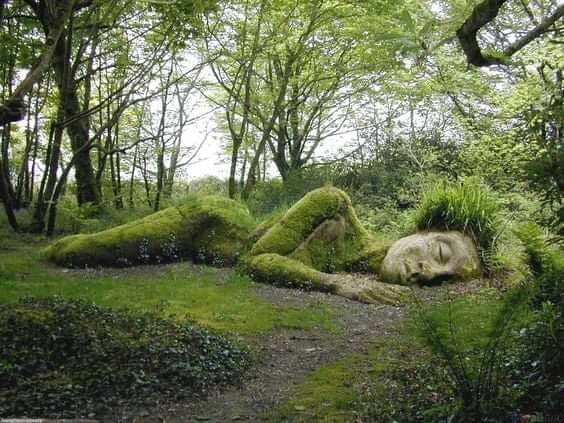
Floating lightness By JEAN EUREKA

Floating lightness, sign materiality
opposite confrontation, unfolded metaphors,
in pacts of stone.
Mythical experience, inherited revelation
light synthesis, sublimation, imaginary.
Whole in quarters, Cloudy in media,
Asleep in thirds, Initiation and ephemeral body,
Wake up.
Alter ego neon, Eternal essence
Induction of the teacher, In silver gardens
time center, inert return, life, sacrifice, resolution
Tlàloc quartz, children, gods, droughts, Abyssal hike.
Resurrection of allegories
Luminous tremors
Idyllic awakenings
Brief review
In decaying inductions
Parasomatic, extracorporeal
Pact accepted,
On mother moons.
Swing bridges
Irreversible destiny.
Here and now
Tomorrow, never, always.
seductive lightness.

---------------------------------------

Drought  
By Jean Eureka

The prairie became desert, it was the decisions, the ones that are made, the ones that are forgotten, it was the wars, the pain and the greed. Of green cloaks, now marked cracks. The meadow became deserted, it was the indecisions, the ones that are released, the memories, it was the half peace, the false joy, the feigned detachment. Of blue cloaks, deep cracks. The lush meadow became desert, the sky no longer watered the cloaks, fearful of hypocrisy.
                         
 And despite everything, I can still see the light through the cracks.

Betrayal irreversible, death irreversible. Your impact, my impact, our impact ... let's not look to blame if there is no time for solutions.
Does it matter? Did it matter?
Earth resists, humanity ... awake!
The prairie became desert ... arid, hot, and inhospitable.
And we are still here.
Biocorta: 

The DHC. Architect Jeanette  E. Tiburcio, known as Jean Eureka, is a proud Veracruzana. Living in the state of Querétaro for two decades, and the descendant of a great artistic, educational, historical and cultural legacy, she is known in the world as the Mexican Pandora's Box for her fascination with poetry. 

She is also known for supporting spoken word, for teaching architecture, the arts, mathematics, and science. Also, for promoting youth of all ages, architects and teachers. 

She began her career with a masters' degree in Innovation and Research, as well as in Neurolinguistics and Accelerated Learning. She has 30 years of experience teaching mathematics in basic education, high school and college, and has more than 150 awards for her activism, awarded in more than 50 countries for her social contributions, cultural, educational, artistic and peace achievements. 

She has 11 honorary doctorate degrees awarded by different universities on four continents.

She is Life President of Mil Mentes por Mexico, Cabina 11 Cadena Global, Eureka, Accelerated Mathematical Learning and the International Rector of the Mexican University of Entrepreneurship. She is also the International Rector of the Children's University, a recent member of the World Academy of Thought, and an honorary member of Teaching Colleges in America. She is the Founding President of Sustainable Reaction working on the SDGs 2030, and the National Executive President for Mexico of the Main Research Institute of India in its general offices for Mexico. 

She is a member of different peace groups in the world working to forge a better human condition, where ideas are promoted in harmonious freedom of collaboration among nations based on understanding and promotion of universal values ​​and respect to achieve justice and freedom of thought. 

In 2022 she was named Honorary President of the Hispanic World Union of Writers, which was founded 30 years ago and has a presence in 140 countries. She has two solo books and has participated in 22 international anthologies. She is the Founder of Las Olas del Arte Magazine in Belgium and of Trezz Magazine in Mexico and is the editor of Literature magazine in China.

Screenplay from Chimezie Ihekuna

Title: Twists of Life
Adapted from a book by Chimezie Ihekuna (Mr. Ben)
Screenwriter: Robert Sacchi

Rev Michael Xhosa’s ‘Saved By His Grace’ sermon becomes a It narrates twists in the ordeals of people all around the world. Ranging from personal to professional, educational to business, political to ministerial endeavours, it explores the situations of individuals whose plights fall under them.

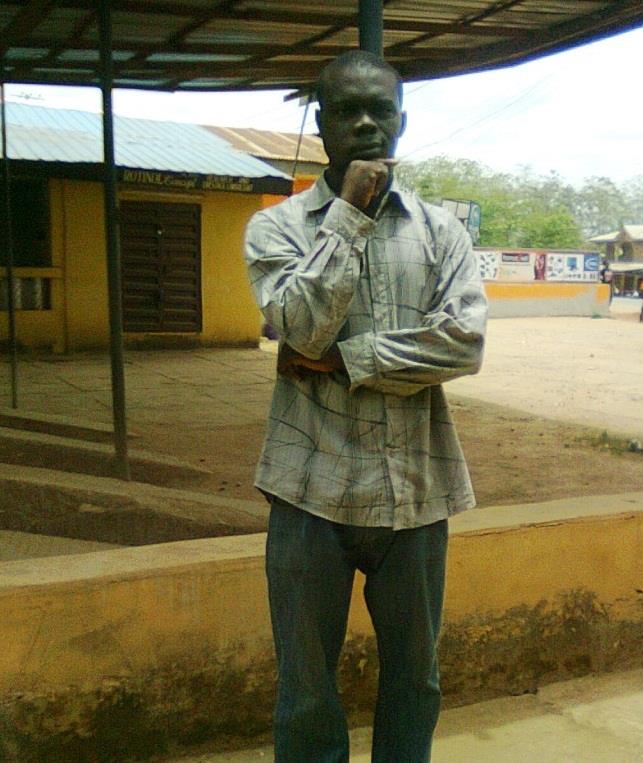
Chimezie Ihekuna (Mr. Ben) Young Black man in a collared shirt and jeans resting his head on his hand. He's standing outside a building under an overhang.
Chimezie Ihekuna

Genre: Short

For reviews, production consideration and other publicity, please contact us through the email addresses below:

mrbenisreal@gmail.com

rsacchi@rsacchi.20m.com

Synopsis/Details: 

Twists of Life is a five-chapter work that portrays “situational twists” – when those who sow good seeds in the world end up reaping a harvest of grief! Reflecting that the world, since its emergence, had had great affinity towards stories, this work includes a matrix of stories that appeal to all peoples of the world because of their specificity. Asians, Americans, Europeans, Africans, the Arabs and so forth have their stories mirrored in the literary work Twists of Life.

Chapter One, “The Graced Fellow,” paints a story of a crime-turned-love situation involving a group of armed bandits known as the Notorious Circle. They operate in Lagos, Abuja and the Port-Harcourt areas of Nigeria. Killing industrialists, merchants, politicians, robbing and raping young women epitomize their activities. From the Republic of South Africa, Morocco, Cameroon, the Central African Republic, Liberia, and Nigeria, and all currently residing in Nigeria, the seven-man gang became a household name through the nineties there. Coming from wealthy backgrounds, except for Bode, who had struggled, they all had their fill of ill-gotten success until the long hands of the law caught up with them. But something happened to Bode…

“The Other Side of Education”, Chapter Two, describes the twists in the fates of Ken and Spencer, educated at Kent High School, London. Ken was known as a “misfortune to mankind.” Spencer had all going his way-intelligence and influence. However, Ken would realize that earning “Fs” in class would not necessarily mean being a failure in life. This would be his motivation throughout his travels till he finally settled in his home, Canterbury, New Zealand, after he made it in the oil industry. Spencer, on the other hand, had a rosy life in England, his home country, until the financial crisis took a toll on him. This situation created a twist – brought Spencer to his back-in-High-School second-fiddle feelings toward “nobody” Ken after many years, but then another development comes up.

“The Woman In Politics,” Chapter Three, depicts the political tussle between Rodriguez and Gloria of the Peoples’ Party and Empowerment Party, respectively. Through politically motivated manoeuvres at the expense of her rival Rodriguez, who was winning the popular vote, Gloria became the first-elected female president of Brazil. The plot turned in favour of Gloria when she was quoted as saying: “…A man has his will but a woman will always have her way…But fate turned towards Rodriguez again soon, in Lisbon, Portugal and Madrid.

Chapter Four, “The Evil Genius,” narrates a story of how Park Sung, a Korean-America preacher, intended to set a record as the first man to embark on a successful world religious tour. With the P.A.G.A.N movement he set up when he was twenty-one, he had gathered knowledge about trickery and hypnosis and had studied world geography at a certain price…to DEAL with his uncle and master, Jin. For over the next thirty years of his life, he would achieve his agenda until there was a total twist in his blueprinted plan!

Chapter Five, “The Ugly Decision,” tells the story of a man, David. Growing up under the watchful eyes of his parents, Canadian disciplinarians, he promised to live a responsible life. However, as he grew older, he became a shadow of what he promised. Promiscuity took a hold of him. Due to that, David could not settle down in marriage the way his parents had at a young age. In fact, during his teen years, he vowed never to have anything to do with the promiscuous Eunice, but something happened between them years later…

“The Learning Authoress” is the last chapter’s title. It narrates years of rejection by several publishers for Greco-Roman American Alice’s work “The Twists of Life.” As time went on in her search for a publisher, one thing led to another and life brought her into personal contact with Skyline Publishers-the first publisher that rejected her work outright! She became a household name throughout California.

Poetry from Mahbub

Poet Mahbub, a South Asian man with dark hair and glasses and a suit and tie
Poet Mahbub
The Yellow Bed

In this world of hymn 
I had been so many times in the past 
But not like that I have got my sense today so colorful and new
Just entering into the bed of the yellow flowers
I was taken aback at the buzzing so loud
As it calls, spreads around the bed like the slogan of the young
Halting a moment I tried to understand 
What is that? Is it here or from other side
I would like to pay heed to for some more time 
O my surprise!
Almost on every flower the bees are circling and buzzing
Rising up and low busy in sucking honey and hissing
Like the lover maddened in love with the beloved
Never before I heard this bewitchment, such a commotion of love
Forgetting all other sites the wings on the air
How swarming the bees on the soft yellow flowers in the winter sunlight! 

Chapainawabganj, Bangladesh
26/12//2020


Memory

The ship has just left the harbor
The mountain is taking a large shape from one corner to other
The round circle slowly turns into the U-shape before the eyes
Advancing beat by beat
The mountain appears to be smaller in size
The ship runs some more - far from away
It glows only the green and gradually it entered into the world of water
What a wonder sight turnng into insight!
As like as my mother goes away before my eyes
What it left behind?
More powerful than it appeared to be.

Chapainawabganj, Bangladesh
26/12//2020


The Eternal Soul

Soul never dies though day by day body collapses
Soul is a cognition taking rest in a certain place after death
Body slips away to the grave but soul flies higher  
A long sleep that sweet dreams may enlighten the eyes 
I believe death is not a journey to darkness 
It can't breach the relation that we have had in between us
A journey to the eternity and light everyone is bound to taste
Our love, responsibility, sympathy, care, duty to God move the soul to laugher and peace
The soul that comes out from the sleeping peace of heaven on the doom's day
The soul that regenerates the young deathless charming body 
In the endless peace of heaven the soul must rejoice then with bright face
We are all on that ongoing process to enter into that eternal world.

Chapainawabganj, Bangladesh
27/12//2020

An Outlook We Promised

To make my mind calm and cheery
I sometimes go out in touch of nature in soft wind or in the stormy rainy weather
Nature teaches us how to flow, how to live well breathing fresh air
We can have different taste and flavor in the moonlit night 
Or at the sunny moments of the day when we sit under the shade of the banyan tree 
The sky is always open at day and night 
We face the challenges of how to live and strife
The misty winter morning, the silent long and large headed mountains, 
The crashing waves, the sunset at the evening, the sunrise in the morning, 
The soft blowing wind, the flying wings of the birds, the roaring and preying in the forest
Even the dead leaf falling from the tree get mixed with the soil
Sing the song of immortality fulfilling the demand we promised.

Chapainawabganj, Bangladesh
28/12//2020


The Little Bright Flowers

The little bright flowers kindle my heart
As like as your soft voice glints my face 
Into the flowers I can fully see your love-laden flashy smile
The butterfly flying around reminds me 
Your blissful note of expressions
The sight of the flowers moving and straining
I can live and die; a source of delight
It's like the stars twinkling at night
Like the moon eliminating sadness
I look over this fascination again and again
And make out the brilliance of love in between the flowers and you, my beloved.

Chapainawabganj, Bangladesh
29-12-2020

Poetry from Pesach Rotem

A Prickly Pair
by Pesach Rotem


The world is cruel and harsh and cold
And we yearn for warmth—my love and I—
A pair of porcupines
We approach and embrace
And she jabs me
And I prick her
And we flee, bleeding, back into the safety
of the pain-free cold.


Carey, Get Out Your Cane
by Pesach Rotem


When I was fifteen years old,
Joni Mitchell came out with a new album called “Blue” 
that had a song called “Carey” 
that went “Oh, you’re a mean old daddy but I like you”
and when I heard that song I resolved, right then and there,
that someday I would have a girlfriend—
I’m talking now about a real girlfriend, not an imaginary girlfriend—
that someday I would have a real girlfriend and
that someday I would be a mean old daddy.

I had my first real girlfriend 
the summer after my junior year of high school.
We were counselors in a camp.
She said, “I think you’re cute”
and I said, “Thank you very much,
“my grandmother also thinks I’m cute”
but she never said, “Oh, you’re a mean old daddy but I like you.”

Time went on
and I went to university
and I graduated
and I went out into the world.
I thought about becoming a professional motorcycle racer
but then I decided, for various reasons,
to become a marketing content writer instead.

Later, as the twentieth century transitioned into the twenty-first,
I myself transitioned from regular marketing content writer 
into online marketing content writer 
and I must say, at risk of immodesty, that I am a damn good one, 
but, alas, online marketing content does not a mean old daddy make.

I am now sixty-six years old.
I will never read The Odyssey in the original Greek.
I will never pole vault fifteen feet.
I will never argue a case before the United States Supreme Court.
I will never see Machu Picchu.
And I will never be a mean old daddy.


Why an Apple?

Hello, everybody.
I am Pri Etz haDaat Tov v’Ra.
You English speakers may call me The Fruit of the Tree of Knowledge of Good and Evil.
I’m cool with that.
I am a major character in Chapters Two and Three of your Book of Genesis
along with my sidekick, the Tree of Life,
who actually has a much smaller part but nevertheless became more famous
just because he makes such a handy metaphor:
the Torah is a Tree of Life, the Sefirot are a Tree of Life, et cetera,
but I don’t care, I’m not jealous, I don’t even know why I brought it up.
What I came here to talk about is: Why an apple?

I never claimed to be an apple,
that rosy-cheeked symbol of good health and good cheer,
and yet Albrecht Dürer painted me as an apple.
Hendrick Goltzius painted me as an apple.
Titian painted me as an apple.
Lucas Cranach the Elder painted me as an apple.
And the folksingers are as bad as the painters.
Just listen to Patrick Sky sing “Separation Blues” and you’ll know what I mean
and why I keep on wondering: Why an apple?

At first, I suspected that John Milton might be behind it
but my investigation revealed that 
John Milton wasn’t even born until 1608
while Titian and them had already been painting apples back in the 1500s,
so that’s an airtight alibi 
that lets John Milton off the hook
but it leaves me wallowing in puzzlement
as I continue to ponder that eternal question:
Why an apple?


“Paint It Black” Revisited
by Pesach Rotem


“Use the active voice.”
William Strunk Jr. and E.B. White, The Elements of Style


Last night I watched a movie called “Devil’s Advocate” on Netflix
and at the end of the movie, as the credits rolled by,
they played the Rolling Stones song “Paint It Black”
and the subtitles on the screen said “I see a red door and I want it painted black”
and I said, “That’s a mistake, it should be ‘I see a red door and I want to paint it black’”
and my date said, “Are you sure?”
and I said, “Of course. ‘I want it painted black’ is passive and the Rolling Stones weren’t passive guys so why would they sing passive lyrics?”
and to prove my point I replayed the song
but to my surprise it did sort of sound like “I want it painted black”
and I said “uh-oh”
and we played it a few more times and we listened very closely
and we also looked at AZLyrics.com and a couple of other lyrics sites
and they all said “I want it painted black”
and I said, “Well, I guess I’ve been singing it wrong for 55 years”
and my date smirked.

I brooded for a while and then I became defiant.
“But my way is better,” I proclaimed.
“‘I want to paint it black’ means I feel a powerful urge to grab a bucket of paint in one hand and a paintbrush in the other and slosh my pain and my grief and my anguish all over that grotesquely cheerful red door and all over the whole cold cruel uncaring world
while your way—‘I want it painted black’—means . . . what? I’m going to send a requisition to the Maintenance Department to have someone take care of this matter? Where’s the catharsis in that?”

I was starting to feel angry at the Rolling Stones for failing to consult with me 
as they should have done before releasing the song in 1966.
I would have told them to read their Strunk & White and use the active voice
but No,
the Rolling Stones are too high and mighty to ask for my advice
so I decided to lodge a Statement of Protest
but I wasn’t sure whom to lodge it with
so I lodged it with the songwriters Mick Jagger and Keith Richards
and I also lodged it with Bill Wyman and Charlie Watts as collaborating members of the Rolling Stones
and with the Decca Record Company
and with the Rock and Roll Hall of Fame
and with Queen Elizabeth II of Great Britain
and with the Upper Galilee Chapter of the Voices Israel Group of Poets in English
and I am well aware that you can’t always get what you want
but I did at least get some measure of satisfaction.


Pesach Rotem was born and raised in New York and now lives in Yodfat, Israel. He received his B.A. from Princeton University and his J.D. from St. John’s University. His poems have been published in more than two dozen literary journals including Chiron Review, Permafrost, Voices Israel, and Synchronized Chaos. His poem “Professor Hofstadter’s Brain” was nominated for a Best of the Net award. He is a member of the Israel Association of Writers in English.

Poetry from Elbov Kulmonov

Elbov Kulmonov
Elbov Kulmonov was born on 29 May, 1992 in Koson district in the Kashkadarya region of Uzbekistan. His poems and stories were published in local and national newspapers. 

His poems were published in a collection of "Ezgulik yolqini" and his poems were published in Uzbek Writer's Anthology in India in 2013 and '*Katla-lntercontinental magazine in 2013.Now he is a correspondent of "Tarovat" newspaper. He is a member of the "Astonishment" creative writing club.

Uzbekistan 

My body made by from your soil. 
I know some day I will die. 
Some day my soul will get across my body, 
So my soul is a temporal. 
I will take you away with me, 
until dead your memory. 
I will live in your land till this event, 
I will remain in your soil. 


Dreams

Dreams, dreams white dreams, 
You are a ray lighted my soul palace. 
You appeal me to live, 
You are an Antelope in my heart. 
I am trying to reach the dream's mount, 
Everyday, cry an hour with hope. 
I admire my feelings to reach you and I will gain a victory some day.

Poetry from Benyeakeh Miapeh

Listen 

When the lightning smiles,
let fear not boil your blood 
for my voice will be deep into the thunder scream,

give ears when the cloud gets shadowy 
and the rain is dancing on your roof,

listen to the wind when the trees dance 

look beyond the wave of the oceans 
as it chases itself off the shore,
for my eyes will be smiling in each tide
 
when the sun oozes down the ocean,
as hummingbirds sing lullaby,
as the wind stands still,

listen to those lyrics 
from the sounds of crickets  beneath your window
for  I'll be flying on the wings of butterfly 

listen to nature 
for I am in every sound you hear. 
to paint your heart with kisses,
Listen.
My mother is nature 

           
The fountain of God's love 

Her thighs are the roots of cotton tree 
And the ground on which my feet first tasted 

Her hands are the gravity that held me 
when I thought I could fly without wings 
Her fingers still taste like raindrops on my heated body 

The circulated winds from her nostrils 
breathe life 

in her smiles-- I see twinkling stars 
beautiful flowers from the top of Everest 

in her veins-- I see oceans upon oceans 
oceans that tide with the peaceful hands of wave
Her face holds the brightness of the sun 
as it escorts itself every morning
 
In her eyes-- I see winging butterflies being chased by Blue Jay 
and tiger happily racing with antelope 
As the branches of her eyelashes stand tall above
 
Her chest holds waterfall canals 
That flow down from mountains built in heaven 

In the heart of nature--I see jewelries 
Gold, diamonds that smile with love

She is as green as Amazon forest 
The sky shows her eyes
And her body is Sahara 
Nature lives in her