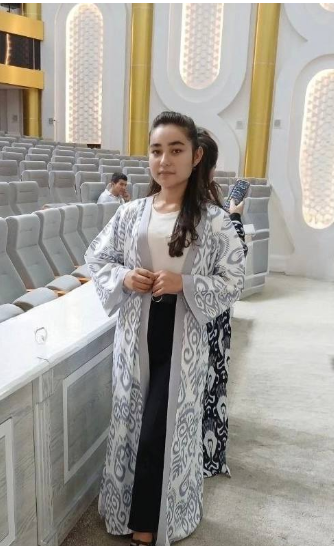
Omonova Dinora Anvarjon qizi Samarqand viloyati Narpay tumani beklar mahallasi nurli tong koʻchasi
Life Lessons Hidden Between the Pages
Life is the greatest teacher. However, it often takes years to teach us its most valuable lessons. A book, on the other hand, has the remarkable ability to gather those lessons within a few hundred pages. Every book is a priceless treasure that preserves humanity’s experiences, dreams, joys, and sorrows. When we open a book, we do more than read words—we step into different lives, understand different cultures, and discover new truths about ourselves and the world.
To me, a book is far more than paper and ink. It is a silent teacher, a faithful friend, and a lifelong companion. Every page I turn reveals another lesson about life. Sometimes a single story teaches me the value of patience; sometimes one sentence inspires me to become a better person. It is in these quiet moments that I realize the true power of books.
Reading broadens our minds and deepens our understanding of the world. It teaches us not only to gain knowledge but also to think critically. People who read learn to see situations from different perspectives, respect the opinions of others, learn from mistakes, and remain compassionate even in difficult times. These qualities are the foundation of a strong and successful society.
The characters in every story have something meaningful to teach us. Some inspire us with their courage, others remind us of the importance of kindness, honesty, and integrity. Their happiness makes us smile, while their struggles touch our hearts. Through their journeys, books awaken empathy, compassion, and humanity within us. These are among the greatest lessons life can offer.
Today, technology has become an inseparable part of our daily lives. Information is available everywhere, yet people often have little time to think deeply. Books encourage us to slow down, reflect, analyze ideas, and search for truth. That is why reading remains just as valuable today as it has always been—perhaps even more so.
Books have taught me that true wealth is not measured by material possessions but by knowledge, wisdom, and character. An educated person has the ability not only to improve their own life but also to make a positive difference in the lives of others. Every book we read brings us one step closer to becoming wiser, kinder, and more responsible human beings.
I firmly believe that the life lessons hidden between the pages of books never grow old. Time passes, generations change, and technology continues to advance, but the influence of books on the human heart remains timeless. Books help us discover who we are, inspire us to pursue goodness, and give us the courage to follow our dreams.
Whenever I close a book, I realize that I am no longer the same person who opened it. I carry with me new ideas, deeper understanding, and stronger determination. That is the greatest miracle of reading—it transforms people. And people who transform themselves have the power to transform society and shape a brighter future. For this reason, I believe that every page is a lesson in the school of life, and every book is a priceless treasure that illuminates our hearts and minds.
Nodira Akhmetova Pulat qizi Uzbekistan, Karakalpakstan, Student of School No. 69, Ellikkala District
Abstract This article examines the importance and impact of digital literacy in Central Asia. The study analyzes the role of modern information technologies in the development of the Central Asian countries. The results indicate that digital literacy contributes significantly to the progress and advancement of the countries in the region.
Keywords: digital literacy, youth, education, survey, observation.
Introduction Today, the rapid development of digital technologies has a significant impact on the advancement of many countries. In particular, digital literacy in the Central Asian states is expanding educational opportunities for young people. Therefore, studying measures to further improve digital literacy among the population has become one of the most relevant issues of our time.
Literature Review In recent years, many scholars have investigated the effectiveness of digital literacy. According to their findings, digital platforms increase access to books and support students in pursuing independent learning. At the same time, some researchers have also highlighted the negative effects associated with prolonged use of electronic devices.
Research Methodology The study employed observation, survey, and comparative analysis methods. The collected data were analyzed using statistical techniques.
Results and Discussion The survey results show that the level of Internet usage in Central Asian countries has been increasing from year to year. However, key components of digital literacy—such as critical evaluation of information, fact-checking, and cybersecurity awareness—remain insufficiently developed. Among the countries of the region, Kazakhstan holds a leading position, while Uzbekistan is also achieving notable positive results in its digital transformation processes.
Conclusion The understanding of digital literacy among the peoples of Central Asia is increasing day by day. Moreover, the strong interest of young people in this field is an important factor contributing to the growth of digital literacy. The effective use of electronic resources can help improve the quality of education. In the future, it would be advisable to further expand the opportunities provided by digital libraries.
Akhmetova Nodira Po’lat qizi was born in 2012 in Ellikkala District, the Republic of Karakalpakstan, Uzbekistan. She has recently completed the 7th grade at School No. 69. She is interested in the exact sciences, and mathematics is her favorite subject. In her free time, she enjoys studying English. Her dream is to become a successful economist in the future.
Mother tongue
You lie
You cheat
There are maps
of open sores on your face that refuse to heal
They’re as red as an ambulance
They’re like a pot of rice
left too long on the stove
that threatens to boil over
And then boils over
Your wounds, brother, have become my own
I encourage you
I pray for you
Still, it is not enough
I don’t know what you want from me
What do you want me to do for you?
There are days and nights, hours
that I just can’t cope
I just lie there
in the dark, staring at the ceiling
I wear the light like a mask
God is my constant companion
You steal
You curse
You smoke
like a house on fire
And turn the muscles of your lungs
into two orange flames
that dissolves into blackness
in the sea of your chest
That is your mother tongue
The language of addiction
Your crime?
In the sprawling desert of your hands
In the tragedy of your yellow fingers
your slender frame
I search your face
for the signs of addiction
Marijuana
Tik
All I find
are signs of addiction
Instead, I find
your children, walking in your shadow
Two miracles
Two candles
Two burning effigies
like lanterns in the dark
Guiding you, guiding you
It shouldn’t be a teenager’s responsibility, but it is
Your daughter, a rose
Your son, a giant
I think, their love isn’t enough
It isn’t enough to save you
The moon
witnesses my despair
It also witnesses
your own hardship
I thought by now that you’d change
There you are
in the study rolling a joint
The rose standing next to you
Watching you
She is watching you
She is studying your every move
The giant discovers your drug paraphernalia
He continues to play computer games
So, now I pray for them
That a rose will always be a rose
That a giant will always be a giant
That they will be concerned
for the welfare of the children
that they will have one day
That they will be the sun and the moon
in their children’s lives
And I pray
That they won’t
resort to keeping
drugs
and drug paraphernalia
in full view
of their children
I cry everyday, because of you
because of you
Sometimes I look at the rose
and I cry some more
I hide my tears in the garden
in cups of coffee
I want to be brave
like Linda, Charles Bukowski’s wife
I want to be brave
like Charles Bukowski
and Anderson Cooper
who lost a brother and a father
I am only a sister
who doesn’t know who she must blame
I don’t know how to get you
out of this situation
I don’t know
how to save you
I don’t know
how to save the rose, the giant
These hands are ineffectual
And so, I pray.
From the dust of hopelessness, it’s a rising beyond one’s state.
It’s a gift of fate: a seal cast upon human hearts.
When the world falls silent, the heart, in the depths of stillness,
hearkens to the burden of premonitions
and the unwanted word.
That hospitality continues to bear fruit; love stay awake,
as a sleeplessly tide.
Eyelids will never droop
until the nights of doubt sting with pride.
Refracted Mirrors
(“Załamane lustra”)
I know not into what shadows these voices are woven;
the mind celebrates the secret of this otherness.
I stir my imagination to know the truth;
refreshed scenes gleam within this mosaic.
Specks of memory suddenly settle upon my lips;
lapping waves drown out the flow of thought.
Refracted mirrors upon shifting waters’ flow –
in the web of memory, the purest image takes form.
My Self drifts against the backdrop of infinity low.
Lilacs
(“Bzy”)
Memory stirred
by the fragrance of lilac blooms.
White and lilac-hued blossoms they are a springtime lure.
A hidden flame within the chalices,
a wound upon body and soul.
In their tonalities, they recall both.
The white ona – a parallel to the first – could, like a stream,
bring her a state of bliss.
The lilac-hued one – the second – was a murky,
overgrown river bearing the whisper
of sweet flag, the song of clenched hands.
It pulled her down like a whirlpool
and could have pulled her under down again and again.
Or perhaps nothing was quite
as it seemed…
Translated by Olga Smolnytska
Bionote about the translator:
Olga Smolnytska – PhD in Philosophy, Ukrainian scientific and culture activist, scholar, translator, writer, literature critic, artist.
Aleksandra Sołtysiak (Poland), graduate of the Catholic University of Lublin and Jagiellonian University in Kraków. She has served as coeditor of the poetry anthology Dotyk nadzie (The Touch of Hope), which was translated into Ukrainian and German, as well as of the international anthology in support of world peace The tree of peace turns green / European poetry for universal harmony, which has been translated into Polish and English. She’s also the author of Hope blossoms longer and the published poetry volume „Spilled from the cases”. Finalist in the fourth International Poetry Contest, „Voices in the Wilderness” held in Rome (2022). She publishes nationally and internationally. She has also been awarded the Gold Cross of Merit by Polish president Andrzej Duda. In 2023 distinguished with a medal for Merit to Polish Culture.
Literature Confronts False Narratives: Dr. Jernail Singh Anand
Bilal al Masri [Lebanon] engages Indian poet and philosopher, Dr Jernail Singh Anand in a conversation spanning human rights and ethical imperatives.
Masri:
How can world literature write about catastrophe when suffering becomes a daily condition in places such as Gaza and Lebanon, exceeding the language’s capacity for representation or endurance?
Anand:
Literature and art, which serve as a mirror to society and record and replay its vicissitudes, are active agents of prevalent culture, which not only reflect, but meditate on contemporary reality, and draw a parallel to history, which is the creation of human excesses, and recorded by the academia under pulls and pressure of politics. We can see dry mapping of human progression in history, which merely mentions the march of jackboots turning it into an endless story of deprivation and depletion of human values at all levels. Literature and art present an account of human suffering which was caused by the movement of chariots and cannons on the breast of the earth. I sometimes wonder if there is any stretch of the earth, which does not harbour a human skeleton. The human suffering will become a sad chapter in human history, but not without causing convulsions to the literature and art which are cultural documents of an era.
Masri:
Does the intellectual in today’s world still retain the role of the moral witness, or has their voice become part of a noise that no longer alters the trajectory of pain unfolding in Gaza, Lebanon, and beyond?
Anand:
An intellectual is a man of intelligence, who has a vast grounding in the sphere of knowledge, who understands the drift of history, and can assimilate what is happening in present times. I believe that the moral degeneration which has set in, is the result of the failure of the intellectual equipment of society, in which more and more emphasis has been assigned to academism. The common people form the real sphere of suffering and they remain immune from the salted wisdom of library shelves from where, books have never moved into the parlours of ordinarity. Intellectual is an arbiter of the moral sense but it appears he has failed to find channels of communication to converse with his own society. The world that suffers and the elite of the world that discuss and debate are two different worlds, and the knowledge which could have connected the two worlds has become a wall, rather than a bridge.
The second part of your question is: has the intellectual become a part of the noise. I would say, yes. The corporate culture and the market economy has afflicted every sphere of social activity, and intellectual is not immune from its influence. In most of the cases, we find the intellectuals taking part in the race for recognition, and becoming a part of the noise. Standing apart and recognizing and challenging the rot is left to very few people who are in absolute minority.
Masri:
When images of destruction from Gaza and Lebanon are endlessly circulated before the world, do they lose their power of moral indictment, or is the problem located in the viewer’s eye, which has grown accustomed to suffering?
Anand:
You appear to be right in suggesting that human beings have become accustomed to see pain and misery spreading across continents, and do not complain. An empathetic understanding of human misery and a responsive world regime are need of the hour, for which we shall have to reformat human consciousness. The world must have a mechanism to spread the idea of Ethics and Human Rights. Our world has failed to recognize the right of people to live in harmony. As members of a highly civilized society, we are expected to respect the right of human beings to exist, and exist with dignity, which God has granted to every one born to this earth.
Masri:
To what extent can we still speak of universal ethical and humanitarian values when they appear powerless in the face of what is happening in Gaza and Lebanon, and how can we understand this contradiction between the global human rights discourse and its absence in practice?
Anand:
The ethical movements are run by private organizations which do not find statutory support from states. Human Rights Organizations have got international presence, but they do not go beyond mere condemnation. Universal ethics is an abstract ideal, and the apparatus through which these ethical sensitivities could be articulated, and spread across is almost non-existent. The near total absence of universal ethics and disregard of human values results from a social set up in which evil is not condemned nor looked down upon. Education, family and spiritual bodies tried hard in the past to instil the ideals of good and evil. At present, education has been converted into a thriving business, family has disintegrated and spirituality too is in the grip of market forces. With the failure of this regulatory mechanism, it is free for all. There is no one to check man from a hasty fall into insensitivity and moral inertia.
Masri:
To what extent can literature be an ethical stance, rather than merely an aesthetic reflection of the suffering of the distant other?
Anand:
Human suffering comes to us packaged in history books. When history is replayed, it takes us back to the hoary times when great massacres took place, killing millions of people. If we go back to myth, just imagine how many went under the grave in Troy, and how many perished in the epic battles of Ramayana and Mahabharata. The story is disturbing when it filters through history. It makes the tragedy stare at you, in all its horror. It is unvarnished truth, which really disturbs us, and it can demean us too. Nearer home, if history of the Partition is brought before us through history, those who suffered the loss of their near and dear ones, would find their wounds reopened and blood might start flowing in the streets all over again.
Literature Confronts False Narratives:
Literature and art are a medium through which when human tragedy is passed, it gets a new makeover. Literature and art serve a great purpose: bringing the margins to the centre, and softening the hurt, by giving it a plausible argument. Art is an argument with time, so is literature a conversation with the self. The material they use is history, but they treat it with a humanistic angle, and before presenting it to the people, dilute its lethal substances, so that they do not kill whosoever drinks on it.
This is the ethical stance of literature. To represent its society and its evil in such a way as to prepare men to discard it altogether. Literature presents the truth of an era, but it is treated with a moral varnish, and given an ethical orientation. Truth cannot be unleashed unguarded, because it has the potential to disturb peace, unless the author gives it a makeover of art, removes its poison, and reduces it to a story with a plausible moral.
[Bilal al Masri is a Lebanese Arab poet and writer whose work engages with the intersections of poetry, language, and existential thought. He writes texts that explore the tensions between self, memory, and the world. His practice seeks the inner music of language, where meaning emerges through rhythm, image, and silence rather than ornamentation. For him, literature is not merely an aesthetic craft but a way of questioning existence and human fragility. He is also engaged in the critical reading of contemporary Arabic literature, continually exploring the human condition through writing].
Dr. Jernail S. Anand, with 200 books to his credit [20 epics] is a Chandigarh-based polymath, and a vital architect of the 21st century ethical literature whose seminal work ‘Lustus: The Prince of Darkness’ challenges the moral complacency of our era. Founding President of the International Academy of Ethics, and Laureate of Charter of Morava [Serbia], Seneca [Italy], Franz Kafka [Germany, Ukraine, Czech Rep] and Maxim Gorky [Russia], his name is inscribed on the Poets’ Rock in Serbia. He is an Honorary Member of the Serbian Writers Association, Belgrade. Anand has built a poetics that unites ethics, Vedic spirituality, social critique, and the philosophy of meaning. Anand presents an articulated perspective on poetry as an instrument of planetary consciousness. A moral philosopher, professor, and international speaker, Anand has devoted much of his research to the ethical dimension of language, to the responsibility of the individual within a globalised society, and to the relationship between matter, consciousness, and transcendence. Email: anandjs55@yahoo.com.
Poem dedicated to late HARRISON ESTHER, a student of BHS EKINRIN ADDE, who was slaughtered and her blood taken away, in her house while preparing for school in the early morning on 4th May, 2024.
THEY DON’T IGNORE WHAT HURTS YOU, THEY STAND WITH YOU THROUGH IT.
FRIENDSHIP IS NOT JUST VIBES AND LAUGHTER…,
IT’S LOYALTY, EFFORT, AND SHOWING UP WHEN IT MATTERS.
THAT’S NOT JUST FRIENDSHIP, THAT’S REAL ONE.
Hassan Musa Dakasku is a Nigerian writer, a passionate advocate for youth well-being, a microbiologist, and a performance poet. He is an author whose work is rooted in vulnerability and personal expression, and he maintains a personal blog where he shares his insights and creative pieces.