
ANDIJAN: ON THE CROSSROADS AIMING FOR THE FUTURE
“My Andijan, which saved my soul there, remained with me…”
(Babur)
Uzbekistan is a Motherland that lives forever in our hearts! O dear country, which has captured the morning shimmer of the sun in your orbits, I feel helpless, no matter how many words I find to describe you. You are a sacred land where stars embrace in your mountains, where the wind writes pages in your steppes, and where the breath of life sparkles in your rivers and lakes! Sun particles smile and scatter across your sky. Every morning your dawn breeze creeps through my soul. These breezes feel as if they carry not just the air, but the living breath of history. You are like a perfect picture drawn for the face of the earth; I feel the breath of tranquility at your every point. You are not the pearl of the East; you are the crown set within its bosom! Thousands of dreams blossom in your every inch of soil, and the birds that fly in your sky sing the song of freedom.
Andijan! The rays of dawn are reflected in your white tunics, the wings of swallows harmonize in your silk belts. You are radiant like a bride whose solar hair is scattered across the sky. You are a miracle that has made both the sun and the stars fall in love with you. You are a mother who bestows hope in the hearts of your children and courage in their gaze.
In the heart of every person is imprinted the bright image of the land where they were born and raised, where they took their first breath. This image is not only a geographical location but a part of the soul, the beginning of destinies, the first foundation of the future. Andijan, in turn, is the lifeblood of blessed Uzbekistan, a living witness to a thousand years of history, the inspirational abode of the great Mirzo Bobur, the land of hardworking and sincere people, the supporting mountain of the nation. The description of this land, where every inch of soil is kneaded with the traces of history, and every drop is moistened by the sweat of a hardworking farmer’s brow, is beyond an epic poem. My chest is full of pride and honor for growing up under the warm sun of Andijan and being raised among its rich culture and generous people. This is not just a fleeting emotion, but a feeling ingrained in my heart and soul, an eternally connected spirit, a dear fortress to me. It is not only the apple of the eye of the Fergana Valley but also a majestic land standing tall as the Eastern gate of the country, a symbol of the harmony of historical heritage and modern development.
The great personality who stamped his seal on Andijan’s glory is undoubtedly Zahiriddin Bobur. The great writer of his time, statesman, and great commander, this world conqueror who founded the Mughal Empire in India, was born in the dignified bosom of this land. Talented poets and poetesses, including Nodira and Muhammad Yusuf, the Venerable Jadid Abdulhamid Chulpan, the world-recognized Shaykh Muhammad Sadiq Muhammad Yusuf, Shaykh Hasan, Husayn Yahyo Abdulmajid, and many other scholars and intellectuals originated precisely from this region.
Andijan is the most invaluable gift nature has bestowed upon the local people. This land, which is one of the most fertile and lush areas of the valley, is deservedly called the “Jewel of the East.” Even the thistle that grows here is a cure for a thousand ailments. The true wealth of the province, I believe, lies in its simple, hardworking, and sincere people. Andijan residents are known for their devotion, sincerity, and hospitality. Their every word and gaze reflect boundless love for the homeland, respect for labor, and gratitude for life. Here, let alone speaking a harsh word to a person seeking refuge, even looking at them coldly is considered a sin. Their tables are always open, and their magical hands are always ready to prepare pilaf.
Their friendly words and unique, sincere dialect are proof of their warm embrace, even for strangers who come from afar. The juicy accent is like a stream rushing through the blood of every Andijan resident. I also speak this dialect, and it always gives me a special warmth and pride.
Andijan people are very emotional individuals who completely immerse themselves in work, friendship, and even sorrow with their entire being. The neighborhood is the center of life in Andijan. The ties of neighborliness here are extremely strong. There are such close neighbors who share fresh bread when baked, and meat from their meal when cooked, that an unaware person might think they were born from the same mother. Their affection, kindness, and generosity are extraordinarily high. Those who are too shy to address each other as “you” are Andijan residents; those who hold weddings for forty days and forty nights are Andijan residents; it is exactly them who have turned unity and community into a core value! In particular, Andijan is a crossroads of cultures, a magical land where the vigor of people whose hearts are as bright as their faces is reflected, a place upon which the Creator’s gaze has fallen.
Today’s Andijan fundamentally differs from yesterday’s. The province is known not only for its cotton fields but also as the powerful heart of modern industry. Moreover, Andijan is considered a center of the sacred religion of Islam, a hearth of science and enlightenment. This region has presented countless talented individuals to society—from scholars and philosophers, famous religious figures to undefeated athletes, sharp-penned poets and writers to Honored People’s Artists of Uzbekistan—all have emerged from this land. In the remote villages of the region, there are still countless women and girls faithful to their “paranji”, accomplished reciters of the Quran, as well as students worthy of various named scholarships and honorary titles, striving intensely in the pursuit of knowledge. This is, of course, a vivid proof that the future of Andijan is bright.
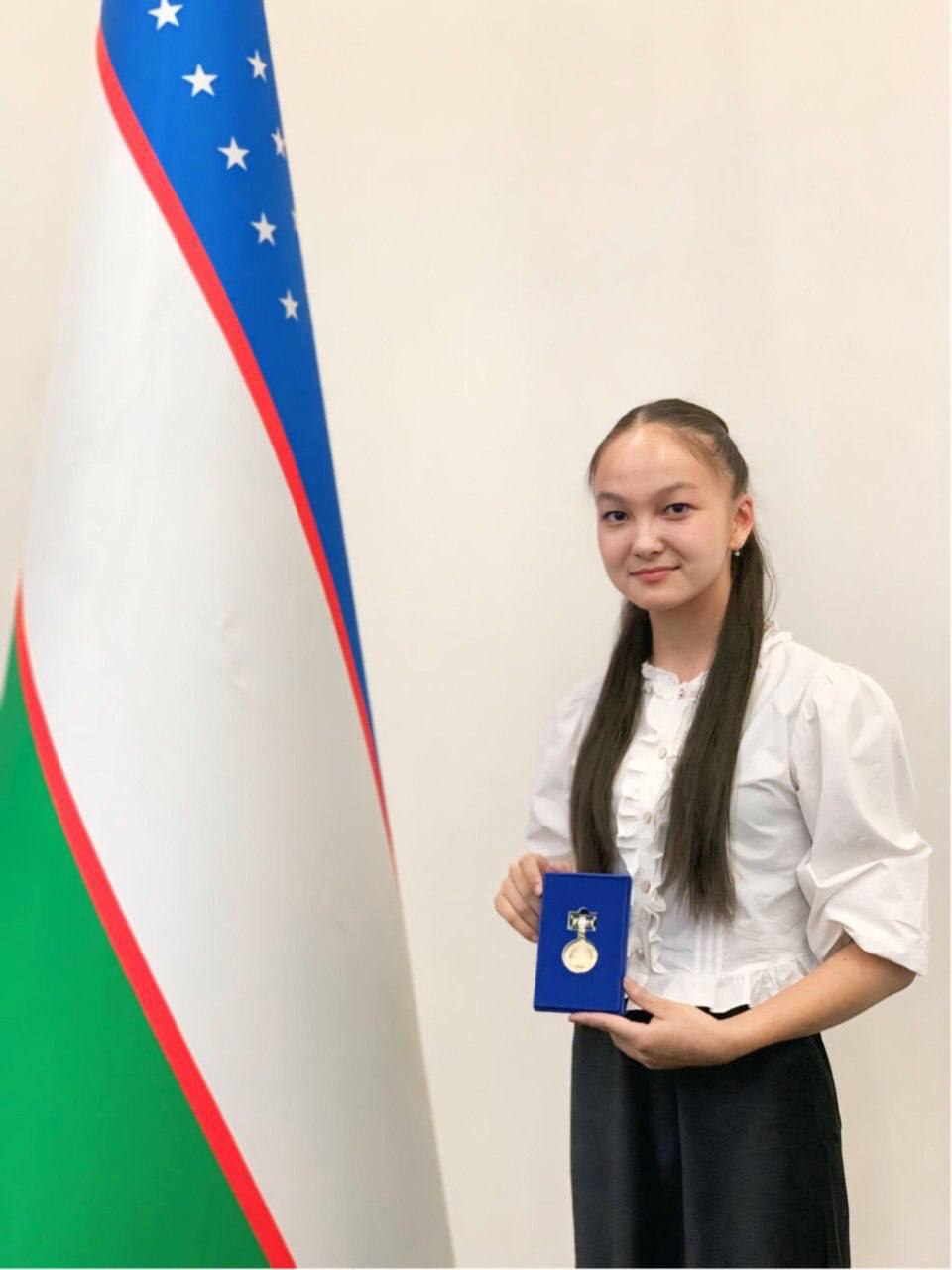
Dilafruz Muhammadjonova was born on January 2, 2007, in Qorghontepa District, Andijan Region, Uzbekistan. She is currently a second-year student at the Faculty of Philology of the Uzbekistan National Pedagogical University named after Nizami, majoring in Uzbek Language and Literature Education.
She is proficient in Uzbek, English, Turkish, and French. She holds national certificates in Mother Tongue and Literature as well as English.