
The Zulfiya State Prize: Recognition of talented young women
Every society has moments when it chooses to tell its young generation: “Your talent matters. Your work matters. Your dreams matter.” For the young women of Uzbekistan, the Zulfiya State Prize has become one of the most meaningful symbols of such recognition. Named after the renowned Uzbek poet Zulfiya, the award represents not only an achievement but also an encouragement for talented girls to pursue education, creativity, science, culture, art, and social activity with confidence and determination.
Zulfiya was more than a poet. She became a symbol of dignity, loyalty, intellectual strength, and artistic devotion. Her poetry reflected love for her homeland, the beauty of life, the inner world of women, and the challenges and hopes of her time. Her literary legacy continues to inspire generations, and the state prize bearing her name carries this legacy into the lives of young women who are building their own paths.
The establishment of the Zulfiya State Prize was an important step toward recognizing the achievements of talented young women in Uzbekistan. The award is presented to girls and young women who demonstrate outstanding abilities and achievements in fields such as literature, culture, art, science, education, and social activity. In this sense, the prize goes beyond a traditional literary award. It recognizes talent in many forms and shows that the contribution of young women to society cannot be measured by a single profession or area of achievement.
For a young girl, recognition can be more powerful than it may initially seem. Behind every achievement there are often years of study, countless hours of practice, unsuccessful attempts, doubts, and moments when giving up may seem easier than continuing. A public recognition of that effort can become a source of new confidence. The Zulfiya Prize therefore carries not only an official title but also a powerful message: perseverance and talent deserve to be seen.
The significance of the award becomes especially clear when we consider the changing role of young women in modern society. Today, girls are not limited to one traditional path. They study foreign languages, conduct scientific research, write books, participate in international competitions, create artistic projects, develop social initiatives, and represent Uzbekistan on international platforms. Their achievements demonstrate that education and creativity can open doors far beyond the boundaries of one’s hometown or country.
Literature naturally holds a special place in the legacy of the Zulfiya Prize. Zulfiya herself demonstrated how poetry can become a voice of an entire generation. Her life and work remind young writers that literature is not merely about beautiful words. It is also about responsibility, observation, courage, and the ability to express emotions and ideas that others may struggle to articulate. A young poet who receives recognition in Zulfiya’s name is therefore not simply receiving an award; she is becoming part of a cultural tradition that values the written word.
However, the importance of the prize extends far beyond poetry. A talented young scientist, artist, teacher, athlete, or socially active student can also demonstrate the qualities that the award seeks to recognize: dedication, originality, discipline, and a desire to contribute to society. This broad understanding of achievement is especially important in a rapidly changing world, where creativity and knowledge are increasingly connected.
The prize also has a symbolic dimension. Zulfiya’s name represents a bridge between generations. The poet belonged to an earlier era, yet her work continues to speak to young people today. When a young woman receives an award named after her, it creates a dialogue between the achievements of the past and the aspirations of the future. The young recipient inherits not only a title but also a responsibility to continue developing her abilities and to become an example for those who will follow.
Perhaps one of the most valuable outcomes of such recognition is inspiration. A girl living far from the country’s major cultural centers may read about a young recipient of the Zulfiya Prize and begin to believe that her own dreams are possible. She may decide to write her first poem, enter a competition, learn another language, conduct research, or simply work harder at the subject she loves. In this way, one person’s achievement can inspire many others.
The award also encourages young women to see success not as an unreachable ideal but as the result of consistent effort. Talent may open the first door, but discipline, education, patience, and courage are what allow a person to move forward. The stories of talented young women who receive national recognition can therefore serve as powerful examples for the younger generation.
At the same time, recognition should not become the final destination. An award can mark an important moment in a young person’s life, but true achievement lies in what comes afterward. The most meaningful response to recognition is continued growth: reading more, learning more, creating more, helping others, and using one’s abilities for the benefit of society. A prize may place a name on a list of achievements, but only future work can give that achievement lasting meaning.
The Zulfiya State Prize is therefore more than a medal, certificate, or title. It is a reflection of society’s belief in the potential of its young women. It tells talented girls that their voices deserve to be heard and that their efforts can make a difference. It also reminds society that investing in young women’s education and creativity means investing in the country’s intellectual and cultural future.
In today’s Uzbekistan, where young people are increasingly connected with the wider world, such recognition has an additional significance. A talented Uzbek girl can now publish her work internationally, participate in global competitions, communicate with peers from different countries, and introduce Uzbek culture and language to foreign audiences. National recognition can become the beginning of an international journey.
Ultimately, the Zulfiya State Prize is not only about celebrating what a young woman has already achieved. It is about believing in what she may achieve tomorrow. Behind every recipient stands a story of effort, hope, talent, and perseverance. And behind every story stands a message to thousands of other girls: do not be afraid to dream, do not be afraid to create, and do not underestimate the power of your own voice.
Zulfiya’s legacy continues not simply because her poems are remembered, but because new generations continue to find inspiration in her name. Every young woman who strives for knowledge, creates something meaningful, and contributes to her community adds another page to that continuing story. The Zulfiya State Prize celebrates these young women—and, perhaps most importantly, reminds the country that the future can be written by those who dare to believe in their own potential.
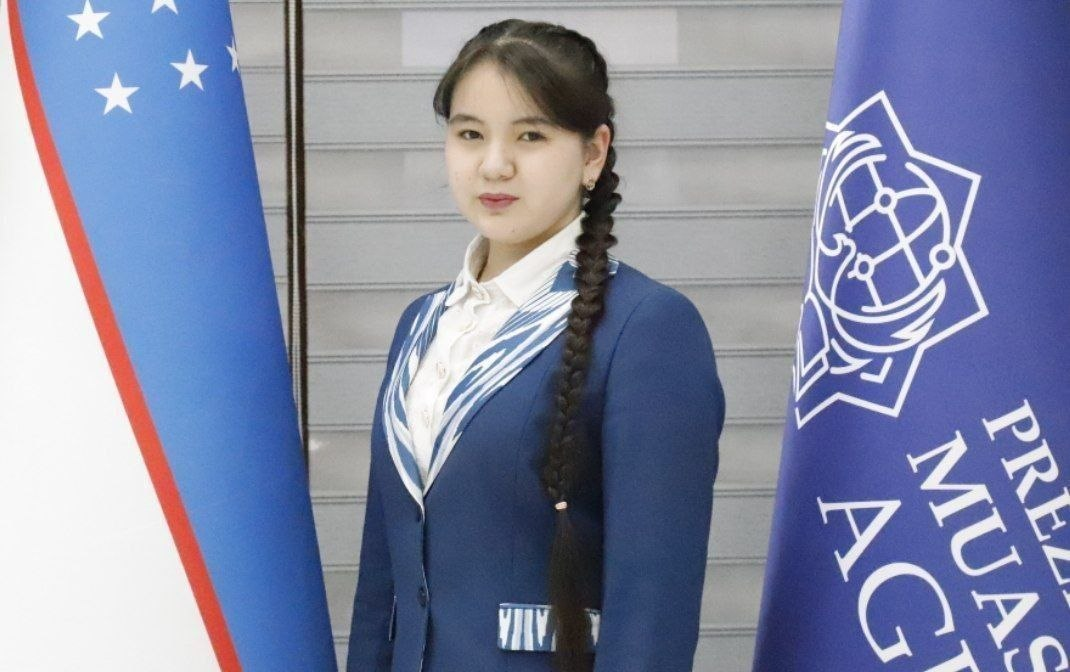
Tursunboyeva Nigoraxon Abdumannob qizi was born on February 23, 2009, in Uzbekistan.
She is a graduate of the Is’hoqxon Ibrat Creative School. She is the winner of numerous international and national competitions and the author of two poetry books.
She is fluent in four languages and was admitted to university ahead of the usual schedule. In addition to writing poetry, she also writes prose and journalistic articles.