
This month’s issue addresses the Unfinished Business of Living.
The Talmud states: “Do not be daunted by the enormity of the world’s grief. Do justly, now. Love mercy, now. Walk humbly now. You are not obligated to complete the work, but neither are you free to abandon it.” This quote emphasizes the importance of taking action and doing good, even in the face of overwhelming challenges. No one can do everything that should be done, but we can all do something.
We look at different types of human ventures, including literal business and entrepreneurship, but expanding out to art, literature, cultural preservation, maintaining relationships, living within nature, peacebuilding, and just figuring out whom to be, how to exist in the world. Perhaps the deepest work of a human life is learning how to belong, to land, to history, to one another, to the difficult truths we carry, and to the dreams we still have the courage to pursue.
First, an announcement: our regular contributor Rui Carvalho invites readers and contributors to submit poetry to the next annual Nature Writing Contest.
Our contest, Nature 2025-2026, is a new opportunity that we, as organizers, create to reach the rest of the world. Every Contest is a challenge for authors participating and to people that make it happen. This year we invite all authors to write poetry about:
(i) Flowers;
(ii) Trees and wind;
(iii) Water;
(iv) Nature Conservation;
(v) Turtles;
(vi) Love for people and nature;
(vii) Hope and Happiness.
Rules and submission information here.
Now for The Unfinished Business of Living.
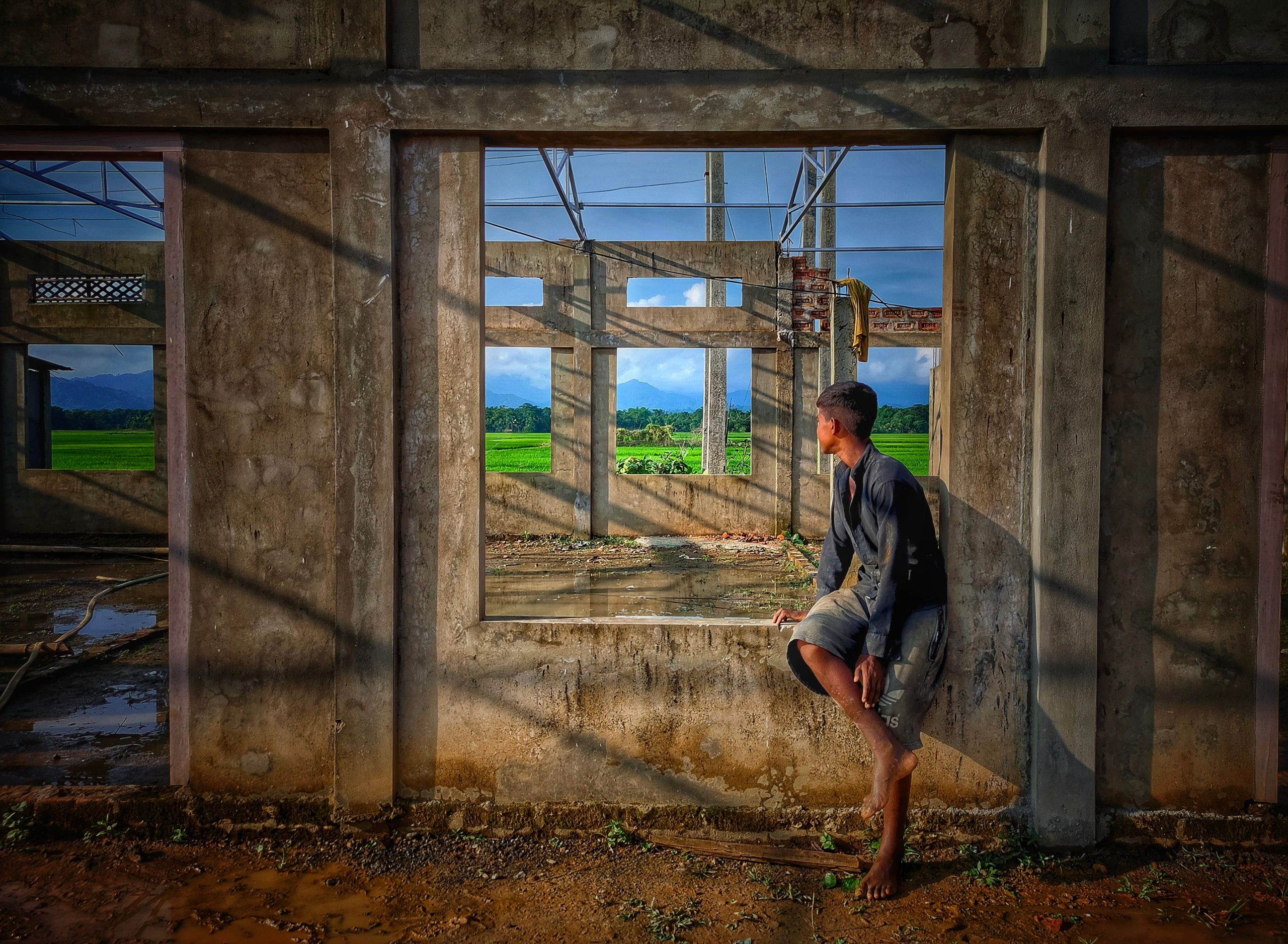
Ismoilova Madinabonu Jaloliddin qizi reminds us of our need for and connection to the rest of nature, and this single insight threads through nearly every voice gathered here. We are not isolated atoms; we are woven into a living world.
Business leader Safwan Ahmed outlines mind-shifts that can assist entrepreneurs in his upcoming titles The Solo Founder’s Kite and the Maverick Strategy, suggesting that how we orient our thinking determines what we can build. Dr. Jerry Olivas reflects on how, like sports, life sometimes doesn’t allow do-overs—a bracing reminder that presence and intention matter now, not later. Shah Jehan Asrafi reimagines silence not as absence, but as a latent, creative force, pushing back against the modern terror of quiet. Ananya Guha loves the difficult, noisy, demanding parts of life, even barking restlessness, insisting that vitality lives in the friction, not the ease. Umida Sayfulloyeva encourages society to look at stress and social pressure as we would any other epidemic. Elmaya Jabbarova captures the spark between people when love could have started, and the feeling after the moment passes. Amonboyeva Shahnoza reminds us to notice and reach out to lonely people around us—a small, radical act of repair in a disconnected age.
Mark Young playfully alters the color and texture of Australian geography to craft unique landscapes, showing that the ground beneath us can be reimagined, not just endured. Priyanka Neogi relates a trip to colorful Guayaquil, celebrating the beauty and culture of the developing Ecuadorean city. Su Yun’s Chinese elementary school students’ poetry, which he translated into English, focus in on ordinary, relatable experiences. Abdukarimova Farangiz discusses strategies for helping Uzbek students learn English as a foreign language, bridging worlds through language. Timothee Bordenave finds Jesus Christ within his ordinary life: in legends, in his craft, in his quiet room, not as a doctrine to be believed, but as a reality to be lived—a spirituality of the everyday, not the cathedral. Amina Sunnatullayeva underscores the importance of remembering and teaching history to maintain one’s cultural identity, a thread that runs through several contributors here. Dr. Reda Abdul Rahim traces the history of Palestinian political and military uprisings, grounding memory in the specific, contested weight of lived experience. Lan Xin acknowledges the long and rich history of the Dongba culture in China and her partnership with Dongba elders to preserve the culture through education. Rushana Shomurodova pays poetic homage to Uzbekistan’s scientific, medical, and literary history with her tribute to the works of historical writer Abdulla Oripov.
Saymurodova Madinakhon Zokhidjon kizi discusses the cultural associations given to the sound of various languages, revealing how hearing itself is shaped by belonging. Gulyor Matchonova highlights the importance of reading for personal education, the quiet technology of becoming. Maftuna Rustamova encourages steady work towards our goals and consistent study in order to learn, in a manifesto that attempts to empower ordinary people to achieve aspirations. Elmurodova Charos also notes the importance of history and national memory to Uzbekistan’s young people, so that they can appreciate the sacrifices of their ancestors and the value of hard-won peace—a generational chain of gratitude and awareness.
Silke Heiss reviews Abigail George’s novella Did You Get Married To Her While I Was In the Mental Hospital? which is a fierce, boundaryless fusion of mental illness, womanhood, and political rage, where survival lies not in being a “writer” but in being a woman who lives, acts, and cares for others. Abigail George’s new poem relates the experience of family life shaped by addiction, illness, and the commandment of silence, the things we are told not to say, and the cost of keeping them buried. J.J. Campbell writes from the trench of a life lived hard, with no romanticism, no filter, and no apology. Yet his poems are acts of resistance: he’s still here, still writing.
Mahbub Alam’s poem reminds us of the power of a simple word or bit of attention from a friend or loved one. Nidia Amelia García reflects on a love that has healed her, not through rescuing, but through consistent and tender presence. Maja Milojkovic draws on elements in nature that balance and complete each other as metaphors for romantic love. Sumana Bhattacharjee describes love as both otherworldly and grounded in reality, a spiritually grounded physical journey. Gaurav Ojha’s essay brings a philosophical perspective to the experience of falling into romantic love as Milena Pčinjski evokes a quiet, tender, and sacred rhythm of romance unfolding away from the world’s eyes.
Christina Chin’s haiga presents a simple, yet tender, image of departure and separation, the ache of distance rendered in few strokes. Tanja Ajtic portrays the anguish of intimate loss and grief. Milka J. Šolaja acknowledges the grief intertwined with the beauty of aging, losing physical and mental prowess even as we develop wisdom.
Duane Vorhees’ work explores false promises and hidden costs: sometimes we don’t get what we expect or bargain for in life. Rehaan Khan’s piece is a plea and prayer for a visit from the divine, or from a departed loved one—the hunger for presence beyond the veil. Joseph Ogbonna’s simple yet profound piece reminds us that life and death are paths traveled by all. Graciela Noemi Villaverde weaves a vision of loss incorporated into future life, transformed into future growth. Dr. Debabrata Maji’s poem shows that togetherness transforms losses that would break you into something you can carry. Bahtiyar Hidayet mourns the devastation of war and longs to return to the days when people and animals were cared for and respected—a vision of peace that includes the whole created order. Danijela Ćuk insists that peace is not a distant ideal but something we give each other, moment by moment.
Alan Catlin’s poetic portrait illuminates the humanity of school shooting survivors. Stephen Jarrell Williams suggests that humanity has a last chance to wake up, speak up, and choose sanity over destruction, both personally and globally. Christopher Bernard’s story portrays young children caught between idealism and the betrayal of national institutions.
Saeed Koushan’s work illuminates love that arrives and departs in the same wet night, leaving nothing behind but the memory of something that briefly, impossibly, shone. Noah Berlatsky’s piece speaks to the gap between spiritual ambition and clumsy, human reality—the comedy and tragedy of trying to be better than we are. Hassan Ismail Adekunle shows how one doesn’t build a bridge only by laying steel, but through asking, listening, leaving room for mystery, and honoring the ones who cross with courage and return with compassion.
Jacques Fleury’s poem brings humanity together in solidarity against injustice: it’s always a fresh new morning for someone on the planet. Marjorie Thelen’s short story “The Alien Jazz Band” is about found family, identity, and escape from a broken system, while also serving as a cautionary tale about AI, surveillance, and the loss of human agency, a warning that the technologies we build can sever the connections we need. Bill Tope’s short story is about the gap between what people see and what a person is really like, and how, for some, allowing the gap to remain is a refuge, strategy, and quiet form of grace. Saymurodova Madinaxon Zohidjon qizi points out how ownership of the English language has shifted from a small group of native-speaking nations to the global community of users, a democratization of voice that mirrors the broader themes here.
Chidimma Ewelukma illustrates what it means to be there for someone: to witness their difficult moments even when you can’t solve their problems, and to stay with them through the different seasons and versions of themselves over time. Srijani Dutta’s collection of poems and paintings embrace questioning, resilience, and self-discovery as a way of living, through recurring images of light, water, wind, dawn, journeys, circles, and flames. In Patrick Sweeney’s monostich poems ordinary moments, memory, faith, and imagination constantly intersect, revealing how people search for meaning amid imperfection, mystery, and everyday life. J.K. Durick’s poetry captures the feeling of being a tourist in one’s own life: perpetually out of place, unable to change situations, and curious about the mysterious lives of the locals around you.

Photini Karamouzis Chalkias’ work reflects a journey through deprivation, survival, and a desperate attempt to find meaning and connection in a world where truth is veiled by blood and silence. Cyril Etchev’s work highlights the power of the dreaming, loving, creative spirit to rise from the grounded, the silent, the ordinary and transform both self and world into light. Mykyta Ryzhykh depicts a reality in which time melts, language fragments, bodies decay, love becomes entangled with violence, nature becomes contaminated by human suffering, and death seems to be the only stability—a counterpoint that makes the acts of connection elsewhere in this gathering all the more urgent. Türkan Ergör expresses a nostalgic wish to return home where she feels she belongs, although life has inevitably changed her. Alex S. Johnson’s interview with musician Militia Vox highlights how for her, authentic artistry is forged in the stubborn refusal to abandon the raw, relational reasons you started, and reclaiming that impulse is itself an act of rebellion.
Dr. Jernail Singh’s piece argues for ethical action on a broader timescale, regardless of visible consequences in our lives. Sayani Mukherjee’s speaker seems to ask: What truly makes a nation? The answer is not simply borders or governments, but the memories, emotions, songs, cultures, and stories shared by its people. Shlok Pandey explores the weight of generational trauma and impossible social expectations through a mother-daughter story, the inheritance of wounds and the possibility of healing. Thi Lan Anh Tran’s piece suggests that childhood is often happy because then we know how to be fully present, wonder at small things, and love without condition.
Brian Barbeito offers a meditation on authenticity, simplicity, and the harmony that exists when humans, animals, and land live in honest relation to one another, circling back to the opening note from Ismoilova Madinabonu Jaloliddin qizi.
Shannon Scoates speculates through a tone poem on a decaying piano on what remains of our art and creation as natural cycles and time pass.
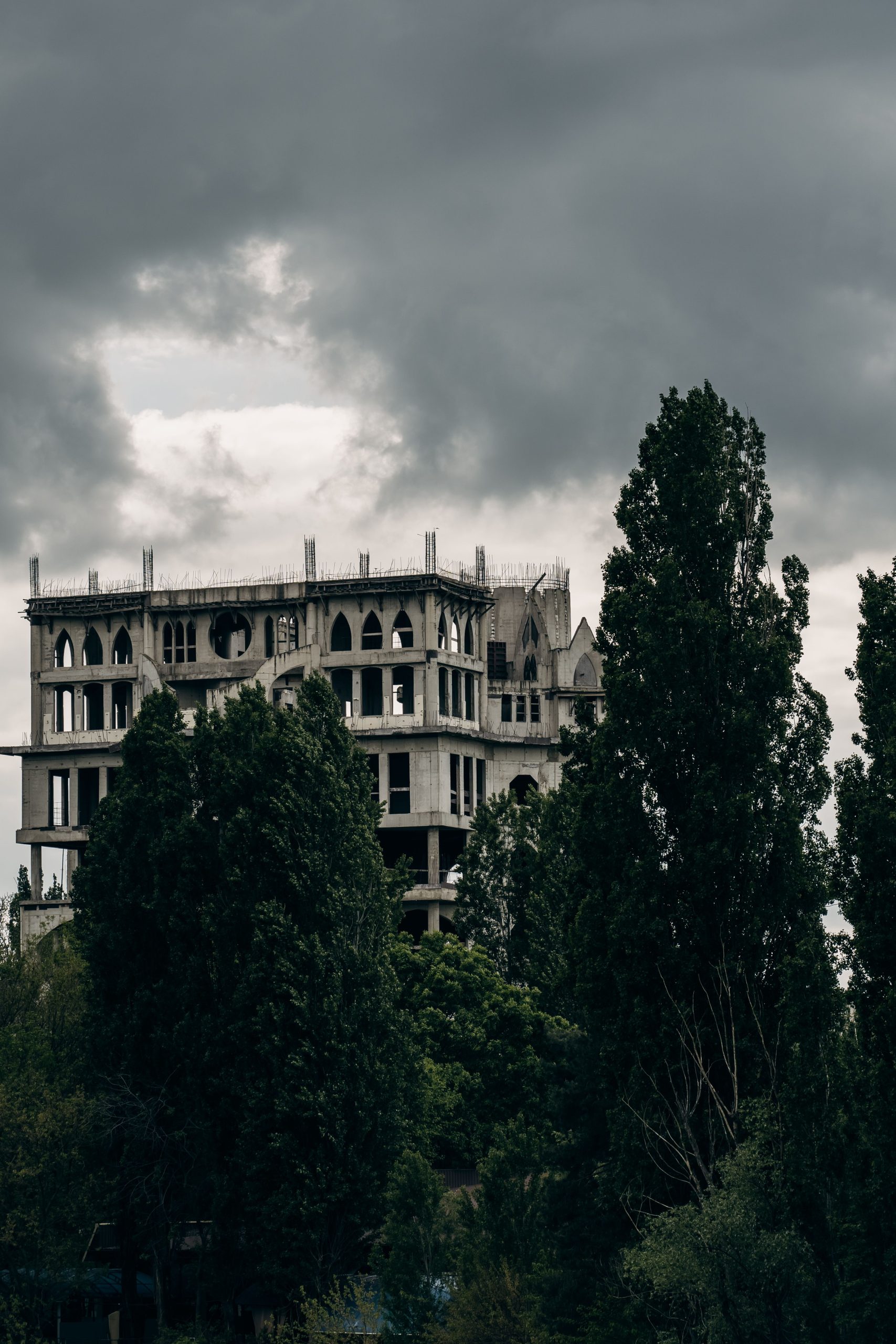
Finally, Madina Shodmonova encourages us to summon up all our courage and live our dreams with gusto.
What emerges from this constellation is a single, insistent truth: we are beings whose survival and meaning depend on the quality of our connections—to nature, to history, to language, to the divine, to the lonely, to the difficult, to the departed, to the dreams we have not yet lived. The work of being human is not to transcend these ties, but to deepen them, to show up for them, to carry what breaks us together, and to keep writing, making, and loving through the wreckage and the wonder alike.