Yes I have been to India. To that crazyquilt sari of piecemeal continua. This corner of culture remnant here supraimposed with that antic pocket there — all portions piled on, fu/ture/past juxtaposed and jangled, the mangled jazz of sitar/synth. In all this harem, whose hair is being plucked?
Yes I have been to India. Traced the serial Gandhicide graffiti through each election warren and heard the turbaned urban politicos scrawl their sloganscreed upon eager puppetdom. And thus learned that here, like home, the public part of man is apportioned mainly between play and display — performance shivas into form.
Yes I have been to India. Aboard a portable bedlam chugging from the station, a neverend circus of practived infant beggary — already, no gesture out of place, a persistent pantomime of persuasion and despair (yet my only alms a stone stare and stubborn refusal to be moved, and my sad wonderment at how the heart can harden so, and how soon.) Meanwhile, the Hooghly dawn unfolds in pinks and peach…
And all emerges from India. And all merges there — pedestrians, pushcarts, palanquins, pigs pressed together on the pavement with the trucks, trikes, bikes, and buses — like the constant blendings of ancient gods and newer fads. The whole universe, in India, remains submerged except for heat and mosquitoes.
My goals were as high as mountains, As if I could reach them with my hand. With every step filled with hope, My heart was full of faith and strength.
My path is long, yet full of light, My dreams keep calling me ahead. Even when difficulties become obstacles, My prayers open the way for me.
Sometimes I feel tired and stop, The light in my eyes begins to fade. But an inner voice always tells me: “Do not turn back, keep moving forward.”
One day I will reach the вершина, And smile while looking back behind. Those mountain-like dreams and goals, One day I will hold with my own hands.
Celebrating Another Year of My Life
I do not know why tears fill my eyes, My heart is overwhelmed with sorrow. Even asking the reason feels difficult, Harder than celebrating another year of my life.
The nights are silent, my pain rests in my eyes, Even silence feels like my companion. My heart trembles from tiny pieces of regret, Yet hope still lives deep within my soul.
Rain knocks softly on the window, As if it wishes to speak with me. But telling it about my pain is difficult, Harder than celebrating another year of my life.
Even the dawn feels strange to me, The sun cannot warm my heart anymore. A smile comes to my lips with difficulty, Harder than celebrating another year of my life.
When I look into the mirror — the same question appears, I have finished another year of my life. Hidden regrets tremble within my gaze, Harder than celebrating another year of my life.
Candles burn — shadows dance upon the wall, Silent thoughts surround me again. At this moment, I begin another year of life, Harder than celebrating another year of my life.
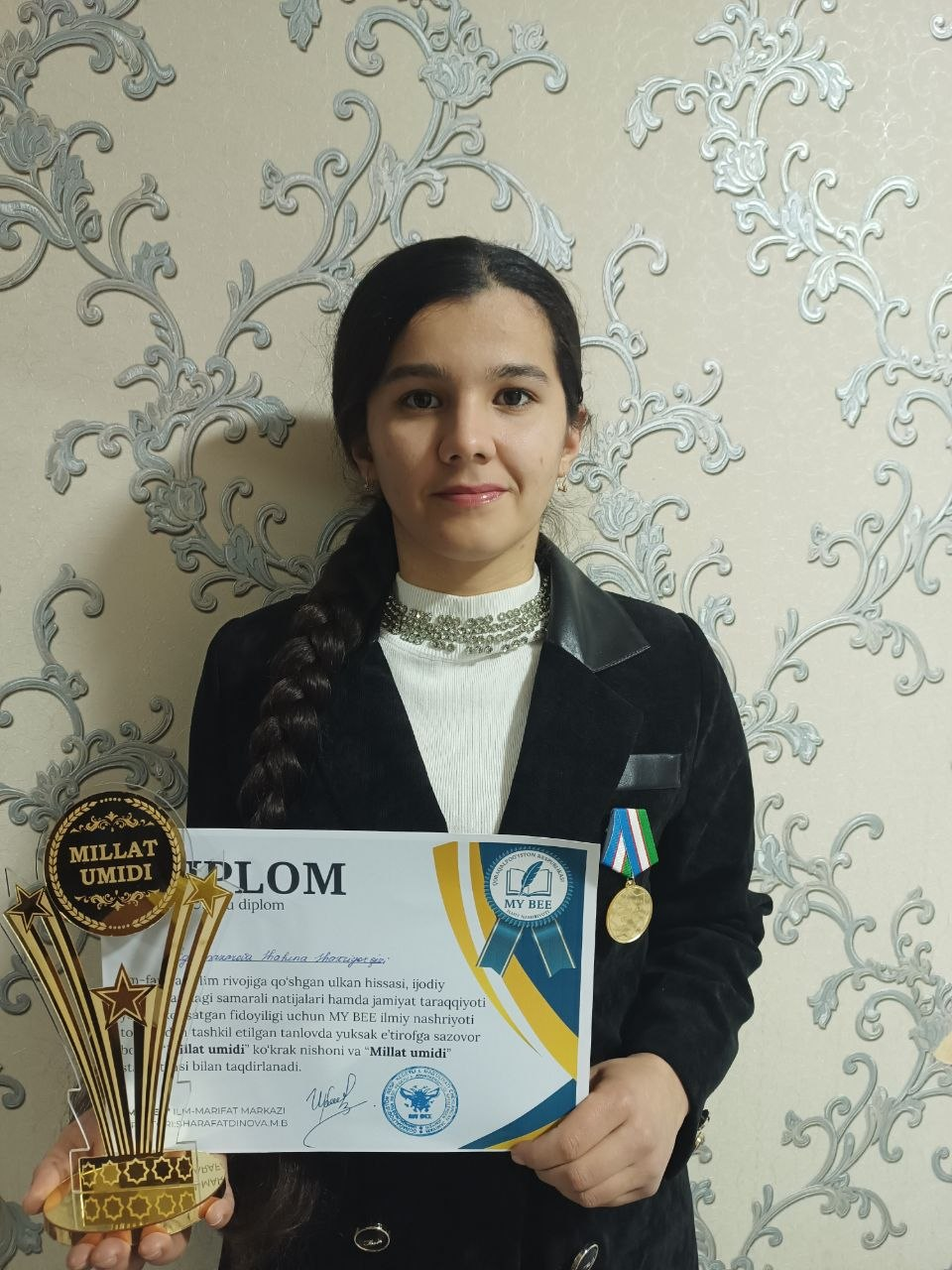
Egamnazarova Shahina Shaxriyor qizi was born on November 28, 2006, in the Qashqadaryo region of Uzbekistan. She is currently studying at Turon University in the field of Philology: Language Teaching (Uzbek language). She is the recipient of the “Millat Umidi” badge of honor. Several of her articles have been published in international journals. Her works have appeared in Turkey’s “Bilgi Çeşmesi”, Germany’s “GERMAN INTERNATIONAL JOURNAL”, and Uzbekistan’s scientific journal “Ilm-fan va ta’lim”.
Her creative works have also been published in national spiritual, educational, and social publications. Her short story titled “Gift” was published in the magazine “Inson Manfaati”. In addition, her poem “Childhood Longing” was published in the Qashqadaryo regional newspaper “Voha”. She is actively engaged in scientific and creative activities and regularly prepares scientific articles. She is interested in reading books and poetry. In the future, she aims to become a highly qualified specialist in her field.
J.D. Scrimgeour, born in 1965, holds a BA and MA in English from Columbia University and an MFA and PhD in English from Indiana University. He is the author of six books of poetry and two of nonfiction, including Themes for English B: A Professor’s Education In and Out of Class, which won the Association of Writing and Writing Program’s Award for Nonfiction. His most recent poetry book is Small, Rectangular, Reflected World. His previous book, 香蕉面包 Banana Bread: A Mandarin Pandemic Diary, is a bilingual collection of poems written first in Mandarin. His scholarly work includes articles on poets William Carlos Williams, Langston Hughes, Stanley Kunitz and Yusef Komunyakaa.
His poetry has won awards from the Academy of American Poets, the National Society of Arts & Letters, and the Massachusetts Cultural Council, and he recently received a residency at the T.S. Eliot House in Gloucester, Massachusetts. In 2025 he was named the inaugural Poet Laureate of the city of Salem, Massachusetts, where he has lived for the past 30 years. Poet in High Street Park: Prose & Poetry for Modern Salem, a collection of his writing about the city, will be published in 2026.
Interviewer Profile:
Ma Yongbo was born in 1964, Ph.D, representative of Chinese avant-garde poetry, and a leading scholar in Anglo-American poetry. He is the founder of Objectified Poetics and Difficult Writing. He is also the first translator to introduce British and American postmodern poetry into Chinese.
He has published over eighty original works and translations since 1986 included 9 poetry collections.He focused on translating and teaching Anglo-American poetry and prose including the work of Dickinson, Whitman, Stevens, Pound, Amy Lowell,Williams, Ashbery and Rosanna Warren. He published a complete translation of Moby Dick, which has sold over 600,000 copies. He teaches at Nanjing University of Science and Technology. The Collected Poems of Ma Yongbo (four volumes, Eastern Publishing Centre, 2024) comprising 1178 poems, celebrate 40 years of writing poetry.
(1)Which development stages have your poetry gone through, what are the main poetic philosophies or ideas driving each of these stages?
I have had the good fortune of having a father as a poet, so I was exposed early on to the art form in its contemporary state. As a child, I not only heard my father read his poems often, but I attended readings that he hosted, hearing poets such as Bill Tremblay and Robert Bly. In college at Columbia, I took two formative classes, both on Modern Poetry; one was taught by legendary teacher Wallace Gray, the other by the remarkable poet Kenneth Koch. In Gray’s course I became fascinated with the Modernist aesthetic, particularly the emphasis on the image, while in Koch’s course I was exposed to other kinds of experimental writers, from Mayakovsky to Appolinaire to Lorca.
As I’ve grown as a poet, I have become more open to letting my poems use different levels of diction and statements to add richer texture to a poem. That said, I think my aesthetic is best summed up in two quotes about poetry by some great mid-century poets, Bishop and Auden. For a long time I’ve loved Bishop’s three-word list for what she looks for in a poem: “accuracy, spontaneity, mystery.” And more recently, I’ve been drawn to Auden’s “Poetry might be defined as the clear expression of mixed feelings.” I see no reason to deliberately obfuscate, but “mixed feelings” means that every good poem has a depth. It can’t be summarized.
To that end, I’ve found that often flourishes of rhetoric are effective ways to get at “mixed feelings.” For example, in “Cemetery Poem,” the opening line, “Sooner or later every poet writes a cemetery poem” establishes a wry voice and tone that starts to shape all the details that will follow. I say “starts to shape” because I don’t want the connective tissue of the phrases like “sooner or later” to create just one way to apprehend the poem.
(2) Within the landscape of contemporary American poetry, how do you perceive your own position?
While I’m drawn to cosmopolitan and experimental writers and inspired by them, I am fundamentally a poet of place. I have a new book coming out next year, Poet in High Street Park: Prose & Poetry for Modern Salem, which contains 30 years of my writing about the city.
So, for better or worse, I guess I’m a regionalist. Of course, poets like Robert Frost, William Carlos Williams, Langston Hughes, and Jane Kenyon might be called regionalists, so to me the term doesn’t have the negative connotations it may have in some circles.
Some of the poems I admire most of yours have a wonderful sense of place. For example, I get a sense of a northern Chinese youth in poems like “Cinema” and “Killing the Pig.”
Do you align yourself with any specific school or movement within American postmodern poetry? If not, have you created your own movement or poetic manifesto?
No, I don’t, and no, I haven’t. There are some lines of mine that could serve as manifestos, including these from the poem, “The Sofa”: “I do not love words, but I consider them friends./ They cannot always be trusted, but neither can I.” These lines, in a casual way, acknowledge the the slipperiness of both the language and the self, while also suggesting an alliance, albeit sometimes uneasy, between the poet and language toward efforts at representation.
(4) You’ve mentioned two of your teachers: Kenneth Koch of the New York School and Yusef Komunyakaa, renowned for his jazz poetry. I’m curious about what secrets they taught you.
Kenneth Koch exuded such joy reading and talking about poetry that it was infectious. One thing he did that affected me, and I realize it only now, is that he had students write imitations of the poets in his anthology, Sleeping on the Wing. He would collect our assignments, and the next class he would come in and read aloud some of the imitations that he especially liked. To see a professor who was an accomplished poet relishing the work of students made an impression on me. He wasn’t judging the work based on how famous the author was, but on whether the poem moved him. It made me feel that I could write poetry.
I also recall that when I showed him some poems he made just one or two small suggestions, but they were memorable. He pointed to a word I’d used, “ceased,” and suggested that I might want to use another since it wasn’t a word that we often use in conversation. It was a “poetic” word.
Komunyakaa introduced me to poets that I still read today, like C.K. Williams and Bob Kaufman, and he taught me about the free verse line, both from my study of his own work, and from his comments on my poems. I have always felt that his attraction to jazz is seen in where the caesuras fall in his lines. Often they are near the beginning or the end of a line, which makes the lines feel syncopated. He also uses enjambment frequently, and that, combined with his caesuras, leads to a unique rhythm.
I still recall an amazing suggestion he made for a poem I’d written about Harriet Jacobs, the author of a famous slave narrative. I’d written “Jesus is white.” And then the next line began with the one-word sentence, “Property.” He suggested I remove the period after “white,” and suddenly the whole poem cohered.
(5) Which poets have influenced your writing, and who are your favorite American or foreign poets?
There are too many to list. But certainly an early influence was Langston Hughes, who showed that poetry could stylize common vernacular of a particular community. I appreciate how he charted his own path in poetry, how he brought blues and jazz into the genre. I also admire how his best poems feel simple on the surface but have depth.
One poet whose work is nothing like mine, but whom I love, is the American poet Dean Young, who passed away a few years ago. While he had attachments to the New York School, I felt he, too, charted his own path. I was always learning from him and always entertained by him.
And I have only read Tu Fu in translation, but I find him inspiring.
Here are some other poets I return to: Anna Akmatova, Frank Bidart, Elizabeth Bishop, C.P. Cavafy, Emily Dickinson, Robert Frost, Jane Kenyon, Yusef Komunyakaa, Vladamir Mayakovsky, Fernando Pessoa, Adrienne Rich, Rainer Maria Rilke, Muriel Rukeyser, Wallace Stevens, Walt Whitman, C.K. Williams, William Carlos Williams.
Your elegy for Kenneth Koch, “Me and Kenneth,” left a deep impression on me. It has many elements of experiential poetics, and many of your poems employ narrative techniques, which I find very interesting. It resonates with some of my own poetic pursuits. Could you share your insights?
I’m glad you like that poem. I certainly was trying for the informality and talkiness of some of Koch and Frank O’Hara’s poems, so that the poem is an homage to him by incorporating his style.
As for narrative, it’s very satisfying to discover a satisfying arrangement for a sequence of events. And that’s essentially all narrative is for me: putting events that occurred at different times in an order to indicate their relation to each other and, necessarily, to the speaker’s consciousness. So, for example, in “Me and Kenneth,” there are several different time periods referenced, and the poem moves from one to another; there are also moments that seem to be capturing the actual moment of composition.
I studied poetry in the late 1980s, when what was called “memory narrative” was competing with Language Poetry and the New Formalism, all resisting, in their own way, the free verse lyric poem with an “I” speaker, which was probably the dominant mode at the time. Memory narrative drew from fiction, although the stories it told, and the way it used time, aimed to capture the flux of consciousness in the process of recall. It’s a kind of poetry that I still find compelling.
Family environment has a very important influence on the growth of a poet. I know your father is also a poet. I am a little curious, is this an obstacle? If not, how does your father’s poetry influence your own?
My father has been an important influence on my work. First, he simply served as an example, when I was growing up, that one could be a poet, that it was a noble and profound calling. Second, he has been a helpful reader of my work, someone especially good at identifying when I was—and wasn’t– being authentic.
Has he been an obstacle? Of course, but only in the way that fathers are obstacles to their children. One must find one’s own path.
Perhaps we could talk about the relationship between poetry and music. I don’t understand music theory, so feel free to expand on that. You’ve shown me some of your collaborations with musicians. Are your sons musicians?
I don’t have a lot of experience with music, but one of my sons, Aidan, is a musician, and, in fact, we collaborated on a musical, called Only Human, a dark comedy about barnyard animals who pretend they are human so they don’t have to face their mortality. I wrote the book, and he wrote the music.
Pound’s simple formulation still feels relevant: “Music rots when it gets too far from the dance. Poetry atrophies when it gets too far from music.” I think poetry is very much about patterns, establishing them, varying them, breaking them. In that sense, it is much like music, with its theme and variation.
I was just in the studio last month recording my poems to music with Aidan and some other musicians. There was a moment when Aidan instructed the band to play for a little while and then “go into time.” Of course, he was talking about playing with a regular rhythmic beat, but I loved the phrase’s suggestiveness, as if time was a room, or a river. I think the best poetry finds its way into time, both in terms of rhythm and, literally, by entering time. I realize this last part is a bit mysterious, but I guess what I’m trying to say is that time is part of the subject matter of any good poem.
I’ve read two of your poems about cemeteries, “My Graveyards” and “Cemetery Poem”. The former employs a Ted Berrigan-esque list-making approach, while the latter exudes a sense of indifference, stripping away the sentimentality that often characterizes such subjects. Cemetery poetry has a long tradition in English (I think of Thomas Gray), so what are your innovations?
I think you identified one way my “cemetery” poems stand out: they aren’t conventionally elegiac, especially “Cemetery Poem.” That doesn’t mean that I don’t allude to poets who came before me. “My Graveyards” has echoes of two poems by Frost in the final lines, “The Road Not Taken,” and “A Tuft of Flowers.” Still, if I’m going to write a cemetery poem, I want to put things in it that don’t usually find their way into the genre, such as tampons, eggplant, and kangaroos. “Cemetery Poem,” despite its ironic voice, actually ends with a plea for experiential poetics, so maybe that’s another new thing that it’s doing.
(10)There are such comments about your poetry collection LIFTING THE TURTLE, “LIFTING THE TURTLE explores the idea of community, how we might find it-in places, people and poetry-but also how it can damage and ostracize. In verse humane and honed, J.D. Scrimgeour balances the tension between our sense of being the outsider looking in and our desire for connection.” Do you consider yourself an outsider in American poetry? Do you feel excluded and marginalized? I have always believed that when it comes to poetry writing, poets in marginal positions have more opportunities to write good poems because they have a clearer understanding of things. They are more oriented towards the things they want to write about, rather than the so-called literary life and literary history.
You are asking some very interesting questions. How I respond to this depends on how we are talking about being excluded. If we are talking about writers in general being excluded and marginalized by mainstream culture, I think that is sad, but it has produced some great poems.
For much of the last 100 years in the west, the figure of the writer has generally been one of an outsider (it has also been male, and, until recently, white). That stance has produced some beautiful writing. However, I think the stance is limited, too. There are cultures where the poet is a figure revered by the community and feels a responsibility to and for it. The Black Arts movement in the U.S. helped make this kind of approach more widespread in this country.
If we are talking about being excluded by a literary community (for example, not winning major poetry prizes, etc.), I don’t really worry about this. But I would say, in agreement with you, that impressive poets are found in the most unusual and unexpected places, and poets that I admire often are not widely published or known. Charles Bukowski says, “Bad luck for the young poet would be a rich father, an early marriage, an early success or the ability to do anything well.” If one persists despite obscurity, I think one finds a readership and a style.
(11) As a scholar, what do you think about the state of contemporary American poetry, especially our contemporaries, the post-1960s generation of poets? Who do you think is the mainstream or mainstream figure in contemporary American poetry? Or to put it another way, is there any famous American poet whom you dislike, think they are not worthy of the fame?
Certainly there are poets who seem overrated to me, but the ones I don’t like much I don’t read much, so I hesitate to cast judgement. Back in the 1980s, I remember a poet I admired saying that you could take the authors’ names off the poems in magazines and you wouldn’t be able to tell them apart—everyone was writing in a similar style. That has definitely changed for the better. There has been a flourishing of poetries.
Childhood experiences are very important for a poet, could you please share your thoughts on this?
The fiction writer Flannery O’Connor said, “Anyone who survived childhood has enough material to write for the rest of his life.” I had a happy childhood, but I think this quote holds true. The patterns that we discover in the world as a child, whether they are about nature, or human relations, or rhythm, or sound, become how we understand the world and ourselves.
Besides including one of my poems in the anthology “Pushing the Window,” you were the first poet to translate my poetry into English, for which I am forever grateful. Before meeting me, you must have been exposed to other Chinese poets. Why did you become interested in my poetry? In your opinion, how does my poetry differ from that of other Chinese poets?
I think the beginning of this question was meant for another writer.
I first got interested in Chinese poetry when I was teaching world literature. I taught a unit on ancient Chinese poets, and that led me to read a lot of Tu Fu.
Your work is some of the first Chinese poetry that I translated after translating some Hai Zi poems. I was made aware of your work by a former student, Yicheng Tao. I was drawn to it by its willingness to be fairly experiential and use engaging imagery, while also making leaps of thought.
I haven’t found work like yours in other Chinese writers, but I also haven’t studied enough Chinese writers to feel like I can say more.
(14)Modernist poetry often sanctifies everyday experience, like Eliot’s moment of hearing children’s laughter in the garden. But I’ve noticed that you don’t always do this. Instead, you often reduce the alchemy of memory to a kind of memory revision, presenting experience as it is, as in “My Father’s Rages (With Comment By My Mother)” and “Roosevelt Island Tram.” You don’t seem to elevate experience to a metaphysical level, but rather simply embellish it with wit and humor, making it somewhat amusing but not particularly meaningful. Is this intentional, like the bland flatness of postmodernism? I’d like to hear how you defend poems like these, which, according to traditional readings, lack “poetic quality.”
This is an interesting question, and I don’t think I can answer it by talking too abstractly, so let me just say a few things about the poems that you cited. The first, “My Father’s Rages…” was actually a failed poem. It began in response to a poetry prompt in which we were asked to write about “my father’s rages.” It struck me that in many poems, the father was an angry man, a patriarch to be feared. But mine wasn’t. When I finished it, however, I didn’t think the poem had enough tension. Though it sketched my father as someone who had led a rather quiet life, it didn’t quite know what to do with that. Fortunately, my mother came to the rescue. I’d sent a draft of the poem to my parents, and the last 14 lines of the poem are, almost to the word, what she said about it in a phone call.
To defend the poem, I guess I’d say two things: the first is that the strategy of the poem, to incorporate another person responding to what the author has written, seems fresh to me. It surprised me, and I hope it surprises the reader. Just as importantly, the poem commemorates the love between two people by showing how they have secrets, privacies. The speaker of the poem couldn’t have imagined his parents being so bold as to make love outside on the wooded hill behind their house. It ends with the suggestion that we don’t know as much as we might think we do about people, and that what we don’t know, but what a couple shares, may be where love resides. The poem operates like some Elizabeth Bishop poems, in that the speaker is experiencing a revelation as the poem is being composed.
“Roosevelt Island Tram” is a poem that is a slightly disguised extended metaphor for the gift of being alive and the journey we take. That seems metaphysical enough to me.
(15)I leave the last question to you. You can talk about any topic you want so that Chinese readers can get a general understanding of you through this interview. Please also use your poetry as examples to illustrate your point of view. Thank you.
First, I’d say that it has been a pleasure to answer these questions. Thank you for the time and care you put into this interview and translating my poems.
As a writer, I have a restlessness and aversion to received wisdom and poetics. In the poems that I have already discussed, and in some others, I aim to follow the informal dictum of the New York poets, “Above all, be interesting.” And I am also guided by Frost’s statement, “No surprise in the writer, no surprise in the reader.” And yet I find poetry that doesn’t cohere, that seems motivated primarily by surprise, to be unsatisfying. There is a fine line between meaning and joy, truth and beauty. I hope that I manage to walk it in my poems. In his poem, “Man Carrying Thing,” Wallace Stevens writes “The poem must resist the intelligence/Almost successfully.” I like that.
Ma Yongbo, 20250807-10
D.斯克林杰诗选
目录
The Last Miles
For Langston
After the Fire
Valentine’s Day, 1991
Wine
The Writer’s Retreat
Monarch
My Graveyards
Cemetery Poem
Cell
Housesitting
Lifting the Turtle
My Father’s Rages (With Comment By My Mother)
Whitman
Me and Kenneth
After Tu Fu
Father Bob
Salem, Mass
Jim & Irene
Side Mirror
Double Happiness
Savers Thrift Store, Danvers, Mass
Spring
Roosevelt Island Tram
The Chocolate Moose
Pronouns
Guano
Thoreau Suite
Maples Seen from the Metroline
Unsent Letter from Langston Hughes to His Father, First Semester at Columbia
D. 斯克林杰,萨勒姆市桂冠诗人,塞勒姆州立大学英语教授,曾任英语系主任和创意写作协调员,并于 2023 年获得该校的教师奖最高奖。他著有五部诗集:《最后的里程》《领地》《托起乌龟》《节日》、双语诗集《香蕉面包》和《小小的、长方形的、倒映的世界》。他与音乐家菲利普・斯旺森合作发行了 CD《奥甘奎特及其他作品》,该专辑融合了诗歌与音乐。他还著有两部非虚构作品:《旋转动作》和《英语 B 的主题:一位教授的课内外教育》,其中《英语 B 的主题》获得了美国作家与写作项目协会的非虚构作品奖。他也曾获得过马萨诸塞州文化委员会、美国国家艺术与文学学会以及美国诗人学院颁发的奖项。
J.D. Scrimgeour is Professor of English at Salem State University and the author of five collections of poetry, The Last Miles, Territories, Lifting the Turtle, Festival, the bilingual 香蕉面包 Banana Bread, and Small, Rectangular, Reflected World. With musician Philip Swanson he released Ogunquit & Other Works, a CD blending poetry and music. He is also the author of two books of nonfiction, Spin Moves and Themes For English B: A Professor’s Education In & Out of Class, which won the Association of Writers and Writing Program’s Award for Nonfiction. He has published over 140 poems in magazines such as Poetry and Ploughshares and has won awards from the Massachusetts Cultural Council, the National Society of Arts & Letters, and the Academy of American Poets. In 2023, he was the Gregory Stockmal Memorial Speaker for the Worcester County Poetry Association. Over the course of his career, Scrimgeour has written and published poetry, essays, short stories, and drama about Salem.
Scrimgeour enjoys interdisciplinary collaborations. In addition to his CD of music and poetry, he has worked with choreographer Caitlin Corbett and photographer Kim Mimnaugh. With his two sons, Aidan and Guthrie, he wrote the musical, Only Human, which premiered in Ames Hall Theatre in 2014, and his short film, Chasing Chloe, about a middle-aged man’s quixotic attempts to defeat his talented niece in a race, premiered at Cinema Salem in 2022.
Scrimgeour has been a member of the Executive Board of the Massachusetts Poetry Festival, and in that role he helped bring the Festival to Salem in 2011, where it has remained ever since. He also founded and directs the Salem Poetry Seminar, a collaboration between Salem State and the Salem Athenaeum that brings 12 select undergraduates from Massachusetts public universities to Salem for a week to study poetry.
Scrimgeour has served on the Salem Education Foundation, and he coached in Salem Little League for eight years. He has been Chair of the Salem Athenaeum’s Writing Committee for over a decade, for which service he received the Edward Augustus Holyoke Award for “exemplary leadership cultivating a community of writers.” Part of that work included founding and hosting the Salem Writers’ Group in the early 2000s, a group that continues today. At Salem State, he has served as English Department Chair and Coordinator of Creative Writing, and in 2023 he received the University’s Senior Award for Faculty.
Scrimgeour has lived in Salem since 1996 with his wife, Eileen FitzGerald. Their two sons attended Salem public schools. Mary Towne Eastey, an ancestor in his direct line, was put to death during the Salem Witch Trials. Another ancestor, Thomas Perkins, sat on the jury that found her guilty. Words from Mary Eastey’s petition, which helped bring about the end to the Trials, are carved into the Salem Witch Trials Memorial.
最后的路程
去往我父母家的最后的路程
阴影多过了光亮,
道路被绿色遮蔽。
黑色的箭头标出危险的弯路。
补丁般的天空亮得发白,
从树叶的缝隙中爆发开来。
我猛踩踏板攀登群山。
我已经 听到母亲的声音:
交通状况如何?你饿了吗?
你饿了吗?
半生之前
我开车驶过这些道路,一份暑期工
清理通往自然景观的小径。当一天结束
我的脖子和胳膊留下树叶和嫩枝的污点。
现在,仿佛我在穿过自己的血管
行驶,仿佛,像血液一样,
这些年我一直在循环不息:
通过毛细血管而出,
又返回心脏。
The Last Miles
The last miles to my parents’ house
are more shadow than light,
the road canopied with green.
Black arrows mark dangerous curves.
Patches of sky so bright they seem white,
explode through gaps in the leaves.
I push the pedal to climb the hills.
I already hear my mother’s voice:
How was the traffic? Are you hungry?
Are you hungry?
Half a life ago
I drove these roads, a summer job
clearing nature trails. At day’s end
my neck and arms flecked with leaf and twig.
Now, it is as if I am steering through
my own veins, as if, like blood,
I have been circling all these years:
out through the capillaries,
back in to the heart.
致兰斯顿
“我,也歌唱美国”——兰斯顿·休斯
美国不唱歌。不怎么唱。
我爱你这爱你那,如此这般,
它对着收音机低吟,
可是关掉它,没有任何
曲调,没有声音,一片寂静
来自电视和午餐
——土豆片的吱嘎声——
溜进来。没有舞蹈,没有臀部
震动和捶击空气,
没有披散的、无拘无束的头发。
兰斯顿,你拥有更好的听力。
我信任你,当你说你听见
美国在歌唱,但是来吧,今天
且倾听,现在就来吧,今天,
把你的笔埋在我们的喉咙里——
那些单纯的、有时愤怒的音符
让你的诗句几乎变得真实:
美国在歌唱?那就是你。
For Langston
“I, too, sing America”
Langston Hughes
America doesn’t sing. Not much.
I love you this and that, and such,
it croons along to the radio,
but turn it off, there’s no
melody, no voice, a silence
that t.v. and lunch
–the crunch of potato chips–
slip into. No dancing, no hips
shaking and thumping the air,
no splayed, unbuttoned hair.
Langston, you had the better ear.
I trust you when you say you hear
America singing, but come today
and listen, come now, today,
and bury your pen in our throats–
those simple, sometimes angry notes
that made your line almost true:
America singing? That was you.
火灾之后
——她说——
我不介意感动我自己。
我不介意凝视。
医生的探访,
是浪费我的时间——我知道
我会做得更好——但是我不介意。
我不介意我的丈夫离开,
他和我说时没有看着我。
我的脸不再是结婚时的样子。
我的脸不再是我原以为的样子。
我的密友要我告诉她
我的梦魇,我如何醒来,
汗涔涔,因为火舌堵住了
门道,但是我的梦
关乎本地池塘,我希望拥有的
孩子们,牙签的身体
沿着甲板奔跑。
太阳里的一个光斑。
当我的母亲来看我,帮助我,
我想要拥抱她,把她抱在怀里,
仿佛我可以祝福她的仁慈。
我告诉她不要担心,
我要活下去。
她让我给她梳头
当我们观看重播说出
我们已经听过的话语,而广告
提供了我们变美所需的一切。
After the Fire
–she speaks—
I don’t mind touching myself.
I don’t mind the stares.
The doctor’s visits,
they waste my time—I know
I’m doing better—but I don’t mind.
I didn’t mind my husband leaving,
not looking at me when he told me.
My face is not the face he married.
My face is nothing I thought a face could be.
My close friend wants me to tell her
my nightmares, how I wake,
sweaty, from flames blocking
the doorway, but my dreams
are of the local pool, the children
I’d hoped to have, toothpick bodies
running along the deck.
A splash in the sun.
When my mother visits, and helps me,
I want to hold her, take her in my arms,
as if I could bless her kindness.
I tell her not to worry,
I want to live.
She lets me brush her hair
as we watch reruns tell us words
we’ve already heard, and commercials offer
all we need to become beautiful.
1991年的情人节
夜晚,炸弹落在巴格达
我脑袋里的烟雾和燃烧。
我知道你无法阻止他们。
当那里有314名平民死去
所谓的希望
就是一种“政治挫折”,当
我们只能嘲笑“新闻”
我们有汤供应,小口喝着,
倾听雨水打在
玻璃上,远处有
警报声。当我在厨房里
啜泣,在集会之后,
在人们停止
向我们尖叫之后,“我希望
你被选中并死去,”
你抱住我,你的头发粘在
我的脸上。但是
那无关紧要,就像你告诉我
我真的可以弹吉他
或是我在你外套口袋里
留下便条,或是
把巧克力薯条曲奇
烘培在一起,都无所谓。
什么都没有了,过去
曾是建筑物的地方,
过去曾有腿和胳膊的
地方,过去曾有人
存在的地方。一个空间,一个
我们地球的无遮拦的视野。
我提供给你,我的爱,
一棵植物,一首歌,某种东西
来帮助我们凝视烟雾
和火焰,某种
在空间里舞蹈的东西
我们和每一个夜晚一起躺下。
Valentine’s Day, 1991
Nights, the bombs on Baghdad
smoke and burn in my head.
I know you can’t stop them.
What hope is there when
314 civilians dead
is a “political setback,” when
we can only laugh at the “news”
we are offered and sip our soup,
listen to the rain against
glass, the sirens
in the distance. When I wept
in the kitchen after the rally,
after people had stopped
screaming at us, “I hope
you get drafted and die,”
you held me, your hair stuck
to my face. But that is
nothing, like you telling me
I really can play the guitar
Or me leaving notes
In your coat pocket, or
Baking chocolate chip cookies
Together, all nothing. There
is nothing, too, where
buildings used to be,
where legs and arms
used to be, where people used
to be. A space, a less-
obstructed view of our earth.
I offer you, my love,
a plant, a song, something
to help us look at the smoke
and flame, a something
to dance in the space
we lie down with each night.
酒
我希望我的话语像酒一样,
从大地的果实酿造而成,
陈年,柔滑,美味
富有效力。某种连同其他
世俗乐趣一起接受的东西,
某种你将会吸收的东西
停留在你内心,让你想要更多,
但不能太多;绝对不会
让你头疼,只是某种
让你温暖又忧郁的东西,
它既庆祝又哀悼,并且坐在
深夜厨房的桌子上,
确切地说,它不是你的朋友,而是
朋友之间传递的一切。
Wine
I want my words to be like wine,
pressed from the earth’s fruit,
aged and smoothed, tasty
and potent. Something to take in
with other worldly pleasures,
something you’ll absorb that stays
within you, that makes you want more,
but not too much more; nothing
to give you a headache, just something
that leaves you mellow and melancholy,
that celebrates and mourns, and sits
on the kitchen table late in the evening,
not your friend, exactly, but what passes
between friends.
作家隐居处
一切都系于一根无形的白发。
——哈特·克兰,《我祖母的情书》
几年前,我钻进父母的阁楼
与黄蜂和松鼠一起,拖出
那个装着旧日笔记本的破纸箱
那时,写作还闪耀着希望的光芒。
一些瞬间在笔记本里存在着——
那些似乎精准的句子,某个意象
从褪色纸页上跃出,点燃记忆的火花,
但多半时候,我只感到失望。
我所求不多,并非证明自己天赋异禀
只是,那个“我”在哪里?那段我分明
经历过的人生?我瞥见一丝微光的那个夜晚
我们穿过一片长长的雪地,走向她的小屋。
我听见那些抗议夜晚的鼓声轰鸣
那时,我们锁链拴紧汉密尔顿楼的门
还有从我父母屋后
农场粪肥的臭味。
但大多数东西——无论是什么——都已消逝。
再见了,我的人生……
纸箱里还有一个更小的盒子,
一个装信的鞋盒:前女友们的便条,
母亲寄来的一封信——轻松又有趣。
还有一封姐姐从西班牙寄来的信——
足足有六页。我凝视着它,想起第一次读信的情景
当时我坐在印第安纳州中部的那间公寓里。
她爱得那样深沉,让我心生惶恐。
此刻我坐在这座昔日的修道院里
被信仰的书籍包围着,多希望那封信能在身边。
或许我不会读它,只是轻轻抚平纸页。
单单“亲爱的J.D.”这几个字,就已足够。
我记得当时觉得,她比我更贴近
真实的自己,而我或许永远无法企及。
The Writer’s Retreat
It is all hung by an invisible white hair.
—Hart Crane, “My Grandmother’s Love Letters”
A few years ago I climbed into my parents’ attic
with the wasps and the squirrels and hauled out
the tattered cardboard box of old notebooks
from back when writing gleamed with promise.
There were moments in the notebooks—
lines that seemed exact, an image that leapt
from the faded pages, sparking the fire of memory,
but mainly I was disappointed.
I wasn’t asking for much, no proof of genius,
but where, simply, was me? That life
I know I lived? I’d see a wisp of the night
we walked a long field of snow to her cabin.
I hear the rumble of drums those protest evenings
when we chained the doors to Hamilton Hall,
and there’s the stink of manure from the farm
behind my parents’ house.
But most of it—whatever it is—was gone.
Goodbye, my life…
Inside the box there’s a smaller box,
a shoebox of letters: notes from old girlfriends,
the one letter my mother sent—breezy and funny.
And there’s a letter my sister sent from Spain—
six pages. I stare at it, remember when I first read it
sitting in that apartment in the middle of Indiana.
She was so deeply in love it scared me.
I wish I had that letter with me now, as I sit
in this former convent, surrounded by books of faith.
I probably wouldn’t read it, just smooth the pages.
“Dear J.D.,” would be enough.
I remember feeling she’d gotten closer
to who she was than I would ever get.
黑脉金斑蝶
我知道那便是时间本身,
是我昨日所见的那只蝴蝶,
已经死去,在人行道上
当我从四十岁的光景往家走
走向我温思罗普街上的住所
就在与墓地相隔一个街区的地方。
我停下脚步——人到中年——凝视着时间。
我无法对它视而不见——如此鲜亮的
橙色,如此浓重的黑色,宛如瞳孔。
我的岁月平淡无奇:
婚姻,儿子们,一个破裂的膝盖。
可当我凝视着时间,
风忽然转向,
拂动它的一只翅膀,我看见自己
在祖母的葬礼上啜泣
那是二十二年之前,我把妹妹
紧紧拥在怀中。那是八月的一天,
套装里的燥热难以忍受,
而在妹妹的头顶后方,
在湿热的微风中闪烁,
一只蝴蝶,飞起,停落在
附近一块墓碑上,随即
再次升空——一闪——消失不见,
淡出我模糊的视线——
而此刻,我原以为早已死去的它
扇动了两下翅膀,腾空而起,
擦过我的左颊,
绕到我的脑后,
继而盘旋着,越过
运河街上的车流。
Monarch
I know it was Time itself,
that butterfly I saw, dead,
on the sidewalk yesterday
as I walked home from my forties
to my house on Winthrop Street
down the block from the cemetery.
I stopped—mid-life—and looked at Time.
I couldn’t pass it by—so bright
orange, so deep black, like pupils.
My years had been uneventful:
marriage, sons, a busted knee.
But when I gazed at Time,
and the wind shifted,
fluttering a wing, I saw myself
sobbing at my grandmother’s funeral
twenty-two years ago, hugging my sister
to me. An August day,
the heat unbearable in my suit,
and behind my sister’s head,
shimmering in the humid breeze,
a butterfly, off, alighting
on a nearby gravestone, then
up again—a flash—gone,
out of my blurry vision—
and now, what I thought was dead
flaps its wings twice and rises,
brushing past my left cheek,
swerving behind my head,
then sailing and clutching over
the Canal Street traffic.
我的墓地们
有一座在南桥,
我的祖父母葬在那里,
还有一座在什鲁斯伯里的某个地方,
我的外祖父母葬在那里。
有一座,艾琳和我曾穿行其间,
当夕阳正笼罩着布卢明顿。
霍吉·卡迈克尔就葬在那里。
有一座俯瞰着高尔夫球场
喜欢高尔夫的扎伊多先生,
葬在那里。有一座在我家
所在街区的尽头,狗被带到那里
拉屎。还有一座在康涅狄格州
我父母家附近,我曾坐在车里,
抽大麻。还有一座,我姑姑珍妮
葬在那里,我表弟德米特里
从那些花束中,摘下几朵玫瑰
扔进了坟墓。红玫瑰。哦,还有一座
在那次沿着乡间小路的长途骑行中遇见的,
在印第安纳州的乡村。墓碑
不超过二十块。日期都在1900年之前。
一条人迹罕至的路,在一个
人迹罕至的县城。田野,森林,花朵,
还有这座小小的古墓,有人
最近刚刚修剪过草坪。
My Graveyards
There’s the one in Southbridge,
where my grandparents are buried,
and the one somewhere in Shrewsbury,
where my grandparents are buried.
There’s the one Eileen and I walked through
as the sun set over Bloomington.
Hogie Carmichael is buried there.
There’s the one that looked over the golf course
where Mr. Zaido, who liked golf,
was buried. There’s the one down the block
from my house where the dogs are taken
to shit. And the one near my family’s home
in Connecticut, where I sat in a car
and smoked pot. And the one where my Aunt
Jeanne is buried, where my cousin Demetri
tossed some roses from the arrangements
into the grave. Red roses. Oh, and the one
on that long bike ride on country roads,
the Indiana countryside. No more
than 20 headstones. Every date before 1900.
A road hardly traveled, in a county
hardly traveled. Fields, forest, flowers,
and this small old graveyard that someone
had recently mowed.
墓园诗
迟早,每个诗人都会写一首墓园诗。
而且,在大多数——说真的,是所有墓园诗里——都有死亡。
也有生命——青草生长,或是一只鸟掠过天空,
或许还有生者留给逝者的某种信物:
一个麦当劳的塑料玩具,一些已然枯萎的花,
一首抄录在横格纸上的诗。
墓园诗里很少提到卫生棉条,或是
广义上的女性卫生用品。茄子也是同理。
而极少有墓园诗会一边赞美,一边谴责
《拼字游戏》让人上瘾的特质。
几乎不可能有一首墓园诗
不包含“石头”这个词:墓碑,墓石;
而且几乎每首墓园诗里,甚至那些
试图以歌颂生命与崇高收尾的作品,
都透着一丝万物皆无意义的气息,
缺席那石头般的寂静。
难怪弗兰克·奥哈拉要写魔法豆
和袋鼠!墓园诗会令人沮丧,
单调乏味,尤其是如果掺杂有政治元素:
乱葬岗,某个骇人听闻的暴行轶事——
肢解,强奸等等,会让一切显得
比无意义更糟糕。重点成了苦难与不公。
再者,那种阴森恐怖的调调,实在无聊,
而那种假装阴森的,可能更无聊。
墓园诗很少会争抢话语权
互相打断:我懂墓园诗,
而你,我的朋友,算不上一首墓园诗。
其实,墓园诗或许更多是关于诗歌的
而非墓园,若是如此,就不存在
什么墓园诗了,只有关于诗歌的诗,
但我希望并非如此,因为如果真是这样,
那么每首诗就都是一座墓园了。
Cemetery Poem
Sooner or later every poet writes a cemetery poem.
And, in most of them—all, really—there’s death.
And life, too—grass growing, or a bird crossing the sky,
maybe some token left from the living for the dead:
a plastic toy from McDonalds, some flowers,
already wilting, a poem copied out on lined paper.
Cemetery poems mention tampons, or feminine hygiene
generally, less frequently. Ditto eggplant.
And it’s the rare cemetery poem that celebrates yet deplores
the addictive qualities of the Boggle App.
You almost can’t have a cemetery poem
without the word “stone”: headstone, gravestone;
and in almost every cemetery poem, even the ones
that try to end by honoring life and the sublime,
there’s a whiff of the pointlessness of it all,
the stony silence of non-being.
No wonder Frank O’Hara wrote about juju beans
and kangaroos! Cemetery poems can be depressing,
one-note shit, especially if you toss in the political:
mass graves, some garish anecdote of an atrocity—
dismemberment, rape, etc., which makes it all seem
worse than pointless. The point being suffering and injustice.
Then, there’s the macabre, which is just boring,
and the mock-macabre, which may be more boring.
Rarely do cemetery poems battle for airtime
and interrupt each other: I’ve known cemetery poems
and you,my friend, are no cemetery poem.
Cemetery poems might actually be more about poetry
than cemeteries, in which case there’s no such thing
as a cemetery poem, just poems about poetry,
but I hope that’s not true because if it is,
then every poem is a cemetery.
手机
要是可以,我想用
刚买的这部手机
打给费尔维尤公园
社区泳池外的付费电话
就在伊利诺伊州诺默尔市,
那年夏天我十一岁,
而这个国家刚满两百岁。
我会让电话铃声响起
就在我骑着那辆水绿色
有24英寸车轮的自行车经过时。
我还要让自己比十一岁时
更勇敢些。
我会跳下车,
啪地踢下脚撑
然后接起电话:“喂。”
而电话那头的我,
或许就没那么勇敢了。
我会听见那个十一岁的声音
带着青春期将至的尖细
“喂”——多像我儿子
今晚早些时候的语气
当时我从这间吱呀作响的农舍卧室里
跟他通话,此地离我家
隔了两个州——
“喂。”而我什么都不会说,
只听着年少时自己的呼吸,
想象着我站在那里
没穿衬衫,一手叉腰,
身后的喧闹与水花声
被伊利诺伊潮湿的空气弄得模糊。
不,什么都不说。卧室门的锁孔
从走廊漏进
一小片光的宝石。
“谁——”男孩问,“是谁啊?”
Cell
If I could, I’d use
my recently purchased cell phone
to call the pay phone outside
the community swimming pool
in Fairview Park, Normal, Illinois,
that summer when I was eleven,
and the country 200.
And I’d have the phone ring
just as I was passing by on my
aqua-colored bike with 24-inch wheels.
I’d also make myself more brave
than I was at eleven.
I’d hop off the bike,
thwack the kickstand down
and answer, “Hello.”
And at the other end of the line,
I would probably not be so brave.
I’d hear that eleven-year-old voice
squeak its cusp-of-puberty
“Hello”—so like my own son
on the phone earlier tonight
as I spoke to him from a bedroom
in this creaky farmhouse
two states away from my home—
“Hello.” And I would not speak,
listening to my youthful breaths,
imagining me standing there
shirtless, hand on hip,
shouts and splashes behind me
muffled by the humid Illinois air.
No. No words. The keyhole
in the bedroom door lets in
a gem of light from the hall.
“Who—” the boy says, “who is this?”
看家
我们在那位著名诗人的家里,
躺在他的特大号床上,我在上面。
那是夏天。我们正年轻。
朝向小巷的窗户开着,
薄纱窗帘大敞着,
电话响了;响了又响,
于是我接了起来。是我们从未见过的邻居,
说有个男人在我们的窗户外头,
我扭头望去,看见有东西在动。
我走近些,他便慌忙跑开,
鞋子在巷子里啪嗒啪嗒。
窗户曾只是用来纳凉的。
世界为我们而存在,它的表演
是为了让我们快乐:暴风雨中颤抖的枫树,
农夫市集上整齐码放的苹果,
采石场澄澈的心。
此后数十年,我总会想象那个男人,
他的脸始终模糊不清,裤子拉链敞开着,
一边自慰一边观察着我们。
我撑着手臂,毯子滑落,
躯干弓起,她的发丝与肌肤
带着每日游泳留下的氯气味……
有些事,我们再也不会做了。
一阵微风拂动窗帘。
那扇窗。那扇装着细密纱网的窗。
Housesitting
We were in the famous poet’s house,
on his king-sized bed, and I was on top.
It was summer. We were young.
The window to the alley was open,
gauzy curtains pulled wide,
and the phone rang; it rang and rang,
so I answered. The neighbor we’d never met
said a man was outside the window,
and I looked over, saw something move.
I walked closer, and he rushed away,
his shoes flopping down the alley.
Windows had been just ways to cool down.
The world was for us, it performed
for our pleasure: maples shivering in a storm,
taut apples arrayed in the farmer’s market,
the quarry’s transparent heart.
In the decades since, I’ve imagined that man,
his face always hazy, his pants unzipped,
stroking himself watching us.
I’m bracing my arms, the blankets off,
torso arching, her hair and skin
scented with chlorine from her daily swim…
Some things we never do again.
A breeze sways the curtains.
That window. Its finely netted screen.
举起乌龟
昨天在自行车道上,那块移动的石头
原来是一只乌龟,
我和儿子停下脚步,把自行车
放倒在草地上,它迅速溜开
以乌龟所能的最快速度(我猜是这样),只用了
短短数秒
就躲进了高高的草丛里。但因为格思里
从未抱过
乌龟,我便将它从恐惧中拖进更大的恐惧,
我弯下腰
捏住龟壳把它拎了起来,托在腰侧。
哦,它的四肢
扭曲着,抓挠着,脖子一伸一缩。
它甚至还尿了。
(换作是你,难道不会吗?)格思里摸了摸它的背,
然后接过去,再把它放在
路边,它再次爬向安全之处,
只是没那么快了,
仿佛恐慌已经平息,仿佛那飞翔的奇妙,
以及在神明的意志面前
自身的渺小徒劳这一事实,让它的生命
变得更加丰盈,更加神圣。
Lifting the Turtle
Yesterday on the bike path,the moving rock turned out
to be a turtle,
and when my son and I stopped and dropped our bikes
to the grass,it scooted
as fast as a turtle can scoot (I’d guess),taking just
a few seconds
to reach the shelter of the long weeds.But since Guthrie
had never held
a turtle,I pulled it out of its fear into a greater fear,
when I reached down
and lifted it by its shell and held it at my waist.
Oh,its legs
twisted and clawed,its neck extracted and contracted.
It even peed.
(Wouldn’t you?)And Guthrie touched its back,then held it,
then set it down
on the edge of the path where it again crawled to safety,
not quite so fast,
as if the panic had run its course,as if the wonder of flight,
the fact
of its own futility in the acts of the gods,had made its life
more full,more divine.
父亲的怒火(与母亲的评论)
在他罕见且温和的怒火中,
父亲会说“够了”,
猛地甩上前门,
然后消失上三十分钟,
绕着我们所在的街区走一圈。
他从未打过人。我
无法想象他会打人。
他当兵时,驻扎在德国,
两次战役之间,
既不酗酒也不寻欢。
他会待在营房里下棋,
或者读尼采和加缪。
和内弟们打完高尔夫后,
喝啤酒时,他会点一杯奶昔。
他们叫他“软蛋先生”。
直到此刻,我才想起
他穿过小区,经过马洛伊家,
他们的孩子们笨得没法一起玩,
经过通往麦当劳的路,
经过与小区接壤的农场,
沿着那条没有人行道的街——
他的脚步放慢,衬衫下的汗渐渐干涸,
直到变成一场傍晚的闲逛,
直到再次站在自家门前,
彻底停下。
他摘下眼镜,用袖子
擦了擦额头,
重新戴上眼镜,用手指
把它们按回原位,
凝视着耶路撒冷山,
那座有冷杉、橡树和枫树的小山,
在房子后方隆起。
他和母亲之间的争吵
已如一阵微风掠过那座山——
他从未爬过的山——他为什么要爬呢?
*
我不在乎,你是个作家,
你想说什么就说什么,
但你好多地方都记错了。
你爸从没消失过三十分钟。
他要是真生气了,只会到外面去
然后马上回来。
而且耶路撒冷山不是
那座山的名字。那是
农场后面那条路的名字。
而且,他当然爬过那座山。
我们一起爬过好几次。
后来不再去了,因为
有人开始在那儿放枪。
那曾是个亲热的好地方。
My Father’s Rages (With Comment By My Mother)
In his rare and tepid rages,
my father would say “Enough,”
slam the front door,
and disappear for thirty minutes,
walking the circle of our block.
He never hit anyone. I can’t
imagine him ever hitting anyone.
When he was in the army, stationed
in Germany between wars,
he didn’t get loaded or laid.
He’d stay in the barracks and play chess,
or read Nietzche and Camus.
After golfing with his brother-in-laws,
he’d order a milkshake while they drank beers.
They called him “Mr. Softee.”
Until now, I’ve never thought of his walk
through the neighborhood, past the Malloys’,
whose kids were too stupid to play with,
past the road that led to McDonalds,
past the farm bordering the subdivision,
along the street—there were no sidewalks—
his pace slowing, sweat drying beneath his shirt
until it’s just an evening stroll,
until, standing again in front of our house,
he stops completely.
He removes his glasses, wipes
his sleeve across his forehead,
puts the glasses back on, fingers
pressing them into place,
and gazes at Jerusalem Hill,
that small mountain with firs,
oak and maple, that rises behind the house.
The quarrel between him and my mother
has blown like a breeze over that mountain
he’s never climbed—why would he?
*
I don’t care, you’re a writer,
you can say what you want,
but you got a lot of things wrong.
Dad never was gone for thirty minutes.
If he did get upset, he’d just go outside
and come back in.
And Jerusalem Hill isn’t the name
of the mountain. It’s the name
of the road behind the farm.
And he did so climb that mountain.
We climbed it a couple times.
We stopped going because
people started shooting guns up there.
It was a good place to make love.
惠特曼
当他完成了写作,又划掉
站着,重写,从他的窗户
望着外面,感受着太阳
与他同在,它照透玻璃
如同一个恋人,当他看见海鸥
旋转和尖叫,他觉得它们
在用他能听懂的语言说话,如果他
只是静坐倾听,不加评判……
当他完成了写作,走出房间,
走下弯曲的木楼梯,来到街上。
上帝,他喜欢他的衣服
轻柔地落在他皮肤上的样子。
Whitman
When he had finished writing, and crossing out
and standing and rewriting, and looking
out his window, and feeling the sun
so present with him as it shone through the glass
that it felt like a lover, when he saw the gulls
whirl and screech, and he sensed they were
talking in the language he understood if he just
sat and listened without judgment….
When
he finished, he walked out of his room,
down the curved wooden stairs and into the streets.
God, he loved the way his clothes
fell soft on his skin.
我与肯尼斯
听迪安·扬在诗歌基金会的播客里谈论肯尼斯·柯克,
又读了他为柯克写的挽诗,
之后回到办公室,
在《谢谢你》中读了几首柯克的诗,
接着想起我在网上读到的杰弗里·哈里森为柯克写的挽诗,
还有马克·哈利迪在作家与写作项目协会讨论组上对柯克的庆祝,
我想:我该为肯尼斯·柯克写首挽诗!
我曾在哥伦比亚大学上过他的课。我们读的
是他和凯特·法雷尔合编的现代诗集,
《睡在翅膀上》。若不是那门课和那本书
我或许根本成不了诗人。
那时我算不上用功的学生。去上课,
多半是出于义务。但柯克太喜欢D.H.劳伦斯了,
还有阿波利奈尔、马雅可夫斯基,所以我去上课,
是为了听他读他们的诗。
就是那一年,我开始写诗。
也是那一年,我会从宿舍走五个长长的街区,
去女友的宿舍,努力不踩到人行道的裂缝,
看自己能连续走多少步不踩线,又不会明显改变
走路的姿态(我不想看起来像个怪人)。
可那时我为什么不抬头看看呢?我可是在纽约啊。
数字总会在那里,无处不在。
无关紧要的记录会被刷新、打破,再被刷新,
可我偏要数着步子。等走到妮可的门口
(我改了她的名字),
就把那些数字抛到一边,扑进她怀里,躺到她床上。
我为她写过一首关于那些裂缝的伤感情诗,甚至还押了韵,
她读的时候,抱着我,吻我,向我道谢。
现在那首诗在哪儿,我已经不知道了。
妮可在特拉华州当儿科医生——我用谷歌搜过她几次。
不知道肯尼斯·柯克是否会喜欢“谷歌”这个词。
也是在那一年,学生们用铁链锁了汉密尔顿楼的门,
柯克的课就在那栋楼里上,要是想上课,
就得从哲学楼走隧道过去,
所以尽管我认同那些抗议——我希望哥伦比亚大学
从南非撤资——但我还是会去上课。有时。
柯克读一些学生诗作的那天,我没去上课。
当时我正跟另一个学生说,我交了模仿劳伦斯《蛇》的诗,
——天呐,那是首好诗。你读完这首之后
真该去读读它——那个学生说:
“哦,他在课上读了你的诗!”
要是想矫情些,我可以把那一刻
当作我人生的缩影:
我如何错过了那些我的文字被大声读出的时刻,
这话或许也有些道理。我是个老师,
学生们就算会聊起我,大概也只是在课下
互相复述我在课堂上说过的话,
所以我从没机会听到自己的话被人欣赏。
要是你感兴趣,我那篇《我与兰斯顿》的文章里
讲到了一些我和肯尼斯·柯克的事。但我没写
他去世前几个月给我寄的那封信,
当时我写信感谢他的《睡在翅膀上》
因为那本书我在创意写作课上用了十年
即便学生们不喜欢,我依旧爱它。
信里,他做了件和我在这一节开头做的事——
他跟我提了他的其他书。“如果你喜欢那本,
你也会喜欢……”他写道。
结束此诗之前,我想提一句,
万圣节第二天,我走路去学校时
正在用iPod听那档关于肯尼斯·柯克的播客。
不知道肯尼斯有没有听过“iPod”这个词?
我一边走,一边听他在播客里读一首诗,
接着是迪安·扬通过手机在播客里读他为柯克写的挽歌——
诗名叫做《玩具钢琴上的挽歌》——
同时我在数,自己能连续走多少步,
不踩到一条裂缝。
Me and Kenneth
Hearing Dean Young on a Poetry Foundation podcast talking of Kenneth Koch,
and reading his elegy for Koch,
and then, once I got to my office,
reading a few of Koch’s poems in Thank You,
and then remembering Jeffrey Harrison’s elegy for Koch that I read online,
and the AWP panel that Mark Halliday was on celebrating Koch,
I think: I should write an elegy for Kenneth Koch!
I was in a class of his at Columbia. We read the anthology
of modern poetry he had put together with Kate Farrell,
Sleeping on the Wing. I probably wouldn’t have been a poet
without that class and that book.
I wasn’t a dedicated student then. When I went to my classes,
it was out of obligation. But Koch liked D. H. Lawrence so much,
and Apollinaire, and Mayakovsky, that I went to class
to hear him read their poems.
That was the year I started writing poems.
It was the year that I would walk five long blocks from my dorm
to my girlfriend’s dorm, trying not to step on the cracks in the sidewalk,
seeing how many steps I could take without doing so, but not altering
my gait noticeably (I didn’t want to look nuts).
Why didn’t I look up, though? I was in New York City.
Numbers would always be there, and everywhere.
Irrelevant records would be set and broken and set,
yet I counted. And when I made it to Nicole’s door
(I changed her name),
I put the numbers aside and fell into her arms and her bed.
I wrote a sentimental love poem to her about those cracks, it even rhymed,
and when she read it she hugged me and kissed me and thanked me.
I don’t know where that poem is now.
Nicole is a pediatrician somewhere in Delaware — I Googled her a couple times.
I wonder if Kenneth Koch got to enjoy the word Googled.
And that was also the year that students put chains across the doors
of Hamilton Hall, where Koch’s class was held, and if you wanted
to go to class, you had to take a tunnel from Philosophy Hall,
so even though I agreed with the protests — I wanted Columbia
to divest from South Africa — I would go to class. Sometimes.
I didn’t go to class the day Koch read a few student poems.
I was telling another student how I had turned in my parody of Lawrence’s poem,
“Snake” — God, that’s a good poem. You should read that
after you finish reading this — and that student said,
“Oh, he read your poem in class!”
If I wanted to be maudlin I could make that moment
emblematic of my life:
How I missed the times when my words were read aloud,
and there may even be some truth to that. I’m a teacher,
and students, if they talk about me at all, probably repeat things
I’ve said in class outside of class, among themselves,
so I don’t get to hear my own words being appreciated.
If you’re interested, there’s more about me and Kenneth Koch
in my essay “Me and Langston.” But I didn’t write about
the letter that he sent me a few months before he died,
after I’d written to him to thank him for Sleeping on the Wing
because I’d used the book in my creative writing classes
for a decade and I still loved it, even if my students didn’t.
In the letter, he did what I did at the beginning of this stanza —
He told me about other books of his. “If you liked that book,
you might like . . .” he wrote.
Before I finish, I want to mention
that I was listening to the podcast about Kenneth Koch
on my iPod as I was walking to school on the day after Halloween.
Did Kenneth ever hear that word, iPod?
And as I was walking, and listening to him read a poem,
and then Dean Young read his elegy to Koch on the podcast through a cell phone —
“Elegy on a Toy Piano” it’s called —
I was seeing how many steps I could take, consecutively,
without stepping on a crack.
仿杜甫
晚上开车
车灯聚集在收费亭上像一群星星。
收费员坐在她的亭子里,只讲数字。
一旦自由,汽车们便在夜晚找到自己的节奏,
而在上空,月亮拱起了一条眉毛。
这手势是什么意思?
这些长途驾驶,让我的膝盖疼得厉害。
一只臭鼬妈妈从收费站里跑了出来,
她的一个孩子死在了路上。
*
离开父母的小屋
夕阳和橘黄色的云已经消失。
蚊子,随黄昏而来,
也消失在凛冽的黑暗中。
在门廊灯照不到的地方,大海
与岩石相撞,永恒的声音。
我们把车倒出车道,
碎石刮来刮去,好像要把我们抓住,
摇下车窗,让黑夜进来。
父母在我们的车灯下跳舞,
他们的离别礼物。
*
致我的儿子
你问我们为什么住在
一个满是书的又小又乱的房子里。
我问:一张台球桌?
一间这么大的浴室?为了什么?
我的灵魂从来都不喜欢我们低廉的生活,
但它也没有浮华的欲望。
我们的后院有一张吊床。
如果愿意,我们可以在门廊上吃东西。
*
男女之间
男人和女人之间存在着什么?
几千年来,痛苦多于快乐。
婚姻中——些许的爱,许多的忧愁。
啊,这样的工作让彼此幸福!
但它也可以是诚实的工作,就像照料一座花园,
或者搭棚子,或者写作。
*
夏夜
玉簪已经被砍掉了,
花茎放在我们门廊的袋子里。
就像人们站在一个拥挤的房间里。
今天,我翻起一堆枯叶,
甲虫在潮湿的壤土中跳舞。
这个叫做自由的神话是什么?
在后院的夜空中,
众树在和燕子玩抛接球游戏。
*
杜甫的思想
当我感到孤独的时候,我应该想到杜甫。
被流放,家人和朋友
远在几百英里的下游。
他的酒,一张单薄的毯子,
他的眼睛呆滞,无法阅读,
他对着月亮说话。
After Tu Fu
Night Drive
The headlights gather at the tollbooth like a flock of stars.
The toll-taker sits in her box, speaking only numbers.
Once freed, the cars find their own rhythm in the night,
while above, the moon arches an eyebrow.
What does it mean, this motion?
My knees ache too much for these long drives.
A mother skunk runs from the turnpike,
her young one dead on the road.
*
Leaving My Parents’ Cottage
The sunset and its orange clouds have gone.
The mosquitoes, who came with the dusk,
gone, too, into the chill dark.
Beyond the porchlight’s reach, the ocean
collides with the rocks, eternal sound.
We back out of the driveway,
Gravel scraping as if to clutch us here,
roll down the windows and let in the night.
My parents dance in our headlights,
their parting gift.
*
To My Son
You ask why we live
in a small, messy house full of books.
And I ask: a pool table?
A bathroom so large? For what?
My soul has never loved our two-bit lives,
but it has no gaudy desires, either.
There’s a hammock in our backyard.
We can eat on the porch if we wish.
*
Between Men and Women
What is it between men and women?
For thousands of years, more pain than joy.
In marriages—some love, much sorrow.
Oh, such work to keep each other happy!
But it can be honest work, like tending a garden,
or building a shed, or writing.
*
Summer Night
The hostas have been cut,
stems in a bag on our porch,
like people standing in a crowded room.
I turned the pile of dead leaves today,
and beetles danced in the wet loam.
What is this myth called freedom?
In the backyard’s evening sky,
trees play catch with a swallow.
*
Thoughts of Tu Fu
When I feel lonely, I should think of Tu Fu.
Exiled, family and friends
hundreds of miles downriver.
His wine a thin blanket,
his eyes too dull to read,
talking to the moon.
鲍勃神父
那天晚上,我们被告知不能再假装自己是天主教徒了。
神父只转向你,说道:“这是你和上帝之间的事。”
你哭了。
真希望我们走进夜晚的雪中以前,没有和他握手
那段回公寓的长路,壁橱里放着一个梳妆台,
还有一台重得像死亡的电脑。
雪花将我们包围,风刮过脸颊。我们几乎迷了路。
雪,风,一个又一个街区,经过一栋宿舍窗前挂着的床单,
上面用黑字写着:“去他妈的伊拉克。”
我们多希望糖果店还开着,好买些花生酱球,
然后无意间听到“布什轰炸巴格达”的消息。
战争已经打响。
你的围巾红得仿佛有了生命,你二手店淘来的黑外套
比紫色的夜还要暗。雪越来越深,越来越密。
糖果店已经关门了。
一辆车,又一辆车,车灯扫过这片长长的白色旷野
不久后,这里将会出现抗议者的帐篷城,
泥泞和飞盘。
你能看见我们那栋小房子吗?它的橄榄绿
在街灯下隐约可见,我们沿着小巷走向后门的台阶,
打开门锁——
走进那个几乎容不下我们俩的迷你厨房。
脱下鞋子,地板上沾满了泥泞。时间不算晚,
但感觉已经很晚。
似乎唯一能做的就是躺在日式床垫上,盖好被子,
听收音机里那些我们不愿听到的话语,不断传来。
我们的国家,不再是我们的国家,却更像是我们的国家了。
Father Bob
It was the night we were told we couldn’t pretend we were Catholic.
The priest turned only toward you and said, “It’s between you and God.”
And you cried.
I hope we didn’t shake his hand before we walked into the night snow
for the long walk to our apartment where we had a dresser in the closet
and a computer heavy as death.
The flakes surrounded us; the wind scraped our cheeks. We were almost lost.
Snow, wind, block after block, past a sheet hanging from a dorm’s window
with black words: “FUCK IRAQ.”
We hoped the sweet shop was open, so we could buy peanut butter balls,
and then we overheard “Bush bombing Baghdad.”
The war had begun.
Your scarf so red it seemed alive, your thrift store black coat darker
than the purple night. The snow deepening, thickening.
The sweet shop was closed.
A car, and another, swerved its headlights across the long white field
where, soon, a tent city of protest would arise,
mud and Frisbees.
Can you see our little house? Its olive green
Showing in the streetlight as we came up the alley to the back steps
and unlocked the door—
into the tiny kitchen that we could hardly fit in together.
Taking our shoes off, slush ribbing the floor. It wasn’t late,
but it felt late.
It felt like the only thing to do was lie on the futon, under the covers,
and listen to the radio, to words we didn’t want to hear, falling.
Our country less our country, and more our country.
马萨诸塞州,塞勒姆
我希望自己永远不会忘记那群初中生,
就在我家附近的操场上,他们那副
典型的初中生的做派,穿过整个街区
大声喊着聊天,仿佛在炫耀新运动鞋;
男孩们对女孩做些刻薄的事,
女孩们则互相说着对方的坏话。
要是当时我没带着两岁的儿子在攀爬架那儿,
我敢肯定,他们早就开始在篮球场上
砸瓶子了。
接着,他们像撒爆米花时的鸽子一样,
一窝蜂地涌到篮筐下的一个地方。
有人发出尖叫。一个男孩伸出胳膊,
拦住其他人。“它还活着呢,”我听到有人说。
突然,一个男孩用手捧着一只雏鸟,
另一个则爬上了支撑球网的杆子。“给我,”
杆子上的男孩说,然后接过雏鸟,
把它放进了篮板后面的鸟巢里。
在这座我称之为家的城市里
太多不幸正在发生。此刻我没有心情
在此一一列举。在我孩子们的学校,
在我妻子任教的学校,
大家全都清楚哪些孩子会困在过去
早逝的母亲,酗酒的父亲,困在
从未有人给他们读过一本书的事实里……
那只是一只小小的雏鸟,
它的父母肯定有点傻——
不然谁会把巢筑在
篮板的背面呢?——
但那个下午,它安全了,
当我追着儿子,想阻止他踩到狗屎;
初中生们的声音渐渐消失
他们沿着街区走去
准备去打电子游戏,假装去杀戮;
而我牵着儿子的手,让他飞快地滑下滑梯
那一刻我想,是啊,或许我可以在这里
度过余生。
Salem, Mass
I hope I never forget that pack of middle-schoolers
at the playground near my house, how they acted
like middle-schoolers, shouting their conversations
across the neighborhood as if showing off new sneakers,
the boys doing mean things to the girls,
the girls saying mean things about each other.
If I hadn’t been at the jungle gym with my two-year-old,
I’m sure they would have been smashing bottles
on the basketball court.
Then, like pigeons when popcorn spills,
they flocked to a spot under the basket.
Some squealed. A boy held out his arm,
keeping others back. “It’s alive,” I heard one say,
and suddenly one boy was cupping a baby bird
in his hand as another climbed the pole
that held up the net. “Give it to me,”
said the boy on the pole, and he took the bird
and placed it in the nest that was behind the backboard.
Too much misery goes down
in this city I call my home. I’m in no mood
to list it here, now. In my children’s schools,
the schools where my wife teaches,
it’s all too clear which kids won’t get past
their dead mother, their addicted father, the fact
that no one has ever read them a book…
It was just one small bird
who must have had a stupid parent—
who would build a nest
on the backside of a backboard?—
but that afternoon it was safe,
and as I chased my son, trying to stop him
from stepping in the dog shit,
the voices of the middle-schoolers fading
as they made their way up the block
to go play video games and pretend to kill things,
as I held his hand while he zipped down the slide
I thought, yeah, I guess I could live here
for the rest of my life.
吉姆与艾琳
吉姆八十岁那年的冬天,
他们找出彼此写给对方的信
当时,吉姆正在军中服役
艾琳还在城里的护校读书,
然后念给彼此听,那些六十年前的文字
是第一次被大声读出来。
念完之后,
他们把信撕成了碎片,
然后,告诉他们的孩子
自己干了什么。
Jim & Irene
The winter Jim turned eighty,
They took the letters they’d written each other
When Jim was in the service,
And Irene in nursing school in the city,
And read them to each other, sixty-year-old words
said aloud for the first time.
And when they had finished,
They shredded the letters,
And afterwards, they told their children
What they had done.
侧后视镜
你正试着重新装上汽车的侧视镜
但你没戴手套的手怎么也弄不掉
双面胶上的保护条,
上午的阳光斜射进你的眼里
你努力对准位置,扣上塑料卡扣。
光影交错中,你手忙脚乱。
于是,几分钟后,你索性钻进屋里
因为一月天实在太冷,你向妻子求助
挺不好意思,自己连这点小事都搞不定。
她从眼镜上方瞥了一眼胶带,摆弄了几下,
就把保护条完整撕下,还给了你,
你又噔噔噔走回汽车旁。
街区那头,你看见红发女人
那已经成年的儿子,你的妻子
从街对面的希腊裔祖母那儿听说
她上周去世了。他穿着黑色大衣,
站在车道上的一堆汽车中间。
他曾是你儿子的同学。
记得他以前不是很喜欢电子游戏吗?
还来你家过一两回呢。
他看着你弯腰摆弄
最后一截胶带,然后把它粘在
车外面——管它外观怎么样呢!
你猜想,是不是悲伤让他对这微不足道的画面
格外敏感,多年以后,他或许会想起
同学的父亲当时在修侧视镜
而他在等自己的叔叔出来
慢慢开车去参加守灵仪式。
你暗自庆幸没有因为这点小麻烦
就大声咒骂……
她的年纪,大概比你大不了多少。
突如其来的茫然之感将你淹没
几乎让你站不住。重新装好的侧视镜上
刻有银色的字:镜中物体……
你看着他迈着短促而漫无目的的脚步,
在那方小小的、长方形的镜像世界里。
Side Mirror
You’re trying to reattach your car’s side mirror
But your ungloved fingers can’t remove
The protective strip from the two-sided tape,
And the mid-morning sun angles into your eyes
As you try to align and fasten the plastic clips.
You’re floundering in flashes of light and dark.
So after a few minutes you scoot inside
Because January’s cold, and ask your wife for help,
Embarrassed you can’t do even this simple task.
She peers over her glasses, studies the tape,
Then returns it unstuck, separated,
And you tromp back out to the car.
Up the block you see the grown son
Of the red-haired woman who, your wife heard
From the Greek grandmother across the street,
Died last week. He’s in a black overcoat,
Standing in a crowd of cars in the driveway.
He went to school with your son.
Didn’t he used to like video games?
He came into your house once or twice.
He watches you bend and futz
With a last bit of tape before you stick it
On the exterior—appearances be damned!
You wonder if grief is making this blip of image
Acute for him, how years from now he might
Recall that his classmate’s father fixed a mirror
While he was waiting for his uncle
To come outside for the slow drive to the wake.
And you’re glad that you didn’t swear
Too loudly about your little tussle…
She couldn’t have been much older than you.
You are suddenly so full of not-knowing
You can hardly stand. In the reattached mirror
Etched with silver letters, Objects in mirror…
You watch him take brief, directionless steps,
in the small, rectangular, reflected world.
双喜临门
凝结在你的睫毛上,这突如其来的泪珠
对你二十岁的年纪来说,似乎太过沉重。
你现在正是我当年在河滨教堂的塔楼里
给他做家教时的年纪。
他名字的歪歪扭扭的拼音
在诉说他在这个新国家的不安,
诉说他所有的未知。想必单单那几个字母
就画了足足一个小时。
我保存着一张卡片。红色象征好运。双喜临门。
你跟我说过,你相信权力和金钱,
也喜欢动人的浪漫故事,
但我过去的这份旧礼物,与那些无关。
你说,我甚至都不认识他,
如今却为他流泪。这毫无道理。
姑娘,你有所不知。
夏令时将夜色引入午后
在图书馆这个僻静的房间里,
你正在教我普通话。
但此刻我们却说着英语——这是他
在春节时送我的卡片,
他还带我去唐人街吃晚餐。那么丰盛。
那时他的年纪,和现在的我一样。
一滴泪从你眼中滑落。你把它拭去,
但睫毛上的那滴还在,水银一般微微颤动。
孩子,你凝视着这张卡片,望见的是过去,
是那个男人离开的大陆,是你的故土。
而我,生养了儿子们,即便顶着秃顶
(你教过我,这叫“地中海”),
却在向前看。来,跟我说说——慢慢说!——
你那位新的日本男友。
让我试着,用幼儿园汉语,
给你讲讲我练习过的故事:
在你出生前的几年,我怎样,
在这个国家的中部坠入爱河
在你的语言里,它被称为美丽国。
我们可以一直在学习中前行。
Double Happiness
Caught in your lashes, the sudden teardrop
Seems too heavy for your twenty years.
You’re the age I was when I tutored him
In the tower of Riverside Church.
The shaky pinyin of his name spelled
his uncertainty in this new country,
all he didn’t know. It must have taken
an hour to draw the handful of letters.
A card I saved. Red for luck. Double happiness.
You’ve told me you believe in power and money,
and you like a good romantic story,
But this old gift from my past is none of that.
I didn’t even know him, you say,
and now I cry. It doesn’t make sense.
女生,你不知道。
Daylight savings ushers night into afternoon
in this secluded room in the library,
where you tutor me in Mandarin.
But now we’re speaking English—It’s a card
he gave me for the Chinese New Year,
and he took me to dinner in Chinatown.
So much food. He was as old as I am now.
A tear leaks from your eye. You brush it away,
but the one in your lash remains, quivering like mercury.
Child, you stare at that card and see the past,
the continent that man left behind, your home.
I, sons born and raised, even with my bald spot
(land-in-the-middle-of-the-sea, you taught me),
look forward. Come, speak to me—slowly!—
of your new Japanese boyfriend.
Let me try, in kindergarten Chinese,
to tell you the story I practiced:
how, years before you were born,
I fell in love in the middle of this country
that your language calls beautiful.
We can always be learning.
马萨诸塞州丹佛市,节约者旧货店
三条牛仔裤里有两条不太合身
但我还是买了——只要五美元,
没什么明显污渍,可以给我儿子艾丹穿,
他比我瘦些。排队付款时
艾琳挑了62本童书,收银员
听我们报出数量就信了,
还说我们的裤子基本等于白送,
因为每买四本书就送一本,
艾琳说这些书都会送到她学校,
收银员说太好了,又说她自己
用员工折扣买了24件衬衫,
送到了收容所。这事儿让她一整天都很开心,
她边说边把收据递给了我……
我买的其中一本书里,戈尔·维达尔
谈到自己如何成了一名激进分子:
那是他在意大利别墅接受采访的文字,
他在那儿招待了苏珊·萨兰登——
她的孩子们在他的泳池里游泳——我怀疑
在意大利别墅里,你是否能做一个激进分子。
另一本是《奥斯威辛生还录》,
书里写波兰守卫把手上的油污
擦在普里莫·莱维的衬衫上,
漫不经心,仿佛莱维本人是块抹布。
这本书的原名叫《如果这是一个人》。
还是说说童书吧。艾琳挑到一本
超大版《青蛙与和蟾蜍》给她的学生们,
多好啊,这样孩子们就能看清插图了!
艾丹还不会说话时,我们就给他读这本书:
蟾蜍如何去给青蛙买冰淇淋,
可他急着往回赶时,冰淇淋化了,
他绊了一跤,蛋筒啪嗒掉在头上,
最后谁也没吃到。
那时,艾丹还只是个小婴儿,焦急地听着,
可早在冰淇淋融化的前几页,
他就开始哇哇大哭。怎么哄都没用。
慢慢地我们才明白,
他早就知道故事会怎样结束,
尽管还不会说话,却什么都懂。
Savers Thrift Store, Danvers, Mass
Two of the three pairs of jeans don’t really fit
but I get them anyway—only five dollars,
no obvious stains, and they can go to my son,
Aidan, who is skinnier. At the checkout line
with Eileen’s 62 children’s books, the cashier
trusts us when we tell her the number,
and tells us we basically got the pants for free,
since we get a free book with every four,
and Eileen says the books are all going to her school,
and the cashier says great, says she bought
24 shirts herself, using her employee discount,
and brought them to the shelter. It made my day,
she says, and hands me our receipt…
In one of the books I bought, Gore Vidal
talks of how he became a radical:
the text of an interview from his villa in Italy
where he hosted Susan Sarandon—
her kids swam in his pool—and I wonder
if you can be a radical in a villa in Italy.
The other book I got was Survival in Auschwitz,
the Polish guard wiping grease from his hand
onto Primo Levi’s shirt, mindlessly,
as if Levi himself was a rag.
If This is a Man was the original title.
Let’s go back to children’s books. How great that Eileen
got a giant Frog and Toad book for her classes,
so they will actually be able to see the pictures!
We’d read that book to Aidan before he could talk:
how Toad went to get ice cream for Frog,
but the ice cream was melting as he hurried back,
and he tripped and the cones glopped onto his head,
and no one would get to eat anything.
Aidan, hardly more than a baby, listened eagerly,
then, pages before the ice cream melted,
he’d cry and cry. We couldn’t soothe him.
And slowly we came to understand
he knew how it would end,
that though he could not speak, he understood.
春
雪现在已经黑了,
人行道两旁排列着一英尺高的雪丘,
在某人未及清扫的地方,
我被赶进了满是碎石的街道。
车辆缓缓越过中线避开我,
我既觉不安,又生出一种力量感。
此刻,那个瞬间又再次浮现:
夜色里,穿过小镇中心的
双车道,我坐在后座,
一车的少年人。我们没喝醉,
尽管车里有空酒瓶。我们心里清楚
我们朝搭车人扔瓶子时
是在做什么。这份胆大妄为
让我们自己都倒吸凉气,我们兜回来
再次驶过,扔出更多的瓶子,
哪怕其中一个搭车人
已蜷缩在路边碎石堆里,
另一个则跪在他身旁,
挥着手臂求救。这重要吗
我自己一个瓶子都没有扔,
我曾要求他们送我回家,
我曾叫醒睡梦中的父母,
站在他们床边,哭诉自己的罪孽。
三十年前……我斜身走回人行道,
耳机里淌出轻快的旋律,
于是,过往的车辆就成了
陷阱上的刷子,成了
乐曲的一部分,而雪
正以难以察觉的速度消融,
雪丘边缘已泛起细流。
Spring
The snow is black by now,
foot-high mountains lining the sidewalk,
and where someone failed to shovel,
I’m driven into the gravelly street.
Cars ease over the center line to avoid me,
and I feel both unsafe and powerful.
And now, again, the moment comes back:
night, and the two-lane through the center
of our small town, me in the back seat,
a car of teens. We weren’t drunk,
though there were empty bottles. We knew
what we were doing when we threw them
at the hitchhikers. We gasped
at our audacity when we turned around
and drove past again, and threw more bottles,
even though one of the hitchhikers
was curled in the roadside gravel,
and the other knelt over him,
waving his arm for help. Does it matter
that I didn’t throw a bottle myself,
that I asked to be taken home,
that I wept my sin to my parents,
waking them up, standing over their bed?
Thirty years ago… I slant back to the sidewalk,
my earbuds bubbling a tune,
so that the cars passing are nothing
but brushes on a snare, part
of the music, and the snow
thaws imperceptibly,
rivulets forming at the mountains’ edges.
罗斯福岛缆车
我怎么会不知道
这条穿空之路
只需一杯咖啡的价钱?
我——或是任何人——配得上
这平稳的攀升,这壮丽的景致吗
脚下是拥堵的桥梁
及其谦卑的拱券?下方,
河水奔流入州界
棕褐如地铁隧道
我感受不到风
而且,和别处一样,人们
站在我身旁。
有一些是阖家出行。
我要去得那个岛吗?
不过是另一组城市街区。
渐渐靠近,随即急速
下降,那些仰望的面孔
望着我,又不是望着我。
隔着玻璃,纵使我想要
为所见所历而欢呼
也是徒劳。当一切结束——
太快了!——我被送达地面
随着人群漫步而行
走出敞开的大门,经过
男人们踢足球的场地。
我随着鸽群回到车流中间。
这时,我看见了渡轮。
Roosevelt Island Tram
How could I not have known
about this path through the sky
for the price of a coffee?
Do I—does anyone—deserve
this calm climb, this splendid view
of the clogged bridge
and its humbled arches? Below,
the river rushes into the state,
brown as the subway.
I can’t feel the wind,
and, like everywhere, people
stand around me.
A few are family.
The island I’m going to?
Just another set of city blocks.
Drawing closer, then the swift
drop, the faces looking up
at me, but not at me.
The glass between makes it futile
to shout my joy at what
I’ve seen and done. When it’s over—
too soon!—I am let down,
and wander with the crowd
out the open doors and past
the field where men play soccer.
I’m back in the traffic with the pigeons.
And then I see the ferry.
巧克力慕斯
即便如今,当我们穿过小镇去买冰淇淋时,
脚下的步子既向前延伸,也回溯往昔,
回到布卢明顿,我们走到一起的那一年,
常以散步去“巧克力慕斯”的方式庆祝,
在那里点上带花生酱杯的咖啡暴风雪。
你读到这个的时候,我们早已离世,
美国已经扩张到54个州,内爆已经结束,
你很可能不知道什么是咖啡暴风雪,或布卢明顿。
但巧克力呢?或许还存在吧。
有时一份暴风雪就是我们的晚餐,
走回她的房间时两人都撑得不行,
却依然有一种饥饿感
(用冰淇淋当晚餐通常总会这样)。
当然,还有爱,那种初萌的爱
让两人同做的任何事都变得美好:
我们击退了一只狂暴松鼠的那次野餐,
教堂地下室上演的《海达·高布乐》,
甚至有次她切菜时割伤拇指
晕了过去,我急忙送她去急诊。
我转身看见她瘫倒在地,
试图叫醒她,喊她的名字,拍她的脸,
嘴里说着:“这可不是胡闹的时候。”
有些日子,美国把我们赶入绝望,
但那时我们也一同分担绝望,在那座中西部的校园里
举着单薄的标语,站在约旦河边上,
其实那只是条不起眼的小溪,不过
有次突发洪水,它真成了一条河。
两个学生驾驶内胎在急流上漂,
结果失控了——唰地一下!——冲进了涵洞,
像枯叶般被卷进黑暗里。
你读到这个的时候,我们早已离世,
我希望你能拥有哪怕一丝
我们当时听到电台报道时的喜悦:
那两个人从一英里外的黑暗中浮现,
在那条由溪变河的水流重新汇入世界的地方,
就在通往垒球场的路边,“巧克力慕斯”
冰淇淋店的北边,那间神话般的小棚屋
那里——即便此刻——仍有一对恋人
倾身凑近窗口,点下订单。
The Chocolate Moose
Even now, when we walk across town to get ice cream,
the steps trace backwards as well as forwards,
to the year in Bloomington when we came together
and celebrated with walks to the Chocolate Moose,
where we’d order coffee blizzards with peanut butter cups.
You reading this long after we’re dead, after the U.S.
has expanded to 54 states, after the implosion,
won’t likely know coffee blizzards or Bloomington.
Chocolate? Probably.
Sometimes a blizzard would be our dinner,
and we’d walk back to her room bloated,
yet still with a hunger (that happens
when you eat ice cream for dinner).
Of course, there was love, the early-days love
that made anything done together lovely:
the picnic we fended off a rabid squirrel,
the church basement production of Hedda Gabler,
even rushing her to the emergency room after she fainted
slicing her thumb while cutting vegetables.
When I turned and saw her slumped to the floor,
I tried to wake her, called her name, slapped her face,
saying, “This is no time to fool around.”
Some days the U.S. drives us to despair,
but we shared despair then, too, holding flimsy signs
on that midwestern campus, the bank of the Jordan River,
which was really a puny creek, though
that one flash flood, it became a real river.
Two students rode inner tubes on those rapids
but lost control and—flash!—flew into the culvert,
whisked into the dark like dead leaves.
You reading this long after we’re dead,
I hope you have even a sliver of the joy
we had when we heard the radio report
that the pair emerged from the darkness a mile away,
where the creek-turned-river reappeared in the world,
near the road to the softball fields, just north
of the Chocolate Moose, that mythical shack
where—even now—two lovers
lean toward the window and place their order.
代词
我一直在写些关于你所爱的事物的诗,
可你本就不喜欢诗,这又该如何是好?
其实,你似乎挺喜欢我那些有你出现的诗——
你这个英勇的儿童图书馆管理员!
你不喜欢诗的原因,
恰恰也是我不喜欢诗的缘由:它用力过猛:
那份刻意的真挚、自命不凡、生硬的幽默——
倒不如和一群醉汉厮混来得痛快?
我有个朋友,不喜欢那些以“你”相称的诗,
向人诉说他们早已知晓的事情
这不合逻辑。即便那是他们不曾了解的,
为何要在诗里分享?为何不直接告诉那个“你”?
倘若你已不在人世,这般行径就更其徒劳。
就像默温那首单行诗《挽歌》所写:
我要给谁看呢?
瞧见了吗?我的朋友有道理。所以……
有人喜欢园艺,喜欢游泳。有人
喜欢看周日晨间的政治节目,
即便让她厌烦。有人喜欢采蓝莓
在海边的州立公园里。而这个“有人”
一直陪伴着我,当世界步步紧逼,
天空从旁走过,一派漠然,
当市长模仿着希拉里的做派,
街道上挤满了渴望听到
谋杀与歇斯底里故事的旅游团……
我猜想,这首诗终究没能
抵达它预设的终点,可是爱情又怎会懂得
遵循地图的指引或是按部就班行事呢?
Pronouns
I’ve been writing poems about things you like,
but what about the fact that you don’t like poems?
Actually, you seem to like my poems in which you appear—
heroic children’s librarian!
The reason you don’t like poetry is why
I don’t like poetry: it tries too hard:
Earnestness, pretentiousness, sledgehammer humor—
why not just hang out with a bunch of drunks?
I’ve got a friend who doesn’t like poems that address a “you,”
The illogic of telling someone something
they already know. Even if it’s something they don’t know,
why share it in a poem? Why not just tell the “you”?
And if the you is dead, it’s even more futile.
As Merwin’s one-line poem, “Elegy,” reads:
Who would I show it to?
See? My friend has a point. So…
Someone likes to garden, to swim. Someone
watches Sunday morning political shows,
even though they annoy her. Someone picks blueberries
in a state park by the ocean. And this someone
keeps me company as the world muscles in,
the sky walking by in its oblivious way,
the mayor doing her Hillary impersonation,
the streets filling with tourist gangs eager for stories
of murder and hysteria…
I guess this poem didn’t end up
where it intended, but when has love ever known
how to follow a map or behave?
《海鸟粪》
我从没想过,二十来岁的自己
会在离岸不远的一座小岛
在鸟粪山上挖矿,呼吸着鸟粪灰
而那里,日后将会成为秘鲁。
当初一位叔父许诺说宁波有活干,
我便匆匆离开了村子,那些长毛,
由耶稣基督的兄弟率领,
下令禁止我们行房事。
可到了宁波,我却被关进了围栏
里面满是污秽,还有其他年轻男人
全都操着陌生的方言。
接着他们就把我们赶上了快速帆船。
我看见桅杆拍打着空气,
一箱箱鸦片球被搬下跳板,
集市上的鱼眨着刚才还活着的眼睛,
我这才明白古人所说的“美”是何意。
可随后我们就便进了货舱,那些混蛋
——野蛮人?白人?——从舱口往我们身上撒尿
因为我们中有人抱怨情况太差,
而当我们不肯住口时,他们竟往下泼沸水。
我们点了火——为什么不呢?——结果嘛,无济于事。
我病怏怏地躺着,周围全是死人。
脚步声响起。另一伙野蛮人来了,
把还活着的人赶上另一个白人的船,
然后把我们带到了这里。我提过他们有枪吗?
如今还有这些非洲人
拿着鞭子驱赶我们,逼着我们
搬运鸟粪,直到完成定额。
偶尔,有些时候,当我推着
卸空的推车返回鸟粪山时,
减轻的重量让我有了机会反思,
我会想象几个世纪后,某个人
在剑桥的一家咖啡馆里讲述我的故事
听众嘛,有十七个人。那不是很有趣吗?
Guano
I wasn’t planning to spend my twenties
inhaling guano dust while mining guano mountains
on a tiny island off the coast
of what will someday become Peru.
When an uncle promised work in Ningbo,
I hurried from my village, where the long hairs,
led by Jesus Christ’s brother,
had ordered us not to have sex.
But in Ningbo I was put in a pen
full of shit and other young men
all talking in unknown dialects.
Then they marched us onto the clipper ship.
I saw masts clapping the air, chests
of opium balls carried down gangplanks,
and the market’s fish flashing their recently living eyes,
and I realized what the ancients meant by beauty.
But then we went into the hold, where the fuckers
—barbarians? white men?—peed on us though the hatches
because some of us bitched about the state of things,
and, when we didn’t stop, poured boiling water on us.
We lit fires—why not?—and, well, that didn’t help things.
I was lying, diseased, surrounded by dead men.
Footsteps. Different barbarians came, and put
those still alive on another white man’s boat,
and brought us here. Have I mentioned they had guns?
And now have these Africans
driving us with whips, making sure
we cart our quota of birdshit.
Occasionally, in those moments when I’m pushing
the unloaded cart back to the mountain,
and the lesser weight gives me a chance to reflect,
I imagine someone a few centuries from now
telling my story at a coffeehouse in Cambridge
to, oh, seventeen people. Wouldn’t that be interesting?
梭罗组诗
在它被称为康科德河之前,它叫马斯基塔基德河,
或是“草甸河”,而在它成为康科德河之后,
仍会变回草甸河,再往后,
它只是一条河,树木会朝着
某片阳光倾斜,树干
沉在流速如时间般缓慢的水流中,
慢到雪花落在水面时,
会稍作停留,仿佛在思考,再决定
融化与否。而在这一切之前,它已是一条河,
更早之前是水,再往前
没有文字,再往前
*
树木每天在天空书写,
枯蕨在雪地上留下笔迹,
白鹭雕琢薄雾,
花栗鼠刻划松针,
乳蛇在沉睡的溪流上勾勒线条。
这些都是诗,这些划痕
与探索,这些遗存
与阴影。
*
如果手的移动轻缓,
守护鱼卵的欧鳊,
或许会接受抚摸——它会轻咬
指尖——甚至可能被
捧出水面,
只要手从下方轻缓探入,
手指慢慢收拢,动作
如水流般迟缓,
这条守护鱼卵的欧鳊,
或许会被托向水面
然后,离开
水面。
亨利曾这样做过。
*
在一阵急促的窜动与拖沓的声响后,
当黑暗再次笼罩,
此刻的寂静已非先前的寂静,
却更沉,更警觉,
此刻的黑暗也非
先前的黑暗,有什么
在其中动弹过。伸出手去,
直到看不见它,
不知道会触碰到什么。
你只知道有麝鼠
钻进过你的土豆地,
又或许是狐狸,那抹醒目的红
隐匿在夜色里,
再或许是黑熊,
你的枪在哪,
为何要找枪呢?
Thoreau Suite
Before it was the Concord, it was the Musketaquid,
or Grass-Ground river, and after it is the Concord
it will be a grass-ground river, and after that
it will be river, and the trees will angle
toward some patch of sun, their trunks
sunk in a current that’s so slow it’s like time,
so slow that when snow lands on it
it simply stops a moment, thinking, before it chooses
to melt, and before all that, it was a river,
and before that it was water and before that
there were no words and before that
*
Every day the trees write on the sky,
the dead bracken writes on the snow,
the egret sculpts the mist,
the chipmunk carves the pine needles,
and the milk snake sketches on the sleepy stream.
These are poems, these scratches
and explorations, these leavings
and shadows.
*
If the hand moves gently,
the bream, guarding its spawn,
may be petted—it will nibble
at fingers—and may even be
lifted out of the water,
if the hand moves gently
underneath and closes the fingers
gradually, moving
as slowly as the current,
the bream, guarding its spawn,
may be lifted to the surface
and then, out
of the water.
Henry did this.
*
After the skitter and the shuffle,
as the darkness again settles,
the silence is not the same silence,
but stiller, and more alert,
and the darkness is not
the same darkness, something
has moved in it. Reach your hand
out until you can’t see it,
can’t know what it is you’ll touch.
You can only know a muskrat
has been in your potatoes,
or was that a fox, its shock
of red buried in the night,
or was it a black bear,
and where is your gun,
and why?
地铁线上所见的枫树
它们在银色列车掀起的风中瑟缩,
随后挺直身躯,恐惧
萦绕在它们骤然的轻盈里
那是椋鸟惊飞留下的痕迹。
一台病态的黄色挖掘机
正在拓宽沟壑以铺设更多铁轨,
刨着树根,撬起石块,
将一切扔进自卸卡车的翻斗里。
当你被束缚于地面,
便没有了自主可言,
或许唯有种子纵身一跃
进入动荡的空气,搜寻土壤
在塑料与水泥的岛屿中间。
它们为何要相信呢?甚至在我小时
我也曾剥过那棵梧桐的树皮
正是它,曾经示意我已离家不远。
Maples Seen from the Metroline
They cower in the wind of the silver train,
then right themselves, the terror
lingering in their sudden lightness
from the starlings’ startled departures.
A backhoe’s diseased yellow widens
the gully to lay more tracks,
gouging roots, lifting rocks,
setting all in the dump truck’s pit.
When you are bound to the ground,
there’s no self-determination,
except maybe in the seeds’ leap
into the unsettled air, their hunt for earth
amid islands of plastic and cement.
Why should they trust, when even as a boy
I peeled bark from the sycamore
that signaled I was nearly home?
兰斯顿·休斯寄给父亲的未寄出的信,哥伦比亚大学第一学期
父亲,
没有哪个地方能像纽约这样。
这么多文化,意大利人、黑人、犹太人。
我知道您希望我专心学习,但那些演出
比任何讲座都要精彩。
您听过爵士乐吗?那是灵魂
闪耀的河流!尽管如此,
当我被指引到廉价座位区时
我总会想起您希望我去慕尼黑上大学。
您曾问我,既然不必如此
为何还要过黑人的生活。
纽约的开销很大。
自助食堂的食物
毫无味道,而且学校
让我在自己的房间里用餐。
当他们发现我是“有色人种”时
甚至都不打算给我安排房间,
所以这所学校并非没有不便之处。
但我所有的科目都过了。
感谢您的资助,要是您能想办法
再寄五十美元来,就能帮我撑过这个学期,
还能让我买一张去墨西哥城的车票。
我会立刻开始工作。
我知道您憎恨游手好闲。
我会挣到返程的车票钱,
再攒些春天用的零花钱。
今天在地铁上,车厢里挤满了男性白人
他们正前往有钱可赚的闹市区,
尽管车厢很拥挤,
却没人敢坐我旁边的座位。
所以您看,父亲,我为什么喜欢这座城市:
在这里,一个黑鬼也能活得像个国王。
Unsent Letter from Langston Hughes to His Father, First Semester at Columbia
Father,
There is no place like New York.
So many cultures, the Italians, the Negroes, the Jews.
I know you want me to study, but the shows
are better than any lecture.
And have you heard jazz? The shining
rivers of the soul! Still, there’s the moment
when I get directed to the peanut gallery
that I recall your wish that I go to college in Munich.
You asked me why live like a black man
when I don’t have to.
New York’s expensive.
The food they serve in the cafeteria
has no taste, and the university
makes me eat in my room.
They weren’t even going to give me a room
when they discovered that I was “colored,”
so school is not without its inconveniences.
But I’m passing all my subjects.
I’m grateful for your support, and if you could see a way
to send fifty dollars, it would get me through the semester,
and let me buy a ticket to Mexico City.
I would start working right away.
I know you hate idleness.
I’d earn my ticket back
and some pocket money for the spring.
Today on the subway, the car filled with white men
Waray Literature and Kimball’s Critique of Contradictions in Eagleton’s Work
I
It was a sunny afternoon on May 6, 2026, when I made my way to the Leyte Samar Heritage Center at the University of the Philippines Tacloban. The Heritage Center is a two-story structure with smooth, bright white walls that stand out vividly against the blue sky. Its roof is covered in reddish-pink tiles or corrugated sheeting, and the main entrance features a striking gabled canopy supported by two light-colored pillars. Tall, arched windows with dark frames and louvered or grid-style panes run along the front and side walls, allowing light to filter in. Inside the building, I found Writing Literary History: Mode of Economic Production and Twentieth Century Waray Poetry by Jose Duke Bagulaya, in which he analyzes Waray literature using Terry Eagleton’s ideas.
II
According to Roger Kimball, Marxist academics such as Eagleton embody a paradox. They preach revolution and the destruction of capitalism while holding secure, privileged positions within Western universities. Even as Communist regimes collapsed worldwide, exposing Marxism’s practical and predictive failures, these scholars remained unaffected, retreating into obscure theories, jargon, and radical movements like deconstruction to maintain their stance. This shift turned humanities departments into spaces of intellectual conformity hostile to Western traditions.
Eagleton, a leading British Marxist critic at Oxford, blends influences from socialist thought, practical criticism, and Catholicism, though his work grew increasingly abstract and political over time. Moving from literary analysis to “critical theory,” he began treating literature merely as a reflection of ideology rather than studying it for its own merit. At the core of his work is the Marxist idea that economic structures determine culture – an idea he softens with complex terminology but never abandons.
Eagleton uses the term ideology flexibly. Defined neutrally as how beliefs connect to power yet always deployed negatively to describe ruling-class manipulation. He claims Marxism alone stands outside ideology to offer objective truth, allowing him to interpret all art and literature, from “The Waste Land” to works by George Eliot or Henry James, as symptoms of bourgeois crisis or false consciousness, denying individual genius or intrinsic value.
Ultimately, Eagleton views art and literature only as tools for social change, rejecting the liberal idea that art enriches human understanding or possesses its own validity. His major work The Ideology of the Aesthetic frames aesthetics through this political lens, surveying the history of ideas to argue that concepts of beauty and taste are rooted in power structures. For Kimball, Eagleton represents a critic who cares little for literature itself, using it instead to advance a rigid, utopian political vision detached from reality.
Eagleton’s The Ideology of the Aesthetic surveys major thinkers from Baumgarten to postmodernism but offers predictable coverage and flawed analysis. Though extensively researched, it fails as an introduction to aesthetic theory because Eagleton consistently interprets philosophy through a rigid Marxist lens, distorting ideas (such as Baumgarten’s focus on sensory knowledge or Schopenhauer’s metaphysical pessimism) into narratives of class conflict and oppression. His writing often becomes obscure and forced, as seen in highly abstract, psychologized readings of figures like Kant.
Central to his argument is the claim that the aesthetic is inherently contradictory: it promises freedom yet functions as a tool of ruling-class ideology, as coercive as law though experienced as voluntary. The critique rejects this framework, noting that Eagleton defines “contradictions” only against his own political model, not objective reality. Kimball concluded that the book is judged confused and unilluminating regarding art, serving primarily as an illustration of ideological reasoning rather than rigorous analysis.
Short Biography
Fhen M. was an academic writer at Cebu-Seoul Software International from 2010 to 2011, penning numerous essays, including a literary critique of Voltaire’s Candide. Notably, the novel features a pivotal encounter between its protagonist and a creole character with a maimed slave from a Suriname sugarcane mill. As a philosopher, Voltaire was a vocal critic of slavery in his writings.
In a world where people spend much of their lives surrounded by stress, speed, and constant distraction, the spaces we live in quietly shape our emotions and thoughts. A home is more than walls and furniture; it is a reflection of personality, comfort, and inner peace. The way a space is designed can influence the human spirit just as deeply as art, music, or literature.
When people decorate their homes, they do more than arrange objects. They create atmosphere — a silent language of colors, textures, light, and memories. A carefully placed lamp, soft curtains moving with the wind, or the warmth of wooden furniture can transform an ordinary room into a place of emotional safety. Aesthetic spaces do not need luxury; they need harmony.
Interior design has become an important part of modern life because people increasingly seek beauty in everyday experiences. In many cultures, homes carry traditions and personal identity through decoration. A traditional carpet, handmade ceramics, family photographs, or natural plants can preserve both memory and individuality within a living space. Through design, homes become stories without words.
In today’s digital age, aesthetic living spaces are often shared across social media platforms, inspiring millions of people around the world. Minimalist rooms, cozy reading corners, soft lighting, and natural colors have become symbols of calmness in a noisy world. Yet true aesthetic value does not come from trends alone — it comes from authenticity and emotional connection.
Beautiful spaces also affect mental well-being. Studies often show that organized and visually peaceful environments can reduce stress and improve concentration. Sunlight, open spaces, greenery, and balanced decoration contribute to emotional comfort and creativity. In this sense, interior design is not only about appearance, but also about human psychology and lifestyle.
At the same time, aesthetic living should remain personal rather than perfect. A home becomes meaningful not when it looks expensive, but when it feels alive with warmth, memories, and individuality. The most memorable spaces are often those filled with sincerity rather than decoration alone.
Mushtariybegim Ozodbekova is a student and aspiring writer from Uzbekistan. She enjoys exploring culture, aesthetics, and human emotion through reflective writing. Her work often focuses on the connection between beauty, identity, and everyday life.
This article was inspired by the idea that living spaces quietly influence human emotions and behavior. In a rapidly changing world, creating aesthetic and peaceful homes has become a way for people to reconnect with themselves and find comfort in ordinary moments.
The Evolution of Consciousness and the Struggle Against Ignorance
Awareness, ignorance, right, wrong, weakness, and power; all seem to have distinct definitions. Yet, upon deeper reflection, we realize these terms carry different meanings for every individual, nation, or tribe. Even through the passage of time, the perspective of a 12-year-old, an 18-year-old, and a 40-year-old toward these concepts undergoes a transformation. Our minds are in a constant state of evolution; had it been otherwise, humanity could never have survived the struggle for existence and would have perished in the early ages. Humanity has always contemplated to measure the depth of its understanding and its connection with all phenomena—both perceivable and incomprehensible. Nevertheless, man has never been, and will never be, perfect. It is precisely this “imperfection” that is our greatest strength; for human society was formed and has endured to this day by relying on cooperation and the completion of one another.
In the past, power resided in a single hand, held by the tribal chief, often acquired through bloodshed or force. During the era of monarchies, this process continued in a more polished form, albeit seasoned with hypocrisy and politics. Eventually, humanity realized that power should not be the monopoly of a single individual or dynasty; the French Revolution stands as a brilliant example of this historical awakening. Power and wealth have always been a path between triumph or ruin, sought by humans to achieve goals that they deem “good” and others perceive as “evil.” When a person, relying on power, imposes their thoughts on the masses and meets their resistance with force, they perceive themselves as a righteous soul whom others seek to destroy. Democracy is the gift bestowed by God upon enlightened humans to liberate them from this cycle of tyranny.
The concepts of “good” and “bad” are represented differently in everyone’s mind. If you were to seat individuals from Asia, Africa, Europe, and America around a single table and ask them about a political leader or a famous figure, the likelihood of similarity in their answers would be slim. Each responds based on their society, level of literacy, and personal interests. Someone who has been raised from childhood with irrational premises and superstitions cannot be easily enlightened through logic.
In childhood, the human mind is like unshaped clay, molded by potters such as teachers, family, and society. Once this clay is fired in the kiln and turned into a jar, changing its shape becomes arduous. A person in their fourth decade of life who holds a heartfelt belief in superstitions might even sacrifice their life for these hollow beliefs, yet they will never accept that they have been deceived.
In this midst, the one who possesses the courage to trample upon their previous false beliefs and norms to break free from them is the very person whom dictators fear. They are like a white blood cell fighting the bacteria of ignorance within the body of society. Closed societies tend to keep the masses in a state of scientific poverty; for an empty mind can be filled with any claim, and superstition can be sold to them in place of science. But a mind filled with true knowledge has no room for nonsense—just as a cabinet overflowing with books cannot be filled with packs of cigarettes unless the books are discarded; and that is the definition of being a “sell-out.”
A “sell-out” is someone who possesses awareness and knowledge but, for the sake of personal gain, ignores their human duty to enlighten society and sells their soul to the demon of power and money. These individuals are far more debased than those who mislead others out of sheer ignorance.
Despite all this, light always triumphs over darkness. People will find the path of wisdom and shall overcome tyranny, lies, and ignorance. History bears witness that heroes of humanity have always risen to cast the oppressors down from the heights of power. To the hope of a day when awareness replaces superstition, and all humans—regardless of race, skin color, or language—live alongside one another in peace and tranquility.