I can’t hear you, Tracy, the sun is in my eyes like a strange portrait of light, and I’m stuck in a seashell, drowning in the sound of the ocean. I am staggering like I’m drunk. Slurring my words. Having a seizure over and over again and I just wanted to smile for you and talk about that day at Peace Valley Park when your clothes were plain and everything was going right. When the sun was my ally and everything was green, even the dirt. This strange sphere of a planet dropped me off on the side of the road when I wasn’t looking. I’m at the graveyard now. My tombstone reads rest in pieces. I can’t hear you, Tracy. I can’t even hear myself. Tip toeing into traffic. Knees all crumpled up. How many shades of blue can one man radiate? The clock ticks like Chinese water torture over me and I wish I knew what you were saying, with your hands in your pockets, walking along the grass somewhere.
Hold a match up to a thread from your carpet, does it smell like burnt hair?
The days when I lived in Turkey seem tinged with sepia now
We remember the same stories with different friends in the leading roles.
Expats being bad in the heat of summer.
Daytime “ladies’ lunches” behind closed curtains
bottles of Georgian wine, hidden in cloth shopping bags
Neatly wrapped to hide the clinking
To protect us from the dedekodu
Inside the cement walls, behind closed curtains
We drank, laughed, cried, told the same stories
With our own voices
Our magic carpet rides didn’t always end well
But at our ladies’ lunches we gave each other tips
About how to fall off gracefully
And how to tell if your carpet was silk or synthetic
Windows closed, aircon on, we hid our voices from the neighbors
Until the stroke of five, when we had to start collecting empty plates,
Water glasses stained with burgundy,
Pack up our imported Tupperware and go back to our husbands,
Head to our shift at the language school,
Mask back in place, magic carpet fired up,
Always silk or wool, never polyester.
Have to keep up appearances.
Here, take a piece of gum before you go, you don’t want to stink
Of alcohol on the bus or in the taksi.
Now, years later, I can only look back at the photos
And wonder how you all are…
Stephanie Johnson’s poetry has appeared in numerous publications including Witty Partition, Sink Hollow, Forum Literary Magazine, and others. She is an Associate Editor at Novel Slices, a new literary magazine based solely on novel excerpts, and has spent most of her adult life overseas teaching English literature, ESL and Spanish. Her writing usually focuses on the slightly uncomfortable space of the expatriation/ repatriation experience. She is currently based in San Francisco. Find her on Instagram at @stephaniejohnsonpoetry and Twitter at @stephan64833622
Chris Butler is an illiterate poet shouting from the Quiet Corner of Connecticut.
Belly
The earth will become the oceans,
when it succumbs to the froth of the waves replacing cotton ball clouds,
where one can only swim in all directions towards the slithering glimmers of light
and submerged to plug the hole at the bottom of the sky, in a no fly ozone
surrounded by dangling tentacles with suctioning barbs and incandescent monsters.
Whales with mouths, the stomach and the appetite to swallow whole souls
only for an eternity of digestive processes that is a fisherman’s purgatory,
until I’m born again out of the propulsion of whipping fins and the waist high entrails
that one must wade through, unable to doggy paddle or stroke over tidal waves,
along with the noxious smog atmosphere of salt water and dry air,
untethered from the belly to spill me up and wipe me down
onto the salted seas of sand that stranded the last of us
on an endless palm oasis of ice water cubed in the sinking of sacrificial glaciers,
pulling us deeper away from every surface.
Carbon’s Footprints
The path of carbon’s footprints
across the beach’s sand,
still will not wash away
despite the tide’s undulating
tsunami of vengeance.
I am my own black hole…
…as an astrological waste of space, lackadaisically laying in an inflatable tube down a lazy river of darkness, making my way across an endless nothing, occasionally waving a helpless hello as the stream lures me further down the weightless torrent. But then I am pushed and pulled by forces with such gravitas that their gloriousness simply goes by “gravity”, stretching my inert inertia until my muscles suffer from the slightest strain of atrophy to rupture any rapture, until I am down-streamed up and away from one bobbing gaseous sphere and towards an impending one of dirt. All kinetic and spastic energy is then expunged and redacted, causing me to curl up into a fetal ball to collect all of the dust particles with static shock, until I snatch larger and denser objects in my porcelain drain, tightening them in my grasp until the last atom pops.
Each tongue has individual truths…
Never mind the words,
mind the meaning hiding behind the words.
And in the end…
Everyone will steal a quote from someone famous,
because they never believed in the legend of themselves.
The following is an excerpt from a forthcoming essay by Teresa Smith reflecting on the social and political of the suburban United States between the launch of Britney Spears’ first and second albums.
✵
CW: anti-Indigeneity, murder of Indigenous people, racism, colorism
✵
To my knowledge, there was not a single Black, Latino, or Indigenous student in my graduating class (Issaquah High School, class of 2002). We also didn’t have any teachers, local leaders, or town historians who weren’t white.
In 1997, my last year of middle school, around sixty juniors and seniors from my future high school drove to another city to destroy an Indigenous artifact. It was a totem pole created by a member of the Snoqualmie Tribe. The totem pole had only just been finished and it was slated to be the site of an upcoming celebration over the Tribe’s victory in their long battle to win federal recognition. Prior to the planned celebration, a group of sixty or so Issaquah High School students, led by the football team, drove to the freshly carved totem pole in the middle of the night, chopped it down and set it on fire.
In the weeks that followed, the local newspapers tended to use the term “peep rally” to refer to the incident. The local media also liked to emphasize that the man who carved the totem pole had been an “adopted member” of the tribe, as if the Snoqualmie nation didn’t have the sovereignty to welcome new members, as if this made what the high schoolers did not count.
Our high school’s mascot was “The Indians.”
Following regional media coverage of the incident, outsiders began writing angry letters to the editor of the local paper—perhaps the tokenization of Indigenous people and this hate crime were related? That was the general tone of the letters.
“We’ve been the Issaquah Indians since 1917,” a white woman from the historical society said to me one day, in a huff. “What do these out-of-town liberals know? This is our heritage!”
I began volunteering for the local historical society when I was in middle school (it was a good way to get out of the abusive environment at home) and I would sometimes staff the front desk at the old town hall, which had been converted into a museum. The building was named for the white man who is credited with founding Issaquah, and I would eventually that this man was so famous for murdering members of the Snoqualmie and Sammamish people that, according to legend, once he and his family ran out of bullets so they began to pull nails from the walls of their own home so they could load them into shotguns and keep shooting Indigenous people.
The Issaquah High School mascot was changed to the Eagles in 2003, but there are still hundreds of schools around the country with mascots that depict Indigenous people. When Indigenous kids look around in their daily lives for representation, this is what they see: Some high school mascots are wild animals, others are Indigenous people.
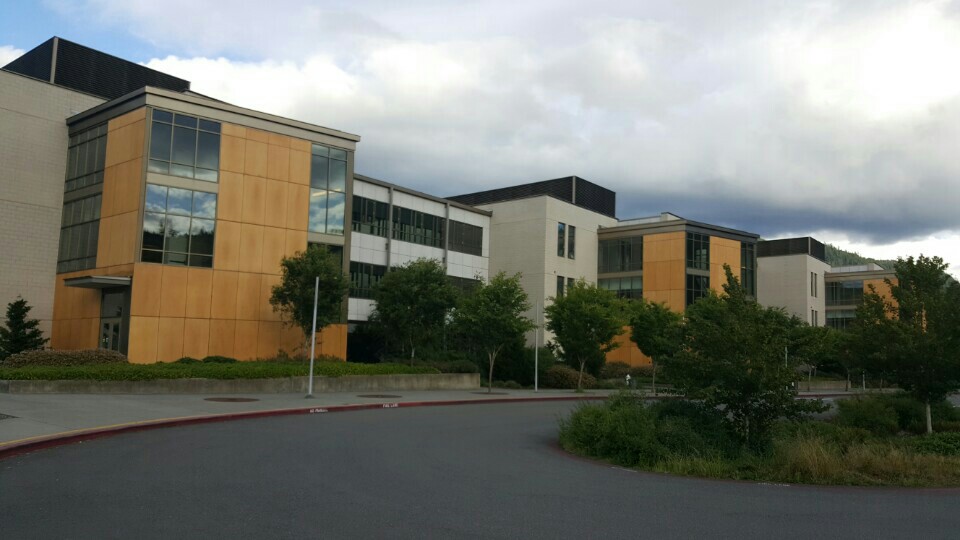
Issaquah High School
✵
In many parts of the country, the White Flight of the 1970s had grafted rather cleanly onto the remnants of earlier white supremacist movements. Our “commuter suburb” had been a known as a Klan haven in the 1930s, and my mom, who was white, didn’t see any problem with this. As for myself, I didn’t pass as white, at least not there, not in Issaquah.
The old ladies at the historical society used to grill me about my origins. They were always smiling, acting cordial as they tried to wrangle the truth from me about “where I was really from,” as if I was intentionally hiding it from them. Their questions didn’t make any sense; I was born in Oregon and had lived in the Pacific Northwest my all my life. Sometimes when I would go to the gas station to buy candy after school, old guys in hunting caps would walk up to me and thrust their big pink noses into my face, demanding to know where my accent was from. Uh…accent?
It wasn’t until I was in my late twenties that I left the Pacific Northwest and learned that in other parts of the country, I read as white. It was like falling into a different universe. I spent so much of my young adult years trying to prove myself to everyone in town—my photo was always being printed in the local paper for things like winning the school walk-a-thon, raising money to rebuild a local playground, running a petition drive to save a nearby wetland. I was just so eager to show that I was that “exceptional person of color.” Even after things fell apart at home and I moved into foster care, I was still actively working on volunteer projects. During my senior year of high school, a plaque was installed at a local mall with my name on it, honoring my service to the community. It was so strange moving to California, and visiting New York, DC, Texas and finding out that in those places, people don’t expect me to constantly prove myself.
Sometimes looking into the mirror feels like gazing at one of those Magic Eye pictures from the early 1990s. If I look at myself one way, all I see is static, whiteness, the markers of colonial privilege. If I turn the other way and squint a bit, this caricature pops out, and I can almost find the features, however faint, that the white supremacists in my hometown used to frame me as an outsider, a sidekick, a suspicious person. Someone always at the periphery, never at the center.
Years later, I would be applying for food stamps in the bigger, safer city of Oakland where I began living in my twenties. I worked full time, but rent was taking up nearly all of my paycheck. The social worker became angry when she found out where I was from. “What are you doing draining our social services here?” she snapped. “Go back home, back to where you belong.”
Just a few months before, I went back to Issaquah for a brief visit and tried to leave a few copies of a brightly colored activist newsletter on a café newsstand. It had become a habit, leaving around little zines and newsletters that my friends and I made in South Berkeley about the dangers of climate change, the 1%.
“Get out of here with that gay trash,” the café owner was suddenly shouting at me. “Go back to Capitol Hill!” At first, I was shocked, indignant. This was my hometown! Didn’t he recognize me? I used to deliver his newspaper. Didn’t he know there is a plaque with my name on it at the mall? I wanted to explain, to make him see who I was, but then I saw him reaching for something and I ran out of there before there was time to see if it was a broom or a gun.