Precious Treasures from Grandie River by Wilton Broome
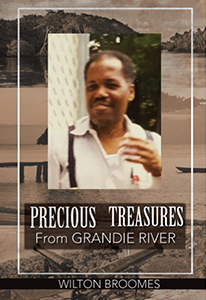
Precious Treasures from Grandie River by Wilton Broome is a fictional story about a family from Tobago. It goes through the life of Mickey and his friend when they find treasure at the Grandie River. The treasure becomes a blessing for their families and the story follows them through childhood to adult. This is an absolutely perfect book for teens and adults. I enjoyed it very much. One of the features I thought brilliant was the key in the back of the book translating the pidgin English to regular English so that the native English-speaker reader can understand. I am sure others will enjoy this as much as I have.
About the book, from the author:
This book is a literary fiction whose setting began on the Caribbean island of Tobago, but was expanded to Europe and other parts of the world, to mimic the movements of the Caribbean peoples during the Colonial era and after the islands had gained their independence. The book contains elements of some real events, which might have been exaggerated, and were stitched together like the various pieces of fabrics in a quilted sheet in order to link together the discourse of the book. Where a portion of the book is similar to a real episode, the names of the characters have been changed, and the spellings of some of the characters and places in some conversations were intentionally misspelled in order to imitate the broken English that is commonly spoken in Trinidad and Tobago. The reader is advised not to try to associate any of the names of those characters and places to any real person or location they know, seeing that some of the real stories might not have been connected to each other, or might have been fictitious altogether and were used just to suit the narratives of this book. The work attempted to capture what life was like during the period which the book covers, and to promote national unity and racial harmony.
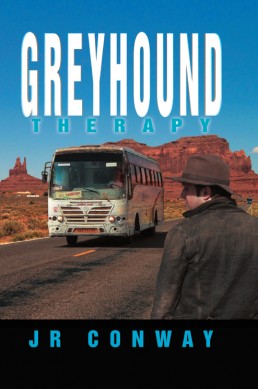
Greyhound Therapy is a suspense/thriller that definitely will keep your adrenaline pumping from the first page to the last. Sheriff Craig is the sheriff in Sweetwater County in Wyoming for nearly 20 years. Memorial Hospital is where people are held in detention lock up when they are deemed a danger to themselves or others. The problem is the lock up area can become overwhelmed when too many people are brought in. Then two men are brought in by the police department and Sheriff Craig is called. They put them in the same lock up room and are cuffed. However things go south quickly. Get a copy of Greyhound Therapy and find out how Sheriff Craig has to deal with the problems that have just begun. Really great book! I absolutely loved it!
About the book, from the author:
There is a practice sometimes used by under-funded law enforcement departments and medical facilities where troublemakers or unwanted people with mental illnesses are put on a bus out of town to become someone else’s problem. This practice can go on for extended periods of time, the same people repeatedly getting kicked out of one county and into another.
Author JR Conway has written a book called Greyhound Therapy, which is what this practice of dumping undesirables into neighboring countries is called. The novel follows a county sheriff with a jurisdiction along an interstate, which like an artery is pumping criminals and mentally ill strangers into his community. Undermanned and overwhelmed, the sheriff is faced with an exploding population, inadequate facilities and law enforcement from other counties all the while sending more difficulties his way. Having to solve a murder that occurred in his jail, a wife who has been diagnosed with cancer and a continuous flow of transients, the sheriff must use all his ingenuity and problem solving ability as he deals with crime, personal struggles in his own life and carrying out his responsibilities to care for the transients.
This thrilling and touching novel shows that tragedy and adversity can bring people together in a common purpose of caring for what is truly important in our lives.
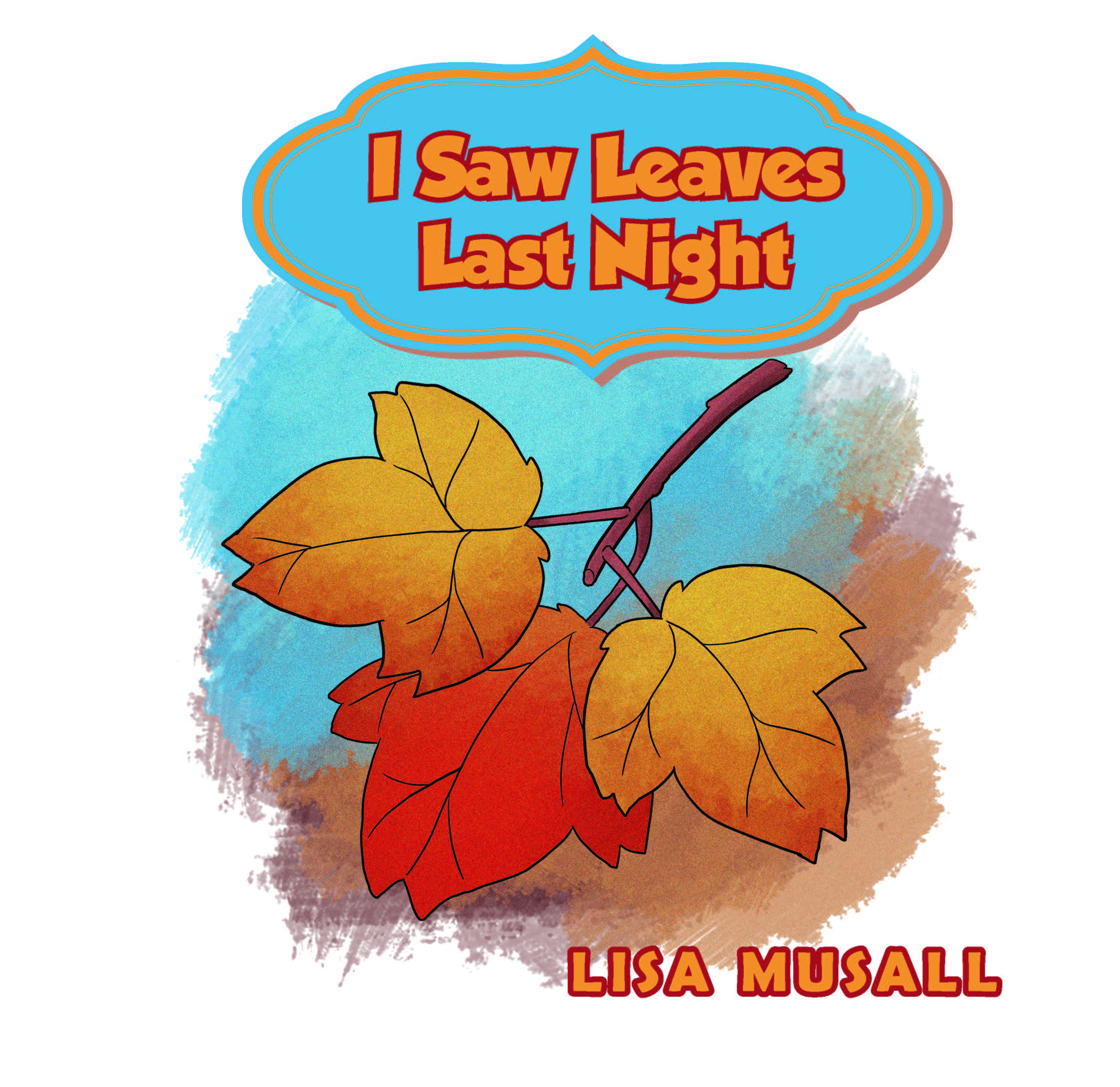
I Saw Leaves Last Night is a delightfully cute children’s picture book. The story is about imagining fall leaves doing all kinds of fun things, dancing, singing, and other fun things. The pictures are bright and happy and will delight babies and small children. I enjoyed it very much.
About the author, from Lisa Musall:
Lisa lives in a rural community in Western New York. She is a wife, mom, farmer and a full time school-based occupational therapist. In her free time, she helps her son show goats at the county fair. This is her first published book.
There are a few times when the female gaze has been taken into consideration when building up a male character onscreen, the articulation of a male character, assuming the sexualization is part of the package, manifesting this eyecandy of a man whose target audience are the hungry women sitting behind their screens, lusting after him and wishing the fourth wall would break so that they could put their hands on him.
Examples are –sadly- scarce across film and TV history, but none has been as enigmatic and gender-defying as Jensen Ackles, one of the two main protagonists in the CW long-running sci fi/horror series “Supernatural”.
Ever since Ackles graced TV screens in 2002 as the transgenic Alec in the ill-fated (and actually really good) series “Dark Angel”, women have swooned over every single scene in which he appeared. A natural scene stealer and surprisingly talented young actor, Ackles stole scenes from Jessica Alba and Michael Weatherly. Back then, after the cancellation of the show, it was obvious for any person with a brain over his neck, an actor like Ackles deserved a show of his own, when the TV lanscape back then had the likes of Chad Michael Murray, Tom Welling, and the older, grungier Jon Hamm, Michael C. Hall, David Duchovny and Julian McMahon.
In her essay “Breaking Down the Schtick: Jensen Ackles, Physical Comedy, Objectification, Consent, and Other Supernatural Topics Inspired By Three Seconds of Footage” Sheila O Malley describes how Supernatural creators and visual artists play the two leads’ hotness factor to the benefit of the female audiences, unlike most TV series –at least back then;
Much of the series is done in extreme closeup which tips right over into objectification. That’s part of the subversive quality of what is going on in the show, and part of the reason why the fan base can be so extreme. The makers of the show know what they are doing, and know that the inherent appeal of these two guys is enormous (by themselves, and together), and so they play up that factor consciously. They present these two guys to us in an almost mythic fashion, lingering on and loving their faces. They are objectified in a way usually reserved for female stars.
When I first watched “Supernatural”, the second season was approaching an end. The first episode that introduced me to the show was “What is and What Should Never Be” which uses Dean Winchester –the character played by Ackles- as a vessel for showing an alternate universe template in which the two ghost huntin’, ass bustin’ brothers could try normalcy and domesticity for the first time in their lives. While the premise could be seen as a trope, something that most genre TV series seek in order to create the nominal mix of mythology vs. light/out of the box episodes, the way Ackles handled the material given to him, was phenomenal to say the least. He embodied Dean Winchester, flirting both with onscreen characters and the camera. He was aware of the hungry voyeurs eyeing his every move and yet he played it subtly without a hint of theatrically orchestrating the performance. Over the course of 15 years, Ackles has played dozens of versions of himself; Demon!self, Angel!self, parodied!self, Mafia!self, Western!self, domesticated!self, to name a few.
As a wannabe geek, I am familiar with how TV abuses its templates, even in Supernatural. But even with the creativity spark skyrocketing as far as the show evolved, nothing would prepare you to Ackles’s portrayal of any version of himself; or in that case, of Dean Winchester.
I fell in love with the show as soon as I saw Ackles smoothly weave a series of emotions reserved to women. Sadness, agony, kindness, flirtatious coyness, and vulgar assertion all took a whole new level of mastery in this man’s hands. The greatest thing about how he portrayed Dean is the way a guy’s guy like Ackles; who started with the plausible 90s dreamboy quality of Leonardo DiCaprio’s fame and ended with the rough-edged, conservative, Southern upbringing boys will be boys blend- is how he manipulated audience into accepting subtlety as part of the sexual grandeur associated with the playboy archetype, which in turn would make the dough from which a whole new level of sexuality was born.
I think what drew us to Ackles –as a generation of horny TV fans, stuck in the blissful nostalgia of dreamy 90s boys and brainless American action heroes, yet unable to ignore the hyphenated, diverse hotties of the 2010s such as Idris Elba, Jason Momoa, Chris Hemsworth and Michael B. Jordan- was that there was nothing super macho, super testosterone-ish about him. When you watch the likes of Jason Momoa, Henry Cavill and the Hemsworth brothers, their sexiness and nudity restrictions are on par with a larger than life image: the big, naked guy. Even leading men like Bradley Cooper, Idris Alba and Ryan Gosling have all been in film, and the big screen treats sexuality differently, with little to leave to imagination and full frontal one item of clothing away from the rating system. With Ackles, there’s no doubting his conservativeness. He plays a promiscuous character very convincingly while keeping his clothes on most of the time. You have no doubt Dean Winchester is as playful, womanizing asshole on par with Don Draper, Hank Moody and Christian Troy yet do not get a full glimpse of that overtly sexual male power. He’s the TV version of Chris Evans, but he can really act!
Female fans flooded the Internet creating a powerful fandom like no other. In this gender-safe, sexual-safe zone where female fans could freely express their darkest sexual desires and fantasies, women’s requests for Dean Winchester strayed from the bizarre to downright creepy. Fans demanded that Dean be bound, tortured, abused emotionally, they even went as far as demand that Dean be raped, physically abused, be transformed into a woman, turn into an animal; whatever strangeness out of the sexual and perverse mind fans of Supernatural imagined it, using their favorite leads as stars of the morbid and the arousing; especially the every affluent Ackles, whose chameleon-like heteronormative sexuality bends the fine line between the masculine and the feminine, with beauty too ephemeral to be attached to a penis, and a deep voice, gruff tone too testosterone-ish to be associated with a vagina. His refusal to be nude –as well as his coyness in not commenting about it- gave the allure of the rare glimpses of his topless form a pleasure for the female –and queer male- voyeur.
Women would anticipate the episode just to take a glimpse of Ackles as the white collar, Sales & Marketing Director of a mega firm, they would drool after Dean the cowboy, Dean the film noir lead, Dean the angel and Demon Dean. In their own way, Supernatural female fans dressed up Ackles like their version of Barbie’s Ken, and it worked! Creators listened to what these horny women requested and handed them Ackles on a gold plate, adorned with garnish.
There was nothing about Ackles, however, that screamed traditional sexy man on the block. He was humble, modest and very Southern, a thick accent obvious every time he opened his mouth, a shyness that kept retreating to the back of the camera whenever he was on stage as part of a fan convention or a fundraiser. Ackles was no modern day activist à la the rest of the celebrities around the globe, he did not publicly express his political views, he did not get involved in controversies, he did not address pressing issues such as gender and sexuality, he firmly resisted molding his character’s elusive sexuality as homosexual, preferring to play it safe –and also in accordance with his conservative views of sex and sexuality- and stick to the playboy persona.
Ackles’s sexuality is part of his identity both as an actor and as a persona in branding himself and subconsciously the show to which he owes his success. Ackles marketed his character as a tormented hero, an atheist who lives the day and practices carpe diem rather than institutionalized religion. While Ackles is a family man, one who carefully and tactfully plans his future and that of his children. He still lives in his hometown Texas and opened a bar that drives its success from his own show.
In a way, Jensen Ackles started his fandom relationship rather awkwardly, relying on his conservative background. Despite firmly resisting the queer gaze that targets his character Dean Winchester, Ackles succeeded in becoming the newest heartthrob in the queer community, attracting gays, lesbians and those who have no defined gender preference, in a way he intimated them; he was not like the LGBTIQ supporters in celebrityverse whose openness about the issues that the gay community faced were part of their brand personas, a means of assuring their fans that they are on their side and of showing the good side of being a celebrity in the modern world. Ackles, however, resorted to his old soul quality of not acting all modern-day activist gone acting. He may not be Lady Gaga, but the majority of his fanbase is queer, gay, lesbian and transsexual. Fan encounters of Ackles supporting his fans individually or one-on-one, encouraging them and supporting their choices leaves more than meets the eye to his persona as well as his sexual power. This is not merely a TV superstar but more of a power figure in the TV industry, which should –hopefully so- be reincarnated in edgier, more diverse works of art.
Jaylan Salah is an Egyptian poet, translator, two-time national literary award winner, animal lover, feminist, film critic, and philanthropist. Jaylan’s first story collection “Thus Spoke La Loba,” published in 2016, explores sexuality, gender, and issues of identity. Her first poetry book “Workstation Blues” will be published with PoetsIN, a publishing house with the purpose of destigmatizing mental illness and supporting international artists.
Author Jaylan Salah
Jaylan Salah is an Egyptian poet, translator, two-time national literary award winner, animal lover, feminist, film critic, and philanthropist. Jaylan’s first story collection “Thus Spoke La Loba,” published in 2016, explores sexuality, gender, and issues of identity. Her first poetry book “Workstation Blues” will be published with PoetsIN, a publishing house with the purpose of destigmatizing mental illness and supporting international artists.
if we cannot leave behind
poetry
a garden
or children
wiser than we were
then we will leave daydreams
of an ideal world
like traces of music
unheard
reverberating across the sky
and etch the scars
of our separation
like bathroom wall vandals
onto other bodies and souls
and the earth
leaving our denuded
and scorched masterpiece
with not a creature left
to piss on the ashes
CASTING OUR NETS
On New Year’s Eve,
a young woman writes in the sand
with a stick of washed up driftwood
faded white as bone:
“Joy”
“Love”
“Empowered”
and then lets the ocean
pull the words into her depths,
as though casting a net
to draw from the universe
the desired things themselves.
I remember writing our names
on a beach somewhere,
inside a heart,
with the word “forever,”
and how we stood
on the cliff above,
looking down on it,
wrapped in each other’s arms.
The waves took that, too.
You know
how this ends.
Maybe I should tell her about that,
but she probably read about
this inscribing-hopes-in-the-sand technique
in some bestselling book,
and I am just a nosy guy
walking alone on a beach.
WE LONERS
we loners
drift far from the harbor
of family and friends
solitary buoys bobbing
on a swollen sea of time
too much time
riding relentless waves
of contemplation
mad surfers with
but one life
yet unafraid of what
curiosity
did to the cat
we pursue threads
of memory and imagination
through crooked passages
howling and dark
snipping the pieces
that stick to our grasping fingers
stuffing our pockets full
and with these
invisible fibers
weave a cocoon
to huddle in
over the years
adding layers
patching holes
and inside
echoes of echoes
swallow the original voice
as their volume swells
a whirlpool of static
mistaken for self
as burly white coated men
drag shackled sanity
off in a padded van
alone
one’s madness
becomes the truth
of a god
whose whims
are chiseled
in stone
we kneel before
our mirrors
then destroy them
THE ROUGHEST DRAFT
You were my roughest draft of all,
a piece written
and rewritten
until my brain smoldered,
and the pen
grew too heavy
for my fingers to hold.
We’re a story
no one could write,
though I tried.
Pages upon pages of you,
of angrily slanted scrawls
and wild loops
crossing lines into margins,
sometimes plunging
off the sharp white edge
like a 2 a.m. drunk
driving off a cliff.
I keep them
in my bedroom closet,
their futile ink fading
inside a cardboard coffin,
buried beneath a pile
of old clothes
that don’t fit anymore.
Michael Robinson (right)and fellow contributor Joan Beebe
Absolution
She had left the church at age sixteen never wanting to return. Now twenty-six years later she found herself sitting in the pew quietly weeping. She thought, would there be absolution for the kind of life she had had? It all was a blur, the drugs and prostitution. It started the night that her father wanted to have sex with her when she was sixteen.
He came into her tiny room with the shades closed, with the smell of jasmine in the air. She was a medium sized girl. He body had developed nicely, and her father watched her attentively while she lay in bed with a sheer night gown surrounding her delicate body. He stood in the shadows of the room and watched her for a long time. Finally he got the courage to sit next to her.
She awoke, alarmed to find her father watching her with probing eyes. He began to touch her shoulders and her body froze. He continued to move his hand down her breast. His hand started to shiver. She was unable to mutter a sound other than a weak whimper as he continued to probe her tender body. He was physically demanding in his sexual advances with her. There was no sensitivity as he all but forced himself onto her.
She found herself staring at the ceiling while he pleasured himself with her. She was numb that night that her father forced himself onto her. Now for ten years there had been a chain of unspeakable experiences with pimps, Johns, and being hooked on cocaine. One day it quietly came to her that if she could make it back to the church, she could regain her life before that night with her father.
She had always believed in god since she could remember and she did not blame him for the many years she was mental, physically, emotionally scarred by life. She stumbled into the church with her tattered soul, her clothing revealing her now fully developed body, damaged from years of abuse.
A nun was kneeling at the altar for her morning devotions when she noticed the young woman. The young woman’s physical appearance brought tears to the nun’s eyes. The nun knew her story and had lived the story herself. Both women kneeled at the altar and simultaneously began to weep. It was at this moment that life began for them both. A nun and a prostitute had found peace and absolution for sins that had been committed against them. It was their faith that had allowed them to discover the true meaning of absolution.
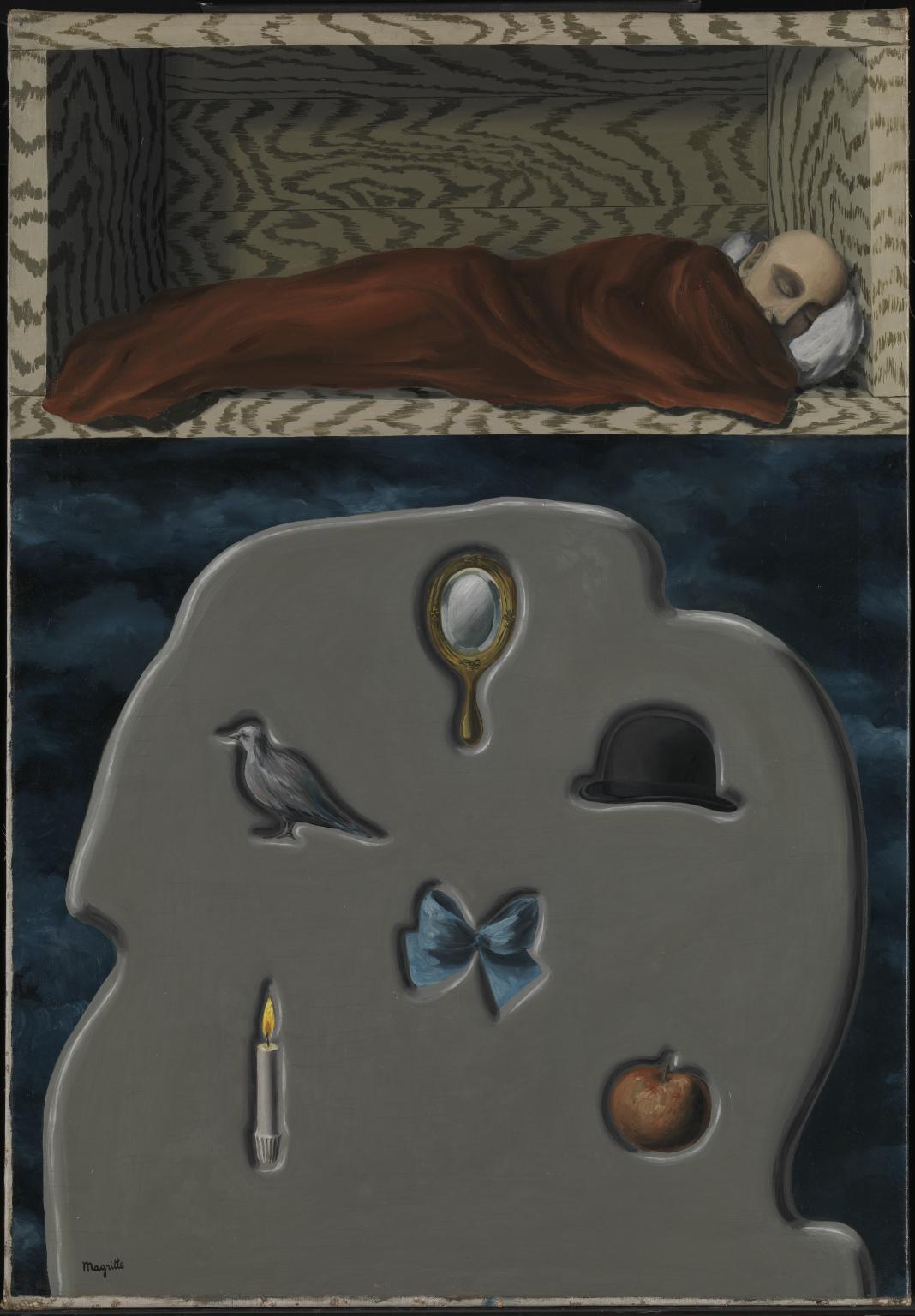
I knew I shouldn’t have told you my dream about the gravestone. As usual, you wanted to sound clever and said that the apple was a representation of my desire for wisdom, and that the hat was about my fear of power. The mirror was a little too obvious and I was disappointed in you. You can’t say ‘That’s about taking a look at yourself.’ You may as well have said it’s about introspection and searching the soul. I’ve come to expect more from our chats. The bird? Freedom, you stated, with no small amount of confidence. By this time, I was getting weary again. And I shouldn’t have mentioned the candle. That set you off on your usual path of criticism about religion; how you don’t trust it and that it is only there to control people. Stop worrying, it was just a candle.
Luckily, I forgot about the bow, so I didn’t have to listen to your suggestions about my childhood and whether I might have been teased because my mother bought me shoes with bows on and how that has created a subliminal block and led to psychic conflict.
That’s the trouble when you have friends who are psychoanalysts, you’re not allowed to have an ordinary experience. Call me reckless if you chose, but I like sleeping in my box with my red blanket. It’s the place I feel safest of all.
Henry Bladon is based in Somerset in the UK. He is a writer of short fiction and poetry and teaches creative writing for therapeutic purposes. He has degrees in psychology and mental health policy, and a PhD in literature and creative writing. He frequently writes commentary about mental health issues and his literary work can be seen in O:JA&L, Tuck Magazine, Mercurial Stories, The Ekphrastic Review, and Spillwords Press, among other places.
I was inhaling deeply from the bunch of sage you’d hung up there.
“I am having sex with the Earth”, I told you.
“How so?”, you asked.
“Here, like that, with the scent – it enters me, and I give myself.”
Soaring is the hyacinth,
a crown of itself,
a crowning of the own,
and an I above the crown.
The permutations of love were taking place in a sunlit space.
Spring was maturing into summer,
death was evolving, it now involved planets and roots.
It was a circle.
Somewhere in it, I overflowed –
my eyes had mirrored themselves in the deep of yours.
Gray flecked, with lights.
Margarita Serafimova was shortlisted for the Montreal Poetry Prize 2017, Summer Literary Seminars 2018 and 2019, and Hammond House Prize 2018; long-listed for the ChristopherSmart(Eyewear Publishing) Prize 2019, Erbacce Press Poetry Prize 2018 and Red Wheelbarrow 2018 Prize, and nominated for Best of the Net 2018. She has three collectionsin Bulgarian. Her work appears in Agenda Poetry, London Grip, Waxwing, Trafika Europe, Landfill, A-Minor, Poetry South, Great Weather for Media, Orbis, Nixes Mate,StepAway, Ink, Sweat and Tears, Leveler, Mookychick, HeadStuff, Minor Literatures, Writing Disorder, Birds We Piled Loosely, Chronogram, Noble/ Gas, Origins, The Journal, miller’s pond, Obra/ Artifact, Arteidolia/ Swifts&Slows, Memoir Mixtapes, glitterMOB, TAYO, Guttural, Punch, Tuck, Ginosko, etc. Visit: https://www.facebook.com/MargaritaISerafimova/?ref=aymt_homepage_panel.