I’m no longer MLK Or Mahatma Hell, I’m not even Robert Kennedy Much less Jack And forget Harriet Tubman All I wanted was . . . the prize The peace And justice For all those years Of fighting my past And presenting myself As open to every change And hoping— my former Being Could be forgiven For transgressions Not of my doing But in my nature While the saintliness Of my new design Desired to be The low hanging fruit Lynched high in penitence Swaying from a tree That sprinkles liberally My seeds Of struggle . . . goodness and light On an earth Ripe with new dawns That pierce the darkness With an awakening . . . sunshine Yet the world— blinded by this virtue Turned tiredly away Denying the angelic Sowing Of a heart unrestrained Progressively collapsing The morrow With realities Etched in stone From the bad old days
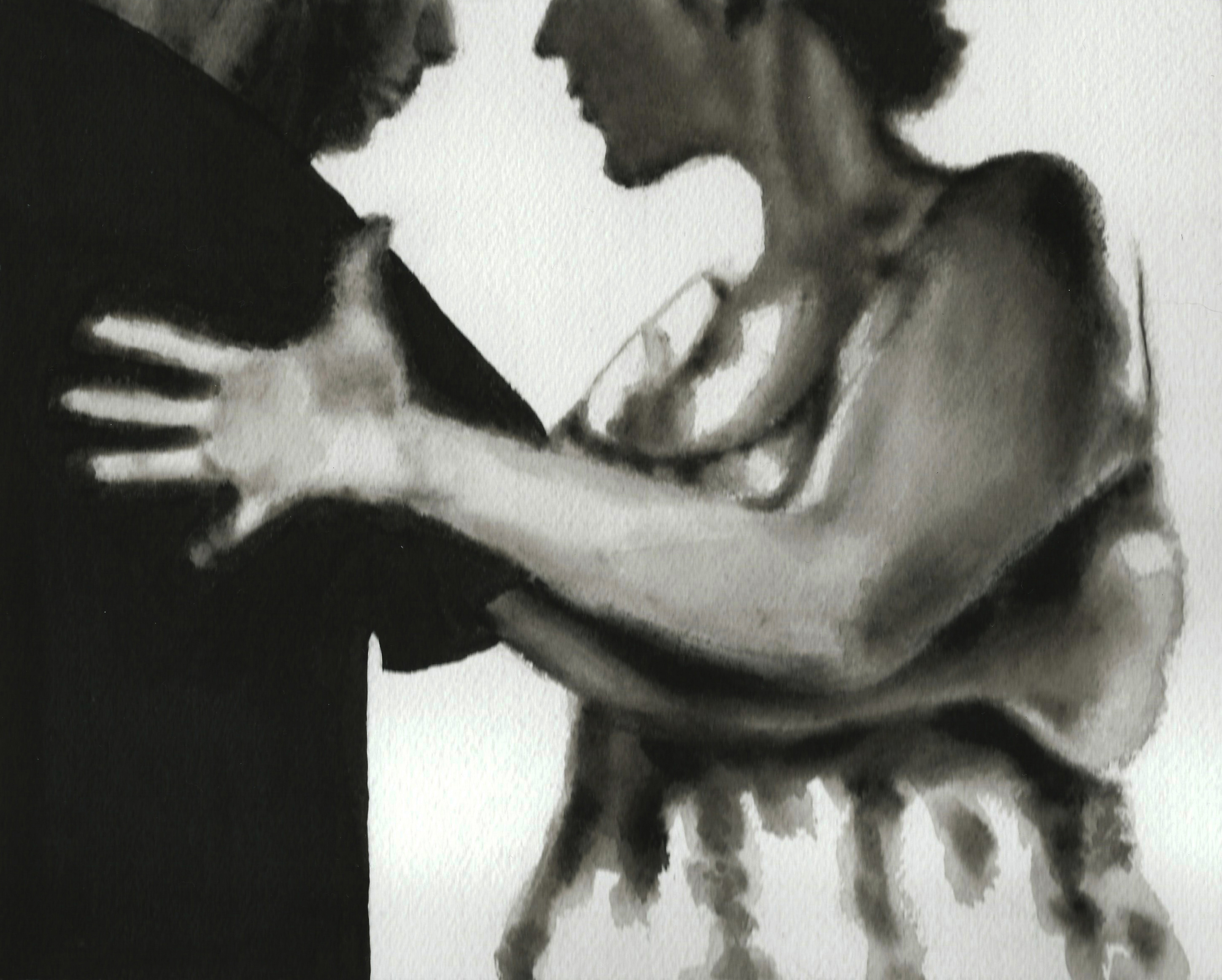
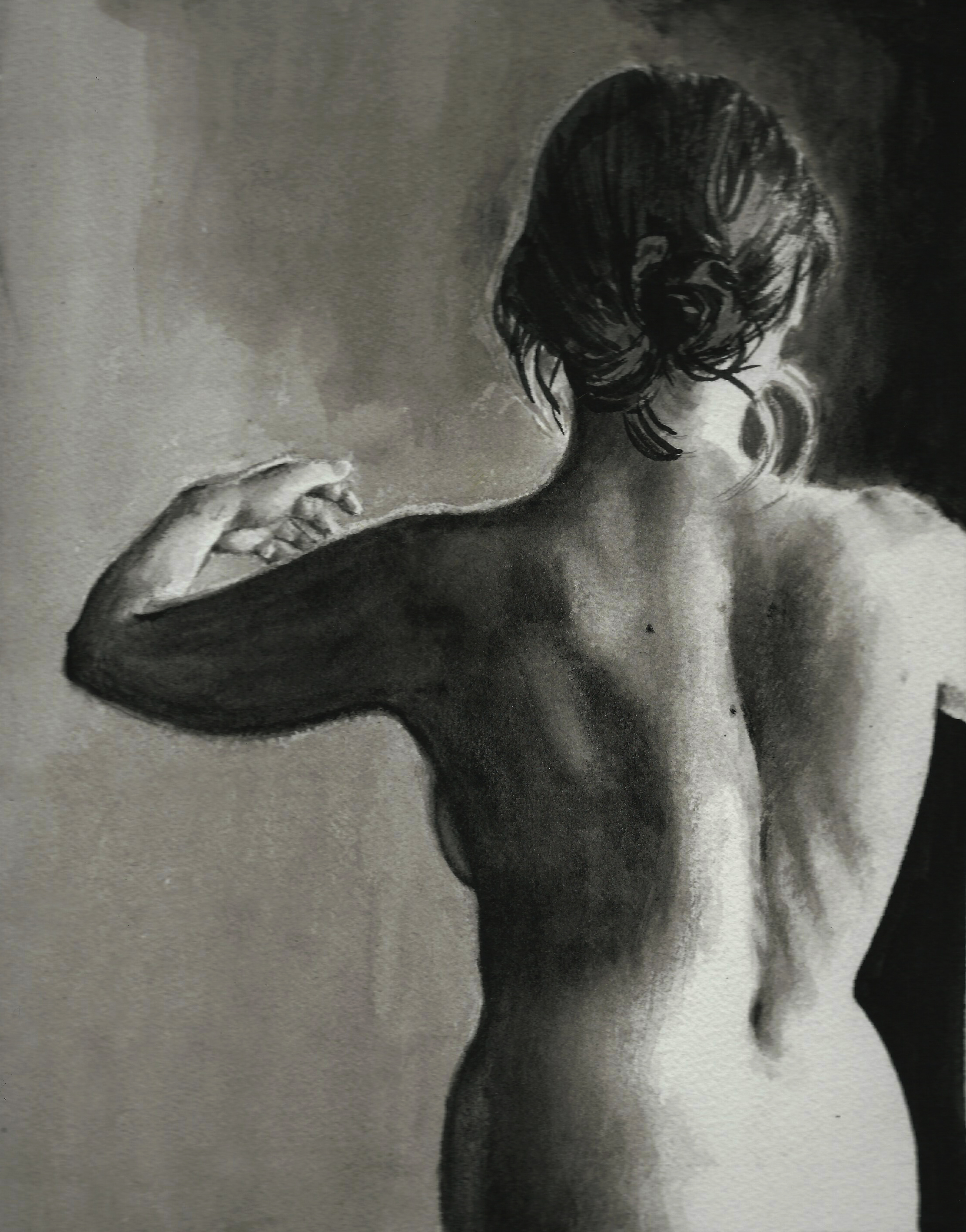
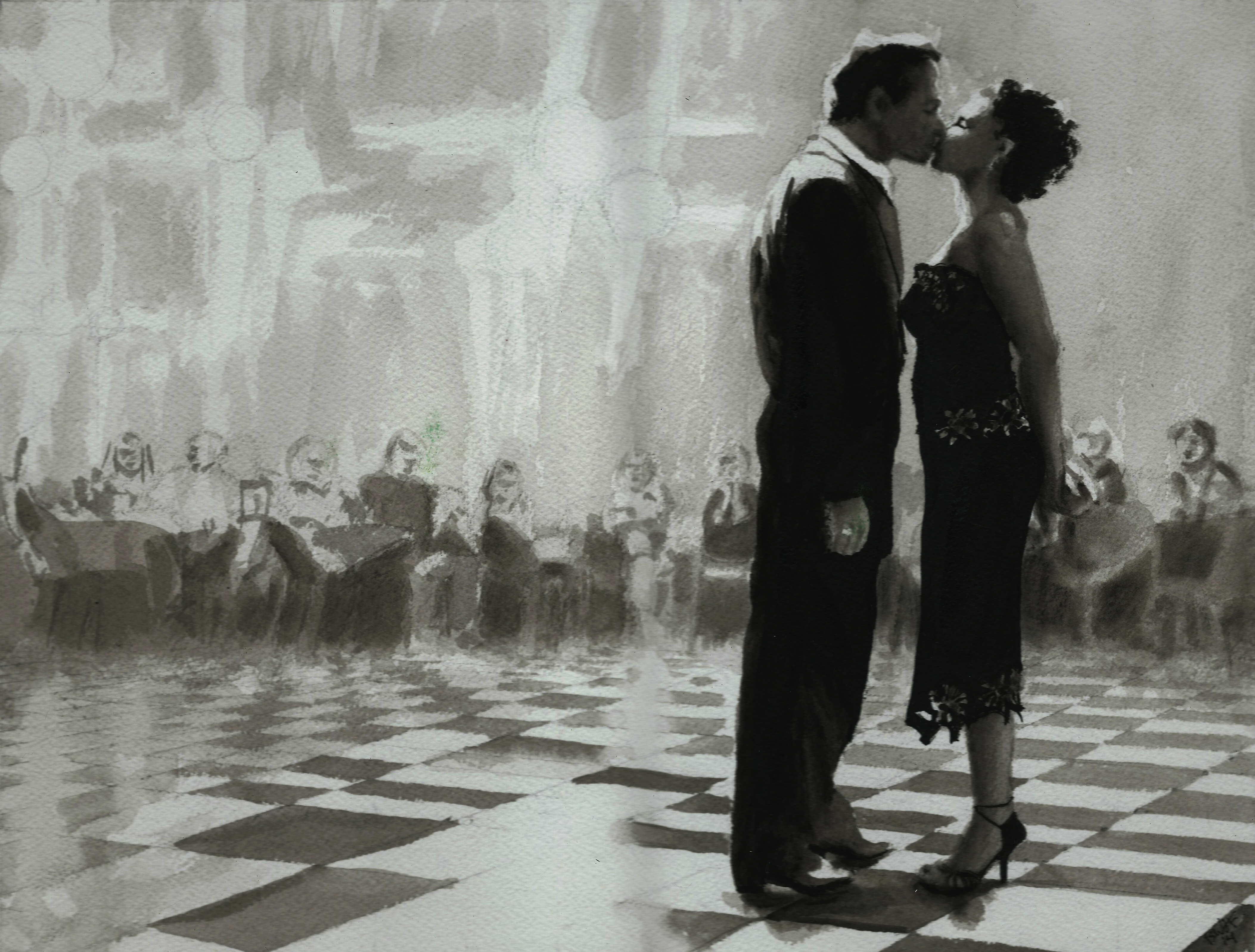
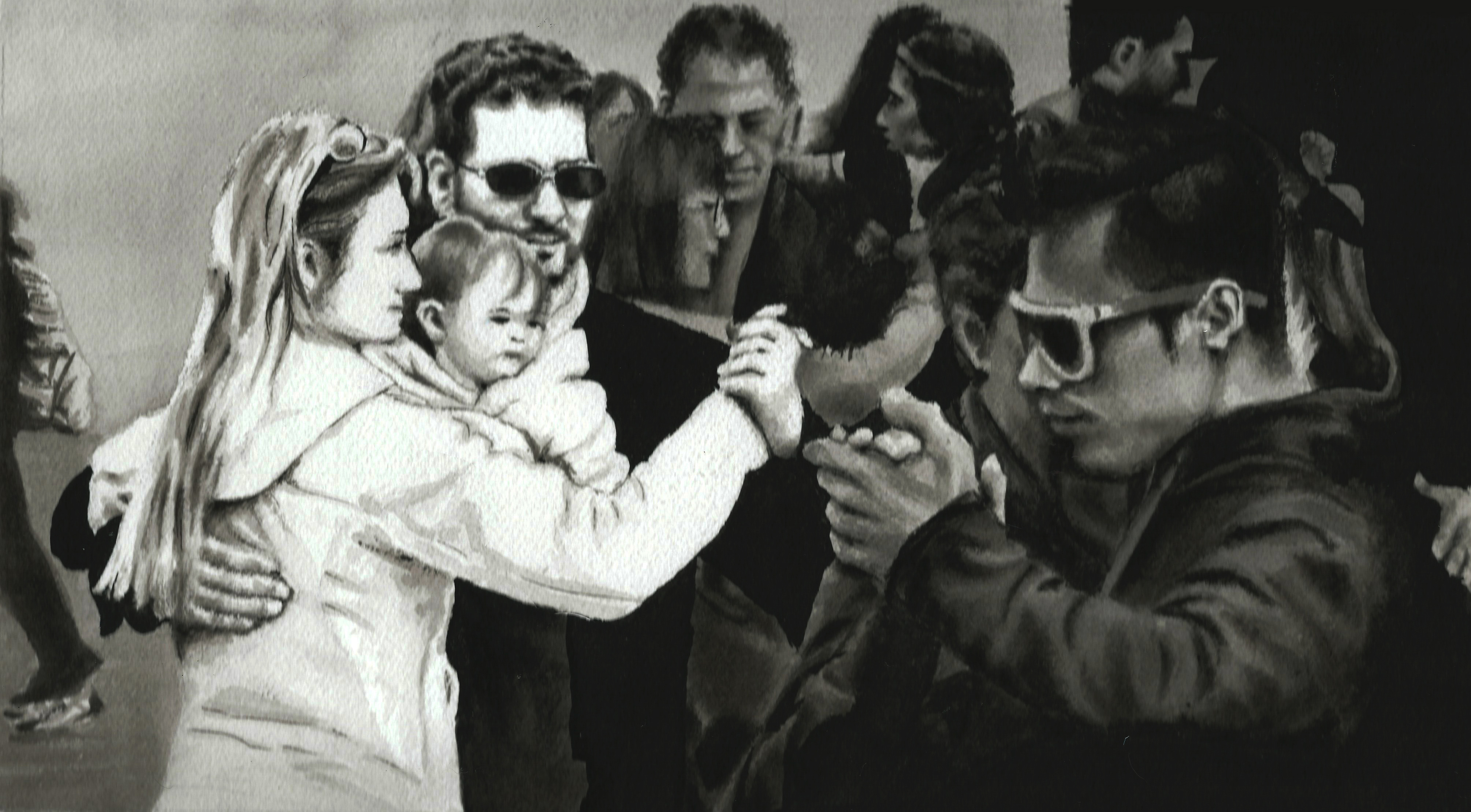
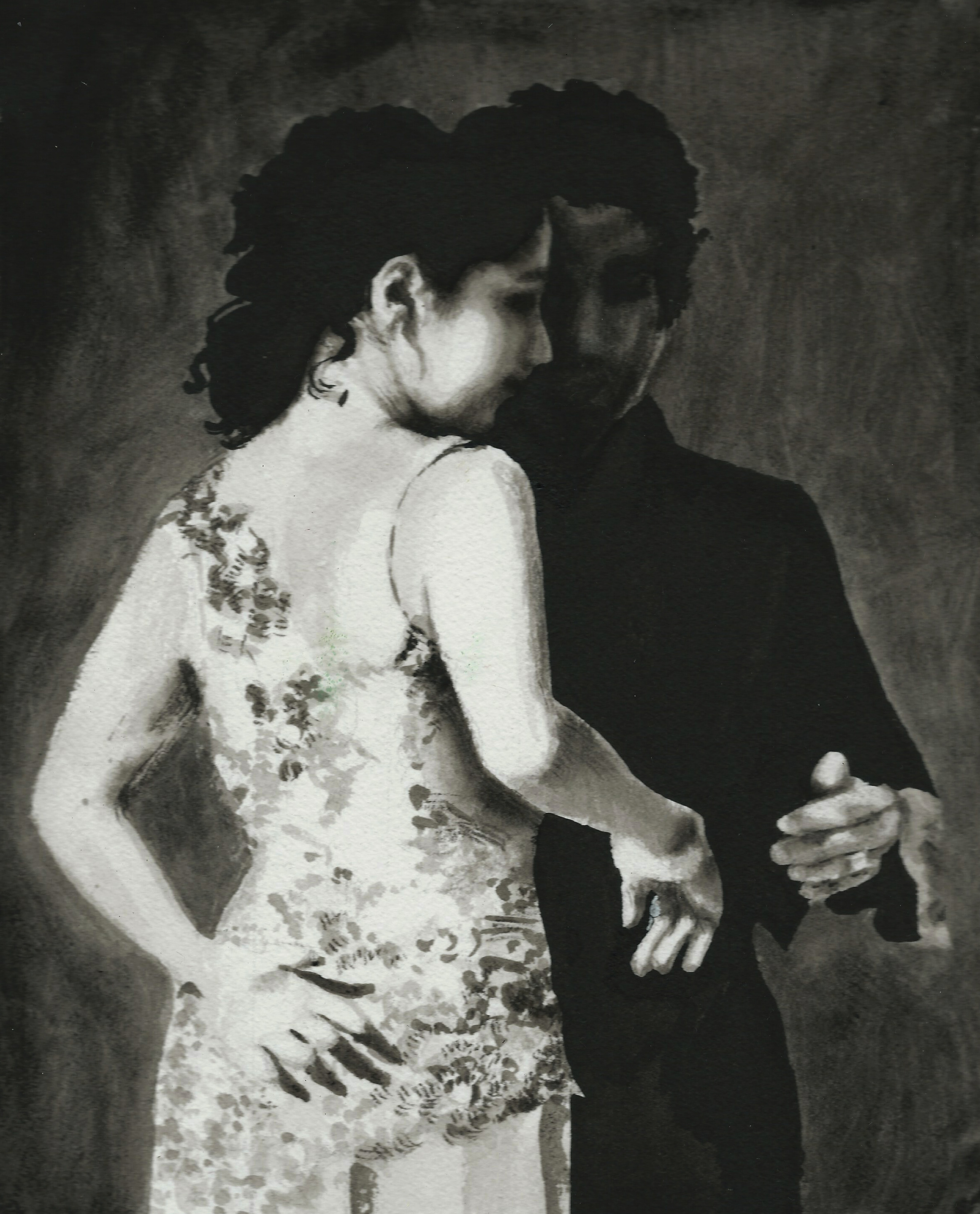
Jordana del Feld is a San Francisco artist and Argentine tango dancer. She paints and dances to connect with the world without and the world within. Her freehand painting technique balances her lifelong training and study of both Eastern and Western art. The dance of the brush records the inner energy of her subjects. Many people mistake the paintings for photographs, but they show what a photograph cannot. They are the art of the unseen.
The tango paintings began as a study of light and shadow, positive and negative, motion and stillness, men and women, yin and yang (and all that jazz), but over time, became intimate portraits that told the story of Jordana’s community. What began as an artistic exercise became confessions from the heart, of the entwined stories of a little world of lovers, friends, hope, heartbreak, joy, sharing, despair, discovery, and above all….
j.lewis is an internationally published poet, musician, and nurse practitioner.
His poetry and music reflect the difficulty and joy of human interactions,
and often draw inspiration from his decades of experience in healthcare.
When he is not writing, composing, or diagnosing, he is often on a kayak,
exploring and photographing the waterways near his home in California.
Mirsky turned fifty-five on his first ever business trip and now was pulling into his garage at home. Expecting a warm and loving reception from his wife Elaine he became instantly depressed when he noticed her car was missing from the garage.
Mirsky had the non-enviable ability to become instantly depressed for almost any reason, good or bad.
He pulled his suitcase from the trunk and it dawned on him—a surprise birthday party was awaiting him. Of course, he thought. How could I have been so dumb?
He smoothed his hair, straightened his jacket and practiced surprise faces for when he opened the door. Mirsky mind-counted twenty-three couples and a few singles that Elaine just had to invite to his party. He was excited as he turned the door knob to enter the kitchen.
The silence was deafening. He flicked on the kitchen light and saw a note on the counter.
‘Went to the movies, see you soon. LE.”
Dejected, he lugged his bag into the bedroom and saw there were candles set around the room, a bottle of champagne sitting in ice and another note. “Make yourself comfortable, birthday boy—see you after the movie. Oh, yeah. Turn on the VCR. LE.”
Mirsky showered, opened the champagne and poured himself a glass, got into bed in his altogether and turned on the TV and VCR.
One by one his friends wished him a happy birthday and then as a group they sang Happy Birthday. They were in his house having a party.
The TV flickered and the party was gone and he watched a close-up of Helen, the woman he met on his business trip. Then he watched them drinking at the bar and then having dinner and finally them making out on the way to his room.
Mirsky heard Elaine’s car pull into the garage and he grabbed the remote, turned the TV off and pulled the covers over his head thinking, “But it’s my birthday”.