I’ve always been ambivalent towards opera. On one hand, I love the voices-those powerful theater-filling instruments that make one ashamed to even try singing in the shower. Their power and majesty are thrilling, inspiring, and humbling—all at the same time.
On the other hand, they tell stories-with characters, and with dialogue. That dialogue–and the accompanying events–often do not achieve the same level of awe-inspiring performance as the singing. A singer might swell his voice to reach the stars–while asking for a sandwich.
I thought of this recently as I sat in San Jose’s beautiful California Theater and watched the opening night performance of Verdi’s last opera, Falstaff. Readers who know Shakespeare at all, know Falstaff as an overweight, loud-mouthed drunkard in Henry IV, a would-be seducer of women, and a bad influence on young Prince Hal, trying to keep him drinking and partying until Hal rises above, rejecting Falstaff to become the heroic Henry V.
The prince does not appear in Verdi’s version—which is based more on Shakespeare’s Merry Wives of Windsor— but Falstaff is there, with all of his bad habits intact—as befitting a comedy. He drinks, he brags, he welshes on his bar tab, he plots to seduce women, he berates his workers, but most of all—as played by Scott Bearden—he sings, with a thundering, powerful voice, the equal of anyone else on stage. Would that his comedic acting equaled his voice.
The true comediennes in this performance were the ladies. More capable of injecting feeling into their wonderful voices, and supporting it with animated faces, Jennifer Forni as Alice Ford, Lisa Chavez as Meg Page, and Nicole Birkland as Dame Quickly establish immediately that Falstaff is no match for them. Their indignation at Falstaff’s plan to seduce them, their glee as they plot their revenge, and their total joy as the revenge comes to pass, are all portrayed with liveliness of voice and face and gesture that keeps the audience in rapt attention. Of course their words and actions do not measure up to their awe-inspiring voices—but that’s opera.
The symbiotic relationship between voice and action and meaning, however, does shine through with the young lovers in the play. Nannetta Ford, played by Cecilia Violetta Lopez, and Fenton, played by James Callon, have the passionate language of romance to match their euphoric, elegant voices, and the results are amazing. Love sizzles in the beauty of their singing, the animation of their faces. And in Ms. Lopez’s larger role, as the Fairy Witch who dominates the final torture of Falstaff, she is the epitome of lively charm.
All in all, attending opening night of Falstaff at the San Jose Opera was a wonderful experience. Tuxedos and elegant gowns everywhere, a glamorous 1927 old-style theater—glittering from a recent 80 million dollar restoration, and a cast with voices magnificent made for an unforgettable evening.
Bruce Roberts is a writer and retired junior high teacher from Hayward, California. He may be reached at brobe60491@sbcglobal.net
In the worlds of some teenagers, life can be hard.
The challenges that some teenagers have to endure may make it seem impossible to live.
The violence, drug use, and bad behavior tend to be the escape from the harshness of their realities.
The ridicule, constant fighting and disagreements with parents, school mates and other family members who have no clue about the pain that a teenager is going through do not help. Teenage life can be extreme, even for the calmest teenager. Being accepted for who one really is the hope of many teenagers, but is rarely realized.
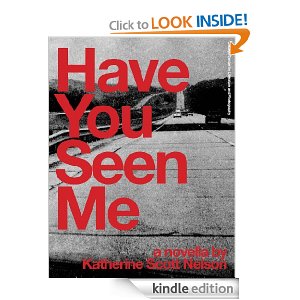
There will always be the stigmas, the misconceptions, and the expectations of the world and the family for a teenager to try to live up to. But you will find in this book, Have You Seen Me, a novella by Katherine Scott Nelson, two teenagers, both struggling with their own way of life and trying to make life work right for themselves.
This book is a great read for mothers and fathers, and teenagers who are great at just being who they are. As parents we often get so caught up in trying to structure our children’s experiences that we forget that we live in a great huge world that has more of an influence on our children that we do. The longing to belong as a teenager is important, and this is a difficult season of life. Although we want to create a perfect teenager who always stays on the right path, we should just be thankful for our son and daughter’s soul and life.
In this book you will see how teenagers at young ages are exposed to the most detrimental experiences inside and outside of the home. One chooses to escape momentarily, while the other tries, unsuccessfully at first, to disappear forever.
No matter the problems that a teenager is facing, they should know that there will always be resources that will be able to help them. Running away from the challenges of family and home, unless to escape physical or sexual abuse, can end in tragedy.
Thank God for friends. In this book, we see these two friends who face similar challenges in life, one who runs away to New York City, and another who is cautious enough to endure the test of time. He is confused, yet unable to take such drastic steps to relieve his frustration, and anger. He holds on and is able to still grow as a teenager, and also lend a helping hand to his friend in trouble.
Through hardships, adversities, anger, family disagreements, distressing and difficult circumstances, conditions of pain, sickness, or dysfunction, we need our teenagers to hold on and be strong. We need our teenagers, despite all the right or wrong choices they may have made, to seek refuge in a family member or friend. As we see in this book, the teenager who goes astray not only takes their family and friends through pain, but they also ultimately hurt themselves in the short and long term.
Now, some advice to teenagers:
As teenagers we have to understand that we can be empowered by many people. The main thing is to learn to love discipline, and to learn to love the ones who may have a different view than ours. We as teenagers have to learn to love ourselves and take time to learn about the world, people and places that surround us.
Kim Brown welcomes thoughts and feedback, and may be reached at kimbrown_kimronice@yahoo.com
Though I’m a willing audience, he doesn’t give a blow by blow.
His mouth is clenched. The lesson is up to my eyes.
Never seen such hairy hands, such huge knuckles.
The razor shrinks inside his fist, its blade peeking out
like a captured sparrow.
What hope has it against the whiskers on that jutting jaw,
the cheeks that fill the bathroom mirror.
He lathers his face with gobs of bright white foam.
Then, with blade close as a kiss, he scrapes along
that relief map of a face,
his fingers like trackers guiding the razor
over bone, under lip, across the red leather of his cheeks.
Miraculously, he doesn’t cut himself.
I swear that razor wouldn’t dare.
Next step, he slaps his skin into submission
with a hot wet hand towel, braces each subdued pore
with smelly stuff from a tube.
He then takes a step back, admires his morning masterwork.
He pats me on the head and leaves the room without a word.
Shaving begins with fascination and ends with an unerring lesson.
And, in between, years I have to grow, and no one saying much.
WHO AM I EXACTLY
Mistakes are made –
I can easily be taken
for my younger brother
but I am not him.
Don’t listen to faint voices
bouncing off the walls
of your conclusions.
First remove the skin.
have me flattened, lifeless,
flesh to flesh, sweat to sweat.
Sometimes identity is exactly that.
But soon it won’t matter.
Other people will have moved into this space.
Misidentification will be replaced
by people who know each other.
Or even emptiness – although
nothing is truly empty- molecules of air
will bump against each other –
bounce this way and that.
Human shape gets some people every time.
Coming together
flutters its visions nonsensically.
What flows sweetly through the head
sounds dumb in the mouth.
Some of my
“No I’m not him” may even remain.
I’m in a new place by then,
not diffidence or solipsism
but because where I’m going
has a future, beyond where my latest step
has taken me.
And there’s my thoughts,
playing to a gallery of one.
Yes, it’s me and not my brother.
Footsteps crackle on all the leafy evidence.
MOON BOY
Art class was a failure.
My moon was half the page
and sat on the roof of the house.
The people outside
were small and fleshless.
The moon’s heft almost drove them
off the edge of the page.
I couldn’t draw what the teacher asked.
There was no separation between my head
and what my hand could do.
I knew the moon was a midget in the sky
and people and buildings towered over me.
But facts never did sit well
with my imagination.
The teacher leaned over my shoulder
but made no remark.
But the girl behind me was rated aloud.
“Very good work, Sandra.”
The teacher had never been where I live.
She hadn’t seen it at night
when I was in bed,
eyes wide and staring out the window,
and the moon was crushing me.
Sandra’s old man beat her mother
and she hadn’t witnessed that either.
Teacher was just pleased that Sandra
had everything in proportion.
MOTHER TREE
When pregnant,
she felt heavy,
like a tree trunk
and its spreading roots.
Her upper branches
bore the baby.
It fluttered out there
with the leaves and the lightning
but she couldn’t budge
from her own hard grounding.
Baby blossomed so far away
she could barely see.
It grew into fruit, ripened,
maybe fell,
but more likely was picked.
But what did scarred bark
know of that?
Or thick strands
of tired wood
nuzzling the dirt?
When pregnant,
she joined a forest
of like trees.
Life after that
was either songbirds
or woodpeckers,
seasons or axmen.
And, of course,
the wind,
the redundant shaking.
John Grey is an Australian born poet. Recently published in International Poetry Review, Sanskrit and the science fiction anthology, “Futuredaze” with work upcoming in Clackamas Literary Review, New Orphic Review and Nerve Cowboy.
Valentina Cano is a student of classical singing who spends whatever free time either writing or reading. Her works have appeared in Exercise Bowler, Blinking Cursor, Theory Train, Cartier Street Press, Berg Gasse 19, Precious Metals, A Handful of Dust, The Scarlet Sound, The Adroit Journal, Perceptions Literary Magazine, Welcome to Wherever, The Corner Club Press, Death Rattle, Danse Macabre, Subliminal Interiors, Generations Literary Journal, A Narrow Fellow, Super Poetry Highway, Stream Press, Stone Telling, Popshot, Golden Sparrow Literary Review, Rem Magazine, Structo, The 22 Magazine, The Black Fox Literary Magazine, Niteblade, Tuck Magazine, Ontologica, Congruent Spaces Magazine, Pipe Dream, Decades Review, Anatomy, Lowestof Chronicle, Muddy River Poetry Review, Lady Ink Magazine, Spark Anthology, Awaken Consciousness Magazine, Vine Leaves Literary Magazine, Avalon Literary Review, Caduceus,White Masquerade Anthology and Perhaps I’m Wrong About the World. Her poetry has been nominated for Best of the Web and the Pushcart Prize. You can find her here: http://carabosseslibrary.blogspot.com