You don’t remember if she has worn a lace blouse or a woollen sweater her hair covered her body so tight
When you have been closing door of the another ramble she has welcomed you with her nakedness sprinkled with the salt of her eyes
Only you and Marta know the secret of every return
Translated by: Anna Maria Mazur
Izabela Zubko (she was born 2 June 1974 in Warsaw) is a Polish poet. She is an author of fifteen poetic collections, a biographic book based on the interview with Stanisław Staniak and a collection of reviews and prefaces „While Touching Words”. She made her debut in 1993 with a poems collection entitled „Doves”. Her poems were translated into ten different foreign languages. She is a laureate of numerous nationwide poetic competitions. She repeatedly was a jury member in many poetic contests. She is a member of Association of Culture Originators in Warsaw, Group of Authors from Tarnów, the Polish Authors’ Association and Polish Writers’ Union.
For ten years she was a member of the editorial team of “Literary Thought” the supplement in weekly magazine “Polish Thought”. Presently she is a member of editorial team of “With My Own Voice” and “The Metaphor of Contemporariness”.
She received the Honorary Reward of the Board of the Polish Authors’ Association in Rzeszów for her poems collection „The Slavic Versary”. This series of poems was the basis for a theatrical play staged in the Municipal Cultural Centre in Dęblin.
Izabela Zubko received Silver Badge and Golden Badge of Association of Culture Originators in Warsaw, Statuette named after Stanisław Moniuszko, Decoration of Honor Meritorious for Polish Culture, Bronze Cross of Merit, Silver Cross of Merit, Bronze “Medal for Merit to Culture – Gloria Artis”, Commemorative medal „Pro Masovia”, Stefan Żeromski Literary Award, Bolesław Prus Literary Award and International Literary Award „Rusy Golden Pen”.
The Autumnal Lands or of Forest and Meadow by Hill and Valley
nobody was there. at all. it was one of those times. and inside the pathway a machine or tool had parted the leaves so that a walker or hiker’s footfalls landed upon the dark and solid earth. leaves many colours, some holding water from the nocturnal rainfall. a valley was over to the right and an impossibly long hill w/a flat tip to the left. slowly the meadow was reached, and you went out framed first by sumac and then you were under the clouds. some birds landed in the tree glade to the left. bamboo-like earth was around and a green and beige swath through it all. if patience and breathe were practiced, along with gratitude, one could slowly begin to feel a oneness and nonduality, a spiritual connection to the autumnal lands…
Illuminating the Soul: The Life and Literary Heritage of Aleksandr Fainberg
Throughout human history, literature has remained one of the most enduring and universal forms of artistic expression, uniquely capable of capturing the breadth and depth of the human soul while offering solace, reflection, and a profound sense of emotional resonance. It serves not merely as a vehicle for communication, but as a mirror of human experience, a repository of collective memory, and a medium through which individuals and societies alike explore their innermost thoughts, values, and aspirations. Every moment of our lives, every fleeting instant, becomes enriched and illuminated through the subtle harmonies, metaphors, and rhythms of literary expression.
Within this vast and complex landscape of literary achievement, Aleksandr Arkadeyevich Fainberg occupies a particularly distinguished and noteworthy position. Among the pantheon of poets who have contributed to the enrichment of literature through their singular voices and imaginative brilliance, Fainberg stands out for his ability to merge intellectual depth with lyrical sensitivity, creating works that resonate profoundly with readers across generations. In the context of Uzbek poetry, to describe Fainberg as a radiant star illuminating the literary horizon is no exaggeration; his poetry embodies both aesthetic sophistication and emotional intensity, qualities that have ensured its enduring appeal.
Fainberg’s oeuvre, remarkable in its originality and depth, has left an indelible imprint on Uzbek literary tradition. His works are celebrated not only for their artistic innovation and mastery of form, but also for their capacity to engage with the cultural, social, and philosophical currents of his time. Literary critics and readers alike have consistently recognized the enduring value of his contributions, acknowledging both the subtlety of his imagery and the universality of the human experience conveyed through his verse. In doing so, Aleksandr Fainberg has secured his place among the most influential and respected figures in modern Uzbek literature, ensuring that his legacy will continue to inspire and shape literary discourse for generations to come.
Aleksandr Fainberg was born on November 2, 1939, in the Jukovskiy neighborhood of Tashkent. After completing his seven-year schooling, he enrolled at the Tashkent Topography Technical College, where he studied to become a geologist. During his time at the college, Fainberg traveled extensively across the various regions of Uzbekistan, immersing himself in the country’s unparalleled natural landscapes, which would later inspire much of his poetic imagery.
After graduating from the Technical College, Fainberg continued his education at the Faculty of Journalism at Tashkent State University. It was during his university years that he published several poetry collections, including Moments (“Lahzalar”), Distant Bridges (“Uzoq Ko‘priklar”), Conquer the Sky (“Osmonni Bos”), and Etude. Fainberg’s literary contributions, however, were not limited to his own poetry. He also gained recognition as a skilled translator, bringing the works of notable Uzbek poets to Russian-speaking audiences. Among his translations are Erkin Vohidov’s epic poem Revolt of the Immortals (“O‘lmaslar Isyoni”) and selected poems by Adulla Oripov, Xosiyat Rustamova, Omon Matchon, and Sirojiddin Said. These translations were later published in his collection Chigir.
Fainberg’s poetry exemplifies not merely a technical command of language, but also an extraordinary and deeply felt reverence for the art of poetry itself. Each of his works demonstrates meticulous attention to rhythm, structure, and imagery, revealing a poet who approaches language with both precision and passion. Beyond the mechanics of verse, Fainberg’s writing conveys a profound philosophical and emotional sensitivity, reflecting his capacity to capture the subtleties of human experience, the beauty of the natural world, and the complexities of social and cultural life. In this way, his poetry becomes more than literary expression; it transforms into a space where intellect and feeling, observation and imagination, converge, offering readers a profound encounter with the power and dignity of the poetic art form.
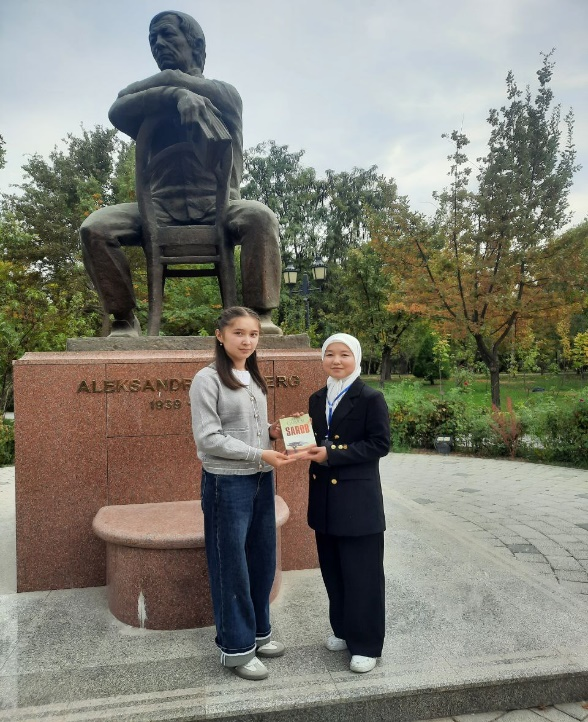
The luminous star of Uzbek poetry, Aleksandr Arkadeyevich Fainberg, passed away on October 14, 2009, leaving behind a rich and enduring legacy that continues to illuminate the landscape of Uzbek literature. His life and work remain a testament to the transformative power of poetry, reflecting a rare synthesis of intellectual depth, artistic sensitivity, and profound humanism. In recognition of his invaluable contributions, a statue was erected in his honor at the Alley of Writers, ensuring that future generations can remember and celebrate his achievements as both a poet and a cultural figure.
Fainberg’s work has continued to attract the attention of literary scholars and critics, who tirelessly explore the layers of meaning, imagery, and thematic complexity within his poetry. A notable example of this scholarly engagement is G. V. Malikhina’s master’s thesis, “The Structure of Artistic Images and Thematic Dominants in A. A. Fainberg’s Lyrics,” which highlights not only the structural sophistication of his works but also their enduring significance in the broader context of Uzbek literary heritage. Such studies underscore the depth of Fainberg’s artistic vision and the lasting impact of his contributions on both contemporary and future generations of readers and writers.
In celebration of his life and literary achievements, I recently organized a special event dedicated entirely to Aleksandr Fainberg. The program focused on his biography and creative legacy, aiming to introduce participants to the richness and depth of his work. The event featured interactive elements, including quizzes and competitions, designed to engage attendees and deepen their understanding of Fainberg’s contributions to Uzbek literature. Through these activities, participants were able to explore not only the milestones of his life but also the thematic and artistic dimensions of his poetry, fostering both appreciation and critical engagement. Events such as this not only honor Fainberg’s enduring influence but also ensure that new generations of readers and literature enthusiasts continue to be inspired by his luminous legacy.
Aleksandr Fainberg’s poetry and translations have left an indelible imprint on the hearts and minds of literary scholars, readers, and enthusiasts alike. His voice continues to resonate as a shining example of artistic excellence, embodying the timeless qualities of creativity, cultural insight, and emotional resonance. Through his works, Fainberg not only enriched Uzbek literature but also inspired a deeper appreciation for the poetic art, leaving a legacy that will continue to guide and influence the literary world for years to come.
She fed love in her heart with tears that flow in silence
Late night coming
The love has faded
She cries,
And left her eyes bloody and red
No attention,
The TV has now become her companion
Biography:
Jelvin S. Gibson is a multifaceted individual with various talents and interests. He is a:
– *Poet*: Known for his thought-provoking poems, such as “Addiction,” “Kweeju” (Abandon Child), “Love at Sunset,” “Black Queen,” and “Another Plus One”.
– *Teacher*: Holds an Associate Degree in Education (AA) in Language Arts from Licosess Mobile Teacher Training College.
– *Scriptwriter*: Has written scripts for movies, including “Greed” and “Kweeju” (Abandon Child).
– *Director*: Involves in the Liberian movie industry as a director.
– *Actor*: Has acted in movies, showcasing his creative skills.
– *Introvert*: Prefers to keep a low profile, focusing on his artistic pursuits.
– *Inspiration*: Draws inspiration from his father, who encourages him to pursue his dreams
Problems in the process of teaching the mother tongue at school Kattakorgan State Pedagogical Institute Faculty of Pedagogy Primary Education Department student Nurmetova Orzu Farhod qizi Tel: (+998)-88-267-37-07 E-mail: orzunurmetova48@gmail.com
Annotatsiya : Ushbu maqolada maktabda ona tili taʼlimini samarali tashkil etish masalalari hamda bu yoʻnalishda uchrayotgan muammolar tahlil qilingan.Maqolada oʻquv jarayonida qoʻllanilayotgan darsliklar va metodikalar,oʻquvchilarning kasbiy tayyorgarligi,nutq madaniyati hamda tilga boʻlgan munosabati haqida soʻz yuritiladi.Shuningdek,zamonaviy pedagogik texnologiyalarni qoʻllash,interfaol usullarni keng joriy etish,oʻquvchilarda ona tiliga muhabbat va masʼuliyat hissini shakllantirish boʻyicha soʻz yuritilgan
Kalit so‘zlar: ona tili, ta’lim jarayoni, metodika, o‘qitish usullari, dars sifati, o‘quvchi faolligi, nutq madaniyati, imlo xatolari, yozma nutq, og‘zaki nutq, didaktik materiallar.
Аннотация: В данной статье проанализированы вопросы эффективной организации преподавания родного языка в школе, а также проблемы, возникающие в этом направлении. В статье рассмотрены используемые в учебном процессе учебники и методики, профессиональная подготовка учащихся, культура речи и отношение к языку. Также речь идет о применении современных педагогических технологий, широком внедрении интерактивных методов, формировании у учащихся чувства любви и ответственности к родному языку.
Ключевые слова: родной язык, образовательный процесс, методика, методы преподавания, качество урока, активность учащихся, культура речи, орфографические ошибки, письменная речь, устная речь, дидактические материалы.
Annotation: This article analyzes the issues of effectively organizing mother tongue teaching at school and the challenges encountered in this field. The article discusses the textbooks and methodologies used in the learning process, students’ professional preparation, speech culture, and their attitude towards the language. In addition, it focuses on the use of modern pedagogical technologies, the extensive implementation of interactive methods, and cultivating a sense of love and responsibility towards the mother tongue among students.
Introduction: The mother tongue is a spiritual treasure of the nation, and the most important means that expresses the people’s thinking and culture. Teaching the mother tongue in the school education system is aimed not only at providing grammatical knowledge, but also at developing the ability to think correctly, fluently and consistently, expanding students’ vocabulary, and improving their speech culture.
However, today there are several problems in the process of teaching the mother tongue in schools. On one hand, this is related to the effectiveness of teaching methods, and on the other hand, it is closely connected with the general attitude towards language culture in society.
At a time when learning foreign languages is gaining great importance in the context of globalization, it is necessary to further strengthen the prestige and status of the mother tongue. Therefore, improving the process of teaching the mother tongue at school, strengthening students’ love and respect for their native language, and increasing the effectiveness of education based on modern pedagogical approaches are among the most urgent tasks.
Literature review
Scientific work and research conducted on teaching the mother tongue in schools show the relevance of this topic. Sh. Almamatova and M. Mamatqulova in their research highlighted the learning problems that occur in modern lessons and developed proposals to eliminate them. U.B. Bobojonova systematically justified the general didactic and subject-specific methodological principles in mother tongue teaching. S.M. Umarova scientifically substantiated the effectiveness of using an integrative approach in teaching the mother tongue, that is, teaching the language in harmony with other subjects through learning tasks. In the article “Current problems in teaching the mother tongue and literature and ways to solve them” written by Jalil Jalolovich, problems related to the scientific-methodological consistency of textbooks, students’ low literacy level, teachers’ methodological culture, and the material and technical base of schools were widely analyzed. These views show that the number of scientific studies on this topic is increasing and that the topic requires constant research.
Research methods
The research on the topic “Problems in the process of mother tongue teaching at school” was carried out on the basis of the following methods:
Observation method – During the research, mother tongue lessons at school were directly observed, and the organization of the lesson, the level of using interactive methods, students’ activity in the lesson, and their independent thinking skills were studied. Based on the results, recommendations were developed to improve lesson effectiveness.
Survey and interview method – Surveys were conducted among students and teachers. In it, students’ interest in the mother tongue subject, problems in speech culture, difficulties encountered during the lesson, and teachers’ methodological approaches were studied. Interviews were also conducted with teachers and their professional experience was analyzed.
Analysis method – School textbooks, curriculum, methodological guides, practical experiences, and materials related to the activities of advanced teachers were analyzed. Based on these, the effective and weak aspects of the lesson process were identified and directions for improvement were developed.
Results and discussion
The results of the research showed that the main problems in the process of teaching the mother tongue are as follows:
the development of students’ oral and written speech is weak, their vocabulary is limited, and their skills of using grammar rules in practice are low;
the learning process is more focused on theoretical knowledge, and work on text analysis, creative thinking and speech situations is insufficient;
teachers’ pedagogical skills and their aspiration for innovation in choosing methodological approaches are not high everywhere;
due to the large number of students in classes, individual approach is limited;
extracurricular reading culture is weak, and interest in reading fiction is insufficient.
To eliminate these problems, it is necessary to strengthen interactive approaches in teachers’ activities, organize lessons based on practical exercises, increase work with texts that develop independent thinking in students, and involve parents in the process.
Conclusion
In conclusion, the mother tongue is not only a subject that provides grammatical knowledge, but also the main subject that shapes the student’s thinking, worldview, speech and spirituality. Therefore, improving the teaching process of the mother tongue at school is a requirement of the time. Applying modern pedagogical technologies in the lesson, strengthening teachers’ methodological training, increasing students’ love and respect for the language, and establishing work with literary texts will increase the efficiency of education. As a result, the speech culture, thinking capacity and national identity of the future generation will rise.
References
Decree of the President of the Republic of Uzbekistan “On measures to radically increase the prestige and status of the Uzbek language as the state language”, PF–6084. – Tashkent, October 20, 2020.
Almamatova Sh., Mamatqulova M. Problems and solutions in teaching the mother tongue. – Tashkent, 2022.
Bobojonova U.B. General didactic and subject-specific principles of teaching the mother tongue. – Tashkent, 2021.
Umarova S.M. The methodology of developing national pride in teaching the mother tongue through integrative learning tasks. – Tashkent, 2024.
Jalolovich J. Current problems in teaching the mother tongue and literature and ways to eliminate them. – Tashkent, June 22, 2025.
G‘ulomova A., Qodirov B., Tojiev R., Raxmatullayev Sh. Using interactive methods in mother tongue lessons. – Tashkent, 2021.
Omonov H., Mamatqulova M. Modern pedagogical technologies. – Tashkent, 2020.