Each time I look at the headlines, I see thick dark clouds condensing into a pool of vague bloody rain, with each drop piercing deeply into this world’s melanin. Altering its colours from green to purple, boring into the deep depths ocean of this spaceship.
This ocean I say, isn’t just a billion water drops, it is not even a thousand sea fully converged to form the Atlantic this accursed world has ever seen. It is the waters of original sin sinking into the skin of dry land.
This is to say our bodies has become a vessel of transmutation, decaying into a Tabernacle caving original sin, because grief lives in us. It becomes a synonymous hyperbole of who we are.
A pillar of broken stones shattered due to Earth’s rotation, colliding like a planet that chewed itself due its body has indeed become a mechanism of digestion. Breaking flames down into minute pieces of hatred.
This world has become a filament of dead songs, composed by the torn face of wind. Floating in fireballs that even the numbers in this world lacks the vocabulary to number.
She carries this world’s flesh, she nurtures them in her womb while she patiently awaits the rise of a bloody moon.
Only then can we know the true definition of pain, because metaphors itself cannot define it, poetry can only feel it using crooked lines.
But the truth can only be seen by telescoping into torture knowing its colour, its genetic material. Untill then this is reality in a fantasy of a broken world.
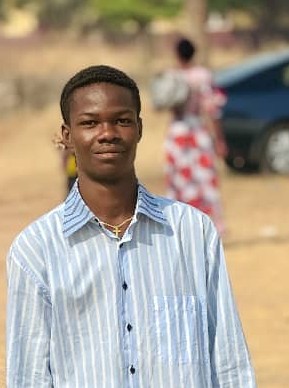
Anthony Chidi Uzoechi, an obsessed Sci-fi writer whose imagination Journeys beyond the heavens of creativity. He is a bonafide member of the Hill Top Creative Art Foundation Minna, a Short story writer, a Poet, Pen artist and a Theologian. He’s an Indigen of Imo State Nigeria. Asides studying and being a Shakespeare Anthony Chidi Uzoechi is an addictive studier, he studies anything significant that comes his way.
Just like how the universe is without bound in suspense, Anthony Journeys into unraveling the deep depth of creativity through writing.
Nikolina Hua’s Echo IV: Free Nations in C Minor is a richly allusive and labyrinthine poem that navigates the psychological depths of a mind deeply attuned to the inner soul and wider society. Its verses move like whispered confessions, cloaked in clever ambiguity and metaphors.
At first glance, the poem seems abstract—perhaps deliberately so. But beneath its surface lies a disquieting echo of societal upheaval, rendered not through direct reference, but via dreamlike symbolism. The lines ‘hair tangles with phosphorus’ and ‘cherry trees beneath imperial drones’ hint of gentle vulnerability in the midst of wider violence, although inflicted by whom, it is deliberately obscure and therefore readers can universally sympathize with the emotions evoked.
The musical motifs are particularly evocative to me as a composer, the term ‘C Minor’ harmonizes with the tension ubiquitous across the entire poem. The work is also terse, the stanzas are short and each line pauses frequently, almost in doubt. Apart from sounds, the poem is also deeply colourful in its imagery, such as ‘black ribbons freeze on unnamed streets’, or ‘fists gripping blue’, each colour a metaphor, yet of what?
The influence from Russian literature can be sensed from the psychological undercurrents: an obsession with guilt, a longing for seeking meaning onto a world that resists coherence. These themes are Dostoyevskian in texture—one can almost feel the spectral presence of Notes from Underground in the speaker’s intellectual and affective isolation. Yet, despite the linguistic artistry being of specific provenance, its message speaks universally to the human condition.
The choice for obscurity instead of clarity is in itself a strength. By being a cryptic mirror, it invites the readers to find their own struggles within the poem’s ambiguous torment. By being obscure, Echo IV: Free Nations in C Minor ends up revealing so much more about ourselves.
Full poem can be found here
FREE NATIONS IN C MINOR
Orcs gnawed the capital’s door,
cherry trees scream beneath imperial drones.
Existence is a slit throat.
Hair tangles with phosphorus,
ghost hymns ride through occupied smoke.
Speech chokes on its own tongue.
Black ribbons freeze on unnamed streets.
Bones in gloves, fists gripping blue,
nails scrape through basement rust.
Hands remember what mouths can’t speak.
A million fingers pull the tyrant down.
This is how I claw myself free:
Change this. Change that. Never turn back
or the money drags you down
ankle-first into wolves’ den.
Beating grief against their ribs,
free nations sing in C minor.
The dark sea holds its breath.
Ng Yu Hng is an award-winning composer whose works explore musical time, liturgy, and intertextual dialogue. He holds a Master’s from the Royal Academy of Music (Countess of Munster scholar) and a King’s College London alum, winning the Purcell Prize. His music has been performed across 15 countries and published internationally, with commissions from ensembles worldwide.
1. Please share your thoughts about the future of literature. Also, when did you start writing?
Actually, I’ve started writing since 2014 during the Israeli aggression on Gaza City. What inspired me to write poetry is the necessity to raise awareness about the Palestinian cause and convey a message to the Western world that Palestinians have been suffering since 1948 and we are looking for justice and peace.
2. The Good and the Bad. Which is winning nowadays?
I do believe that those who seek love and peace will win in this life because those who seek war will destroy themselves. Peace will make the world a beautiful place full of light and mercy whereas war will make it a horrible and dark place none can endure to live. Throughout my literary journey I’ve passed many good things and people who’ve me feel like I’m not alone in this world by showing their sympathy and support. I’m as a poet, I write poetry about how war affects us as humans and destroy anything beautiful. I write about the suffering of my people for years and how my people starve severely. I wish I could write about the beauty of my country Palestine and share poems of love and peace.
3. How many books have you written and where can we find your books?
I’ve self-published four books. Three are poetry books and the fourth is a short novel. The first book I published was ” Gaza Narrates Poetry”, the second ” When Hope Isn’t Enough”, the third ” Stolen Lives,” and the last was “Falastin”. I’ve recently published a poetry book with the great poet John P. Portelli called “The Shadow”.
Most of my books are available on Amazon.
4. The book. Do you prefer e-books or hardcover books?
What will be the future?
I’m looking forward to publishing a new book. The title will be “The Genocide.” It will contain more than 40 poems that I wrote during the ongoing genocide on Gaza City and the horrible experiences I witnessed.
5. A wish for 2025
I wish and only wish that Palestinians who have been suffering for ages restore our legal and humane rights and that peace prevails in this world.
A phrase from your book
“My loyal Cactus, Your thorns are more delicate than the hypocrisy of Humanity”.
” I’m still alive but nothing has remained”
Eva Petropoulou Lianou, Greek author and poet.
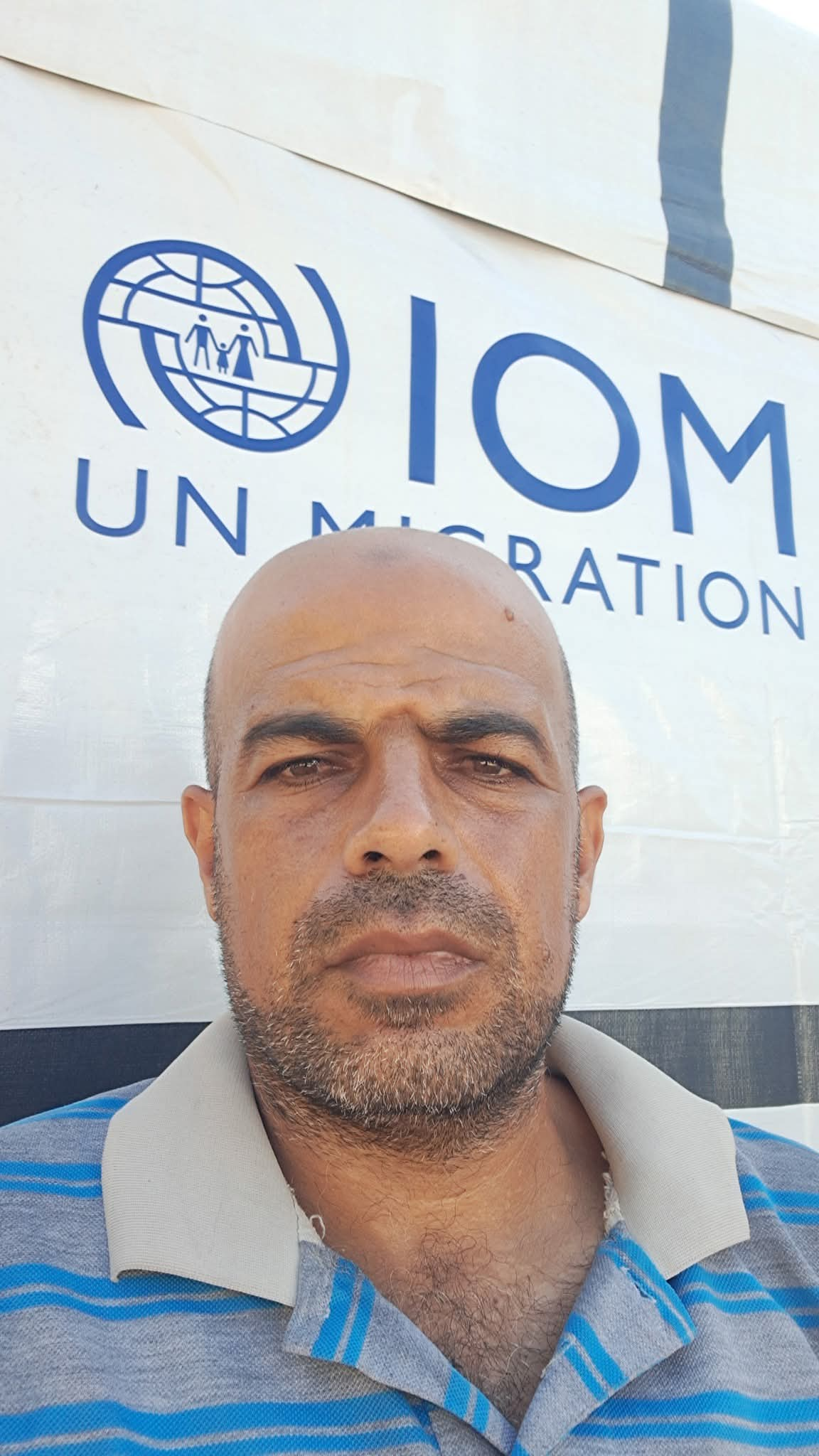
Ahmed Miqdad is a Palestinian poet and activist, awarded the 2025 Naji Namaan Literary Award.
Ahmed Miqdad (b. 1985) is a Palestinian poet resident of Gaza. He has a B.A. in English and a Master in Education. Ahmed is the author of three collections of poetry (Gaza Narrates Poetry (2014), Stolen Lives (2015) and When Hope Is not Enough (2019)) and a novel Falastin: The Hope of Tomorrow (2018). The latest poetry collection is The Shadow: Poems for the Children of Gaza. He has witnessed over three wars and severe aggression by Israeli forces on the Palestinian people since the 1980s with a huge loss of life. He writes and publishes to raise consciousness about the Palestinian cause.