See below pls. Danke, Texas Fontanella is Styx viscous or style viscous is also Pinko werewolf crim Hades Montana etc tech999 dadavinci and so on and so forth
A reflection on various hackings, and hacking attempts at, my raps (this is, indeed, the title)Some of these autocorrects******** FORCED upon me are redunkulous. Reductionist. My booty of work, my choice eyes. I’ll incel you
Them, but it woin’t be noice. WALL-E wrong key. Willie Eilish. V stylish. Ridiculous. Redunkulous. Reductionist. Ride the dick, or liar? Stretch
First. Safety
Con
Scent. No joke. Yo hoax is no blaring witch just a daring wedge.
Put it in. The sour CREAM. This is the hour of
Drags rule everything around messianic access. My bloods my rhythms. The beatnik excess
Pools like a car around my arm
Ours have politics greener than a big farm.
We ER like shisha, all the time
Is out of joint replacement therapy. Rubbed my core, no apple, no app to pelt out an eyes sore that hopeful skint***** in yr eyes, e Claire, you cunt
Have it both ways, a loose ruler, eyes loose rupees, style
Better than kapaur. (Sp?)
KO. Poor. (So?)
Sp
Ed?
I tor down the hail building. There is no fail: the bills dig.
Dog, the riches
Is dead. Off with their Hades. Stop worsting time, mate
Slip of fuel’s love. This is a grape dropped bit of who’s dove
Scries? Ponzi and the velveteen resolution. Every dreg in on so
Aleksandr Arkadyevich Faynberg: Life, Literary Contributions, and Cultural Legacy
Abstract
Aleksandr Arkadyevich Faynberg (1939–2009) was one of the most prominent literary figures in Uzbekistan during the second half of the twentieth century. As a poet, translator, and scriptwriter, he significantly influenced both Uzbek and Russian literary traditions. His work reflects a synthesis of cultures, lyrical refinement, and philosophical depth, making him a key figure in fostering cultural exchange between the Turkic and Slavic worlds. This paper presents an academic overview of Faynberg’s life, literary contributions, translation activities, cinematic achievements, mentorship, and enduring legacy.
Introduction
The literary landscape of Uzbekistan in the Soviet and post-Soviet periods witnessed the emergence of several significant figures who contributed to both national and transnational literary spheres. Among them, Aleksandr Arkadyevich Faynberg occupies a unique position. Writing primarily in Russian yet deeply embedded in the cultural context of Uzbekistan, Faynberg successfully bridged linguistic and cultural divides. His poetic voice resonated across linguistic boundaries, and his translations served as vital conduits for introducing Uzbek literature to Russian-speaking audiences.
Early Life and Education
Aleksandr Faynberg was born on November 2, 1939, in Tashkent, then part of the Uzbek Soviet Socialist Republic. His parents, originally from Novosibirsk, relocated to Tashkent in 1937, a period marked by significant migration within the Soviet Union due to industrialization and political centralization. The multicultural environment of Tashkent, where Uzbek, Russian, and other Central Asian communities coexisted, played an important role in shaping Faynberg’s worldview.
Following his early education, Faynberg studied at the Tashkent Topography Technical School, after which he served in the Soviet Army in Tajikistan. His experiences during military service exposed him to the diverse landscapes and cultures of Central Asia, which later appeared as motifs in his literary work. Determined to further his education, Faynberg enrolled in the Faculty of Philology at Tashkent State University (now the National University of Uzbekistan), pursuing a degree in journalism through correspondence study. This academic background equipped him with literary theory, critical analysis skills, and journalistic discipline. In 1961, he married Inna Glebovna Koval, with whom he shared a lifelong partnership.
Literary Career
Faynberg’s literary debut came in the 1960s with the publication of his first poetry collection, Etude (1967). This work demonstrated his mastery of lyrical form, precise imagery, and emotional subtlety. Over the next decades, he published numerous collections, including Poems (1977), Distant Bridges (1978), Free Sonnets (1990), and Leaf (2008). These collections established him as a leading figure in Russian-language poetry in Uzbekistan.
His poetry combined personal emotion with universal philosophical reflection, exploring themes such as love, time, human dignity, and the transience of life. While his language was deeply rooted in the Russian literary tradition, his imagery and cultural references reflected the landscapes and heritage of Uzbekistan. This synthesis created a distinctive poetic voice capable of appealing to diverse audiences.
Translation Work
One of Faynberg’s most significant contributions was his work as a translator. He translated the poetry of eminent Uzbek writers, including Alisher Navoi, Erkin Vohidov, and Abdulla Oripov, into Russian. His translations were not merely linguistic transpositions; they were creative reinterpretations that preserved the rhythm, imagery, and emotional intensity of the originals. In doing so, Faynberg contributed to the cross-cultural dialogue between Uzbek and Russian literary communities.
In the context of Soviet cultural policy, translation played an essential role in promoting national literatures within the broader Soviet canon. Faynberg’s work in this sphere not only introduced Uzbek poetry to Russian-speaking readers but also helped secure its place in the shared literary heritage of the USSR.
Cinematic and Dramatic Contributions
Beyond poetry, Faynberg made important contributions to cinema as a scriptwriter. He authored scripts for seven feature films and approximately twenty animated films. Notable works include Under the Blue Sky, The House Under the Hot Sun, and Those Burned in Kandahar. In 1999, he wrote The Stadium in the Sky, a poignant film dedicated to the 1979 air disaster that claimed the lives of the “Pakhtakor” football team. This work demonstrated his ability to translate poetic sensibility into visual storytelling, combining emotional resonance with narrative structure.
Mentorship and Literary Leadership
From 1965 to 1969, Faynberg served as a consultant for the Writers’ Union of Uzbekistan. In this capacity, he mentored young writers, organized literary seminars, and provided editorial guidance. His role in nurturing emerging talent contributed to the vitality of Uzbekistan’s literary scene during a period of both ideological constraint and creative innovation.
Recognition and Awards
Faynberg’s literary and cultural achievements earned him numerous honors. In 1999, he was awarded the title of Honored Cultural Worker of Uzbekistan. In 2004, he was named People’s Poet of Uzbekistan, one of the highest accolades in the country’s literary sphere. In 2008, the Russian Federation awarded him the Pushkin Medal for his contributions to Russian-language literature and his role in fostering cultural exchange. Esteemed poet Abdulla Oripov described him as a “unique poet and translator,” noting that no other Russian-language writer had sung about Uzbekistan with such sincerity.
Literary Style and Themes
Faynberg’s poetic style is characterized by lyrical clarity, cultural synthesis, and philosophical depth. His ability to weave together Russian literary forms with Uzbek imagery created a body of work that is both regionally grounded and universally resonant. His poems often reflect on the passage of time, the inevitability of change, and the endurance of love and memory. This thematic range, combined with formal elegance, positions his work within the broader tradition of world literature.
Legacy
Aleksandr Faynberg’s influence extends beyond his published works. As a poet, he enriched Uzbekistan’s cultural heritage; as a translator, he built bridges between linguistic communities; as a scriptwriter, he contributed to the country’s cinematic tradition; and as a mentor, he helped shape future generations of writers. His works continue to be read, studied, and appreciated in both Uzbekistan and abroad, reflecting his enduring relevance in a rapidly changing cultural landscape.
Conclusion
Faynberg’s life and work illustrate the power of literature to transcend linguistic, cultural, and political boundaries. His poetry, translations, and screenplays collectively form a multifaceted legacy that has left a lasting imprint on the literary and cultural identity of Uzbekistan. By harmonizing the Russian and Uzbek literary traditions, Aleksandr Arkadyevich Faynberg not only enriched the artistic heritage of his homeland but also contributed to the global appreciation of Central Asian literature.
References
1.Faynburg, A. (n.d.). Selected poems. Tashkent: Gafur Gulyam Literature and Art Publishing House.
2.Karimov, I. (1995). High spirituality is an invincible force. Tashkent: Uzbekistan Publishing House.
3.Mirziyoyev, S. (2017). We will build our great future together with our brave and noble people. Tashkent: Uzbekistan Publishing House.
4.Sultonov, S. (2003). Modern Uzbek literature: An overview. Tashkent: Fan Publishing.
5.Yusupova, G. (2015). Aleksandr Faynburg’s contribution to Uzbek poetry. Uzbekistan Journal of Literary Studies, 4(2), 45–52.
Lecturer, Department of Psychology, National University of Uzbekistan
Oʻrozboyeva Mohina Nuraliyevna
2nd-year student, Applied Psychology, National University of Uzbekistan
Psychology is a complex field that has been studying the human personality, consciousness, and mental processes since ancient times. Today, this field has secured its place among the developed sciences.
Modern psychology is perceived differently by people, and it faces several important tasks. One of the most significant tasks of modern psychology is related to strengthening our independence. In addition, psychology as a science has both theoretical and practical responsibilities.
Its theoretical tasks include:
– Studying the origins and characteristics of psychological phenomena;
– Scientifically explaining their mechanisms and patterns;
– Interpreting mental processes along with physiological processes;
– Investigating the factors that cause psychological phenomena to appear in life, practice, and various activities.
Its practical tasks involve delivering psychological knowledge to the wider public. This requires working with the community, dealing with children with behavioral difficulties, helping those influenced by harmful ideologies, and supporting children lagging in psychological development.
By the 20th century, psychology had reached the peak of development and achieved numerous successes, as proven by V. Wundt’s experiments. In 1879, German scientist V. Wundt founded the world’s first experimental psychology laboratory at the University of Leipzig. The hundreds of experiments conducted there proved that psychology had the right to exist as an independent science. Wundt’s influence was so great that in another part of the world—the United States—a new school of thought called functionalism emerged. Founded by E. Titchener, its representatives argued that human behavior could be evaluated not only through invisible mental elements but also through observable signs and activity results. Another major American psychologist, W. James, conducted studies of great practical significance, redefining psychology as the science that studies mental activity rather than mental elements.
The 20th century was characterized by science taking on concrete tasks, and psychology had to substantiate psychological laws through research. Today, modern psychology continues to develop and diversify without losing its relevance.
In recent years, new branches of psychology have emerged, such as anthropological psychology, developmental psychology, growth psychology, the psychology of living beings, forensic psychology, psychological literary studies, bioconstitutional psychology, esoteric psychology, psychology of abilities, higher education psychology, psychology of religion, and others.
Modern psychology now has more than 300 branches, each with its own object of study. To make them easier to research, they are classified into specific groups. Professor A. V. Petrovskiy proposed the following classification:
– Psychology branches studying specific types of activity;
– Psychology branches studying developmental age characteristics;
– Psychology branches studying the relationship between the individual and society.
Importantly, by the 20th century, applied branches of psychology had emerged, and their achievements began to be actively implemented in education, upbringing, art, business, marketing, management, and crime prevention. From this perspective, no topic or process is irrelevant to psychology in today’s era of globalization and market relations.
Psychology is so broad in scope that its achievements are being used to realize human potential, stimulate activity, and increase productivity. Modern psychology employs electronic computing technology, as well as electrical and chemical tools, to study the psyche in depth.
In Uzbekistan, psychology began to be taught as a science at the present-day National University of Uzbekistan in 1928. In 1929, a psychology laboratory was established under the People’s Commissariat of Education. Later, various branches of psychology began to be taught in pedagogical institutes. Today, psychological services have been introduced in Uzbekistan, and their network is expanding.
Reference
1. M. E. Zufarova, General Psychology, 2010.
2. U. Fayziyeva, N. Jumayev, General Psychology, 2021.
Orozboyeva Mohina Nuraliyevna
Student at the National University of Uzbekistan named after Mirzo Ulugbek in Tashkent.
Winner of the 2024 Profession Volunteer Competition
Winner of the 2025 International Scientific and Practical Conference among the CIS countries and recipient of the “Honor of the Homeland” medal.
Member and volunteer of the Tashkent city “Kizlar Ovozi” club.
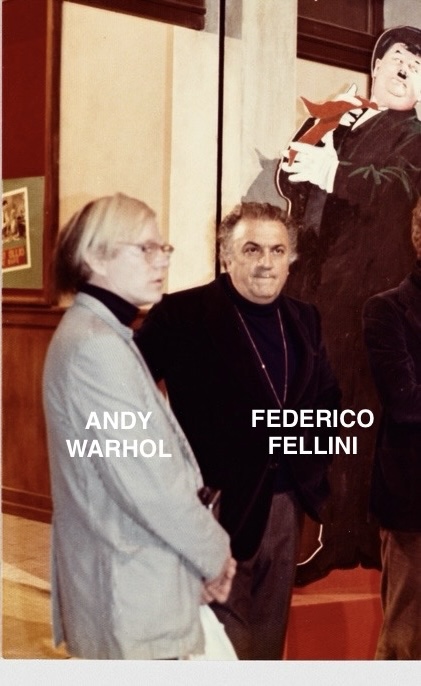
“Andy Warhol – Federico Fellini – Federico Wardal”: a case of “muses”
This is a special story, one that emerged after a full 50 years.
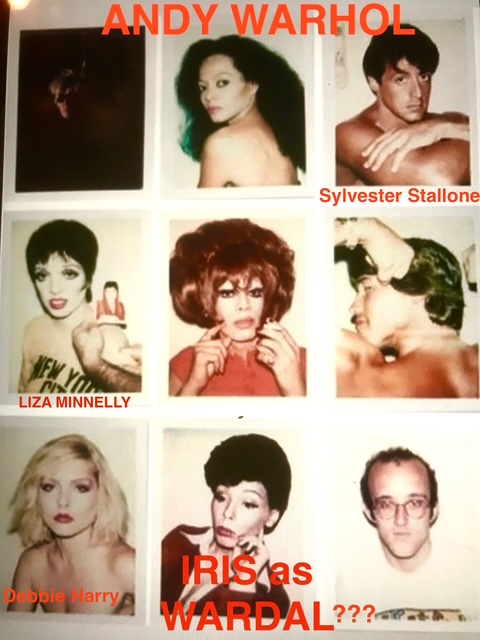
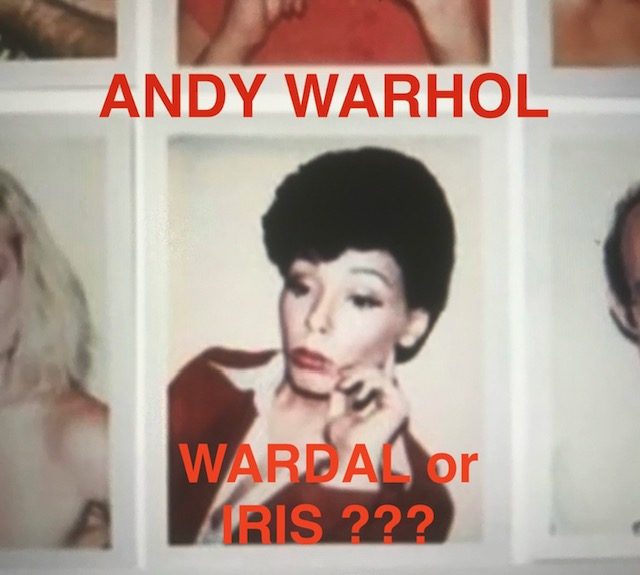
About two years ago, an Instagram fan of mine, who knew I had been an inspiration to my mentor Federico Fellini and vice versa, sent me an Andy Warhol collage. My fan asked me if it was me in the photo, below the one of Liza Minnelli, second from the right, in a famous Andy Warhol collage, which also features Sylvester Stallone.
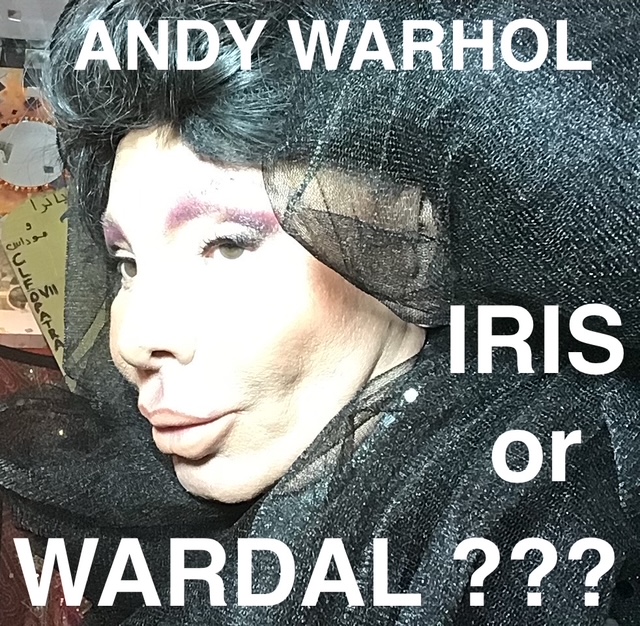
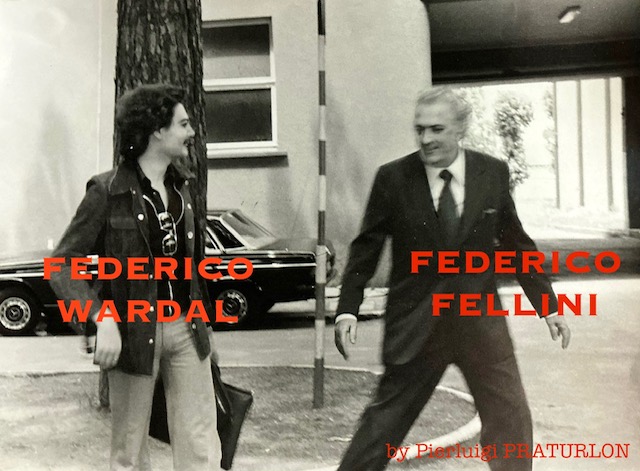
I replied to her that it wasn’t me, fully noticing that the Andy Warhol’s model in the photo appeared like a lookalike of me, wearing makeup, clothes, and attire like me at the time. The conversation between me and my Instagram fan was public and spread across social media and elsewhere, becoming popular. This is the real story. In the 70s, my photos (aka Wardal, my real name is Federico di Wardal) reached Federico Fellini and Andy Warhol via the film agencies of Franco Brel and Yvette Louis. Fellini chose me as the “adolescent alter ego of Casanova” in the first edition of his film “Casanova”, then entirely stolen, shortly before it appeared on the screens and then reshot.
Andy Warhol requested a contract from my manager Mr. Drago to be able to use my image in his compositions, but the agreement did not come to fruition. Surprisingly, it now appears, as I said, that Andy Warhol’s model Mrs. Iris, strongly resembling me, dressed and made up like me, was included in the attached photo, in the same period in which my image was exclusive to Federico Fellini. Fellini had chosen me not only because my aesthetic characteristics fit into his imaginative world , but also for my “metaphysical” personality, but at the same time intense and physical. My image, however, also fit into Warhol’s imaginative world, aside from my personality.
Both Fellini and Warhol always chose characters that no one forgets, and this is certainly positive for me, since for 50 years I have continued to galvanize audiences. But there is one aspect or challenge that has always fascinated me: the power to cancel or obscure my image, when I perform a show, through intense, pregnant acting. That said, Federico Fellini requested me not only as an “image,” but also as an actor, giving me the opportunity to express myself through acting, while Andy Warhol focused only on my special facial expression and my look, and rightly so, since Fellini is a great film director and Andy Warhol is, I think, above all a great visual artist.
For an artist who has a galvanizing image, everything can become very difficult, since producers make you play roles that are more linked to the image and not to the abilities and skills of an actor. It is truly a hard struggle to impose on producers roles that we artists believe in, roles that we feel and love.
In my case, I have been very lucky because I have inspired many directors, authors, writers, poets of different genres, ages, cultures who wanted me in roles that I have immensely loved. The names? Federico Fellini, Carlo Lizzani, Alberto Bevilacqua, Dario Bellezza, Mario Fratti, Franco Cuomo and now Enrico Bernard with the film “Lila” (A Monster Called Lila) https://youtu.be/aURAiSWSK1Y?si=Oqv5RbnlOfRbhrDQ. But also young and very young talents from California, Egypt, Italy , they are inspired by me.
This entire “story” turns 50 this year and will be celebrated in Italy in Pompeii, an ancient city and archaeological site, from December 3 to 13, 2025, during the sixth edition of the Vesuvius Film Festival (vesuviusfilmfestival.it), dedicated to my mentor Federico Fellini. The festival is chaired by Giovanna D’Amodio. I, who always love to act, not just to appear, will give the performance: “FELLINI’s Dream,” directed by the president of the Historical Archive of Italian Cinema, the authoritative film critic Graziano Marraffa. Key partners of the Vesuvius Film Festival are the Vesuvius National Park Authority, chaired by Raffaele De Luca, and ANILDD, chaired by engineer Lino Marasco.
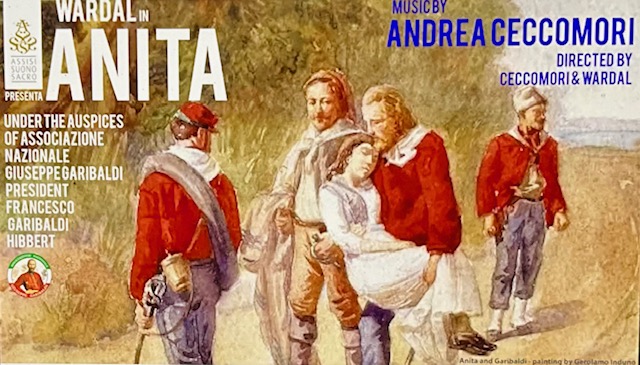
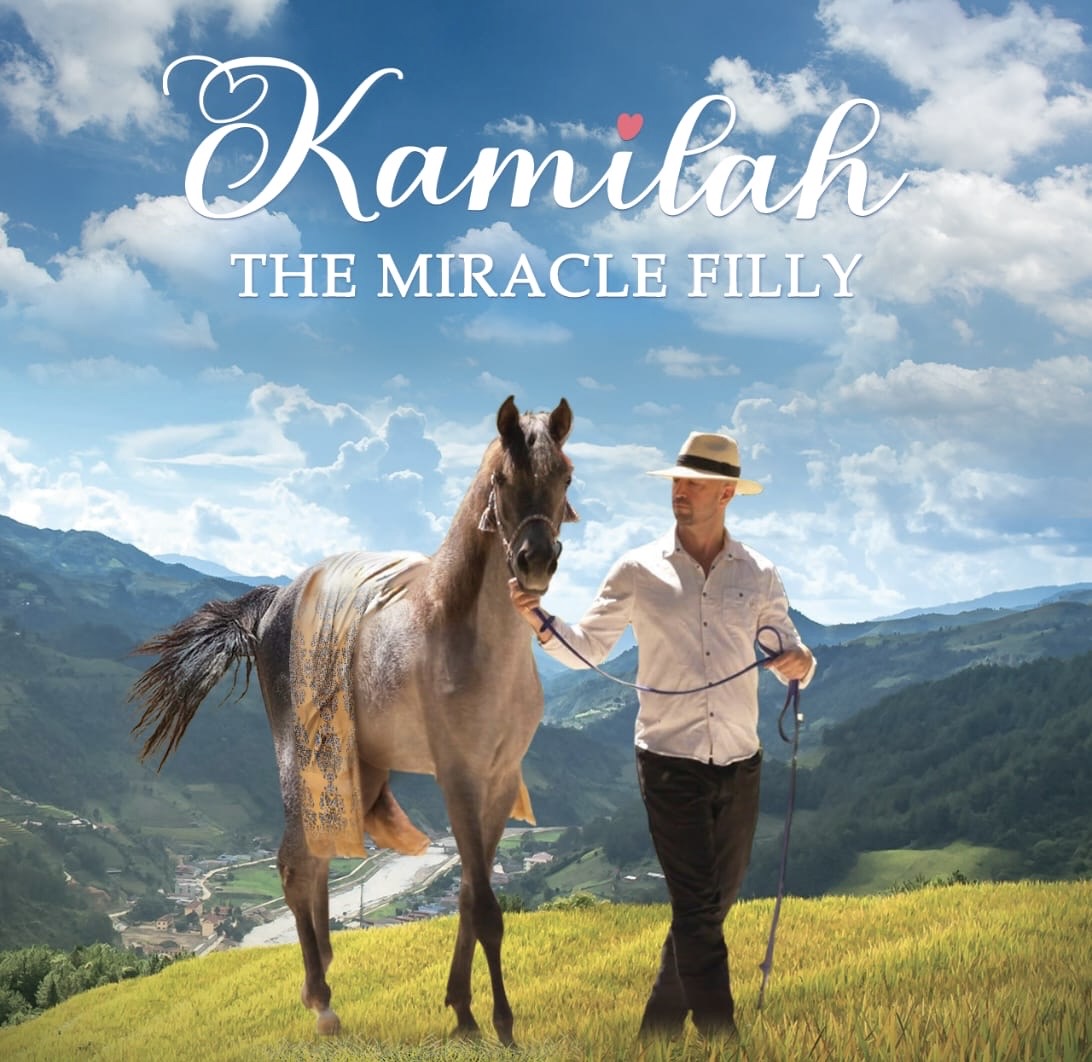
The foreign films in the international section of the film festival are highly anticipated, such as “Kamilah the Miracle Filly” by Angela Alioto, with Joe Mantegna as narrator, and the other film is “Anita” by Wardal and Ceccomori, with Wardal and music by Andrea Ceccomori. The film is under the auspices of the national Giuseppe Garibaldi association, chaired by the descendant of the hero Francesco Garibaldi Hibbert, a special guest of the film festival. https://youtu.be/VMBSioZfN-U?si=f-h04f_CAYd40RVx. I will be accompanied by Maria Luisa Lo Monte, an international television personality. At the Vesuvius Film Festival, a photographic exhibition on Fellini and I will be inaugurated, with photos by the famous Pierluigi Praturlon, but we will also talk about Andy Warhol and the story I told you.
GRACIELA NOEMI VILLAVERDE is a writer and poet from Concepción del Uruguay (Entre Rios) Argentina, based in Buenos Aires She graduated in letters and is the author of seven books of poetry, awarded several times worldwide. She works as the World Manager of Educational and Social Projects of the Hispanic World Union of Writers and is the UHE World Honorary President of the same institution Activa de la Sade, Argentine Society of Writers. She is the Commissioner of Honor in the executive cabinet IN THE EDUCATIONAL AND SOCIAL RELATIONS DIVISION, of the UNACCC SOUTH AMERICA ARGENTINA CHAPTER.
Mirta Liliana Ramírez has been a poet and writer since she was 12 years old. She has been a Cultural Manager for more than 35 years. Creator and Director of the Groups of Writers and Artists: Together for the Letters, Artescritores, MultiArt, JPL world youth, Together for the letters Uzbekistan 1 and 2. She firmly defends that culture is the key to unite all the countries of the world. She works only with his own, free and integrating projects at a world cultural level. She has created the Cultural Movement with Rastrillaje Cultural and Forming the New Cultural Belts at the local level and also from Argentina to the world.