In Which Mallory Learns Three Important Things About Herself as She Pinwheels to Death, Among Other Things
p.1 Dear Mother, I do not regret the time we never spent.
Dear Father, I am you and you are me. Who came first? The chicken or the egg?
Dear Self, You must accept the fact that your imminent death is not and will never be glorious.
p.2 The worst part of realizations, is they are cruel because they cannot be changed.
Mine is that I will die in exactly 17.12 minutes, (my suit calculates) whirling between green, blue, black speckled with pinpricks of distant light from a different age.
I do not scream. I do not cry. I accept. I am streaking through time and the atmosphere is so close, filling my polycarbonate visor with wisps of white.
I am glad that the last thing I will see before I asphyxiate is the pacific ocean. I wonder if fish look up and wonder what it is like to breathe.
p.3 I do not envy anything. I am here, staring at my entire life defined to four numbers ticking!
(I have moved past all things in life. I have moved past staring at twin tombstones and I shall move even when my synapses shall not, forever freefalling into nothing.)
the third thought that cartwheels across me squealing heavenly mercy cries⸺ who will remember you?
The birds twittering under the shingles of my roof, the squirrels eating the acorns left on my porch, my posters hanging in my room are all bits of my existence and remember me in of themselves.
I am real; my pain is proof of this.
p.4 00.10 there 00.09 is 00.08 nothing 00.07 more 00.06 beautiful 00.05 than 00.04 earth. 00.03 I 00.02 am 00.01 happy.
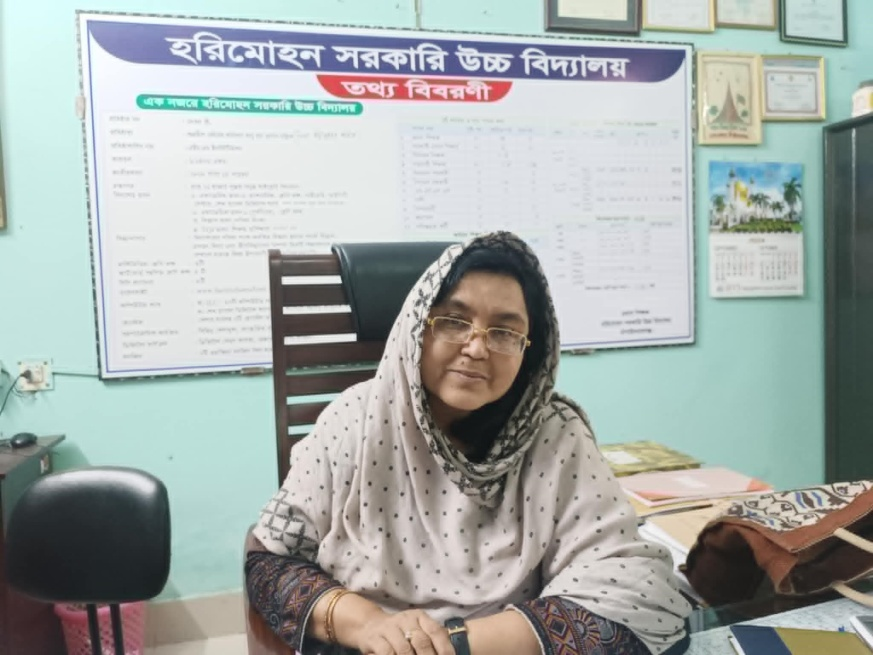
Rubina Anis is the Headteacher of Harimohan Government High school, Chapainawabganj, Bangladesh. She has obtained her honors’ and masters’ degree from the department of Arts and Crafts at Rajshahi University.
At night

curves in the road
multiply

when there are no
street lights

on those posted-
25 miles per hour
and they mean it
two lanes

Excessive drinking
is what the young
and the feckless islanders
do

tourists as well
willfully riding
their motorcycles

rented mopeds
ATV’s

dune buggies

without helmets
where none are
supposed to go

Their roadside
memorials are
everywhere

homemade paint chipped
white crosses losing
their luster


Death Comes to the Harborside

Historic turn of the last
century hotel and lounge’s
self-immolation produced

smoke and flames
visible on mainland
miles away

We wonder what happened
to the speakeasy ghosts

the good time girls

flappers and spirits
of the murdered and
those who died of natural
causes

Days later numbered
striped cue balls
are found unearthed
from rubble along with
a long forgotten
floor safe

Marked cards inside

Tally sheets and chits
IOU’s dated and signed
100 plus years ago


A community of crows

gathers in yew trees
bordering the inland
cemetery

The oldest headstone
date back to 1700’s
but the crows are timeless

By dusk there are
hundreds of them
silently inhabiting the trees


Surfing the Hurricane

A few 12 packs
and surfing the storm
seems like a great idea

a plan

“Oh, man, look at
the swell”

The rip tides
and the submerged
rock

the killer waves


The Chainsaw Artist

works nights in
a barn lit by flickering
kerosene lamps

Such an uncertain light
for carving dread beasts
never seen anywhere in
this world except
in his mind

When they are finished
the artist hides his creations
amid the clutching brambles

the decaying drooping trees
where hikers come upon them
in unexpected places

Unearthing these creatures
instills the kind of fear
that can never be erased

leads to illness
and despair

The woods feel haunted now

alive with unseemly beings
wherever the artist has been

We can hear incessant

tolling of church bells
from the far side
of the great salt pond
where no structures
are

Such a mournful sound
propelled across
the surface by a steady
off-shore breeze

We listen wondering
why we are being
summoned from so far
away
gone

it’s the first time
since she went
that i’ve been back here
to this outdoor café
in a crowded square

by the busy beach
at the same time
in the late afternoon

i use to come here
twice every week
after i saw her
spent an hour or two
with her

in the nursing home
where she lived
for years

today i came here
at the time i use to
and am feeling sad
as i thought i would be
and thinking lots of her

while having a coffee
enjoying the sun
and reading the paper

i suppose thoughts
and feelings
are expected
coming back here
as i’m missing her

and still find it hard
to believe
mum is gone
Stephen House has won many awards and nominations as a poet, playwright, and actor. He’s had 20 plays produced with many published by Australian Plays Transform. He’s received several international literature residencies from The Australia Council for the Arts, and an Asialink India literature residency. He’s had two chapbooks published by ICOE Press Australia: ‘real and unreal’ poetry and ‘The Ajoona Guest House’ monologue. His next book drops soon. He performs his acclaimed monologues widely. Stephen had a play run in Spain for 4 years.
Who among us is unfamiliar with the holocaust, forever etched in history and to some, their memory?
In Duane Vorhees’s introductory poem from his latest work Between Holocausts: “A Mind Rewinds” Vorhees captures something indescribable, when he writes:
My psyche is littered with living Its/ Disregarded superegos still whine/ Od and Ob hiss between young green vines/Bony hilltops strain to catch day’s first light/ their bloodguilt insufficiently contrite/My psyche is littered with living Its…” Perhaps he is describing sephardic warriors of yore and in extant …who were “disregarded” [and[ deemed “insufficient”.
I found the book’s neurodivergent style instructive, creative, intuitive, alarming and haunting….as it grapples with a subject matter such as the holocaust with a sort of classic poetic indirectness that reads like a literary puzzle with a cartage of sometimes obscure literary symbolisms and references that compels further investigation.
Take the use of “midnight”, which in literature can symbolize death, despair, hope, a place between life and death. For example in poetic forefather Walt Whitman’s poem “A Clear Midnight” midnight represents death as a peaceful ending of the day. Whereas in contemporary Chinese literature, midnight can suggest despair OR hope, emblematizing the emotional incongruity in the culture.
The repetitious nature of the poems make for a particularly eerie experience, like an ominous cautionary tale emanated from the sagacious tongue of someone GRAND..whether grandfather or grandmother, you want to lean forward in attention and anticipation. The author achieves preternatural phenomena in the way that he presents his writings, which I found quite refreshing.
Scholastic philosopher St. Thomas Aquinas of Sicily– who synthesized Christian theology with Aristotelian philosophy, contended that the “supernatural” comprised of “God’s unmediated actions” while the “natural” is “what happens always or most of the time” and the “preternatural” is “what happens rarely, but nonetheless by the agency of created beings…”
In “WHAT I DID LEARN”, Vorhees goes full throttle for the macabre and melancholy in this “preternatural” self-revelatory poem. I say “preternatural” because having been voraciously reading early 20th century poetry like Robert Frost and E.E. Cummings since the 8th grade, I have never come across a Vorhees-like style and I consider myself as having been around the “poetic block” a few times…in WHAT I DID LEARN, he writes:
“My music group’s hit singles/stopped so many songs ago/I’ve learned my shakes and wrinkles and still I wait for wisdom…”
As I read these words I felt like an exposed viscera on legs, figuratively inside/out vibes…for I too am learning “my shakes and wrinkles” yet still “I wait” to acquire the wisdom that I presumed would come with the drudging accumulation of years.
LIke Frost, Vorhees investigates complex social and philosophical themes with mastery but with a poignant bout of relatable and humbled vulnerability which is the plight and euphoria, conundrum and exaltation of any type of artist.
Could Vorhees be described as an itinerant troubadour, who in the middle ages were the shining knights of poetry?
Troubadour from an old Occitan (an ancient province that stretched from south of France from east to west) word meaning “to compose”? Perhaps. Or maybe he’s just a guy with something to say about some things that matter to him and he conceivably hopes that they matter to you as well.
The poems read like a heuristic and Socratic exercise replete with mythical biblical and literary symbolisms.
While we’re at it, why not add Mimetic Theory to the list? This terminology is described as a theory of human behavior and culture that explains how human desire and imitation lead to conflict and violence:
What better way to exemplify the ideologies of mimetic desire-conflict- and scapegoating than the horrific and fugly HOLOCAUST!
Here is a synopsis of Mimetic Theory, it’s inception and evolution:
Origin The theory was developed by French philosopher, literary critic, and anthropologist René Girard (1923–2015).
Process Mimetic theory moves through four stages:
Mimetic desire: People imitate others and want what other people want.
Conflict: People compete for the same goods, leading to conflict.
Scapegoating: A group singles out an individual or problem as the source of their problems and violently expels or eliminates them.
Cover-up: Human culture springs up around the scapegoating mechanism to cover up the founding murder.
Throughout history, scapegoating has been the instigator of many atrocities. From the inception of slavery, to Adolf Hitler’s holocaust exterminating millions of Jewish people and what he considered “undesirable” people to the Chinese Exclusion Act of the late 19th century and now Haitian immigrants, both having been branded as “dog and cat eaters” which makes it easier to draft laws against them for you must dehumanize to make it easier to vaporize them from the planet, right?
Although the book is replete with an infelicitous subject matter, after reading it, your resistance to transfiguration could conceivably be an exercise in futility; you will emerge from the chrysalis of self-consciousness to a wise sage having been dug up from the darkness of an egregious past and exposed to ebb and flow of a reformatory present through poetic light and historical literary erudition.
Nothing is nugatory, every word, every nuance seems carefully selected. Vorhees is serving fluid paradoxical wordplay and intrigue, cajoling the reader to read on and hopefully decode the cleverly coded script.
Vorhees writes with ingenuity, authenticity and authority. A MUST read for anyone willing to trek a trip down a dark path with a promise of light ahead. The stuff of LIFE! A familiar trope done in an unfamiliar way…a literary TRIUMPH!
Duane Vorhees’ title Between Holocausts will come out later this fall from Hog Press.
Duane Vorhees is an American poet in Thailand. He is the author of THE MANY LOVES OF DUANE VORHEES, HEAVEN, GIFT: GOD RUNS THROUGH ALL THESE ROOMS, MEMORIES ARE LINKED LIKE OASES, A CONSIDERABLE SHARE OF FELICITY, and THE WOMB AND THE BRAIN. Born in Farmersville, Ohio, USA, he graduated from Bowling Green State University with a doctorate in American Culture Studies. He has taught at Seoul National University, Korea University, and the Asian Division of the University of Maryland University College (now the University of Maryland Global Campus).
Jacques Fleury
Jacques Fleury is a Boston Globe featured Haitian-American Poet, Educator, Author of four books and literary arts student at Harvard University online. His latest publication “You Are Enough: The Journey to Accepting Your Authentic Self” & other titles are available at all Boston Public Libraries, the University of Massachusetts Healey Library, University of Wyoming, Askews and Holts Library Services in the United Kingdom, The Harvard Book Store, The Grolier Poetry Bookshop, amazon etc… He has been published in prestigious publications such as Muddy River Poetry Review, the Cornell University Press anthology Class Lives: Stories from Our Economic Divide, Boston Area Small Press and Poetry Scene among others…Visit him at: http://www.authorsden.com/jacquesfleury.