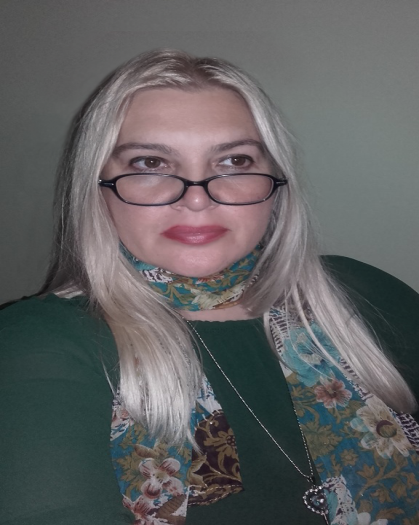
Maja Milojković was born in 1975 in Zaječar, Serbia. She is a person to whom from an early age, Leonardo da Vinci’s statement “Painting is poetry that can be seen, and poetry is painting that can be heard” is circulating through the blood. That’s why she started to use feathers and a brush and began to reveal the world and herself to them. As a poet, she is represented in numerous domestic and foreign literary newspapers, anthologies and electronic media, and some of her poems can be found on YouTube. Many of her poems have been translated into English, Hungarian, Bengali and Bulgarian due to the need of foreign readers. She is the recipient of many international awards. “Trees of Desire” is her second collection of poems in preparation, which is preceded by the book of poems “Moon Circle”. She is a member of the International Society of Writers and Artists “Mountain Views” in Montenegro, and she also is a member of the Poetry club “Area Felix” in Serbia.
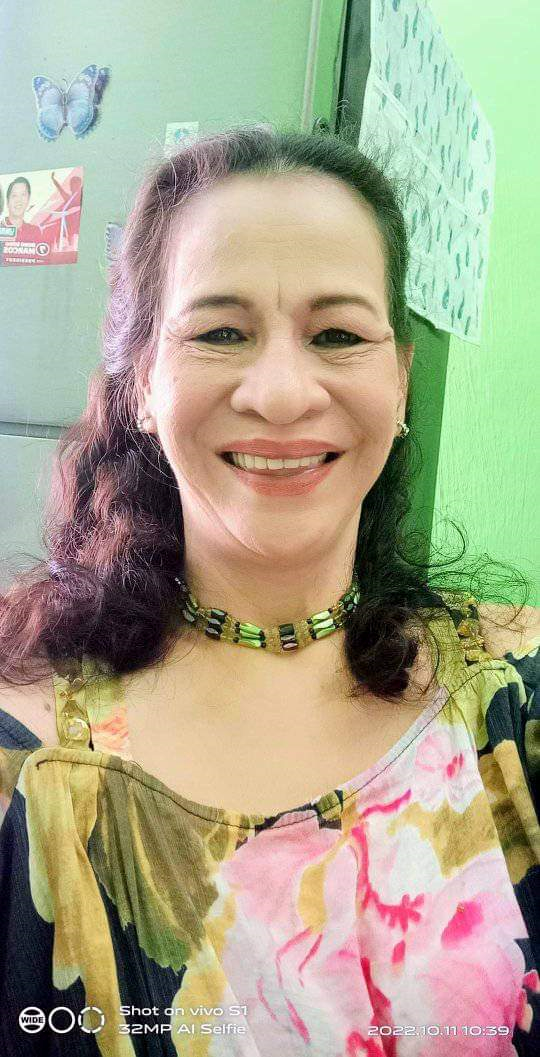
Lilian Dipasupil Kunimasa was born January 14, 1965, in Manila Philippines. She has worked as a retired Language Instructor, interpreter, caregiver, secretary, product promotion employee, and private therapeutic masseur. Her works have been published as poems and short story anthologies in several language translations for e-magazines, monthly magazines, and books; poems for cause anthologies in a Zimbabwean newspaper; a feature article in a Philippine newspaper; and had her works posted on different poetry web and blog sites. She has been writing poems since childhood but started on Facebook only in 2014. For her, Poetry is life and life is poetry.
Lilian Kunimasa considers herself a student/teacher with the duty to learn, inspire, guide, and motivate others to contribute to changing what is seen as normal into a better world than when she steps into it. She has always considered life as an endless journey, searching for new goals, and challenges and how she can in small ways make a difference in every path she takes. She sees humanity as one family where each one must support the other and considers poets as a voice for Truth in pursuit of Equality and proper Stewardship of nature despite the hindrances of distorted information and traditions.
There is a decency and a balance that seals healthy bonds.
Through the similarities,
a welding of feelings that resists
to corrosion in time and space
even when we are far away.
Then there is the poet orator in the quintessence of connections.
A ceramic bowl, flowers in autumn colors,
a book for the soul
and occupations to keep traditions unaltered.
Poets from the languages of the world that embrace the Europe of Hope.
We, a Festival of Languages and Poets united for Peace.
BIOGRAPHY
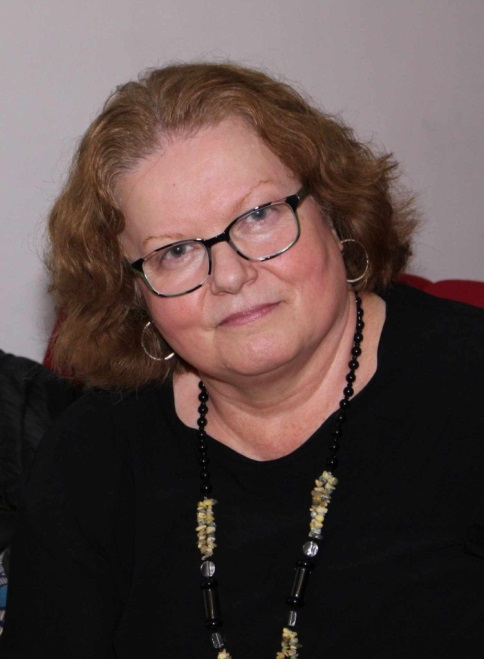
Lidia Popa was born in Romania in the locality of Piatra Șoimului, in the county of Neamț, on 16th April, 1964. She finished her studies in Piatra Neamț, Romania with a high school diploma and other administrative courses, where she worked until she decided to emigrate to Italy.
She has been living for 23 years and worked in Rome as part of the wave of intellectual emigrants since the fall of the Berlin Wall.
She wrote your first poem at her age of 7. She is a poet, essayist, storyteller, recognized in Italy and in other countries for her literary activities. She collaborates with cultural associations, literary cenacles, literary magazines and paper and online publications of Romanian, Italian and international literature. She writes in Romanian, Italian and also in other languages as an exercise in knowledge.
BOOKS
She has published her poems in six books:
in Italy:
1. ” Point different ( to be ) ” – ed. Italian and
2.” In the den of my thoughts ( Dacia ) ” – ed. bilingual Romanian/ Italian AlettiEditore 2016,
4. ” The soul of words” ed. bilingual Romanian/ Albanian Amanda Edit Verlag 2021,
5.” Syntagms with longing for clover ” ed. Romanian, EdituraMinela 2021.
6.” The Voice interior ” LidiaPopa and BakiYmeri ed. bilingual Romanian/Italian, Amanda Edit Verlag 2022.
Her poems featured in more than 50 literary anthologies and literary magazines on line from 2014 to 2023 in Italy, Romania, Spain, Canada, Serbia, Bangladesh, United Kingdom, Liban,USA,etc.
Her poems are translated into Italian, French, English, Spanish, Arabic, German, Bangladesh, Portuguese, Serbian, Urdu, Dari, Tamil, etc.
Her writings are published regularly with some magazines in Romania, Italy and abroad.
She is a promoter of Romanian, Italian and international literature, and is part of the juries of the competitions.
She translates from classical or contemporary authors who strike for the refinement and quality of their verses in the languages: Italian, Romanian, English, Spanish, French, German, stating that “it is just a writing exercise to learn and evolve as a person with love for humanity, for art, poetry and literature “.
SHE IS
*Member of the Italian Federation of Writers (FUIS)
*Honorary member of the International Literary Society Casa PoeticaMagia y Plumas Republic of Colombia,
*Member of Hispanomundial Union of Writers (Union Hispanomundial de Escritores) (UHE) and Thousands Minds For Mexico (MMMEX)
*President UHE and MMMEX Romania, August 21, 2021
*She had come power of attorney Vice-president UHE Romania, Mars18, 2021- August 21, 2021
*President UHE and MMMEX Romania, August 21, 2021
*Counselor from Italy for Suryodaya Literary Foundation Odisha India,
*Director from Italy for Alìanza Cultural Universal (ACU) Argentina
*Member Motivational Strips Oman,a member of numerous other literary groups at the level internationally,
*Director of Poetry and Literature World Vision Board of Directors (PLWV) Bangladesh
*Membership of ANGEENA INTERNATIONAL NON PROFIT ORGANISATION of Canada
International Peace Ambassador of The Daily Global Nation International Independent Newspaper from Dhaka Bangladesh – 2023
*Founder literary group Lido dell’anima with LIDO DELL’ANIMA AWARDS
*Founder LIDO DELL’ANIMA Italian magazine
*Founder SILVAE VERBORUM INTERNATIONAL multilingual magazine
Breaking of the shackles A new nation was born With the breath of freedom Uplifted by the joy! The Declaration of independence inspired That all men are equal! Endowed with rights such as life, liberty and the pursuit of happiness Our struggles for democracy hoped to prove That people are the king! The brave women of America fought And won the right to vote The brave African Americans fought And won the right to vote For thousands of years our native Americans Looked after this beautiful land To them we must make amends And restore them in every way We now must pledge to To care for each other And build a sense of community White, black, brown and others
Brothers and sisters are we all Natives, Europeans, Hispanics, Africans, Asians and others Make the beautiful mosaic of our land Our army is mighty strong And our soldiers are brave May they defend our great land And be fair and just to the world They put their lives on the line So we must take care of them Our planet is now warming up Looks like it has a fever Fossil fuels we must leave behind Green clean energy is our future For climate change we must lead the world For we have so little time Our mothers we must trust to care For children unborn or born Our teachers we must trust to teach The past, the present and the future The quality of our nation depends on them to prepare Productive, skilled, moral and caring students The quality of our nation depends On healthy, happy and caring people May the ingenuity of our people blossom
So we lead the world in enterprise May the big help the small prosper So the benefits are spread around Our farmers we must support So they have joy and pride They grow the food for us That helps us to survive Today, we may stand divided as if we are bitter foes But we must begin to talk and find that common ground For that we must abandon all untruths And face our future with truth and caring Autocracy and dictatorship we must reject Democracy we must strengthen to have more Transparency, openness and accountability For that is the only way we can Have true people’s power where people are the king Hatred, anger and violence we must reject Love, calmness and nonviolence we must embrace We must all be brothers and sisters And express goodwill and take care of others Macho means to have strength and resolve To protect others from injustice To protect others from bullies The great Chief Seattle told us
“The Earth does not belong to man: Man belongs to the Earth.” So let us resolve on this day To build an America that is green and clean Our lands and coasts and bays and waterways Where our brother and sister species prosper again Where everyone is healthy, happy, sustainably prosperous and at peace Where our women feel empowered and free Where minorities join with the majority to build a better nation Oh! America you can be Free and happy to eternity!
Christopher Bernard will be reading at the Poets for Palestine SF Marathon Reading at Bird and Beckett Bookstore. For a donation of any amount to the Middle East Children’s Alliance, poets can come and read at any time at the store on October 14th, Indigenous People’s Day. Please feel welcome to sign up here or email poetsforpalestinesf@gmail.com to be scheduled.
A Day in October
A child holds his breath
like a frightened pet to his chest.
*
His eye peers through a hole
in the wall of his night room,
in the acid dust of siege
and cage of bone and blood,
in the code of an algorithm
governing AI
that has made the ineluctable
decision he shall die.
*
His eye, brown as honey,
watches you, intently.
*
It is like the eye in a castle wall
where hungry defenders await the burning
arrow vaulting through a sky
dark as velvet,
to break a mother’s shield
and wipe her tears with ashes
*
and build in pillars of fire
a school where future terrorists
(according to the omniscient
and infallible AI),
are learning, even now, their alphabet.
*
_____
Christopher Bernard is an award-winning poet, novelist, and essayist. His book The Socialist’s Garden of Verses won a PEN Oakland Josephine Miles Award in 2021 and was named one of 2021’s “Top 100 Indie Books.”
The Sun of Time

The sea of love is frozen
Ships are like a painting of a painter
The sky does not breath
Cloud hides under water
Wind sleeps in the lap of Nature
Sea beach is like empty vessel
Tourists' footprint is vanished
The sun of time is absent
Spring does not smile
Only silence walks here and there
Two sailors are not one
Communication is broken down
But two hearts are one
Fountain of Love flows from one to another
Nothing can stop love
None can break down communication between two hearts.
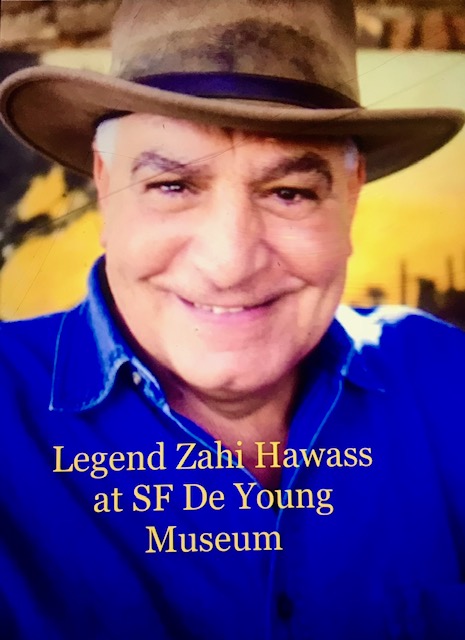
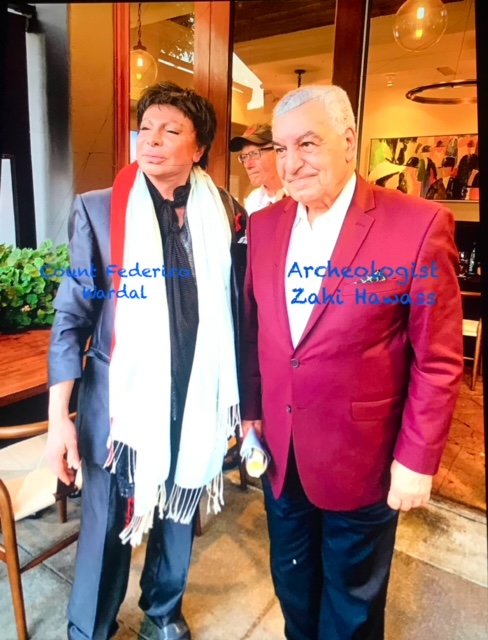
Ancient Egypt: Zahi Hawass and the True Face of the Golden Masks
Prof. Zahi Hawass is the world’s most famous archaeologist and has been active for decades in bringing to light sensational discoveries about ancient Egypt that illuminate the modern world with knowledge.
The archaeological mechanism works that from one discovery you access another and so on and so it is happening regarding the latest discovery of Prof. Hawass: the “Lost Golden City” in Luxor, the most important discovery of 2021, as Daily News Egypt writes.
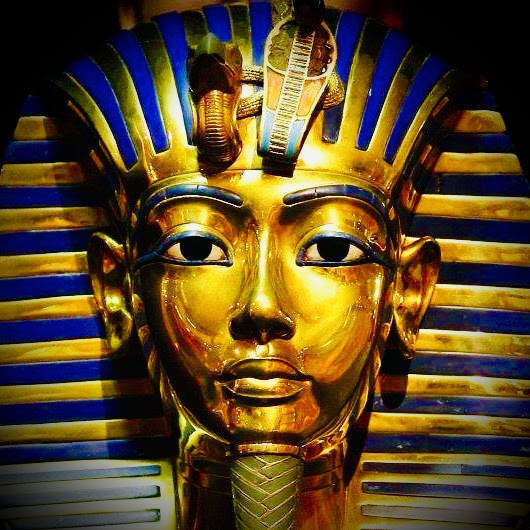
Over the millennia, the sand of the Egyptian desert has covered archaeological treasures, but ancient Egypt itself must be explored through an immense maze of secret underground passages. It is as if an immense golden mask, which would represent death, covers and watches over the secrets of life that rejoins death, in a flow that challenges immortality.
The United States wants Zahi Hawass back and he will be returning to the US and Canada in the spring of 2025 with his very interesting lectures that will widely reveal in detail the most sensational latest discoveries of the mysterious ancient Egypt.