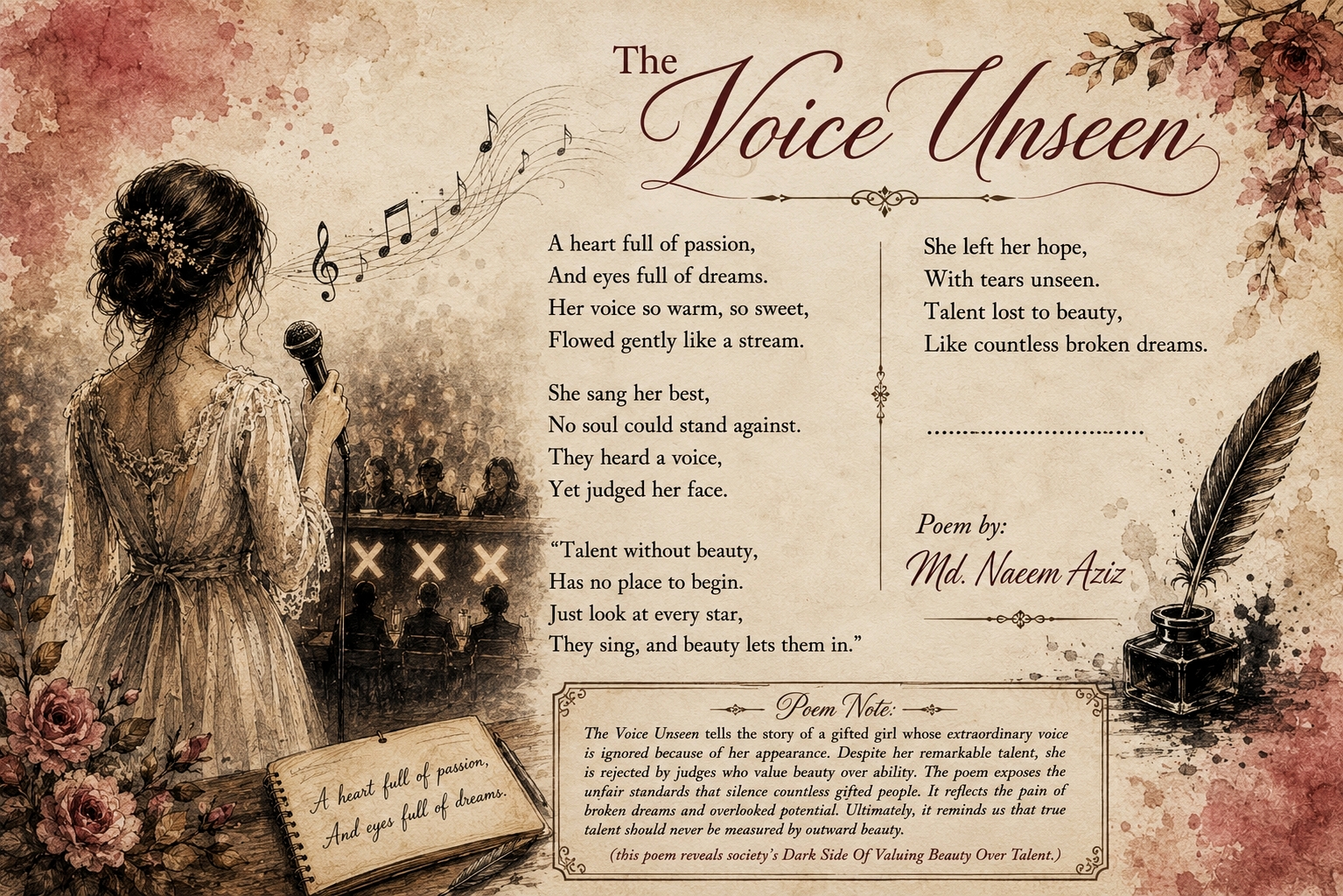
Poem Note: The Voice Unseen tells the story of a gifted girl whose extraordinary voice is ignored because of her appearance. Despite her remarkable talent, she is rejected by judges who value beauty over ability. The poem exposes the unfair standards that silence countless gifted people. It reflects the pain of broken dreams and overlooked potential. Ultimately, it reminds us that true talent should never be measured by outward beauty.
(This poem reveals society’s Dark Side Of Valuing Beauty Over Talent.)
Poet Bio: Md. Naeem Aziz is a Bangladeshi poet, author, engineer, and photographer, born on 10 December 1998. He is best known for his poetry and photography. His literary works have gained international recognition, and one of his poems has been included in an English literature textbook in Italy. Through his writing, he explores themes of humanity, society, history, and emotion. (nknaeem14@gmail.com)
“You will top as always, isn’t it,” said my classmates, as it was the last day of school today, the last exam of English Language was over.
I gave them a faint smile, of course how else could I have reacted, and quickly slipped away, as I always avoided many of them. There were two close friends, and two or three more in forty with whom I ever talked. They were gone, so there was no point in staying here.
Once I was out of the school gate, I was confused where to go to, I wasn’t going home as I know I would be going nuts there because of the boredom. After three minutes of thinking, I headed to the bazaar, my usual spot if I can’t figure out where to kill time. I had anyway informed mother that I will have lunch somewhere outside, and who will say no to a son who except coming and going to school steps out of the house once or twice a month?
I ritually played a little with the two, pure white kitties who were always found outside my school. They were kids of the strangely two black cats who were always found sleeping in the shade of the big banyan tree opposite our school, I had seen them becoming parents from kittens and I swear I cried the day these two kittens were born, whoever may be the father. I sometimes salute the father of those kittens, that black cat didn’t throw up any drama. One film on my this brother’s life, the husbands of this entire nation will learn what it means to love.
I walked away further, took a left turn and saw a small stall of an old aunty selling lemonade. It was May’s usual humid heat, Bombay being Bombay.
“Aunty, one glass,” I said. She smiled; she knew this order from me would be the only thing she would hear from me the entire year. She took a glass, and quickly made me a fresh lemonade, with just the perfect amount of lemon juice, sugar and ice. It was simply refreshing.
I then headed straight ahead, crossed a road and there it was, the bazaar. It was a huge line of one storey-ed buildings, all the same colour and the same structure. The ground floor had toy shops, stationery stores, shops selling utensils, retail shops and fast food selling shops with huge crowds in front of them. The first floor had tailors stitching shirts and pants from cloth, local ladies boutiques and tailors, barbers, and two jewellery shops. Though the rents of the shops here were the cheapest in the city, the jewellery shops here attracted waves of rich and elite people, as they had some of the most trending designs of gold earrings and gave you the largest sum of money in the city if you sold gold here. The shops on the first floor had air conditioners, and only the shops requiring it opened on the first floor. There was a medium broad staircase in between two of these buildings for you to go up. When you walked along these buildings, some hundred meters away, on the opposite side of the road were numerous vegetable and fruit carts, selling cheap but fresh fruits. These stalls sold the cheapest vegetables and fruits after wholesale rates, hence the old people who lived two kilometres or under nearby walked here to buy cheap fruits and vegetables, and even got the compulsory walk the doctors treating their diabetes prescribed them to.
I went up to Suraj ji’s shop that sold the best vada pavs in the city. Ever since his son threw him out, he and his wife learned how to make authentic, Maharashtrian vada pavs. They settled here, in Bombay, and started their very own business by selling all the jewellery they wore. Now, they were fed up with counting the money that rained into their shop, as they were the most famous entrepreneurs of the city. Be it the locals or the foreign visitors, no one ever dared not to eat their delicacy.
“Beta,” shouted Suraj ji as he spotted me. I touched his feet, and he blessed me.
“Why have you come after such a long time, keep coming and see us, you are the only sunshine our old eyes ever see,” her wife exclaimed as she assembled for me a vada pav : she sliced open the pav into two flaps;applied the spicy green chutney of crushed and ground coriander, mint and green chillies; added the dry and spicy powder of red chillies and garlic, a tiny bit of the sweet jaggery and tamarind chutney, and put a big pav of spicy potato filling coated with chickpea flour and deep-fried, in between the two flaps of the bread she had just cut open. She made me two, and I sat there eating them, the only outside food I ever love. All thanks to the love in aunty’s hands that assemble them. I paid them the money after I finished feasting, and they waved back with big smiles as I went away.
I headed to a tiny supermarket next, and bought a chocolate bar for myself. I sat under the big banyan tree at the end of the line of vegetable stalls, and just before the fruit carts. Just as I was about to open the bar, I saw three beggar boys, and one tiny and dirty naked toddler who had just learned walking trying to chase them, falling and then getting back up again and again. They quickly peeped inside the big dustbin on opposite side of this small road which was hardly ever emptied, scanning to find anything new. A boy quickly picked up a wrapper of a big chocolate bar from the very bottom, it still had some chocolate on it. The other boys started licking the stale chocolate on the wrapper, they started dancing yelling “Chocolate…”. But soon this dance turned into bloodshed as one boy snatched it and wouldn’t share. Soon, there was pulling of hair, dragging each other, kicking each other, biting and scratching. I thought it would be thoughtful to leave my chocolate where I was under the tree, and I left. After walking a few yards away, I looked back to see another fight this time over who gets the biggest chunk. I checked my watch, and I thought I must leave now.
All the way home, I observed till I reached home the sky turning white to slight dull blue and then slightly orange, as home was a bit long walk from the bazaar here.
On the way home, I once again passed by my school. This epitome of noises in the afternoon was now dead silent, shut down as if it never functioned. I don’t know why I felt the chills, nobody from my school would ever care for such a small thing, but for me this wasn’t a small thing. I feel (I wrote this in my essay today), that the essence of being human is dreaming big while being surrounded by small, humble feelings and joys.
I turned my head to the tree in front. I was delighted to spot that black cat once again, now teaching his kittens to lick and clean their bodies. He showed them how to fold the paws and clean them, and how to turn the head backwards to clean the backs. If they weren’t able to do it, he showed them again how it’s done, but he didn’t groom them, and they must now do it themselves. While his kittens were practicing, their mother came and lovingly hugged him from behind.
I had seen enough jewels today, enough heartwarming moments, a day to remember and linger in my memories. The sky was now bright orange saying darkness would creep in soon. I headed for home then.
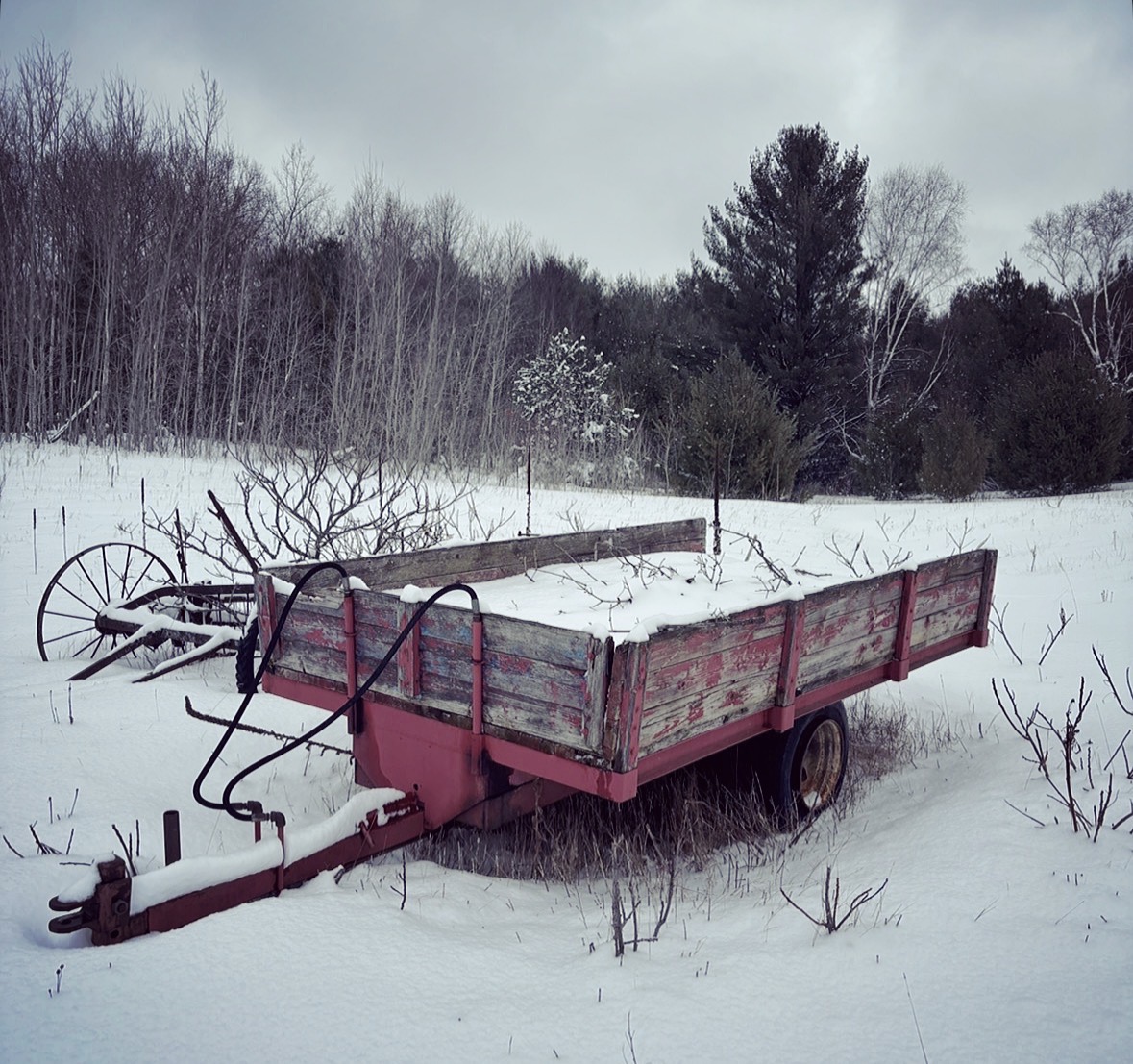
Tree and field, the wild snow calmed by stillness and just waiting. Crystals. Shining. Millions. The outskirts on one side have birch, hundreds of them. The other?- sumac that remains red always save for a few that just become like some skeletal flowers and how strange they seem. The birds of the sky, sometimes, such as they are and be and go. In the summers a swath cuts through making a pathway around and through the pastoral settings.
But in winter then, everything looks and is pretty level. The wagon with its sturdy wheels and faded red paint upon wooden slats, is just stationed there like something from a painting. Old branches of trees in the back. It waits. Maybe forever, but certainly for now. All this under the skies tall and ancient, capricious clouds, the vagaries of landscape life,- sun moon wind silence rains hail or nothing at all…just the calm quietude of stillness for a while.
Screenshot
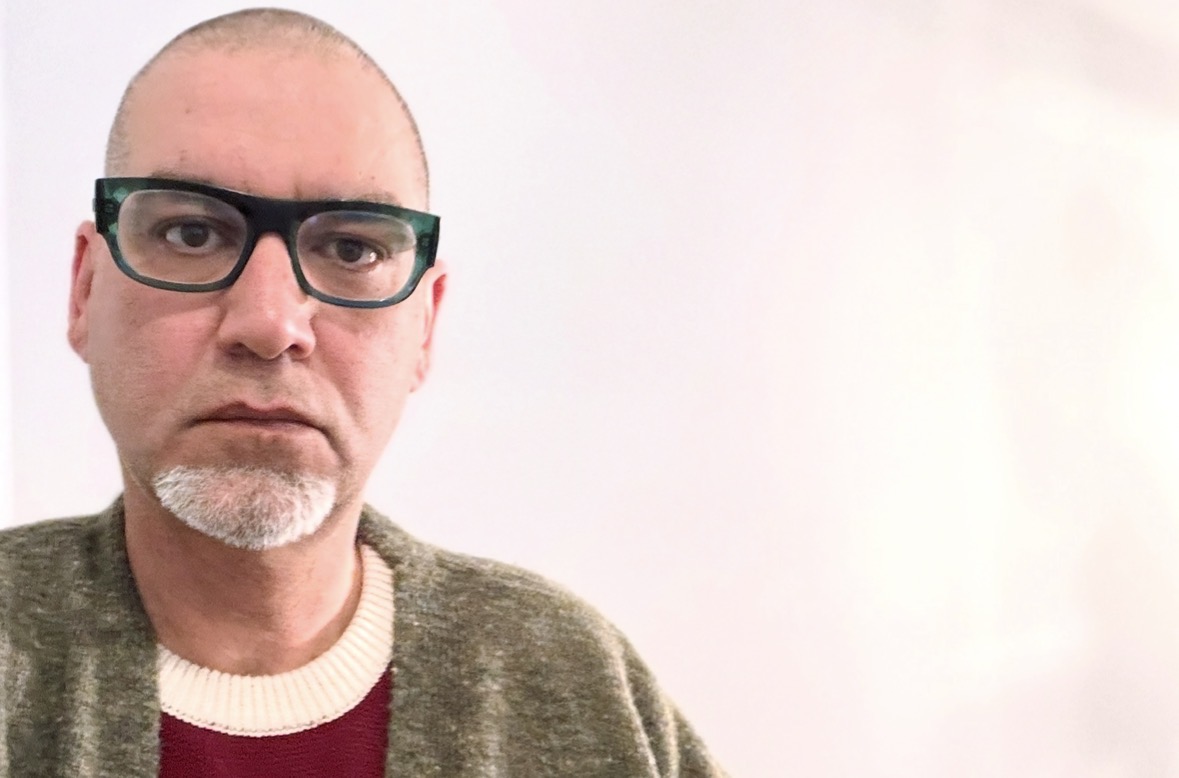
Brian Michael Barbeito is a Canadian poet, writer, and photographer.
Our regular contributor Rui Carvalho invites readers and contributors to submit poetry to the next annual Nature Writing Contest.
Our contest, Nature 2025-2026, is a new opportunity that we, as organizers, create to reach the rest of the world. Every Contest is a challenge for authors participating and to people that make it happen. This year we invite all authors to write poetry about: (i) Flowers; (ii) Trees and wind; (iii) Water; (iv) Nature Conservation; (v) Turtles; (vi) Love for people and nature; (vii) Hope and Happiness.
Synchronized Chaos’ new issue, Questing for Renewal, explores how people navigate a world marked by impermanence, injustice, loss, and change while continuing to seek meaning, compassion, and growth. Across poetry, fiction, essays, and criticism, the contributors examine life, always asking how individuals can respond with courage, creativity, and hope.
Christopher Bernard’s fourth installment of Otherwise argues that even in times when evil appears triumphant, humanity must continue imagining and building a better future. David and Emile Sapp offer complementary poetic and prose reflections on a natural scene with egrets and herons, while Elmaya Jabbarova envisions a fairer society grounded in ethics and spirituality. Sumana Bhattacharjee calls on individuals to improve the world through personal action, and Nidia Garcia presents a peaceful meadow that reminds readers of nature’s restorative power.
Many contributors confront mortality and the passage of time. Mahbub Alam reflects on life’s transience and the need for gentleness; Kumushbibi Hamidova surveys contemporary longevity research; Alan Hardy meditates on aging, creativity, humility, and nature; Nurbek Norchayev examines impermanence and human experience; and Nad Raf offers visceral poems on grief, aging, and mortality. Royal Rhodes’ three poems deepen these concerns through explorations of vision, madness, embodiment, spiritual longing, and the tension between earthly existence and transcendence.
Several works address social realities and cultural history. Kahlil Crawford depicts cultural and ecological regeneration amid disruption while Shlok Pandey reveals the suffering war inflicts on ordinary lives. Alan Catlin’s work explores the ways writers, photographers, and other artists have borne witness to war, loss, and suffering and refused to abandon even the lives they could not save to oblivion. Joseph C. Ogbonna’s work is a politically charged, spiritually framed lament that draws on William Blake’s “Jerusalem” to reinterpret Nigeria’s national crisis through religious longing and moral urgency. Stephen Jarrell Williams’ work contains a spiritual element as well, urging readers to help make the present-day world more humane and just while holding to an eternal hope through faith. Bill Tope’s story recalls the discrimination faced by LGBTQ communities and Jacques Fleury’s darkly comic narrative uncovers the lingering struggles of abuse survivors. Hassan Musa Dakasku advocates fearless self-expression, Alex S. Johnson profiles artist and activist Nina Hartley, who advocated body autonomy, Patricia Doyne satirizes federal monuments mismanagement, and Dr. Jernail Anand Singh reflects on how societies create heroes and what heroism means today. Dr. Kathleen Bryson’s poetry recollects the U.S. 1969 moon landing and how it captured people’s imagination even as reality descended. Thi Lan Anh Tran and Musharraf Hussain examine the US-Iran conflict through the metaphor of a troubled relationship as Sardor Raximov outlines potential solutions to modern-day challenges to effective United Nations global leadership.
Spiritual, ecological, and existential questions weave throughout the issue. Lan Xin calls for a global awakening from ignorance into higher consciousness. Shermamatova Dilnura Shavkat qizi describes personal reflections on what kind of person she wishes to become. Duane Vorhees combines myth, humor, tenderness, and everyday experience to show how people sustain one another through life. Mykyta Ryzhykh’s surreal and unsettling work explores homelessness, trauma, alienation, and fractured identity. J.J. Campbell’s poetry evokes disappointment, bodily exhaustion, failed idealism, and the slow erosion of meaning in everyday life, as Patrick Sweeney sketches out everyday life tipping into absurdity. Taryn Allan speaks to existential crisis, melancholy, and the human condition. Zunaira Rehman captures the ordinary heartbreak of life’s many farewells, while Elaine Murray finds resilience in rivers, mist, and starlight even as she mourns environmental degradation. Charos Ismoilova urges the ecological restoration of the Aral Sea as Ananya S. Guha suggests that continuing to love a natural place that has been degraded over time is itself an act of hopeful rebellion. Christina Chin celebrates peaceful moments with birds as Su Yun’s middle grade students revel in the mysteries and beauty of their environment. Brian Barbeito offers up a nostalgic and introspective reflection on his childhood and adolescence as Mark Young collaborates with nature on a fresh and vibrant set of his altered geographies. Sayani Mukherjee journeys through memory, history, and consciousness toward an affirmation of identity and selfhood. Finally, in his new collection tombboy, reviewed by Cristina Deptula, poet Mykyta Ryzhykh reaches out in an alienating, violent world for a fragile affirmation of love.
Together, these works form a rich tapestry of voices united by a common conviction: that despite loss, conflict, mortality, and uncertainty, human beings continue to seek understanding, preserve memory, nurture connection, and imagine renewal.